The Lindsay Clancy Case: A Family Tragedy on Trial | Case by Case
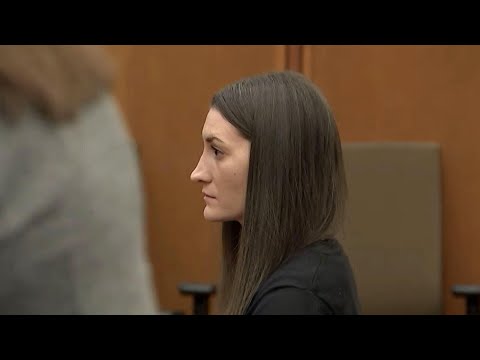
Episode Description
As the trial of Lindsay Clancy is set to begin, Natalie Morales is joined by WBZ-TV Boston reporter and anchor Kristina Rex to examine the case that has drawn national attention and intense public scrutiny. They break down the events leading up to Clancy killing her three young children, the competing arguments expected at trial, and the role mental illness may play in the case.
Crime. Social justice. Impact. "48 Hours" investigates the most intriguing crime and justice cases that touch on all areas of the human experience including greed and passion. "48 Hours," which premiered in 1988, has developed a rich history of original reporting and impact journalism that has helped exonerate wrongly convicted people, caused cold cases to be reopened and solved, and along the way changed lives.
For video licensing inquiries, contact: [email protected]
Read the full transcriptHide the full transcript
- She planned these murders, gave herself the time and privacy needed to commit the murders, and then she strangled each
- child in the place where they should have felt the safest, at home with their mom.
- >> This is not a situation, your honor, that was planned by any means. This is a
- situation that clearly was a product of mental illness. >> That is the prosecution and the defense
- at the 2023 arraignment of Lindsay Clancy. She's the former labor and delivery nurse who is accused of
- murdering her three young children at their home in Dubberry, Massachusetts. That's a coastal suburb of Boston.
- Lindsay attended the hearing remotely via video conference from her hospital bed where she was recovering from
- injuries she sustained on the night of January 24th, 2023. I'm 48 hours correspondent Natalie
- Morales and this is case by case. Now, neither the prosecution nor the defense here dispute what happened that night
- that Lindseay Clancy killed her three children, 5-year-old Ka, three-year-old Dawson, and 8-month-old Ken. Now, the
- question at the center of it all is why? Were Lindsay's actions premeditated? Or
- was she overmedicated and suffering from postpartum mental health issues that led
- to this tragedy? And joining me today is Christina Rex, reporter and anchor for Boston CBS station WBZ. She's been
- reporting on this case since the very beginning, and she'll be covering Lindsay's trial, which is set to start
- next week. Thank you for joining us, Christina. >> Thanks so much for having me. And and
- when I say that you've been covering this case from the very beginning, I mean literally you were there. You
- reported from the crime scene on the very night of the killings. Take me back to that moment.
- >> Yeah, this case is so unique for me in my career because I followed it from its
- inception. So I was covering the night shift at the time it happened. So I reported from outside of the Clancy home
- in Dubbury that very night and I remember personally seeing police officers actually crying, which is
- something that I had never seen at a crime scene before. It was also an unusual case because Ducksbury is a very
- quiet, wealthy town where things like this don't usually happen. So, since then, I followed the case closely,
- attending most of the pre-trial hearings in person. So, Christina, before we get
- further into our discussion, can you give our audience who may not be familiar with this case an overview?
- What happened on the night of January 24th, 2023? >> Of course. So prosecutors laid out a
- timeline of that night at Lindsay Clancy's arraignment, which as a reminder, she attended remotely because
- she was in a hospital bed due to her injuries from what had happened. So prosecutors said that Lindsay asked her
- husband, Patrick, to leave their house to pick up medication and takeout food for dinner. Prosecutors alleged that she
- researched online how long that trip would take. And when Patrick returned home less than an hour later, he went
- upstairs, he found the couple's bedroom door locked. and he said that he was able to unlock it and inside the bedroom
- he noticed blood on the floor and an open window. So Patrick then ran to the backyard where he found his wife Lindsay
- lying on the ground and Lindsay had what appeared to be cuts on her neck and her
- wrists, but she was still conscious. And at that point Patrick called 911. >> Now according to the prosecution on that
- 911 call, you can hear Patrick talking to his wife, right? >> Yeah. And just as a note, we've never
- actually heard the 911 call, but it's been described in court motions, and we know that jurors are going to hear it as
- part of evidence at trial. So, prosecutors have said that on the call, Patrick asked his wife what she had
- done, and that she allegedly replied, "I tried to kill myself and jumped out the
- window." Now, prosecutors said he can be heard on the 911 call asking, "Where are
- the kids?" And he later told police that Lindsay replied to him in the basement.
- So after EMS and first responders arrived and were tending to Lindsay, Patrick went to the basement and
- prosecutors said he can be heard still on the 911 call screaming. They described it as in agony and in shock as
- he discovered his children. So their 5-year-old daughter Kora, their three-year-old son, Dawson, they were
- declared dead that night. And then their eight-month-old son Ken, he was medflighted to a Boston hospital, but he
- died several days later. I mean, just a horrific and emotional 911 call and the jury is going to be hearing that for the
- first time. Um, Lindsay Clancy, she was hospitalized. She was placed under police supervision following the
- killings. Now, according to her defense attorney, as a result of that fall, she is permanently paralyzed from the waist
- down. So, I think when we're reviewing all the facts, what we know of the facts in this case, you know, the first
- question on everyone's mind is why would a mother kill her three children? And it's not just the first question on
- everyone's mind, right? It's going to be the question of this trial. And we really can't answer it definitively, but
- we know that Patrick Clansancy, he did file a wrongful death lawsuit in January of this year against some of Lindsay's
- healthc care providers, and that may give us some insight into Lindsay's mental health struggles leading up to
- these killings. So, I'm just want to tell you a little bit about that lawsuit. It it alleges, quote, "Prior to
- the alleged murder, Lindsay sought medical treatment for her anxiety and increasingly poor and deteriorating
- mental health condition." That lawsuit goes on to read, quote, ultimately defendants negligent treatment of
- Lindsay, including their complete failure to recognize and address the radical erosion of her mental health,
- resulted in tragedy, namely allegations that Lindsay took the lives of her children.
- Oh, just such a horrific case. Again, I mean, I just cannot overstate that. As of now, um that civil lawsuit is still
- ongoing. One of the defendants though has responded in a court filing denying allegations that they provided
- substandard care. Yeah, we also reached out to the other defendants for statements related to this case and one
- of them, a regional health care system, gave us a statement on behalf of themselves and their employee who's also
- named in the lawsuit, noting that they can't comment on specific allegations due to the ongoing litigation here. And
- we did not hear back from the fourth defendant at the time of this recording. So, according to both Patrick and the
- prosecution, Lindsay actually called Patrick from the hospital about two weeks after the killings, and she gave a
- little more insight into what happened that night. Yeah. According to both Patrick and the prosecution here, she
- allegedly told him that she heard a voice and had a moment of psychosis. Now, according to the prosecution, she
- said that she heard a man's voice telling her to kill her kids and herself [music] because, quote, "It was her last
- chance." So, Lindsay was charged with the murders of her three children in February of
- 2023. Now, leading up to the trial, both the defense and the prosecution's medical experts have evaluated her
- mental health. Lindsay's defense attorney has suggested that she was not only suffering from postpartum
- depression, but also possibly postpartum psychosis. Now, I think most of us, Christina, have heard of postpartum
- depression. It's a type of depression that it can occur after giving birth. You know, Ken is 8 months old at the
- time. Now, this is fairly common. Apparently, it affects one in seven mothers. We don't hear often though
- about postpartum psychosis. How does that differ from postpartum depression? >> Well, Natalie, it's very different. So,
- postpartum psychosis is also a mental health condition that can occur soon after giving birth, but it's categorized
- by the medical community as a mental health emergency that affects a person's sense of reality. It can cause
- hallucinations, delusions, paranoia, or other behavioral changes. It's rare, estimated to affect about one or two in
- a thousand new mothers. And only a very small percentage of those women go on to
- die by suicide or commit infanticide. Now, it's also worth noting that it is both preventable and treatable. Medical
- experts say that those suffering with postpartum psychosis require inpatient psychiatric care. That's where they can
- be continuously monitored by professionals to ensure that they stay safe. >> So different than of course than
- postpartum depression. And so we know that at this point Lindsay had been going to doctors. She had been getting
- treatment, right? >> Yeah. She had been getting treatment and we know that she was on a variety of
- medications in this case and as we mentioned those two different diagnoses really are so different and there should
- be a lot of regular screenings for postpartum depression. I mean I can speak from my own personal experience. I
- had a baby just about nine months ago now and every appointment including in the hospital at the pediatrician I was
- always screened for any postpartum depression symptoms. I was very lucky that I didn't have symptoms but as a
- part of my reporting in this case also a few years ago I did some interviews with
- women who had experienced PPP that's postpartum psychosis. They were all part of this support organization for women
- who had experienced that. And I distinctly remember at the time one woman telling me that when she used to
- experience postpartum psychosis, she would have these hallucinations that she had actually stabbed her baby even
- though that had never happened and her child was not harmed at all. And fortunately those women who I spoke to
- as a part of that story got help and no longer experienced those symptoms. >> Yeah. Something that surprised me about
- this case was the statement that Patrick made just days after the killings. Now,
- as we said, Patrick was the one he discovered his children in the basement. Um, he was with 8-month-old Ken when he
- was removed from life support, and he now, of course, is grieving the loss of his three children and that life that he
- once knew. But just 4 days after the killings, he posted a statement on a GoFundMe page that had been set up for
- medical bills and funeral expenses. And he actually asked people to please forgive his wife. I mean, forgive his
- wife for the unthinkable. >> Yeah, it was a stunning and really interesting aspect of the case at the
- time. So, Patrick's GoFundMe statement. It was mainly about his children. He said the shock and the pain was
- relentless and that with the little sleep he got, he dreamed about them on repeat. But he also wrote about Lindsay
- and he said she was a loving wife, a loving mother and nurse. He said she loved being a nurse, but he said, quote,
- "Nothing matched her intense love for our kids and dedication to being a mother. It was all she ever wanted." And
- he also asked others to join him in forgiving his wife. So, he said their marriage was wonderful and grew stronger
- even as her condition rapidly worsened leading up to these killings. Now, Patrick was also asked about the status
- of his marriage in an extensive interview that he did with the New Yorker back in 2024. Right.
- >> Yeah. And at the time, he said he preferred not to comment out of deference to Lindsay. Although his
- mother was quoted as saying he has to come to terms with the fact that she's no longer part of anything. Quote,
- "She's going to go her way and he's going to go his." >> And I know some of our listeners are
- going to be surprised by Patrick's ability to forgive Lindsay. I mean, so soon after the deaths of his children,
- but as we've touched on, he had additional insight into her mental health struggles leading up to the
- killings. And he really opened up about those struggles in that 2024 New Yorker article. Right.
- >> Yeah. In addition to laying out Lindsay's treatment history and the civil lawsuit that he filed against
- several medical professionals, Patrick also broke down Lindsay's history of mental issues leading up to the night of
- the killings in that New Yorker interview that you mentioned. So according to Patrick, Lindsay began
- seeking out psychiatric support in September 2022 after giving birth to their son Ken in May prior to that. So
- she was diagnosed with generalized anxiety disorder and received a prescription for Zoloft from a local
- psychiatrist as well as additional medication including Adavan after she suffered from insomnia as a side effect.
- And just a reminder, in a recent court filing, the psychiatrist denied allegations that she provided
- substandard care. So, what else did Patrick detail in that interview? >> So, Patrick claims that over the next
- couple of months, Lindsay visited the emergency room, attended virtual teleaalth and in-person appointments
- with a perinatal psychiatric nurse practitioner, and visited a facility that specializes in perinatal care. And
- she was prescribed several more medications, including ambient and cerakquil. And various doctors said she
- should be okay or found that she had no symptoms of postpartum depression, actually. So when I read the interview,
- I was just struck when Patrick said that Lindsay actually told him she had had thoughts of wanting to die. She had also
- had unwanted thoughts of harming the children. This was about a month before the killings. Now Patrick says she told
- him she needed to be admitted to a hospital. And so she spent 5 days in an inpatient facility before being
- discharged with a prescription apparently for an anti-depressant. Now, according to Patrick, this was her 13th
- medication in a span of 4 months. I mean, she was being heavily medicated and treated at this point, right?
- >> Yeah. And that's part of her defense strategy as well, Natalie. But according
- to the prosecution, when she left the inpatient hospital, she denied having any more intrusive thoughts at that
- point. By mid January, she seemed to be improving and was back under the supervision of that first psychiatrist
- we talked about. And I also want to mention that Patrick was never told that Lindsay shouldn't be left alone
- according to the defense. >> Now, Lindsay's treatment history is of course something that her defense lawyer
- has really emphasized as well. You're going to be hearing this throughout the trial as it gets underway. But here's a
- clip of her defense attorney, Kevin Readington, at her arraignment in February of 2023.
- Now, our society fails miserably in treating women with postpartum depression or even postpartum
- psychosis. It's medicate, medicate, medicate. Throw the pills at you and then see how it works. If it doesn't
- work, increase the dose or decrease the dose. Then end up trying another combination of medications.
- >> Yeah. And Lindsay's most recent pre-trial hearing was actually just this week. And Kevin Readington, her lawyer,
- reiterated that same sentiment. So Lindsay's defense lawyer, Mr. Readington, he's a well-known defense
- lawyer here in Massachusetts. He's a self-described kind of old school lawyer. He even has a license plate on
- his car famously that has the initials NG for not guilty. I should also mention that at the arraignment, the prosecutors
- made pretty much the opposite argument of what he did. They say Lindsay was of sound mind at the time of her children's
- deaths. They pointed to evidence that she had looked up the restaurant for takeout on Apple Maps before sending
- Patrick to pick up food, arguing that she had calculated how long he was going to be gone. And I hear that they also
- argued Lindsay had not been diagnosed with postpartum depression, though they conceded that according to Patrick, she
- had been initially diagnosed with generalized anxiety disorder. >> Yeah, that's right. They argued that she
- had never used the word psychosis until after she had met with a doctor that was
- hired by her defense team in this case. >> And I want to talk a little bit more about Lindsay Clancy's trial that is
- getting underway this month. I mean, she has been charged again with three counts
- of firstdegree murder. She's pleaded not guilty. Her defense lawyer has indicated
- he's going to pursue an insanity defense. And what does the law say about when a defendant can be found not guilty
- by reason of insanity? Well, in Massachusetts, somebody can be found not guilty by reason of insanity if due to
- mental illness, they couldn't control their actions, even if they did understand what they were doing and they
- knew it was wrong. So, basically, the law not only considers whether Lindsay knew what she was doing was wrong, but
- if she was able to act on that understanding at the time of these killings. So, at Lindsay's arraignment,
- the prosecution suggested that her actions earlier that day, including taking her daughter to a doctor's
- appointment, show that she was thinking lucidly. But some experts have noted that evidence that Lindsay was acting
- rationally earlier in the day. And even evidence that she planned the killings possibly is not enough to rule out
- temporary insanity. >> So, what would happen in Lindsay's case if a jury were to find her not guilty by
- reason of insanity? So, according to legal analysts, it wouldn't be the same as being acquitted. Lindsay is currently
- in a secure mental health facility here in Massachusetts. So, it's likely she would stay there and be evaluated
- periodically to determine whether it would be safe for her to be released. But, it is possible that she would stay
- in that facility for a very long time. There have been several famous cases in the US of mothers killing their
- children. Can any of these other cases be seen as perhaps benchmarks in this case?
- >> You are right that there have been so many high-profile cases of women killing
- their children that could offer some insight, but most of them occurred outside of Massachusetts, so they don't
- necessarily provide a legal benchmark for this case. The case that comes to mind for me is the 2001 case of Andrea
- Yates. She drowned her five children in a bathtub at the family home in Texas. And she said at the time that Satan
- ordered her to kill her children to save them from eternal damnation. She'd been
- hospitalized with postpartum depression shortly before those killings. Now, initially a jury did convict her of
- capital murder, but they rejected the death sentence in that case. But that verdict was later overturned and a
- second jury found Yates not guilty by reason of insanity. So today, Yates remains at a mental health facility and
- she's repeatedly declined to seek release, meaning she chooses to remain under that psychiatric care.
- >> And you know, I think also back to the Susan Smith case. I mean, she killed her
- two young sons in 1994 by rolling her car into a South Carolina lake while they were strapped in their car seats.
- And she initially claimed that a carjacker drove away with her sons, but when the truth came out, she was
- convicted of their murders. That's right. She was convicted of murder and the jury sentenced her to life in
- prison, but again, not the death penalty in that case, >> you know. And it's interesting that in
- both these cases, the women were spared the death penalty. I'm wondering if there is a social or a cultural element
- at play with how the juries looked at these kinds of cases. >> Yeah. Interestingly, Philip Resnik, so
- he's a national expert on philicide. He was retained by Lindseay Clancy's legal team. He evaluated her mental health.
- And in that New Yorker article we talked about, he suggested that women who are accused of killing their children may
- actually benefit from society's assumptions about a mother's unconditional love. So Resnick argued
- that many people believe a mother must be insane to kill her child because no sane mother would ever do that.
- >> Yeah. Yeah. And then on on the other hand, I mean, the social expectations of
- mothers, does it make it harder for women who are struggling with we're talking seriously struggling with mental
- health conditions to ask for help before they reach a point a point of crisis. >> Yeah. I mean, absolutely. Researchers
- actually say social norms and expectations around motherhood that can leave women suffering with mental health
- conditions feeling isolated or guilty. and the stigma around mental illness can make it harder for them to ask for help.
- Speaking from my own experience, having again just had a baby nine months ago, I
- was asked regularly about my own mental health, even at my daughter's appointments by the pediatrician, and I
- was always pointed to resources if I was feeling depressed in any kind of way. So, it did feel like there was an effort
- from doctors and nurses to kind of reduce the stigma around asking for help if needed. But in Lindsay's case, she
- apparently actually turned to strangers online for support in the months leading
- up to the killings. So, for example, she was in a Facebook group called I am not
- alone, postpartum depression/ anxiety and rage, but she didn't really share the extent of her struggles with the
- other mothers in the town of Dubury. I can't imagine also you being a new mother reporting on this case as
- extensively as you did. I mean, it must be, you know, just it must hit so much harder in some ways, too. I mean,
- there's so many hormones and emotions that you're dealing with and then, you know, covering a case like this. Wow.
- >> Absolutely. It's uh, you know, I'll be honest that I'm a bit anxious about seeing the evidence at trial.
- >> Yeah. Going back to the to the case here, though, in a June 2026 pre-trial hearing, prosecutors revealed that
- Patrick Clancy will testify at his wife's trial. Do you have any insights into what information he might share?
- >> Well, it's possible that Patrick will be asked about his conversations with Lindsay, you know, both before and after
- the killings. We know from that interview he did in the New Yorker that he says he and Lindsay spoke over the
- phone a few times following the deaths of their children. And he asked her in one of those calls if she had planned to
- kill their children and if if that's why she had actually sent him out to get the
- takeout food and medicine that night. And according to Patrick, she said no, it was just like a snap of the fingers.
- And Patrick also said he asked Lindsay why she looked up how long it would take him to get to the restaurant. And
- Lindsay told him she'd been concerned about him getting stuck in rush hour traffic. Now Lindsay's trial is set to
- start next week. The prosecution has listed 168 names. That includes law enforcement, medical professionals,
- family members, also of course including Patrick. Now, Patrick is also on the defense's witness list with so many
- witnesses. I mean, do we know how long this trial could last? >> So, there have been estimates at the
- pre-trial hearing earlier this week, lawyers estimated 6 to 8 weeks for this trial. And just remember, just because a
- witness is listed, it doesn't mean either the Commonwealth or the defense will actually call them to the stand.
- They have to send in a list of any potential witnesses. We do know in the case of Patrick, he could be called by
- the Commonwealth, for example, by prosecutors and then just cross-examined by the defense. It doesn't mean the
- defense will then also call him as a witness. >> And what do we know about the possibility of whether or not Lindsay
- Clancy will testify in her own defense? >> She's not on the defense's witness list,
- but Lindsay has attended her recent pre-trial hearings in person, so she does plan to attend the entire trial in
- person as well. Now, she's paralyzed from the waist down and she's wheelchair bound now because of what happened that
- night back in 2023. She gets full-time care at a Massachusetts hospital for people with mental and physical
- illnesses. In the pre-trial hearing earlier this week, Lindsay's lawyer said she does intend to be present for the
- full trial, but it is unusual for a criminal defendant to take the stand. So, I would be shocked if she testifies.
- >> Yeah. Now, is there anything else we should be looking out for at trial? >> I think that really Patrick's testimony
- is going to be what uh people are looking to see. He's he's the closest thing to a firstirhand witness of what
- happened that night, with the exception of Lindsay, of course. And the judge also did rule in this case that he's
- going to allow Patrick's 911 call to be played for the jury after he provides what's called a limiting instruction. So
- that instruction typically directs jurors to consider that recording only for its evidentiary value and not to be
- swayed by the emotional impact it might cause. And one other thing is just in the final pre-trial hearing this week,
- the judge denied a motion from the defense, uh Kevin Readington, the defense attorney, actually wanted to
- introduce testimony from over a dozen witnesses who have personally experienced postpartum psychosis and
- postpartum depression, but had no direct connection to this case. Prosecutors challenged that motion, and the judge
- ruled that just expert testimony on that issue would suffice here. So for the jury, it really all will come down to
- what they believe was Lindsay Clancy's state of mind at the time that she killed her three children. So I imagine
- there's going to be a lot of medical evaluation, a lot of talk about the differences between postpartum
- depression, postpartum psychosis, and that's what the jury is going to have to decide here. Right, Christina?
- >> Exactly. and really whether they believe that Lindsay understood that what she
- was doing was wrong or if she had the ability to act on that understanding. And I think, you know, jury selection is
- always so important in criminal trials and murder trials. But in this case, with just how emotional the evidence is
- going to be and the fact that it involves the deaths of children, I think jury selection could take a long time
- for that reason >> there. Yeah, I I imagine it would. Um Christina Rex, so nice to have you with
- us. This is just a horrific, tragic case. I can't imagine um, you know, being a new mother yourself having to,
- [music] you know, report on this case, but we really appreciate what you're doing and and thanks for sharing your
- thoughts with us today. >> Of course. Thank you so much for having me. Now, we do want to use this
- opportunity to say that if you or someone you know may be experiencing a mental health crisis, contact the 988
- [music] suicide and crisis lifeline by simply dialing or texting 988. [music] If you are pregnant or have just had a
- baby, you can dial or text the National Maternal Mental Health Hotline at [music]
- 1833 TLC MAMA. And we will be back next week with another episode of Casey by Case. Be sure to rate and review and let
- us know which cases you are following and which cases you would like us to follow. [music]
Brief Summary
Lindsay Clancy faces trial for murdering her three children amid claims of mental illness and premeditation.
Key points
- The Tragic Case of Lindsay Clancy. Lindsay Clancy is accused of murdering her three children in a shocking case that raises questions about mental health.
- Postpartum Psychosis Explained. Experts discuss the differences between postpartum depression and postpartum psychosis, a rare but serious condition.
- Patrick Clancy's Forgiveness. Just days after the tragedy, Patrick Clancy publicly forgave his wife, Lindsay, for the unthinkable.
- Motherhood and Mental Health. Experts discuss how societal expectations can isolate mothers struggling with mental health.
- Patrick Clancy's Testimony. Patrick Clancy is expected to testify at his wife's trial, revealing key conversations.
- Trial Duration Estimates. Lawyers estimate the trial could last 6 to 8 weeks, with many witnesses involved.
Episode highlights
- The Tragic Case of Lindsay ClancyLindsay Clancy is accused of murdering her three children in a shocking case that raises questions about mental health.“The question at the center of it all is why?”1:25Jul 28, 2026
- Postpartum Psychosis ExplainedExperts discuss the differences between postpartum depression and postpartum psychosis, a rare but serious condition.“It's categorized as a mental health emergency.”8:00Jul 28, 2026
- Patrick Clancy's ForgivenessJust days after the tragedy, Patrick Clancy publicly forgave his wife, Lindsay, for the unthinkable.“Please forgive my wife.”10:28Jul 28, 2026
- Motherhood and Mental HealthExperts discuss how societal expectations can isolate mothers struggling with mental health.“Social norms can leave women feeling isolated or guilty.”19:56Jul 28, 2026
- Patrick Clancy's TestimonyPatrick Clancy is expected to testify at his wife's trial, revealing key conversations.“He asked her if she had planned to kill their children.”21:26Jul 28, 2026
- Trial Duration EstimatesLawyers estimate the trial could last 6 to 8 weeks, with many witnesses involved.“Just because a witness is listed, it doesn't mean they will be called.”22:33Jul 28, 2026
- Lindsay Clancy's ConditionLindsay Clancy is wheelchair-bound and receiving full-time care after the incident.“She does plan to attend the entire trial in person as well.”23:18Jul 28, 2026