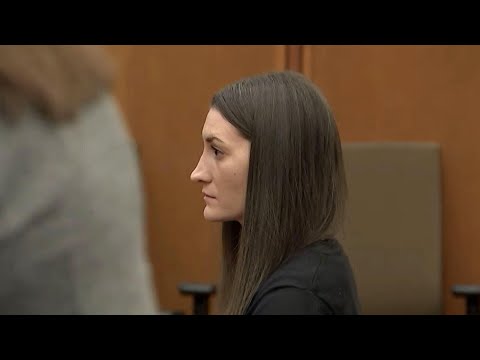
Inside Lindsay Clancy's Home | Case by Case | "48 Hours" Podcast
Episode Description
As the Lindsay Clancy murder trial continues, jurors hear testimony from the medical professionals who treated her before and after the deaths of her three children, and excerpts of her journal. They also visit key scenes from the night of the killings. "48 Hours" correspondent Erin Moriarty speaks with WBZ-TV reporter and anchor Kristina Rex about emotional courtroom moments, graphic testimony, and the key question at the heart of this case: what was happening in Lindsay Clancy's mind on January 24, 2023?
Crime. Social justice. Impact. "48 Hours" investigates the most intriguing crime and justice cases that touch on all areas of the human experience including greed and passion. "48 Hours," which premiered in 1988, has developed a rich history of original reporting and impact journalism that has helped exonerate wrongly convicted people, caused cold cases to be reopened and solved, and along the way changed lives.
For video licensing inquiries, contact: [email protected]
Read the full transcriptHide the full transcript
- As a warning, some of this content contains graphic and disturbing details, including discussions of suicide and the
- killing of children. So, please listen or watch with care. We'll have resources at the end of the episode.
- So we asked her, you know, how how are you feeling? Horrified. And then uh she wrote down uh do I have an attorney? and
- I said with my team that at this time we're just getting to know you and getting to know the the case and we're
- not sure exactly you know what what is happening and we we asked her do you have questions
- for us and she asked is my body broken uh are my legs straight >> that was Dr. Dr. Jill Biswas, a
- psychiatrist from Bighgam and Women's Hospital. Biswas consulted on Lindseay Clancy's treatment in January 2023 after
- the then 32year-old mother killed her three children and harmed herself at the family's Ducks, Massachusetts home.
- This is a trial that is so hard to watch and yet it's hard to look away from. As
- a reminder, Lindsay is on trial for three counts of firstdegree murder. But this is not a case of did she do it, but
- why. Her defense is arguing that she should not be held criminally responsible for the deaths of her
- children by reason of mental disease or defect. That she was suffering from postpartum psychosis at the time,
- exacerbated by the medication she was taking. Under Massachusetts law, jurors will have to decide whether Lindsay knew
- that what she was doing was wrong at the time of the deaths, but also whether she
- had control of her actions at that time. Clearly, it's a complex case. Opening statements began on July 27th with a
- trial expected to last several weeks. This week, jurors heard passages from Lindsay's journal, as well as
- testimonies from doctors and nurses about Lindsay's medical treatment and the efforts to save her three young
- children, Kora, Dawson, and Kalen. We've been following this case closely, and we
- covered the first week of the trial in our last episode. For our continuing coverage, you can check the casebycase
- feed wherever you find your podcast or you can watch on the 48 hours YouTube channel. I'm 48 hours correspondent
- Aaron Morardi and this is Case by Case. Joining me today is Christina Rex. She's
- a reporter and anchor for Boston's CBS station WBZTV. Christina, thanks for being here. I know
- that you're coming right after a long day in court or at least almost two weeks of being in court.
- >> Almost two weeks now. Thank you for having me. >> Well, you've been covering this case
- literally from day one. You were actually reporting from the Clansancy home on the night of January 24th, 2023
- when these deaths occurred. And you have been present in the courtroom at some extremely intense moments. You heard
- Patrick Clancy's testimony, his chilling 911 call along with testimonies from first responders on the
- scene. So my first question honestly is about you. How are you doing? This is this has to have been tough on you.
- >> Yeah, I mean thank you for asking. That 911 call is going to stick out in my mind for sure as the most harrowing
- thing I've ever heard in my 10 years of reporting. And this case has not been easy to cover. As you know, we're
- supposed to kind of remove ourselves from our coverage, shut off maybe at the end of the day, but this is just one
- that sticks with you. >> I'm curious how you would describe what the mood was like in the courtroom,
- particularly during that 911 call um or even during Patrick's testimony. >> Yeah. So about the 911 call, just a
- reminder that at Patrick Clansy's request, the judge ruled that that 911 call could not be recorded to
- distribute. So the mood in the room, it was solemn. It was really tense. It was emotional. You could hear a pin drop.
- And there were several people shedding tears when the 6 and 1/2 minute call wrapped up. There were members of the
- public, even some jurors who you could see crying. And then Lindseay Clancy herself was loudly sobbing when that
- call finished playing. And since then, you know, testimony has still been grim at times, but it's taken a much more
- technical turn and been kind of less emotionally driven than that 911 call in the early days.
- >> I understand that Lindsay was first brought to the ER at Southshore Hospital and then later was transferred to
- Brigham and Women's because she needed further treatment. The children were brought to Beth Israel Plymouth ER. What
- can you tell us about the testimonies from physicians? first the ones who treated Lindsay when she got to the
- hospital. Give me some sense of her injuries. Um, were you surprised by the extent of some of her injuries?
- >> We had known about some of Lindsay's injuries from her defense attorney. And this week we got to hear from some of
- the ER doctors who treated Lindsay at Southshore Hospital. And then prosecutors also questioned
- psychiatrists from Brighamin Women's who had assessed Lindsay's mental state shortly after that night. Now, most of
- the questions we heard from the prosecution and defense were about treatment. We heard about rounds of CPR
- that had been used to attempt to revive the children. We had heard about the marks found on their bodies that were
- consistent with strangulation. And then also, of course, as you mentioned, the injuries to Lindsay Clancy's body. So,
- Lindsay did sustain serious injuries to her spine. They left her paralyzed. She's still paralyzed today from the
- waist down. >> Were you surprised though to hear the discussion about coding that she
- actually went into cardiac arrest? I had not known that. >> I had known that from her defense
- attorney. So, it wasn't surprising to me, but I understand that it may have been surprising to the public. You know,
- all people knew about what had happened was an alleged suicide attempt. Uh I don't think the extent of the injuries
- including you know cardiac arrest that first 24 hours in the hospital I don't think that was very publicly known
- >> and let's talk about the children which I think is very difficult to talk about.
- On Monday, the prosecution called to the stand the ER physicians who treated Dawson and Ken Clancy when they were
- rushed to Beth Israel that night. And the physician who treated Kora also testified. The doctors went into great
- detail about the children's conditions and the efforts, the heroic efforts to try to save them. These children were
- only, you know, Kora was five years old, um, Dawson three and Ken 8 months old, being brought into the ER with severe
- injuries. How difficult was that for people in the court to hear and and particularly for
- Lindsay who was sitting there? Yeah, I mean it was really hard for everybody in the courtroom to hear these life-saving
- efforts. But Lindsay was visibly upset, especially when they were speaking about
- the youngest, Kalen, because he regained consciousness after CPR, but he was eventually declared dead because his
- brain never regained function. That was after a few days. And I've also noticed in the courtroom that Lindsay doesn't
- look at pictures of her kids. So, she has an evidence screen that's right in front of her at her seat, but often when
- pictures of her children are up on that screen during these testimonies, she looks at her lap instead of at the
- screen. >> The prosecution also entered some pretty graphic pictures of Lindsay from that
- night, um, showing pictures of her neck and wrist where they were cut. What argument, what is the point of the
- prosecution showing these photos to the jury? There's been a lot of testimony about these photos and prosecutors are
- trying to make the case that Lindseay Clancy's suicide attempt was over dramatized. So, this goes directly to
- prosecutors attempts to show the jury that Lindsay was in her right mind, >> that she used a suicide as part of her
- plan. You know, some of the testimony the prosecutors have elicited, it's focused on calling the cuts that she
- made to herself superficial, implying that she didn't cut deep enough to actually kill herself. The defense, of
- course, pushed back on that, questioning the doctor's full recollection of Lindsay's injuries. And then also this
- week, prosecutors had elicited some testimony suggesting that Lindsay maybe hung or or leaned from her second story
- window rather than actually [music] jumping out of it. Now, a reminder that is what led to her breaking her spine
- and ultimately the [music] paralysis that she has today. Christina. This week, the juries gain
- more insight into Lindsay's state of mind on those days leading up to the deaths by going through her journal. In
- it, she wrote about everything from financial guilt to the difficulties of raising her children to her worries
- about returning to work. In court, we actually heard excerpts of some of those journal entries that were read aloud.
- And let's play some of these. First, an entry that was read to the jury by one of the prosecutors, that's Shannon
- Buckingham, and then one by Lindsay's defense attorney, Kevin Readington. >> That page reads, "It's like I'm so
- desperate to get a mental break from taking care of everyone that my mind is trying to make something physically
- wrong with me." You recall reviewing that in the journal? >> Yes. >> I'm completely overwhelmed trying to
- take care of the three kids. I feel like I'm drowning every day. Again, another page that's not dated.
- >> Correct. Um, at some point there are some dated pages in this journal. Fair to say, right?
- >> Yes. >> Um, and there's one on November 18th. And November 18th, that page reads,
- "It's like I'm so desperate to get a mental break from taking care of everyone that my mind is trying to make
- something physically wrong with me." You recall reviewing that in the journal? >> Yes,
- >> Christina, didn't it? The defense also made some references to her mental state
- at the time. Um, let's play that exchange here. >> She wrote, "I have crazy brain fog. I
- feel like I can't make a plan. I can't carry it out. Like I just live moment to moment waiting for the next nap time.
- I'm terrified of Cal getting over tired now because I feel I can't help him." She wrote that, right?
- >> Correct. She then wrote, "I'm really worried about going back to work and not
- being able to function with the brain fog. I feel like I should start with a 4-hour shift and see how I do. I can't
- tell if I am withdrawing from Adavan and Benadryil or is this my new baseline. I
- feel completely disconnected with my baby. I feel like I'm going through the motions every day." She wrote that,
- right? >> Correct. Christina, it appears that both sides, both the prosecution and the
- defense, are using these same entries to make their case. How do you think this could aid or hurt the defense's
- argument? >> At the end of the day, it really depends on how the jury interprets these notes
- that Lindsay wrote. So prosecutors say Lindsay was so overwhelmed that she just wanted out of her life completely and
- that she was allegedly so controlling that she wanted to take her children with her. So will the jury believe that
- from hearing these journal entries or will they believe the defense's interpretation that Lindsay was
- struggling with severe postpartum anxiety and depression and that she was making every effort to get help and be
- there for her family until she snapped one day. We've heard through the trial from many professionals who speak about
- Lindsay from a very clinical outsiders perspective. But then this week, we got more of a sense of who the Clancy family
- was from inside the home. On Wednesday of this week, we actually heard from Clancy's family's former nanny. Um, I
- want to play some of her testimony. >> Did you come to find out that Lindsay was having some issues? I did.
- >> Did she talk to you about that? >> She did. >> And what did she tell you about her
- issues? >> Uh, she shared with me that she was suffering from postpartum. >> Um, now when she shared this information
- with you, had you noticed anything different about her demeanor or um her presentation around the house?
- >> I didn't at all. I observed a wonderful mom who loved her kids, who was she was
- very concerned with um their safety. She was very uh concerned with Ken's eating
- and sleeping. She was a wonderful mother. >> So, according to the testimony, Nanny
- took care of the kids between September and December of 2022, just about a month
- before the deaths of those kids. And on the stand, she spoke about the kids' personality and Lindsay's parenting.
- During that testimony, Lindsay seemed to be very emotional. Yeah, it actually looked like Lindsay was crying
- throughout this testimony. She had her head in her hands and you could see her shoulders shaking and she was pulling
- tissues to wipe her eyes. And she specifically became visibly emotional when a very short video that the nanny
- had taken of baby Kalen drinking a bottle played on the evidence TV. I can't imagine what was going through her
- head at that moment to hear all these kinds of things about herself and the kids.
- >> You know, I wasn't in the courtroom. I'm I'm watching, you know, through the TV
- and uh the camera shows Lindsay after well, it's actually right after the nanny had said something wonderful about
- her parenting and it didn't look like Lindsay was even looking at her. Um, and I was a little surprised by that. It
- looked like she was looking down because it was very sweet testimony from this woman who was a nanny who said she loved
- Lindsay. >> She said that quoted. She said, "I loved Lindsay." I think at that point the
- video of the baby had already played and there had already been some descriptions
- of the children's personalities and also Lindsay as a mother and Lindsay seemed to have already kind of gotten emotional
- and had her face in her hands. So, you're right that at that point she didn't look back up. This was near the
- end of the nanny's testimony. >> And again, Christina, I can't see what's going on in the courtroom. You can. And
- I was curious. It doesn't look like she is participating very much in her own defense. Is I am I
- just not able to see it? >> No, you're correct. Every now and then her lawyer will ask her a question, but
- she certainly is just there listening, often crying, often looking down. When the more technical testimony is
- happening, she tends to watch the witness and actually look, but you certainly in the courtroom don't see her
- strategizing or contributing or offering information to her lawyer throughout the
- course of testimony. >> And then just one other question about her. Um, you know, you and I have both
- sat through a lot of trials. I have never seen a defendant cry or seem as visibly upset by the evidence, even
- refusing to look at things. Um, do you see the same thing? I don't know. >> Yeah, I mean, it's certainly unusual.
- Uh, but at the same time, isn't that part of the unique nature of this case? You know, you have a defendant here,
- Lindseay Clancy, whose lawyer says she admits what happened. She admits what she did. So, I think that that brings a
- whole new layer of emotion into the case. You know, she claims that she had a postpartum psychosis episode when this
- happened. So, if now she's in her right state of mind, you might expect to see those emotions.
- So, on Tuesday, we also heard from over a halfozen forensic scientists at the Massachusetts State Police Crime Lab.
- The prosecution and defense asked about, of course, the medications in Lindsay's
- system that night. They talked about the blood that was found on the knife that she used to cut herself. And then it was
- interesting the blood spatters that were found on the interior and exterior of the Clansancy home. I just want to play
- a bit of their back and forth here because you're going to hear from both the prosecution and then the defense
- >> and um defense council asked you about the the red bound stains on the window
- sill, the one on the exterior and the interior and asked if it could be from someone leaning out the window. Correct.
- >> Correct. >> Could it also be from someone hanging out the window [clears throat] holding
- on to in those spots? >> Correct. >> Nothing further. Wouldn't there be drops in, you know, if somebody was bleeding
- significantly from cuts on their wrist to the extent that one of the marks on the shingle you said had a drip on it,
- right? That's a >> So depending on the amount of blood where that contact is coming into place
- is what is deposited. So, if somebody was going to climb out the window and hang on the ledge
- and then what, like do a Spider-Man and go down the side of the shingles, they would leave a smear going all the way
- down on the shingles, wouldn't they? >> If they came in contact the entire way down, yes, there would be a transfer all
- the way down. What does it appear, Christina, that the prosecution is trying to do with these um you know,
- blood stains on the window sill and outside the house? >> I think this is more of the prosecution
- questioning the validity of Lindsay's suicide attempt, which we had spoken about. In the courtroom, you could
- really sense Kevin Readington's frustration with this line of questioning, as we just heard him in
- that Spider-Man reference there. Well, I want to make another point here because
- I've really noticed it during this trial. It's pretty clear so far that the defense attorney is not waiting to put
- on his case. You know, I have seen examples over and over again of Kevin Readington using cross-examination to
- make some pretty strong points for the defense. I want you to listen to another example of this in this clip.
- >> Do you recall um collecting the knife? >> Yes. Why would you collect the knife as
- part of the crime scene response? Or excuse me, >> there's no objection to any of this
- physical evidence being introduced. >> That's all right. I'm going to allow this line of inquiry just to kind of put
- things in perspective. >> I mean, Christina, you hear him insert time and time again um points that he
- wants to make that you hear him at times saying that Lindsay how how ill Lindsay
- was when she got to the hospital. He sounds so frustrated at times. Where do you think this tension is coming from?
- Is this real or is this just a, you know, a defense ploy? >> It could be both. To be fair, the
- feeling has been a theme of the trial. Lindsay's defense attorney, Kevin Readdington, he had actually offered
- before the trial even started to stipulate that she admits to killing her kids in the exact manner that
- prosecutors claimed that she did. In return, he wanted this trial focused only on her criminal responsibility and
- her mental health issues. Now, at the time, prosecutors actually objected to that idea, and the judge ruled against
- it. Meaning that we're seeing what we're seeing now. Prosecutors are still putting on a case where they're proving
- every little detail of evidence about the actual murders despite the fact that Lindsey Clansancy has more or less
- confessed to them. And I think that's why you can see her lawyer getting frustrated as certain testimony comes
- up. But our legal analysts have also said it could be a little bit of grandstanding for him to kind of play to
- the jury. >> So at the end of last week, the trial was actually brought outside the
- courtroom. Members of the jury were taken to three locations that were crucial to the events of January 24th,
- 2023. First, they were taken to the CVS where Lindsay's husband, Patrick, picked
- up meds for Kora. Then the restaurant where he got the takeout. And then lastly, the jury was taken to the site
- of the killings, the Clancy family home. Again, we've been talking about uh cases
- you've covered. Is this kind of trip typical for a trial, you know, and why do you think it was so important for the
- jury to actually go to the the scene of these deaths? >> Yeah. So, they call it a jury view, and
- it actually is very typical in criminal cases like this. So, the judge takes the
- jurors to view the premises or the property related to the case. When they're there, the prosecution may point
- out the essential features of the location. you know, just where things are located, certain rooms, but no
- comment or discussion is allowed in that time. There are no witnesses who are heard and jurors are not allowed to ask
- any questions or even discuss amongst themselves. And the presence of the defendant in a criminal case, that's
- left to the judge's discretion. So, in this instance, Lindsay was not present because according to her attorney, she
- chose not to be just because of her paralysis. She's wheelchair bound. It was just too much to plan logistically
- to get her to all three locations. But observations that are made by the jury and the judge on a view may be used by
- the jury, the finder of fact when they start making a decision in this case. In this case, it was interesting because
- the current owners of the Ducksbury home, a new family, they didn't want jurors allowed inside the property, but
- last week, Judge William Sullivan, who's overseeing this case, he ordered them to
- allow access to the premises for the purposes of a view. So in this case, three groups of six or 18 jurors were
- taken inside the home one group at a time. Uh they were given specific instructions, you know, not to touch
- anything, not to open any drawers. But part of that is just being able to see the context of where an event happened.
- You know, it's all described in court, but then when jurors get to see it for themselves, it kind of puts things in
- perspective for them. In particular, in this case, going to the other two locations, not just the house. A big
- part of the testimony has been about the amount of time that Lindsay spent at home alone with the kids who allegedly
- commit these crimes. And the reason that the jury is able to experience that is by taking the same journey that Patrick
- Clansancy did. You know, going to CVS, going to the takeout restaurant, and then going back to the house. That's the
- exact route that he took that night. But Erin, I'm I'm very curious in your experience covering murder trials. How
- often have you come across jury views like this and how do you think they help the prosecution?
- >> Well, I haven't seen it very often. I think I've only seen a jury go to the scene of a crime one time and that
- actually surprises me because if you look at this specific case, I think the jurors are going to be really interested
- interested since there is um you know a difference. The prosecution is saying that she carefully planned to go out the
- window while the defense is saying she threw herself out the window. I think the jurors would want to actually see
- the home. Um, and I think it often puts the crime scene or the death scene in in
- context >> and in perspective in this case, right? I mean, they've seen pictures of the
- window on the back of the house and they've been told how high it is off the ground, but to see it in person is
- certainly different. >> What are you expecting to come out of, you know, the rest of this week and the
- coming weeks? >> So, of course, more of the trial is going to have to focus on Lindsay
- Clansy's state of mind. We have to hear from the doctors and nurse practitioners
- who treated her for psychiatric issues before the murders and then also some additional providers who continued to
- treat her after the murders happened. That has yet to happen and uh the defense attorney actually told me that
- he doesn't know for sure if prosecutors are going to call a psychiatrist from before the children's death, but if they
- don't, he will. Well, because don't you expect the defense to kind of put the medical profession on trial as well?
- >> Oh, absolutely. I mean, that's really the central argument of the defense in this case is that Lindsay was so
- overmedicated that she experienced psychosis. >> We look forward to covering this in our
- next episode on the trial. Christina, thank you. We're very grateful that you could join us this week to share your
- experiences inside that courtroom. I've been thinking about this because even though this trial has been so hard to
- watch, you know, everyone I know has been talking about it and I and I feel that
- people have become really invested in this case and the reason why might just be because as you mentioned at the very
- beginning, it is so rare for a mother to kill her children. It is so rare that we
- actually remember the names of other mothers uh like Andrea Yates in Texas who killed her five children. Um and yet
- here we are back again. >> I actually had a conversation about this this week. Uh I covered another case
- here in Massachusetts. It was on Christmas Day several years ago where a mother uh threw her two children off of
- a garage roof and then jumped into her own life. Uh, so something that would never go on trial because she died in
- that suicide attempt. But when you hear a case like this, they're so rare, but it it's really hard to hear it and not
- immediately think of other similar situations. >> And I'm hoping that this makes people
- talk about this issue. Um, I think that is the one of the best reasons for putting a trial like this on television
- and talking about it is to let other people know that there is help. >> Yeah, I think you're right. I think
- you're right. If there can be any silver lining in a case this horrific, maybe the conversation around mental health is
- it. >> Thanks again, Christine. I really appreciate it. >> Thank you. Now, we want to take this
- opportunity to say that if you or someone you know may [music] be experiencing a mental health crisis,
- please contact the 988 suicide and crisis lifeline. Just call or text [music] 988.
- And if you're pregnant or you've just had a baby, you can dial or text the National Maternal Mental Health Hotline
- at [music] 1833 TLC mama ma. And we'll be back next week with another episode of Case by Case. Be sure to rate
- and review and let us know which cases you're following and which cases you'd like us to follow. [music]
Brief Summary
Lindsay Clancy's trial reveals complex mental health issues after she killed her three children, raising questions about her mental state during the incident.
Key points
- Lindsay Clancy's Trial. Lindsay Clancy faces three counts of first-degree murder, raising questions of mental health.
- Emotional Testimonies. Witnesses recount the harrowing details of the night of the tragedy.
- Lindsay's Journal Insights. Entries reveal Lindsay's struggles with motherhood and mental health leading up to the incident.
- Jury View of Crime Scene. The jury visits crucial locations related to the case, including the Clancy family home.
- Mental Health Discussion. The trial raises important conversations about mental health and its implications.
Episode highlights
- Lindsay Clancy's TrialLindsay Clancy faces three counts of first-degree murder, raising questions of mental health.“This is not a case of did she do it, but why.”1:29Aug 7, 2026
- Emotional TestimoniesWitnesses recount the harrowing details of the night of the tragedy.“The mood in the room, it was solemn. It was really tense.”4:42Aug 7, 2026
- Lindsay's Journal InsightsEntries reveal Lindsay's struggles with motherhood and mental health leading up to the incident.“I feel like I'm drowning every day.”10:28Aug 7, 2026
- Jury View of Crime SceneThe jury visits crucial locations related to the case, including the Clancy family home.“It's all described in court, but seeing it puts things in perspective.”23:06Aug 7, 2026
- Mental Health DiscussionThe trial raises important conversations about mental health and its implications.“Maybe the conversation around mental health is it.”27:05Aug 7, 2026