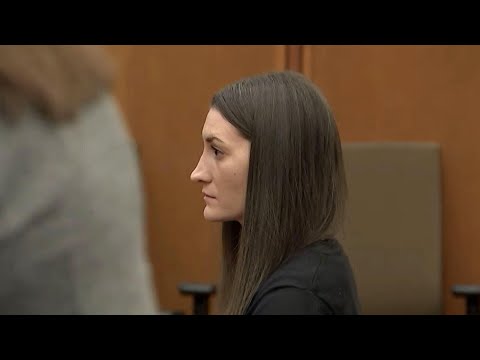
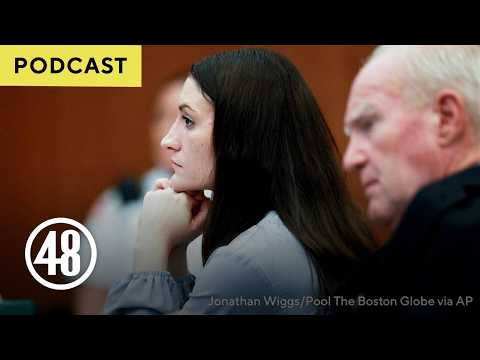
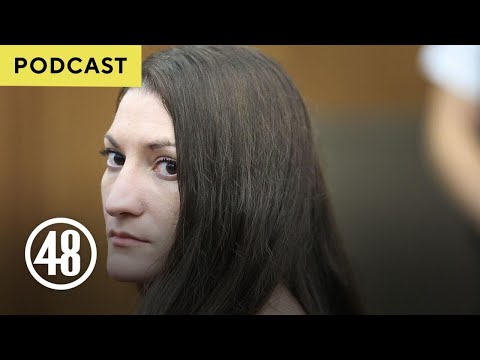
Inside the Final Days of the Lindsay Clancy Trial | Case by Case | "48 Hours" Podcast
Episode Description
A mistrial motion, testimony from family members, and a battle of forensic psychology and psychiatry experts mark the final days of the Lindsay Clancy trial. "48 Hours" correspondent Natalie Morales and CBS News legal analyst Caroline Polisi break down the key testimonies, the debate over postpartum psychosis, and what comes next for the jury.
The cases everyone's talking about, explained as they happen. "Case by Case" is a weekly update on the biggest criminal stories unfolding now. New episodes every Friday, available wherever you watch or listen to podcasts. You can also get ad-free access to 48 Hours podcasts by subscribing to 48 Hours+ at 48HoursPodcasts.com.
Crime. Social justice. Impact. "48 Hours" investigates the most intriguing crime and justice cases that touch on all areas of the human experience including greed and passion. "48 Hours," which premiered in 1988, has developed a rich history of original reporting and impact journalism that has helped exonerate wrongly convicted people, caused cold cases to be reopened and solved, and along the way changed lives.
For video licensing inquiries, contact: [email protected]
Read the full transcriptHide the full transcript
- As a warning, some of this content contains graphic and disturbing details, including discussions of suicide and the
- killing of children. So, please listen or watch with care. We'll have resources at the end of the episode.
- I'm not going to uh declare a mistrial at this time. What I am going to do is I'm going to bring the jury in. I'm
- going to tell them to disregard it. I'm going to tell them that's an inappropriate area of inquiry and that
- this witness's understanding of Catholic dogma or Catholic teaching is irrelevant.
- >> That was the judge in the Commonwealth versus Lindseay Clancy case in one of several tense moments this week as the
- trial comes to a close. Now, this was a shocking moment in the trial when one of
- the prosecution's expert witnesses brought up the Clansancy family's Catholic faith while on the stand, and
- it led to defense attorney Kevin Readington requesting a mistrial immediately due to intentional
- misconduct. Lindseay Clancy, the Ducksberry, Massachusetts mother, has been on trial for the past five weeks
- for the killing of her three young children, 5-year-old Kora, three-year-old Dawson, and 8-month-old
- Ken. And as a reminder, Lindsay is paralyzed from the waist down as a result of jumping from her second story
- window after killing her three children that night in her own attempt to kill herself. Now, there is no question as to
- whether Lindsay killed her children. Now, what the jury has to decide is whether she should be held criminally
- responsible. The defense argued that she experienced undiagnosed postpartum psychosis that took away her ability to
- control her actions and therefore that she should not be found criminally responsible. They also argued that her
- condition was exacerbated by the 13 different psychiatric medications she had been prescribed. I do want to
- emphasize though that it is the prosecution that has the burden of proof here. I'm 48 Hours correspondent Natalie
- Morales and this is Case by Case. Now, we've been following this case closely in our last several episodes for our
- continuing coverage. You can check the Casebyase feed wherever you find your podcasts. You can also watch episodes of
- Casey by Case on the 48 hours YouTube channel or by searching Casebyase on Paramount Plus. Returning this week is
- CBS News legal analyst Caroline Pissy, who has covered this case with us before. Caroline, so great to always
- have your insights and your input on this very important case. Thanks for being here.
- >> Thanks for having me, Natalie. >> Caroline, this has become such an emotionally divisive case for those
- who've been watching closely both inside and outside the courtroom. It's a case,
- as we've said, it has garnered such huge interest. that sparked lots of important
- conversations regarding mental health, particularly maternal mental health. Now, the courtroom in Plymouth,
- Massachusetts, has been packed for weeks. A and Caroline, what we've really seen, this has become a battle of the
- medical experts with conflicting and sometimes opposing testimony throughout the past five weeks and some very tense
- moments. So, I want to start by asking you about an intense moment during the rebuttal. After the defense rested their
- case, the prosecution then called forensic psychologist Dr. Kirk Hybrraw to the stand. Now, he had evaluated
- Lindsay in April of this year, and he recounted what she told him about her recollection and state of mind at the
- time of the killings three years ago. Let's play some of his testimony. One of the things that she said
- when asked about what happened is that in the course of strangling each child, she said, "Go to God, baby. Go to God."
- And that was part of her expectation that she and the children would be together in heaven with God. She was
- raised as a Catholic. And this, as I understand, Catholic considerations, that's not necessarily
- what happens. But but when I asked her about that, when I said, "Isn't suicide a mortal sin?"
- >> Yeah. Can I see counsel over here? >> Well, you heard immediately there. That's Clancy's defense attorney, Kevin
- Readington, then calling for that mistrial. Here he is asking Judge Sullivan. >> It's a concern I have because this is
- just over the top. It's the same thing again. Talking about religion, talking about heaven, talking about um killing
- people and the and the impact of the effect that it would have on on on Lindsay as well as her children.
- uh the fact that this is not the first time that it occurred during the trial and the prosecution has previously
- brought up the concept of mortal sin based on your ruling in the past in conjunction with the fact that they
- brought it up again. Um I believe it was intentional misconduct and I feel that the court should grant the motion for
- mistrial. >> The judge as we heard denied the motion for mistrial but how could this now
- affect the case? >> Yeah, that's right Natalie. I mean, remember this wasn't actually even the
- first time that the defense had objected to this line of questioning. I mean, the
- prosecution had actually previously asked Lindsay's um mother-in-law at the time, her former mother-in-law now,
- about her being in the Catholic church, about her being active there, and then proceeded to ask the question, "Are you
- aware that murder is a mortal sin?" >> Yeah. I mean, it was shocking to hear that in court. Um, I just want to replay
- a little bit of that here just so you get a more of a feel for it. >> Now, are you a active member in the
- Catholic Church? >> Yes. >> So, you're um aware that murder is considered a mortal sin?
- >> Yeah. Council, can I see you over here? >> Yeah. So, Natalie, I mean, as a defense
- attorney, I can't even begin to express how highly inappropriate that line of questioning was and and even more
- egregious this first time because it's actually coming from the prosecutor, right? The second time, you know, they
- argued it was inadvertent. They inadvertent. They didn't know he was kind of kind of going to go there. But
- the prosecutors, they know the rules of evidence. I mean, they explicitly prohibit inquiring about a witness's
- religious beliefs. Um, not only is it inflammatory and prejuditial, but it's not even relevant, right? It doesn't go
- to the ultimate issue in this case. I mean, you can't unring that bell, right? So to speak. I mean, ultimately, yes,
- no, no mistrial. Uh, the judge ruled no mistrial, but >> honestly, I mean, this could be a really
- compelling issue on appeal if there is a conviction in this case. Really, one of
- the strongest uh issues for an appeal that that I've seen in a long time in a trial. So, the prosecution brought their
- last rebuttal witness to the stand on Wednesday, Dr. Gregory Sat. He's a forensic psychiatrist at the University
- of Virginia and a senior psychiatrist for the FBI's behavioral analysis unit. Caroline, how effective was he as a
- witness? >> Yeah, I mean, I will say, Natalie, things are things are really getting
- messy here right at the end of the prosecution's case. I mean, I think a little bit their narrative is getting
- away from them. Um so much so that Kevin Readington on his um recross of this final witness who by the way has you
- know very heavy-hitting credentials I mean he's he's the head of the FBI's behavioral analysis unit and I think was
- was quite credible. They're expert witnesses. I mean they showed compassion for this woman. Essentially their
- argument is that she was in a really serious mental uh crisis. They just disagree on what that exactly was. And
- so we're seeing evidence here that the prosecution is putting on that she just was in a really really deep depressive
- state, a postpartum depression, not necessarily a postpartum psychosis. So this is where the case sort of rises and
- falls for the jurors. There's been a lot of conflicting testimony about what her
- ultimate diagnosis was. Ultimately, you know, it's up to the jury to decide what
- her state of mind was on that night, >> right? And she was never diagnosed with postpartum psychosis. The defense's
- witnesses began to take the stand on August 17th. Now, defense attorney Kevin Readington called a number of people to
- the stand who could speak to who Lindsay is as a person and what they may have known about what she was going through
- at the time and leading up to her killing the kids. Now among those called her mother and her former mother-in-law.
- Let's play some of their testimony from first starting with Lindsay's mother here.
- >> At what point, if any, did you become aware that your daughter was suffering from this symptomology?
- >> In late October >> and and how did that come about? >> She sent me a text message.
- >> And do you recall when that was? >> Yes, that was on October 20th. Now, your honor, the government has introduced
- into evidence the entire um of the phone dumps, if you will, and I think they put
- it on a disc, and it's probably thousands of pages, but I do have the text thread that deals with that time
- frame in October. >> Mom, will you please come up and stay with me for a bit? I'm really sick.
- Something is wrong. I had horrible insomnia all night, and I just don't know how I'm going to get through the
- day. I started taking the medicine my doctor prescribed for anxiety and I think it's made things worse. It's just
- really scary and I don't want to be alone. >> Heartbreaking to uh hear that testimony
- from her mother. And then here now is a snippet of Lindsay's former mother-in-law as well on the stand.
- >> She reached out to me in November and told me that she felt unwell. >> Did she describe any symptoms for you?
- She did >> tell the jurors what she said. >> She felt um mostly she had insomnia.
- She was losing her appetite. She was um very anxious and sad. >> Did she tell you that she was um seeing
- doctors? >> Yes. >> And at some point did you recommend um did she come to you and ask you for
- help regarding seeing a doctor? Yes, she asked for my support. >> And did you do you obviously gave it to
- her? >> Yes. >> And what did you do to make any recommendations for her? >> I reached out to my colleagues um who
- were running a clinic for women that was struggling postpartum. >> Have an opinion with your observations
- of Lindsay as to whether or not she was offered help and would just spurn it and
- not see doctors and not have treatment. >> She was begging for help. >> Begging for help as you heard there. So
- here you can see according to the testimony, Lindsay reached out to both sides of the family for support in the
- months before the killings. So Caroline, how does this fit into the defense's broader approach?
- >> Yeah. Well, I mean, I think like you said, these these witnesses really build
- the case that that Lindsay Clansancy and those closest to her all all really knew
- she was unwell. You know, I I think the defense is trying to just prove that there are multiple instances of Lindsay
- asking for help and and that she really wouldn't have asked for help if she was,
- you know, secretly planning on killing her children. >> Right. Now, the the prosecution then
- cross-examined Lindsay's mother. I want to play some of that for you here. Now, um, you testified in direct examination
- about the statements that Lindsay made in December about having thoughts about harming the children. Was when in
- December was that? >> I don't exactly remember. I would say early to mid December. Probably
- ear maybe earlier rather than mid December, but I don't exactly remember when. >> Okay. And when she made the statement
- that she had thoughts of harming the children, did either you or Patrick ask her what she meant by that?
- >> I believe I remember Pat asking her if she felt like she couldn't be alone with
- the children and she said no. >> And after she made those statements, did uh did you have any thoughts about
- committing her? >> No. Did you have any thoughts about having her come stay with you in Connecticut
- away from the children? >> No. >> Were you concerned for the children's safety at that point in time?
- >> No, because I was there. >> So, Caroline, what is the point that the prosecution seems to be making here?
- >> Yeah, I I think you can see the prosecution furthering this argument that Lindsay was of sound mind. She may
- have been struggling, but in those weeks leading up to when she killed her children, she was um, you know,
- coherent. She was thoughtful. She was able to complete tasks. I mean, they do concede that she was, you know,
- experiencing serious mental health problems. But this overarching theory is that basically she was yes, depressed
- and anxious, but not psychotic. >> Yeah. And Caroline, that exchange that we heard, it it felt a little bit like
- they were questioning, you know, the moms and like what did you do about it? H how did you take that?
- >> Um as like it's almost as if they were putting some of these witnesses in the
- position of having to to defend themselves and sort of defend their actions. Um, you know, there were these,
- as you noted, these like multiple instances where Lindsay's mom had these really like tur responses to the
- prosecution's questioning and she'd, you know, say things along the line of, "I don't recall or, you know, that's what
- the text says in response." And you can tell when when when witnesses start to to get that way, um, you know, it's
- really escalating in tension. Well, the defense also brought forensic psychiatrists and psychologists to the
- stand who could speak to Lindseay Clancy's treatment and alleged uh postpartum psychosis. One notable
- witness uh was forensic psychiatrist Dr. Philip Resnik. Now, Resnik, if you know
- the name, uh he's had some he's been a consultant on some pretty high-profile cases, including the Jeffrey Dmer case,
- Casey Casey Anthony trials. He also testified for the defense of Andrea Yates. Now, Yates, for those who may not
- remember, she was that Houston, Texas woman who confessed to drowning her five children in their bathtub back in 2001.
- She was found not guilty by reason of insanity and she was committed to a psychiatric facility where she remains
- to this day. So Resnik evaluated Lindseay Clancy and her parents about 4 months after the Clansancy children were
- killed and the defense attorney Kevin Readington brought him to the stand last Friday morning. I'm going to replay some
- of his uh testimony here >> and I believe the jury has heard from various treaters u such as Dr. Tus uh
- and nurse Gelada and others uh and her own anguish about how depressed she was where she actually felt she couldn't
- function, her brain was damaged, she would never be the same. Uh so the uh she definitely met the definition of a
- major depression as well as this bipolar phenomena. Now with respect to the postpartum aspect,
- um since Miss uh Clancy's symptoms began within 3 months of Callum's birth, that would be
- considered a postpartum uh onset. Uh then of course she had considerable difficulty over the next five months and
- at the time of the crime itself on January 24, 2023, Miss Clancy was frankly psychotic. So in
- that sense she had a postpartum psychosis. So Carolina, I want to talk about what we just heard here because,
- you know, I'd like your take on the merit of having an expert witness like this. When we talk about Jeffrey Dmer,
- Casey Anthony, Andrea Yates probably being the most close case to this one. I mean, Dr. Resnik is no stranger to
- criminal trials of this caliber with this national attention. >> Yeah. I mean, in fact, he's actually a
- leading expert on what's known as filicide. It's it's a relatively rare occurrence. Um, but it's it's when
- parents kill their children. Um, and as you said, he he really gained credibility in my mind when he noted
- that he had been retained by the defense in the Casey Anthony trial, but he he said he couldn't be helpful to their
- defense, which I think sort of speaks volumes in that he clearly came to and comes to independent conclusions when
- he's being retained, even if it's, you know, doesn't go the way uh they want it to. Um, this is like, you know, a huge
- issue for cross-examinations for for any experts. It's it's it's known as retention bias. So, you know, you often
- often see lines of questioning where implying that these people are sort of like hired guns for the prosecution or
- the defense that they're, you know, getting paid thousands of dollars to come up with a conclusion or or or, you
- know, an an idea or um, you know, a a ultimate resolution that fits with the narrative for the for the side that
- they've been retained by. Um, to me, you know, Dr. Resnik seemed very credible. Well, the defense rested its case on
- Friday, August 21st. That same day, the Commonwealth called additional witnesses
- to the stand in the prosecution's rebuttal. First on the stand was forensic psychiatrist Dr. Abram Mack,
- who evaluated Lindseay Clancy back in April this year and shared his opinion on her diagnosis. Here's some of his
- testimony from the prosecutor's questioning. opinion about her diagnosis in the span from 2022 to 2023
- is that she suffered from a what's called a major depressive episode. That probably is a part of what's called a
- major depressive disorder. But the important point about it is the major depressive episode.
- >> What what what made you come to that conclusion based on her presentations? The information about her feelings and
- the progression of her illness um highlighted that it was best represented by a major depressive episode. It's a
- condition defined in DSM5 um where an individual uh displays problems with mood, problems with um
- feeling pleasure, feelings of guilt or worthlessness, problems with appetite, problems with sleep. of preoccupation
- with death or suicide. Um, poor concentration, poor energy, perhaps also what's called psychoot agitation or
- retardation. >> And now again, let's play a clip from the defense's cross of Dr. Mack.
- >> And you also were able to review records um from um Jennifer Tus from an um an
- appointment with the defendant the day before the incident occurred. Correct. >> I did.
- >> And again, in those records, um, did you find anything that would have been suggestive of mania or hypomomania?
- >> Not of mania or hypomomania? No. >> What about psychosis? Did you observe any of that?
- >> I did not throughout the period in question. >> All right. So, as we've mentioned over
- and over again, Caroline, you get these conflicting uh testimonies. What is the jury facing
- here? I mean, Dr. Max seems to have a completely different opinion on Lindseay Clancy's diagnosis. And I mean, I can
- imagine that is going to be really tough for the jury to then have to decide again who has the most credibility here.
- And also the timing of when he interviewed um Lindseay Clancy, I know that came into question as well because
- it was just, you know, it was April um of this year and versus three years ago when the killings happened.
- >> Yeah, that was that was a huge line for for Cross. But >> I mean, Natalie, this this is the heart
- of this case. This is like a roar shock test, right? You you have like the same evidence being used on both sides. So
- here we see these different experts using her um you know the symptoms and what she told providers both sort of
- using them in different ways and giving Lindsay these different diagnoses at the
- time that that the killings took place. Um so on the defense side you have you know Dr. Resnik saying that she was in a
- state of postpartum psychosis. And he really described that really vividly where she was, you know, hearing and
- experiencing these auditory command hallucinations telling her to kill her children. Um, which we she was, you
- know, physically unable to resist acting upon. And that's that's really important
- that point because that's essentially the the the legal standard for not criminally responsible. So he described
- her as like a puppet who wasn't controlling the strings. So you know and then we have on the prosecution sides,
- you know, Dr. Mack saying, >> well, no, she was experiencing all of these symptoms. However, that's more
- indicative of yes, a serious mental health crisis, but not psychosis. He's saying instead it was a major depressive
- episode. Um, you know, and that even in the depths of this very deep depression,
- she she still was able to know the difference between right and wrong. and she would have been able to conform her
- conduct to the law and and that's again the standard and that's ultimately what the juryy's going to decide in this
- case. >> Well, as we've said, the Clancy case has certainly dominated headlines and social
- media for the past few weeks. You know, on the one hand, the case has sparked some really meaningful conversations on
- postpartum mental health and treatment. And on another hand, we've seen people online follow the case so closely that
- some have even come up with a few pretty wild theories, some conspiracies out there. Now, Katherine Kaduto is an
- assistant professor of media science at Boston University. She says there's actually a name for this. It's called
- forensic fandom. Kaduto broke down this phenomenon in an interview with the Guardian. She says it's basically when
- true crime viewers start playing detective rather than being a spectator. And I'm sure Caroline, you've seen a lot
- of that and heard a lot of people talking about it even on your own social media.
- >> Yeah, Natalie. I mean, I I've definitely seen some of that on my feed. I mean,
- people are really homing in on every little detail in this case, picking apart the timeline, for example. You
- know, her body temperature. I mean, a lot of viewers have picked up on a lot of really um, you know, minute evidence
- in this case. Let's talk more about this high-profile nature of this case. I mean, last Thursday, hundreds of women
- were waiting outside the courthouse wearing pink in support of Lindseay Clancy, and CBS News reported that the
- judge actually questioned the jurors one by one. What can you tell us about that?
- And and why was that questioning necessary? >> Yeah, the the jury was was sworn in and
- then each one was questioned individually because the judge really wanted to make sure that they could stay
- impartial, right? I mean, outside the courthouse, there were these throngs of Lindsay supporters, you know, a sea of
- pink. And you can see how witnessing those supporters might impact how the jury sees this case. Remember, they're
- they're warned every single day. Do not consume any media about this case. Don't
- go on social media. Don't do their own research. Don't even discuss this case with anyone, not even their spouses. So,
- you know, it's hard to do that in this day and age, Natalie. I mean just seeing those protests could have had an impact
- on their view of the case which is you know an outside influence which is considered legally improper. Just to
- note that in almost all high-profile cases that get extensive media coverage, judges do go to great lengths to make
- sure that jurors are not exposed to media coverage. And that's, you know, why we sometimes hear of juries being
- sequestered, although we're we're seeing that less and less. But um you know, think of famously the OJ Simpson trial.
- Casey Anthony, Bill Cosby, those those juries uh were sequestered. >> Yeah. On Monday, seemingly in response
- to Lindsay supporters, people were then out there in white shirts. They were also seen outside the courtroom and they
- wore the white shirts in remembrance of the Clansancy children. And you know, as
- as we said, this has really become this, you know, sadly, you hate to put it this
- way, but almost water cooler conversation. I mean I I get asked about it, you get asked about it as well, how
- we feel about the case, who is more credible in the case. I mean, as you said, passions are on all sides here and
- very raw, very emotional. And as we come to a close here, I think Caroline, an important reminder to play some
- testimony from Lindsay's mother, who, you know, I think really brought it home to so many of us. I know what she said
- really stayed with me. I want to play some of that here. I loved my grandchildren with all my
- heart and you never know what it's like to love a grandchild and you till you become a grandmother and it was the most
- beautiful thing. I love them with all my heart. >> Yeah. I think so many in that moment
- were just thinking about those beautiful three children. I can't imagine what it
- must have been like for members of the Clansancy family to take the stand. And it really does serve as a reminder of
- what was lost back in January of 2023. I mean, three innocent children. They were
- loved and missed to this day. And the loss of these children is is just what makes it so difficult for everyone in
- the courtroom. I mean, of course, including the Clancy family who've had to, you know, relive one of their worst
- days in a public setting. You just can't sadly take that thought out of your head. what what all have experienced
- emotionally on so many sides of this case. But we want to thank you once again, Caroline, for joining us this
- week and breaking it all down for us. Again, thanks for being here. >> Thank you so much for having me.
- >> Well, once again, we do want to take this moment to say that if you or someone you know may be experiencing a
- mental health crisis, contact the 988 suicide and crisis lifeline. Just call or text 988. Also, if you are pregnant
- or have just had a baby, you can dial or text the National Maternal Mental Health
- Hotline at 1833 TLC MAMA. And we'll be back next week with another episode of Case by Case. Be sure to rate and
- review. Let us know which cases you're following and which cases you would like us to follow.
Brief Summary
Lindsay Clancy's trial reveals mental health struggles and conflicting expert testimonies regarding her criminal responsibility for killing her children.
Key points
- The Clancy Trial's Emotional Toll. The trial of Lindsay Clancy has sparked intense discussions about mental health and maternal care.
- A Shocking Moment in Court. The prosecution's mention of Lindsay's Catholic faith leads to a call for mistrial.
- Conflicting Testimonies. Experts disagree on Lindsay's mental state, complicating the jury's decision.
- Postpartum Psychosis vs. Major Depression. Experts debate Lindsay's mental state during the killings, impacting her legal defense.
- Forensic Fandom Phenomenon. The Clancy case has sparked intense online discussions and wild theories.
- Emotional Testimony from Family. Lindsay's mother shares her love for her grandchildren, highlighting the tragedy.
Episode highlights
- The Clancy Trial's Emotional TollThe trial of Lindsay Clancy has sparked intense discussions about mental health and maternal care.“This has become a battle of the medical experts.”3:14Aug 27, 2026
- A Shocking Moment in CourtThe prosecution's mention of Lindsay's Catholic faith leads to a call for mistrial.“It's a concern I have because this is just over the top.”4:47Aug 27, 2026
- Conflicting TestimoniesExperts disagree on Lindsay's mental state, complicating the jury's decision.“This is the heart of this case.”21:26Aug 27, 2026
- Postpartum Psychosis vs. Major DepressionExperts debate Lindsay's mental state during the killings, impacting her legal defense.“She was like a puppet who wasn't controlling the strings.”22:19Aug 27, 2026
- Forensic Fandom PhenomenonThe Clancy case has sparked intense online discussions and wild theories.“It's called forensic fandom.”23:25Aug 27, 2026
- Emotional Testimony from FamilyLindsay's mother shares her love for her grandchildren, highlighting the tragedy.“I loved my grandchildren with all my heart.”26:24Aug 27, 2026