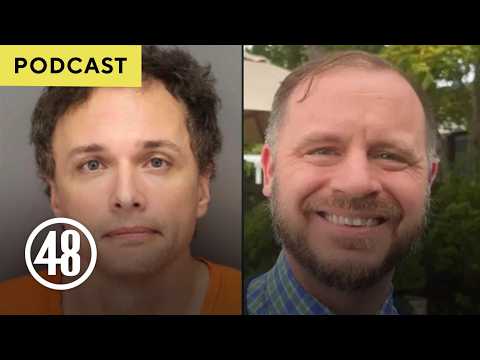
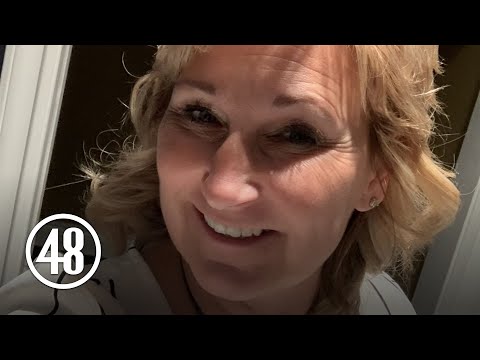
Verdict Soon in the Larry Millete Trial | Case by Case

Episode Description
The prosecution and defense have rested their cases. Jurors heard testimony about Maya Millete's secret relationship, a hidden Instagram account, Larry Millete's communications with an online spiritual practitioner. Prosecutors also questioned witnesses about the digital evidence they say helps reconstruct the events surrounding Maya's disappearance and where investigators searched for her. CBS News legal analyst Caroline Polisi and "48 Hours" consultant Herman Weisberg discuss the significance of witness testimony for the outcome of this trial.
Crime. Social justice. Impact. "48 Hours" investigates the most intriguing crime and justice cases that touch on all areas of the human experience including greed and passion. "48 Hours," which premiered in 1988, has developed a rich history of original reporting and impact journalism that has helped exonerate wrongly convicted people, caused cold cases to be reopened and solved, and along the way changed lives.
For video licensing inquiries, contact: [email protected]
Read the full transcriptHide the full transcript
- An online spell caster, a secret Instagram account, and a trail of digital evidence that offers new insight
- into Maya Millete's life. She's not been seen since January 2021, and her husband Larry is now on trial
- for her murder in Chula Vista, California. He pleaded not guilty to killing Maya.
- Welcome to 48 Hours Case by Case. I'm CBS News legal analyst and criminal defense attorney Caroline Polisi.
- The Larry Millete murder trial is now in its seventh week. The prosecution has rested its case. The defense did the
- same one day later. Since 48 Hours last checked in on this case, jurors heard from key witnesses
- like one of those spell casters Larry Millete emailed, as well as the man that Maya Millete had been seeing
- romantically. The question that needs to be answered in court, what happened to the
- 39-year-old mother of three, Maya Millete, after she disappeared from her Chula Vista home in January 2021?
- Her body has never been found. Joining me today is 48 Hours consultant Herman Weisberg, a private investigator
- and managing director of Sage Intelligence Group, where among many responsibilities he oversees
- investigations in litigation. Herman, it's so exciting to have you here. In fact, our paths have crossed
- that way back when when I was a criminal defense attorney. >> Oh, first of all, thanks for having me.
- It's great to see you again and be working with you again, Caroline. Um before forming Sage, I spent 20 years
- in the NYPD as a detective. My last 10, I was lucky enough to work uh in the Manhattan District Attorney's
- Office. I led criminal and financial investigations. >> Yeah, as I as I told our producers,
- you're you're the real deal. So, we're lucky to have you today. >> Thanks. >> Before we get into the latest details, a
- reminder that we've covered the trial in two previous episodes. So, if you want that earlier background, check out our
- Case by Case podcast feed and 48 Hours YouTube channel. So, Herman, what makes this case so interesting to you?
- >> Mostly the challenge, you know, this is a very pretty rare to have a no body case, as they say.
- Uh you know, it's it's hard enough to prosecute a murder, uh but this it has significant challenges, you know,
- starting with there's no cause of death, for example. >> I mean, no body cases are notoriously
- difficult, right, for prosecutors to to handle. So, in our last episode on this case, there was a lot of discussion of
- Jamie Laird, the man who's admitted to having an affair with Maya at the time of her disappearance. Juries not only
- heard from Laird, but also his ex-wife Patricia, whose testimony we'll we'll get into in a little bit, but let's
- break down JB Laird's time on the stand, Herman. >> Jamie's testimony gave jurors a much
- more intimate look at Maya's life in the months before she disappeared. Uh Jamie
- testified that he met Maya while they were working together as civilian employees supporting the Navy. He said
- what started as a friendship eventually turned romantic, even though both were married. He said Maya confided him about
- problems in her marriage. He testified that she described Larry as controlling. Said she wasn't even allowed to drive to
- work alone, and she shared concerns that he was tracking her movements. He also told jurors that she was making
- plans for a future outside the marriage. >> On the stand, Jamie even shared that
- Maya's code name for Larry was V in their secret communications, which he says was in reference to the evil wizard
- Voldemort from Harry Potter. >> Yeah, I had to look that up. I never read or saw Harry Potter movies. But in
- looking it up, it was interesting though. He was noted as "You Know Who" was one way to describe
- Voldemort, or "The Man Who Shall Not Be Named", or "The Name That Shall Not Be Mentioned", or something. So, that
- that's a pretty cute uh nickname or code name they came up with there. >> Yeah, absolutely. Um and you know, by
- all accounts the prosecution's witnesses' testimonies allege that he he was only growing more and more
- controlling in the months leading up to her disappearance. Uh, Jamie's testimony was really
- significant because jurors finally heard directly from someone who perhaps had a
- little more insight into Maya's private life than anyone really. >> Another detail that really stood out was
- where Jamie was when Maya was last seen alive. He testified that he was at a hospital while his wife was giving birth
- to their child. Though the judge said neither the prosecution nor the defense could dig into this, noting Laird could
- not be treated as a potential suspect given no direct evidence tying him to her alleged murder.
- >> Jurors also heard that Jamie wasn't initially truthful with investigators about the affair. Herman, can you talk
- about some of the cross-examination? >> Yeah, we we saw the defense pointed out Jamie's initial lies to his wife, his
- bosses, and the multiple law enforcement agencies. Uh, Jamie acknowledged he lied because
- he was afraid of the consequences for his marriage, and he didn't want their affair to coming out.
- >> Yeah. And that's a common fact pattern we see sometimes in cases like this. Um,
- Herman, as a former detective, how do investigators and and ultimately jurors evaluate a witness who admits they
- weren't truthful at first? And how often do you come across witnesses like this who initially lie?
- >> In my experience, it's not unusual at all for witnesses to withhold embarrassing or deeply personal
- information when they're first interviewed. Uh, you know, as investigators, we don't
- automatically dismiss somebody just because they were they weren't forthcoming initially. You know, there's
- a process to this. The next question becomes, once they begin cooperating, is their account
- corroborated by other evidence? It can certainly be a barrier in a trial for a jury to get around, um, and
- defense counsel may try to poke holes, and prosecutors may try to use that to villainize.
- It's pretty common, though. >> Yeah, and as we often say, as defense attorneys, you know, you
- can't choose your facts and you can't choose your witnesses. So, you just, you know, use what what you've got and hope
- that the jury chooses your side. So, prosecutors had already established the affair through Jamie's testimony, but
- they called Patricia Laird, Jamie's ex-wife, as a witness a few days after his testimony. What did Patricia's
- testimony add? >> Well, Patricia corroborated parts of Jamie's testimony, including that he was
- at the hospital with Patricia as she gave birth when Maya went missing. But Patricia added another twist to this
- case. After Larry learned about Maya's affair, but before she went missing, Patricia testified she started getting
- repeated phone calls from Larry. >> Yeah, what do we know about those calls? >> Well, she said Larry first contacted her
- at work, identifying himself as somebody from the Naval Hospital, which initially, of course, made Patricia
- think something had happened to Jamie. So, from an investigative standpoint, testimony like that helps establish
- another piece of the timeline and Larry's reaction after discovering their relationship.
- Interestingly, according to reports of the defense cross-examination of Patricia Laird, they asked about Larry's
- demeanor during the calls and if he was threatening. She noted that he was polite, never
- menacing, and would repeatedly apologize for disturbing her. >> Yeah, but but still, Patricia noted the
- the frequency of his calls, which the prosecution may want to show sort of as a window into his state of mind.
- >> She also noted that the calls from Larry ceased after Maya went missing. >> Yeah, overall, Patricia's testimony
- wasn't really about proving the affair. It seemed to be more about helping jurors understand how Larry reacted once
- he believed Maya was involved with someone else. Patricia said that Larry told her Jamie was cheating on her with
- his wife, and that by early 2020, it felt like he was calling her weekly. So much so that she actually blocked his
- number. Uh but Larry would actually find other numbers to reach her, and on the stand, according to our San Diego
- station, she listed phone numbers linked with Larry that included his children's
- cell phones and even the phone number of his aunt. >> Yeah, this testimony definitely suggests
- a pattern of behavior. Betraying him not as a guy who takes hints very well. I've seen it in other
- cases where it could be seen as really harassment. Just repeated calling like this.
- >> So, through Jamie and Patricia, jurors heard about the affair and the impact it
- had on Maya's marriage. But in their case, prosecutors also introduced digital evidence they say corroborates
- much of that testimony. Before Jamie and Patricia Laird took the stand, investigator Matthew Greenly with the
- San Diego County District Attorney's Office testified on how they uncovered a private Instagram account connected to
- Maya. Prosecutors say Maya used it to communicate secretly with Jamie. According to the reports, Greenly said
- that the messages between them were sexual, and {quote} that they were very emotional.
- In Jamie's testimony on their correspondence within the Instagram account, he said,
- {quote} We were always working together to cover up the affair. There was no topic off-limits.
- >> Yeah, this is this is very important information here. It's contemporaneous. It's unfiltered. And investigators can
- can use this to compare against text phone records and witness testimony. >> Here, the prosecution wasn't just asking
- jurors to believe what Jamie said Maya told him, but they were also pointing jurors to Maya's own words, including
- screenshots of text conversations with Larry that she'd screenshot into her private Instagram DMs. Like this one
- from August 2020, where Maya said to Larry, {quote} I can't wait to get away from this toxicity that you create.
- >> And and investigator Greenley also shared contents of Maya's emails that they obtained that through a search
- warrant where she also she was writing herself almost like a journal like messages where she described her plans
- for the future without Larry. Plans that included graduate school and they also found that she had been making
- appointments with a divorce attorney. For the prosecutors this this painted a consistent picture of where Maya
- believed her life was headed. >> Yeah. Prosecutors questioned Courtney Nixon, one of Maya's closest friends
- from work, who described hearing Maya in their Facebook messages become increasingly anxious over the impact on
- their children of leaving Larry. >> Courtney testified that Larry went onto Maya's Facebook, found those messages
- between them and then blocked Courtney's ability to to communicate with Maya on Facebook. You know,
- we know this was early 2020. The height of the pandemic. People were really relying on social media back then
- as like a lifeline to their friends and family. Courtney and and Maya eventually got
- around this moving their conversation to Instagram, but Larry somehow also accessed Maya's account there.
- According to the prosecution and messaged Courtney, you know, on Instagram urging her to speak in his
- favor. >> Yeah, you know, and again like this testimony just suggests to me this
- increasingly escalating behavior, this controlling behavior. Um and then of course Herman, there was
- the spell caster that Larry had been emailing, perhaps what this case is most well known for because it it it just
- seems so unbelievable. Um how often have you come across spell casters in your work, Herman?
- >> I remember I took the homicide course in the NYPD and there was a couple of hours
- dedicated to the occult. It was called occult training. >> Wow, I I certainly have never come across it in
- any of my work. Um but you know, it's one of the things about this case that is so sort of eye-popping and and and
- catching for really everybody. Um, so we heard from Frank Peavy, and while much of the media has referred to him as
- a spell caster, on the stand he described his work as a spiritual assistance. Uh, prosecutors say Larry
- sought him out online in October of 2020 in the hopes of repairing the relationship with Maya. Herman, what
- else did we learn? >> So, interesting, uh, jurors heard that Larry Millete sent Peavy a flood of messages. There were
- days when he was sending more than two dozen brief messages in quick succession.
- And Peavy described Larry as when he used the exact words, "Manic, desperate, and obsessive."
- And eventually, Peavy blocked Larry because of the volume of communication. >> Yeah.
- >> So, you're seeing, uh, you know, definitely a a recurring theme here. >> Yeah, sounds sounds familiar. Um,
- obviously, you can't help but draw those parallels to Patricia Millete's testimony, where she described blocking
- those calls from Larry as they escalated. It is important to note that in the defense's cross-examination of
- Peavy, he acknowledged that Larry Millete had never asked for Maya to be killed or have her vanish.
- >> Yeah, that's right. But because this is a no body case, these little behavioral details hold a
- lot of weight. They They help the jury understand the relationship between this couple, and also to reconstruct events.
- Investigators begin looking at every piece of physical, digital, forensic evidence that they can gather to either
- support or challenge their theory of what happened. >> Yeah, and you know, one recurring theme
- we've seen throughout this trial has been Maya's phone. Investigators testified that they never recovered it,
- but they spent years trying to reconstruct her movements through the digital evidence that she left behind.
- Herman, how significant is a missing phone in a homicide investigation? >> Oh, it's it's huge. Uh I mean, a phone
- they tell investigators an incredible amount of what's going on in our lives. And when a phone can't be recovered,
- investigators have to work backwards. They have to like reverse engineer other digital evidence, phone records,
- surveillance, and witness testimony to try to fill in these gaps. >> And and just this week, a cell phone
- record specialist took the stand to present a timeline of Maya's last phone activity.
- Turns out that on the night she disappeared, he testified that she texted her family about a trailer and a
- motorcycle before all communications suddenly ceased at 1:25 a.m. >> The data specialist timeline also
- revealed Larry's phone activity on the day Maya disappeared, including the 12 hours that he was unreachable.
- >> Yeah, and digital evidence wasn't the only way prosecutors tried to reconstruct Maya's final days. This
- week, jurors also heard testimony about the family's Lexus SUV as prosecutors worked to reconstruct what happened the
- day after Maya disappeared. A district attorney's investigator testified that by analyzing the SUV's service history,
- odometer readings, and cell phone records, he identified approximately 444 miles of travel that couldn't be fully
- accounted for. His analysis led him to focus on a remote area near the California-Arizona
- border, which is an area that the Millete family had visited before. He testified investigators searched that
- region three different times for Maya, but never found her body. >> Jurors also heard that the search
- vehicles returned with scratches after driving through that rugged terrain. Testimony that really echoed earlier
- evidence that Larry asked a neighbor to repair scratches on his Lexus a couple days after Maya disappeared.
- >> Cars can become almost as important as phones in a case like this. By itself,
- the mileage really doesn't prove anything, but when you combine it with digital evidence, witness testimony, and
- timelines, it can help investigators support or eliminate possible scenarios, I think.
- >> Jury's also heard prosecutors introduce border crossing records and and passport
- evidence. A border patrol officer testified that Maya's passport had expired in November of 2020 and was
- never renewed. In fact, there's no record of her leaving the country since 2019. So, this really challenges the
- idea that Maya abandoned her family to live elsewhere or went off the grid out of the US.
- >> Yeah, that that's pretty much a standard part of of a missing person's investigation. Detectives really don't
- begin with a conclusion. They test different possibilities. It'd be bad if if you started with one conclusion and
- tried to work it from there. You you really have to keep an open mind. You know, did the person leave
- voluntarily? Did they travel off? And did they use their passport? You work to eliminate reasonable alternative
- explanations before settling on a theory of the case. >> Right. And and you know, because this is
- a no body case, we still don't necessarily know if the prosecutors are going to put forth their own theory of
- just how Maya was killed or where her remains may be in their closing statements. And they don't have to,
- right? So, as long as the jury unanimously agrees on guilt beyond a reasonable doubt, they don't have to
- agree on the cause of death, um which is which is interesting. Jury's also heard
- testimony from an FBI scientist about evidence recovered during searches of the Millete home, including this file
- containing plant material that was tested. The scientist confirmed it was a type of
- weed called hairy fleabane, but not poisonous hemlock. Herman, some jurors may hear testimony
- like that and wonder why prosecutors spend time on evidence that may not ultimately prove anything.
- >> I think that's the tough part. That's the tedious part of homicide investigations cuz investigators don't
- know at the outset what's going to matter and what's not going to matter. Every single item
- recovered gets examined, you know, bag it and tag it you as you've seen on TV and and I've you and I have seen in real
- life, Caroline. Uh some evidence becomes central to the case, other evidence simply helps
- investigators rule things out and that goes into some closet somewhere in a safe or in a property room. Um
- but it's part of building a thorough homicide investigation, especially in a case where there's no body and no single
- piece of evidence tells the entire story, you know, you you really you're throwing a lot of stuff up against the
- wall here and hoping it sticks. >> Yeah. This is This is a big circumstantial case. Not to say that uh
- circumstantial evidence can't be incredibly powerful. The prosecution rested their case on
- Tuesday. The defense rested theirs on Wednesday. Herman, what were you watching for?
- >> During opening statements, the the defense brought up the fact that Jamie Laird was not thoroughly investigated,
- but as you know and as we mentioned earlier, that the judge banned the defense from suggesting any other
- suspects. In opening statements, the defense also stated that there's no clear evidence
- that a murder even occurred. I was curious how they negate the evidence that the prosecution has brought
- forward. You know, all they really need is reasonable doubt here. >> Yeah. Um but of course, one of the big
- questions, would Larry Millete testify in his own defense? Obviously, legally, he had an absolute right not to testify
- and if he chose not to, uh jurors couldn't hold that against him. He didn't testify in this case. I mean, the
- conventional wisdom is you don't put your client up there, opens the door to a whole can of worms, the prosecution
- can then cross-examine the defendant, uh you know, potentially getting him or her to
- really trip up or, you know, not be consistent in their prior statements. Um while the prosecution called witnesses
- for weeks, the defense just took one day before resting its case ahead of the holiday weekend. And all signs point to
- closing arguments next week followed by jury deliberations. >> Uh you know, I want to tell you about
- that, Caroline. >> Oh. How often does that happen? That the defense just taking one day, like what's
- the strategy behind that? >> Yeah, all the time. It happen It happens all the time. You know, as a defense
- attorney, you want to, you know, definitely let the prosecution know and let the judge know that you have a
- potential case you may put on. You got your witnesses lined up. You do that fullsome research. But really, this is a
- game day decision. I think people don't really understand that, you know, new issues are coming up all the time in
- trial. And so, as a defense attorney, you're you're looking at what the prosecution presents. And in closings,
- you know, you want to point to all of those those doubts there. And we'll obviously be staying tuned to see what
- happens next. Herman, thank you so much for joining me today. >> Thank you. Thanks for having me. Felt
- like the old days there. >> So, make sure to rate and review 48 Hours case by case and let us know which
- cases you're following in your podcast reviews and comments.
Brief Summary
Larry Millete's trial reveals troubling details about his marriage to Maya Millete, who disappeared in 2021, amid witness testimonies and digital evidence.
Key points
- The Larry Millete Murder Trial. Larry Millete is on trial for the murder of his wife, Maya, who disappeared in January 2021.
- Testimony from Jamie Laird. Jamie Laird, Maya's romantic partner, testified about her controlling marriage and plans for the future.
- Digital Evidence Uncovered. Investigators found a private Instagram account linked to Maya, revealing her secret communications.
- Defense Strategy Unveiled. The defense took just one day to present their case, a bold move in court.
Episode highlights
- The Larry Millete Murder TrialLarry Millete is on trial for the murder of his wife, Maya, who disappeared in January 2021.“The question that needs to be answered in court: what happened to Maya?”0:56Jul 28, 2026
- Testimony from Jamie LairdJamie Laird, Maya's romantic partner, testified about her controlling marriage and plans for the future.“Maya described Larry as controlling.”3:07Jul 28, 2026
- Digital Evidence UncoveredInvestigators found a private Instagram account linked to Maya, revealing her secret communications.“We were always working together to cover up the affair.”9:00Jul 28, 2026
- Defense Strategy UnveiledThe defense took just one day to present their case, a bold move in court.“This is a game day decision.”19:37Jul 28, 2026