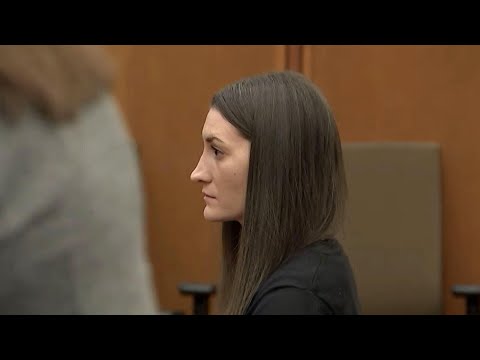
Lindsay Clancy trial: Patrick Clancy takes the stand | Case by Case | "48 Hours" Podcast
Episode Description
Three years after the deaths of Cora, Dawson and Callan Clancy, the trial of their mother Lindsay is underway. This week, CBS News legal analyst Caroline Polisi and CBS News correspondent Shanelle Kaul take listeners inside the courtroom for jury selection, opening statements, and the highly anticipated testimony of her now ex-husband Patrick Clancy. They examine the prosecution's claim that Lindsay Clancy carefully planned the killings and the defense's contention that postpartum psychosis left her unable to control her actions.
The cases everyone's talking about, explained as they happen. "Case by Case" is a weekly update on the biggest criminal stories unfolding now. New episodes every Friday, available wherever you watch or listen to podcasts. You can also get ad-free access to 48 Hours podcasts by subscribing to 48 Hours+ at 48HoursPodcasts.com.
Crime. Social justice. Impact. "48 Hours" investigates the most intriguing crime and justice cases that touch on all areas of the human experience including greed and passion. "48 Hours," which premiered in 1988, has developed a rich history of original reporting and impact journalism that has helped exonerate wrongly convicted people, caused cold cases to be reopened and solved, and along the way changed lives.
For video licensing inquiries, contact: [email protected]
Read the full transcriptHide the full transcript
- As a warning, some of this content contains graphic and disturbing details, including discussions of suicide and the
- killing of children. So, please listen or watch with care. We'll have resources at the end of the episode.
- Cory was into princesses and um she had a lot of friends [snorts] and um [sighs]
- she just liked taking care of people >> and showing you um [snorts] correct? >> Yes. Um, what kind of things was Dawson
- interested in? [sighs] >> Using firefighters and trucks [sighs] and um, he liked Paw Patrol.
- [sighs] Um, exhibit 11. [clears throat] >> He's only 8 months old. Correct. >> Correct. Um, did he have any of the
- sort? >> He's just a happy baby. >> Happy baby. >> That's Patrick Clancy testifying on
- Monday, July 27th, in the murder trial of his ex-wife, Lindseay Clancy. The Ducksberry, Massachusetts mother is
- charged with three counts of first-degree murder in the January 2023 deaths of the couple's children,
- 5-year-old Kora, 3-year-old Dawson, and 8-month-old Ken. There is no dispute that Lindsay strangled and killed their
- three children at the family's home after sending Patrick out for errands. What the jury has to decide is if
- Lindsay will be found guilty of murder or if she shouldn't be held criminally responsible for those killings due to
- her defense of postpartum psychosis. Lindsay faces a penalty of life imprisonment without parole if
- convicted. But just to be clear, even if she is found not criminally responsible,
- she will be civily committed to a state mental health facility where she would remain until doctors and the court
- determine that she's no longer a danger, and that could last indefinitely. I'm CBS News legal analyst and criminal
- defense attorney Caroline Pissy, and this is Casey by Case. Joining me today is CBS News correspondent Chanel Call,
- who's been reporting from the trial in person. Thank you so much for joining us today, Chanel. I've been following your
- coverage on the CBS Evening News and all over our social feeds. It's it's just wonderful to have you here.
- >> Thanks so much, Caroline. I appreciate that. Um I this is actually my first time in Plymouth, Massachusetts. So, I'm
- coming to you from my hotel room today because it's actually raining outside. Um and so we couldn't come to you from
- outside the courthouse. But yeah, it's been a pretty wild and heavy week here. >> So, Chanel, I'm eager to hear your
- insights from inside the courtroom. But before we dive in, I just want to remind
- our audience that Case by Casease covered the events leading up to this trial in a previous episode. And if you
- haven't listened or watched it yet, you can find the Lindsey Clansancy case, a family tragedy on trial, wherever you
- find your podcasts. So in that episode, we went deeper into the definition and discussion around postpartum psychosis
- and depression. But just to recap, postpartum psychosis is a mental health condition that can occur soon after
- giving birth. And it's categorized by the medical community as a mental health emergency that can cause hallucinations,
- delusions, paranoia, and other behavioral changes. >> Yeah. And Caroline, I don't know about
- you, but I had never even heard of postpartum psychosis or PPP um until this week. You know, I'm not blessed
- with being a mother just yet, but you know, I've had friends and family members that have gone through
- postpartum depression or baby blues and I've heard about that, but I think what I learned this week is that is very
- different than postpartum psychosis. Like psychosis is something that is very rare, very serious, but look, it is
- preventable. It is treatable. And a lot of the medical experts that we talked to
- this week were saying that is something that you really need inpatient care for.
- >> Yeah, absolutely. So, on that last episode, the Clancy case generated a lot of debate from our audience. I was just
- looking through some of the comments and there are some very strong opinions about this case.
- >> I mean, lots of hot takes, right, Caroline? This is a complicated case. It's also a really emotional case and
- maybe because a lot of us have a certain perception or idea of the role uh mothers should play in society and our
- families, you know, people feel really strongly about this. A lot of people sharing their own experience with
- postpartum depression or even postpartum psychosis. And then there's other people
- who have the other perspective here that agree with the prosecution, Caroline. People that think that this had to be
- something that was premeditated. This had to be something that was calculated and they believe she should be held
- criminally liable. >> Yeah. This this has just uh opened up a whole discussion around women's health
- care, uh mental health, things of that nature. And and you're right. I mean, the comments sections, it's a lot of
- women, a lot of mothers having very strong opinions. Um, I want to get into detail, Chanel, with you about this
- really intense case. So, the trial kicked off with the jury selection on Monday, July 20th, over 3 years since
- the killings. And for such a tragic and and well publicized case, I mean, I would imagine it'd be really hard
- finding jurors who could remain impartial. >> Yeah, absolutely, Caroline. you know,
- this was a high-profile case, not just here in Massachusetts, but across the country. So, I think it was always going
- to be a challenge to find uh jurors who were not going to have an opinion, who were not going to come into this with
- any kind of bias, especially when it comes to women. When it comes to female jurors, there were several women who
- spoke about how being a mother was going to make it difficult for them to come into this and see some of the evidence
- and look at that evidence fairly. There was even one woman who left the courtroom in tears. You know, not only
- was it difficult to seat this jury because of the sensitive nature of this evidence, but I actually noticed, you
- know, the judge, he instructed the jury to really try their best to disregard any intense feelings they may have of,
- you know, like sympathy or emotion that the evidence might produce in them and really use it only for evidentiary
- value. But it's just, you know, it's difficult. It's difficult to hear. It's difficult to experience and it's
- difficult to see. >> Yeah. Yeah, and we sort of saw that play out in day two of the trial. You know,
- prosecutors were there. They played that 911 call that Patrick had made um to police the night that he came home, the
- night he found that his children were killed. Um and before that happened, that's exactly what the judge did,
- right? What you mentioned where they're instructing the jury to listen to this call and to just consider the facts and
- set aside the emotional value um of that 911 call. But I have to say, you know, I
- was in the courtroom, Caroline. I heard this call. This was a really chilling call. I can't imagine how difficult it
- would be to be sitting on that jury and, you know, be tasked with separating the
- emotion from the facts here. >> Yeah. I mean, I I I can't even imagine it. Um, but let's let's talk about
- opening statements. They began this week and what it was like inside that courtroom.
- >> Well, the courtroom was was full. There were people in Lindsay's family, her sister, her parents were there. Uh there
- was three rows of the media as well. And you know, there's lots of people from the community who showed up because
- there's just so much public interest in this case. Something interesting that I noticed, Caroline, was like 90% of
- people from the community on day one that showed up for day one of this trial were actually women.
- >> Let's play a portion of those opening statements. So, you'll hear from the prosecution first and and then the
- defense. >> This is not a case about the Lindsay Clansancy that sits before you today.
- This case is about the Lindsay Clancy on January 24th, 2023. At the time of the crimes,
- this was not a woman in the throws of psychosis on January 24th, 2023. This was a woman who acted intentionally,
- rationally, and swiftly to accomplish a very specific goal to kill. This is a woman
- that did not get the medication, did not get the medical treatment that she so deserved. This is a woman that
- was suffering from psychosis. At the time that she went down to that basement, she had no motive. She loved her
- children. She intended to kill herself. She didn't fake that. >> So, Caroline, what's happening here is
- you're hearing the prosecution sort of paint this picture of Lindsay that is somebody who thought this out. Someone
- who um was very calculated, was very deliberate, someone with a sound mind. That's really the key word here. But
- then you have the defense telling a very different story. Um a story, Caroline, about someone who was experiencing
- really serious mental illness in the months leading up to the moment that she killed her her three children. So, the
- prosecution's opening was really foreshadowing how they later dealt with Patrick Clancy on the stand and the
- types of questions they were going to ask him, like if Lindsay showed any signs of having a mental breakdown.
- >> Well, look, I think that what the prosecution was trying to do from day one was uh basically tell a story of a
- woman who felt like life was too overwhelming. Uh she was anxious about going to work apparently. And uh there
- were a lot of references to her character uh in terms of being too controlling and that's why she had to
- choose to do this. And remember, Lindsay is there, Caroline. She's there in the room during these opening statements.
- She was quite visibly emotional during some of that. She even broke down into tears at one point.
- >> Now, the defense on the other hand emphasized that she really had no motive and that she loved her children, that
- she repeatedly sought treatment for her mental health struggles. And the defense
- is arguing that Lindseay Clancy should not be held criminally responsible by reason of mental disease or defect. And
- in Massachusetts, the law not only considers whether Lindsay knew what she was doing was wrong, but also if she was
- able to act on that understanding at the time. So here, this test is not only was
- she able to tell the difference between right from wrong, but also could she control her own actions.
- >> That's what's so interesting about this story, right? And you know this because
- you have a legal background, but of course, um, the burden of proof here is on the prosecutors. So, you know, we're
- hearing about her mental health. We're seeing that a lot of it in in the last few months before the killing was pretty
- well documented. And, you know, in fact, we heard from her ex-husband, Patrick Clancy, testifying this week that they
- tried multiple times, he said, to try to get treatment. They even checked her into a hospital. She went to the ER. Um,
- she was prescribed all of these different medications. And yet, here we are. Yeah. And you know, from from a
- tactical standpoint, I think the prosecution, you know, can certainly concede that she was having mental
- health struggles. They just have to show that she was not in a state of psychosis
- where she couldn't recognize what she was doing was wrong or that she couldn't conform her conduct to the law. So, you
- know, uh that's the burden, you're right, is on the prosecution, not the defense here.
- >> Yeah. And look, they have actually conceded that look, this is someone who we agree struggled with their mental
- health, but you know, my sense here, Caroline, is like the argument from their perspective is hinging on the idea
- that she wasn't in a state of psychosis on the day that she killed her children.
- And we're seeing this play out in the trial because even though we're in early days, we've seen them try to hammer this
- argument home three times. We heard um Patrick Clansancy taking the stand and being questioned by prosecutors and he
- had actually said that in his view Lindsay was having one of the best days um on the day that this happened that
- she killed her three children. And then on Wednesday we also heard um from someone who was a manager at CBS saying
- that well when I talked to Lindsay on the phone earlier that day she seemed to sound normal. Um they also brought uh a
- host from the restaurant 3B which is where Patrick picked up takeout dinner from that night as well. while he was
- gone from the house. And the host said, "Yes, I also took Lindsay's order on the
- phone. She seemed to sound normal." So, I think that that's what they're trying to prove is like this is someone who was
- fine on the day [music] of this killing. So, as we noted, the prosecution did call Patrick as their first witness.
- And, you know, people have been pontificating about this, what this testimony was going to be. It was really
- highly anticipated because he, you know, had the firsthand experience living with
- Lindsay leading up to these killings and, you know, he was obviously the first on the scene. What was the
- reaction in the courtroom when he entered? >> Yeah, Caroline, I think there was so
- much natural curiosity about who this person is, what they're going to say on the stand, and one of the big reasons
- for that is because we saw what he said just a few days after his children were killed. He put out this statement um on
- a GoFundMe page where he actually asked people to forgive Lindsay for what she did. And I think that caught a lot of
- people offguard. And I think it also proves this case is so much more complicated, um so much more nuanced and
- probably way less cut and dry than people think it is. And when he was on the stand, Caroline, I have to say he
- was pretty calm. He was pretty measured. You know, there were moments where he got emotional. He took some heavy deep
- breaths, especially when he talked about, you know, the the nice and the rosy memories of his children. Yeah. I
- mean, his testimony was was just painful to watch. I noticed he was like taking these deep intentional breaths. Like he
- was really trying to calm himself down. Like it was taking every ounce of his energy to sort of keep it together up
- there. I mean, I think it's likely that this is the first time he's seeing a lot
- of this excruciating evidence. You know, he has been, as you noted, really historically sympathetic and and
- supportive of Lindsay. I remember that really extensive interview he gave to the New Yorker in 2024. He said, "I
- wasn't married to a monster. I was married to someone who got sick." >> And you know, given that he's already
- been pretty public about how he feels about Lindsay's role in all this, I just wonder like because you come from this
- with a legal perspective, why do you think the prosecution would have asked him to testify first?
- >> Yeah, I mean, I've been asking myself that as well because it was sort of bumpy in the beginning there. you could
- tell it was a little contentious. Like I said, in some ways he's a hostile witness, right? It seems pretty clear
- which side he falls on. Um, but I think from the prosecution's perspective, you know, he was he was first on the scene
- of the killings and and you know, a lot of times in these types of cases, I think the prosecution feels it's it's
- best to lay out a timeline um chronologically of the events of that evening so that they're laying the
- foundation of what happened. I I also think it could be they want to get this really emotional testimony out of the
- way from the beginning like we we were talking about before. Um that way it's not like as fresh in the juror's minds
- when they go back to that deliberation room. So um you know since the January 2023 killings, a lot of people want to
- know what's the status of Patrick and Lindsay's relationship today. >> Yeah, that's a great question. I mean we
- know that Patrick and Lindsay got divorced after their children's death. Uh Patrick later got remarried. We also
- understand that he moved to New York City after all this happened. >> Yeah. I mean I I noticed he was wearing
- a wedding ring during his testimony. >> Um so the prosecution questioned him extensively about Lindsay's demeanor
- after giving birth to to to each child and her pattern sort of of becoming more anxious as she neared her return to work
- um and following that that maternity leave. Just as a reminder, you know, Lindsay worked as a labor and delivery
- nurse at Mass Gen. I mean, one of the things that came out in testimony is their firstborn daughter was named after
- the first baby that Lindsay delivered at Mass Jen. Yeah. Um, you know, they also
- asked Patrick about Lindsay expressing thoughts of harming the children, and I want to play a clip of some of that
- exchange. How many times did she tell you this that she had thoughts of harming the kids?
- A >> couple times. >> And was that a couple times over the course of a night or two in December?
- >> Yeah. >> And as a result of her telling you this that she had thoughts of harming the
- kids, what did you do? >> Um her parents came up and um I think I asked her at some point, you know, do
- you feel like you need to be kept away from them? And she said no. And then, you know, it was very confusing because
- a minute later she was making them lunch or playing with them or, you know, getting them ready for bed or whatever
- it was. So, >> so it was confusing in that she wasn't physically harming them at the time, but
- was having had these thoughts. Is that what you're saying? >> Right. I never saw Lindsay harm the
- kids. So Caroline, I think this this exchange is so interesting because that sort of
- back and forth is exactly what doctors that I've been speaking with this week have described is what women that are
- going through postpartum psychosis experience. You know, you can be fine one moment, the next moment you're
- hearing voices, you have those intrusive thoughts. And a lot of Patrick's testimony this week has actually echoed
- that. In fact, uh, just on Wednesday during day two of the trial, he talked about how he's left the kids alone with
- Lindsay, you know, several times, even overnight in the weeks leading up to the killings.
- >> Yeah. Yeah. They they also asked him if he was aware that Lindsay only took a
- small amount of the pills prescribed by these, you know, various medical professionals. This, you know, I think
- is a really important point because the defense is arguing that she was dangerously overmedicated and and I
- thought the defense did a really good rebuttal to this picture that the prosecution was painting that she didn't
- take her meds as prescribed. Patrick pushed back really hard saying um she did take the medication as prescribed
- and that you know the pill bottles that the prosecution was referring to that only had you know a few pills taken out
- of them that wasn't the entirety of the pills that she was prescribed. In fact, there was this like intense moment in
- court where the defense attorney, Kevin Readington, came up to Patrick and, you know, one by one showed him some empty
- uh uh prescription bottles that were in Lindsay's bedside table as if to say, well, here are multiple bottles of um
- prescriptions that that she did take. They're they're empty, right? So, I think that really poked some holes in in
- the prosecution's sort of theory and and you know, jurors don't like it when they
- feel like either they've been lied to or um they're not getting the full story. So, I I think that could have done some
- damage to their case. Well, I think this whole idea of which medications and how much of it she was
- on is going to be a big part of this trial, especially if the defense is trying to say that this is someone who
- was overmedicated. Um, you know, Patrick was asked a lot about this while he was
- on the stand this week and and he said it's true. Yes, she was prescribed a long list of medications, but he really
- made a note of saying uh she wasn't taking all of them. There were over a dozen, you know, Caroline, but he said
- multiple times, this this is not a situation where she was taking over a dozen medications at any given time. As
- for which medication she was taking and how they may have interacted with each other, that's going to be something
- that, you know, hopefully we learn more about because I'm sure we're going to hear from doctors and other healthcare
- providers who are going to take the stand later on in this trial. And >> and one nuance I think that came out is
- it's not necessarily their argument that she was over medicated so much as she was on the wrong medications. Right. We
- we heard in that opening like perhaps she was misdiagnosed and you know she wasn't feeling well on some of these
- medications and so they were really like trying to get her to the right medication. Part of it is like she
- didn't actually get a diagnosis, right? Like the defense is arguing that yes, she was suffering from PPP, but you
- know, something that that some of the doctors I've been speaking to this week have have made a point of saying is like
- it doesn't it doesn't appear as though a lot of healthcare providers are equipped
- with enough advanced training to even see some of the red flags sometimes. So, she didn't get a clear diagnosis. Yes,
- we need to hear from experts because there's there's so much out there, especially I mean on social media, this
- back and forth about whether or not it was appropriate for her to been prescribed so many different
- medications. But I think we're getting a clearer picture and an outline of the timeline of which medications she was on
- and when. And we should also note that that both Lindsay and Patrick have civil suits against some of the healthc care
- providers in this case. Now, the prosecution also questioned Patrick about one instance in November
- of 2022 when Lindsay went to the hospital. >> And um why did she go to the uh Southshore Hospital that day?
- >> I believe that day it was because she basically went 48 hours without sleeping.
- >> And um was she having heart palpitations? >> I think so. Yeah. Were you aware that she had taken a weed
- gummy that day? >> Um, I don't recall. >> And are you aware that she didn't tell
- medical staff at the hospital when describing her symptoms and her medication that she left out that she
- had used marijuana? >> I wasn't with her, so I don't know what she talked about at the hospital. So, in
- their opening statements, the prosecution alleged that Lindsay manipulated her healthc care providers,
- sought quick and easy fixes, and really disengaged from treatment whenever she didn't like the plan. Was the
- prosecution trying to poke holes in Lindsay's credibility? Well, I mean, just remember here what the
- prosecution's job is is try to prove to jurors that Lindsay was of sound mind when this happened. That this was
- calculated. It was premeditated. So, this is a line of questioning that's going to be them trying to make a case
- to jurors that she withheld some information from some of her doctors. I will say though that a lot of the
- experts that I've been talking to are again saying this is a pretty hard thing to diagnose postpartum psychosis. You
- know, are there enough healthcare providers in this country that know enough about it to distinctively
- diagnose these cases and actually give people the care and the treatment they need before it's too late?
- >> Yeah. And then there was this moment when they asked Patrick if he was aware that Lindsay had taken selfies at the
- hospital one night when she was admitted. Let's play a clip. Were you aware um that that night um while at the
- hospital um Lindsay was taking selfies? >> Uh no. >> Yeah. And Caroline, this was no doubt a
- pretty jarring moment in court. Like you have this woman who was in the ER taking
- a selfie allegedly. um you know she'd been transferred to MLAN hospital which if you weren't familiar MLAN isn't just
- any hospital right I mean this is the country's one of the country's leading mental health facilities so there is
- someone here who is reportedly really suffering but also taking selfies uh that can that can be something that's
- confusing for jurors to digest. I will note it is not something interestingly that the defense circled back to at any
- point to try to iron out or explain um like Kevin Readington did on some of the other notes. So, we'll just have to see
- how this sits with those jurors. >> Yeah, I thought that was interesting, you know, from a defense standpoint, but
- um that that really struck out >> to me as well. >> Um on Wednesday, the 911 call that
- Patrick made the night of the killings was played in full for the jury, >> but Patrick had filed a motion asking
- the judge to keep that call private from the media and the general public. Right,
- Chanel? >> Yeah. So, what happened was after jury selection wrapped up and we knew who was
- going to be seated, um Patrick basically put in this request and the judge uh blessed essentially uh and and the asked
- was that they keep certain evidence private. So, you know, that graphic 911 call that was one thing. So, the jurors
- heard it um we the media heard it. Any community public members that were si sitting inside court, they got to hear
- it. But this is not something that we could replay, repurpose in any way. >> Yeah. and and Patrick was actually
- excused from the courtroom during that time. Um, but you were there in person to hear that 911 call along with the
- jurors. I mean [clears throat] I mean that that must have been just incredibly emotional. You could see
- Lindsay clutching her attorney's hand and at one point breaking down sobbing. I mean, what was it like in that
- courtroom? I mean, this was for sure the most traumatic and painful moment inside
- the court since this trial began. And yes, of course, we're in early days, but I think we all knew that we were going
- into day two of this trial. Um, expecting to hear that 911 call. You know, you hear the moment that Patrick
- finds Lindsay in the backyard when he gets home from running those errands. Then you hear him, you know, phony 911.
- He's describing some of the injuries to her neck, to her wrist. And then you also hear the moment when paramedics
- arrive to take care of her and to check on her and he says, you know, I'm gonna go down to the basement. I'm gonna check
- on the kids because he had asked her earlier and you can hear him asking on that call like where are the kids? And
- she says in the basement and I don't think in that moment, Caroline, that he realized that, you know, they'd been
- harmed. Perhaps maybe he thought she had she had put the kids in the basement while she tried to harm herself upstairs
- in the bedroom. And then that's when it gets really really chilling. You know, he's calling out to the kids. say
- obviously don't respond. And then you hear that moment where he sees them in the basement. And Caroline, I just have
- chills, you know, thinking about hearing that again right now. It It's like he's
- shrieking. He's wailing for several minutes on end as he's discovering one by one that they were in the basement
- strangled. You know, we hear the operator asking him, "What happened? What happened?" And eventually Patrick
- says, "She killed the kids." And you know, it it was incredibly difficult in the courtroom. A lot of people were
- visibly emotional. I was looking around. There were multiple people who broke down in tears, including, of course,
- Lindsay, because she was sitting in the courtroom during this call, and we'd heard through her lawyer, uh, that this
- was the first time she heard the call. >> That makes sense. I think it's likely the first time that
- both Patrick and Lindsay are hearing and seeing this evidence for the first time.
- So, the prosecution's questions, I mean, they had to they really went into detail
- about how Patrick found Kora Dawson and Ken's bodies in the basement. It It was harrowing. Um, that was definitely one
- of the most awful, gut-wrenching moments to hear from that night. What was Patrick's demeanor having having just to
- recount those events? >> I mean, I don't think you or I could imagine how difficult this would have to
- be. You lose your children and now here you are taking the stand recounting every single, you know, harrowing
- detail. You have this father that found out that his three children were killed in their family home by a wife who he
- says he loved very much. He says that he was so close to. You know, all of it is
- so unbelievable. And and now here he is reliving so much of that in court, in front of a jury, in front of the public,
- in front of the media. Um, in terms of his demeanor, Caroline, you know, I think he was pretty solemn. Um, he
- described, you know, how and where he found the children in a very matter-of-fact way. Um, I do think that
- he got more emotional when he talked about the children's personalities. You know, you play that clip right off the
- top of the podcast here when he talked about Kora loving princesses. You know, those were the moments, I think, where
- we saw a bit more emotion from him. And then we saw him return to the stand later on in the day. you know, he was
- cross-examined by the defense team and uh Lindsay's defense lawyer, Kevin Readington, who we've talked about, you
- know, he showed a bunch of photos um of Lindsay, of Kora, of Dawson uh from Lindsay's Facebook page. And at one
- point, he even brought this book and and the title here is Good Moms Have Scary Thoughts. Um and and he asked Patrick if
- he knew that that Lindsay had this book. And and Patrick had said that, you know,
- she had a lot of books on these kinds of topics. He's probably seen it. he said,
- but you know, didn't didn't recall exactly this one. But I'm just curious like, you know, in your perspective from
- from a legal strategy point of view, Caroline, why would Readington be pulling up books like this? What's the
- point here? >> Well, well, first, I mean, he's he's laying the foundation with those those
- photographs, right? She, by all accounts, was this loving mother. I think he's trying to show what a
- dedicated mom she was and then showing that she was having issues and that she was trying to get help. I mean, I I
- think along similar lines, he also asked Patrick if he had left Lindsay home alone with the kids to go out to things
- like brunch and trips and friends, and you know, he he did, right? So, let's let's play a clip of the defense's
- questioning here. >> So, for two days, two nights, a month and a week or so before she killed the children,
- she was home with the kids for two days. Is that right? >> Right. Fair to say that you also had your
- friends that you would do brunch with on occasion, Sundays or week nights or whenever go guys night type thing.
- >> Yeah. >> And you'd be out with your friends. If she wanted to kill the kids, she
- certainly could have done it that time when you're out. Right. >> In theory. >> So here, I mean, it looks like the
- defense's argument is that Lindsay couldn't have planned to harm those kids that night since there were, you know,
- plenty of opportunities for her to have done so before. Yeah, I mean I think that's the case that the defense team is
- trying to make here and it's something that Patrick Clansancy actually echoed many times as well. You know, he said
- that yes, she admitted to him that at times she was having those kinds of um graphic and intrusive thoughts and that
- he actually asked her when when she talked about um ideas of self harm or potentially even harming the children
- that he said, you know, Lindsay, should you be separated from the children? And she said no. And so, you know, given all
- the testimony that we've heard from Patrick that's really centered on this fact that this was new for her, this was
- new for him, and it was probably confusing for both of them. He talked about how even though that she shared
- those intrusive thoughts, she would also be then moments later taking care of the
- kids, feeding them lunch, taking them to their activities. And so, I think that they were both pretty lost about how
- best to deal with this and how seriously to take it potentially. >> Yeah. Absolutely. I think it was it was
- confusing for everyone involved. Um, the defense also went on to, you know, strengthen this argument that Lindsay
- was over medicated, mismedicated prior to the events that night. And I I did think it was a smart move to address
- that prosecution's claim that that Lindsay was, you know, doctor shopping to get medications. Le let's play that
- now. Um, to your knowledge, did Lindsay go to doctors to seek out benzoazipines or uh
- drugs just because she was a drug addict? >> No. No. Lindsay, I think, wanted to um
- she definitely didn't want to take any more benzoazipines and definitely didn't want to take any more cerakquil. I think
- that it wasn't really a matter of trying to get off the medication. It was just trying to get on the right medication.
- >> Okay. So, he's saying it wasn't just trying to get off the medication, right?
- It was trying to get on the right medication. I think that's like a really important point here.
- >> And I think you're absolutely right, Caroline. This is going to be part of like the bigger, broader narrative that
- is coming from Lindsay's defense team, right? That this is a woman who was a mother, someone who was caring, someone
- who understood that she was suffering and tried to get the help she needed. And the case that he's trying to make,
- Kevin Reington, is that this is someone who was ultimately failed by the healthare system.
- >> Yeah. Exactly. So Chanel, I mean, what do you anticipate are the key moments in
- this trial to come. >> Yeah. So I think at the end of the day, Caroline, this isn't a who done it,
- right? We know what happened that night because um Lindsay's defense team has agreed with what prosecutors are
- alleging in terms of who was at fault here. It's not a question of if Lindsay Clansancy killed her three children.
- It's why she did it and whether or not she's going to be held criminally responsible for it. And look, I think
- what could move the needle here in the coming weeks of this trial is really hearing from medical experts and
- healthcare professionals about what postpartum psychosis really is and whether or not that definition lines up
- with what she reportedly was going through at the time. The medications, I think, are also going to be a really
- interesting part of this trial. What was she taking? How much of it was she taking? When was she taking it? Who was
- prescribing it? I think as we learn more about that, jurors are going to have more information to eventually make a
- decision on whether or not her condition and those medications that she was on as
- a result of it actually played a part in this. >> Yeah, Chanel, we're we're so grateful to
- have you with us. This is this is one of the most intense cases I've covered. And
- I I honestly can't imagine what it must be like to be inside that courtroom. So So thank you so so much.
- >> Thanks for having me. I mean, I will say um reporters have pretty thick skin and
- we're pretty tough cookies. Um but this has been, you know, one of the most difficult things to cover in in my
- 15-ear career. You know, when that 911 call was playing, I was just looking around the room to see how other people
- were processing this moment. And I think that there was a collective feeling um where everyone's heart was sinking, you
- know. And I will note as well that that we actually saw paramedics um were called to the court after that 911 call
- had played to check on a juror who was experiencing some severe anxiety. So [music] certainly I think this trial is
- going to weigh heavy on a lot of people. I >> I I heard about that. I mean I mean
- again unimaginable just unimaginable. So So thanks again. Now, we do want to use
- this opportunity to say that if you or someone you know may be experiencing a mental health crisis, contact the 988
- suicide and crisis lifeline, just dial or text 988. And if you're pregnant or have just had a baby, you can dial or
- text the National Maternal [music] Mental Health Hotline at 1833 TLC MA. [music]
- We will be back next week with another episode of Casey by Case. Be sure to rate and review and let us know [music]
- which cases you're following and which cases you'd like us to follow. [music]
Brief Summary
Lindsay Clancy's trial reveals her mental health struggles amid charges of murdering her three children.
Key points
- Lindseay Clancy's Trial Begins. The trial of Lindseay Clancy, charged with murdering her three children, opens with emotional testimonies.
- The Emotional 911 Call. The jury hears the full 911 call made by Patrick the night of the killings, revealing the harrowing moment he discovers his children.
- Misdiagnosis and Medication Issues. The defense argues that Lindsay was misdiagnosed and improperly medicated, complicating her mental health treatment.
Episode highlights
- Lindseay Clancy's Trial BeginsThe trial of Lindseay Clancy, charged with murdering her three children, opens with emotional testimonies.“This is a woman who acted intentionally, rationally, and swiftly to accomplish a very specific goal to kill.”7:50Jul 31, 2026
- The Emotional 911 CallThe jury hears the full 911 call made by Patrick the night of the killings, revealing the harrowing moment he discovers his children.“This was for sure the most traumatic and painful moment inside the court since this trial began.”25:05Jul 31, 2026
- Misdiagnosis and Medication IssuesThe defense argues that Lindsay was misdiagnosed and improperly medicated, complicating her mental health treatment.“This is a woman who was a mother, someone who was caring, someone who understood that she was suffering.”32:11Jul 31, 2026