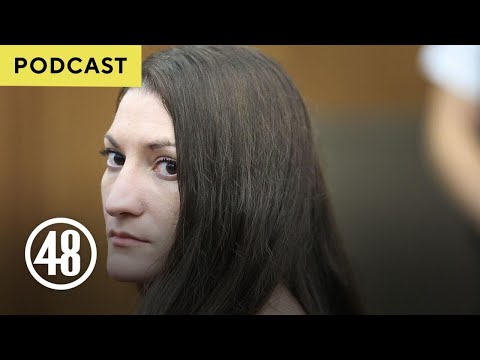
Treating Lindsay Clancy | Case by Case | "48 Hours" Podcast
Episode Description
The focus in the Lindsay Clancy trial shifts to her mental health treatment as jurors hear testimony from her psychiatric providers, friends, and family. "48 Hours" correspondent Erin Moriarty and CBS News correspondent Shanelle Kaul break down the emotional moments in court, the competing narratives emerging at the center of the case, and the lasting questions surrounding maternal mental health.
The cases everyone's talking about, explained as they happen. "Case by Case" is a weekly update on the biggest criminal stories unfolding now. New episodes every Friday, available wherever you watch or listen to podcasts. You can also get ad-free access to 48 Hours podcasts by subscribing to 48 Hours+ at 48HoursPodcasts.com.
Crime. Social justice. Impact. "48 Hours" investigates the most intriguing crime and justice cases that touch on all areas of the human experience including greed and passion. "48 Hours," which premiered in 1988, has developed a rich history of original reporting and impact journalism that has helped exonerate wrongly convicted people, caused cold cases to be reopened and solved, and along the way changed lives.
For video licensing inquiries, contact: [email protected]
Read the full transcriptHide the full transcript
- As a warning, some of this content contains graphic and disturbing details, including discussions of suicide and the
- killing of children. So, please listen or watch with care. We'll have resources at the end of the episode.
- I'm willing to try anything. I just keep coming back to the feeling that I'm dependent on Adavan after my 2 and 1/2
- weeks of taking it daily with benadryil following the bad reaction to Zoloft. I feel addicted to it and I feel like I'm
- not being heard. That that is a possibility. I feel like we are throwing all these different meds at my insomnia.
- When the root cause is out of dependence, I don't feel any of the anxious thoughts I had before. I feel
- completely numb. That is one of the prosecutors reading what Lindseay Clancy wrote to a Southshore hospital nurse,
- sending her a message on the patient portal, my chart. We are nearly at the end of the third week of testimony in
- the case known as Commonwealth of Massachusetts versus Lindseay Clancy. Lindsay is currently on trial for three
- counts of firstdegree murder. The now 36-year-old mother spent her birthday on Tuesday, August 11th, in the courtroom.
- She's charged with killing her three young children, 5-year-old Kora, three-year-old Dawson, and 8-month-old
- Ken. In our last episode on the trial, we got an inside look at the Clancy family through Lindsay's journals and
- from testimony of a former nanny. The jury got even more with a trip known as a jury view to locations crucial to the
- events of January 24th, 2023. This week, we're getting a glimpse into Lindsay's possible state of mind through
- the mental health providers who treated her. The prosecution continues to present evidence that they say proves
- that Lindsay Clancy deliberately killed her children. They called Lindsay psychiatrist to the stand as well as
- friends of the Clancy family and the children's preschool teachers. The defense doesn't deny that Lindsay killed
- her children, but says she shouldn't be held criminally responsible because she experienced postpartum psychosis that
- took away her ability to control her actions. a psychosis the defense says was exacerbated by the medications she
- had been prescribed. We have continually seen this argument laid out by the defense attorney Kevin Readington as he
- cross-examines the state's witnesses. What seems to be unusual in this case is that prosecutors and Lindsay's defense
- appear to be using some of the very same evidence to try to prove their very different arguments. It appears that
- this could be a very tough case for jurors. I'm 48 hours correspondent Aaron Morardi and this is case by case. As you
- know, I've been doing this for a while and I've watched gavveltogavl coverage on many trials and usually as the state
- presents its case, viewers watching the trial online are supportive of the prosecution in their comments. But there
- seems to be something very different with this case. If the comments online are any indication, viewers are deeply
- divided. Now, we've been following this case closely and covered the second week
- of the trial in our last episode. For our continuing coverage, you can check the case by case feed wherever you find
- your podcast. You can also watch episodes of case by case on the 48 hours YouTube channel or by searching case by
- case on Paramount Plus. Returning this week is friend of the show and CBS News correspondent Chanel call who has been
- covering the trial for the network. Thanks for being with us today Chanel. First I want to ask how you are.
- >> You know I think as journalists Erin um the story obviously is never about us.
- This one is a hard one. I think as a woman, um I'm not a mother yet, but I can imagine for any mother out there who
- is watching this happen or covering the trial inside the courtroom, it's definitely a hard a hard time. Well,
- Chanel, it's week three and this trial has been taking a toll on everyone in the courtroom. I think most visibly
- Lindsay Clancy when her children's autopsy photos were presented as evidence. On Wednesday, two medical
- examiners, as you know, took the stand to speak to the injuries that were sustained by Kora Dawson and Ken. This
- was such an intense moment. Um, I'm going to play some of that for you. Um, and you could actually hear Lindsay
- breaking down at one point saying, "I can't do it." >> What do you mean by a furrow? Um so
- again the furrow uh is a liature is when you have external compression by an object on the neck and a furrow is
- simply a pattern of injury that occurs beneath it. It can be an imprint, it could be a pattern or it could be more
- developed types of injuries such as bruising or abrasions. >> And what what about um injuries?
- >> All right, council could want me to take a break this time. All right. Uh Erin, I have chills as I'm
- re-watching this moment. I mean, this was obviously the most emotional that we've seen Lindseay Clansancy since the
- trial started. She was sobbing so hard there. She was saying, "I can't do this." Um there were juror members who
- were even crying and a WBZ reporter who was inside the courtroom actually told us that Lindsay's dad was there through
- all of this. He was also really visibly emotional. Um what happened after that was Lindsay ended up leaving the
- courtroom in tears. She was wheeled out and then a judge ended up calling two recesses just to give everybody a bit of
- a break. >> Remember, they've been working these three, you know, probably morning and
- night during these trials and tension appears to be building between them. For example, last Thursday while Ken's
- autopsy photos were up on the evidence screen, Lindseay Clancy again was audibly crying. But then hot mic
- captured what defense attorney Kevin Readington believed was someone at the prosecution table saying, "Shut her up.
- Let's play this. >> No, I don't want to go to the sidebar. I really don't want to go to the sidebar.
- I need to know what you're going to talk about before I want to tell you that I they got picked up on a hot mic saying
- shut her up during the playing of that autopsy. >> All right. >> This is not this is not like Handmaid's
- Tails. >> Chanel, can you explain what happened there? >> Yeah. I think if there's anything, Erin,
- that's really clear so far in this trial. This is someone who does not hold back punches in the courtroom. Um and
- and this is what was this is what was very clear during this very spicy moment in court. You saw the prosecutors sort
- of looking at each other. They looked a bit confused about what this accusation was from Readington. And then what
- happened after was a DA's office released a statement. Um and they had claimed Darren that this was an unknown
- member of the courtroom who actually said, "Shut it off, not shut her up." Um and they were they were referring to
- those graphic images again of 8-month-old Ken that we were seeing on the evidence screen at that point in
- time. Now, regardless of what was actually said, this was a hot mic moment. As you know, this is pretty
- unusual in a courtroom. Uh, so the judge had to acknowledge this. He talked about
- it. He warned everyone in court last Friday that you'll be kicked out of the trial if you speak out of turn. It was a
- pretty powerful moment. We actually have that clip. Let's play it here. >> There is to be no inappropriate comments
- or disruptive comments to be made inside of this courtroom. If anybody is found to make those, they will be immediately
- uh [clears throat] escorted out and barred for the balance of this. All right, just want to make that real
- clear. And just in case you're wondering, there are microphones all around. Uh and so if we hear if I get a
- report of that, there's going to be some serious uh issues and serious problems.
- >> Yeah. So, like you said, Erin, I mean, it does feel like tensions are really rising between the prosecution and the
- defense here. Chanel, at times during this trial, it feels like it's not just Lindsay who's on trial here. Last
- Friday, we heard from the prosecution's witness, Lindsay psychiatrist, Dr. Jennifer Tus. But then on Monday, the
- defense attorney began his crossexamination where you can really see Readington taking a proactive
- approach in his questioning. Let's play some of this. You'll hear from the prosecution first. At any point in time
- did she tell you she was planning to kill herself? >> No. >> Did at any point in time on the 23rd did
- she say she was planning to kill her children? >> No, absolutely not. >> And then here the defense cross-examines
- Dr. Tus asking more about some of the medications that Lindsay was prescribed. We'll play some of that.
- >> You went over the side effects of Zoloft surgery, I imagine, with her, right?
- >> Yes. Did you tell her that one of the known side effects is suicidal thoughts
- and actions in ideation? >> Well, that's specifically in in children. Um, so I I don't think I
- mentioned that cuz it wasn't relevant. >> Not really. Um, suicidal ideiation and
- homicidalation. Uh, there's a black boxing [clears throat] lot along with SSI, right?
- >> Under >> for children and adults younger than Lindsay. >> Doctor, I apologize. Can you just listen
- to my question and answer it yes or no? Is there a blackbox warning on Zoloft? >> Yes.
- >> Okay. And a black box warning is required or prescribed by what? The FDA >> probably.
- >> Probably. And it basically warns that especially with young people uh or young adults
- that it may cause suicidal or god forbid homicidal ideiation. Yes. >> Yes. And >> and you're aware that in fact the FDA
- has determined that that goes up possibly to a 23 or 24 25 year old. You know that, right?
- >> I think 24 is is what they say. >> I'll give you 24. >> So with 24, you're suggesting as a cut
- off. Are you suggesting to the jury that a drug that increases the risk of suicide in a 24 year old patient cannot
- increase the risk of suicide in a 29 or a 30-year-old patient? Just a little bit.
- >> There's there I don't believe there's evidence that it causes that at all in individuals over 24. So look, Erin, I
- mean, we've seen this strategy from Readington before, right? This is someone who's not waiting around for the
- prosecution to rest their case before he starts his. He seems her to be using those moments of cross to try to poke
- holes in their story. That's his job, right? And what he's trying to do is basically find problems in the
- prosecution's larger argument here. We really saw him drill down on that strategy when it came to medications
- Lindsay was prescribed, uh, like Zolaf, for example. And speaking of those drugs
- like Zolaf, there has been a lot of testimony about the medications Lindsay was taking, there are moments in the
- trial where it feels possibly too granular for the jury. From the detailed discussions about drugs like Adavan,
- Zoloft, and Prozac along with all their side effects to actually the difference between medication addiction and
- medication dependency. How do you think jurors are taking in this information? Is it helpful? Is it
- confusing? Is it too much? >> So, you know, Erin, I can see how some of the jargon here can be a little
- overwhelming to the jurors um because it is so nuanced, especially because they're not allowed to Google things
- like you and I are during the course of this trial, right? But I do think that the detail here is important and this
- kind of testimony could actually sway them because Zolaf for example, right, that was the first medication that
- Lindseay Clansancy was prescribed and a doctor that I spoke to, Erin, said if you have any kind of underlying
- condition, for example, bipolar disorder, which Lindsay's former psychiatric nurse practitioner had
- testified that she believed uh Lindsay may have had underlying bipolar disorder, that drug could actually push
- you into a manic state. So, while it is a little over complicated, understanding
- each of these drugs, why they're prescribed, what role they may or may not have played here um in her mental
- health in the weeks and the months leading up to what happened in January 2023 is pretty important here.
- Now, we've seen [music] Lindsay's attorney, as we've said a few times, Kevin Readington, get pretty combative
- with witnesses on the stand, and he seemed especially hard on Dr. Jennifer Tus during the cross-examination.
- I want to play one of their many tense exchanges here. >> And you know that the outcome of this
- case is very very major to the outcome of your lawsuit. >> I don't actually know that.
- So you understand that if in fact it's determined that you advertise as an expert in postpartum
- and in postpartum psychiatry and you've had a month experience plus a residency.
- Would you consider that to be negligent or misrepresentation? >> I do not believe that I have been
- negligent. >> Do you understand what misrepresentation means? >> Yes. for the month under your golf plus
- your residency. Do you really want this journey to believe that you were an expert? You advertise that.
- >> I I don't think that's exactly the wording that I used. I think I said that it was an interest of mine.
- >> The answer. >> No, go ahead. Go ahead. You answer. >> Um I I just think um the wording was
- that it's an interest of mine. I don't believe I called myself an expert. >> Are you an expert in postpon?
- I I may be it I don't know. I think it depends on what you define an expert as. >> So now he alludes to also a civil suit
- in that and we're going to get to that in just a second, aren't we, Chanel? But it's pretty clear the point that
- Readington is trying to make for the jury, right? >> I mean, I think what we're seeing here
- is Readington being Readington. I mean, he's questioning whether TU's knowledge and experience aligns with what she was
- advertising that she could offer patients like Lindseay Clancy. And so the big question here is did Lindseay
- Clancy get the care she needed? Right? And this particular line of questioning obviously aims to prove to try to try to
- prove to some of the jurors that she was failed by the system, that she was failed by medical professionals. And in
- Readington's cross-examination of Dr. toughs. He actually questions the notes that she made, the notes she didn't
- make, asking why she didn't write certain things down with greater detail, and about why she prescribed certain
- drugs that had potentially negative side effects for Lindseay Clansancy. And remember, Erin, uh this testimony is
- important outside this trial, too, because Dr. Tus has also been named in civil suits that was filed by uh both
- Lindsay and Patrick Clancy. >> Yeah. Let's talk a little bit about those civil suits. Um, we're right in
- the middle of a criminal trial, but there are these other suits that are pending. Lindsay has filed a medical
- malpractice, negligence, and personal injury suit against a number of her healthc care providers, including Dr.
- Tus. And Dr. Tus has also been named in a suit filed by Patrick Clansy for the wrongful death of their three children.
- So, what does the testimony from this criminal trial mean for those two civil suits that are far away from happening
- at this point? Can we expect to hear from other people who were named in them? >> Yeah, this is a little bit of a tangled
- web and all of this is going to be playing out at different times. Um, Rebecca Gelato, who was Lindsay's
- psychiatric nurse practitioner at Southshore Medical, also took the stand this week, Aaron, and she's also named
- in both of these suits. So, when Readington brought up the suits during that cross-examination of TUS, I think
- what he was trying to do here was really just remind the jury that this is someone who's also going to be on trial.
- Um, albeit a civil one. Now, I do want to note that, you know, in court papers, Tus and Gelato, they both denied
- Lindsay's lawsuit allegations. And they, by the way, have also requested that the
- evidence be reviewed by a third party, a medical malpractice tribunal. Uh when it
- comes to Patrick Clancy's lawsuit, Aaron, they've also asked a judge to just full out dismiss it. Uh both of
- those requests are pending. And you know, maybe just because those civil suits are still pending here. Lindsay,
- you know, seemed to be more observant during that testimony with Tus. She actually had her glasses on and she
- seemed to be paying pretty close attention. >> Chanel, I I think I can restate and
- remind listeners and viewers that Dr. Tus refuted Readington's line of questioning that implied that she was
- negligent in her treatment of Lindsay and that both Tus and Gelada on the stand explained the reasoning behind
- their decisions for Lindsay's care. But I can't help but think it cannot be easy
- for either one of those women to take the stand, go back through their notes from 2022 and early 2023 for the jurors
- knowing that everything they did back then, it will be questioned and examined. Um, but you rais a really
- interesting point because through most of this trial, especially when evidence of her children's death was shown,
- Lindsay seemed to go between being overcome with emotion or she just looked away or she was looking down. But as you
- mentioned, when Jennifer Tus was on the stand, Lindsay did appear to be more engaged, maybe even a little more alert.
- Um, of course, we don't know what she was thinking, but it was it was noteworthy.
- >> Yeah. I mean, the testimony from Tus Gelato, remember, is about herself. It's
- about Lindsay Clansy. But those moments when we're hearing testimony about her children, you know, I'm thinking back to
- the the moment in the courtroom where that 911 call was played, it was so chilling. Lindsay was sobbing. There
- were people in the courtroom who were visibly emotional. And then again, when those autopsy photos were released last
- week, she got emotional again. [music] Last week, we also got to look into who Lindsay Clancy was before she killed her
- children through the people who were close to her. We heard from Lindsay's friends, her former father-in-law, and a
- friend of Patrick Clancy's. And what was interesting to me, they all describe her
- as a loving, caring mom. It made me think, I'm not really quite sure who whether this helps the state or the
- defense. Lindsay's childhood friend was actually texting Lindsay a few days before the events of January 24th, 2023.
- And here's what she had to say on the stand. >> [sighs] >> She had shared that she was had been
- taking a medication that um caused her to have some dark thoughts, but that she was going to or had been weaning like
- tapering off that medication and was trying new ones um that would remove those side effects and be more helpful
- and therapeutic to what she needed. >> And did she tell you what those dark thoughts were?
- >> No. [sighs and gasps] >> [snorts] >> What was the tone of the conversation? >> Hopeful. I would categorize it.
- >> Did she ever express at any point um that she wanted to harm herself? >> No. >> Did she ever express that she wanted to
- harm the children? >> No. >> Did she ever tell you that she was hearing voices? >> No. [sighs]
- It's just so hard to make sense of the fact that this conversation that Lindsay's friend described as hopeful
- took place just days before January 24th, 2023. >> Yeah. And Erin, I think it really
- mirrors Patrick's testimony at the start of this trial. You remember what he said
- that the day of the killing started as one of her best days. I mean, it really highlights that mental health challenges
- can change hour by hour. And I think that this is also something that doctors that I've been talking to have echoed as
- well. You know, there's a doctor named Katherine Bernorf. She's a psychiatrist here in New York and she treats women
- with PPP. And she said to me, you know, you can present as normal one one minute
- and then those hallucinations, those voices, they hit you and then suddenly you're not living in reality anymore. We
- are learning so much and it's this fluctuation that it seems both the prosecution and the defense both of them
- are using to bolster their arguments. Um we also heard similar stories from some
- of the teachers of Clancy's three young children. This testimony was particularly difficult to listen to
- because you could tell the teachers were so fond of these kids. Here's part of the testimony from a teacher at Kora's
- prek. >> How was Kora um as a as a preschool student? >> Amazing. She was wonderful.
- >> Um was she in your opinion ready for kindergarten? >> Yes. >> Chanel, there has to be a very specific
- reason that the prosecutors would ask these teachers to come to court, isn't there? I mean, I think the the the point
- prosecutors are trying to drive home here to the jurors is to define what was lost that day. I mean, these were three
- beautiful young promising children, and they're gone now. So, you have this teacher taking to the stand, getting
- pretty emotional, talking about what it was like to care for Kora, who of course
- was the oldest child, just 5 years old. Chanel, as you may know, The Guardian calls this America's saddest murder
- trial. And I think it may be three beautiful children are gone. The family of the defendant also is the family of
- the victims. But whatever the jury ultimately decides in this case, I think it's really going to matter. It could
- have a huge impact on how we talk about and treat maternal mental illness. And what we're learning is that Lindsay
- tried to get help as she struggled with postpartum mental health issues, but that there may not be enough clear-cut,
- recognizable signs that can accurately predict when a person will develop psychosis or hurt their children.
- >> I mean, Erin, I think conversations around this are already happening. I don't know about you, but my social
- media feed is full of it. All of my group chats are talking about it. I was at a restaurant the other day and I
- heard women talking about Dr. Tus. Like I can't remember uh a time when a trial really took over public discourse in
- this way. Um this has become one of those cases that women everywhere are talking about because I think it calls
- into question that larger issue that you just mentioned about maternal mental health, something we don't really talk
- about that much. Um and this week I actually interviewed a woman who experienced postpartum psychosis. You
- know, her story had a ton of parallels to Lindsay's case, but what was different about her was thankfully she
- was able to get a diagnosis and then because of that get the correct medications in time. But a doctor that I
- also interviewed who treats people with PPP uh or postpartum psychosis um said that PPP Erin is actually not named as
- its own distinct category in the standard handbook that's used by mental health experts across the country.
- That's sort of like the medical bible, right? And so what that means is a lot of doctors may not know what to look
- for. And if you don't know what to look for, you probably don't know how to diagnose it, and you probably don't know
- how to treat it. So this doctor told me she thinks this case is a watershed moment that's really exposing a gap in
- the system. >> Well, I hope that that's one good [music] thing that comes out of this.
- Chanel, thank you so much for joining us this week, and I'm sure we'll be talking
- to you again. >> Thanks, Aaron. Now, we want to take this moment to say that if you or someone you
- know may be experiencing a mental health crisis, contact the 988 suicide [music]
- and crisis lifeline, just call or you can text 988. And if you're pregnant [music] or have just had a baby, you can
- dial or text the National Maternal Mental Health Hotline at [music] 1833 TLC MAMA MA. [music]
- and we'll be back with another episode of Case by Case. Be sure to rate and review and let us know which [music]
- cases you're following and which cases you'd like us to follow.
Brief Summary
Lindsay Clancy's trial reveals complex issues of mental health and medication in a tragic case of maternal filicide.
Key points
- Trial of Lindsay Clancy. Lindsay Clancy is on trial for the murder of her three children, with complex emotional and legal dynamics at play.
- Emotional Breakdown in Court. Lindsay Clancy breaks down during the presentation of her children's autopsy photos, showcasing the trial's emotional weight.
- Hot Mic Moment. A hot mic captures a controversial comment during the trial, raising tensions between the defense and prosecution.
- Conflicting Perspectives on Lindsay. Witnesses describe Lindsay Clancy as a loving mother, complicating the narrative of her actions.
- Teachers' Emotional Testimony. Teachers share fond memories of the children lost, emphasizing the tragedy of the case.
- The Impact of Maternal Mental Health. The trial highlights the urgent need to address maternal mental health issues.
Episode highlights
- Trial of Lindsay ClancyLindsay Clancy is on trial for the murder of her three children, with complex emotional and legal dynamics at play.“The prosecution continues to present evidence that they say proves that Lindsay Clancy deliberately killed her children.”1:59Aug 14, 2026
- Emotional Breakdown in CourtLindsay Clancy breaks down during the presentation of her children's autopsy photos, showcasing the trial's emotional weight.“She was sobbing so hard there.”5:39Aug 14, 2026
- Hot Mic MomentA hot mic captures a controversial comment during the trial, raising tensions between the defense and prosecution.“Shut her up.”6:28Aug 14, 2026
- Conflicting Perspectives on LindsayWitnesses describe Lindsay Clancy as a loving mother, complicating the narrative of her actions.“They all describe her as a loving, caring mom.”19:13Aug 14, 2026
- Teachers' Emotional TestimonyTeachers share fond memories of the children lost, emphasizing the tragedy of the case.“This testimony was particularly difficult to listen to because you could tell the teachers were so fond of these kids.”21:31Aug 14, 2026
- The Impact of Maternal Mental HealthThe trial highlights the urgent need to address maternal mental health issues.“It could have a huge impact on how we talk about and treat maternal mental illness.”22:41Aug 14, 2026