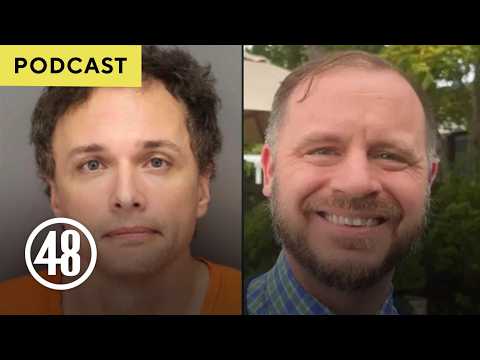
Bryan Kohberger Prosecutor Speaks | "48 Hours" Podcast
Episode Description
What was it like to be the lead prosecutor in the Bryan Kohberger case, with the nation watching your every move? "48 Hours" correspondent Peter Van Sant speaks with Latah County prosecutor Bill Thompson who opens up about the immense pressure of the Bryan Kohberger case, the emotional toll, and the controversy surrounding the plea deal. Why was there no requirement for Kohberger to reveal crucial information? And what really happened behind the scenes of the case that gripped the country?
Read more: https://www.cbsnews.com/news/bryan-kohberger-lead-prosecutor-last-message-convicted-idaho-murderer/
Crime. Social justice. Impact. "48 Hours" investigates the most intriguing crime and justice cases that touch on all areas of the human experience including greed and passion. "48 Hours," which premiered in 1988, has developed a rich history of original reporting and impact journalism that has helped exonerate wrongly convicted people, caused cold cases to be reopened and solved, and along the way changed lives.
For video licensing inquiries, contact: [email protected]
Read the full transcriptHide the full transcript
- What was it like to be the lead prosecutor in the Brian Cobberger case? A case that captured the world's
- attention with seemingly everyone looking over your shoulder and commenting on your every legal move. And
- how did that plea deal come to be? And why was there no stipulation that Coberger provide key answers? Today I'm
- speaking with Latalk County, Idaho prosecutor Bill Thompson. He has worked on this case from day one. This is
- Inside the Bryant Colberger case, the Idaho student murders. I'm 48 hours correspondent Peter Vans. It is great to
- be with you, Bill. Thank you for joining us. Um, can you tell us what it was like
- for you to be at the center of this case that literally commanded attention all around the world? Well, I didn't feel
- like I wanted to be at the center of the case. It's really just a team effort. This was a huge team effort. I've been
- the prosecutor here for over 30 years now. I've never seen this degree of coordination with agencies like the FBI
- and the Idaho State Police as well as our Moscow Police Department. >> You're the quarterback, kind of the team
- captain, and all of that social media pressure. Did you feel that during the course of all of this? Did you pay any
- attention to it or did you try to brush that aside? >> Actually, I don't watch social media.
- Um, we made our decisions based on what the law was, what the evidence was. And frankly, we were pretty successful in
- insulating ourselves from what the swings of public opinion might be out there uh on the internet.
- Bill, I have to tell you during that sentencing hearing, I have never, as a reporter who's been in in dozens and
- dozens of courtrooms, I've never seen such emotion as I witnessed during that hearing. Both you and the judge were
- moved to tears. What is it about this case that touches you so personally? >> Well, it's just so
- it's so sad in every possible sense. I we we've dealt with many homicide cases unfortunately during my my time here as
- the prosecutor. Uh but this one just was so sad. Such a loss of life. These young
- people, you know, four people killed in their home in the middle of the night. Uh it was just simply
- cruel uh and heartless. And feeling for those families and feeling for the two surviving roommates, uh my goodness. Um,
- you know, I was sitting right next to to one of them as she was giving her statement and she asked that that we
- block her view of the defendant. That's why I was sitting kind of at a funny angle, but that was overwhelmingly
- powerful. Uh, pure honesty and emotion from this young woman in such strength and it was remarkable and and for Dylan
- Mortonson after what she had experienced through social media, she just said it all from the heart. Um, it brought that
- teared me I teared me up. I mean, she was just a remarkable person. What was it like for you to listen to her?
- >> Oh, it was it was almost overwhelming. U, but I saw her strength and I knew that we needed to be strong with her and
- for her. >> Bill, you have been in the house where these students were brutally murdered.
- You saw the blood. You've seen what was done to these students bodies. How do you describe the crimes that Brian
- Coberger committed? >> These crimes, these murders were brutal. We've we've seen plenty of homicides and
- each one is different. Um, but this is one that you'll never be able to erase from your eyes and from your memory.
- >> Were you actually inside that house while the victims were still present? >> Yes. Ashley Jennings, my senior deputy,
- and I were both on scene on November 13th. We were in the house. We were working with the investigators uh and
- seeing firsthand what was going on, what the crime scene looked like. Um it's part of our philosophy. We work
- with our officers right from the very beginning. Um but it brings with it some challenges and this certainly brought
- emotional, physically emotional challenges with it. You've also been in the same room as Brian Coberger. Um,
- you've looked into this man's eyes and you've watched his reactions during these victim impact statements. What did
- you see? >> I saw nothing in Brian Coberger while the impact statements were going on.
- It's as though his eyes were empty. >> He made eye contact with with each of these people completely
- unmoved. No reaction, no remorse, no tears. What does that tell you about this man?
- What is inside him? If if anything, I don't know how to answer that. Um he's an enigma to me. Uh the evil that he
- committed is incomprehensible. In many cases when I'm in court, I'm engaging directly with the defendant.
- I think I did it once at the sentencing and that was just to point out that he wasn't going to leave prison until he
- was dead and that was it. I don't care to ever interact with him again. I'd be happy to never hear his voice again,
- never see him. Bill, I want to ask you a question. I know you've been asked this
- already a bunch of times, but as you well know, everyone, the families and friends of those students, the public at
- large, everyone is vexed by the question of why did he do this? Do you have a theory?
- >> I don't know why he did this. Early on in the investigation when we had u folks
- from the FBI's behavioral analysis unit, their profilers, they were here helping
- with the investigation in the first few weeks. Um as they were looking at the case, even just the little we knew then.
- They were telling us in all likelihood we would never find out or understand why this occurred. And even if the
- murderer were to tell us the reasons that in all likelihood it wouldn't make sense to ordinary people like ourselves.
- >> So we know that Colberger had done some homework he'd studied um past crimes. Is
- it within the realm of possibility that for Coberger this was a thrill kill? >> I don't think we can rule out anything.
- I mean he certainly is a criminal justice major. He was studying criminal behavior. He studied serial killers. We
- know that um the investigators recovered uh textbooks uh on those topics that were part of classes he was taking. He
- studied how to manage a crime scene and that was evidence that we were prepared to offer a trial to help explain why
- this particular crime scene it was so clean of incriminating evidence and his car was so clean of incriminating
- evidence. There was a lot of thought and preparation put into that. When I talk to people about this case,
- people know that there are Ring doorbells and security cameras that pick up automobiles in an area and everyone
- knows about DNA. How would you describe He meticulously seemed to prepare for this and yet he
- made some mistakes. >> Well, no plan is perfect and we don't know what may have changed his plans if
- it did inside the home. um because we don't know who he intended to attack first. Uh we do believe that uh Zana
- encountered him while she was still awake. She was up. Um she'd received a Door Dash uh order. Um that very likely
- could have put him into a panic. Uh and panicked people make some mistakes. Or maybe it's just simply he's not as smart
- as he thought he was. Um we'll never know for sure and we really don't need to know for sure. We look at at where
- this investigation went. They started out with one sample of DNA from a knife sheath. It was from a single male
- unknown source and the car leaving the scene. That's what the investigators had. Um that's the what Cobberger left
- behind. Uh and from there the team put the case together to where he was guilty beyond a reasonable doubt. There's no
- question. You know, in those weeks after the murder when the public was getting more and more uh frustrated that they
- they felt as though no progress was being made. In fact, progress was being made. It's just you can't reveal it.
- Right. >> Correct. Yes. Well, whenever investigation's going on, the investigators aren't going to compromise
- what they know. That's important to protect the the quality of investigation. It was a bit satisfying
- uh when we finally were able to come public with the charges and the basis for the charges and to see the skeptics
- out there scratch their heads and say, "Oh yeah, these folks really did know what they were doing." And I know you've
- talked about this quite a bit, but the fact that the defense team came to you seeking a deal, doesn't that mean that
- you had the leverage in this case that essentially you were holding all of the cards that since Brian Coberger clearly
- now wanted to live? So help me out on this because even the president of the United States weighed in on this issue.
- Why didn't you put a stipulation into this deal where Colberger would have to have honestly answered all questions
- about these murders to the satisfaction of detectives before this plea could be finalized? Why didn't you do that?
- >> Well, and you know, Judge Hitler talked about this at the time of sentencing.
- Um, there is nothing that I believe that Mr. Cobberger could say that would shed
- the actual truth on what happened. If he were to talk, he would only say things to benefit himself that would further
- victimize the families. That's what we've seen repeatedly over the years um in in particularly in major cases. Uh
- under Idaho law, there's no way we could compel him to disclose. Um, and if we'd
- gone to trial, he would have never even acknowledged guilt. We would have just moved into appeal time. So, it was our
- our conclusion that straight up guilty please as charged, waiver of appeal for closure. So, we have accountability and
- closure with fixed life sentences was the best course. >> Bill, based on my experience and and
- with my colleagues on 48 hours, we cover murder cases for a living. I had a story
- in which in a plea deal, the defendant was, it was contingent on the defendant agreeing to show where he had disposed
- of a body. And a colleague of mine had a a case in another state where the plea deal stipulated that not only did they
- have to show where the body was, but give a narrative of how that person um committed the crime. And it answered all
- sorts of questions for the families. you guys didn't decided not to do that and why not at least try. I I don't
- understand that. >> Well, and I I understand what you're saying and and I certainly understand
- and hear from uh the families and members of the public uh who will always have the question why. Uh as we viewed
- this and looking at the circumstances of this case, it was our conclusion and ultimately my conclusion. I'll take
- responsibility. I'm the elected prosecutor, so it stops with me. Um, but it was our our team's decision that
- getting the guilty p, straight up factual guilty p uh was going to be the best legal way to approach this. I think
- that there were concerns that somebody like this particular defendant uh if he was trying to allocate in a specific
- factual fashion, he could actually undermine the basis for his plea and the judge would not have as solid of a
- foundation to uphold the plea. So we we analyze this really from a pretty strict
- legal factual point of view. It's not to say that we don't understand and appreciate folks desires to know what
- really happened, but I have no faith at all that Mr. Cobberger would ever truthfully explain what happened or what
- he would say would make any sense. And I think that would even further victimize
- our families. >> But why not challenge him on that? Why not see if you might get some honesty
- from him? >> Yeah, I I hear what you're saying, Peter. And um we have considered that
- and we decided that our best course on this case with this defendant in Idaho was to proceed as we did. Uh I'm not
- going to say the decision was perfect. It certainly doesn't perfectly answer everybody's questions. I I realize that.
- But I also accept that um as I said earlier from the beginning we were advised by the profiling professionals
- that even if the person who committed these homicides uh tried to explain his ra reasoning and what occurred that it
- wouldn't make sense uh to ordinary people and that would further victimize these poor families. It was a judgment
- call. I accept it. It was a judgment call. Is it true that you are personally opposed to the death penalty?
- You know, I don't know that I have strong feelings one way or the other. We've had uh a handful of death penalty
- potential cases during the time here. We have had one case where the death penalty was imposed and it was thrown
- out uh after the Arizona versus ring versus Arizona decision uh came down. Um and that was a case involving Dale
- Shackleford. That was a 10-week trial. Uh and we elected at that point that many years after the fact uh that it
- wasn't realistic to go back to trial uh just to seek the death penalty. Um so you know we have pursued the death
- penalty where we think it's appropriate. Um in the cases we've had to try and death penalty eligible
- we've had it there. Uh we've decided each case on its merits and I I really don't have a personal moral feeling one
- way or another. Uh the law of the state of Idaho is the death penalty is the sentencing option for certain crimes.
- And this this crime would certainly fit the elements of a death penalty case if we'd gone to trial. How difficult was it
- for you to take the death penalty off the table in this case? >> I don't know how to how to characterize
- it as being difficult. Making the decision was difficult because it was a major decision. Uh and it was changing
- course from where we'd been working for so many months preparing to go to trial.
- So, we took a step back and look, we being the attorney team, the prosecutor attorney team, uh, and just kind of
- analyzed each aspect of this case and we came to the conclusion that if the defendant was prepared to plead guilty
- straight up, factually admit the crimes uh, and agree to wave appeals and we get
- fixed life sentences, that that was an appropriate resolution. I've always thought that the death
- penalty in in various states is basically reserved for those spectacularly heinous crimes like this
- one where someone like Coberger here he butchers these four kids shows no remorse. Wasn't it your responsibility
- to to take this case as far as you could so that he gets the maximum penalty that
- is in Idaho law? What do you say to that? >> Oh, I would say that it's my responsibility as a prosecutor to do
- justice. Prosecutors who blindly go into court on an agenda, I think are doing a
- disservice to their profession in the public. This case and his actions certainly deserve the death penalty if
- we had had to go to trial. No question about it. for Coberger in his mind. Wasn't this plea deal a
- victory? He gets to live. >> You know, I can't speak to what's going on in his mind. I don't see it as being
- a victory where he's going to prison. The only way he's going to leave is when he's dead.
- >> I've been in many a maximum security prison. And for what it's worth, they are places of extreme punishment. I'll
- put it that way. I can say a lot more than that. But when you park sometimes in the parking lot outside a maximum
- security prison and you hear people shouting inside from the parking lot, you know there's a hellscape behind
- those walls. >> You're right. And there's something to be said for a person being reminded
- every day of the punishment for what they've done. >> Give us a sense of what your closing
- statement would have been if you had an opportunity to sum it all up. Uh Peter, actually the best way to look at that is
- go back to what we did in court on July 2nd in front of Judge Hiper. Uh where we
- gave the summary of the evidence in this case. Uh and we presented it I presented
- it uh in a manner very similar to what we have argue would have argued to the jury would presented opening statements
- and argued in closing uh arguments. Uh the length of the evidence here that once the investigators
- identified Mr. Coberger, they were able to bring into play uh not only the DNA match, which was significant in and of
- itself. It's kind of tough to explain that away when your DNA is on the sheath of the murder weapon next to the body of
- one of the victims. >> As you know, uh, Bill, jurors want that CSI moment, they call it, and you had
- one in this case. You had a a CSI moment that was irrefutable. Well, and as the story came out, it it really was a
- multiple CSI moment because we didn't file charges uh even though we had a lot of circumstantial evidence until they
- did the trash pole in Pennsylvania and we got the paternal DNA match uh from a Q-tip in that trash pole that said the
- source of that DNA on the Q-tip is the father of the person whose DNA was on the knife she was the DSI moment to
- start for us. That's what really triggered us being able to get the arrest warrant in place, the search
- warrants in Pennsylvania, get him arrested, get a direct DNA sample from him, and it matched. That was that was
- overwhelmingly powerful. >> When do you believe the Coberger family realized that their son was the murderer
- in this case? >> I don't know for sure. Uh when the investigators spoke with them after his
- arrest, uh there was nothing the investigators uh heard or saw to suggest that the family knew uh that Mr.
- Cobberger was responsible for this. The information we have and the defense maintained his factual innocence uh all
- the way up to the time of the plea would suggest to us that he never acknowledged
- guilt to his family. um quite possibly not until he stood up in court on July 2nd and entered his guilty pis
- at that time. That may very well have been the first time they actually heard it. Police reports reveal that Kaylee
- Gonzalez had told roommates that she saw a creepy looking man while she was walking her dog and that roommates
- returned to find that the front door had been damaged. Do you believe that Coberger was possibly stalking the
- house, stalking them? >> Well, we think that Coberger was certainly stalking that neighborhood.
- Um, and we're aware of those incidents where where the roommates uh at the house would sense per perhaps that
- somebody was up on the bank behind the house when the dog went out or uh that somebody was being followed. Um, the
- cell phone experts were not able to correlate um Mr. Coberger's phone being in the
- area at the time of those occurrences. Um, but they were able to show that he was in that area some 20 plus times. Um,
- other times at night between like 10 and early morning hours, 10:00 in the evening when there would be no
- legitimate reason for him to be over here to shop here being Moscow, being in Moscow to shop, uh, which was his
- routine practice. So, we certainly believe that those trips uh were uh involved Mr. Cobberger uh looking uh and
- surveilling or stalking, whatever the case may be, >> wanting to see what their living
- patterns were when they came and went from the house, getting familiar with that neighborhood, things like that.
- >> Certainly, and certainly there may have been other potential victims that he was
- looking at. The Gonzalez family told me in an interview some months ago that they
- thought he must have been in that house prior to the murders because on the night of the murder, it's alleged that
- he had entered that house and gone right up to Matt Madison Mogan's room. Do you
- think that's a possibility? >> It's possible. We The investigators never undercovered any evidence that
- would definitively prove that, but I think that's a legitimate point. The layout of the house is unique. It's a
- little bit confusing. Admittedly, if he was parked up behind the house on that bank, which we believe is where he
- parked, he would be able to see into the house at night and he would be able to see whose rooms were where. Um whether
- he was actually in the house at some point before November 13th, we don't know for sure. We can't exclude that.
- >> Bill, for you personally, what questions do you still have about this case? Well, I don't have any question about
- whether we have convicted the killer. Uh I think if there are questions, they're
- more details uh that really in the big picture don't have any significance. Um our feeling is that we have accomplished
- a lot to obtain straight up guilty pleas to all five charges in the indictment. um and have him spend the rest of his
- life, not leave prison until he's dead with no appeals. So we have that finality for the families and for our
- community. >> And so each night now, Bill, as you put your head on that pillow to go to sleep,
- are you still preoccupied with this case? Is your heart still broken? Do you still have moments of of emotion looking
- back at this uh tragedy uh for the state of Idaho, for the country? There is never a day that goes by that I
- don't remember this and remember what happened to these poor young people and what happened to their families and
- their friends and the community. And I don't know that that ever is going to end. Um,
- for the past over 2 and 1/2 years, I have woken up every night around 2:00 in the morning and we'll just sit there
- with this spinning in my head and I keep a pad of paper and a pen right beside the bed so I can sit up and write down
- what's going through my mind about what we need to do with the case before I fall back asleep and forget it. Um,
- that's been our life for well over two and a half years. Uh and I think gradually that that will
- change for us. Um but what has happened in our community with these murders uh is forever.
- >> And one last message to Bryant Cobberger if he happens to be listening to this.
- >> Goodbye and good riddens. >> Thank you, Bill Thompson. >> You're welcome. Thank you for the time.
- And thanks to all of you for listening. I'm Peter Vans.
Brief Summary
Bill Thompson discusses the Brian Coberger case, emotional impact, plea deal decisions, and the challenges faced during the prosecution.
Key points
- Inside the Brian Coberger Case. A deep dive into the emotional and legal complexities surrounding the Idaho student murders.
- The Brutality of the Crimes. Bill Thompson describes the horrific nature of the murders committed by Coberger.
- Coberger's Chilling Demeanor. Bill Thompson shares his unsettling observations of Coberger during the trial.
- The Unfathomable Evil. Bill Thompson reflects on the incomprehensibility of Coberger's actions.
- The Mystery of Motivation. Bill Thompson discusses the uncertainty surrounding Coberger's motives for the murders.
- Bill Thompson's Ongoing Reflection. Bill shares how the case continues to haunt him daily, impacting his life profoundly.
Episode highlights
- Inside the Brian Coberger CaseA deep dive into the emotional and legal complexities surrounding the Idaho student murders.“It's just so sad in every possible sense.”2:05Jul 30, 2025
- The Brutality of the CrimesBill Thompson describes the horrific nature of the murders committed by Coberger.“These murders were brutal.”3:43Jul 30, 2025
- Coberger's Chilling DemeanorBill Thompson shares his unsettling observations of Coberger during the trial.“I saw nothing in Brian Coberger while the impact statements were going on.”4:45Jul 30, 2025
- The Unfathomable EvilBill Thompson reflects on the incomprehensibility of Coberger's actions.“The evil that he committed is incomprehensible.”5:11Jul 30, 2025
- The Mystery of MotivationBill Thompson discusses the uncertainty surrounding Coberger's motives for the murders.“I don't know why he did this.”5:59Jul 30, 2025
- Bill Thompson's Ongoing ReflectionBill shares how the case continues to haunt him daily, impacting his life profoundly.“There is never a day that goes by that I don't remember this.”23:23Jul 30, 2025
- Final Message to the KillerBill delivers a poignant farewell to the convicted murderer, encapsulating his feelings.“Goodbye and good riddens.”24:27Jul 30, 2025