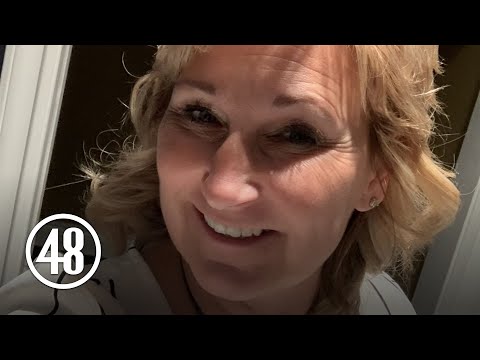
A Deadly Obsession: The Murder Trial of Dr. Kosowski | Case by Case | "48 Hours" Podcast
Episode Description
A missing lawyer, a plastic surgeon representing himself at trial, and a case filled with chilling details, including a murder bag and a paralyzing agent. "48 Hours" correspondent Erin Moriarty and "48 Hours" consultant Herman Weisberg unpack the murder trial of Dr. Tomasz Kosowski and the evidence that led to his conviction for the murder of attorney Steven Cozzi.
Crime. Social justice. Impact. "48 Hours" investigates the most intriguing crime and justice cases that touch on all areas of the human experience including greed and passion. "48 Hours," which premiered in 1988, has developed a rich history of original reporting and impact journalism that has helped exonerate wrongly convicted people, caused cold cases to be reopened and solved, and along the way changed lives.
For video licensing inquiries, contact: [email protected]
Read the full transcriptHide the full transcript
- I would say that the criminally criminal act that the state accuses me of perpetuating is physically impossible.
- It is physically impossible to transfer a body in the manner the state suggests.
- Take into account what what they're proposing. You take that full weight, that 200 lb in a big and bulky cart. You
- take that, you lift it up straight in front of you, and you get it onto that truck.
- That's physically impossible. I mean, maybe not for like an Olympic caliber deadlifter.
- And Mr. Bonderight knows this very, very well. And that is why he refused to lift
- up that cart yesterday. That was former Florida plastic surgeon Dr. Tomas Casowski representing himself
- in court after being charged with the murder of 41-year-old attorney Stephven Kazzy. Despite his arguments, and he
- made some good ones during a six-day trial, Dr. Kasowski, aged 47, was found guilty of first-degree murder on
- September 23rd. The doctor, who now faces the possibility of the death sentence, not only represented himself
- in court, but he waved his right to a jury. So instead asking for a bench trial. So he's leaving it up to a single
- judge alone to decide his fate, whether he'll live or whether he'll die. To understand how this case came about, you
- do need some history. The two men met because of a legal conflict. Dr. Kasowski had sued his former employer,
- the Lawer Institute of Plastic Surgery, and some of the people associated with the institute over a negative online
- review and a medical billing dispute. Steven Kazzy just happened to be the lawyer for the defendants for the other
- side. But things apparently got so heated between the two men that in January of 2023 during a deposition,
- Kazowski confronted Kazzy in his law offic's bathroom, calling him a scumbag. And that matters because it was in that
- same bathroom 3 months later that authorities believe that Dr. Kazowski came back in and killed Steven Kazzy. He
- was then arrested a few days later in a traffic stop with $280,000 in cash, brass knuckles, a paralyzing
- agent of medication, and a ballistic vest that was stained with Kazzy's blood. Here's the important part for
- this case. Kazzy's body has never been found. I'm 48 hours correspondent Aaron Morardi and this is Case by Case.
- Returning to the show today is 48 Hours consultant Herman Weisberg. Herman is a private investigator, former NYPD
- detective and he's also the managing director of Sage Intelligence Group where he oversees investigations.
- Thank you, Herman, for being back with Case by Case today. >> Thanks for having me, Erin. I really
- honor to be working with you. I'm a big fan. And yes, this is a heck of a case. Herman, I first have to ask you your
- impressions of Dr. Kasowski in court. Um I you have seen individuals represent themselves. Um I think he's a little
- different. He's he's incredibly educated. He seems sometimes even smug. I mean, do you think he was really
- prepared for what he did defending himself in a death penalty case? >> No, not at all. He was to me I I was
- transfixed watching this this he he looked like a deer in the headlights half the time. I don't know what he was
- thinking representing himself. The old expression comes to mind, you know, a fool for a client. Uh but I would
- seriously rather see a lawyer perform surgery on himself than to to watch this surgeon practice law or what he thought
- was practicing law. He he didn't do himself any justice, literally. Well, what troubled me, why I keep calling
- this a troubling case, is that there are a lot of people in this country who dislike lawyers, but this seemed to go
- beyond that. Um, this was an obsession for this plastic surgeon. But there did seem to be some
- warning signs. As you know, um, Kazzy's husband, Michael Montgomery, had actually feared for Kazzy's safety. Uh
- he bought Kosy pepper spray and he testified that he fixed their home security system. And I I think it was a
- smart move because a week before Kazzy disappeared, Kazowski was found at a business near
- his law office and he was hiding an electrical closet with a torch lighter and a wagon, what's called a gorilla
- wagon, identical to the one that investigators believe he later used to transport Kazzy's body.
- So, it seems like everyone should have known that Kasowski was a threat. Was it? Do you think it's just that people
- didn't realize how far he would go? >> For the husband to react by improving their security system and getting the
- mace and taking those steps. I I really do think that Kazzy was concerned about it, but not to this extent.
- >> Have you ever seen grudges play out quite like this in all your years as a detective?
- >> Not like this one. you know, this this I think this doctor they they often, you
- know, you've heard the expression uh god complex. I think he was not used to losing at all or ever being wrong and
- this got to him and and he got fixated on it. This is a man that clearly snapped. I I've seen a lot of litigation
- get out of control. I've seen really messy divorces. I've seen business breakups. Grudges get held and the
- lawyers sometimes take the brunt of it, but not to this extent. I I this is really one really bizarre and extreme
- case to me. >> I it definitely seems like that. Um what kind of sticks out though about Kazowski
- is that he had no criminal history, right? I I mean why why risk all of this? >> I think something really really big was
- going on. And the disadvantage here is that he represented himself. if he didn't have an attorney to step in and
- make those evaluations for him. >> I have to say, um, you know, what's really important in this case is the
- fact that it's a nobody case. Doesn't the fact that you have no body, you don't have a cause of death, you don't
- have a weapon make the circumstantial evidence in this case that much more significant. Right? What they know is
- that Stephven Kazzy disappeared, literally disappeared from his office on March 21st, 2023. He went to the
- bathroom. He left an email unwritten, left his phone behind. Um, but then he's never seen again. Can you talk about
- some of the evidence that then led investigators to look at Dr. Kazowski? As we all know, the first 48 hours are
- extremely crucial in in these cases, and I think the police did an appropriate job here. They definitely pounced on
- this and they got right into preservation and collection of evidence and the video, which is kind of unusual.
- These nobody cases, they usually take a long time. It starts out as a missing person and and then it proceeds to be a
- homicide investigation. In this case, I think they were looking right away as a possible abduction or andor um an
- assault or homicide. >> Well, well, yeah, because I think Kazki um made an error by being found a week
- before. You believe then that this uh that the circumstantial evidence is very powerful in this case?
- >> Very, very powerful. you know, the stalking, uh, the confrontation, and, you know, Kazzy went back and obviously
- told his husband that he was concerned about this. So, you've got that. You've got, you know, probably a limited amount
- of people that were looking to harm Kazzy. You know, he's an attorney doing civil work, civil litigation. This is
- not somebody that's, you know, going around making enemies, as far as I'm concerned or as far as I know. 10:22
- that morning, surveillance video outside that law office shows someone who really
- appears to be Kazowski wheeling out a heavy wagon and and then struggling to put it in a truck. It doesn't take a
- Sherlock Holmes level investigator to figure out something's happened and and that he's either been abducted or
- murdered, >> right? I mean, it was clear that Kazowski was going to be a suspect. I
- still find it shocking that he was kidnapped in broad daylight basically in the morning in his office when he goes
- to the bathroom. Prosecutors still had to convince the trier of fact who happens to be a judge in this case how
- he got into the law firm and got Kazzy out without anyone seeing him and how he did it on his own. At the top of this
- episode, we did hear Kazowski in court asking the assistant state attorney, Nathan Vanderhyde, to do a
- demonstration, and I think he was trying to prove that he himself was not strong
- enough to have maneuvered the cart himself with a body on it. Uh, the judge did ultimately deny that request for a
- demonstration, but I did think that Kazowski made a point that it is what the state is saying. He did does seem
- like it would be difficult. >> It difficult but not impossible in my view. I think the the prosecutor avoided
- a trap there because the way Kazowski described it, it was basically picking up with your two arms a 200 lb block.
- And anybody that's ever struggled with a too large a box or too heavy a box outside of a Home Depot or, you know, a
- television store knows that you there's ways to maneuver boxes and carts into a car with a little bit of leverage. You
- get up underneath it. You lean it against the car. There are ways to do that. But this prosecutor was smart
- enough and the judge didn't allow it in the way it was presented by Kazowski to to have him try to pick up something
- that would have definitely thrown the prosecutor's back at I [music] know would do it to mine.
- There was a lot of other circumstantial evidence against Casowski, including these flock cameras that showed that the
- truck that you see on video um returned to Kasowsk's home in Tarpon Springs on that very night that Kazzy disappeared.
- And then 4 days later, Dr. Kazowski was pulled over. He was driving a different vehicle, a Toyota Corolla, and the cops
- had a search warrant, so they had clearly been focusing on him. And inside his car, which I should have mentioned,
- but investigators found what they call a murder bag in this car, was some really
- creepy contents. Uh, can you talk about that a little bit? >> This reminds me of like an old, you
- know, cop show or detective show in the in the 70s. I I I'd probably turn the channel if I saw somebody carrying a bag
- like this. But they found cash, $280,000, which is an unusual unusual amount of money for anyone to be
- carrying unless you're planning on going away. They found brass knuckles, the a paralyzing agent, a ballistic vest,
- which had Kazzy's blood on it. Um, a ton of incriminating items, a Guy Fox mask in the bag, you know those scary masks
- that you've seen in the movies. Uh, one of the police officers noted that he was
- playing the Beatles song Free as a Bird on his CarPlay as he was being arrested and detectives found blood in the law
- firm's bathroom, the truck, Kazowski's car, his garage floor. They also found Kazowski, and this is important, his his
- US and Polish passports were in the car. So, this was really, you know, an investigator's dream. It was like if if
- an investigator got to write the script on this, what he would be looking for in
- a car of somebody that, you know, that was suspected of doing a crime like this.
- >> There's something else that I I found really interesting about that arrest. There is a video and he is in the back
- of the squad car and you actually see at first his hands are behind his back but
- then he does this really strange move so that he can bring his hands in front and
- then he starts like I I don't know how else to put it. He's like sucking on his fingernails almost gnawing on his
- fingers. What did you think was going on with this? I I I have seen a lot of people been able to put handcuffs, rear
- cuffed people being able to put them in front of them. It's not easy at all. It takes a lot a lot of effort. So, he was
- really really insistent on getting his hands and his fingers in his mouth. This could this could be read as a lastditch
- effort to get rid of some of the evidence. He he he knows that there's either blood or skin cells under his
- nails. That's my theory. If somebody has an alternative theory that they want to
- put in the comments, I'd be interested in hearing it because I don't think that's a a nervous tick or that he was
- biting his nails or anything like that, you're going through a really a lot of effort and and I'd have to think that
- the doctor thought that there was some evidence on his on his uh on his fingers.
- >> I I have to agree with you. That's that's how I read it. Um this case also contains some very strange disturbing
- details that we have kind of alluded to. Um, as you know, investigators found that paralyzing agent in Kazowsk's car
- of medication and that they found that Kazowski had researched how long the medication lasts. Um, I assume you have
- a feeling of why, you know, we don't have the body. We don't know if he used it against Kazzy,
- but why do you think he would have that with him? >> Well, the paralytic that they found in
- the syringe is called suinicoline. It's a muscle relaxing often used as an anesthetic during surgical procedures.
- So, it would make sense that Kazowski would have access to it and have knowledge of it. Surprised he had to
- look up the, you know, the what the effects were. Uh, and we know it can be lethal at the right dose. It can be used
- so a victim can't fight back, but can still is still aware of what's happening to them. So, that's that's horrifying.
- You know, you're basically in a paralytic state. That's what the prosecution argued. Anyway,
- >> has that ever come up in any cases that you've handled in the past? >> Not not this specific drug, but I have
- seen I've had a lot of experience with cases with knockout drugs, Rohypnol, Rufies, and you know, I I was lucky
- enough to be involved in a uh 48 hours episode about an attempted murder cheesecake case uh that was a drug
- called Fazipam. I mean, I think that when I read that, that was one of the most cruel details. The idea that a
- person I mean, if in fact, and he was convicted, he didn't just want to inflict pain on him. Um, he wanted he
- wanted Steven Kazzy to know it was happening and not be able to fight back. I can't think of anything worse than
- that. Um, now as we've already mentioned, there is no body in this case. They've not been able to find
- Steven Kazzy, but there was blood. There uh were traces of blood found at Kasowsk's home and in his vehicles. Uh,
- the prosecution at trial called a blood pattern expert to the stand. Why would that be important in this case?
- >> So, I've been involved in murder cases and I've seen what known as in police department anyways, blood spatter
- experts. They reconstruct crime scenes. It's an art and a science as far as I'm concerned. But they can show it's used
- often in in blunt trauma, assault and and murder cases, uh stabbing cases, and other situations like that because they
- can recreate or reconstruct the crime scene, and you can see they can they can illustrate what position a victim was
- in, where the attacker was, which hand he was using. So, it's fascinating to watch these people work and I've seen it
- before at at crime scenes. Um, it's it's necessary in a case like this because you don't, like you mentioned before,
- Aaron, you don't have a cause of death. You don't have a weapon. And the crime scene is basically what you're working
- with here to prove your case. >> Well, yeah. So, you've got this problem. The prosecution has this problem that um
- they have no body, but they believe that Kasowski disposed of Steven Kazzy's body
- at a dumpster in Collier County, Florida. Again, this was just circumstantial evidence to support it,
- but they had George Valante, who was the garbage truck driver, um who emptied this dumpster on March 23rd, 2023, 2
- days after Steven Kazzy disappeared. And here's a recap of what he went through.
- Uh, and it comes from the prosecution's closing argument. >> I think George Volante's testimony, and
- I'm sorry that the causes, and I'm sorry that Michael had to hear this, but the way he described it was [ __ ] vile, that
- the odor was so bad. It's consistent with decomposition, the way it falls. >> I mean, how important is this type of
- evidence, which is smell evidence? I think it's good evidence when you have somebody who's around garbage all day.
- With due all due respect, this man uh you know is an experienced garbage truck driver. He's used to smells and he's
- used to smells that, you know, that resonate with him and and I really do think when you get a witness like this,
- it would have had a big impact on a jury. But I'm sure it got to the the judge, too. a judge understands that a
- guy who's surrounded by foul smelling stuff all day, if something sticks out to him, that's that's definitely uh
- something that you want to introduce as evidence. You know, there's also canine that were trained to detect human
- remains alerted to this dumpster. I I watched uh they're called cadaavver dogs. I watched them during, you know,
- the recovery e efforts at the uh the trade center. Amazing. I mean, they can, you know, there's rescue dogs that find
- living uh people and then there's cadaabver dogs and they pick up a scent and they don't give up. It's it's
- incredible. They they can pick up that scent I I reportedly years later. So, it's pretty interesting. As Valante
- testified, the dumpster had already been emptied and compacted. They were able to
- trace the contents of, you know, to a landfill in Kier County and they searched for three days, but they still
- couldn't find any body. Um, so they were able to prove Kazowski's guilt because his phone data was traced to that
- dumpster. And that's really, really important. There's no way to explain why you happen to be at a dumpster and all
- of these other circumstances. You know, again, I use the [clears throat] term exclusive opportunity here. His license
- plate was also captured in that area, which even just really nails in the coffin there.
- Despite this overwhelming evidence, circumstantial evidence, albeit against him, Kazowski chose to represent himself
- in court, and he decided he did not want a jury. He just wanted a judge. And that
- part really surprises me because at least with a jury, and he had to be thinking of this, you have a chance that
- one person will have reasonable doubt. That's what it seemed like Kazowski was going for.
- and one person out of 12 might. Um, so, so that was odd. And it also was odd to me that even though he is representing
- himself, he didn't put on much of a defense. Uh, he didn't, didn't call any witnesses to the stand. Um, I just want
- to play some of uh some of what the judge said confirming this as Kazowski rested his case. I'm not going to call
- any witnesses. >> Right. Well, you're not going to call any witnesses. Um, you're not going to
- present any evidence and you're not going to testify yourself. Correct? >> No, I presented evidence already in the
- case. >> Well, on cross- examination, you did you >> What are you talking about? The
- transcript? >> No, the defense exhibit one. >> There was a photograph. One stipulates.
- >> All right. All right. But you're not going to uh introduce any further evidence, right? That's correct. Okay.
- So, basically, you rest. Okay. >> Okay. Herman, I'm going to agree with you. I mean, he really didn't know what
- he was doing. But it also struck me when I watched him cuz I I hate this that >> that the defendant got so much play at
- trial, not the victim. But I couldn't take my eyes off Kazowski. He seemed so emotionless. that he's facing the death
- penalty. It It was almost as you watch him that I mean there was a smuggness to his face too, like he was playing a
- game. Um but I think it's important to note that Kazowski didn't start off representing himself. He did have
- attorneys at one point and they filed motions um on his behalf to fight the death penalty and then afterwards
- Kazowski withdrew those. And most important I think to you is that Kasowski also refused to comply with a
- psychological evaluation. >> Yeah, I would have loved to have seen that that psych evaluation
- you know even on TV and watching this knowing what I know now. He had those I call them shark eyes, you know, just
- like that weird distant look in his eyes like there's something something there's definitely
- obviously something off there. But it really stood out to me when I uh when I watched, you know, the few times that
- the camera really really focused in on him. This was uh I've never seen anything like this
- before. >> I have to agree. I have not either. Um, I I do think some of the more compelling
- moments um are when Dr. Kasowski tried to physically demonstrate his points because he's trying to raise reasonable
- doubt. You know, as you know, at the top of the episode, we have that clip of Dr.
- Kazowski in his closing statement recounting his attempt to have the chief medical examiner who was testifying to
- get into a cart so that the prosecutor would have to lift it onto a nearby table with a man in the cart. The judge
- rejected that. And then later, uh, Gazowski asked the exact same medical examiner to get physically into a black
- trash bag. The judge denied that as well. Um, you know, I thought he made a point, but do you think these
- demonstrations would have helped the case? >> I was a little surprised that the prosecution didn't offer testimony from
- something called a kinesiologist. That's somebody who studies the human body movements and they understand how
- muscles and nerves and bones work together to do physical activity. If he had a lawyer, he could have introduced
- demonstrations. That's not the proper way to do that. You can't just, you know, haphazardly instruct people that
- are testifying to do, you know, 100 push-ups or anything like that either. It's just the judge, I think, and I'm
- not an attorney, uh, was was correct in in um, not allowing that. But if if Kazowski had proper legal advice or
- legal counsel, they may have been able to introduce something to prove or disprove that that that a human would
- have been capable of doing that. It's just he didn't representing yourself. That's one of the pitfalls here. He just
- didn't properly do that. And the prosecution could have had their own experts to do that. It would have never
- worked in any court of law the way this man was trying to do it. >> Let's talk a little bit about the
- defendant. I hate putting the emphasis on the defendant, but what's surprising about this case, honestly, is that
- Kasowski is a very educated man. obviously not in the law, but he has several advanced degrees, including he
- got his medical degree from Dartmouth. And whether he decided to um represent himself came because he was arrogant or
- otherwise, I I don't think we'll really know. Or maybe he just was giving up. But um but before this happened, he had
- a lot of friends. They said he was known as Dr. Tampa Bay when he worked at the Lawer Institute of Plastic Surgery in
- Clearwater. And um and this whole thing started because he was defending his reputation. So it just seems so hard to
- understand how he could end up in this situation. >> And it it really some of it's explained
- in the complaint where Kazzy and him were first introduced, you know, in the litigation that was going on. And I want
- to read the quote there because it's interesting to me. It was, "It is important to really understand
- how negative reviews and negative allegations can have a huge impact on a career." It goes on to say, quote, "In
- this day and age, a positive online reputation is key in securing medical services as everybody first Googles
- practitioners from which they will be getting medical, you know, services from." End quote. So the doctor was
- probably fixated on reading reviews about himself. Again, I have to bring in that God complex type of situation that
- you've heard so many times associated with some surgeons. But his civil suit was an indication that he was going to
- get some pretty, you know, this is worse than any kind of negative review that you could probably try to get rid of on
- Google. This was going to be on the record here. So, Kazowski definitely, you know, he he thought that this was
- the end of the world and obviously it isn't said that this happened, but that's what I mean about somebody
- snapping. >> I I I almost think that's the only explanation. Uh because it's the part I
- don't understand. Why would anyone who clearly cared about his career and his image so much risk it all, throw it all
- away by killing the lawyer on the other side? It makes no sense. And again, I don't understand why he didn't want to
- argue his case to a jury. Uh because after he and the prosecution delivered their closing arguments, we have this
- one judge who's making a decision about whether guilt or innocence, and it only took that judge 15 minutes to reach a
- verdict. Here is the verdict. and the state of Florida versus Thomas Kazowski. Case number 23 02935CF.
- The verdict. The court as a trier of fact having considered testimony and evidence presented at trial. The
- exhibits admitted into evidence and the applicers the following verdict. The defendant is
- guilty of murder in the first degree as charged. This verdict is rendered in open court this 23rd day of September
- 2026. Signed by honorable judge Joseph A. Salone, circuit judge. >> All right. Thank you. All right. State,
- are you still seeking a sentence of death in this case? >> Yes, sure. >> Herman, I know there was just one judge
- making this decision, but we are talking about a death penalty case. I mean, have
- you ever seen such a short period of time to deliberate for such a important sentence? Some of it makes sense that it
- was quick because, you know, the judge is taking cont, you know, contemporaneous notes while the the
- evidence is being presented. He doesn't have anyone to deliberate with. There's not one hold out juror that wants to ask
- some questions, which they're entitled to do and they should do. This is a judge that was probably sitting there
- saying to himself, "The prosecution has given me enough that there's, you know, extremely convincing evidence here." And
- Kazowski didn't do himself any favors by not having a juror out there that may have said, "Oh, maybe you can't get
- somebody into that box or maybe somebody couldn't get into that bag." >> Now, I had been surprised initially
- until I really looked at this case why it was a death penalty case. Um, according to the state, uh, they argued
- that Kazowski should be put to death. Number one, because he committed this murder for financial reasons. Um, but
- also because the act itself, which we have discussed during this podcast, was just so cold and calculated, Kazowelski
- has said he's not going to fight the death penalty, and he's not planning on uh presenting any evidence to the judge
- to explain why he shouldn't be put to death. Uh but I think to be safe, the judge did appoint special counsel who
- will uh argue uh to try to save uh Dr. Kasowsk's life. Uh we will find out what happens when the judge decides life or
- death at the sentencing hearing on October 8th. Now, after that verdict was announced, even Kazzy's friends and
- family finally got to talk about him. And they delivered their victim impact statements. And I want to play some of
- these. I want to start first with Steven's husband, Michael Montgomery. >> The most unbearable part is that we were
- never able to bring Steven home. I cannot describe the horror this has brought me and all of Steve loved loved
- ones. It brings me more anger than any than I can put into words. It's always difficult to lose someone to murder, no
- question. But the no body cases also, it just it leaves it open for family members. They have no one to
- bury. Um it doesn't feel like it's closed at all. >> Yeah. But you know, as investigators, we
- talk about all this work that goes into these nobody cases, but it's really important to remember that the the loved
- ones here have the real burden. I can only hope that they were able to find closure maybe in in the fact that this
- went the way it did as far as the the court proceedings and [clears throat] so sad for the the spouse. You know, his
- husband seems like such like a gentle nice guy and I fell for him. >> I have to agree. You you get the
- impression that Steven Kazzy was a nice guy, was not one of these like cutthroat
- lawyers. Um so I can't imagine what his family is going through. Um, I think it's also important to hear from
- Steven's parents and what they said in court. You're going to hear first from his dad and then from his mother.
- >> Steve was one of the warmest, kindest, friendliest, most genuine human beings you could ever
- hope to meet. He was vibrant and full of life. Every conversation with him left you
- smiling. His quick wit, his kind smile, and heartfelt transparency made him a joy to be around.
- >> It would take me 41 years, 10 months, and 9 days to recount everything in my son Steven's life that mattered to me. I
- cannot tell all of it today, but I can share what his loss has done to us. When the police told us they knew where
- Steven's remains were, but could not recover anything, our grief became something indescribable. We had no body
- to bury, no funeral, no rituals, no way to honor him in the ways that families have honored honored their dead for
- years. I think I think this is a good reminder of how important these rituals are. Um, and how important it is for the
- victim's families to be able to say goodbye. So, I hope this helped a bit and I think it was very important for us
- if we're going to talk about this case that focus so much on the defendant. It's really important to end with how
- important the victim was. Steven Kayy, um, thank you for letting me tell this story today, Herman. It's a very weird
- case, disturbing case, upsetting case. That's a rough one, >> and I feel the worst for the the family,
- [music] the families of Steven Kazzy. >> I I appreciate you having me on, Eron. It's a it's a tough case, and it's a and
- it's an interesting case, and I'm glad we're talking about it. U and I really do hope this family, you know, can
- find some closure. >> I hope so, too. We'll be back next week with another episode of Case by Case.
- For our continuing coverage, you can check the Casebyase [music] feed wherever you get your podcasts. You can
- also watch episodes of Casey [music] by Case on the 48 hours YouTube channel or by searching Casebyase [music] on
- Paramount Plus. Be sure to rate and review and let us know which cases you're following and which cases you'd
- like us to follow.
Brief Summary
Dr. Tomas Kasowski is convicted of murdering attorney Stephven Kazzy, despite no body being found and representing himself in court.
Key points
- Dr. Kazowski's Defense. Dr. Kazowski argues that the crime he is accused of is physically impossible.
- A Shocking Discovery. Dr. Kazowski was found with a murder bag containing cash and incriminating items.
- The Absence of a Body. Despite overwhelming circumstantial evidence, the body of the victim has never been found.
- Kazowski's Emotionless Demeanor. Kazowski appeared emotionless during the trial, raising questions about his mental state.
- Kazowski's Background. Despite his education, Kazowski's decision to represent himself raises eyebrows.
- The Verdict. Kazowski was found guilty of first-degree murder after a quick deliberation by the judge.
Episode highlights
- Dr. Kazowski's DefenseDr. Kazowski argues that the crime he is accused of is physically impossible.“That's physically impossible.”0:36Oct 2, 2026
- A Shocking DiscoveryDr. Kazowski was found with a murder bag containing cash and incriminating items.“They found cash, $280,000, which is an unusual amount of money.”11:53Oct 2, 2026
- The Absence of a BodyDespite overwhelming circumstantial evidence, the body of the victim has never been found.“They still couldn't find any body.”19:26Oct 2, 2026
- Kazowski's Emotionless DemeanorKazowski appeared emotionless during the trial, raising questions about his mental state.“He seemed so emotionless... like he was playing a game.”21:42Oct 2, 2026
- Kazowski's BackgroundDespite his education, Kazowski's decision to represent himself raises eyebrows.“Kazowski is a very educated man... but he has several advanced degrees.”25:01Oct 2, 2026
- The VerdictKazowski was found guilty of first-degree murder after a quick deliberation by the judge.“The defendant is guilty of murder in the first degree as charged.”28:02Oct 2, 2026
- Victim Impact StatementsFamily members express their grief and anger over Steven's murder during court statements.“It leaves it open for family members. They have no one to bury.”30:52Oct 2, 2026
- Closure for the FamilyThe discussion emphasizes the importance of closure for victims' families in murder cases.“I hope this helped a bit... it's really important to end with how important the victim was.”33:06Oct 2, 2026