Forensics
Reading a Crime Scene
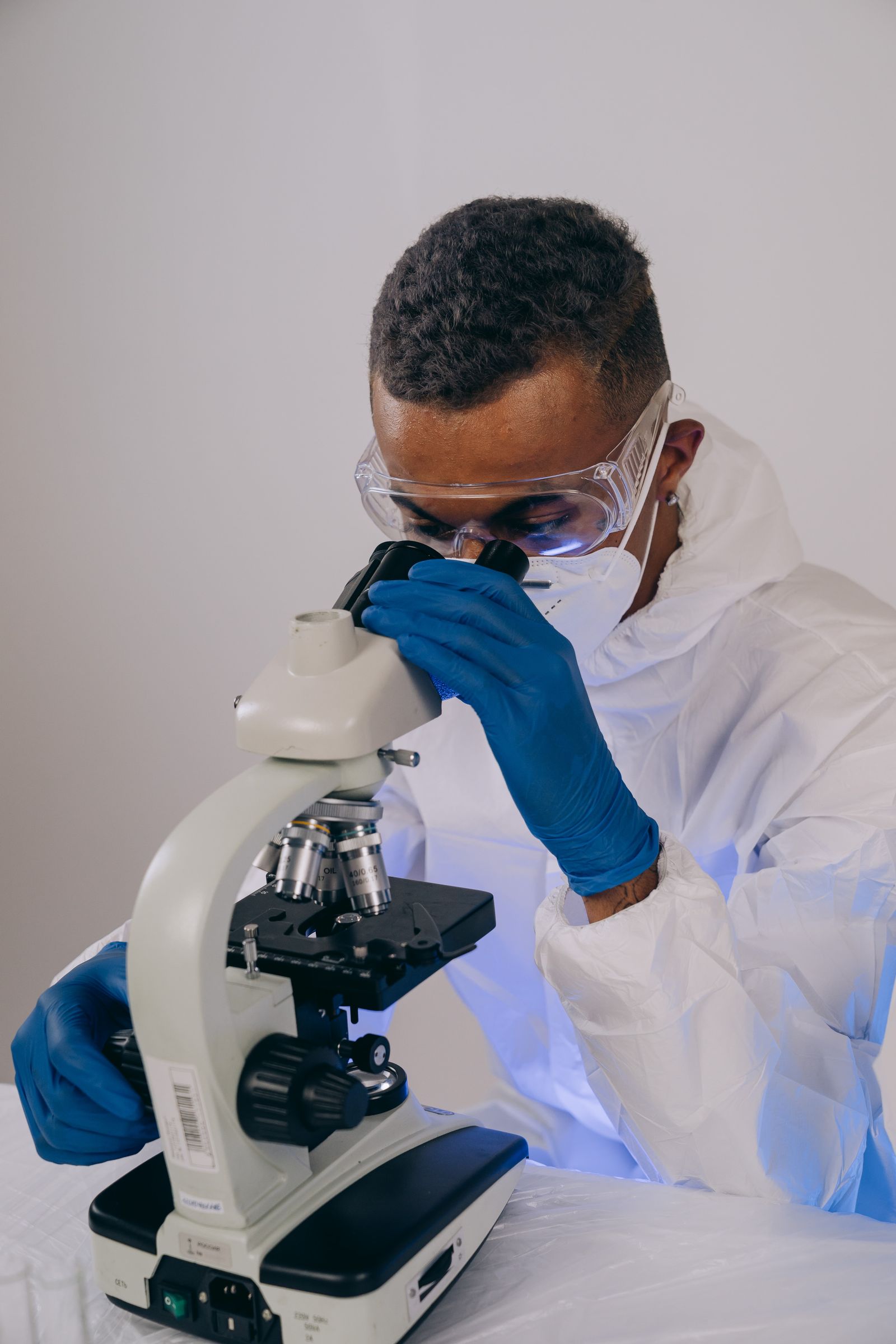
Trace evidence is the material too small to notice at a glance. Together, the pieces tell a story.
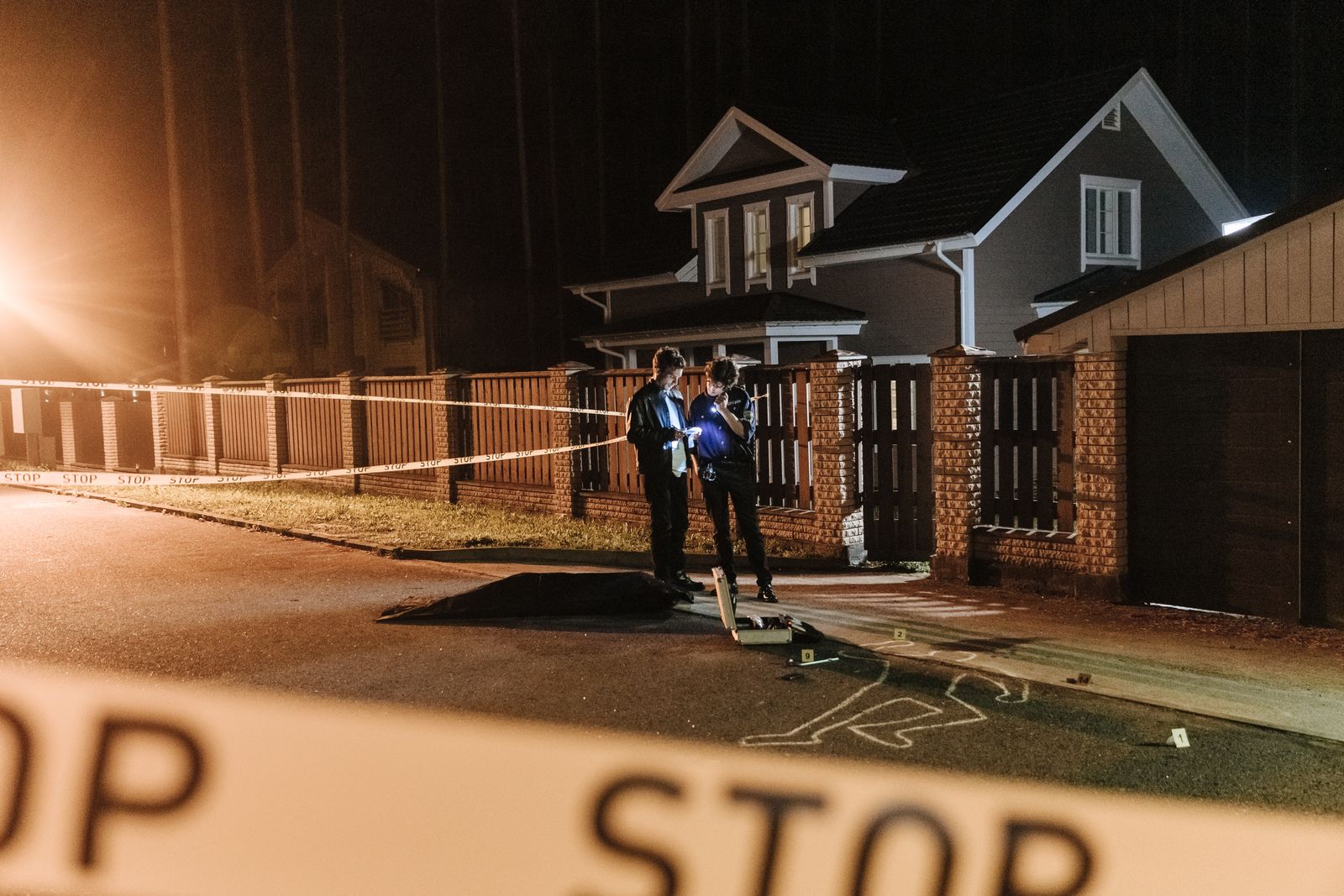
A crime scene is read, not just searched. The reading rests on a simple claim made by the French forensic scientist Edmond Locard in the early twentieth century: every contact leaves a trace. Locard put it as the impossibility of a person acting at a scene without leaving something behind and taking something away [1]. When a person touches a surface, sits in a chair, or struggles with a victim, material moves in both directions. A few fibers from a sweater shed onto a carpet. A little carpet lint clings to the sweater. That two-way transfer is what investigators are trying to find, record, and later match.
The materials at issue are usually small and easy to miss. Trace evidence is the category for the things that travel in tiny amounts: hairs and fibers, paint, glass, soil and plant matter, gunshot residue, tape, and similar fragments [2]. None of it announces itself. A single fiber on a jacket or a chip of paint in a wound can place two things in contact, but only if someone notices it before it falls off, gets stepped on, or mixes with material that was never part of the crime. Much of crime-scene work is the slow, deliberate hunt for material most people would walk past.
Because the material is fragile, the order of operations matters. The rule processors follow is to document before touching. Standards for scene work tell investigators to plan how evidence will be identified, recorded, collected, and preserved before anyone disturbs it, and to give priority to whatever could be lost or changed first [3]. That means photographs, notes, sketches, and measurements come before collection. The record is taken while the scene is still in the state the events left it, because once an item is bagged, the spatial relationship between it and everything around it is gone and cannot be rebuilt from memory.
Contamination is the constant worry, and Locard's principle cuts both ways here. The same physics that carries a suspect's hair onto a victim will just as readily carry an investigator's hair onto the evidence. Every person who enters a scene sheds and picks up material, so the people processing the scene can introduce traces that were never there during the crime, or strip away traces that were. Guidance on recovering trace evidence is built around handling, packaging, and preservation steps meant to keep recovered material from being altered or mixed [4]. Gloves, clean tools, controlled paths through the scene, and separate sealed packaging for each item all exist to keep the investigator's own exchange out of the result.
One point about trace evidence is widely misread, including in popular crime shows. A fiber match does not prove a person was at a scene, and the absence of a person's fibers does not prove they were not. Trace material is class evidence: a blue acrylic fiber can be sourced to a type of garment, not to one specific sweater out of all sweaters in the world. A 2009 report from the National Academy of Sciences reviewed the forensic disciplines and found that many methods outside of DNA analysis had not been studied enough to support strong claims of a unique match, and it pressed for the limits of each technique to be stated plainly in court [5]. The honest version of a trace result is usually "consistent with," not "came from."
Absence is part of the reading too, and it carries information rather than nothing. If two people clearly struggled but the suspect's clothing holds none of the victim's fibers, hair, or blood, that gap is a fact about the case, the same way a present fiber is. It can point away from a suspect, or it can point at a problem in how the scene was handled, since trace evidence that should have transferred can be lost to weather, time, washing, or sloppy collection. Treating a missing trace as meaningful is the same logic as Locard's, run backward: if contact really happened, something should be there, so its absence is worth explaining.
The field has spent the last two decades trying to put firmer ground under these readings. A 2018 review in the journal Analytical Chemistry, supported by the National Institute of Justice, surveyed recent work on fibers, hair, paint, glass, and gunshot residue, and noted a push toward methods that can analyze a trace without destroying it and, in some cases, can be run at the scene itself [2]. At the standards level, groups organized under NIST have published written procedures for recovering trace evidence and for documenting and reconstructing scenes, so that two competent examiners working the same scene follow the same steps [3][4]. The aim is consistency: a result that holds up because the path to it was recorded and repeatable.
Read this way, a crime scene is less a puzzle with one hidden answer than a record of contact that someone has to recover carefully and describe honestly. Locard supplied the underlying idea more than a hundred years ago. The work since then has mostly been about the discipline around it, finding the trace before it is lost, keeping your own traces out of it, and being clear about how much a fiber, a hair, or a fleck of paint can actually prove.
Sources
- Locard's Exchange Principle, EBSCO Research Starters (overview of Edmond Locard and the "every contact leaves a trace" principle)
- Mistek, Fikiet, Khandasammy & Lednev, "Toward Locard's Exchange Principle: Recent Developments in Forensic Trace Evidence Analysis," Analytical Chemistry (2019), via National Institute of Justice
- NIST / OSAC, Trace Evidence Collection: Crime Scene Investigation Guide
- OSAC 2023-N-0027, Standard Guide for Forensic Trace Evidence Recovery (NIST / Organization of Scientific Area Committees for Forensic Science)
- National Research Council / National Academy of Sciences (2009), Strengthening Forensic Science in the United States: A Path Forward, Summary