Becoming Chief Brown | Criminal Podcast
Episode Description
Shortly after David Brown was sworn in as the Dallas Chief of Police, his son shot and killed a police officer. Just before he retired as chief, five Dallas officers were shot and killed in what was said to be the deadliest attack for police officers since September 11th, 2001. Today on the show, we ask David Brown how he’s changed after 33 years of policing.
Music in the episode “Two Dollar Token” by Blue Dot Sessions “Thoughtless” by Blue Dot Sessions “Still Missing” by Scott Holmes “A Good Bass for Gambling” by Komiku “Tolls Folly” by Blue Dot Sessions “Tralaga” by Blue Dot Sessions “Vengeful” by Blue Dot Sessions
Criminal is a show about people who’ve done wrong, been wronged, or gotten caught somewhere in the middle. Hosted by Phoebe Judge. Part of the Vox Media Podcast Network.
Follow the show on Apple Podcasts, Spotify, or wherever you get your podcasts. https://link.chtbl.com/n33u0HsA
Say hello on Twitter (@CriminalShow), Instagram (@criminal_podcast), and Facebook https://www.facebook.com/ThisIsCriminal/.
Sign up for our occasional newsletter, The Accomplice https://bit.ly/accomplicenewsletter.
We also make This is Love and Phoebe Reads a Mystery.
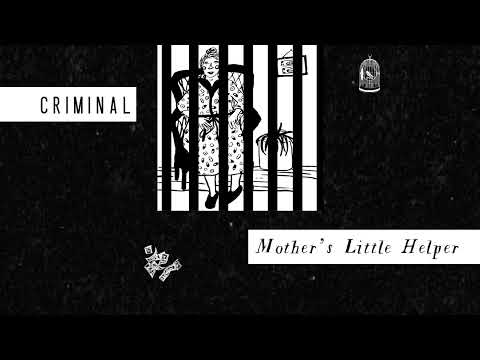
Artwork by Julienne Alexander http://www.yssrs.com/.
Check out our online shop https://store.dftba.com/collections/criminal.
Episode transcripts are posted on our website https://thisiscriminal.com/.
Episode 69 originally published 6/16/2017 https://thisiscriminal.com/episode-69-becoming-chief-brown-6-16-2017
Read the full transcriptHide the full transcript
- cops can sometimes make bad things worse and cops know this as well you know there's some cops that I wouldn't want
- to ride with they ratchet things up and can't de-escalate things say things to make everybody angry again
- or just start people to go going at it with you causing you to be the villain when they're fighting each other because
- they have no control over their temperament so there are bad cops yes without question cops will tell you that as well
- and I would say not bad cops people who should not be police officers this is former Dallas police chief David
- Brown he was born in 1960 in the Oak Cliff neighborhood of Dallas a predominantly African-American Community
- where his family had lived for three generations his father was in and out of the picture
- his mother did most of the parenting of David Brown and his two brothers Calvin and Ricky I was unaware that I was
- growing up in the poor parts of town and that it was segregated but it was very much segregated I was very much in the
- you know underserved part of Dallas at the time you remember about police when you're
- yeah I mean I think I have this idea of what I used to think about cops when I was a little girl I wonder what your
- first thoughts of the police were you wanted to avoid the police at all costs just based on the perceptions from
- the adults the adults didn't care for the police and how they treated them this and my
- the adults in my life when I was a young child grew up in Jim Crow uh separate but equal so they had the most negative
- views of police and and I caught on to their reactions to police they just tried to avoid him and I I did the same
- when you were growing up were the police in your community all white yes I very rarely ever saw
- an African-American Or Hispanic police officer and and the record reflects that after becoming a cop
- they're just it's just a long history of it being predominantly a white male profession
- his family had warned him to stay away from the police since he was a little boy so when he told me he was going to
- leave college early and apply to the police academy they couldn't believe it his father said cops mistreat people in
- the community still in July of 1983 he showed up at the Dallas Police Headquarters and
- filled out an application he was accepted and began the 17-week training during the day he'd attend lectures and
- Firearm Training and at night change diapers and feed his infant son at the police academy he made good
- friends with a fellow trainee a military veteran who was much older his name was
- Walter Williams Walter Williams and David Brown graduated from the police academy at the
- same time just before the holidays they were given batches and guns and both assigned to the Oak Cliff neighborhood
- of Dallas which meant David Brown ended up patrolling the streets where he grew up and sometimes arresting people he had
- gone to school with my neighborhood was was particularly hit really hard by the crack cocaine
- epidemic of young kids experimenting with crack cocaine becoming addicted and subsequent violence and that was your
- hope is that you'd make your neighborhood safer I was so naive I was actually on side of the crackling
- epidemic I was that naive I was going to come in swoop in like Superman in a couple years make my whole neighborhood
- safe and it wasn't just the neighborhood it was my mother lived there all of my friends live there and their parents
- lived there these were people I knew this this is you know more personal than just coming back to
- uh quote-unquote neighborhood it was people that I was trying to protect were you hoping in in some way that you
- could change the perception African-American teenagers and also I guess your father had about the police
- the most honest answer is no I I was intent on putting drug dealers in jail and I had the view of let's put them all
- in jail like God sort them out I was complicit with the mass incarceration failures in this country and and did not
- look beyond the booking the person in jail so short-sighted 21 years old 22 years
- old with no thoughts that there wouldn't be enough jail bad space to arrest your
- way out of crime David Brown and Walter Williams often rode together as partners in those early
- days their shift was 2 30 in the afternoon to 10 30 at night when they didn't ride together they'd
- check in the next morning and brag about who'd arrested more people they'd talk about how to get promoted within the
- department one of us needs to be Chief Walter Williams said Thirty Years Later David Brown would go
- on to become chief of the Dallas Police and six weeks after that his son would shoot and kill a police officer I'm
- Phoebe judge this is Criminal [Music] back in 1988 David Brown was promoted to Crime Scene investigator at a time when
- the crime rate in Dallas was at an all-time high the third highest in the country
- do you remember those early calls and would your heart start beating fast would you get nervous walking up to that
- door not knowing what was on the other side yes and and it's it's addictive that
- what you described that that that's an adrenaline rush it's not only our heart being fast but
- it's you get a dry mouth uh your sensory is overloaded and you just get wide-eyed and you your your
- head's on a swivel and you get attached to that feeling and and most cops love being in that environment because
- they're able to [Music] um like an athletic event do it over and over you get really good
- at it and you know not knowing what's going to happen is the attraction to the job particularly for many uh young cops
- as a crime scene investigator he worked the graveyard shift One Night in August of 1988 he got a call for assistance at
- an apartment complex in Oak Cliff when he got there he learned from Patrol officers that a domestic violence call
- had gone wrong and a man hiding in the bushes had shot a police officer I was taking pictures I was collecting
- fragments of evidence on the on the ground you know looking at blood splatter on the ground and just trying
- to figure out what happened based on the evidence and I saw a pair of glasses and they looked familiar and I asked who
- had been involved in this police involved shooting and the sergeant there says oh a guy named Walter Williams
- and uh the the ground shook under me my heart dropped I could not believe it and
- I raced to the hospital and what did you find when you got there he had been shot in the head
- and officers had gotten his wife Joanne Williams and brought her to the hospital
- and were there he wasn't expected to make it and and so I did what Joanne wanted me to do
- and set with uh her two teenage kids and one very minor child all night until she called
- and said that the doctor says he's brain dead and wanted me to get permission to basically
- pull the plug and and one of my advice on what to do I'm 28 years old I don't know what to
- tell her and I tell her what I think is right I said don't do it just give Walter every chance to make it
- you'd regret it for the rest of your life and she didn't give that permission but by the time she
- got off the phone with me and walked back to check on Walter he had passed [Music]
- it devastated me to my core in all of my belief systems just I didn't know what to believe but I didn't understand as a
- 20 year old how bad things happen to good people I did not understand that at all and it didn't seem fair I would
- learn much later that that's that are our faith or our goodness doesn't protect us from tragedy I
- learned that much later I did not know that at 28. and I I wanted to quit the department and I was unable to
- function and I was torn with how to go on but he didn't quit the department two years later he took and passed the
- Sergeant's exam and was assigned to the 9-1-1 in dispatch centers in the basement of City Hall managing 9-1-1
- operators and this was 1991. the same year that Dallas set a homicide record with more
- than 500 murders many were drug-related I had demonized those people I had no compassion form at all
- actually I had this name for him I wanted them in jail out of my neighborhood I blame them
- for the deterioration of my neighborhood the drug user and the drug dealer I made
- no distinction at all and I was wrong I was so wrong and only through my brother's death that I
- realized will you tell me what happened to him uh I heard that my brother who was a truck driver
- had made a stop in Phoenix Arizona and went to purchase some crack and smoked it and it wasn't it was fake
- apparently went back to either get his money back or get the the drug got in a fight and the drug didn't shot
- and killed him I never called the police department to find out the details I didn't want to
- know I I didn't see how it would bring him back and I can imagine that you having seen yourself as the guy who
- was going to come in and clean up all this drug stuff and make everything better
- that must have been a hard blow to hear to hear about your brother and what had happened yes yes
- definitely and made me humble it it Stripped Away my judgmental attitude toward people who use drugs
- because I came into the profession as a police officer and I condemn them as people that need to be put in jail who
- had no compassion for me no empathy for me at all and when drug addiction hits close to
- home it will make you reconsider your your holy and denial attitude toward people and uh I was no better than them
- I just didn't have that experience I didn't have the experimentation David Brown says that in a strange way
- working at the 911 dispatch Center helped him cope with the death of his brother a constant flow of emergencies
- he says puts your grief and perspective but after 18 months there he was ready to work outside again he took the SWAT
- Sergeant exam and soon after he had a new position the most competitive and physically demanding in the department
- in 1993 Bill Clinton visited Dallas and SWAT officers were part of the president's Protection Team
- by now David Brown's son DJ was 11 years old and when he heard his father might meet the president he asked if he could
- come too DJ shook hands with both Bill and Hillary Clinton and then Hillary Clinton
- invited DJ on board Air Force One to look around [Music] David Brown was promoted to Lieutenant
- and was assigned to community policing he wasn't happy about that at all it seems to me that SWAT and community
- policing are about as opposite ends of the spectrum as you could possibly be yes what is special weapons and tactics
- and and the line that best describes SWAT is that when Citizens need the police they call 9-1-1 when the police
- need help they call SWAT that's the best line I can give on what SWAT is in the policing culture and we're lacking no
- self-esteem at all we're pretty pretty arrogant folks but when you get held hostage that's who you want coming
- someone with that kind of arrogance that that we're going to be able to save the hostage and and in this
- Siege without uh problems so that's why and so that's that's in contrast to community policing where you're making
- means in the community and trying to establish a relationship a lot of sit Downs uh over uh Kool-Aid and cookies
- and a lot of playing with kids in the park and very little probably no traditional policing no writing tickets
- no answering calls just creating interactions with the public that are positive how long did it take you to stop being
- mad about this new reassignment I talked to a grandmother looked like my great grandmother Mabel Henderson who
- who was the matriarch of my family and she looked like her had mannerism like her and I stopped and talked with her
- and we we could have talked all night and uh I felt like this is why I came into policing and how
- did I get so distracted with self-serving you know adrenaline rushing activities
- that did not meet the needs of the citizens that I loved and that that grandmother in the Housing
- Development there at West Allis reminded me of what public service was all about it
- was about serving the public not serving yourself even gave out his personal cell phone
- number to residents he'd been so successful in every role he was assigned at the department people
- started to take notice he was promoted to second in command and finally to Chief he was 50 years old
- when he heard the news he immediately called his mother she told them to be careful just as she
- had back in 1983 when he told her he was going to become an officer Ed is swearing-in ceremony he says he
- kept thinking of his friend Walter Williams he was sworn in on May 5th 2010. six weeks later on Father's Day David
- Brown was in church when his phone rang he didn't answer the caller was a police chief from a
- suburb of Dallas he left a voicemail saying that his son DJ had gotten into an argument with his girlfriend and that
- officers had been called to the scene but everything was fine the girlfriend had decided to go stay with her parents
- for the night he said I just wanted to let you know give you a heads up so I didn't try to call DJ on us on his
- cell phone and it wrote over to his voicemail and I just told him to call me I didn't mention the phone call I had
- gotten I wanted him to tell me exactly what was going on without me being accusatory I just wanted to hear from
- him and I was hoping it to give him some relationship advice uh and to go apologize to his girlfriend
- and say you're sorry no matter what happened you just uh you take the first steps to say say
- you're sorry the next phone call I get is from detectives at the scene there at his
- apartment describing something that I just could not believe I could not believe
- DJ had shot and killed a man he didn't know in the parking lot of his apartment complex neighbors called the police and
- when an officer arrived DJ shot and killed the officer many more officers arrived and DJ was killed by police
- gunfire he was 27 years old the pain was unbearable the same type of unyielding pain
- take the breath away it darkens the room and it isolates you from your reality I mean you just don't think
- it's real [Music] PCP was found in his system which David Brown says may have triggered a bipolar
- episode he didn't know his son was struggling with bipolar disorder until it was too late
- after that every time he dealt with cases involving mental illness David Brown says the thought of DJ
- how do you square being a police officer a police chief and a father in a situation like that
- you don't there's no squaring no there's no squaring There's no practical way there's no step do this on the first
- step and do this on the side this is what you got to do there's no advice that helps the ease is the pain there's
- there's no logical way to approach that particular incident that happening in my
- life is it's that small taking a deep breath and okay thank you Lord thank you for
- helping me and here's the strangest thing about it is everything that you know about yourself
- and life is Stripped Away to its core it is what's ever there helps you get through
- he returned to his work as Chief weeks later and threw himself in head first he immediately began expanding the
- community policing program in Dallas he partnered with the University of North Texas at Dallas to study what
- wasn't working in his Department as chief he changed the way the department disciplined officers if an
- officer used excessive force Chief Brown fired them he says he wanted to send the message
- that officers can't abuse the very people they're supposed to protect and then on July 5th 2016 in Baton Rouge
- Louisiana two white police officers were arresting a 37-year-old African-American
- man named Alton Sterling he was pinned to the ground whom at least one of the officers shot him
- the very next day in Falcon Heights Minnesota a police officer fatally shot 32-year-old philando Castile in his car
- his girlfriend filmed and live streamed the shooting on Facebook he just shot his arm off
- we got pulled over on larpenter told Dr Reed's friend I told him to get his hand
- out he had you told him to get his ID sir and his driver's license oh my God please don't tell me he's dead
- please don't tell me my boyfriend just went like that yes I will sir I'll keep my hands where they are on July 7th
- people in cities all over the country gathered to protest the shootings of Alton Sterling and philando Castile
- they were two of 963 people killed by police officers in 2016. according to the Washington Post database
- a protest was planned in Downtown Dallas and organizers had been in communication
- with the Dallas Police so everyone would know what to expect from everyone else and at 7 pm more than 800 people
- gathered I was at work that whole day until the protests began to disperse and they begin to disperse and I I began
- to tell the second in command their Police Department that well I'm headed home let me know when the last protester
- leaves at 8 58 PM someone opened fire at first no one knew where the bullets were coming from protesters began
- running it became clear that the shooter was not aiming for civilians but specifically aiming at police officers
- get back protesters scattering in panic as their peaceful March against officer-involved shootings wound down I
- would say probably about 20 gunshots rapid succession I think they might have got somebody one witness catching the
- standoff unfolding from the ground police exchanging gunfire for over 45 minutes while trying to negotiate and
- there's somebody else down over there an officer trying to catch the shooter off
- guard I was having conversations with people and watching social media people were
- just saying the world seems like it's going upside down yes and I was I couldn't afford to be distracted
- on all the scenarios or what could go wrong I could only afford to be focused on
- making the right decisions what's what's the right decision what's the best decision what protects life I only
- focused on was I was clear-headed enough to know how critical the decision making would be
- so this is a person of interest as you can see they're in camouflage and they have a rifle strap slung with a rifle
- but sticking up and so if anyone knows or recognizes this picture please immediately call 9-1-1 do not approach
- this suspect uh we'll bring them to justice the shooter was a 25 year old army veteran named Micah Johnson
- high-powered assault rifle and killed five officers seven more officers and two civilians were wounded
- Johnson made his way to the El Centro Community College where he took cover at the end of a long hallway and he's
- continuing to threaten to kill more officers he's laughing about having killed the officers that he had had shot
- and he's threatening that he has Bombs all over downtown that he's placed bombs everywhere downtown
- and we negotiate with him for near is nearing four hours of negotiation most of the solutions the police would
- normally employ had the potential to harm another officer and even if that potential was small David Brown wouldn't
- take the risk there had already been too many wounded he told his team that he wanted to hear as many new ideas as
- possible the commander Bill Humphrey explains to me this idea of using the bomb robot
- in a way that had never been used in American policing to basically weaponize the bomb robot
- rap wrap a pound of C4 on the extension arms of the robot and distract Michael Johnson through uh
- negotiations you know get into talking and and get them agitated so he doesn't hear the humming noise
- because the robot makes a humming noise down the hallway and that we can get it close enough because he would be ranting
- which is exactly what happened uh The Negotiator asked him so why why are you killing officers and that get
- sent him into a rant and while he was ranting the robot gets close enough to him
- to be detonated and it kills him and the season is over and if I had to do it all over again
- I will make the same decision your job is not only to control the city but also you're kind of
- the you're the head the ceremonial head and also the real head of of the department what was it like for you to
- have to deal with the families of these police officers who had died and uh those trips to the hospital I imagine
- you you were there around the wounded officers yes it was and still is hard to imagine
- their wives and girlfriends and mothers and fathers and brothers and cousins I mean just everyone just
- torn that this happened to someone they love they taught I mean just really ripped
- apart the hearts of people that love them particularly the widows and many of these officers had young kids
- but old enough to know what was happening and you and you know at least I knew having set with Walter Williams
- two teenagers and uh his his third child was uh 10 years old I knew specifically how I felt
- I sat there at 28 years old when Walter I I don't know what to say to his wife Joanne I
- don't know what to say to his kids I'm sitting there just mumbling and fumbling and stumbling and
- I'm I I'm I'm I'm as grieved as they are I can't function they looked at me for support and I don't I don't know what to
- say at 28. when July 7 happens because I had lived through that I knew that this family
- could make it that it would be hard and I know that some families were blame the chief and the police department for
- what happened and that that you just don't defend yourself just take the blame [Music]
- eight weeks later he announced his retirement it surprised a lot of people he was 55
- years old and had been a police officer for 33 years we don't get to hear the police speak
- too often maybe sound bites here or there press releases vetted all the way up the chain of command
- so we were glad to spend some time talking with Chief Brown to hear what he believes
- and all those things that he used to believe that he's lost along the way [Music]
- thank you [Music] criminal is produced by Lauren Spore Nadia Wilson and me audio mix by Rob
- Byers and Johnny Vince Evans special thanks to Mary Helen Montgomery Julian Alexander makes original
- illustrations for each episode of Criminal you can see them at this iscriminal.com where we've got a link to
- David Brown's book called to rise say hi to us on Facebook Instagram or Twitter and we have a newsletter which
- you might like it's called the accomplice and it doesn't come out too often we promise you can sign up on our
- website criminal is recorded in the studios of North Carolina public radio wunc we're a proud member of radiotopia
- from PRX a collection of the best podcasts around shows like The Illusionist hosted by our friend Helen
- zoltzman in it she explores the wild meanings behind words and phrases and comes up with things you would never
- imagine in our latest episode she speaks to a woman who woke up after brain surgery
- only able to remember 40 words I was 27 and there was absolutely no warning I mean I was actually performing on stage
- when it happened I was I went on stage to perform a karaoke duet what was the song it was a total eclipse
- of the heart go listen radiotopia from PRX is supported by the Knight foundation and thanks to adserc
- for providing their ad serving platform to radiotopia I'm Phoebe judge this is Criminal
- [Music]
Brief Summary
David Brown discusses his police career, personal tragedies, and the need for community policing reforms.
Key points
- David Brown's Early Views on Police. David Brown reflects on his childhood perceptions of police and the impact of segregation.
- The Tragedy of Walter Williams. David Brown recounts the devastating moment he learned his friend was shot.
- A Shift in Perspective. David Brown discusses how personal tragedy changed his views on policing.
- DJ's Fatal Encounter. David Brown shares the harrowing news of his son's tragic death.
- The Pain of Loss. David Brown describes the unbearable pain of losing his son.
- The Bomb Threat. A man threatens to detonate bombs across downtown, escalating the situation.
Episode highlights
- David Brown's Early Views on PoliceDavid Brown reflects on his childhood perceptions of police and the impact of segregation.“I wanted to avoid the police at all costs.”1:28Dec 12, 2022
- The Tragedy of Walter WilliamsDavid Brown recounts the devastating moment he learned his friend was shot.“My heart dropped, I could not believe it.”7:41Dec 12, 2022
- A Shift in PerspectiveDavid Brown discusses how personal tragedy changed his views on policing.“It stripped away my judgmental attitude toward people who use drugs.”11:09Dec 12, 2022
- DJ's Fatal EncounterDavid Brown shares the harrowing news of his son's tragic death.“I could not believe DJ had shot and killed a man.”16:43Dec 12, 2022
- The Pain of LossDavid Brown describes the unbearable pain of losing his son.“The same type of unyielding pain takes the breath away.”17:06Dec 12, 2022
- The Bomb ThreatA man threatens to detonate bombs across downtown, escalating the situation.“And he's threatening that he has bombs.”23:29Dec 12, 2022
- Innovative TacticsPolice use a bomb robot in a groundbreaking way to neutralize a threat.“To basically weaponize the bomb robot.”24:04Dec 12, 2022
- Tragic ConsequencesThe robot is detonated, killing the suspect and ending the standoff.“And it kills him.”24:57Dec 12, 2022