Waco: The Raid on Mount Carmel (Part 2/3)
Episode Description
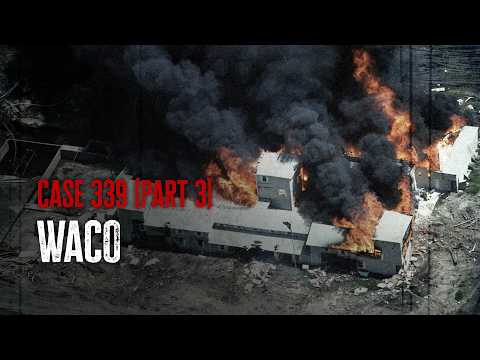
[Part 2 of 3] In 1992, a chance discovery by a UPS delivery driver would lead to the Bureau of Alcohol, Tobacco, Firearms and Explosives - commonly known as the ATF - launching an investigation into David Koresh’s activities at Mount Carmel in Waco, Texas. Upon discovering that Koresh’s Branch Davidians were stockpiling illegal weapons, the agency began planning a raid that was also intended to boost their image with the public… but the consequences would be disastrous.
CREDITS Narration – Anonymous Host Research & writing – Erin Munro Production & music – Mike Migas Audio editing – Anthony Telfer
SOCIAL LINKS
Website https://www.casefilepodcast.com Facebook https://www.facebook.com/casefile Twitter https://twitter.com/case_file Instagram https://www.instagram.com/casefilepodcast Patreon https://www.patreon.com/casefile Casefile Presents https://casefilepresents.com
RESOURCES
Read the full transcriptHide the full transcript
- Our episodes deal with serious and often distressing incidents. If you feel at any time you need support, please
- contact your local crisis center. For suggested phone numbers for confidential support and for a more
- detailed list of content warnings, please see the show notes for this episode on your app or on our website.
- In the wooded hills of northern Idaho, just 30-odd miles south of the Canadian border, lies a mountain ridge in the
- Kaniksu National Forest known as Ruby Ridge. This rugged and remote location was home
- to 20 acres of land that belonged to a former US Army Special Forces officer named Randy Weaver.
- Randy had bought the land in 1983 after his wife, Vicki, who was deeply religious, began having recurring dreams
- about living on a mountain top. Believing an apocalypse was imminent and that Vicki's dreams indicated where they
- needed to be, Randy and Vicki sold their belongings, learned from an Amish community how to live without
- electricity, and built a basic cabin on their newly purchased land. It had no power or running water, but
- the Weavers made it work. Over the next decade, they turned it into a home for their four children:
- Sara, Samuel, Rachel, and Elisheba. The family lived a survivalist, self-sufficient lifestyle.
- Instead of buying food, they hunted and foraged and raised their own livestock. The children were homeschooled.
- Despite their isolated setup, the Weavers made friends with others in the area. They even took in a troubled teenager
- named Kevin Harris. Early on the morning of Friday, August 21, 1992, Kevin Harris and 14-year-old
- Samuel Weaver were walking along a trail that led to the family's cabin, accompanied by one of the Weavers' dogs,
- a Labrador retriever named Striker. The trail was wide enough to accommodate an SUV and flanked by heavy woods on
- either side. When a noise emanated from some nearby brush, Striker barked. The dog approached the brush, still
- barking loudly. Hoping Striker might have sniffed out some game they could hunt for meat,
- Samuel and Kevin followed. According to later testimony from the Weaver family, gunfire suddenly rang
- out, killing Striker. Three US Marshals who dressed from head to toe in camouflage and carrying M-16
- rifles had been hiding in the surrounding woods as part of a reconnaissance team keeping watch over
- the property. One of them shot Striker after he revealed their location. Samuel Weaver cried out,
- "You've killed my dog, you son of a bitch." As he was carrying a firearm, the 14-year-old returned fire.
- A second US Marshal shot back in his direction, hitting Samuel in the arm. Samuel began running up a hill back
- toward the family's house when he was shot again, twice in the back, and fell face down on the ground.
- Meanwhile, Kevin had dived behind a tree stump for cover before firing his own gun at the Marshals.
- He hit and killed one of them. Kevin Harris managed to flee back to the cabin. Wails and despair could be heard from
- inside its walls as the family discovered that their only son and brother had been killed.
- 19 rounds had been fired during the confrontation. Three were shot by Samuel Weaver, two by
- Kevin Harris, and 14 by the three US marshals combined. The marshals' story differed somewhat
- from the Weaver family's. They had been at the property as part of a planned raid to arrest a Randy Weaver,
- a white supremacist who'd been on the radar of multiple law enforcement agencies for years.
- In 1985, a neighbor had accused him of threatening to kill then US President Ronald Reagan, the governor of Idaho,
- and Pope John Paul II. It was said that Randy was a member of the racist terror group Aryan Nations,
- and that he had a large cache of firearms. In 1986, the Bureau of Alcohol, Tobacco,
- and Firearms, known as the ATF, learned of Randy Weaver after one of their informants met him at the World Aryan
- Congress, a convention where American neo-Nazis called for the creation of a new white
- and male-dominated homeland. Randy met with the informant several times and suggested they form a group to
- fight what he called the Zionist Organized Government. This was his term for the United States
- government, referencing an anti-Semitic conspiracy theory that claims Jews secretly run Western states.
- The ATF later charged Randy Weaver with selling their undercover informant two shotguns with barrels that had been
- sawed off below the legal minimum length. In October 1990, a grand jury indicted
- Randy for possession of illegal weapons. He was granted bail but failed to appear
- in court for his scheduled trial date. It was said that Randy possessed multiple firearms and arresting him at
- his own residence was therefore deemed too dangerous. This led to the US Marshals attempting
- to arrange for Randy to surrender himself peacefully. After four months of failed
- negotiations, on Friday, August 21, 1992, the US Marshals descended on the Weaver property under cover of darkness
- in a planned raid that resulted in 14-year-old Samuel Weaver, a US Marshal named William Bill Degan, and the
- Weaver's dog being killed. In the Marshals' version of events, Randy Weaver had been with Samuel,
- Kevin, and Striker as they approached the brush. They claimed that when Striker exposed
- their locations, they shouted to identify themselves, which led to Kevin Harris firing at them and initiating the
- confrontation. Deputy US Marshal Degan, who Kevin had mortally wounded, fired seven rounds
- back while another Marshal shot Striker, scared the dog would attack. It was then that Samuel Weaver started
- firing. Ballistics reports indicated that Samuel was killed by Deputy US Marshal Larry
- Cooper, though these reports weren't conclusive. Cooper denied shooting Samuel, saying he
- hit Kevin Harris instead. Though there was no evidence that Kevin was struck at all.
- The FBI later stated that they hadn't realized Samuel Weaver was dead until days after the shootout.
- The altercation led to a standoff between law enforcement and the Weaver family.
- While the Weavers barricaded themselves in their home, the Marshals radioed for reinforcements.
- State police, ATF agents, an FBI hostage rescue team, and FBI snipers took up locations around the property.
- Given the drastic situation with two people already dead, one of those a member of federal law enforcement, and a
- family said to be armed and to dangerous, the FBI amended its usual rules of engagement.
- Ordinarily, an FBI agent can only fire against someone if they or other agents are in danger of bodily harm or death.
- At Ruby Ridge, agents would be permitted to fire at any adult male holding a weapon as long as the shot could be
- taken without endangering children. In the wake of the initial shootout, members of the Weaver family had managed
- to collect Samuel's body from where it lay dead on the ground and moved him to a shed.
- On Saturday, August 22, they made plans to bury him. Before laying his son to rest, Randy
- Weaver left the cabin to visit him one last time. He was joined by his 16-year-old
- daughter, Sara, and family friend, Kevin Harris. Randy Weaver was lifting the latch to
- the shed where Samuel's body lay when a shot rang out. An FBI sniper named Lon Horiuchi, who
- had been watching the scene from 200 yards to the north had taken fire. The shot struck Randy in his back with
- the bullet exiting his right armpit. Injured, but not incapacitated, Randy turned and ran back towards the cabin
- with Sara and Kevin. Sara did her best to shield her father from being shot again, realizing that he
- was the target, and pushed him in front of her towards the cabin. Vicki Weaver stood in the cabin's
- doorway holding the door open for them with her 10-month-old daughter Elisheba in her arms.
- Randy and Sara raced indoors with Kevin behind them. As he crossed the threshold, Agent
- Horiuchi fired another shot aiming for Kevin. But the bullet struck Vicki first,
- fatally tearing through her face before hitting Kevin Harris in the chest. Vicki fell to the floor with her infant
- daughter still in her arms. Kevin was badly injured and begged Randy to kill him and put him out of his
- misery. Randy refused. The Weavers felt like they were being hunted. They had no faith in the federal
- government and refused to trust the FBI negotiators who tried to arrange for their surrender.
- The standoff went on for days with the Weaver family holed up inside their cabin and federal agents surrounding the
- property. A crowd of spectators and protesters sympathetic to the Weavers gathered at
- the base of the mountain. Some carried signs that decried the actions of federal law enforcement.
- One read, "Federal informant, federal charges, federal attack. I'm fed up. Are you?
- Stand up before it's too late. Eventually, a former US Army Special Forces member with similar politics to
- Randy Weaver was called in to help. Over 3 days, he managed to convince Randy to surrender, promising that he
- would assist in getting Randy a fair trial. The standoff finally came to an end on
- Monday, August 31, 11 days after it began. Randy Weaver and Kevin Harris, who recovered from his bullet wound after
- the surrender, were charged with multiple offenses, including the murder of the US Marshal.
- Both men were acquitted of this most serious crime at a federal trial. Ballistic reports revealed that Randy
- Weaver hadn't fired a single shot during the entire standoff. In the end, Randy was sentenced to 18
- months in for missing his original court date and violating bail conditions. He later filed a $200 million civil suit
- against the government for the wrongful deaths of his wife and son. In 1995, the government settled the
- case, agreeing to pay Randy Weaver $100,000 and $1 million to each of his three daughters.
- The events at Ruby Ridge sent shockwaves through the United States and had significant ramifications.
- The media and the public were broadly critical of how the various federal agencies had handled the case.
- A special task force report and a Senate subcommittee report both agreed that the
- rules of engagement were unconstitutional. They also broadly agreed with the Weavers' version of how the altercation
- began. Agent Lon Horiuchi, the FBI sniper who shot killed Vicki Weaver, was charged
- with involuntary manslaughter, though the case against him was ultimately dismissed.
- There were no criminal convictions for the deaths of either Samuel or Vicki Weaver.
- For many Americans, the Ruby Ridge incident was seen as a shocking example of state overreach and unnecessary
- government interference into the lives of private citizens. Roughly 2,000 mi away, at the Mount
- Carmel Center east of Waco, Texas, members of the Branch Davidian Church were among those taking note.
- For some time now, their leader, David Koresh, had been predicting an impending apocalypse on their land, which would
- take the form of government persecution. "What are you going to do 6 months from
- now when this is all surrounded by tanks?" he'd asked several followers in June of 1992.
- 2 months later, as they followed reports of the Ruby Ridge siege on television news, David Koresh wondered aloud,
- "Is it a dress rehearsal for an attack on Mount Carmel?" The Bureau of Alcohol, Tobacco, and
- Firearms, abbreviated to the ATF, is a US federal law enforcement agency that falls under the Department of Justice.
- Initially founded as a way to collect taxes on imported spirits and tobacco, the agency's role evolved over time,
- taking on a more investigative and regulatory role. The ATF is responsible for investigating
- crimes that involve alcohol, tobacco, firearms, and explosives, which has made it an unpopular agency at times.
- This has been attributed to the ATF's role in regulating products that many Americans enjoy and don't want
- regulated. In the words of author Jeff Guinn, the agency has become something of a public
- punching bag. The ATF wasn't just unpopular with the public. It struggled with lawmakers,
- too. It received less funding than other federal law enforcement agencies, had fewer employees, and frequently came
- under attack by the country's powerful gun lobby, the National Rifle Association.
- The ATF's role as the nation's enforcer of gun laws meant it was often accused of trampling on citizens' Second
- Amendment rights, the amendment in the US Constitution that enshrines the rights of Americans to bear arms.
- In the early 1990s, the ATF was in such dire financial straits that agents in charge of divisional offices began
- issuing fines to other agents if they were late for meetings, just so they had some money they could use to purchase
- necessary equipment. The ATF undertook its own investigations, but was also often
- called upon by other agencies to provide support as required. In early June of 1992, the ATF received
- one request from a sheriff's department in Texas who said that they were dealing
- with a situation in McLennan County, near the city of Waco. It had all started with some reports of
- troubling things being sent in the mail. Larry Gilbreath was a driver for the United Parcel Service, or UPS, and he
- had been delivering parcels to the Mount Carmel compound since 1986. Sometimes he made several deliveries in
- one week. Initially, he'd thought nothing of it. The residents who lived at Mount Carmel
- were viewed by the broader community in Waco as maybe a little odd, but harmless
- and decent people. Larry would drive their parcels out to the Mount Carmel compound, where David
- Koresh often signed for them personally. He was always friendly, and Larry enjoyed chatting with him about cars and
- other hobbies. But, things changed over time. While the parcels had initially borne
- packaging labels that indicated they contained medication or other personal items, larger boxes had started arriving
- from an arms dealer. More and more kept coming. Larry thought it was strange that a
- religious organization would be ordering so many firearms. In early 1992, David Koresh began
- redirecting these deliveries, so they weren't addressed to the Mount Carmel compound. Instead, Larry had to take
- them to a garage that they rented several miles away, known as the Mag Bag. The Branch Davidians who met Larry to
- sign for the packages began dressing in military fatigues. In Larry's view, they looked more like a
- militia than a church group. They were also ordering ammunition and magazines for .223 rifles, AK-47s, and
- AR-15s. They even ordered a grenade launcher. One day in February of 1992, Larry
- dropped one of the parcels marked for delivery to the Mag Bag and it broke open.
- Inside were about 50 hand grenades. Several rolled out of the box. Terrified, Larry jumped back before
- realizing that they were just the grenade casings and they had no explosives inside.
- Still, the sight of so many potential bombs was alarming, especially as Larry had noted that another delivery was
- marked as containing black powder, a substance used to make explosives. Larry told his wife about the incident,
- who in turn reported it to the local Sheriff's Department. The Gilbreaths told the Sheriff about
- the other deliveries as well. It wasn't illegal to receive large shipments of firearms in Texas, but the
- grenades and black powder were more concerning. Plus, some of the ammunition David
- Koresh was ordering was for fully automatic rifles, suggesting he might be illegally converting semi-automatic
- weapons. The size of these orders was large enough to suggest a substantial operation.
- A number of the Sheriff's deputies also remembered David Koresh's shootout with the George Roden several years earlier
- and how he was subsequently trialed for attempted murder. On Thursday, June 4, 1992, McLennan
- County Sheriff's Department reached out to the ATF to request an investigation. Agent Davey Aguilera began looking into
- the matter, tracing David Koresh's purchases of firearms and ammunition. He also interviewed neighbors who lived
- near the Mount Carmel compound to see if they had noticed anything strange. One neighbor, a military veteran,
- mentioned that in January of 1992, he'd heard machine gun fire coming from Mount
- Carmel. After learning that Koresh had purchased weapons from a local dealer named Henry
- McMahon, Agent Aguilera spoke to him as well. Henry told the agent that he and Koresh
- were in business together. Koresh and his Branch Davidians assembled AR-15s from other parts, then
- Henry sold them at gun shows. Agent Aguilera informed Henry that this arrangement could make him liable for an
- 11% federal tax on any proceeds, and he'd need to keep meticulous records of every transaction.
- This prompted Henry to cancel the arrangement with Koresh, as he didn't want the extra cost or hassle.
- While he was speaking with Agent Aguilera, Henry called Koresh to tell him that the ATF was there asking
- questions. Now, the Branch Davidians would know they were being investigated. "Well, if there's a problem, tell them
- to come out here," Koresh replied. But the agents declined his invitation, as they didn't yet have a warrant to
- search the compound and doubted Koresh would show them everything they wanted to see.
- Agent Aguilera continued working on his investigation, certain that Koresh was involved in illegal firearm activities.
- He also sent a report on his discoveries to ATF headquarters, asking for permission to seek a search warrant for
- Mount Carmel from federal court. While Agent Aguilera was waiting to hear back about his request, news broke of
- the siege at Ruby Ridge in which two innocent civilians and a US Marshal had been killed.
- This led to significant negative publicity for the ATF along with other federal law enforcement agencies.
- Two months after the conclusion of the siege, Agent Aguilera was informed on Monday, November 2, that his request to
- search Mount Carmel had been denied. The denial of Agent Aguilera's request didn't mean the case was closed. It just
- meant that Aguilera had to keep digging for more evidence. Understaffing at the ATF meant that he
- was mostly working solo with occasional help here and there. He'd managed to track down multiple arms
- dealers who'd sold to Koresh and established that the Branch Davidians possessed enough firearms, conversion
- kits, and munitions to suggest that they were likely involved in illegal sales. But, Aguilera hadn't found any actual
- evidence that proved criminal activity. In December 1992, he began focusing more
- on interviewing individuals who might have witnessed illegal activity. Agent Aguilera spoke to Child Protective
- Services worker Joyce Sparks about her investigation into the Branch Davidians. Amongst her general recollections of
- what she'd seen at Mount Carmel, Joyce described how a little boy there had told her that all of the adults had guns
- and practiced using them a lot. Joyce had asked if David Koresh if she could see the guns kept at the compound.
- After a 30-minute wait, Koresh escorted Joyce to an old yellow school bus that lay next to the compound.
- It was mostly buried under the ground. At one end of the bus was a refrigerator marked with bullet holes.
- Three rifles lay on the floor. Koresh explained that he did his target practice there as the bus muffled the
- sound and didn't disturb the neighbors. Joyce also related how Koresh had given an ominous warning stating,
- "My time is coming. When I reveal myself as the messenger and my time comes, what
- happens will make the riots in LA pale in comparison." He was referring to the 1992 Los Angeles
- riots, which saw a series of violent riots and civil disturbances across Los Angeles County during May and April of
- that year. In total, 63 people had been killed and 2,383 were injured. Agent Aguilera interviewed some
- ex-Branch Davidians including Mark Breault who was living in Australia and had started a campaign against Koresh
- after becoming disillusioned with his former mentor. Mark described how he had participated
- in shooting practice alongside Koresh and said that Branch Davidians took it in turns to stand guard around the
- building while armed. He himself had done so with a loaded gun. According to Mark, Koresh had told them
- that if anyone attempted to enter the property, they should shoot to kill. During one conversation, Koresh had
- disparaged gun laws as ludicrous because, quote, "An individual could easily acquire a
- firearm and the necessary parts to convert it to a machine gun. But, if a person had the gun and the
- parts together, they would be in violation of the law." This was significant as it was an open
- admission that Koresh knew he was breaking the law by converting firearms. Another witness who had left the Branch
- Davidians in June 1992 said that Koresh's arsenal had grown even larger in recent months.
- This individual had seen a .50 caliber weapon so large that it was mounted on a tactical bipod and had heard of other
- similar firearms on the property. There were also around 15 AR-15s, 25 AK-47s, several pistols, and three street
- sweepers, a 12-gauge 12-shot shotgun with a spring-driven drum magazine and folding buttstock.
- Each time a street sweeper's trigger was released after firing a shot, the magazine rotated to position the next
- shot for firing. Agent Aguilera also spoke to one of Koresh's former wives, Robyn Bunds, her
- brother, and her mother, Jeannine, who had also slept with Koresh with the intention of conceiving a child.
- They told the agent that Koresh had screened violent movies about the Vietnam War and told his followers they
- were training films. Branch Davidians armed with guns took turns standing guard around the building
- and there were sometimes shooting drills with AK-47s. The Bunds also told Aguilera that there
- were foreigners at Mount Carmel who had overstayed their visas, and that Koresh had fathered more than a dozen children
- with various women and girls. They explained that no man other than Koresh were permitted to engage in
- sexual activity. Janine Bunds told the agent that she had personally delivered some of the babies
- born to female Branch Davidians. The youngest mother had been just 11 years old.
- Although the sexual abuse of minors and immigration violations did not fall under the ATF's jurisdiction, these
- other alleged crimes strengthened Aguilera's case, especially as it was against federal law for illegal aliens
- to receive a firearm. Upon performing background checks on the Branch Davidians, Agent Aguilera found
- that more than 40 were foreign nationals, many of whom were there illegally. Several others had been arrested,
- convicted, or were under investigation for various crimes, ranging from fraud to smuggling and narcotics offenses.
- Agent Aguilera had enough to obtain the search warrant he needed to raid Mount Carmel.
- But he still wanted evidence that was stronger than statements from former members who'd left the compound years
- earlier. On Friday, October 2, 1992, the ATF installed a pole camera along the road
- near the property in the hopes of capturing photographic proof of the Branch Davidians shooting drills.
- Unfortunately, the footage captured by the cameras was too poor to be of any use.
- Their next option was to send in some undercover agents. >> The Mount Carmel compound had a long
- driveway and it sat 200 yards back from Double A Ranch Road. It was a narrow road that could barely
- accommodate two lanes and much of it was unpaved. It was mostly packed dirt framed by
- gravel along its margins. Sprawling sparse fields lay on either side with an occasional house here and
- there. As there were just a few other properties within the vicinity of Mount Carmel, everybody there knew one
- another. One of these properties sat directly across the road from the Mount Carmel
- driveway. In late 1992, the tenants of that house moved out explaining that the property's
- owner wanted to perform some minor repairs. In January 1993, eight men in their late
- 20s and early 30s moved in. They told the Branch Davidians and other neighbors that they were students at
- Texas State Technical College in Waco. Not long after they arrived, they threw a housewarming party and invited the
- Branch Davidians. In reality, they were undercover ATF agents tasked with surveilling the Mount
- Carmel compound. Their new home was dubbed the undercover house. They kept cameras aimed at the compound
- at all times and noted all the comings and goings of its residents. The ATF estimated that about 75 people
- lived at Mount Carmel, but it was difficult to obtain an accurate count of the residents due to the way people came
- and went from the building. There were always people milling about. In actuality, Mount Carmel's population
- was almost double that amount. There were 130 Branch Davidians there including 42 men, 45 women, and 43
- children aged 15 and younger. The undercover agents also wanted to get a sense of what the compound's internal
- layout was like. On Thursday, January 28th, 1993, two of the undercover agents walked over to
- Mount Carmel and tried to strike up a conversation with some of the men working outside on the property.
- After a few of these visits, Agent Robert Rodriguez received an invitation from David Koresh to attend a Bible
- study. The two seemed to build a rapport, with Koresh spending time talking to Agent
- Rodriguez one-on-one. He warned the undercover agent that his group was being persecuted by law
- enforcement, and said that Rodriguez would also be watched by police if he continued to visit.
- Koresh spoke disparagingly of regulations that made it illegal to convert semi-automatic rifles to
- automatic ones without a permit. He referred to the United States as the dragon and said it was going to be
- destroyed. Over the next few weeks, Rodriguez visited a few more times, and even
- participated in shooting practice with Koresh. On Sunday, February 21st, Koresh suggested that Rodriguez join a two-week
- Bible study course that was beginning in just over a week's time on Monday, March
- 1st. After completing the course, Rodriguez could move into the compound as part of
- becoming a Branch Davidian. Joining the Branch Davidians and living at Mount Carmel would give Robert
- Rodriguez complete access to the inside of the compound, allowing him to provide
- a detailed description of its layout to his superiors. He proposed that he take Koresh up on
- his offer, but his proposal was rejected. The ATF already had another plan. While the undercover operation had been
- getting underway, tactical leaders at the agency had been developing plans for how they would serve search warrants at
- the property. They wanted the operation to be seamless. Recently, the ATF had been on the
- receiving end of negative publicity from all sides. The Ruby Ridge siege had led to strong
- criticism from the public and conservative politicians who were already disinclined to like the agency.
- Late in 1992, reports that female ATF agents had been sexually harassed by male colleagues led to negative
- attention from the political left as well. There were rumors that the newly elected
- US President Bill Clinton wanted to merge the ATF with the FBI. The ATF's officials wanted to improve
- their optics. They needed a big win that would reflect well on their work. They had hopes that win would be a
- successful raid of the Branch Davidian compound. Ideally, they would just arrest a David
- Koresh away from the compound when he left to conduct a business elsewhere. That would ensure the safety of the many
- followers who lived at Mount Carmel. But, the ATF received inaccurate reports that Koresh never left the compound. So,
- they didn't put together a plan for how such an arrest might be achieved. Usually, the ATF used one of two methods
- when conducting a raid. The first was dubbed surround and call out, where they would approach a
- residence and call out to its occupants to surrender peacefully. The other was known as a dynamic entry
- and involved bursting into a location before the suspects inside had time to prepare.
- Everything the ATF thought they knew about the Branch Davidians made the first option a no-go.
- There was fear they might destroy evidence, use their firearms to attack, or enact a mass suicide rather than
- surrender. They also had enough food in the form of military style ready-to-eat meals to
- sustain them for months. The problem with the dynamic entry was that Mount Carmel was in a difficult
- spot to launch a surprise attack. It sat on top of a small hill with no ground cover around it.
- Any approach by the ATF would be seen by the Branch Davidians before they arrived.
- Even though Koresh kept strict controls over the group's firearms and they were locked away when not in use, they'd
- still have time to grab their weapons. Then they could fire at approaching agents who'd be left completely exposed.
- Plus, there were many women and children who lived at the property. The last thing the ATF wanted was
- another situation where innocent civilians were killed. Intelligence gathered by Agent Aguilera
- helped them come up with an alternative idea. He'd learned that every morning of the
- week except for Saturdays, the men at the compound went outside by 10:00 a.m. at the latest and worked on excavating a
- large pit intended as a tornado shelter. Maybe the ATF could catch them by surprise before they had time to grab
- weapons from the compound by driving up in pickup trucks with cattle trailers hitched to the back.
- That would make them look like regular road users instead of law enforcement. When the Branch Davidians saw them
- heading up the driveway, they would probably assume they'd just taken a wrong turn.
- It was decided that helicopters would also fly overhead as a kind of diversion from the pickup trucks.
- Snipers would also take up position in the undercover agent's house nearby, just in case.
- As the pickup trucks pulled up, agents would burst out from the cattle trailers and subdue the men at the pit.
- Another group would climb into the compound via a ladder to secure the gun room inside, making sure no one else
- could gain access. Meanwhile, other agents would announce themselves at the front door, then use a
- battering ram to gain entrance. Female ATF agents would herd the women and children together and keep them calm
- in a separate area of the compound. After the scene was contained, the agents would search the compound and
- seize illegally converted weapons along with any other illicit materials they might find.
- 76 ATF agents would participate in the raid, and about half of these were members of the agency's elite tactical
- units known as the special response teams, or SRTs. Agents from all over the country would
- arrive in Texas several days beforehand to be deployed at Fort Hood Army base for briefings, special training
- exercises, and rehearsals. Then, they would be relocated to Waco the night before the scheduled raid.
- It would be the biggest raid in the agency's history and was dubbed Operation Trojan Horse.
- The go word to signal the launch of the raid was showtime. The ATF director signed off on the plan
- in mid-February, and Operation Trojan Horse was scheduled for Monday, March 1, until a last-minute complication changed
- everything. By early 1993, Branch Davidians had been making occasional headlines in the Waco
- Tribune-Herald for a number of years. The newspaper had covered the 1988 trial of eight Branch Davidians for attempted
- murder, and in April 1992, they ran several articles about a mass suicide that was rumored to be planned at Mount
- Carmel. Stories about so-called cult groups always attracted interest from readers
- and made for a change of pace to the usual daily news. Mark England and Darlene McCormick were
- the journalists of the Waco Tribune-Herald known to cover the Branch Davidians. In October 1992, they received reports
- from sources that the group was being investigated by the federal government for possessing illegal weapons.
- When Darlene McCormick had dug deeper into the matter, one of her sources told her how David Koresh had claimed the
- divine right to take every man's wife. They also alleged that he had boasted of having sex with underage girls, and he'd
- abused children both physically and psychologically. Darlene McCormick and Mark England began
- putting together an investigative series on the Branch Davidians. It was ready for publication by early
- January 1993, but its release was postponed after ATF officials confirmed with the newspaper that a raid was being
- planned. The agency wanted the paper to hold off on publication until after the raid.
- They initially told the editors that the raid would happen on February 22, then changed it to March 1, and then moved it
- to an indefinite date. After much back and forth, the agency refused to provide an exact date for of
- operation or even a window for when it was likely to occur. Tired of holding off on the story, and
- believing the public had a right to know what was being alleged about the church
- group, the Waco Tribune-Herald published the first article in the series on Saturday, February 27, 1993.
- Under the headline, The Sinful Messiah, the article opened with the words, "If you are a Branch Davidian, Christ
- lives on a threadbare piece of land 10 miles east of Waco called Mount Carmel. He has dimples, claims a ninth-grade
- education, married his legal wife when she was 14, enjoys a beer now and then, plays a mean guitar, reportedly packs a
- 9-mm Glock, and keeps an arsenal of military assault rifles, and willingly admits that he is a sinner without
- equal." Spread across three pages, the article went on to outline the allegations
- against 33-year-old David Koresh, noting that authorities have done little to prosecute Koresh for his alleged crimes.
- It described how many former members had left the group, but that Koresh remains
- with about 75 faithful in a compound they built to await the end of the world. Former cult members and authorities say
- it is heavily armed. The newspaper also ran an editorial imploring local authorities to take
- action against Koresh. The ATF had originally planned to execute the raid on Monday, March 1.
- After learning that the Waco Tribune-Herald was beginning a series about the Branch Davidians 2 days before
- the intended raid, the ATF decided to change their plans. Worried the articles might make the
- Branch Davidians cagier and more alert to danger than usual, they would bring the raid forward.
- They couldn't move it to the day of the articles publication as most of the agents participating in the operation
- would have only just arrived and needed more time to prepare. Instead, the raid would take place the
- day after the story ran on Sunday, February 28th. On Saturday, February 27th, undercover
- agent Robert Rodriguez visited Mount Carmel with a copy of the paper to show the group.
- After David Koresh read the articles, he seemed concerned. At a sermon in the chapel that day,
- Koresh spoke about the coverage and how an attack from Babylon was clearly impending adding,
- "Now for sure, they'll be coming. Remember what I taught, how we have rehearsed.
- It seemed as though Koresh was clearly anticipating some kind of intervention. Agent Rodriguez reported back to his
- superiors stating that while Koresh and his followers had been unhappy about the
- articles, they'd still gone about their usual routine. He also noted that he hadn't seen any
- guns out while at the compound. This seemed reassuring. Rodriguez's superiors told him to return
- to Mount Carmel early the next morning before the raid to gauge the goings-on there.
- Sunday, February 28th was a chilly morning with light rain. At 8:00 a.m., agent Robert Rodriguez
- returned to Mount Carmel with copies of that day's Waco Tribune Herald. Everything seemed normal with no sign of
- any preparations for an attack. He chatted with Koresh in the front compound area.
- After reading the articles, David Koresh decided he wanted more copies of the paper. So, he asked his brother-in-law,
- David Jones, to go to the store and buy some. David was employed as a postal worker,
- and he drove a yellow Buick with the words US Mail painted on the door. At about 8:30 a.m., David Jones drove
- away from Mount Carmel. As David drove along Old Mexia Road towards Waco, he spotted a car pulled
- over the side of the road. Standing next to the car was a man wearing a windbreaker jacket emblazoned
- with the letters KWTX, the name of a local television station. David pulled over and asked if there was
- a problem. The man introduced himself as Jim Peeler, a TV news cameraman. He said he was looking for a nearby
- compound called Mount Carmel, but he was lost. Thinking he was just talking to a US
- postal worker, Jim explained that he needed to film an important police raid that was about to take place.
- David Jones pointed out where the compound was. Then he got back into his car, did a
- U-turn, and sped back to Mount Carmel. David Jones burst back into the compound just 15 minutes after he'd left.
- He saw that David Koresh was still speaking to Agent Rodriguez in the front compound area.
- Although Rodriguez believed he'd successfully infiltrated the Branch Davidians with an undercover persona,
- the truth was that they had known he belonged to law enforcement right from the start.
- The entire household of undercover agents had stood out like a sore thumb. Despite saying they were students, the
- eight men looked too old to be in college and had the clean-cut look of law enforcement agents.
- They drove new model cars and when they'd hosted a house party, they kept most of the doors inside firmly closed.
- The Branch Davidians had realized who they really were and some had discouraged David Koresh from welcoming
- Agent Rodriguez to their home. Koresh had simply reminded them that the Gospels told of Jesus befriending a
- Roman Centurion. Knowing that Rodriguez was with the ATF, David Jones didn't want him to know that
- he was now aware of the impending raid. So instead of approaching Koresh, he whispered the information to his father,
- Perry Jones, who then summoned Koresh to another room by pretending he had a phone call.
- After speaking with Perry Jones for a few minutes, David Koresh returned and approached Agent Rodriguez, who could
- immediately see that something was wrong. Koresh was physically shaking and had dropped the Bible he was carrying.
- Nervously, he told Rodriguez, "They got me once and they'll never get me again."
- He then walked to a window and gazed out across the long driveway before moving to another window.
- After staring outside for some time, Koresh turned back to Rodriguez and said, "They're coming, Robert.
- The time has come." Understanding that Koresh had somehow found out about the imminent raid,
- Rodriguez knew he had to leave the compound. Meanwhile, more and more Branch Davidians were gathering in the room,
- watching and listening to the goings-on. Agent Rodriguez told Koresh he had to leave and meet someone for breakfast.
- Koresh shook his hand and added, "Okay, Robert. Good luck." Rodriguez exited the compound terrified
- that someone might shoot him from behind as he walked to his car. Trying to hide his fear, he walked the
- 30-ft distance to where he'd parked, glancing at the end of the driveway towards the undercover house as he did
- so. He was shocked to see that all of the house's windows were open with cameras
- and snipers clearly visible inside. If any of the Branch Davidians walked outside, they would be able to see that,
- too. Rodriguez made it to his car and drove down the long driveway back to the undercover house.
- Once he was inside, he called raid leader and operations second-in-command, Chuck Sarabyn, who was stationed at the
- ATF's command post about 8 mi away. Frantically, Rodriguez explained how their cover was blown and Koresh knew
- they were coming. In response, Agent Sarabyn asked if Rodriguez had seen any guns out while
- inside the compound. Rodriguez said he hadn't and nor had Koresh responded to the news with a call
- to arms. He had just been shaking and reading the Bible. Nevertheless, Rodriguez still hoped that
- the raid would be called off. But instead, Agent Sarabyn decided, "I think it'll be okay if we go
- quickly." At 9:10 a.m. Agent Chuck Sarabyn arrived at the staging area where the agents
- participating in the raid were waiting. "Get geared up. We've got to go now." he
- shouted. "They know ATF and the National Guard are coming. We're going to hit them
- now." He ran to agents milling about the parking lot and to others waiting inside, urging all of them to hurry.
- Within 15 minutes of Sarabyn's arrival at the staging area, the ATF special response and arrest teams were geared up
- and crammed into the two cattle trailers that would transport them to Mount Carmel.
- Space inside the trailers was tight and the agents were sardined together. Some of the agents felt confident while
- others were apprehensive about going ahead with the raid if the element of surprise was gone.
- But none felt it would be appropriate to question a decision made by the higher-ups.
- The mood inside the trailers was later described as uncharacteristically somber.
- Agent Sarabyn rode in the truck pulling the first trailer and maintained cellular contact with Agent James
- Cavanaugh who was one of the top officials waiting in the undercover house. Agent Cavanaugh kept Sarabyn up to date
- on the scene at Mount Carmel. He reported that there were no signs of any Branch Davidians.
- "Everyone must have been inside." When the trucks with the two cattle trailers pulled up to the Mount Carmel
- driveway at around 9:45 a.m., the mood was eerily quiet. "There's no one outside." one agent
- radioed. "That's not good." another replied. At the same time as the trucks arrived,
- three helicopters sent by the National Guard approached the rear of the compound.
- They were supposed to be a diversion, but had arrived too late, failing to have the intended impact.
- One was a Blackhawk with five ATF agents and a National Guard pilot inside. The other two were smaller models, also
- piloted by National Guard pilots, and with ATF Operation Commander Phil O'Neal Netsky riding as a passenger in one.
- Meanwhile, the trucks had parked in front of the compound's main building as per the plan.
- Then the agents began to climb out. The first to emerge were those tasked with fending off the compound's dogs,
- which were kept in a pen by the front entrance. The Branch Davidians had five dogs, an
- 80-lb brown Malamute named Fawn and her four 10-month-old puppies. The ATF dog team had fire extinguishers
- to keep the dogs at bay, as well as shotguns just in case. One agent immediately discharged a fire
- extinguisher at the dogs, while another approached the compound gate. David Koresh suddenly appeared in the
- front double doorway and called out, "What's going on?" The agents identified themselves,
- calling out that they had a warrant and ordering Koresh to freeze and get down. Koresh slammed the door shut and
- disappeared. Accounts of the following events vary, and there are some discrepancies between
- the government's version of events and the Branch Davidians. Kathy Schroeder, a Branch Davidian,
- would later say that she had been looking down from her second-floor bedroom window when the ATF trailers
- arrived. She was hiding up there with her four kids, with Koresh having told the women
- and children to go to their rooms. Kathy's room looked out directly over the dog pen.
- According to her memory, the first gunshots of that day were the ATF agents firing shots at Fawn and her pups almost
- immediately upon arrival, killing the five dogs. Then, after that, "There was a lot of shooting," she told
- author Jeff Guinn. Branch Davidian David Thibodeau wrote in his memoir that he ran into the foyer
- just as David Koresh was slamming the double doors shut, and bullets were being fired at the doors by ATF agents
- outside. In David's view, the shots that followed from inside the compound were a natural
- attempt at self-defense by the Branch Davidians, who had armed themselves with 9-mm pistols and automatic and
- semi-automatic assault rifles over the preceding hour. ATF agents said that it was the other
- way around. The first gunshots rang out from inside the compound as soon as David Koresh disappeared behind the
- front door. The gunfire was shot through the door so heavily that the door bowed outward.
- The agent standing closest to the door was shot in the thumb before diving for cover in a nearby pit.
- Other agents still emerging from the trailers became caught up in the gunfire as well.
- The initial shots from the doorway were followed by shots from windows all along
- the first and second floors. Bullets punctured the trailers canvas coverings and pinged off the metal poles
- along the sides. Some hit ATF agents. The ATF's version of events has been supported by members of the media who
- were watching the scene unfold from a ditch on Double A Ranch Road. Several reporters and a cameraman all
- said that the shooting started from inside the compound right when the door slammed shut.
- The helicopters that had arrived at the compound at the same time as the trailers were targets, too.
- Official government reports note that when the helicopters were roughly 350 m from the back of the compound, they were
- fired upon. This forced them to pull back, but it was too late for them to warn the agents
- in the trailers to abort the raid. Two of the helicopters landed in a nearby field to check for damage, while
- the third remained hovering above. All three had been struck by bullets. None of the helicopters were fitted out
- with mounted guns, and the pilots were certain none of the agents on board had fired any shots.
- Plus, they only carried sidearms, which would have had little impact when fired from such a height.
- However, several Branch Davidians have said they were fired on from above, with the roof of the compound's tower being
- riddled with bullets. This account was later supported by the Branch Davidians lawyer, Dick DeGuerin,
- who entered the compound some weeks later. On the ground, ATF agents took cover behind the trucks and behind the Branch
- Davidians cars and vans parked nearby. One agent who hid behind a white van with several colleagues later said that
- the van seemed to bounce from all of the bullets hitting it. Other agents ducked behind an old air
- conditioning unit that lay abandoned outside. Others crawled up to the base of the
- compound building, pressing themselves low against the walls. When they looked up, they could see gun
- barrels poking out of the windows above. Once they had cover, they began firing back.
- They did admit to shooting the compound's dogs, but only after they were fired at first.
- The ATF agents weren't as well armed as the Branch Davidians. Most had a German 9 mm submachine gun
- known as an MP5. Some only had their handguns, and a few had shotguns. Six had AR-15s.
- In the chaos and smoke of the gun battle, they could see little of the people they were firing at.
- Within a few minutes, most of the ATF agents had spent all of their ammunition. They began shouting to their colleagues
- over the gunfire and the sound of the helicopter, asking them to ration their bullets.
- At one point, a Branch Davidian inside the compound began firing with one of the .50 caliber rifles.
- An agent told author Jeff Guinn how its bullets tore chunks as large as cantaloupes from the ground.
- When they hit the cars outside, chunks of the engines flew off and ripped into the agents' legs.
- Branch Davidians also tossed hand grenades down from the windows, spraying agents with shrapnel.
- 16 ATF agents were injured. One was shot five times, but survived. Some sustained leg wounds, with one
- agent being hit in both legs. Several others were pinned down behind a shed when another agent staggered over
- and collapsed on top of them, his arm bleeding profusely. An agent who was also a medic braved
- gunfire to try and reach his fallen colleagues, only to have his medical bag shot out of his hands by bullets from a
- .50 caliber weapon. He attempted to go to the aid of a 32-year-old agent named Steve Willis,
- who'd taken cover behind a van when he was shot through the head. Willis died at the scene.
- Meanwhile, the ATF pushed forward to complete their mission with a team of seven agents hauling ladders through the
- gunfire to the east side of the building. They had been tasked with climbing into
- the compound to gain access to David Koresh's bedroom and the gun room. Their intelligence from former Branch
- Davidians who'd left the group was that all of the weapons were kept in the same
- room on the upper floor. The agents raised the the ladders several meters apart, giving them access
- to the roof. Special agents Conway LeBleu, Todd McKeehan, Kenny King, and David Millen
- climbed up to enter Koresh's bedroom. 36-year-old LeBleu made it up there first and held up his shotgun to provide
- cover for the others. David Millen approached Koresh's bedroom window using a breaching tool to smash
- the glass and clear away the remaining shards. As he did, gunfire exploded from the
- room, hitting Kenny King four times. 28-year-old Todd McKeehan was struck in the chest and died immediately.
- King tried to reach him, but was hit twice more. He rolled off the roof and landed in a
- courtyard near the back of the compound. He would lie there bleeding for nearly 2
- hours. Millen rolled away towards LeBleu, and they began returning fire. They tried to provide cover for the
- second team of three who were headed for the gun room. Special agents Bill Buford, Keith
- Constantino, and Glenn Jordan had successfully entered their window, tossing a destruction device inside
- before crawling through. But a Branch Davidian stood in the doorway and fired at them.
- The agents shot back and he vanished before more shots peppered the gun room's walls.
- Some of the shots passed through to the outside roof area where agent Millen still stood.
- He slid down the ladder to the ground to escape. Buford and Jordan were both hit.
- They escaped through the window, dove onto the roof, and slid down to the ground.
- Buford was struck in the face by a bullet as he lay on the ground. Another agent lay over him for
- protection then managed to pull him to safety. Meanwhile, agent Constantino was still
- in the gun room where the firing had stopped after his injured colleagues fled. As he tried to decide what to do, a
- Branch Davidian appeared and shot at him. Constantino returned fire. The man fell and Constantino ran for the
- window, hitting his head on the way out. Dazed, he rolled off the roof and sustained severe injuries to his hip,
- leg, and knees. He was dragged out of the line of fire. Agents Millen and LeBleu were still on
- the roof. Millen clambered down the ladder, safely reaching the ground as LeBleu provided
- cover for him. LeBleu was then shot before he could climb down and his lifeless body fell
- near Todd McKeehan's. Special Agent Robert Williams, age 27, had been providing cover from the ground
- for his colleagues climbing the roof, but intense gunfire forced him to seek shelter behind a large metal object that
- lay on the ground. A few seconds passed with no shooting. Robert Williams held his MP5 up when he
- was suddenly struck by a bullet from a high-caliber weapon, dying instantly. People were dying inside the compound,
- too. Jaydean Wendell, a 34-year-old former policewoman who joined the Branch Davidians, wrapped her children in
- mattresses for protection, then began firing shots down at the ATF agents below.
- She kept leaning out of the window to aim at them. The snipers positioned in the undercover
- house shot at Jaydean as she leaned out too far, and she fell back to the floor,
- dead. Her children stayed hidden beneath the mattresses, too scared to emerge. A 24-year-old Australian Branch Davidian
- named Peter Gent had taken up a sniper position in the water tower. He posed the biggest danger to the
- agents below, as he was in the perfect position to shoot at them over and over. They fired back at him repeatedly until
- he was killed. 28-year-old British national Winston Blake was killed in the kitchen after
- being shot in the head. Others were injured. Judy Schneider, the 41-year-old wife of Koresh's
- second-in-command, Steve Schneider, and the mother of one of Koresh's children, was shot through her bedroom window.
- The bullet struck her right forefinger and shoulder. Koresh's brother-in-law, David Jones,
- was also injured, as was Scott Sonobe, the Branch Davidian who'd fired on ATF agents in the gun room.
- Peter Hipsman, 28, was struck in his side, which caused major internal damage to his abdomen.
- He repeatedly begged for someone to end his suffering, and another Branch Davidian later did as he requested,
- shooting him twice in the back of the head. Perry Jones, David Koresh's father-in-law, was also shot in the
- abdomen during the beginning of the siege when ATF agents fired at the front double doors.
- The 64-year-old was seen crawling on his hands and knees screaming that he had been shot and begging to be killed.
- He was also subsequently mercy killed. Despite being the target of the ATF's initial gunfire, David Koresh had
- avoided being shot while standing at the double doors. He was wearing a protective vest and
- carrying a rifle as he roamed throughout the compound over the course of the siege.
- About 45 minutes after the first shots were fired, two ATF agents gained access to the compound entering via the rear
- first floor. A lone Branch Davidian fired on them from a catwalk above while shouts of
- ceasefire began to ring out through the compound. The ATF agents couldn't say who exactly
- was shooting at them, but it was David Koresh. They shot back striking his left hip
- bone, left wrist, and thumb. Koresh crawled away badly injured. The calls for a ceasefire had been a
- long time coming. The alarm had first been raised just 3 minutes into the siege when Branch
- Davidian Wayne Martin ran to his office on the first floor to call 911. A Harvard law graduate and one of
- Koresh's inner circle, Wayne sounded distraught as his call was picked up by Lieutenant Larry Lynch of the McLennan
- County Sheriff's Department. >> Hello. >> Hello. >> Yeah, this is Lieutenant Lynch. May I
- help you? >> Yeah, there's 75 men around our building and they're shooting at us in Mount
- Carmel. >> Mount Carmel? >> Yeah, tell them there are children and women in here and to call it off.
- >> All right. All right. You know? I hear gunfire. Oh, [ __ ] Hello? >> Who is this?
- >> Hello? >> Call it off. >> Upon learning of the gunfire at Mount Carmel, Lieutenant Lynch muttered,
- "God almighty, that [ __ ] newspaper." Assuming the issue was connected to the ongoing series by the Waco
- Tribune-Herald. Wayne Martin set the phone down and the call ultimately disconnected after about
- 13 minutes. Lieutenant Lynch was able to call Wayne Martin back, who shouted down the phone,
- "Tell them to fall back. We've got women and children in danger. Call them off. We're under fire."
- Lieutenant Lynch asked who was firing at them and ordered Wayne not to fire back.
- "We haven't been." Wayne said. While keeping the line open with Wayne, Lieutenant Lynch began trying to call
- the ATF. The sheriff's department had been aware of the ATF's investigation into the
- Branch Davidians and their undercover house across the road. Lieutenant Lynch was able to make
- contact with the ATF's operation commander, Phil Wooldridge Woynacki, who had been in one of the helicopters.
- He began acting as a messenger between Wayne Martin and the ATF, desperately trying to arrange a ceasefire.
- He asked Wayne to stop the Branch Davidians shooting while arranging with Agent Woynacki for the ATF agents to do
- the same. At 10:34 a.m., after the shooting had been going on for over 45 minutes, Wayne
- Martin told Lynch that someone else wanted to talk to him. David Koresh picked up the phone and
- told the lieutenant, "We've known about this. I've been teaching about it for 4 years.
- We knew you were coming and everything." When Koresh began quoting the Bible and
- discussing his theories about the seven seals, Lynch demanded that he stopped talking about religion and focus on the
- urgent matter at hand. He asked Koresh to call a ceasefire, which Koresh said he would consider.
- Meanwhile, Agent James Cavanaugh in the undercover house also tried to call the compound.
- After the phone rang for a long time without answer, it was picked up by Koresh's second-in-command, Steve
- Schneider. Agent Cavanaugh could hear screaming and crying in the background. Steve Schneider was angry and it took
- the agent a few minutes to calm him down. When Steve had calmed somewhat, Agent Cavanaugh proposed a ceasefire.
- Steve was receptive, given that people inside the compound, including his wife, were wounded.
- He began making his way through the building, telling people to stop shooting with shouts of ceasefire
- echoing through the halls of Mount Carmel. It took several minutes for the shooting
- to ease due to the sprawling layout of the compound and the fact that the Branch Davidians were deafened and
- shocked by the almost hour-long shootout. Agent Cavanaugh advised his team leaders
- to tell the agents the same thing, but the delay in the message being communicated throughout Mount Carmel
- made the agents nervous that the whole thing was a trick. The lack of trust on both sides led to
- the shooting resuming. Many of the ATF agents were almost out of ammunition, while the Branch
- Davidians had a seemingly endless supply. A second ceasefire was attempted and then a third before the shooting finally
- stopped at 11:39 a.m. Rather than being the successful public image boosting operation the ATF had
- hoped for, Operation Trojan Horse had been an unmitigated disaster leading to multiple deaths and an ongoing crisis
- with no clear resolution in sight. Additional law enforcement agencies would now be drawn into the standoff
- including the Texas Rangers and the FBI. Agent Cavanaugh negotiated for the ATF agents to retrieve their fallen comrades
- before withdrawing and leaving the compound. This included Agent Kenny King who had
- rolled from the roof and lay bleeding in a rear courtyard for two hours. He was carried from the grounds on one
- of the ladders. The retreating agents had to raise their hands and slowly begin exiting the
- compound without making any sudden movements. Deceased and badly injured agents were
- placed into vehicles to be driven from the property while the remaining agents walked away on foot.
- A news cameraman who'd filmed part of the botched raid from the front of the compound captured footage of the
- defeated agents limping down Mount Carmel's driveway. When he began to film the bodies of
- those who had died, some of the ATF agents and members of local law enforcement shouted at him and pushed
- him to the ground. ATF agents were subsequently joined by Texas Rangers and highway patrol
- officers in setting up perimeters around Mount Carmel. Late in the afternoon, nearly six hours
- after the shootout, some ATF agents were sent out to set up a skirmish line around the compound scouting the area.
- Several of them were crossing a field about 350 yards behind Mount Carmel when they came across three Branch Davidians
- attempting to enter the compound. Mike Schroeder, Norman Allison, and Bob Kendrick lived in the Mag Bag building
- several miles away. They'd caught wind of what had been going on at Mount Carmel and wanted to
- stand alongside their fellow Branch Davidians. They drove towards a nearby trailer
- where several elderly Branch Davidian women lived about 2 miles from the compound, then walked the rest of the
- way. Bob Kendrick had heart disease and struggled to keep up, eventually giving up on his mission.
- But Mike and Norman carried on. One of the ATF agents said he ordered the men to show their hands, and
- 29-year-old Mike Schroeder responded by shooting at them. The agents fired back, killing him.
- Norman surrendered. The Branch Davidian death toll had increased by one. Inside the compound, there was some
- brief celebration when law enforcement initially retreated, followed by anxiety that they would soon return.
- The Branch Davidians were also dismayed to discover that their leader had been badly wounded.
- David Koresh was lying on blankets in an upstairs hallway, shaking and drifting in and out of consciousness.
- His eyes kept rolling back in his head, his skin was deathly pale, and his glasses were fogging up with sweat due
- to a fever. Koresh and all of his followers believed that he was about to die. He called his mother to say goodbye,
- leaving a message on her answering machine. I'll be back real soon, okay? He said.
- I'm sorry you didn't win the seals, but I'll be merciful, okay? I'll see you all in the skies.
- However, several hours passed and Koresh remained alive. Ultimately, he decided that God didn't
- want any more Branch Davidians to die just yet. They would still have to face off
- against the forces of Babylon for the final battle, but Koresh couldn't say exactly when that would be.
- The ATF reestablished contact with the compound by the early afternoon after Steve Schneider called officials to
- talk. When they learned that David Koresh had been injured, they offered to send in
- medical assistance. Koresh refused. The officials tried to find out exactly how many people were inside the compound
- and how many were injured. What were their names and ages? But Koresh wouldn't provide that
- information. He wanted to broadcast his religious teachings over local radio before he or
- anyone else would leave the compound. Negotiators agreed and at 4:00 p.m. Koresh issued a broadcast over the
- Dallas radio station KRLD. It was replayed twice over the following hour. The ATF agents continued trying to coax
- David Koresh out, but he abruptly cut off communication with them at 6:14 p.m. He then made calls to cable news station
- CNN giving an interview about the day's events. The standoff was making news across the
- country and public interest was high. They fired on us first, Koresh told CNN. I never planned to use the weapons.
- The problem is that people outside don't understand what we believe." He also claimed a 2-year-old child had
- been shot and killed, which was not true. Contact with the ATF resumed later that
- evening. Though the ATF had no trained negotiators, they did their best to reason with David Koresh, pleading with
- him to release the compound's children to relatives or friends on the outside who would take good care of them.
- To everyone's surprise, Koresh agreed. By midnight, he sent four children out of the compound with notes pinned to
- their clothing detailing contact information for their temporary guardians. The ATF wouldn't be managing the
- situation for much longer. The death of four federal agents meant that the FBI would be stepping in,
- deploying about 20 highly trained negotiators and their hostage rescue team, an elite tactical unit experienced
- in managing hostage crises. At 9:30 a.m. on Monday, March 1, the director of the ATF made the official
- decision to hand over the scene to the FBI. Agents from the FBI had started arriving
- in Waco the previous night with more arriving throughout the morning. Their leaders and negotiators would be
- based at a command post close to Mount Carmel in an airplane hangar about 5 and 1/2 miles from the scene, while other
- agents would have boots closer to the ground. Their first priority was to control the
- inner perimeter around the compound. Their second was to set up a central negotiation channel.
- In order to restrict the Branch Dividians communications to them and them alone, they cut off all but two of
- the compound's phone lines and disabled them from calling any number other than theirs.
- This would prevent the lines being tied up by media outlets seeking interviews or exclusives from the Branch Dividians.
- The FBI negotiation team set up long narrow barracks where they would be working from. A large open space with a
- small room where the telephones were set up. The Bureau's chief negotiator, Gary
- Nessner, took over from ATF agent James Cavanaugh, who introduced him to Koresh over the phone.
- Gary Nessner spoke with Koresh regularly throughout Monday, March 1. The two established a decent rapport,
- despite Koresh telling agent Nessner, "We're not ready to come out." However, he did agree to release more
- children from the compound. During the course of the day, 10 further children left Mount Carmel, aged between
- 5 months and 11 years old. None of the children sent out of the compound were David Koresh's offspring.
- Agent Gary Nessner could see that Koresh wouldn't agree to an entire surrender, but he hoped that he might be convinced
- to keep sending out Branch Dividians in smaller groups. Although Koresh was angry about the
- compound's phone lines being cut off to everyone other than the FBI, he continued talking with the authorities.
- He repeatedly assured them that the group had no intention of taking their own lives.
- In fact, he explained that they needed to stay alive so that they could deliver their message to the outside world.
- The FBI negotiators found David Koresh to be a puzzling character. They were accustomed to coaxing out bank
- robbers and political terrorists. Koresh's citing of scripture and desire to discuss biblical prophecy was an
- entirely new experience for them and one they weren't sure how to take. Byron Sage, one of the chief negotiators
- at the scene, would later tell journalists from Frontline, "There had been some question, are we
- dealing with a delusional personality or are we dealing with a con man? Does this guy think he's Jesus Christ or
- is he just a con man who's using religion to deceive all the rest of the people inside?"
- Deciding to take Koresh's proclamations at face value, the FBI continued with the strategy that had shown some
- progress thus far. They would offer him more opportunities to broadcast his message in exchange for
- more surrenders. Perhaps if he was given a national platform rather than just a local one,
- Koresh could be convinced to leave the compound. Shortly after 10:00 p.m. on Monday,
- March 1, David Koresh made the FBI an offer. If they allowed him to deliver a nationwide broadcast about the Book of
- Revelation, then he and all of his followers would surrender peacefully. Gary Nessner proposed that Koresh record
- his message using a tape recorder with a statement at the beginning promising to
- leave Mount Carmel after the message was broadcast. After negotiating throughout the night,
- Koresh agreed to this proposal early on Tuesday morning. He recorded his message and sent it out
- for the FBI to review. It was 57 minutes long, the entirety of which was a sermon about the Book of
- Revelation. After some further negotiations and tweaking of Koresh's message, the FBI
- gave their approval. They arranged for the tape to be played uncut via the Christian Broadcasting
- Network television station at around lunchtime. As a show of good faith, David Koresh
- sent out four more children and two women in their 70s who lived in the trailer adjacent to the compound.
- Spirits were high. The initially tense and a violent standoff looked to be coming to a peaceful end.
- At 1:32 p.m. on Tuesday, March 2, Koresh's sermon was played on the Christian Broadcasting Network.
- It began with Koresh stating, "I agree that upon the broadcasting of this tape to come out peacefully with
- all the people immediately. My name is David Koresh and I am speaking to you from Mount Carmel
- Center." As it was delivered into homes all across the United States, the FBI continued working out the logistics of
- the surrender plan with Koresh. They would deliver a stretcher to the compound's front doors so that the
- injured Koresh could be stretchered out. He would be the first to leave with four
- men carrying him. A number of women and children would follow. Then Steve Schneider would
- coordinate for the remaining people to leave, sending out one person every two to three minutes.
- By 3:00 p.m., the FBI's Hostage Rescue Team buses were in place, ready to escort the Branch Davidians from the
- property. Laboratory personnel stood by preparing to process the crime scene inside the
- building. Inside the compound, the Branch Davidians packed their bags in preparation to leave.
- Over the next hour and 45 minutes, Koresh and several of his followers repeatedly reassured the FBI that their
- surrender was imminent. Steve Schneider explained that they were just trying to stretch the injured
- Koresh downstairs to the lower level. "Everyone's lined up with their stuff, ready to go out," he told Gary Nestler
- in a relieved-sounding voice. Children were standing near the front doors wearing their coats and holding
- prized possessions such as teddy bears. Many members were emotional, exchanging hugs and tears with Koresh as they
- braced themselves to leave. A little while later, Agent Nestler spoke to Steve Schneider again.
- Steve explained that Koresh just wanted to deliver one final Bible study lesson before they left.
- The FBI was reassured as such an action seemed to be consistent with Koresh's character.
- It seemed like they were nearly there. At 5:59 p.m., the negotiators called into the compound again.
- Steve Schneider answered the phone, and this time his words filled the negotiators with dread.
- "The Lord spoke to David," Steve said. "The Lord told David to wait, not to come out."
- To be continued next week. >> Mhm.
Brief Summary
The episode covers the Ruby Ridge incident and the ATF raid on the Branch Davidians, detailing the tragic outcomes and public backlash.
Key points
- The Tragic Shootout at Ruby Ridge. A confrontation between US Marshals and the Weaver family leads to tragic deaths.
- Government Overreach and Standoff. The Weaver family's standoff with federal agents raises questions about state power.
- Koresh's Prophetic Warnings. David Koresh predicts an apocalypse and government attack, reflecting his fears.
- Koresh's Ominous Warning. David Koresh warned Joyce that his revelation would lead to chaos worse than the LA riots.
- The Sinful Messiah. The Waco Tribune-Herald published an article detailing allegations against David Koresh.
- Koresh's Warning. David Koresh warns Agent Rodriguez about the impending raid, signaling a shift in tension.
Episode highlights
- The Tragic Shootout at Ruby RidgeA confrontation between US Marshals and the Weaver family leads to tragic deaths.“You've killed my dog, you son of a bitch.”3:21Apr 24, 2026
- Government Overreach and StandoffThe Weaver family's standoff with federal agents raises questions about state power.“The Weavers felt like they were being hunted.”10:50Apr 24, 2026
- Koresh's Prophetic WarningsDavid Koresh predicts an apocalypse and government attack, reflecting his fears.“What are you going to do 6 months from now when this is all surrounded by tanks?”14:26Apr 24, 2026
- Koresh's Ominous WarningDavid Koresh warned Joyce that his revelation would lead to chaos worse than the LA riots.“My time is coming. When I reveal myself as the messenger...”25:35Apr 24, 2026
- The Sinful MessiahThe Waco Tribune-Herald published an article detailing allegations against David Koresh.“If you are a Branch Davidian, Christ lives on a threadbare piece of land...”42:37Apr 24, 2026
- Koresh's WarningDavid Koresh warns Agent Rodriguez about the impending raid, signaling a shift in tension.“They're coming, Robert. The time has come.”49:39Apr 24, 2026
- The Raid BeginsAgent Sarabyn orders the team to gear up for the raid, escalating the stakes.“Get geared up. We've got to go now.”52:05Apr 24, 2026
- Tension at the CompoundAgents arrive at the compound to an eerie silence, raising alarms about their safety.“There's no one outside. That's not good.”53:36Apr 24, 2026