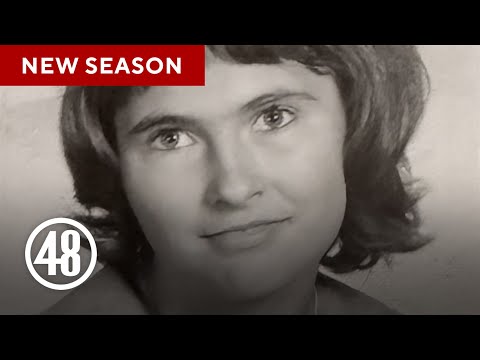
The Girl from Wahoo | Full Episode + Post Mortem
Episode Description
Watch "The Girl from Wahoo" and then catch up with 48 Hours correspondents Anne-Marie Green and Natalie Morales as they examine the cold case of Mary Kay Heese on "Post Mortem."
00:00 The Girl from Wahoo 42:17 Watch the Post Mortem podcast
Crime. Social justice. Impact. "48 Hours" investigates the most intriguing crime and justice cases that touch on all areas of the human experience including greed and passion. "48 Hours," which premiered in 1988, has developed a rich history of original reporting and impact journalism that has helped exonerate wrongly convicted people, caused cold cases to be reopened and solved, and along the way changed lives.
For video licensing inquiries, contact: [email protected]
Read the full transcriptHide the full transcript
- The murder of Mary Kay Hessi has been on the minds of the people of Wahoo, Nebraska for 56 years now.
- I remember being about 9 years old out in the front yard. My mom came out and said, "Hey, get in
- this house right now. A girl in Wahoo has been murdered." And I I remember that plain as day.
- It didn't happen that often in Nebraska. Murders were rare. Mary Kay Hessi was a 17-year-old high
- school student from Wahoo, Nebraska who was killed by stabbing in 1969. The Mary Kay Hessi case is unique
- because of how many people have tried to solve it and they just hit brick walls right and
- left. I'm Bob Frank. Back in 1999, I was a sergeant in charge of the Nebraska State
- Patrol Cold Case Unit. He was running. You can see the struggle. The blood on the ground and the
- footprint and show there was a struggle in this area. Her shoe and another spot of blood was
- found. And then her body. I'm hoping the integrity of the evidence is still there as far as it's not too
- old to test as far as DNA. We're hoping after 30 years we can pull a fingerprint
- off those books. The purse was found at the crime scene and this stuff has been in here for the
- last 30 years. Rabbit's foot with a key and a nail clipper on it. Better be dead sure than sure dead.
- Kind of ironic, isn't it? With the makeup, the pencils, the handkerchiefs, the Kleenexes, just
- your normal 17-year-old's purse. I have one prime suspect. What I'll say right now is he knows who
- did it or he was there. I can't positively say he did it yet. What did you learn about what the
- connection was between him and Mary Kay? Through reports that we had, they were both at the Wigwam Cafe about the same
- time. How long did you end up working this case? Uh we probably stayed on it for
- about a year. Did you think, well, I couldn't make any more headway here, it's it's never going
- to be solved? >> Well, it got to the point where, working with a grant, we had X amount of funds
- to expend per case. And we had reached our maximum. It was one that I really wanted to solve
- for the community, but it just didn't turn out that way. My name is Ted Green, and I was the
- criminal investigator for the Saunders County Attorney's Office. Her body was found where, roughly?
- It's roughly right here. >> Right >> When you're first assigned this case, did you think, well, I'm the guy, I'm
- going to solve this, I'm going to get the answer? No, but I don't let go. I won't give up.
- And it was putting this puzzle back together. What happened after more than 50 years
- in this case? The puzzle came together. You finally got a full puzzle with all the pieces in place.
- >> Mary K. Hessie's unsolved murder hung over this community for five decades. It needed to be resolved.
- I look at this as the case where the community lost its innocence. Where people were told we're not going
- into Wahoo, you're not going out alone. Jennifer Jocum, Saunders County Attorney, and Richard Registered, Deputy
- County Attorney, worked on what is believed to be the longest unsolved cold case in Nebraska history. The 1969
- murder of 17-year-old Mary K. Hessie, a high school junior. It was a very well-known
- A murder, especially of this nature, uh is not common for this area. This right here is what Wahoo is really
- known for, right? I mean, we're >> cow country, >> corn country. It hasn't changed much.
- Ted Green was the criminal investigator for the Saunders County Attorney's Office.
- He started working on the case in 2015. So, this was the high school here. So, on that day she had just finished her
- >> Walked home, and she started walking north here on Street. Memories of Mary K Hessie's murder loom
- large in this small town. This black and white footage was filmed by a local television station shortly
- after the murder. Much of Wahoo looks like it did on March 25th, 1969 when Mary K Hessie never made it home
- after school. So, the last place that she was seen was here on the corner. That evening, Mary K's parents reported
- her missing and the community came out in force to search for her. So, they had Boy Scouts, Cub Scouts, church groups,
- school groups, and the Wahoo Police Department and Sheriff's Office all searching for
- Nothing was found until close to midnight when a farmer spotted Mary K's school books and purse stacked neatly on
- a road near his field. Inside the books was her name, and so he brought the books into Wahoo
- and ran into the police that were searching for her. They all went back to where the books were found
- and they found her body lying in a ditch on the side of the road. Not far from Mary K's bloodied body investigators
- discovered her shoes in the road, tire tracks from a car, and shoe prints potentially from the killer.
- And how had she died? Well, in a horrible way. She was chased down. The The footprints, which were preserved by
- the ground freezing, showed that she got out of the vehicle and she ran, and you
- could tell by the strides that she was really trying to escape. And then near where her body was found, there was a
- pool of blood. She's laying there discarded like trash. Investigators photographed scene,
- measured, and made a cast of that shoe print, and sent Mary Kay's body for an autopsy.
- It was determined that Mary Kay had been beaten and was stabbed to death, leaving
- 14 wounds. No knife was found at the scene. She has a pretty good mark on her jaw
- where she was punched, and the stab wounds come after that. Stabbing somebody 14 times, though, what
- did that tell you about the nature of the crime? >> Rage. Rage. Was she sexually assaulted?
- No. No. But, I believe she understood that's probably where it was going to head.
- The investigation was initially handled by various law enforcement departments. Mary Kay's clothing was sent to the FBI,
- to J. Edgar Hoover's attention, before the days of DNA testing, to see if anything could be learned.
- Investigators questioned people around town about the day of the murder. A witness reported seeing Mary Kay that
- day at around 5:00 p.m. getting into a car that had two men at that street corner. In those early days and weeks,
- did you think, "Oh, they're going to They're going to find whoever did this?" >> Oh, yeah. Mark Miller and Kathy Toll are
- Mary Kay's cousins. >> These are some of Mary Kay's personal belongings, right? >> Mhm. This is her 4-H. Was she proud of
- Oh, yeah. what she did at the 4-H? >> she was. Yeah. Kathy was nine and Mark eight when they
- learned Mary Kay had been murdered. She's the oldest of those cousins, so she always looked out for all of us.
- She was a 17-year-old girl full of life. Kathy recalls being picked up early from
- school the day Mary Kay's body was found. And they told us we had to come to Wahpeton.
- Kathy's family drove to her cousin's home. When they got there, Kathy saw and heard Mary Kay's mom, Dorothy.
- When we went in, it was just you could hear her wailing. It's a kind of pain you feel across the
- room. And at the time, did they tell you how she was found or was that too much to
- tell the cousins, the kids? I think we heard it. When they told us then, it was on the news.
- The family and the community could not understand why Mary Kay had been targeted. There were no answers, just
- fear. And I remember thinking, I'm scared. Everything changed. What our parents allowed us to go do. You didn't have the
- freedoms that you had before. We lost so many different things because of it. Our
- parents wanting to overprotect us. But being overprotective did not ensure safety. Mary Kay's parents, especially
- her father, had always been very watchful and careful with their daughter. She had a
- very strict father. And she was shy. She very much wanted to fit in. And there was a group of girls
- that would put makeup on her at the beginning of the day and change her clothes out so she would fit in
- socially. And then at the end of the school, she changed them back. She wanted to be a part of the crowd. Mary
- Kay was trying to participate in school activities, practicing baton twirling, hoping to be a majorette.
- Part of fitting in for Mary Kay also involved trying to get a date for an upcoming school dance.
- Mary Kay had even written this letter to another cousin asking him to be her date. Will you go to the Sadie Hawkins
- dance with me?" Just wanted a date. >> Mhm. And so she would take her cousin. This
- was March 18th, 1969, until just a week before she died. Investigators thought that perhaps the
- pressure to find a date and fit in led the usually shy Mary Kay to get into that car with the man at that street
- corner. I think she was so naive, she had no clue that something bad could happen to
- her. She just wanted to get a boy to go to the dance with her. And unfortunately, the dance she went to
- was her death. Ted Green, formerly the investigator for the Saunders County Attorney's Office,
- believes the two men who picked up 17-year-old Mary Kay Hessey on March 25th, 1969,
- were driving here, to an area known locally as the Grove. Natural parking and party spot. So kids coming
- down this way, they were two things in mind. Either partying or hooking up. Or hooking up. Those are the two things on
- everybody's mind. Green's theory of the crime is that when Mary Kay realized the men's intentions,
- she fled the car, and one of the men ran after her, eventually stabbing her to death.
- But people who knew Mary Kay wondered why she got in the car with the two men. She wouldn't get into a car with
- somebody that she didn't know. She knew these guys. Working that theory, investigators in 1969
- questioned males in town, especially ones who could have crossed paths with Mary Kay.
- They used what was then a brand new crime-solving tool, polygraphs. They polygraph virtually the entire male
- population of both the schools. I mean, can can you imagine the uproar that would happen today? And they were
- looking for that as their silver bullet. One of the people polygraph and questioned a few days after the murder
- was this man, Joseph Ambrose, 22 years old at the time. Ambrose had been seen weeks before the murder talking to Mary
- Kay around town. They both frequented this restaurant, the Wigwam Cafe, which still stands today.
- Ambrose stood out as he was new to town. Investigators learned he was on parole after having been convicted of forgery
- and escaping from custody. He wrote a $10 bad check with his buddy up in Wayne, Nebraska. They get stopped for
- that, and they escape this little county jail up there, and they catch up in California and bring them all the way
- back. Ambrose served about 3 years and then moved to Wahoo. And he's out on parole.
- He's got a job. He's working at a packing plant. So, a slaughterhouse. Yeah, slaughterhouse.
- And she knew him. Authorities say they learned that Ambrose was known to mingle with high
- school girls and had a reputation for having a temper. He also drove the type of car similar to
- this one that someone said they saw near the crime scene. A local resident had seen two cars leave that night. One car
- was a white over red '56 Chevy. The second car was a white over blue '56 Chevy with two dark-haired males in it driving
- at a high rate of speed. Ambrose drove that white over blue. He's a person of interest.
- Ambrose denied any involvement in the murder and his polygraph seemed to support that.
- Ambrose said he had an alibi that the night of the murder he was hanging out at various locations with his friend
- Wayne Greaser who was also questioned and polygraphed. Wayne Greaser was just that want-to-be kid who was just
- following around Ambrose. And so he's he says he's with him. But while being questioned Ambrose did
- speak about things as Ted Green that got him in trouble with the law and he was immediately sent to jail. He blows his
- parole right there in the pre-polygraph interview. He violates it. Says, "I'm buying booze for minors. I'm having sex
- with minors." So he's booked parole violation. But not for Mary Kay's murder. Why did this case not move along further
- at the time? That's that's a very good question. Follow-up in the initial investigation
- prosecutors say seemed to be lacking with inexperience a factor. Cars were not checked for blood and
- suspects shoe sizes were not compared to the shoe prints found at the scene. This
- was the beginning of the state patrol. Um because before then they just gave tickets for speeding and so these people
- were thrown into this new investigative unit. There were other agencies involved
- but it didn't seem like there was really a lead investigator. And they were just relying on those
- polygraphs. For decades the case sat cold. After seeing the pictures and going through the case you can visualize it.
- I mean everything's the same. After 30 years it's all the same. Nothing has changed. Then 30 years later in 1999
- with the creation of the Nebraska State Patrol Cold Case Unit, Mary K's murder was getting attention again. And 48
- Hours cameras followed Sergeant Bob Frank as he worked the case. And her body was found right in here,
- and that's where we're at right here. And we spoke with Frank again in 2025, now retired from the State Patrol. One
- thing about doing cold cases you find is that stories grow. Stories change. And so, you know, trying
- to separate truth from fiction is sometimes difficult. To try to get to the truth, Frank, in
- 1999, scoured the old case reports. He noticed that Joseph Ambrose and Wayne Greaser,
- the men who were each other's alibis, kept coming up in witness statements. So, then I started talking to other
- people who had been told by these two individuals that they had done this homicide. Greaser had died by suicide in
- 1977. Ambrose was long out of jail, having served a year and a half for that parole
- violation after Mary K's murder. He had moved around and worked as a truck driver.
- Bob Frank knew at some point he would want to talk to Ambrose, but first wanted to take a new look at the old
- evidence. In '99 now, are you hoping you're going to get some sort of DNA? Something.
- So, here's the evidence bag. By 1999, when Sergeant Bob Frank led the Nebraska State Patrol's Cold Case Unit, Advances
- had been made in forensic science that were not available in 1969 when Mary Kay Hechey was murdered. 48 Hours cameras
- filmed Frank going through Mary Kay's belongings as he looked for DNA and fingerprints.
- Among the items tested were Mary Kay's school books found stacked at the scene. Uh we're hoping for for prints to come
- off. It's been 30 years. The theory was that Mary Kay left the books and her purse in the car. The
- killer noticed the items and not wanting to be linked to her belongings, dumped them.
- So we know it was probably the suspect that that put those books on the road. What we were looking for there was any
- type of fingerprint evidence. A fingerprint examiner worked to find and lift prints off the school books
- including one titled Building a Successful Marriage. Were there any fingerprints that came
- No. No. >> That's what we really had them concentrate on were were the were these
- gloves. She was wearing these at the time, wasn't she? Yes. We were looking for somebody else's
- blood on on those gloves. They also tested Mary Kay's clothing. You see these clothes were cut off at the autopsy.
- When I see this it just motivates me more. I mean it's it's something you want to solve. It's something you want
- you want to get closure on. I tell you the truth when I put this out and laid it out the first thing I thought of was
- Mrs. Hechey. I thought of Frank spoke several times with Mary Kay's mother Dorothy over the course of his
- investigation. That's when she started the high school. 48 Hours spoke with her as well in 1999.
- I don't think it'll be solved. I really don't. It's gone all these many years and
- I just I've just given up hope. Hope would be diminished again when the forensic testing led nowhere. Still
- Joseph Ambrose and Wayne Greeser remained at the top of Frank's suspect list. In May 1999,
- Frank decided to question people who knew Ambrose and Greeser around the time of the murder that had been named in
- prior police reports. That's That's why I want two guys in there so one guy can really watch how these guys are reacting
- to the questions being asked them. The thought was the passage of time might make someone more forthcoming.
- And the investigators took several steps to try to help that along. >> We created an atmosphere
- to where it appeared we were a full-fledged task force looking at this case. Uh if he's giving you a hard time
- >> In fact, there was no designated Hessi task force, nor was it getting hot. It
- was just one of the measures taken by Frank and his team as they tried to see if anyone would give new information. I
- wrote their names down on the board and and some numbers behind those names which don't really have any relevancy
- either. Investigator Jay Peterson But it's just going to get them to thinking that we know a heck of a lot more about
- them than perhaps we actually do. They also tried to make the setting a bit uncomfortable for those being
- interviewed. >> Did you grease the table down too? >> Yeah, I dusted What we did was we took a
- bottle of furniture polish, we waxed the table, we waxed these chairs. So when they sit down, they're not going to be
- able to get into a comfort zone. So keep them on edge a little bit and hopefully
- that'll get them talking a little bit, too. We put electronic devices in there to
- record in the room. We let these people know when we brought them in that they were going to be monitored constantly.
- But despite all those efforts, nothing usable was learned. We had people telling us that Wayne Greeser told us
- this. Joe Ambrose told us this, but it was all hearsay evidence. You know, we didn't have that witness
- that was there or you know, knew the facts directly. So, Frank decided it was time to
- interview Joseph Ambrose himself. We will just go see what we can get by knocking on the door. Let's do it.
- In September 1999, Frank traveled to Orange Park, Florida where Ambrose was living. Working with local law
- enforcement, Frank went to Ambrose's home where he answered the door. Mr. Ambrose?
- >> Yes, sir. And willingly went to be questioned at the Florida Department of Law
- Enforcement. >> Recall for me what what you did that night. I mean, if you know, you've been
- questioned about it before. >> No. So, you know, tell me what what what you did. Ambrose said on the day of the
- murder, he got off work around 5:30, went home, and then went to a club until closing time.
- Unlike his previous interview where his now deceased friend Wayne Greeser was his alibi, he did not mention being with
- Greeser. >> But you had said in interview reports, and I have those interview reports, that
- you were with Wayne. Okay. I I it's possible. I said it's been a long time. It's possible I was
- with him. Frank also asked many questions about Ambrose's job at a slaughterhouse.
- >> Uh I worked on the kill floor. >> Kill floor? Yeah. Since Mary Kay was stabbed to death, Ambrose was asked
- about his access to knives. >> Was there a special type of instrument you had to use for that or was it just a
- regular knife? Uh no, I had uh like like three different knives, but I didn't Ambrose was adamant he had
- nothing to do with Mary Kay's murder, even when Frank implied they found someone's DNA at the scene.
- We have a wonderful thing called DNA. Right. And we're going to be able to show who she struggled with. But Um
- Again, you know, we have all these little bits of information here and there that fit together that you were
- there. Not necessarily that you did it, but that you were there when it happened. Okay?
- >> Well, that that That's yet to be proven. I mean, I wasn't there. Like I said, I had nothing
- to do with it. Uh and you're you're free to take blood, anything you want. >> Okay. Despite Ambrose's cooperation,
- Frank found several things suspicious. Like Ambrose's explanation for giving different versions of where he was at
- the time of the murder. Well, I don't remember everything. The reports here indicate a size 9 and 1/2 shoe
- at the scene. And there was that shoe print found at the scene, which was the same size that Ambrose wears. You got a
- 9 and 1/2 shoe. Okay, another coincidence. Really? Okay. Frank also asked Ambrose about a report from 1972,
- before Wayne Greeser died, in which a friend of Greeser informed authorities Greeser had confessed to him that he and
- Ambrose drove Mary Kay to the field, and that it was Ambrose who killed her. When
- Frank brought it up, Ambrose got agitated. >> nothing to do with it. I don't know what
- Greeser was saying, and that's all I got to say. After the interview, Ambrose gave his blood for DNA testing and
- submitted to another polygraph. Nothing incriminating was found at his house, and his DNA did not match any found on
- Mary Kay's items. We presented what we had to the to the county attorney at the time, and he just
- felt there was not enough to even take it forward. In 2000, Frank stopped working the case, but held out hope that
- one day something would be found. We needed something to to drive this case forward.
- What exactly happened in this field in 1969 was still a mystery when Ted Green in
- 2015, then the investigator for the Saunders County Attorney's Office, started looking into Mary Kay Hessie's
- murder. I was putting this puzzle back together. He had collected reports from all the
- different agencies that worked the case over the years. He found memos and statements that had never been filed.
- Then I started going through the list of names and all those volumes and re-interviewing. And so I was able to
- start tracking down individuals. Green says one of those people told him that Ambrose had seen Mary Kay, not just
- at that cafe they frequented, but also around town. And that Ambrose told him he wanted to have sex with Mary Kay.
- And he says, "Well, Mary Kay was up in her driveway twirling her baton." And he had made the comment that, "Yeah, the
- suspect told me he wanted to do her." Green, like Frank, focused his investigation on Joseph
- Ambrose. Green says another person told him he had seen Ambrose and Wayne Greaser arguing that night. They got
- into a fight that very night about some girl. And this guy's coming forward and saying this fight occurred and nobody
- paid attention to him. Green also re-interviewed a co-worker of Ambrose who said Ambrose told him after the
- murder that, quote, "I can do 6 months, but I can't do life." For Green, this was Ambrose's motive. Green theorized
- that Ambrose could deal with serving 6 months for a parole violation, but not more for attempting to sexually assault
- Mary Kay. He knows he's going back. It's not a place he wants to go. So you believe he killed her because he was
- trying to make sure >> going to, yeah. She She didn't report him. Yeah. Green was frustrated with the
- initial investigation's lack of follow-up. Especially disturbing to him was that Joseph Ambrose's car, that
- looked similar to this, was long gone and had never been examined. Why wasn't this in those reports? These are basic
- questions I was asking. While Green worked the case, this man, Josh Eberhardt, a friend of Kathy Toll, Mary
- Kay's cousin, wanted to bring attention to the decades-old murder that continued
- to haunt the family. >> The way that I could feel their pain when I spoke with them, I couldn't let
- it go. I knew I wanted to help them somehow. That help came in 2019 when Josh, with the assistance of Kathy, set
- up a Facebook page tipline. And I started writing the post for this page, and I was trying to pull at the
- heartstrings of the community. Dear Mary Kay, 50 years have come and gone since someone took you from us all.
- I sit here at my computer every day working to find justice for you. Josh hoped the post might jog people's
- memories. Tips came in that went nowhere, but then Somebody came forward with a really big
- tip. The tip involved a reservoir not far from the murder scene. The person had heard stories about men taking apart
- a car that looked like the one Joseph Ambrose drove and pushing the car into the water shortly after Mary Kay's
- murder. We heard the words white over blue, '50s Chevy. So, we knew it was important enough to pass to Ted, and he
- took it from there. Ted Green also thought it was important. He always wondered what happened to the car
- witnesses reported seeing Mary Kay get into a car he believed belonged to Joseph
- Ambrose. You think it's the Chevy that's in that lake? Yeah, they got rid of the
- car. There was blood >> blood on it. It was a murder scene. It was a murder scene.
- I think the murder weapon's there also. So Green tried to determine what was at the bottom of that reservoir. It was a
- process seen here that went on for about 5 years including having a portion dredged. And
- we started coming up with bits and pieces of weird steel. But he needed to come up with more.
- Civilian divers cracking cold cases Then Green saw a YouTube video from an underwater search and recovery dive team
- called Adventures with Purpose. The organization is primarily focused on searching underwater for missing
- persons. Called them up and said, "Listen, this is an active investigation. We don't have a body in
- here. I'm looking for evidence." And they agreed to do it. Two-tone piece of fiber.
- Two different colors. Piece of metal. Same same metal we've been pulling up. >> We pulled up more and more metal.
- We also pulled up fiber consistent with the color of the interior of the car we're looking for.
- Still though, they could not prove the metal and fiber were from a car. To determine anything more, the reservoir
- would need to be drained, which was not feasible. If the reservoir couldn't provide more
- clues, Green and the county attorney thought perhaps Mary Kay herself could. In 2024,
- the decision was made to have her body exhumed and perform another autopsy. The first autopsy was not quality
- autopsy or at least by today's standards. Obviously, it's science, things evolve.
- But first, the family had to consent. Green and Kathy Toll had been in close contact through the course of his
- investigation. Kathy was always pushing to learn more, so she gave her permission to have Mary
- Kay's body exhumed. It was It was hard. I uh anything that maybe would get the answers we were looking for, but
- it was a hard choice. But what kind of answers could be found from a body that had been buried for
- more than 50 years? We didn't know what we were going to find. Mary Kay had been buried for 55 years
- when her casket was lifted out of the ground to perform another autopsy. Remarkably, say prosecutors, her body
- was well preserved, allowing a pathologist to learn more about her knife wounds.
- The second autopsy was extremely valuable. It added clarity to the manner of killing.
- According to investigators, the manner in which Mary Kay was stabbed was consistent with how slaughterhouse
- workers are taught to kill animals. The angle, exactly how her body was showed in the autopsy, is exactly how
- they were told to do it. For Ted Green, it was another piece of the puzzle tying Joseph Ambrose, who had
- worked on the kill floor of a slaughterhouse, to Mary Kay's murder. There was also that shoe print at the
- murder scene. A size 9 and 1/2. And he wore 9 and 1/2 shoe and that's the size shoe that was there.
- But it was more than just the size. Green says it was also the pattern of the print. It matched a prison issue
- shoe that Ambrose, on parole at the time of Mary Kay's murder, could have been wearing. So, these little consistencies
- are starting to add up. At what point though do you feel you have enough that you can then go to the county attorney's
- office and say, "I think I've got a pretty good case here." It was his interview.
- In 2021, Green interviewed Ambrose, traveling to Ohio where he was living. According to Green, people told him they
- had seen blood on Ambrose's car around the time of the murder. Green says when he asked Ambrose about
- this, he admitted there was blood on his car because he ran over a deer or rabbit. He said that blood is on the
- left rear fender. The back The back fender. >> Yep. You don't hit a deer or rabbit on a
- left rear fender and put blood on that. And he admitted the blood was there at the night of the homicide. Green
- believed Ambrose pinned Mary Kay on the car trunk and the blood was hers from those 14 stab wounds.
- In 2023, Green presented his investigation's findings to the county attorney. The witness statements, the
- shoe print evidence, Ambrose's interview. Prosecutors knew it would be a challenging case. The murder weapon was
- never found, nor was there DNA evidence connecting Ambrose to the killing. But they also knew time was running out. We
- were getting to a point that 55 56 years ago this occurred. So, we're starting to
- lose witnesses. So, the decision was made to take it before the grand jury. The grand jury quickly indicted Joseph
- Ambrose for the first-degree murder of Mary Kay Hesse. The then 77-year-old was arrested on
- November 18th, 2024 in Oklahoma, where he was living. Ambrose was then extradited to Nebraska.
- Thrilled to death. >> I was thrilled to death that finally, finally, Mary Kay will have justice.
- For Mary Kay's family, the arrest was gratifying, especially for Kathy. She had promised Mary Kay's mother, Dorothy,
- who died in 2007, that she would fight for justice and not forget Mary Kay. This is Aunt Dorothy
- asking for us to continue to search for whatever happened to Mary Kay. I didn't want to let her down. I told
- her that I would not stop, that I would continue. Kathy and Mark were preparing themselves to finally
- have some answers to 56 years of questions about what happened to Mary Kay. There were pretrial hearings where
- Ambrose appeared frail and on oxygen. Months passed, and then in July of 2025, Kathy and Mark got news they were not
- expecting. A plea deal had been reached, not for first-degree murder as charged,
- but for conspiracy to commit first-degree murder. As part of the deal, Ambrose pleaded no
- contest, which meant he did not have to give any details about the murder. The family never got the chance to say
- no. Kathy and Mark say they weren't consulted about the deal, which also named the deceased Wayne Greaser as the
- other person conspiring to kill Mary Kay. It was a blow to Kathy and Mark and to
- Ted Green. There's no justice for Mary Kay. There's no justice for the family. And
- no answer. And no answer. In an email to 48 Hours, Joseph Ambrose's attorney stated that Mr.
- Ambrose maintains his innocence. Due to Mr. Ambrose's age, he states he took the
- plea bargain due to his health issues, since he may not have lived until trial to try to clear his name.
- He gets off. I didn't do it. Really? I'm sorry. If you're going to fold like that,
- I laid my keys on the table and walked out 2 minutes after he played. I retired right then and there.
- I understand with some folks the plea deal wasn't particularly appealing. County Attorney Jennifer Jokum knew
- there would be backlash for accepting the plea deal. But she also felt as they proceeded to
- trial, the case was only getting weaker. You know, you have to look at the odds of even getting to trial.
- There were chain of custody issues from the evidence going through so many hands
- over the years. And with some witnesses dead, testimony could be deemed inadmissible.
- It was leaving them uncertain the case could be proven beyond a reasonable doubt.
- We had to analyze the case and the evidence. It was important to get the conviction.
- But since Mary Kay's murder occurred in 1969, sentencing guidelines from then would
- have to be used. A conviction of conspiracy to murder in 1969 carried only 2 years of prison time.
- We're bound to use those statutes as they existed at that time. Oh, I'm angry. I'm plain angry.
- On August 27, 2025, just before formal sentencing was to occur, we spoke with Kathy and Mark.
- They already knew the maximum sentence that could be imposed was 2 years. We all know this isn't justice. And his
- thing was he didn't want to die in jail. He didn't want to die in prison. Mary Kay didn't want to die that day,
- either. At sentencing, Kathy and Mark addressed the court. I remember Mary Kay Hessey as a person
- who would never hurt anyone. Joseph Ambrose chose to say nothing. Mr. Ambrose, is there anything you wish
- to say before a sentence is imposed? No. The maximum penalty under the law as it
- existed in 1969, and which is applicable today in the matter, is 2 years of imprisonment.
- Due to Nebraska's good-time sentencing reduction law, Joseph Ambrose's sentence was cut in half. With time served, he
- was released on November 15, 2025. He got all these years to live, and Mary Kay never had the chance to
- live. For Mary Kay Hessey's family, the quest for justice, after more than 50 years,
- remains elusive. She didn't deserve this at all. She was a 17-year-old girl full of life.
- >> Welcome to Postmortem. I'm your host Anne Marie Green, and today we're discussing the murder of Mary Kay
- Hessie, a 17-year-old high school student from Wahoo, Nebraska. She was killed in 1969.
- 55 years and multiple investigations later, one of the very first suspects, Joseph Ambrose, was finally arrested and
- charged with Mary Kay's murder. Joining me now is 48 Hours correspondent Natalie
- Morales. Natalie, you worked on this episode. It was I mean, it was a doozy. Yes, it was. And good to see you again,
- Anne Marie. In fact, this is one of the longest cold cases that 48 Hours has been working on. Before we dive deeper,
- just a reminder to everyone, if you haven't listened to this episode of 48 Hours, you're going to find it in the
- podcast feed just below this one. Listen, and then come on back for this conversation. So, Natalie, you know,
- watching the years tick by, I really didn't think that there was going to be a resolution to this murder at all. And
- I wonder what it was that kept detectives coming back to the case over and over again. When with each year, it
- seemed like it would have been more and more of a long shot to get a resolution.
- Yeah, you know, this was a real shock to the town of Wahoo. I mean, it really lost its innocence after the murder of
- Mary Kay Hessie back in 1969. Murders there in this town were very rare. But afterwards, people were afraid to go to
- Wahoo because that's where the girl was murdered. It kind of developed that negative reputation and connotation. You
- know, and if you think back, I mean, this was these were the days, 1969. It was the Sadie Hawkins dance. Girls would
- bring, and Mary Kay Hessie, in fact, was bringing her little straw pocketbook to
- school. I remember, in fact, having a bag very much like that, and even the the lucky rabbit uh keychain was
- something that I even had as a kid growing up. It was like a time capsule um reminding us of kind of a much more
- innocent time. And when you go back to Wahoo, you know, it really does look a lot We compared, you know, the footage
- throughout the hour from 1969 to then we were a little bit of a time lapse to 1999, and here here we are 2026 covering
- this case again, and really not much has changed. A lot of the things there still
- remain the same. And another interesting people may think, "Well, Wahoo, why does
- that sound so familiar?" Well, David Letterman used to have a stick on his show where he would check in with our
- home office in Wahoo, and we drove past the what was the old phone booth, the old glass phone booth that you would see
- back in the day, and people would put Post-it notes on that phone booth, and that was the so-called office in Wahoo
- that David Letterman was referring to. And just to bring people back to the case, this is how things unfolded that
- day. March 25th, 1969, Mary Kay's parents reported her missing that evening when she failed to come
- home from school. A witness reported seeing Mary Kay getting into a car with two men. Her body is then found in a
- ditch along a rural road. Uh she has been beaten, and she has been stabbed to death. Yeah.
- We know that when it comes to homicides, you know, those first few hours, those first few days, they are crucial when it
- comes to solving a case like this. Why was it so difficult to sort of nail down suspects for this murder in those early
- days, especially when there was an eyewitness who saw her getting into a vehicle. Yes, and the police at the time
- did question all those witnesses, investigators, you know, went about doing the job as best they could back
- then with the tools that they had. Investigators now looking back on the case and the prosecutors, you know, they
- reminded us 1969, I mean this type of murder case, a homicide in Wahoo, Nebraska, that was unheard of. In fact,
- the Nebraska State Patrol had just started to broaden the scope of things that they got involved with like
- criminal investigations. >> Also, it was it was spread out over various different law enforcement
- departments, you know, the police department covered some of it, the sheriff's office had part of the case,
- the state patrol got involved. And some of the evidence of this case was even sent to the FBI, which was at that time
- under J. Edgar Hoover. All was sent to J. Edgar Hoover's attention. And the current prosecutors say that the
- evidence was scattered all over the place across these different agencies, so that made sort of pinning down things
- a little more difficult. So, then what sort of evidence did they have, you know, at that time?
- Well, really it came down to analyzing and and taking stock of that crime scene. You know, they saw footprints in
- along the road that showed that it appeared that Mary Kay Hassey got out of the vehicle and it seemed
- like she was running and they could tell this according to the investigators back
- then because the strides were long strides. And they also saw another shoe print by
- her footprints. Her her schoolbooks were found alongside of the road as well as that pocketbook that I mentioned stacked
- neatly on the road. So, investigators believe that the killer might have placed them on the side of the road
- realizing, you know, I've got to get rid of this evidence. But this was long before the days of DNA testing, so all
- of that would be preserved somewhat, but yet it would take years for them to go back and analyze and look at the case
- again using new tools with science advancing and catching up to where we are today. I thought it was really
- interesting that they relied a lot on the polygraph test. And now we know polygraph tests are, you know, I don't
- know how often they're used because we know that people can beat them, but Joseph Ambrose, they speak to him at the
- time. He's 22 years old. He's questioned because he was seen talking to Mary Kay
- weeks before the murder. He tells investigators that he was actually hanging out with a friend, Wayne
- Greeser. They were at a number of different locations the night of the murder. Both of the men though take and
- they pass polygraph tests. Um Nowadays, polygraphs are usually not admissible in court.
- >> Yeah. And you know, today, I mean, I think scientific research suggests that polygraph tests, they're generally not
- reliable as you said. People can beat those tests. Also, if you're nervous and you're taking a polygraph test, I don't
- know if you've ever been hooked up to one of those, but you know, you get nervous when you're taking that. I I had
- it done once, you know, just as a tool, and your levels are spiking just because
- you're nervous, and it could change the the polygraph result. Um so, Ambrose did
- pass that original polygraph, but we again don't really know what exactly he was asked, and um they didn't even look
- at, you know, Ambrose's car at the time. And it's believed, you know, if all of this happened, it happened within the
- car and outside of the car, that would have been the crime scene. And also, they never really compared the shoe
- print that they found frozen to Ambrose's. Although Ambrose was a size 9 and 1/2, which turns out was the size of
- that print, but it would only be years later now as recent investigators started putting the pieces together that
- they would make that connection. And then in 1999 we have Sergeant Bob Frank. He picks up the case again and 48 Hours
- cameras were actually there following the investigation. That's right. You know, we filmed Sergeant Frank. This was
- back when they formed this this newly formed cold case team to tackle this case and they worked on it for a year
- because this was a 30-year cold case at the time. So we at 48 Hours back then in
- 1999 were interested to see if the cold case team using DNA technology, if they could find any new DNA evidence with the
- new tools and the science. So we filmed the team for quite a while and and it was evident though at the time that the
- case didn't seem to be moving forward anywhere. It remained cold. So the story was really put on the shelf. That
- footage also put on the shelf for us at 48 Hours. But like we say, we always like to follow cases for as long as we
- can until there's some sort of resolution and we became aware that an arrest had been made in 2024 and we
- found all the footage that we had and realized boy, you know, we do have a lot here and and this would make for a
- fascinating update. Hm, and in watching the archival footage, I was sort of struck by how much access 48 Hours had.
- I don't think we'd have the same level of access today. I mean, it really was like being a fly on the wall in the
- investigation as it was carrying on. We We went into the interrogation room with
- them. They made it seem like there was this so-called cold case task force. They waxed up the tables, even waxed the
- chairs so that anybody that they brought in for questioning would be uncomfortable and like it would be slick
- and sliding around. You see a bunch of names up on the whiteboard in the interview room. That was again one of
- the tactics they used just to try to make it seem like, "Oh, they're making a break in the case. Look at these names."
- Although a lot of the names were fake names. One of the investigators even put his own name on the whiteboard. So, that
- kind of insight into a case, I don't think we've we've seen something like that today.
- Um it shows though the lengths that the detectives went through to try to get some sort of break in the case and new
- information. Yeah, and you get some real insight into sort of how they're thinking about this investigation.
- Sergeant Frank scours these old case reports and what he notices is that Joseph Ambrose and Wayne Greaser, they
- keep coming up over and over again in witness statements. So, then he interviews people who knew the men at
- the time of the murder and then eventually he actually travels to Florida to speak with a Joseph Ambrose
- himself. And we have some of that sound. We have a wonderful thing called DNA, right? And we're going to be able to
- show who she's wrong with. Okay. Um Again, you know, we have all these little bits of information here and
- there that fit together that you were there. Not necessarily that you did it, but that you were there when it
- happened. That's yet to be proven. I mean, I wasn't there. I said I had nothing to do
- with it. Uh and you're you're free to take blood, anything you want. You know, we even had
- incredible access. The the crew that was there following Sergeant Frank at the time, they were parked right outside
- when when they picked up Ambrose up for questioning. Ambrose has always been insistent since shortly after the murder
- that he had nothing to do with this. Um he though, as you heard, seemed to be cooperative. He even offered up his
- blood, but he knew investigators also had a search warrant for his house. So, one of the few times we do see Ambrose
- get just a little bit agitated is when Frank brings up, you know, the man who told authorities that Greaser confessed
- that he and Ambrose had driven Mary Kay to that field area and that it was Ambrose who killed her. However,
- detectives at the time couldn't talk to Wayne Greaser anymore because he had died by suicide in 1977.
- Given all of that, there was no match when it came to the DNA to Mary Kay's books or her clothes. So, ultimately it
- came down to this case once again stalling because, you know, the county attorney at the time felt there just
- wasn't enough to move forward in the case. They also they were working off of a grant. They started to run out of
- money. So, in 2000, Sergeant Bob Frank unfortunately had to stop working on the case.
- Welcome back. So, the case is cold and then fast forward to 2015. Enter Ted Green. He is an investigator for the
- Saunders County Attorney's Office and he starts looking into the Mary Kay Hesse murder.
- This is a small town. I presume with limited resources, yet, you know, they still sort of
- managed to scrounge up the money to keep this investigation open. How were they able to do that?
- Yeah, you know, I it was up to the prosecutor and like I said, this is a case that really hung over the
- community. So, it was something that always remained on people's minds. Time though, as as you know, was not on their
- side. Witnesses, of course, were dying, memories are fading, and Ambrose was getting old. So, prosecutors told us
- they felt it was now or never and, you know, Green was the one who looked back at all the files once again. He had to
- go scrounge various bureaus to find all these other pieces of evidence that were
- were widespread over various departments and agencies and he tried to consolidate
- it, put it all together. He ended up re-interviewing witnesses again um and what started off with just a
- couple of files ended up being boxes and boxes of files. And they really went all
- out um running down leads. Um in 2019 a tipster reported that they had heard stories about a man taking apart a car.
- Green feels that the car looks an awful lot like one that Joseph Ambrose had actually driven at the time and that the
- car was pushed into water shortly after uh Mary Kay's murder. This led investigators to search a local
- reservoir. It took five years to partially to search and then partially dredge this
- reservoir and really they got scraps. So as I was watching this though I I just like I wondered why that was so
- important to them especially considering that it didn't seem like they got much in the way of evidence. Yeah, you know
- um Ted Green was was adamant that finding the car would be the ultimate piece of the puzzle that he really
- needed. It was what he viewed as the crime scene. He thought also that the murder weapon, the knife, could possibly
- still be in the car. Unfortunately in this case they came up with just little scraps of material which they felt could
- have been the material from the seats from the inside of the car because it kind of looked like that, you know, the
- color of the material they would expect. Um but they didn't get to the bottom of
- the reservoir because they couldn't end up dredging the whole reservoir. Mary Kay's body was exhumed for a second
- autopsy. Now, you know, after the body was buried for 50 years, I assumed that there
- really wouldn't be much in the way of evidence because I assumed there'd be more decomposition.
- But I want to play a portion of the interview that you had with Richard Register, the deputy county attorney,
- and Jennifer Jolken, the Saunders County attorney, where you talked about just how well preserved Mary K's body was.
- When they revealed her after they took off the the drapings or whatever that thing she had on her,
- her legs looked like she was in just the day before. Remarkable. >> And remarkable. The thing that was just
- frightening is all is her goosebumps formed on her legs during the autopsy. Mhm. That's what Ted was saying. I did
- not know that could happen. Almost as if she was her body was trying to tell you
- something from the grave. >> Yeah, just completely remarkable. I had never heard of that being, you know, a
- possibility that, you know, that the body would have goosebumps like that. But apparently, according to the
- prosecutors, they said the medical examiner said that sometimes when a body is re-exposed to oxygen, that it can
- have sort of that that reaction like that. What was fascinating about the second autopsy and what that revealed
- that allowed them to get a much bigger clue into who could have done it was they they noticed there were more stab
- wounds in the autopsy than was initially reported. And also, according to investigators, the manner in which Mary
- K was stabbed was consistent with how slaughterhouse workers are taught to kill animals. And I bring that up
- because Joseph Ambrose worked on the kill floor of a slaughterhouse. So, he knew how to kill animals. He had the
- weapons and the knives to kill animals. And the way Mary Kay Hessi was killed, according to the prosecutors and the
- medical examiner upon the second autopsy, they felt that it looked like somebody who knew what they were doing.
- Mhm. So then, in 2021, Green travels to Ohio now to interview Ambrose again. Um this guy kind of gets around because
- every time they try to track him down, he's living in a in a different state. Do we have any idea just what was going
- on in his life over the decades between, you know, Mary Kay's murder and 2021? Yeah, I mean, it's it's hard to
- really pin it down. Um we do know that according to authorities, Ambrose had had six wives. He also reportedly
- was a truck driver perhaps for some of that time, uh according to the prosecutors. Um but
- when Ted Green goes to interview him this time, he asked him about claims that people had reported at the time that
- they had witnessed blood on his car around the time of the murder, and Ambrose admitted there was blood on his
- car because he said he probably ran over a deer or a rabbit. But the blood was reported on the back rear fender, and
- that is not typically where you run over an animal. You don't really back up into
- the animal. You would hit them moving forward. So the fact that Ambrose said yes, that there was blood on his car,
- Ted Green felt that was a revealing part of the interview. Right. I I I I just thought to myself, either a deer a deer
- or a rabbit? I mean, Yeah. You would think you'd be able to narrow it down, and you would remember what you hit.
- Yeah. Yeah, you if you hit a deer, you probably never forgot that. You know, but There's a lot more damage to the car
- as well. Absolutely. So by 2023, Green feels like he has compiled enough evidence. He shows his findings to the
- county attorney, and then that's presented in front of a grand jury, and the grand jury indicts Ambrose for
- first-degree murder, for the murder of Mary Kay Hessey. Do we know what the collection of
- evidence was that convinced the grand jury? So, it was again Ted Green putting all of the pieces together to to give a
- fuller picture to this puzzle. He had presented new witness statements, Ambrose's interviews, because he went
- back to the old interviews and it compared to what Ambrose was telling him now with the new interview, and then of
- course the evidence of the shoe print. Well, Ted Green says the shoe prints at the murder scene appeared to match
- Ambrose's size, the size 9 and 1/2, and also the pattern was a prison-issued shoe that Ambrose, who had served time,
- he was on parole at the time, had been new to the town, but he had been given a prison-issued shoes, so it could have
- matched the pattern that was found at the crime scene. So, they are preparing to go to trial, and then in July of
- 2025, before the case can be heard in a courtroom, prosecutors reach a plea deal.
- So, Ambrose agrees to plead no contest to the charge of conspiracy to commit first-degree murder.
- But, because the crime was governed by the sentencing guidelines in 1969, the charge carries a very light penalty,
- just 2 years behind bars. Ambrose is sentenced to the maximum. It's 2 years. Right. And with the good
- time sentencing reduction law, Joseph Ambrose's sentence was actually cut in half, so with time served, he He
- actually released in November of 2025, which for the murderer that has haunted this town for so long, 55 years, for him
- to serve just a little over a year, you know, for the family, it was a real shock and almost a slap in the face.
- They were not happy about that whatsoever. They wanted to bring the case forward to a jury. They wanted the
- case to go forward in trial, but Ambrose, he said he did take this plea deal because he um because of his age,
- he was on oxygen, he had some health issues, he was in his late 70s, he may not have lived until trial. To this day
- though, he maintains his innocence. With this plea deal, he didn't really have to talk about the
- case at all. He didn't have to address any of the accusations. He didn't have to reveal any details about the murder.
- So, you can you can understand why viewers Mhm. and I count myself among them, feel
- a little satisfied with this result. What the prosecutors told us is while they understand and they see the
- family's perspective, of course, they would have loved to have been able to have charged him and to really have seen
- him, you know, go to trial. They do believe Ambrose did this, um as does the family. But the prosecutors really felt
- that their case faced several challenges. This is 55 years later. The possibility of witnesses not being
- around much longer, might have even died. Uh prior statements could have been viewed as hearsay, and that would
- be inadmissible in court. You know, the murder weapon also was never found. There was no DNA evidence, and they
- weren't confident that they were going to be able to get a conviction from a jury. Ambrose had also had an
- experienced attorney who was provided by the state. That attorney was able to get
- Ambrose the best plea deal possible. It's It's very difficult. Not only is it difficult to investigate decades-old
- cases, but it's difficult to put together a 48-hour episode. Um so, you guys did an excellent job. I really sort
- of felt like I was transported kind of back in time and then forward again. And even though it never went to trial,
- you know, we did get some answers. Right. In the end, there is, as you said, finally an answer and some form of
- justice for Mary K Heaslip's murder. Absolutely. Um really interesting hour. And Ali, thank you so much. Thank you.
- And if you like this episode, please rate and review on Apple Podcast or Spotify.
Brief Summary
The murder of Mary Kay Hessi remained unsolved for 55 years until Joseph Ambrose was arrested and charged in 2024, but received a minimal sentence.
Key points
- The Unsolved Murder of Mary Kay Hessi. For over 50 years, the murder of 17-year-old Mary Kay Hessi has haunted Wahoo, Nebraska.
- A Community's Loss of Innocence. The murder changed how parents allowed their children to roam freely.
- The Investigation's Challenges. Investigators faced numerous obstacles, including inexperience and lack of evidence.
- The Search for Closure. Sergeant Bob Frank's efforts in 1999 reignited hope for solving the case.
- The Arrest of Joseph Ambrose. After 55 years, Joseph Ambrose was arrested for the murder of Mary Kay Hesse.
- The Plea Deal. Ambrose reached a plea deal for conspiracy to commit murder, not first-degree murder.
Episode highlights
- The Unsolved Murder of Mary Kay HessiFor over 50 years, the murder of 17-year-old Mary Kay Hessi has haunted Wahoo, Nebraska.“Mary K. Hessie's unsolved murder hung over this community for five decades.”4:29Mar 15, 2026
- A Community's Loss of InnocenceThe murder changed how parents allowed their children to roam freely.“I look at this as the case where the community lost its innocence.”4:46Mar 15, 2026
- The Investigation's ChallengesInvestigators faced numerous obstacles, including inexperience and lack of evidence.“Follow-up in the initial investigation seemed to be lacking.”16:26Mar 15, 2026
- The Search for ClosureSergeant Bob Frank's efforts in 1999 reignited hope for solving the case.“It's something you want to solve. It's something you want closure on.”20:32Mar 15, 2026
- The Arrest of Joseph AmbroseAfter 55 years, Joseph Ambrose was arrested for the murder of Mary Kay Hesse.“Finally, Mary Kay will have justice.”36:47Mar 15, 2026
- The Plea DealAmbrose reached a plea deal for conspiracy to commit murder, not first-degree murder.“There's no justice for Mary Kay.”38:24Mar 15, 2026
- The Cold Case ReopenedIn 1999, Sergeant Bob Frank revives a 30-year-old cold case, hoping for new DNA evidence.“We always like to follow cases for as long as we can until there's resolution.”50:18Mar 15, 2026
- The Shocking Plea DealJoseph Ambrose pleads no contest to conspiracy to commit first-degree murder, receiving just 2 years.“For him to serve just a little over a year, it was a real shock.”1:03:25Mar 15, 2026