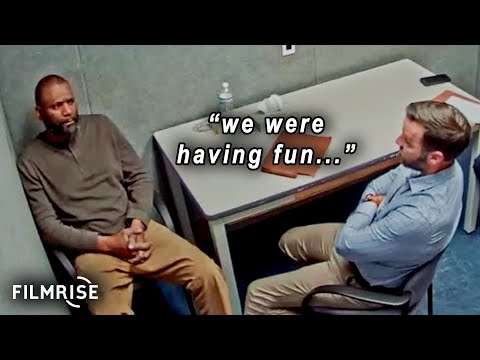
The Dark World of Alex Murdaugh | Millionaire Murders
Episode Description
In 2023, Alex Murdaugh, a prominent South Carolina lawyer, was charged with murdering his wife and son. The killings were linked to his financial crimes, including embezzlement and fraud.
Greed, jealousy, revenge, lust, anger — any and all are motives for murder. When there's cash involved, the stakes are even higher. Explore a new case in each episode of Millionaire Murders.
Read the full transcriptHide the full transcript
- [theme music] JOHN CONRAD: The murders themselves occurred in a place called Moselle, in the low country,
- here in South Carolina. JOHN MONK: It's a region of low lying swamps, Spanish moss hanging from trees.
- And it's pretty romantic and kind of a frightening place to be at night. KENNY KENSEY: The property is 1,700 acre,
- sportsman's paradise, with a really, really nice residence in the middle of that property.
- It's a place that most people would only be lucky enough to visit, much less to call it home.
- [line dialling] RYAN NEIL: Alex Murdaugh called 911. He starts the phone call by saying
- that I need help because my wife and son have been shot. They keep him on the phone for a little while,
- talking to him about the incident and what he can recall. They also talked to him through about rendering aid.
- And he basically tells them that he can't render aid, that they're both deceased.
- During the call, he tells the 911 operator that I'm going to go back to the house.
- And I'm going to get a gun for my own protection. Then you can hear, on the call, you
- can hear the door chimes on the vehicle and everything else. He goes back to the house and then goes back to the scene.
- And he is standing by until deputies get there. [sirens wailing] CREIGHTON WATERS: The Murdaughs lifestyle
- was a very wealthy one. They had a beach house in Edisto, which is a very nice and fairly wealthy beach community.
- They had the Moselle property. And they traveled a fair amount. They were generally known.
- And Alex was generally known as one of the richest, most powerful charismatic lawyers in town.
- They had a nice house. And they owned several properties, including that 1,700 acre Moselle and a nice beach house.
- They certainly lived a very wealthy lifestyle. JOHN MONK: The Murdaughs weren't just any family.
- Alex Murdaugh was a fourth generation member of a very powerful, political, social, and legal dynasty
- in South Carolina, which started in 1910 when his great grandfather, Randolph Murdaugh,
- founded the Murdaugh Law Firm. And in 1920, Randolph Murdaugh became what's called the solicitor or chief elected prosecutor.
- And that's just not any job. As chief elected prosecutor over five county region,
- the prosecutor is in charge of all the criminal cases and interacts with sheriffs
- and other elected officials. KENNY KENSEY: Very powerful. I would probably compare their connections to--
- the only ones I could compare it to is probably the Clintons. Quite a following here in the south, in South Carolina
- and very connected. RYAN NEIL: Alex is one of three sons to Randolph Murdaugh. Alec married Maggie.
- And they had two children, one being Buster, who is the oldest. And Paul being the youngest.
- Paul was more of a free spirit. He was an undergrad. I don't think he had any plans to be an attorney in the future.
- The aspect of the Murdaugh lifestyle he enjoyed the most was the farming aspect of Moselle.
- That's probably along the lines of what he wanted to do in the future. CREIGHTON WATERS: He loved to be on that property.
- Wherever he went, he always had a shotgun and a rifle with him. And then Maggie was very much a doting mother.
- She was not one who had a job. She was a homemaker and lived a life of luxury, I think.
- BLANCA SIMPSON: Alex had this personality that would lure you in. You he made you feel like, you were his friend.
- ALL: (SINGING) Happy birthday, dear Creighton Happy birthday to you. MAN: Thank you all so much.
- BLANCA SIMPSON: She just brought you in. He had that personality, that southern gift of gab,
- I guess you can call it. So it was hard for you not to like him. JOHN MONK: Alex and Maggie Murdaugh,
- with their trappings of wealth, and the prominence, and prestige in the community, I mean, they were people,
- if you got in trouble, they could help you. JOHN CONRAD: Alex, Paul, and Maggie, quoting Alex,
- all met for dinner at Moselle. They had eaten dinner. He went and sat on a couch and laid down
- and actually fell asleep for a couple of hours after dinner. He got up around 9:00 ish, something like that.
- And he wanted to go check on his mother. He spent about 45 minutes at his mom's house, visiting with her.
- And then he drove home. And he went to the main house first, noticed that Paul and Maggie were still not at the house.
- And then decided, well, I'll drive on down to the kennels. And very quickly discovered their two bodies
- and then called 911. SAVANNA GOUDE: The police arrive at Moselle. It's very dark there, a good distance away from the house.
- I wouldn't want to walk that far, especially at night. I think it may have rained earlier.
- It's kind of wet out there. RYAN NEIL: One of the challenges we have whenever we arrive on scene is that we're not controlling
- that scene initially. We have to rely on the local jurisdiction to control the scene until our arrival.
- At that point, they had allowed family members to gather. There were attorneys from the law firm there as well.
- And they were all pretty close to the crime scene. From Maggie's body, they were probably within 40 yards.
- And they were all parked in their vehicles around that area. KENNY KENSEY: The crime scene where Maggie and Paul were
- killed, several hundred yards from the main home, it was a dog kennel, where hunting dogs were kept.
- It had eight or nine runs, real nice kennel. And then adjoining that was an area.
- And I called it the feed room, where you would keep all of your medications, and food, and that kind of thing for your canines.
- Paul was in the doorway of that feed room right outside the kennel. And Maggie was not far away in front of Paul and to the left.
- And she was face down. And Paul was face down. And Paul's cell phone fell out of his pocket.
- And what's your son's first name? You said Paul. Paul Terry Murdaugh. What are they covering him up?
- Paul was shot very close, not a contact wound, but a near contact wound to the middle of the chest
- with a double ought buckshot. And those buckshot-- the reason we know it was close
- is because they didn't spread. They entered as one in the middle of his chest. It traveled underneath his skin and exited under his arm.
- And at that time, Paul, probably in shock, walked several feet toward the door. And when he cleared the door from his shoulders
- up, at that time, he was shot in the left arm, almost contact once again. And the shot went in, out, in.
- And his brain was lacerated. And it ejected his brain. And that's where he came to rest.
- Maggie had a through and through in her thigh. She had a through and through in her wrist.
- She had an abrasion on her abdomen. And we surmised she had a bad injury to her left chest area.
- And we believe that was a continuation of one where she was down and shot from behind.
- And it actually abrased her stomach, did the damage to her chest, and then entered her head.
- RYAN NEIL: Our crime scene unit arrived on scene. And they're now tasked with processing
- of the crime scene for us. While they're processing the crime scene, our agents are doing their initial interviews of family
- that's on scene, friends, first responding deputies, and also Alex that night. They photographed inside of each room or different angles.
- They do overalls or what we call general pictures of the whole scene. And then they start photographing individual items.
- And that's things that they see, such as blood or shell casings. They photograph the bodies, the vehicles.
- But two items are specifically missing, and that's both firearms. We know we have two guns that we're dealing with.
- And both of those are missing. The first was buckshot. The second was steel shot.
- So there are 100 and some odd pellets in the second shot. There's only a dozen in the first shot
- and much smaller the second shots. SAVANNA GOUDE: Maggie didn't die instantly. KENNY KENSEY: The weapon that was used to kill
- Ms. Maggie is very effective. And you can just tell because it wasn't effective because the shooter had to shoot her so many times.
- She was moving. I'm not saying she was fighting, but she was moving to get away from him or to at least put some distance
- between she and the shooter. If an ambulance could have been called, maybe her life could have been saved.
- Well, the pathologist concluded that this was obviously a homicide. When we met with her, we kind of discussed how Maggie may have
- been positioned when she was shot in different times to figure out how that happened.
- JOHN CONRAD: And so death had certainly occurred within the previous few hours of law enforcement arriving.
- They didn't occur earlier that day. It was sometime that night. SAVANNA GOUDE: So the scene was finished, processed earlier
- that night or in the morning. And then it was released. In the next steps in the investigation,
- they're really just trying to figure out what happened out there. Who could have done something like this?
- KENNY KENSEY: You've got this prominent attorney from a prominent family. And everyone knew the Murdaugh name.
- So we knew that the mother and one of the sons had been brutally murdered. And you couldn't turn the television on that you
- didn't see something about it. So we knew they were brutally murdered. We knew that SLED was involved and possibly other agencies.
- And knew that this was going to be a big deal. JOHN CONRAD: I think the date was June 7 of 2021.
- I come in to work. And Creighton, my boss, says, you know, so Paul and Maggie were shot last night.
- And I'm like, holy cow. That's pretty ridiculous. Our first thought was, well, Paul Murdaugh was
- involved in a boating accident. This is some sort of revenge for the boat case because one young lady tragically died.
- KENNY KENSEY: Paul had been under a lot of stress with the boat wreck. And the reality is Paul was probably going to do some jail
- time, some prison time. CREIGHTON WATERS: It was about 2:00 AM, I believe, on a February night.
- It was about 40 degrees. And Paul was in a boat that was owned by Alex. RYAN NEIL: The Murdaugh family owns property
- on the Chichester River. And Paul and a group of friends, three boys and three girls--
- so Paul and his girlfriend, Anthony and his girlfriend, and the other guy and his girlfriend.
- They had left the Chichester property and had gone over to Beaufort by water, to an oyster roast.
- And after the oyster roast, they were leaving there, where they had been consuming alcohol.
- And then they stop in downtown Beaufort at one of the day docks. And then gone to a bar, had a few more drinks.
- And the allegations were was that Paul had been drinking heavily and was driving the boat at a high rate of speed
- and in the dark. JOHN CONRAD: And people were shouting at him to sit down. And he's yelling at them, I'm the one who owns this boat.
- I'm going to be driving, things like that. And the boat's going faster and faster.
- And it crashes into the side of a bridge, several miles from across the bay and up a creek.
- It took the EMTs and police awhile to get there because it was night. It was dark.
- It was confusing. RYAN NEIL: So the young lady that was missing was Mallory Beach.
- And that Mallory, when they hit the bridge, she was ejected from the boat. And they attempted to search for her,
- but they could not find her. Mallory was missing for almost a week and a half before her body was located.
- JOHN MONK: Paul was still quite drunk and quite obnoxious. He was taken to Beaufort Hospital.
- And a deputy had to ride in the ambulance with him because he was being so unruly and rowdy.
- We had heard some things about Alex's behavior in the hospital, where all the kids and Paul were taken
- after the boating accident. He had supposedly been very pushy, had tried to tell some of the other kids,
- maybe, hey, don't talk to the cops, that kind of thing. And his concern was-- and the whole issue in that case
- was who was driving the boat. And obviously, our theory was and I would say still is, Paul was driving.
- But that was something that was very much on Alex's mind that night, was to prevent anybody telling law enforcement
- who was driving the boat. And that was what he was trying to do in the hospital that night.
- RYAN NEIL: Upon admission to the hospital, the hospital would have drawn samples of blood.
- That sample from Paul was ultimately tested and showed that he was intoxicated. And ultimately, Paul was charged with the boat crash
- based on his toxicology levels. CREIGHTON WATERS: When you have something like this happen, Alex's wife and son, Maggie and Paul,
- had been shot, the first thing you have to do is include or exclude people. We explored the boat case, obviously,
- and whether or not anyone associated with that was involved. RYAN NEIL: Through our investigation and interviews,
- through people's voluntary cooperating with us, and also through DNA samples that we had collected,
- we were pretty quickly able to remove everybody from the boat case from this investigation.
- CREIGHTON WATERS: When you do an investigation, you have to keep that open mind and consider everything.
- There were literally hundreds of interviews that were done. And every possible lead was run down.
- JOHN CONRAD: They did extremely thorough job investigating a crime scene. And I'm pretty sure they set a record
- in any individual case of the number of people they interviewed. It had to have been over 100 people they interviewed
- over that couple of months. And as they proceed in the investigation, they ruled this person out, this theory out, this person out,
- this theory out. The entire time, Alex was still right in the middle of it and they could not rule him out of the case.
- CREIGHTON WATERS: When you have a case where you have two family members who are killed and you have the person who's
- the last one to have seen them alive, you have the person who is the one who found them, obviously,
- that's somebody that you have to focus on to either include or exclude. JOHN CONRAD: Alex gave actually three interviews to SLED.
- And SLED, they interviewed him the night of. MALE OFFICER: I hate to have to do this.
- ALEX MURDAUGH: I understand. I totally understand. So you don't-- The initial interview is designed
- to give us an overview of what transpired or what was going on at the time. They came back a couple of days later
- and interviewed him a little further. The second interview is more to lock his story
- in at that point because, well, let's face it, people are emotional. Are there some details he's left out or something else?
- So that second interview is to set his story firm. And in this case, he was firm with it.
- He stayed pretty consistent with what he told us initially to that second one. JOHN CONRAD: And then a couple months
- go by as the investigation proceeds. And then they come back and interview him a third time in August.
- But by that third interview, the agent had some very strong suspicions about Alex
- and had some things that he wanted to clear up to see if Alex could explain. RYAN NEIL: So I would say in that his story now
- is locked in on what he's done or what had happened. The investigation was proving different.
- We're thinking, why are you being dishonest with us? What's your motive behind it?
- So this third one is now going to dig in a little bit deeper, to look at those inaccuracies that are going on.
- Paul's phone had been with us several months. And we had experts from our agency,
- from the United States Secret Service, and the Federal Bureau of Investigation looking at his phone and possibly
- how to get into this phone. Our people had been in contact with Cellebrite there,
- the software and hardware provider that we were using, as they had the most advanced system at the time.
- They got us into the phone. Now, that gave us all the data that we needed to look at.
- Obviously, when we're looking at data, we're looking at call logs, text messaging, social media apps.
- We're looking at instant messaging on those apps, everything that you can possibly think of.
- JOHN CONRAD: When law enforcement arrived, Paul's phone-- he was laying more or less face down.
- And Paul's phone was kind of laying on top of his back pocket on really kind of on his butt, which was pretty unusual
- for a crime scene to see a phone sitting like that with someone-- really with their head blown off, laying face down.
- Why would their phone be on their back pocket? It was pretty unusual. And of course, law enforcement noticed that.
- And that was one of the questions they asked Alex in his first interview and said, do you
- have any idea why Paul's phone would have ended up where it did? And Alex actually said in that first interview,
- he admits to picking Paul's phone up. And he says, I was going to go look at it.
- And then he said, oh, then I realized I probably shouldn't mess with it. And I put it back down on his body,
- is what Alex says in that first interview. So that's one of the things they asked him
- about in that third interview. Alex kind of says, well, I don't remember. In reality, he was probably potentially worried
- about what was on Paul's phone. Law enforcement couldn't get into Paul's phone for many months after the murder.
- They found a video. And that video. MAN: Get back. Get back. RYAN NEIL: Well, it's a short video.
- And what it appears is that Paul is attempting to video record the injury to Rogan Gibson's dog's tail.
- Because you see Rogan's little dog moving all around the kennels. And you hear Maggie yell out, oh, my god.
- He's got a guinea, being a guinea bird. Paul says back, no, that's a chicken. JOHN CONRAD: The key piece of evidence in this case
- is and has always been that dog video, where you hear Alex's voice in the background.
- Because across the three interviews with SLED, he was steadfast and said, I never went to the kennels.
- I never went to the kennels. I never went to the kennels. And when SLED finally discovered that video
- that I can clearly hear Alex's voice in the background. All of a sudden, boom. That whole alibi is gone.
- RYAN NEIL: Alex had always stood firm that he had fallen asleep at the house and then gone to visit his mother
- and never went to the kennels. And by his phone records and all the records we obtained,
- we knew that he had left his residence sometime after 9 o'clock to go to his mom and dad's house.
- With the time stamp on this shows that his presence at the kennel was before he left
- to go to his mom and dad's. CREIGHTON WATERS: Ultimately, as we put together the evidence
- in the case, as we in particular put together a timeline based on all the cell phone evidence and all the digital evidence
- that we were able to uncover, we were able to show that, not only was Alex at the scene,
- he was at the scene with the two victims, just minutes before they died. And he had been lying about it.
- For us, this video showed that he is now officially lying to us. And that he is being dishonest on purpose now.
- [eerie music] JOHN CONRAD: After the murders, when Alex is done, he's gone back from the kennels to the house because I think he
- had left his phone at the house the entire time, but we see it get picked up at 9:15 ish.
- And he's got it. And he's trying to call Maggie. We see him walking around. OK, so that's the end of that hour and a half
- where he had left the phone at the house. We know, for a fact, that he had to have the weapons with him
- when he went back to the house because they later disappeared. And we still haven't found them.
- And so he had to have them with him because he later on disposed of them in some way.
- And I think when he came back from the kennel, he brought Maggie's phone with him.
- RYAN NEIL: Because his vehicle was so new, we reached out to General Motors. They were able to produce us with vehicle
- data off of his vehicle. JOHN CONRAD: It turned out to be an extremely detailed, almost
- second by second location data of where that truck went, and how fast it was going throughout the night.
- And on the surface, it seemed to support Alex's alibi. It shows, at about the time he said, he'd drive to mom's house
- and then drive back. And one of the things we saw was, on his way back from mom's house to Moselle,
- he was driving, at certain points, over 80 miles an hour. These are very rural two lane roads.
- And it's extremely dark out there at night. No street lamps. That's very fast to be driving under those conditions,
- for someone who's just having a normal night drive. And the number two thing is and really
- the most important thing to me is, we can show precisely when Alex's car drove by where SLED found Maggie's phoned the next day.
- He sends Maggie a text saying, hey, I'm going to mom's house or M's house or whatever he says.
- That is within about a 10 second window of when he drives by right where her phone ends up.
- He sends her that last text, setting up that alibi. And then he knows he can't drive with Maggie's phone
- to mom's house. So then he just tosses it and we see his car drive by almost at the same time,
- right after he sends that text. And so he sends a text, probably picks her phone up
- to see if the text comes in, tosses it. I think that's a mistake he made. And he didn't realize we were going
- to be able to see to that granular of a detail, but we do. And we also can see his speed.
- And we can see that he does seem to slow down a little bit right as he passes Maggie, didn't stop, maybe
- consistent with taking your foot off the gas, rolling down the window, and tossing it.
- I think that's all pretty much marries up. And I think that's what the evidence shows is exactly what happened with Alex and Maggie's phone.
- MAN: I'll meet you at the car, OK? A couple days later, we learned that he is actually shot on the side
- of the road in Hampden County. I believe that date was September the 4th of '21.
- He is shot once in the back of the head, but it's a grazing wound and does not penetrate his skull
- or cause any massive injuries. It's more of a cut to his head. And what we initially were told is that he was riding down
- the road in Maggie's Mercedes. And that the car had a flat tire. And while he was changing the tire,
- a guy, a white male in a pickup truck drives by, turns around, and comes back towards him.
- And as he goes to walk towards the guy because he thinks the guy is going to offer help,
- the guy pulls out a gun, and shoots him once, and flees the scene. Alex is treated by EMS on the scene
- and transported to Savannah Hospital, which is the closest trauma unit for a gunshot wound, especially one
- possibly to the head. JOHN MONK: The rumors, the things we talked about where somebody trying to assassinate
- Alex, you know, they are going to finish off the rest of his family. RYAN NEIL: We're talking about, now, two random acts of violence
- on this family. But we're also thinking, could this be a person that's now come back to finish off the job,
- that he was trying to kill Alex? [music playing] After the roadside shooting of Alex, some of his law partners
- had grown suspicious of some things. And there was actually some confrontation between him
- and some of his lawyer friends, that he had been stealing from the law firm and stealing from his friends, which
- ultimately led to that roadside shooting. We went ahead and opened a case into his financials
- because we felt like his financial stuff may be partially motive for Maggie and Paul's death as well.
- After the roadside shooting, the law firm provided us basically with a spreadsheet that
- showed these are the clients. And this is how much he stole from those clients, in various ways.
- CREIGHTON WATERS: And that really became crucial in describing why these murders happened.
- What we uncovered and what came to light in a couple of months after the murders was that Alex had
- conspired with his buddy, another attorney by the name of Corey Fleming. He was a member of that law firm and was very close with a number
- of lawyers in the area. Many have considered him a great friend and ultimately were very shocked when they found out that he had
- betrayed them as their partner. JOHN CONRAD: And really, the reason he was doing that was to keep supporting his lifestyle,
- and to keep supporting Maggie's lifestyle, and keep supporting the boy's lifestyle because when we traced
- all those financial records, the vast majority of money that he made legitimately and he stole
- went to fund the lifestyle. Alex took things into his own hands to make sure they could keep living that type of lifestyle.
- RYAN NEIL: We were kind of in shock that financial issues were coming up because the lifestyle they led.
- They live on this nice house. They have this huge piece of property, which the property itself was in the millions of dollars.
- Flying private planes to college baseball world series, to eat an expensive dinners and stuff.
- We were kind of in shock that financial problems were existing with him. JOHN MONK: On the outside, Alex looked
- like a very prosperous lawyer, being part of multimillion dollar settlements. And his house at Moselle, the estate and his 1,700 acres,
- and his house at the beach, Edisto Island, and another house on an island. He had all the trappings of wealth, but underneath,
- he was drowning in debt, struggling to keep up payments for various mortgages and the high life
- he liked. So you had these two, Alex Murdaugh. One outwardly showy and confident
- and brash and prosperous. And the other, desperate and grubbing for money and becoming a man who would do anything to get more money.
- RYAN NEIL: A couple days after the roadside shooting, Alex ends up telling us the full story.
- And that is that he confirms to us that he wanted to die. And he asked Eddie to shoot him because he felt like if it was
- a suicide, it was not going to pay the life insurance out for Buster. And that he felt like the stress had become too much.
- And he was losing everything with the law firm and everything going on with Maggie and Paul.
- And so therefore, he wanted to die, at that point. His lawyers, at this point, are now involved.
- And this is Dick Harpootlian and Jim Griffith. They are now representing him officially because this case
- is now taking a different turn. And we have already told them that we're going to charge him
- the minute he comes out of rehab, which they have put him in for an opioid addiction.
- They blame everything on an opioid addiction. And that when he was a football player-- because Alex
- did play football for the University of South Carolina. He at one point got injured and became addicted to painkillers.
- BLANCA SIMPSON: When he got arrested, it was devastating because being around them,
- seeing the family unit, you know, how they flowed together. It was hard. And it still is.
- It still bothers me. It's hard. After we released this story, which made headlines all around,
- not only the state, but the country, people were just going, holy cow. I can't believe this.
- What's going on? And even then, many people didn't believe that a husband and a father could kill his wife and son,
- certainly not Alex Murdaugh from the nobility of the low country and the former president of the South Carolina
- Trial Lawyers Association. No, he wouldn't have done that. And he was a Murdaugh.
- And Murdaugh's don't murder their kin. The trial started January 23, 2023. And when it started, most people weren't sure that there
- would be a guilty verdict. People thought-- by people, I mean court observers, reporters,
- people who'd been around thought, well, the most probably the attorney general can hope for would be
- a hung jury, a divided jury because it takes a unanimous jury of 12 people to find a guilty verdict.
- And they thought a hung jury because of the prestige of the Murdaughs, because of the unlikelihood of a man
- killing his wife and grown son, it just seemed a bridge too far for any prosecutor
- to be able to pull off. CREIGHTON WATERS: I think that we presented evidence and argued
- to the jury that neither one of them had defensive wounds, the traditional defensive wounds
- that you would expect. And so that indicated to us that they were caught by surprise,
- that they did not see the threat coming until it was too late. And obviously, that's consistent with someone
- they wouldn't have expected to be their killer. There was a shotgun that killed Paul.
- They had multiple blackout style AR rifles. They had bought three of them. One had been lost years ago.
- And there had been a replacement bought. When SLED searched the property a couple of days later,
- they only were able to account for the one blackout. And it was not the blackout that was used to kill Maggie.
- The other blackout was missing. Alex's shotgun was missing as well. And so even though there were a lot of weapons that
- were recovered at the property, the two weapons that were used to kill those victims were not there.
- And they have never been recovered to this day. The body cam footage, those were the first two witnesses
- that I presented at the trial. And that was very crucial. I put up the officers who were the first responders on scene.
- And in doing that, there was a couple reasons. Number one, I knew I needed to get the jury familiar with Alex
- Murdaugh's voice because that was going to be huge later when they saw and heard the kennel video, which showed that he was
- actually at the scene right before the murders happened and lied about it. ALEX MURDAUGH: Are they covering them up?
- CREIGHTON WATERS: He also did not appear to have any blood or anything on him when you look at the body cam from the scene.
- And this was a very, very bloody scene. Both the victims had terrible injuries and it was as bloody a scene as I've ever seen.
- We wanted the jury to get familiar with his voice, but we're also telling his version of events.
- And so I wanted them to be thinking critically about how he was acting and what he was saying because that was all
- going to become so important later when we presented evidence that refuted that.
- What this case became about-- and this is what I argued to the jury. I said, ladies and gentlemen, this case
- has a different type of forensic evidence. And I held up my cell phone. And I said, there's a new kind of forensic evidence
- that's just as powerful. And it's just as objective as DNA. And it's what's in these cell phones.
- Ultimately, when we were able to get into Paul's phone, he had taken a video at the kennels just a couple
- of minutes prior to that. And that you could hear, very clearly, Alex's voice on that video.
- Another real highlight was when Alex took the stand, he was Alex, the good old boy, aw shucks.
- By that time, financial information had come out in the trial about Alex's extensive hidden life
- of treachery and betrayal of his friends, and his law partners, and his family. Alex had a reputation of being very friendly with people,
- very sociable, very well-liked. And psychologists say that Alex probably thought he could
- convince the jury of anything. He was such a con man and had such confidence. JOHN CONRAD: We got a verdict within three hours.
- And with my rationale and my thinking at the time, I was feeling pretty good at that point.
- I felt like-- this jury, they went back there, where they talked about it. They deliberated.
- But the fact that they were able to come to a unanimous decision within three hours, to me, was a pretty good sign
- that they were going to come back guilty, which is what they did. The sentence was two consecutive life terms, which
- means if the sentences sustain or withstand the appeals process, which every defendant has a right,
- then he will never leave prison. And it's just simply never going to get out, which I think is just result.
- MAN: I sentence you to prison for the rest of your natural life. JOHN MONK: Some people might have wanted Alex to face
- the death penalty, but a life sentence was the most that the judge could give him.
- And I think most people would consider that justice. BLANCA SIMPSON: I didn't want to hear the verdict.
- My husband told me, you know, they have found him guilty. It hurt me. I don't know how else to describe it.
- Because you don't know, was I really your friend? After Maggie and Paul were killed, I was around him,
- you know, still taking care of him. It was like a betrayal. JOHN CONRAD: Alex is a very narcissistic person.
- And you know, like a lot of criminals, the first lines he crossed were probably not a big deal.
- The first time he stole money was probably not a lot of money. And probably nobody would have ever noticed.
- But he probably realized nobody noticed. And then he stole more the next time. He stole more.
- And he got more and more brazen. And at some point in there, he lost whatever grounding on morality he had.
- And it became about himself. And it became about sustaining what he had been doing
- and not getting caught, which is why, I think, the murders occurred. What we argued to the jury is that Alex's perception
- of what people thought of him as being this powerful, influential, wealthy, charismatic heir
- to this family legacy, the Murdaugh family name, the Murdaugh legal family name, which was so important to him.
- And we argued to the jury that nothing mattered more to Alex than Alex. So the prospect of him facing accountability-- and this
- was a man who had not had to face accountability his entire life. Those were very powerful motivators and stress words
- to him, and they were more important to him than anything to ensure that nothing undid his power.
- JOHN MONK: Alex had a motive for killing his wife and son. I think everybody in the courtroom,
- even though Alex had been charged with these crimes, was just amazed at the extent of his treachery,
- and his double life that he was leading, and the money that he had stolen from motherless children.
- In all, Alex is said to have stolen about 10 million, maybe as high as 16 million over the course of 15 years.
- BLANCA SIMPSON: Despite what I've heard people say, I believe that it was money.
- I think he got desperate. I think he got desperate. CREIGHTON WATERS: You have to put yourself
- in the position of someone like Alex, who was facing the prospect of his family's legacy of domination
- in that area for over 100 years falling apart, was facing the prospect of his public persona
- of this powerful, charismatic, wealthy, influential person falling apart and being exposed as a criminal.
- This was a man that hundreds and hundreds of people would tell you that they thought that they knew him well.
- And not one person knew who he really was. And there's something chilling about that.
- The sentencing hearing was actually fairly impactful for me and the judge in this case, who did
- an amazing job, Clifton Newman. He gets a philosophical in a way that touches me because he talked to Alex
- and got at the heart of the matter. When he says, Alex, I'll bet you hear from Maggie and Paul
- every night, don't you, when you go to bed? And Alex agreed with that. I think Maggie and Paul are going to haunt
- Alex for the rest of his life. BLANCA SIMPSON: All I can say is Maggie and Paul did not deserve
- the brutality of their murders. They did not. The last few memories I have of Paul and Maggie are good ones.
- We were laughing. We were joking. You know, I can still see Paul walking through the door, what
- up, Ms. B? You know, that's what he called me. All the love that I saw and all the family, you know,
- the united family unit that I saw on a regular basis was not displayed the day of the murders
- by the man who claimed to love them. [theme music]
Brief Summary
The episode details the Murdaugh family murders, Alex Murdaugh's investigation, and his eventual conviction for the crimes.
Key points
- 911 Call Reveals Tragedy. Alex Murdaugh's frantic call to 911 reveals the shocking news of his family's shooting.
- The Murdaugh Family Legacy. The Murdaughs were a powerful dynasty in South Carolina, deeply intertwined with the legal system.
- The Boat Crash Incident. Paul Murdaugh's involvement in a fatal boating accident raises questions about motives for the murders.
- The Dog Video Evidence. A video recorded by Paul Murdaugh becomes a key piece of evidence in the investigation.
- Alex's Alibi Crumbles. Evidence reveals Alex Murdaugh's presence at the crime scene just before the murders.
- The Roadside Shooting. Alex Murdaugh is shot on the side of the road, raising suspicions about his family's safety.
Episode highlights
- 911 Call Reveals TragedyAlex Murdaugh's frantic call to 911 reveals the shocking news of his family's shooting.“I need help because my wife and son have been shot.”1:28Mar 28, 2025
- The Murdaugh Family LegacyThe Murdaughs were a powerful dynasty in South Carolina, deeply intertwined with the legal system.“Alex Murdaugh was one of the richest, most powerful charismatic lawyers in town.”3:08Mar 28, 2025
- The Boat Crash IncidentPaul Murdaugh's involvement in a fatal boating accident raises questions about motives for the murders.“This is some sort of revenge for the boat case.”13:20Mar 28, 2025
- The Dog Video EvidenceA video recorded by Paul Murdaugh becomes a key piece of evidence in the investigation.“The key piece of evidence in this case is that dog video.”24:03Mar 28, 2025
- Alex's Alibi CrumblesEvidence reveals Alex Murdaugh's presence at the crime scene just before the murders.“He was at the scene with the two victims, just minutes before they died.”25:32Mar 28, 2025
- The Roadside ShootingAlex Murdaugh is shot on the side of the road, raising suspicions about his family's safety.“Could this be a person that's now come back to finish off the job?”31:00Mar 28, 2025
- The Trial BeginsThe trial for Alex Murdaugh starts, with doubts about a guilty verdict due to his family's prestige.“Most people weren't sure that there would be a guilty verdict.”36:25Mar 28, 2025
- The VerdictThe jury delivers a guilty verdict within three hours, leading to a life sentence for Alex.“We got a verdict within three hours.”40:19Mar 28, 2025
Tension
85/ 100High tension