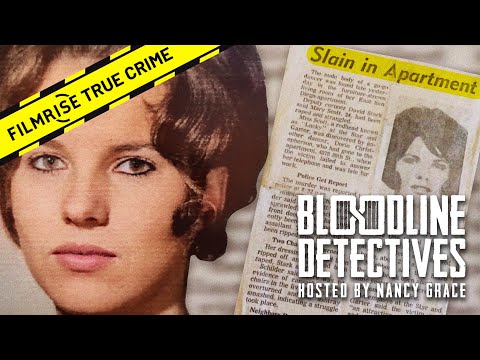
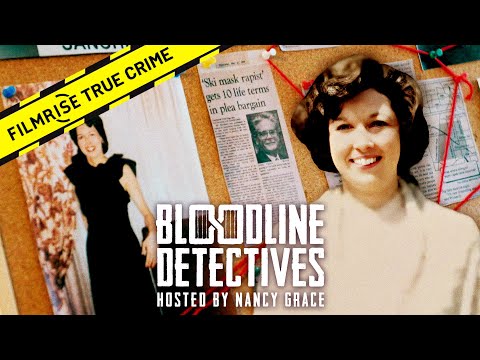
The Chandler Arizona Predator | Bloodline Detectives with Nancy Grace
Episode Description
Chandler, Arizona, 1991, an intruder viciously sexually assaults a woman in her own home. The case goes unsolved for decades until revolutionary science connects the dots.
Now in its fifth season, Bloodline Detectives is the leading true crime series that explores how police departments harness genetic genealogy to solve crimes that were once considered "unsolvable," bringing long-awaited answers to victims' families.
Read the full transcriptHide the full transcript
- [GRIM MUSIC] NANCY GRACE: Chandler, Arizona, November 9, 1991. Police respond to an urgent 911 call.
- They find a young woman brutally sex assaulted. BRIANA WHITNEY: This man was so confident in what he was doing
- and so sick in wanting to watch it happen that he had the audacity to videotape it.
- NANCY GRACE: Eventually, every lead to identify the suspect dries up. 2002, investigators reopen the 1991 case
- when they learn of a similar attack that took place in 1992. DONALD NEWCOMER: The biological evidence is critical.
- It gave us a match to Chandler PD, which is how we got involved, but it didn't tell us who the suspect was.
- NANCY GRACE: The rape suspect continues to evade police, leaving his victim to live in constant fear.
- The early use of DNA matching cannot crack the case. Investigators must wait for the arrival of a new and powerful
- forensic tool. Genetic genealogy was a perfect opportunity to break this case wide open.
- This is a story of a victim, a victim of a brutal rape, who lives in fear for years.
- She must wait for three decades until new forensic science brings her attacker, her rapist, to justice.
- I'm Nancy Grace. This is "Bloodline Detectives." [THEME MUSIC] [SOMBER MUSIC] NANCY GRACE: 1991, Chandler, Arizona, a suburb in the Phoenix
- Metropolitan area. The Chandler community is shaken the night of November 9, 1991.
- Chandler Police Department got a call from a neighbor saying that his neighbor had just been assaulted.
- [SIRENS WAILING] BRENDAN BUSSE: Officer Tyndall was the officer that responded to the scene.
- He contacted the victim on the stairway that leads up to the apartment. NANCY GRACE: The brutalized victim
- tells police about the horrible ordeal she has just survived. She heard a knock on her door, and she decided
- to check to see who was there. She was expecting a package that night. And as she cracked the door slightly open,
- she was faced with a man standing in front of her who had a silver revolver and had pointed it at her
- and forced his way into the apartment. The suspect came into her apartment and held that gun to her back.
- And at that point, he proceeded to pull bindings out of a blue metal case that he carried with him,
- and he was able to bind her hands behind her back and then force her into her bedroom.
- So once he got her into her bedroom, he used more bindings to bind her to the bedposts of her bed.
- And then he proceeded to cut her clothing from her body and then sexually assaulted her.
- This man was so confident in what he was doing and so sick in wanting to watch it happen that he had
- the audacity to videotape it. ASHLEY NOLAN: Officers obtained that initial statement and then
- requested transportation to have the victim go to the hospital for a rape examination.
- BRIANA WHITNEY: Once the victim is at the hospital, a nurse gives her a sexual assault exam.
- It's called a SANE exam. And this is traumatic for victims because they have to take specimens from the victim
- to send that to the lab. But to get that, it's a very intrusive and invasive exam.
- And victims have described it almost feeling like they're getting raped again. And that's why some victims don't ever go through with it.
- NANCY GRACE: As the victim of a brutal rape recovers, she agrees to be interviewed by detectives.
- ASHLEY NOLAN: The victim told detectives that the suspect had a very, very strong body odor that kind of emanated
- off of him as he assaulted her. We were able to obtain a really good description of the suspect, as well as that composite sketch.
- BRENDAN BUSSE: The victim described the suspect as a white male with dark hair, a
- brown, neatly-trimmed mustache. She thought he was about 6 foot tall, 140, 150 pounds.
- She said he wore a dark in color baseball cap that said "Security" on it, had a blue button-down,
- short-sleeved shirt that was consistent with, like, a paramedic or ambulance driver-type shirt at the time.
- ASHLEY NOLAN: What was interesting in this case is, as the victim was participating in the composite sketch,
- she actually stepped back, and the detective at the time noted that there was just a look of fear in her eyes, that she--
- the recreation of the composite sketch was a near-match to what she-- to the individual that came into her apartment that night.
- NANCY GRACE: This young victim, who amazingly survived, is still in shock. But she very slowly begins to provide
- more information to police. She points crime scene investigators to the sort of evidence they need to collect
- inside her apartment. ASHLEY NOLAN: She noted that the suspect, when he was inside the apartment, had a runny nose
- and was constantly using tissues, that he would blow his nose and then discard in the apartment.
- In this case, detectives, when they went back to the scene, they were able to locate a number of tissues
- that they believe were discarded by the suspect. They were able to locate the duct tape
- that they believed was part of the bindings to bind her to the bed. And they located a pair of scissors.
- The victim had talked about having her clothes cut from her body, and the detectives
- had collected that pair of scissors for processing later on. So we would look for possible DNA evidence.
- We might pull out a forensic light source, maybe look for semen. We're going to look for hairs and fibers.
- If we would consider a trace evidence case, we would do that before anything else.
- If we have a pillowcase covered in hair, for example, we would collect what we could of the hair in
- order not to lose any evidence. But if it's general bedding, if we're looking for things
- like pillowcases, sheets, blankets, we're going to photograph them and collect them and preserve them that way for further examination.
- ASHLEY NOLAN: What was somewhat unique in this case is the victim talked about the suspect being
- in the apartment for a couple hours and had helped himself to a Sprite bottle that
- was in her refrigerator and actually had drank from it as well, and then at some point, had spit into her sink,
- discarding a large amount of saliva that detectives were later able to collect. NANCY GRACE: As the forensic evidence is being analyzed,
- investigators search for a physical match to the perp, that match based upon sketches
- made of the suspect. Tips are also coming in to police. One Chandler detective has a suspicion
- about a particular individual. ASHLEY NOLAN: The detective did believe at one point
- that maybe the victim's boyfriend could have been associated with the incident on some level.
- And he thought that because there was just this level of possessiveness that the boyfriend
- had over the victim. He was very inquisitive into the investigation, and he did have some prior criminal history,
- so there was a theory that maybe there was an association there. But there were no particular theories outside
- of really focusing on the description that was given based on the clothing that was worn.
- So both detectives in the case thought there could have been an association with law enforcement
- or the fire department. There were a number of investigative leads established. Our sex offender listings were looked at,
- and sex offenders in the area were contacted and individually ruled out. NANCY GRACE: Detectives are dealing
- with a very cagey offender. He erased his fingerprints at the crime scene. Over time, new leads all run dry.
- BRENDAN BUSSE: Very shortly after this assault, the victim left Chandler. She left Arizona and returned to her home state
- and never came back to Chandler. In 2001, the case is reopened when a similar sex assault in 1992 is shared by a neighboring
- police department. Are detectives any closer to finding a suspect? We find out next on "Bloodline Detectives."
- [AUDIO LOGO] [AUDIO LOGO] [SUSPENSEFUL MUSIC] NANCY GRACE: Chandler, Arizona, 2001, cold case detectives
- investigating the brutal sex assault of a young woman in November 1991. DNA forensic science has advanced.
- The cold case team believes a suspect has struck more than once. ASHLEY NOLAN: So in this particular case,
- we had a detective that submitted 15 items for DNA testing. But in this case, they only tested two of the items.
- And the reason that labs will do that is they look at all the items of evidence, and they look,
- what is going to be the most probative type of evidence in this particular case?
- So of those 15 items, they tested specifically two items, and that was the victim's underwear
- and the swab from the sink. NANCY GRACE: The DNA evidence found in the 1991 case
- is submitted to the CODIS national database to determine if it matches DNA from any other unsolved attacks.
- CODIS is the Combined DNA Index System, and that's used by law enforcement all over the country where, when they get
- a profile for a suspect, somebody who's incarcerated, they upload it to that database.
- And then law enforcement agencies across the United States can see that and see if it links
- to any of their unsolved crimes that they have in their systems. It's a way to try to catch people
- who may not have been caught for other crimes in other places. ASHLEY NOLAN: On August 13, 2002, we get a DNA result back,
- and that is when Chandler is notified that there was a match of our case and our perpetrator
- to an incident that occurred in Phoenix in 1992. DONALD NEWCOMER: She was a student, a 15-year-old female.
- There was a alleyway that she was walking through on her way home from the bus stop.
- That was about 4:15. She remembers the time because she looked at her watch as she was walking in the alleyway.
- And she saw a man standing in the alleyway, looking down at the ground. As she approached, he looked up at her
- and said that he was a private investigator working for the police department, looking for kids that were
- setting fires in the alley. She was nervous, so she wanted to get away from him,
- and she started to walk the other way. And that's when he ran up behind her, put his hands over her mouth, and pulled her backwards
- to where he was standing. And she tried to get away. He was-- put the ball in her mouth,
- and then he went and duct taped her and threw her in the hatchback, took her to a house.
- She also saw something yellow around the house. She didn't know if it was an object
- or if it was a part of the house. She just didn't have that ability. And the reason she was able to get limited information
- was because when he first abducted her, he left her alone for a second. She was able to push up the right part of her eye
- on the tape so she could see out a little bit. ASHLEY NOLAN: Once the suspect gets the victim
- into the bedroom, he puts her on the bed, and this victim just fought. She fought and fought and fought,
- trying to stop this attack. And every time she fought, the suspect would strike her.
- And he at one point used a kitchen utensil to beat her into submission. And the more she fought, the more
- she feared that it was going to get worse and she could potentially die from this.
- So she eventually complied with the suspect's demands. The whole assault was no more than an hour in time.
- And between the time she was picked up in the alley to the time she was taken to the house,
- to the time she was released into a different alley, she estimated no more than an hour.
- DONALD NEWCOMER: There was grass stains that were on her jeans. And the grass was important because as she tried to get away
- from the man, he tackled her and pushed her down into the grass, which is where she collected the grass stains.
- It tells us that we are looking for an alleyway with the grass in it. And it-- to piece her story together.
- BRENDAN BUSSE: She gave a fairly detailed description of the suspect-- dark hair, brown mustache, very strong, offensive body odor that
- was covered up with cologne. She thought he was about maybe 6 foot tall, 180 pounds.
- ASHLEY NOLAN: Both agencies inputted their DNA into the CODIS database to see if there were any matches,
- and neither agency had received a match in that case. And so both cases were actually closed
- for another period of time until it was once again reopened in 2009. Detective Newcomer and Detective Busse went back to the area
- of 25th Street and Hubbell, and they would-- they tried to retrace those steps back to that
- house based on the direction of travel that the victim had given. They were looking at the sex offender registry,
- and even 18 years later, that database has grown. And so they would be looking to match any type of motives that
- seem similar from the offender database to these particular crimes. Detectives went through the neighborhoods, up and down
- different streets, just really trying to find that house that the victim had described.
- In 2009, when Detective Newcomer and Detective Busse took over the case, that was a key component
- in their investigation to reopen this case and try to solve. We identified a number of homes that
- were strong candidates, and then we did historical research of those homes to try to find any connection
- between the people that lived in those homes and these cases. DONALD NEWCOMER: We actually drove a couple of times
- through that area trying to look for this house. We spent a lot of time looking for that house.
- We found nothing. NANCY GRACE: Phoenix detectives cannot precisely locate a legitimate crime scene where
- a second sex assault occurs. Therefore, they will not have enough evidence to conclusively link this second attack to the original attack
- in Chandler. It is a bitter disappointment, but it's by no means a dead end for the Chandler investigation.
- Police now have a brand new forensic tool-- familial DNA searching. But will it lead to the identity of a brutal rapist?
- That's next on "Bloodline Detectives." [AUDIO LOGO] [AUDIO LOGO] [SUSPENSEFUL MUSIC]
- NANCY GRACE: 2018, cold case detectives from the Phoenix and Chandler, Arizona Police Departments team
- up. They reopen an investigation into the sexual assault of a young woman in 1991.
- They also think, but cannot prove, the same perp may have struck more than once.
- BRENDAN BUSSE: In all likelihoods, there are other victims that haven't come forward.
- But in these two cases, it appears that he was attracted to very small-framed, dark-haired women.
- The case went cold for both Detective Newcomer and Detective Busse in 2018. NANCY GRACE: Detectives try another way to unmask a killer.
- This time, they launch a familial DNA search in that CODIS national database. ASHLEY NOLAN: So familial DNA is a way
- to utilize the CODIS database to try to match, potentially, family members to a perpetrator.
- COLLEEN FITZPATRICK: Normally, CODIS looks for a one-to-one match between crime scene DNA
- and a convicted offender in that database. There's 12 states that allow a partial match or a near match,
- which usually indicates a family member in the database. That gives them an investigative lead to find the real guy.
- NANCY GRACE: The familial DNA search does not produce any matches in CODIS, so investigators
- try other forensic tools to ID a rapist. One of those tools-- investigative genetic genealogy.
- ASHLEY NOLAN: Forensic genetic genealogy looks at ancestry. And so you're looking at placing a unknown profile
- into a genealogy database to try to look for family matches. For many years, genealogists were using
- DNA to do adoption searches. So an adoptee would take a direct-to-consumer DNA test.
- And then, based on what we call "DNA cousins" that came up, you could try and puzzle out who that person was based
- on these cousins and the network that the cousins found themselves in. We have the list of DNA cousins.
- And we don't know who they are at first, but we find out. And then we start and we build trees for each--
- let's say we have 10. We build different family trees for each 10. But because they're related to each other somehow,
- those trees start to connect through common ancestors. And if we do our job, we actually come up with two trees.
- One is for the mother's side, and one is for the father side. So in a perfect case, there'd be five
- trees that all connect here, five trees that connect them. And then our job is to find one person in one group
- married one person in the other group, and those are the parents. And we're looking for one of their children,
- because the children connect to the parents, to the two groups, to all of those matches we started out with.
- NANCY GRACE: Good news for investigators-- the suspect's DNA profile is being scanned
- through various genealogy databases, and hits start pouring in from distant relatives.
- COLLEEN FITZPATRICK: And this case was really interesting because we had a couple of matches,
- I'd say nothing to write home about, but not too bad. The top match was the second to third cousin.
- Our genealogists normally just build the trees out, and we connect and connect. And it turned out that most of the people we were coming
- up with were from Canada. If they weren't from Canada, they were from Minnesota, Michigan, kind of the colder areas
- and the northern part of the United States. And following those families down to the present,
- we stumbled on a family from Arizona, and that was the Young family. ASHLEY NOLAN: So for me, for an investigator, especially having
- experience with genetic genealogy, that's what I was looking for. I was looking for an investigative lead based on DNA.
- You know, DNA is accurate, and it doesn't lie. And so if you can make the links and connections through DNA,
- then you know you're on the right track, especially as an investigator. On June 3, 2020, I got a magical phone call
- from Colleen Fitzpatrick, and she told me that they think they had identified a lead in the case
- and that I needed to look at the individual known as Gary Robert Young. COLLEEN FITZPATRICK: From that point on, the detectives have
- to look into his background, his criminal record, you know, anything else that might-- they know that might
- put him in that time. Did he own a hatchback? Did he own a van? Was it within distance of the crime scene,
- put him in the right place at the right time? ASHLEY NOLAN: I immediately started
- digging into Gary Robert Young. Who was this person? Where did he live? And was he the one responsible for these horrific assaults?
- And I found a lot of information on Gary. And he had lived in Phoenix, and he was still at the same
- location the day that I was looking into him near that 40th Street and McDowell area.
- And he had been living there in 1991 and 1992. He had two vehicles associated with him,
- and those vehicles were described as a 1985 two-door Toyota Celica hatchback and a 1984 Dodge Caravan.
- And when you look at those vehicles, they were a match to what the victim had described in the Phoenix case.
- He's had a number of run-ins with law enforcement over the years. He's spent time off and on in state prison.
- He apparently was very sexually motivated a number of different ways. ASHLEY NOLAN: He had been married three different times
- and was divorced twice and had children with different wives. And there were a number of reports that came in for drug
- issues, domestic violence. One of his wives had actually reported being raped by Gary
- and that it was investigated, but they didn't have enough evidence to file charges.
- So as I'm looking at Gary Robert Young, everything is just starting to fall into place.
- I have the genealogy that's matching. I have the vehicles that are matching. I have the handgun that is matching.
- I have the residence that he lived at that's matching at least to the area that was in close proximity to the abduction
- site in the Phoenix case. I also located a hit-and-run report out of Chandler in 1993.
- So that told me he had some association to Chandler, Arizona at the time. Detectives begin the process of tracking
- down Gary Robert Young. They need to obtain a DNA sample from him. Are they this close to capturing an elusive predator?
- We find out next on "Bloodline Detectives." [AUDIO LOGO] [AUDIO LOGO] [SUSPENSEFUL MUSIC]
- NANCY GRACE: Cold case detectives so close to arresting a primary suspect in the 1991 rape
- of a Chandler, Arizona, woman. His name-- Gary Robert Young. DNA from the original crime scene links Young to the rape.
- Now, detectives must obtain a DNA sample from him, Young, to prove he is, in fact, the assailant.
- In a case like this, we would be looking at conducting surveillance on Gary. I asked Sergeant Rowton and his team
- to surveil Gary and follow him, looking for a discarded piece, an item or an object, that he discarded
- that may have his DNA on it. He had also recently helped me in a prior case where we obtained a sample that was pretty successful.
- PETE ROWTON: She provided us enough information upfront in this case to locate where he lived at that time.
- And then we just backed that information up by doing our own research. We conducted static surveillance initially,
- meaning we would park in the area of the neighborhood that he lived in and then just try to get eyes on that person,
- identify him positively as being the person that lived at that house, or at least one of the people that
- lived at that house. We operate in unmarked vehicles. We were driving a mix of-- most of us
- drive a mix of pickup trucks. We really wanted to see when he left, how he left, where he went, how many
- opportunities was he going to provide for us to obtain that DNA. It could have been a glass he used to drink
- or a cup he used to drink or a straw he used. If he stopped in a restaurant, it could have been silverware or something that he used
- or a cup that he used in there. The cigarette butt was just an opportunity. We knew that he smoked because we'd seen him come out
- and smoke in the front yard. At that point in time, we'd probably been to the house two to three times,
- two to three different days, just watching. He left the house in his car, so it was relatively quick.
- And as soon as he got out onto 40th, going to the intersection, he reached out the window and threw the cigarette butt out.
- So we knew he was the only person in the car. We positively identified him as leaving in the car,
- so it was obviously his. The problem at that point was it was a major intersection.
- And we were just-- we had two vehicles behind him and then my vehicle back behind.
- And letting him leave and then being able to obtain that cigarette butt without losing it in traffic--
- either, you know, a car running over it or something-- and not letting him see us doing it--
- so it was a very quick opportunity. The light turned green. He moved ahead in the intersection,
- gave us enough room. I stopped back, blocked traffic in that lane. Detective Engler saw it, saw where it was,
- and was able to stop traffic in the next lane, get out of his car, and pick it up.
- And then as soon as we could, we moved down the road into an area where we could repackage it better than it was.
- We were super excited because he was quick. We didn't really think it would happen that fast.
- We've had cases where we've done DNA work where it's taken days or weeks in order to find a sample,
- and then to make that sample, you know, a sole source and make it-- hopefully, it's a good sample.
- ASHLEY NOLAN: I learned that Gary Robert Young had discarded a cigarette out his driver window
- and that detectives with the Criminal Apprehension Unit had collected that cigarette for me
- and brought it to the police station, where I could then submit it for comparison testing.
- The results confirmed that the DNA profile obtained from the cigarette was, in fact, a match
- to the DNA profile obtained in the rape kit from the Phoenix case, and also the saliva
- sample that was obtained from the victim's sink in the Chandler case. NANCY GRACE: Investigators now have a DNA
- sample from Gary Robert Young, and it confirms their suspicions. Young is their prime suspect, and they
- move swiftly to make an arrest. PETE ROWTON: We were basically going to be the thing to set it
- off by when he came out, we were going to apprehend him, if possible. And he did came out into his front yard to smoke a cigarette.
- So at that point in time, we moved up on him, arrested him-- no incident at that point.
- He was very surprised. ASHLEY NOLAN: Gary was charged with multiple counts of aggravated assault, sexual assault,
- kidnapping, and burglary. I think he felt he was going to get away with this, but--
- and he had never really considered to have to deal with the repercussions of what he did.
- NANCY GRACE: Gary Robert Young finally in custody. Now detectives want to inform his victim,
- he's finally behind bars. That's next on "Bloodline Detectives." [AUDIO LOGO] [AUDIO LOGO]
- NANCY GRACE: Chandler, Arizona, 2020, police finally arrest a suspect in a brutal 1991 sex assault.
- The perp's name? Gary Robert Young. He's now 65 years old. Investigators moved to contact the victim, who has lived
- in fear for nearly 30 years. We don't ever want to unnecessarily contact the victim
- and dredge up bad memories at all. If we can avoid it, we will avoid it at all costs.
- Finally making that contact with the victim and advising the victim that the perpetrator has been positively
- identified and taken into custody, that's payday for investigators. That's-- that's the accomplishment
- that we want to have. But it's got to be extremely difficult for the victim, especially if 10, 20 years have gone by.
- The victim has moved on. The victim more than likely has repressed from all memories
- this event. And then to be contacted out of the blue and the incident comes flooding back, I'm sure.
- DONALD NEWCOMER: It's like ripping a Band-Aid off of a wound when you call somebody 30 years later
- and say, look, we have your suspect identified. Would you like to assist us in prosecution in this case?
- That, to me, is a very traumatizing call because it makes her-- that person relive everything
- that happened 30 years earlier. To have endured something like this and to have survived it,
- they're survivors, not victims. And they're amazing people to be able to, you know,
- go through life and try to live a normal life and know that, you know, even being contacted 30 years later,
- they were going to help any way that they can to make sure that this guy didn't hurt anybody else.
- NANCY GRACE: Detective Ashley Nolan conducts the interrogation of Gary Robert Young.
- Gary was-- you could tell, was somewhat physically ill. He had reported that he had major back pain.
- And so he struggled when he was sitting in the interview room that he was just--
- he wasn't quite awake, and he needed his coffee before he could even have a conversation.
- And so that was provided to him. And then I came in and sat down and started talking to Gary
- about who he was and why we were sitting here at the Chandler Police Department.
- ASHLEY NOLAN: It came to a point where I kept pushing Gary to try to obtain some sort of statement or admission
- that he was involved in these crimes. And he kept denying it, said he was not involved in any way.
- And then at some point, he invoked his right to counsel, and he didn't want to talk about these incidents anymore.
- So I got up, and I left the room. But we have detectives standing by. And it's a monitored interview room, and they're listening.
- And as I left the room, the detective listening pulled me aside and said, you know, he made a comment
- after you left the room. And I said, OK, what did he say? And he said to himself, what have I done?
- Prosecutors indict Gary Robert Young for a brutal rape back in November 1991. But just before the trial begins,
- Young's defense lawyers make a surprising move. They change his plea to guilty. PETE ROWTON: I don't know that I was surprised.
- I think he realized that the evidence against him was pretty insurmountable, that he was going to do time
- either way, and at his age, it was probably better giving him a chance to finally get out of prison possibly, as opposed
- to fighting it and getting more time. NANCY GRACE: The court confirms Gary Robert Young's guilty plea.
- His sentence is much harsher than he expected. ASHLEY NOLAN: Because of Gary's criminal history,
- there were pending drug charges that were going to account for additional charges and time
- in prison. So I don't think Gary will ever be getting out of prison. I am just elated that it was solved.
- And it's one of many that I left and was wondering if it was ever going to be solved, when it was going to be solved,
- because it just takes motivation and the right personnel to go out there and solve the case.
- BRIANA WHITNEY: I hope that now it's easier for the victims to move forward. There's never an easy point in moving
- forward after you're a victim of something like this. But to have the answer of who did this and for that person
- to be held accountable, I hope that these victims can feel better about that aspect,
- heal, and be able to live their lives now. NANCY GRACE: The arrest of Gary Robert Young
- is a victory for forensic science and a victory for dedicated police work. It proves even the toughest cold cases can be solved.
- Phoenix Police Department, the Chandler Police Department, they're really forward-thinking, and they're top notch,
- so I'm not surprised that they preserved that evidence, knowing that the future was in front of them and that there was
- a lot of developments going on, and that evidence was going to be important in the future.
- BRENDAN BUSSE: There have been many battles with property and evidence facilities
- across the country in every police department about retaining physical evidence.
- And in these two cases, it's very clear that the arguments to retain the physical evidence
- as long as possible paid off. Without their assistance and giving that information
- that they gave back in the time, like in 1991 and 1992, without that information, we would
- not have been able to proceed as far as we did 30 years later. I think our agency does a really good job,
- and our detectives are fantastic. And our forensic unit is really good. I really-- this is not me drinking the Kool-Aid.
- I really think Chandler is a great agency to work for, and I think we do a really good job.
- ASHLEY NOLAN: After having discovered genetic genealogy and knowing we have this advancement in technology,
- I hope that I can continue to look at other cases and hopefully solve them with that same technology.
- And so having the success in other cases, having the success in this case, I think is just paving the way for all of those older cases
- to someday be solved. The 30-year terror that a monster like Gary Robert Young inflicts upon an innocent victim is really too much to imagine,
- living night after night in fear he will return. After her assault, she lives in fear,
- knowing he's still out there. Her pain will never go away. But it's softened, knowing her attacker will never strike her
- or anyone else again. Victory. I'm Nancy Grace. Thank you for joining us here on "Bloodline Detectives."
- [AUDIO LOGO] [AUDIO LOGO] [THEME MUSIC]
Brief Summary
A 1991 rape case is solved 30 years later with DNA evidence leading to Gary Robert Young's arrest.
Key points
- A Brutal Assault in 1991. A young woman is brutally assaulted in Chandler, Arizona, leaving her in fear for years.
- Cold Case Reopened. In 2001, detectives reopen the case after a similar assault occurs, hoping for new leads.
- Familial DNA Search. Detectives launch a familial DNA search in hopes of identifying the rapist.
- DNA Evidence Leads to Arrest. Investigators confirm DNA from a cigarette matches that of the suspect, leading to his arrest.
- Gary Robert Young Arrested. Detectives finally apprehend Gary Robert Young, the prime suspect in a 1991 rape case.
- Victim Contacted After 30 Years. Detectives inform the victim that her attacker has been identified and arrested.
Episode highlights
- A Brutal Assault in 1991A young woman is brutally assaulted in Chandler, Arizona, leaving her in fear for years.“This man was so confident in what he was doing.”0:25May 23, 2025
- Cold Case ReopenedIn 2001, detectives reopen the case after a similar assault occurs, hoping for new leads.“Are detectives any closer to finding a suspect?”10:09May 23, 2025
- Familial DNA SearchDetectives launch a familial DNA search in hopes of identifying the rapist.“Will it lead to the identity of a brutal rapist?”17:27May 23, 2025
- DNA Evidence Leads to ArrestInvestigators confirm DNA from a cigarette matches that of the suspect, leading to his arrest.“The results confirmed that the DNA profile obtained from the cigarette was a match.”29:23May 23, 2025
- Gary Robert Young ArrestedDetectives finally apprehend Gary Robert Young, the prime suspect in a 1991 rape case.“Gary was charged with multiple counts of aggravated assault, sexual assault, kidnapping, and burglary.”30:12May 23, 2025
- Victim Contacted After 30 YearsDetectives inform the victim that her attacker has been identified and arrested.“Finally making that contact with the victim... that's payday for investigators.”31:39May 23, 2025
Tension
85/ 100High tension