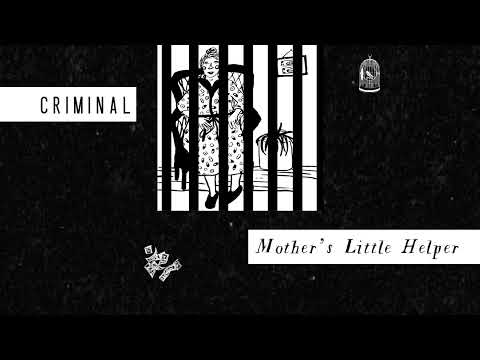
Phillip and Becky | Criminal Podcast
Episode Description
When Philip Benight met Becky Golden, they made a promise to stick together, no matter how bad things got.
Read Ann Neumann’s reporting in Harper’s (https://harpers.org/archive/2019/02/going-to-extremes-elderly-assisted-suicide-caregivers/). Her book is The Good Death: An Exploration of Dying in America (https://www.beacon.org/The-Good-Death-P1138.aspx).
Criminal is a show about people who’ve done wrong, been wronged, or gotten caught somewhere in the middle. Hosted by Phoebe Judge. Part of the Vox Media Podcast Network.
Join Criminal Plus on Patreon for ad-free listening, bonus episodes, listener chat rooms, behind-the-scenes content, and more membership perks. https://www.patreon.com/Criminal
Follow the show on Apple Podcasts, Spotify, or wherever you get your podcasts. https://pod.link/809264944
Say hello on Twitter (https://twitter.com/criminalshow) Instagram (https://www.instagram.com/criminal_podcast) Facebook (https://www.facebook.com/thisiscriminal) and TikTok (https://www.tiktok.com/@criminal_podcast)
Sign up for our occasional newsletter, which includes a note from Phoebe, behind-the-scenes photos, and things our team has been enjoying lately. https://thisiscriminal.com/newsletter
We also make the podcasts This is Love (https://pod.link/1337100398) and Phoebe Reads a Mystery (https://pod.link/1503921457).
Artwork by Julienne Alexander: http://www.yssrs.com/. Check out our online shop: https://shop.thisiscriminal.com/
Episode 114 originally published May 10, 2019 https://thisiscriminal.com/episode-114-philip-and-becky
Music in this episode: “The PI Sleeps” by Blue Dot Sessions “Lick Stick” by Blue Dot Sessions “More Weather” by Blue Dot Sessions “Holo” by Blue Dot Sessions “Vulcan Street” by Blue Dot Sessions “November Mist” by Blue Dot Sessions “As Dust Gathers” by Blue Dot Sessions
Read the full transcriptHide the full transcript
- This episode discusses suicide in some detail. Please use discretion. Well, the police asked me if I knew that
- what I'd done was illegal before I did it. And uh I told them that uh there are higher laws than Pennsylvania
- laws. And then it didn't make any difference to me if it was legal or or illegal. It
- was nobody else's business. >> [music] >> In 1998, [music] Philip Benight was working in a clothing store in
- Washington, D.C. when he met a woman named Becky Golden. He was 42. She was 54. Becky said the thing that stood out most
- uh was that I she heard me laugh and it reminded her of her father. And uh So, she reached out to me [music]
- first. Then we just went from there. Philip says he'd never met anyone like Becky before. He'd never met someone
- where no matter what they did together, even just driving around, it was fun. He said she was outgoing and curious and
- incredibly funny. They went dancing. They went to art shows and antique stores. For his
- birthday, she got him a Chihuahua. Then he moved into her house. I'd been in and out of relationships.
- I'd had several relationships with men. Uh None of them Well, they would last a couple of years,
- a few of them, but none of them lasted like uh Becky and and my relationship did.
- We took a a trip out west, went to 27 states and three provinces uh driving with the dog.
- And um we were just really, really close friends. And, uh then Becky got cancer.
- So, we got married so I could put her on my health insurance. Um we got married in 2005.
- When they decided to get married, Becky Golden changed her name to Becky Benight
- because she said she felt like Philip was the only person who really, truly loved her.
- Philip told us we had all of the really important things. He says they had trust and commitment
- and comfort in knowing [music] that the other person would always be there no matter how bad things got.
- I'm Phoebe Judge. This is Criminal. >> [music] >> For about 6 [music] years, Philip and
- Becky had a happy life. And then, >> [music] >> she was diagnosed with cancer of the
- supraglottis. And, to tell you the truth, I'd never heard of a supraglottis before.
- Um >> [music] >> it's in the throat. It's close to the uh vocal cords. By then, [music]
- they were both working as school bus drivers. They wanted a job that [music] would
- give them the summers off so they could travel and have free time. When Becky got sick, she quit working,
- but she was able to get medical care through Philip's insurance. She had a 7 and 1/2 hour surgery to
- remove the cancer. Philip stayed home to help her recover. Her speech was temporarily affected by
- the surgery, so she couldn't speak or call out to him. Philip slept on the floor of her bedroom, so if she woke up
- in the middle of the night and needed something, he'd be right there. And uh we had a cat and a dog. They
- slept with us. Um so we all hung out in one room. A few weeks later, Philip had a heart
- attack. The doctors said it was stress-related. And then, on top of it all, their house burned down.
- Philip says Becky somehow kept her sense of humor through all of this. They tried
- to be positive. And since Becky had always wanted to live in a log cabin, they moved to Lancaster County in
- Pennsylvania and bought one. She sewed curtains for all the windows in the house.
- And then, Becky began to have a series of strokes. Her quality of life declined quickly.
- Her health issues are constant. She fell and broke her shoulder. The radiation from the cancer treatment had damaged
- her teeth so badly they had to be removed. A blood clot formed behind one of her
- eyes. Philip says she was exhausted. Her attitudes changed. Uh she started talking about wanting to die and
- hoping that the next stroke would just take her out. >> [snorts] >> And one day uh while I was driving a school
- bus, she sent me a text that said um "Don't call me. Don't text me. Uh I'm I'm through."
- And I thought it was uh like a suicide message. Of course, it panicked me and I called
- the police. And the police came. She couldn't hear them because she wore hearing aids and she'd taken them out.
- Uh but I'd told the police where a key was hidden outside and they let themselves in.
- And she was upstairs with her feet up, eyes closed, relaxing when suddenly there policeman standing
- over her that frightened her half to death. The whole thing was a fiasco, but what she was telling me was no, the
- text didn't mean that she was uh going to commit suicide. It just meant she was through for the day and and
- didn't want to be bothered and that was really a turning point. She was so angry at me for calling the police
- that we didn't talk for 3 days and when we did talk, she'd calmed down and said, you
- know, if I decide to kill myself, that is my business and nobody else's, not even yours.
- And she wanted me to promise that if she decided to do that, that I would not call anyone to stop her.
- I wanted her to promise that she would talk to me first. I needed to know that she wasn't just
- having a bad day and gave up without thinking about it that we needed to discuss it.
- And she promised um and after that, that changed things. Every so often, every few months, she
- would talk to me about wanting to die and I would convince her each time, just give me a little bit more time where I'm
- working with it. Um I I just didn't want her to go. One day Philip came home from work to
- find that Becky had had a stroke and fallen and hit her head. They called 911. Becky stayed in the hospital for more
- than a month. And when it was time for her to be discharged, her doctors advised
- full-time medical care, a nursing home. Becky refused. She wanted to go home. And so Philip took her home.
- Philip says his insurance, which was with Cigna, covered 16 hours a day of in-home medical care. Philip applied for
- it, and until it got sorted out, he took off work to stay home with Becky. Uh I took care of her 24 hours a day.
- Before [snorts] she came home, I had to buy enough food to hoard up so that I cuz I couldn't go to the grocery store.
- I couldn't leave her until Cigna sent someone here to stay with her. Um when I brought her home,
- the rehab hospital called uh Office of Aging in Pennsylvania uh to report that I was taking her home
- against doctor's wishes. And uh Office of Aging came, they interviewed me, interviewed her.
- Uh they said, "No, she was being cared for, she was happy. Um and she was where she wanted to be,
- and they didn't see any danger." Philip says that after several weeks of negotiations, Cigna pushed back on
- paying for someone to come to their house. The insurance company said it was willing to pay only if Becky was in a
- nursing home. If Becky wanted to be at home, she and Philip would have to pay for her care
- out of pocket, which they couldn't afford. And there was no way around it. >> [music]
- >> Um was uh decision that Office of Aging had made >> [music] >> uh that for her own safety,
- she had to go to the nursing home. Philip went to see her every single [music] evening after work.
- He would pick her up and take her to dinner. After dinner, Philip says he would often
- take her home to their house. She couldn't stand up on her own anymore. And so they wouldn't go inside.
- They'd sit in the car in the driveway and talk. We live on top of a hill. You can see for miles. It's really pretty
- view. And [music] we would sit, listen to the radio, and look at the view, and remember things that we had done here.
- And and she would tell me that she remembered [music] planting these flowers or those
- flowers or really was just a way for her to reconnect with her home. Um it felt normal because we were
- together and we were home. Even if we were outside. Becky spent a lot of time outside. So
- um we were still home. And she used to tell me if anybody can get me home, you can.
- And um >> [music] >> she asked me to promise that she would come home. And I told her that she
- would. I promised her that she would come home. When [music] Becky went into the nursing
- facility, she was so miserable, so unhappy. She was very vocal about it. Reporter Ann Newman. Her son John came
- to visit her and she said, "Hey John, did you bring the gun?" And he said, "No." And she said, "That's too
- bad." So the nursing staff knew that Becky did not want to live anymore. >> [music]
- >> And they were afraid that she would run away. And so they put her in a locked
- ward of the facility without telling Philip. [music] And that's what that's what made Philip say, "I'm
- [music] ready." I realized that I'd lost the battle. There was no way that she was ever going to be able to
- come home. And [music] when that happened, um >> [music] >> I started getting things together.
- >> [music] >> Philip and Becky decided to escape the situation and the only way out they saw
- was ending their lives. I could help her, but I also knew that if I did, um 60 years old and be going to jail for at
- least 10 years. Um I'd be 70 when I got out. That's uh if I ever got out. And um I wasn't going
- to do that. That was a ridiculous thing to do. Um So, I decided that I would rather just
- go. I told Becky that um we would face that the same way that we faced all of the uh health decisions,
- that we'd just do it together. Um she didn't want me to, but after I explained that I would be going
- to jail and that it was really my decision, um was her decision whether or not she did it and it was mine and if I
- wanted to join her and And so, it was agreed upon. And when we made the choice, um
- and that we were going together, it was actually kind of comforting and seemed right.
- Um I talked to Becky and told her that I'd gotten everything ready. And uh but I thought that Sunday
- because we would have the whole day together, um would be the day. Um Sunday, I picked her up early. We
- drove down by the Conestoga River and sat down there for a while watching uh the birds in the river. And we went to
- lunch. And then brought the came and parked in our driveway. Which was for us the
- fulfillment of my promise that she was coming home, that she would be home. Did you tell anyone
- before No. >> you did it? No one. I didn't think that would be fair. Didn't seem right to bring anybody else
- into it. It was personal, it was ours, and we weren't going to discuss it with anybody else or try to explain it, and
- they would want an explanation. Um So, uh no, we didn't do any of that. What What I did do is I wrote
- letters and kept a journal. So, that uh my aunt and Becky's relatives would be able to
- see and read that we did know what we were doing. No, they couldn't have done anything.
- And uh it just seemed uh like the right thing to do. Um Before picking her up, I'd placed all
- of the important papers and things in the kitchen. That was all prepared for the executor of the will to come in and
- have everything that they needed, computers and whatnot. Um I told Becky I would have to come in and
- get the pills and she said, "Okay." She that she would wait in the car. Becky had been sick for 14 years.
- And in that time, she'd been prescribed a lot of medications. Philip collected every pill he could
- find and dumped them out onto the marble island in the kitchen. He crushed the pills in a mortar and
- pestle and mixed them into a cup of Kraft vanilla pudding. He walked outside of the house, opened
- Becky's car door, and knelt down beside her. She could no longer swallow pills and her pills had to be ground up.
- Uh she ate her pudding first and then I came around and sat down next to her and
- and swallowed the pills and um it was a large amount of pills. Uh I can if I remember correctly, it was
- three heaping handfuls of of pills to get them all down. And when I turned to look at her,
- uh she was already unconscious. So, I knew it wasn't going to take long and that
- was the last thing that I remember. >> [music] >> They became unconscious. And >> [music]
- >> after several hours, the nursing home um became concerned because >> [music] >> Philip had not returned Becky to the
- facility. And so, they called the police for a wellness check. Um >> [music] >> and so, police showed up in Becky and
- Philip's driveway in after midnight in the wee hours of the morning >> [music] >> and um of the of January 26th.
- And they found Becky and Philip [music] in the car unconscious and pulled them from the car and [music] cut their
- clothes off and stabbed them with Narcan. Um and resuscitated them and took them
- to Leicester General Hospital. The first thing that I remember is um >> [music] >> a light
- and I was shocked that I would even recognize a light or have any sort of consciousness because I didn't believe
- that I thought when you died you just die. Um >> [snorts] >> no religious anything. And I thought,
- "Oh my god, now why am I um seeing light?" And and my first thought was "Son of a [ __ ] there is a light."
- And then I started uh like mentally mental telepathy or something telling Becky, "We have to go
- to this light. I have no idea what's there, but I can't see you. I can't If you can hear
- me, come to my voice, but we have to do this together." And so I was searching for her.
- Um the light disappeared and and I was still calling out to her and the next time that I saw the light, it
- was horrifying. I I realized it was not the light. It was just a light and hospital and
- uh there were people all around the bed holding me down. I was physically uh restrained to the bed
- and I came up fighting. Um I remember hating everybody that was there, Um um I was terrified, angry,
- uh um and really uh scared and worried about Becky because I didn't know where she
- was. And I asked where Becky was. They told me that she was uh in the next room.
- Philip had been in a coma for 3 days, and when he woke up, the police arrived. They asked me questions. I I answered
- them, and at the end of that, they said they were um arresting me. They apologized for having
- to arrest uh arrest me, and [music] um that they were taking me to jail. So, you went straight from the hospital
- to jail? Yes. And only hours after waking up. Had you ever been in trouble with the
- law before? No. Did they put you in handcuffs? Yes. Uh they put me in handcuffs. Um
- they handcuffed me in front of my body rather than behind my back >> [music] >> uh cuz they said it was more
- comfortable. How long were you in jail for? >> [sighs and gasps] >> Time doesn't mean much to me, but it was
- the same day. Uh a matter of hours, but I don't know how long. They took me in front of a judge.
- Um >> [music] >> He set my bail at um $300,000. And as soon as um that happened, the guard asked me, "Do
- you want me to call a bail bondsman?" And I said, "Yes." Um um Uh yeah, they took the last money that
- we had. What a surreal thing to walk into your house again? Uh it was, and uh outside my house was a barrage of
- reporters, cars, uh video cameras, uh television cameras, uh They stayed several days, um
- parked across the street so that every time I went out. Also, they would come occasionally and knock on the door and
- >> [music] >> ask me if I wanted to talk. Did the judge tell you that you could not go anywhere near Becky? My attorney
- told me that the judge had ruled that I was not to be able to see Becky, and that I could not go to the hospital.
- So, the attorney said, "If you feel like you have to go and see her, all I can tell you is that I'll
- >> [music] >> do my best, but I don't know what I can do if they decide to put you back in
- jail." >> [music] >> How did you feel when you heard she had died? None of it felt real to me because
- it felt like a dream or some sort of nightmare because I didn't expect to be here. I never expected to be back in my
- home. I never expected to be separated from Becky. Um even when she died, I um my attorney said uh
- that the rule the judge had put in place was still in place, even though she was uh
- no longer living. I was still not allowed to see her. What were you charged with?
- I was charged with assisting suicide. And the assisting part was that I ground her medication up. And what potential
- sentence were you looking at? The sentence for that is 10 years in prison and a $25,000 fine.
- During the trial, Becky's son John testified that he knew that his mother had wanted to die and that he believed
- that Philip was carrying out his mother's wishes. Other family and friends of Becky's
- testified that Philip would never do anything to hurt her and that they had no doubt that Philip had done exactly
- what Becky had asked and had been asking for years. The judge himself had just lost his parents not
- long ago, so I think he was sympathetic. At any rate, I got 6 months of house arrest and 5 years of
- probation. Did anyone make you feel like a murderer? No, not really. There are a few people that um
- they don't talk to me anymore. So I'm assuming they disapprove. Um but they never voiced it.
- Um >> [snorts] >> and surprisingly most people were supportive and um when Becky and I were going through it
- those last few years, uh I had really felt like the both of us were invisible. People didn't listen to
- us. So I was surprised that I actually got cards from people that worked in stores.
- Uh one of the pharmacist and the card said that they knew that uh I was a good caregiver, that I loved Becky, that they
- had watched seen us together. Uh, that [music] they had admired the way that we worked
- together. Uh, it was mostly all positive things. Was there anyone who who stood up and
- and who knew Becky and Philip and said this was wrong, this was not what Becky wanted or should have been done? Not a
- single person. And I think that's why Philip was only given 6 months house [music] arrest because so many people
- had heard Becky adamantly say that she no longer wanted to live. Ann Neumann is from Lancaster County and
- was home visiting her sister when she read about Philip in the local paper. She'd been researching cases like Philip
- and [music] Becky's for years. She'd written a book called The Good Death, an exploration of dying in America.
- So, when she realized that Philip was just a few miles down the road, she knocked on his [music] door. When I met
- him, I was um, probably the first few weeks or interviews, um, I wanted I wanted to find the cracks. I
- wanted to find his errors. I wanted to see what could [music] have gone differently, um, to allow Becky to still
- be alive. And ultimately, I realized that there was nothing. She was so determined
- >> [music] >> and they were committed together to doing what was best for Becky, what she
- had wanted, um, >> [music] >> and what was in keeping with her sense of autonomy and independence.
- You know, what's funny is that whether we think this is right or wrong or doesn't matter, our
- opinions or or this story that's coming with it. I mean, it's a crime. Exactly. And I think anyone who's spent time in a
- nursing home can see that there's a big problem. There's a big problem with just
- caring for someone's body, but forgetting about someone's mind and intellectual stimulation and giving
- agency and dignity to to people at the end of their lives. Do you think about this all the time in your work?
- All the time, every day. We know that this is not just an issue that Philip and Becky experienced. Kaiser Health
- News just did a fantastic report on the rate of suicide in long-term and elder facilities [music]
- and they've noted that these facilities are placating patients, making them as easy to manage as possible. Part of this
- is because staffing is too low and resources are not invested in, you know, the the health and livelihood and
- maintenance of these individuals' intellects or social lives. It's really just about getting their bodies through
- the course of a day and this is detrimental to seniors' health, mental and physical, and they're
- profoundly unhappy. No one listens to you when you're in a nursing home. No one listens to you when you're over
- 65. >> [laughter] >> You know, and I I do think it's challenging when dementia, Alzheimer's are brought into
- the picture. It it's harder to just call something black and white in the way that you might
- handle an individual, but this wasn't with Becky. >> No, um I think some of the local news
- reports stated that she had dementia, but that was completely untrue. She did not have a dementia or Alzheimer's
- diagnosis. Um and I think she was always clear and consistent in what she was willing to
- tolerate and and when she no longer wanted to be alive, she was always very clear about
- that. >> [music] >> What's a typical day for you like now? How is your life different?
- >> [music] >> I am I have friends here helping to get my house ready. I'm going to sell this
- house and move. >> [music] >> Um It's too big for me. Uh it's too expensive for me.
- And here I don't [music] get the choice of memories to keep. Um I think when I move, I'll be able to
- keep the memories I want. And [music] not remember the things that I don't want to remember quite so
- often or at least have a little more control over it. Here, I'm bombarded every day
- with um memories that um would be easier just not to have every second. Do you ever feel like Becky talks to you
- [music] now? I I talk to her all the time. All the time. We called Philip last weekend to check
- in. He said he'd just been thinking about Becky when he was brushing his teeth. Thinking how he used to wake up and look
- forward to talking to her. He said it seemed like it was going to be a long day.
- >> [music] [music] [music] >> Criminal is created by Lauren Spore and me. Nadia Wilson is our senior producer.
- Audio mix by Johnny Vince Evans. [music] Ann Newman wrote about Philip and Becky
- along with other couples [music] in similar situations for Harper's Magazine. We've got a link in the show
- notes. Special thanks to Melissa Kaplan. [music] Julian Alexander makes original
- illustrations for each episode of Criminal. You [music] can see them at thisiscriminal.com.
- We're on Facebook and Twitter @criminalshow. Criminal >> [music] >> is recorded in the studios of North
- Carolina Public Radio WUNC. We're proud member of Radiotopia from PRX, a collection of the best podcasts
- around. I'm Phoebe Judge. This is Criminal. Radiotopia >> [music] >> from PRX.
Brief Summary
Philip and Becky chose to end their lives together after years of suffering from illness and a lack of autonomy in care.
Key points
- A Love Story Amidst Tragedy. Philip and Becky share a deep bond, but tragedy strikes when Becky is diagnosed with cancer.
- A Turning Point. After a concerning text from Becky, Philip calls the police, leading to a significant conflict.
- A Heartbreaking Decision. Faced with insurmountable health issues, Philip and Becky make a pact to end their lives together.
- The Aftermath. Philip wakes up in the hospital to find himself arrested for assisting in Becky's suicide.
- The Good Death. Becky's book explores the complexities of dying in America.
- A Life of Autonomy. Becky was determined to maintain her independence until the end.
Episode highlights
- A Love Story Amidst TragedyPhilip and Becky share a deep bond, but tragedy strikes when Becky is diagnosed with cancer.“He'd never met someone where no matter what they did together, it was fun.”1:07May 5, 2026
- A Turning PointAfter a concerning text from Becky, Philip calls the police, leading to a significant conflict.“If I decide to kill myself, that is my business.”6:31May 5, 2026
- A Heartbreaking DecisionFaced with insurmountable health issues, Philip and Becky make a pact to end their lives together.“It was actually kind of comforting and seemed right.”13:16May 5, 2026
- The AftermathPhilip wakes up in the hospital to find himself arrested for assisting in Becky's suicide.“I was charged with assisting suicide.”23:04May 5, 2026
- The Good DeathBecky's book explores the complexities of dying in America.25:51May 5, 2026
- A Life of AutonomyBecky was determined to maintain her independence until the end.26:26May 5, 2026
- Elder Care CrisisFacilities prioritize managing bodies over caring for minds, leading to profound unhappiness.27:42May 5, 2026
- Memories and ControlMoving will allow for more control over memories and the past.29:18May 5, 2026