It's About Danni | Post Mortem
Episode Description
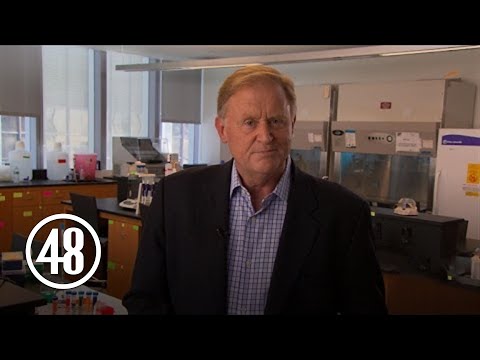
Watch "It's About Danni" and then catch up with "48 Hours" correspondent Peter Van Sant and producer Lauren Clark as they discuss the case of Danni Houchins, who was found dead in Montana near the Gallatin River in 1996. The team discusses why the sheriff's department told the public Danni accidentally drowned, the decades-long fight for justice from her family, and DNA evidence that eventually led investigators to the killer.
Crime. Social justice. Impact. "48 Hours" investigates the most intriguing crime and justice cases that touch on all areas of the human experience including greed and passion. "48 Hours," which premiered in 1988, has developed a rich history of original reporting and impact journalism that has helped exonerate wrongly convicted people, caused cold cases to be reopened and solved, and along the way changed lives.
For video licensing inquiries, contact: [email protected]
Read the full transcriptHide the full transcript
- [Music] Welcome to Postmortem. I'm your host Ann Marie Green and today we are discussing
- the case of Danny Hins. In September 1996, Danny was found dead near the Gallatin River that's just outside of
- Bosezeman, Montana. After an autopsy declared the manner of death undetermined, the sheriff's department
- said it could have been an accidental drowning. In the following years though, Danny's family tried to move on, but
- always suspected that her death was no accident and almost 28 years later, her killer was found. So, with me now to
- discuss this case is 48 hours correspondent Peter Vansent and producer Lauren Clark. Welcome. Hey, good to see
- you again, Anie. Thanks for having us, Anie. All right, guys. As usual, remember if you haven't listened to this
- episode of 48 Hours, uh, head on over to your podcast feed. You can find the full
- episode of this case right underneath this podcast that you're listening to right now. Go listen and then come on
- back so we can have this conversation. All right, let's get into this. One of the things that really
- stood out to me about this case is the fact that in 1996, the sheriff's department publicly said that there was
- actually no indication of foul play here with Danny's death. They withheld details from the coroner's report that
- said that Dany had inhaled water and mud, that she had cuts and bruises on her body, and there were signs of a
- possible sexual assault. Why did investigators originally not release this information? Well, it all depends
- on who you you talked to, and we spoke with a lot of people involved in this investigation, and I have to admit, I
- remain baffled to this day. Why not say that this was a murder? The killer knew it was a murder, right? I understand
- details of the investigation. You may not want a suspect to know, right? But just the basic fact as to whether or not
- it's a murder, that still baffles me to this day. And it baffled people back in the day in 1996 in Montana. Deputy
- Farquar could not believe what his sheriff's department was putting out there. He still can't explain. He's
- still baffled. And Deputy Farquar, who today is a veterinarian, ended up leaving eventually the sheriff's
- department out of frustration in all of this. So, it is one of these things that
- is baffling to me, but some of our people ended up speaking to the sheriff back in the day. Yeah. My co-producer,
- Chuck, uh, gave a call to Bill Slaughter. He was the Gallatton County Sheriff back in 1996, and he was upfront
- with Chuck. He said, "We sometimes withhold information so that we know when someone does come forward that
- that's the real information, that we don't have it all out in the press." That this is often common in
- investigations. But, he says he never lied to the family. But, you know, for the family that doesn't really help.
- They were left with this impression for so many years. And back in 1996, he told
- the media that there was no evidence of foul play. And we can say, we know today
- that simply was not true. The coroner's report said that her manner of death was
- undetermined. So, while Sheriff Slaughter said, you know, we always investigated this as a homicide, there
- wasn't that like conclusive evidence that said this was a murder. M but you know this was something that really
- bothered a lot of people in the sheriff's office for a long time cuz they knew like Danny's family knew Danny
- was an outdoors person. She was comfortable in the mountains. Uh she was wearing a leg brace at the time which is
- something I think investigators did take into account. Um, but Deputy Farquar told us that he talked to Danny's doctor
- at the time and her doctor said there was no reason for her not to be able, even with the leg brace, to be able to
- turn herself over in that mud and still survive if it had been an accidental trip or a fall. I'm glad, Lauren, that
- you said that they always investigated it as a homicide. But I also think what opportunities were missed if the public
- knew that they were looking for someone. Maybe other people were out there at that time and you know they might have
- seen someone else out there talking to her but if you don't know you're looking for another person you're not going to
- you know try to help in that manner or just the thought that there was a killer on the loose in their small town. Yeah.
- Absolutely. And again this is a first for me. I've never known a law enforcement agency at any level to
- withhold from the public that it was a murder. Yeah. Uh to suggest that it was an accident or may have been an accident
- as you said everyone downshifts. uh and Marie, right? They're not as concerned. Uh they don't have a threat in the
- community. They're not racking their brains. What did I see that day in that area in this public fishing area? And
- there could have been opportunity lost there. Mhm. So, you know, a lot of times when people ask me about working for 48
- hours and they say, "Isn't it sort of depressing to focus on these topics?" And I always tell them in every story
- there are heroes. And there are a few in this story. Danny's sister Stephanie is
- definitely one of them. Lauren, you spent a lot of time talking to her. She struggled her entire life to accept
- Danny's death as an accident. She couldn't shake the feeling that that her sister had been murdered, but it wasn't
- until years later that Stephanie pushed the sheriff's department to reopen the investigation. What prompted her to take
- action? Yeah, I think I think Stephanie is really kind of an remarkable woman. She was 12 years old when Danny was
- killed. And in her show, she says, you know, I tried to be strong for my parents. Danny was killed on a Saturday.
- She went back to school on Monday. And she was just trying to keep it together and be strong for them cuz she
- knew that they were going to a lot. But this really really affected her. I mean,
- this was her big cool sister. It was like the mid9s. She was like all grunge. She was just everything Stephanie wanted
- to be. So then Stephanie growing up and having that void in her life and always having these questions, you know, it was
- hard for her. And she told us, you know, every year her mom would send a note or
- call the sheriff's office, be like, "Hey, is anything going on?" But it wasn't really a big push. And Stephanie
- kind of wanted to to really push and ask questions, but some friends told her like, "Make sure you're in a good place
- to take this on because once you take this on, it's going to be a lot." So it took a little while and she got to a
- place where she really felt like, "All right, now's the time." And so it wasn't until really 2020 that she was let in to
- see the pieces of the investigation, to see the autopsy. She chose to look at the autopsy photos herself. And that's
- when she was told that no, they really believed that this was a homicide. And the thing about Stephanie, all these
- years, she had always promised her sister in her thoughts that she was not going to let this case die. And it just
- reached a point where now was the time, as Lauren said, for her to move forward.
- and she is the champion in this and one of the most compelling characters I have
- ever interviewed for a 48 hours episode. Right. Another big driving force is uh Sheriff Dan Springer in 2021. He's a
- newly appointed sheriff and he tells Stephanie, "I am making a promise that we will find an answer to this case."
- Which I thought was quite a hefty promise to make. So, I want to talk about him and just why Springer decided
- that this was the cold case that he was going to dig into and he was going to solve. I think everyone touched by this
- case was haunted by it all this time. Keep in mind, Sheriff Dan Springer, he'd just been on the job for 5 days with the
- Gallatin County Sheriff's Department when Dany's body was found. And if there's one thing that we learned in
- this, uh, Sheriff Dan Springer is a man of absolute integrity. And once he became the big dog, you know, the
- sheriff in the department, this case that haunted him as well, he wanted to return to it and looked Stephanie in the
- eye and said, "We are going to solve this." He played such a crucial role in this. And then there's another hero in
- Danny's case. Uh Springer enlists the help of a former investigator, Tom Elmont. Tom Elfont was a former LAPD
- captain. He retires and he moves to Bosezeman. How did Spur even find him? Well, meeting this guy, you instantly
- love him. I mean, Lauren was there, too. We're just having a brief conversation about how he got involved with this. He
- starts talking about Danny, and tears come to his eyes. He tears up. This is a guy who was a tough
- LAPD police captain, right? He'd seen everything in Los Angeles County and investigated every kind of crime. But
- when law enforcement people retire, they often times get in the private security
- business. He has a business, a number of employees, so he kept his network of contacts out there. And eventually,
- Sheriff Springer learns of his presence, this wealth of experience and investigative talent, his, you know,
- living on the top of a mountain just outside of town. And Springer reached out to him and Elfmon said yes. Which is
- of course crucial in this case. Yeah. Yeah, El Elmont's dedication to this really was key to getting this solved. I
- mean, we've read his case notes. He did everything. He talked to everyone he could and he had the enthusiasm to think
- outside the box a little bit, which ended up being what this case really needed. Welcome back everyone. We are
- going to dig into the science here. Tom Elmont's investigation really starts to gain momentum when he pushes the Montana
- State Crime Lab to retest the semen that was found on Danny's clothes with their
- newest DNA technology. Now, the lab does manage to get a partial DNA profile, but
- it didn't match any of the names in their system or in COTUS, which is the FBI's national DNA database. But there
- were also four rootless male hairs found on Danny that were preserved. And the private lab was able to extract DNA from
- one of those hairs. I didn't realize that that was even a possibility now to tell you the truth. Cuz normally you
- need when we say rootless, we're talking about that sort of white bulb that's at
- the end of a hair when it gets yanked out. This didn't have that, you know. Well, tell me a little bit more about
- this technology and how they were able to do this. Yeah, I mean, it's it's pretty wild, honestly, what they're able
- to do. Now, these weren't just rootless hairs. These were like naturally shed arm hairs, they thought. So, they're
- they're like little, too. But back in 1996, you know, DNA technology was relatively new. It's not nearly advanced
- as where we are now. This is something that is still new in the law enforcement community that this is a possibility
- that you know there are these companies out there like this Astrella Labs that Tom Alfmont connected with that they
- have like their own proprietary methods and software where they they literally grind down biological samples to get as
- much of the DNA as much of the cells in there as they can and then they use computer technology to amplify the DNA
- in there. Sounds expensive. So yeah, another thing about, you know, these DNA tests, they are very expensive. It can
- get into the thousands of dollars. And something in this case that really stood out to us is Tom Elfman told us he went
- to Sheriff Springer and was like, "Hey, can I spend some money here? Can I go to
- these outside labs?" And Sheriff Springer told him like, "Do what you got to do. I'm not going to let money get in
- the way of this." And that was a really big commitment and something that enabled them to do the testing they
- needed to get the break in this case. And think about just like how many cold cases are out there where there's
- evidence sitting in like the back of a file cabinet in the basement of the sheriff's office. You know, if something
- could be retested now or new eyes put on it. I mean, it's a total game changer. Think about this. It's like a time
- machine. They're able to go back generations and then work their way forward to find someone. It's almost
- magic. It really is. M which brings me to CC Moore because it's one thing to have a DNA profile but if you can't
- match it to a person then it doesn't really matter. So Elfmont Enlist the help of CC Moore an investigative
- genetic genealogologist. She's worked for law enforcement to build family trees from
- DNA samples and identify killers. So, in 2024, Cece was able to identify several
- family members who were related to this DNA profile. Eventually though, she zeros in on Paul Hutchinson because he's
- posted on Facebook that he moved to Montana in 1996 and he moved to Boseman. And this is just months before Danny is
- murdered. First off, what was the moment like for CC Moore when she realized here
- are all the dots and now the lines are like D, I have a picture. Well, remember once they get that DNA readings, they're
- able to then get into DNA databases and they found this link to the suspect Hutchinson. So for Cece, who's been
- doing this for a while, it's extraordinarily exciting. It's what she lives for, but it's also a very sobering
- thing. Now, you can go to that person's social media. She learned that Hutchinson was a big- time hunter. He's
- married, has two kids, and she realizes that these people's lives are about to go off a cliff when she brings this
- forward. So, it's excitement that is tempered a bit with this sobering reality of what the consequences will
- be, but finally, it is the path to justice. So, let's talk a little bit about these public DNA databases because
- I think some people they wanted to, you know, see if they were related to the Queen of England or something like that,
- so they signed up for ancestry. We're not talking about a database necessarily like that. No. And it's actually there's
- two parts to CC's work. She starts with the unknown suspect DNA profile. They get permission to test it against
- databases where people have volunteered. Basically, they take the DNA profile that they've gotten from like a 23 andme
- or an ancestry, you know, one of those kits you do at home. But then individual users can choose to take that profile
- and upload it to different sites that contain these databases. And they do have to opt in for law enforcement to be
- able to search their profile in these. In this case, especially because in Montana, there are also a lot of
- personal freedom laws. So Tom Elmmont actually needed to get a subpoena from a judge to some of these companies for
- them to be able to, you know, basically compare the suspect DNA profile to these
- databases. So once they do that, they get a list of people that have similar DNA to the suspect. And that's when CC
- gets to work. And then the next stage of her work, she does use ancestry.com. She
- uses public records. Like the Mormon church has a giant database of family trees and everything. She goes through
- everything and that's where she's piecing in those common connections. Fascinating. So, as Peter pointed out,
- the suspect, Paul Hutchinson, he's well respected. He's working for the Bureau of Land Management in Montana. He also
- has no criminal record. So, he's definitely managed to stay under the radar for many, many years. I know. I
- thought there's no way that this is the only thing this guy has ever done because it it's, you know, it's a murder
- and a sexual assault. Is there any thought that there there could be other victims? Yeah. I mean, Tom Elfman is, as
- we said, a really experienced investigator. And if we had that first thought, he definitely had that first
- thought of, are there more victims out there? And he told us, you know, it's not unlikely, especially for a sexual
- assault like this, for someone to have done it again. Um, as of this day, we don't know, but they are actively
- investigating because Hutchinson was a big turkey hunter, and there's this thing in the turkey hunting community
- called the US Super Slam, where you kill a turkey in every state except Alaska. So, he was working towards this kind of
- certificate, traveling all over the country in these remote backwoods areas. Elfmont told us, you know, it'd be very
- easy for him to get in and out of somewhere no one even knew he was there. Who knows what the possibilities are all
- over the country? And also the Gallatin County Sheriff's Office, they uh sent out a bulletin to other law enforcement
- agencies in the state of Montana to see if they have any cold cases linked to Hutchinson. And that's the big question
- is will they find other cases in this? And Stephanie herself, she ends up saying in our hour, "I think that anyone
- who was able to rape and murder a young girl and then get away with it for almost 28 years had plenty of chances to
- do it again." Wow. Um, so turning back to this investigation, once Hutchinson is identified as the suspect, Elfmont
- and another detective confront him. They make up an excuse to speak to him, but they do say, you know, we're
- investigating crimes along the rivers in Southwest Montana and we want to talk to
- you. But they start to focus in on Danny's murder and Hutchinson becomes visibly nervous. I want to play an
- extended clip here of that interview. Do you remember hearing about this murder or anything about about that?
- I I don't I mean I I might have it was a big case just because she was so young and obviously for Boseman that's that's
- that's big news you know especially in Montana this it wasn't common obviously back in the day I mean I know I'm giving
- you different people but u you know for Boseman Belgrade area that's that was big news. Do you remember this movie
- or hearing her name? I don't I've never seen anybody quite melt down like that. It was like the wicked witch
- in the Wizard of Oz melting down at the end. That's what I saw. He went from being uh calm and collected to sweating.
- He was very nervous. They pointed out that he leaned back in the chair to get as far away from them as he possibly
- could. Psychologically, he wanted out of that room. Yeah. And Hutchinson by the end there was allowed to leave. They
- weren't able to arrest him right then, but Elfmont was pretty sure Hutchinson knew that his time as a free man was
- running out. Indeed, just hours after that interview, Hutchinson drives to a remote area and he shoots himself. When
- Hutchinson's DNA is ultimately checked against evidence from Danny's body, it is a
- match, but unfortunately, he is now dead. And so, there will be no trial. I just wonder what it was like for um
- Danny's family. Yeah. Yeah, I mean Stephanie told us about Tom Elfont calling her that morning. It was in the
- early hours of the morning uh that news kind of spread and I mean she she was shocked. She had been preparing herself
- to be there every day through court hearings for trial. She was mentally and emotionally preparing herself and then
- it was just oh okay but now and again all these questions they have the why, the how, the what actually happened. I
- mean, it's just gone now for them. And it's heartbreaking. It really is. The hour ends in a really beautiful moment
- that um Stephanie allows 48 hours to be there for. Uh she spreads some of her sister's ashes in the Gallatin River.
- What was that moment like? Yeah. I mean, that was definitely not part of our original plan. and we had filmed with
- Stephanie the day before by the fishing access area where Danny's body had been found and they avoided that area for a
- long time. Um, her mom actually moved away. She had just recently moved back and I guess told Stephanie that she had
- some of the ashes with her. So it really was incredibly profound that Stephanie trusted us to be able to do it on
- camera, of course with crew, kept their distance, made sure she had the time on her own, but it was really just, yeah,
- this reclaiming of this scary place with where this horrible thing happened to her sister that now she can go back
- there and think of Danny, think of the beautiful area around her and have it be a good memory. I thought one thing that
- was profound that I just wanted to read as almost kind of a final thought from Stephanie. This was at the press
- conference. She said, "I celebrate that a violent predator is no longer able to victimize other women and girls. I
- celebrate that my fight for my sister is over. Celebration for me is short-lived.
- It's quickly replaced with a tangled mess of frustration, disbelief, and anger." Of course, that is part of the
- profound nature of murder, isn't it? It just never quite goes away inside any of
- these these victims. But in this case, I think Stephanie really accomplished this
- extraordinary feat in her life and gave honor to her sister's memory. Really, really well put, Peter Lauren. Thank you
- so much. Thanks, Denmarie. Thank you. If you like the series Postmortem, please rate and review 48 hours on Apple
- Podcast and follow 48 hours wherever you get your podcast. You can also listen adree with the 48 hours plus
- subscription on Apple podcast. Thanks again for listening.
Brief Summary
Danny Hins was found dead in 1996; her killer was identified nearly 28 years later after a renewed investigation.
Key points
- The Mysterious Death of Danny Hins. Danny Hins was found dead in 1996, with initial reports suggesting accidental drowning. Years later, her family suspected foul play.
- Sheriff's Department's Controversial Decision. In 1996, the sheriff's department claimed no foul play in Danny's death, leading to public confusion.
- A Sister's Determination. Danny's sister, Stephanie, pushed for a reopened investigation years later, believing her sister was murdered.
- The Role of DNA Technology. Advancements in DNA testing lead to a breakthrough in Danny's case, revealing crucial evidence.
- The Tragic End of a Suspect. After being identified as a suspect, Paul Hutchinson took his own life before facing trial.
- Stephanie's Profound Reflection. At a press conference, Stephanie shares her mixed emotions about her sister's case.
Episode highlights
- The Mysterious Death of Danny HinsDanny Hins was found dead in 1996, with initial reports suggesting accidental drowning. Years later, her family suspected foul play.“Danny's family tried to move on, but always suspected that her death was no accident.”0:30Jun 8, 2025
- Sheriff's Department's Controversial DecisionIn 1996, the sheriff's department claimed no foul play in Danny's death, leading to public confusion.“Deputy Farquar could not believe what his sheriff's department was putting out there.”2:13Jun 8, 2025
- A Sister's DeterminationDanny's sister, Stephanie, pushed for a reopened investigation years later, believing her sister was murdered.“Stephanie struggled her entire life to accept Danny's death as an accident.”5:16Jun 8, 2025
- The Role of DNA TechnologyAdvancements in DNA testing lead to a breakthrough in Danny's case, revealing crucial evidence.“They're able to go back generations and then work their way forward to find someone.”12:05Jun 8, 2025
- The Tragic End of a SuspectAfter being identified as a suspect, Paul Hutchinson took his own life before facing trial.“Hutchinson drives to a remote area and he shoots himself.”18:27Jun 8, 2025
- Stephanie's Profound ReflectionAt a press conference, Stephanie shares her mixed emotions about her sister's case.“I celebrate that a violent predator is no longer able to victimize other women and girls.”20:18Jun 8, 2025