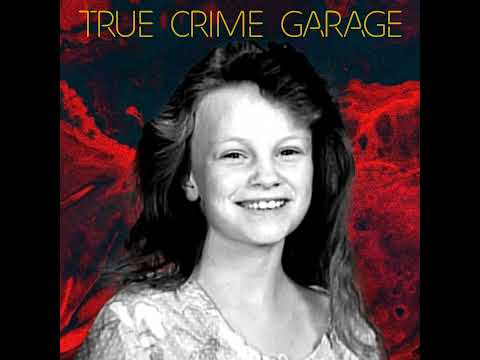
Free Roaming Predator /// Part 2 /// 940
Episode Description
Free Roaming Predator /// Part 2 /// 940
Part 2 of 2
www.TrueCrimeGarage.com (http://www.truecrimegarage.com/)
In 2006, the Greenville, South Carolina Police Department announced that they had connected one of their unsolved homicides from 1990 to two unsolved homicides that had occurred hundreds of miles away in Missouri. This meant that investigators were not dealing with isolated, unrelated crimes. They were dealing with a linked series. Events connected by a single source, a single method, a single offender who traveled. Yet, the announcement came with a crucial limitation: they did not know the identity of the killer. But they knew the nature of the threat.
Beer of the Week - Way Bird Hazy IPA from Half Acre Beer Company
Garage Grade - 4 and a half bottle caps out of 5
More True Crime Garage can be found on Patreon and Apple subscriptions with our show - Off The Record. Catch dozens of episodes of Off The Record plus a couple of Bonus episodes and our first 50 when you sign up today.
True Crime Garage merchandise is available on our website’s store page.
Follow the show on X and Insta @TrueCrimeGarage / Follow Nic on X @TCGNIC / Follow The Captain on X @TCGCaptain
Thanks for listening and thanks for telling a friend. Be good, be kind, and don’t litter!
Hosted by Simplecast, an AdsWizz company. See pcm.adswizz.com (https://pcm.adswizz.com) for information about our collection and use of personal data for advertising.
Read the full transcriptHide the full transcript
- Welcome to True Crime Garage. Wherever you are, whatever you're doing, thanks for listening. I'm your host, Nick, and
- with me as always is a man with a butt full of dreams. Here is the captain. >> And it's a big old butt. It's good to be
- seen and good to see you. Thanks for listening. Thanks for telling a friend. >> Today we still have some Weey Bird hazy
- IPA from Halfacre Beer Company. This is a very wellbalanced hazy. I love the citrus to hops sweet to bitter ratios
- with this one. And the can art is very sort of early8s yacht rock. So very cool. four and a half bottle caps garage
- grade. And garage friends, toast and cheers to Karen and parts unknown. And last, but certainly not least, let me
- try to get this one right or mess it up completely. We don't know. A double cheers. This goes to Michelle and Yuros
- Nicolik of Rroot Yoga, Tom's River, New Jersey. >> Sounds close enough to me. >> Nailed it. Everyone we just mentioned
- went to trimegar.com and helped us fill up the old garage fridge for this week's
- show by donating to the beer fund for the beer run. And for that, we thank you. >> Yeah. Bw beerrerun. If you have a big
- old butt, check out true crimegar.com and sign up on the mailing list. And Colonel, that's enough of the beos.
- >> All right, everybody, gather around, grab a chair, grab a beer. Let's talk some true crime.
- When we left off with episode one of the of this particular case here, Captain, we talked about an article that came
- out, a very lengthy Sunday article that came out locally in Greenville. regarding where the case was and all the
- work that had been done on it over the course of a span of 16 years. And so that's really where the case was
- sitting. It was it was being worked and being worked pretty well, I believe, but
- ultimately it wasn't really going anywhere, >> right? we will be able to understand why
- that was very quickly here because we do get some very positive movement on this
- case. So look, after 16 years, it looks like this renewed interest in the case from the public may have stirred
- something up in the universe because action creates momentum and momentum, my friends, is hard to stop. So, just days
- after that article ran, there is an announcement about a huge and a significant break in the Jenny Zatriki
- homicide case. So, that same month on April 26th, 2006, a story ran from the Greenville News, the same newspaper that
- we were talking about in episode 1, that laid out a development that the Greenville investigators had been
- waiting years to see. DNA had finally stitched together the murder of Jenny Zatriki in Greenville from 1990 with two
- violent crimes committed in two other states 8 years later. So this would be in 1998. Of course, the article starts
- with the Zatriki case, the case that Greenville Police Department would never let go of, never give up on, with
- finding her dead in the bathtub in her apartment in 1990, a crime scene that was brutal and personal. She'd been
- beaten and strangled. But then the article goes into the murder case and the investigation.
- You know, after the shock goes away, it settles into this long grinding reality of an unsolved homicide and an
- investigation that's dragging on year after year after year. One where every new tip had to be chased, every
- possibility checked, and every small detail preserved in a case that science would catch up to later. So 16 years had
- passed by this time. Captain leads came in. They were worked. They went nowhere.
- According to Greenville Police Chief Willie Johnson, investigators spent those years pushing the case forward in
- every way that they could, eventually running down more than 150 leads. Even with that effort, the identity of the
- person who killed Jenny Zatriki remained out of reach for investigators. Then a database changed the trajectory of this
- case altogether. You're just going to gloss over the fact that the guy's name is Willie Johnson? I thought we were
- friends. >> Lieutenant Michael Graham Bell of the Greenville Police Department explained
- that DNA evidence from the Zatrice homicide was entered into the combined DNA index system, COTUS. This was in
- 2005. Now, remember, we're talking about a newspaper article and a big break in the case taking place with this
- announcement in 2006. And what they're stating here is that this wasn't as simple as it would seem. Okay, so early
- on in the KOTUS database when the DNA databases were first being built out, they were largely populated with known
- samples, right? DNA samples that have a name, an identity connected to them. Now
- also keep in mind this is a federal or national database and each and every state that is providing
- and adding to this database they sort of have their own approach to collecting and contributing DNA to the database. So
- in this case, the Jenny Zatriki homicide, Greenville, all they had was an unknown DNA sample that they
- collected from the crime scene. >> Mhm. What they were saying was because the databases were heavily populated
- with known samples that they had a bit of difficulty getting their sample in because they needed to get and I'm using
- his words. All right, we are at the mercy of using the words in what Greenville PD stated publicly in the
- case. They said we it took some time getting the quote appropriate amount into the system. So they say this would
- be enough of a sample reliable enough for a comparison. And they said that that took time in their case. But once
- it was in, Cotus then did what it was designed to do. It compared and it searched for a match. The match that
- came back didn't just point to a single related incident. It reached across state lines and across time. Chief
- Johnson said the DNA samples from the Zatriki homicide matched samples tied to a shooting in Portageville, Missouri.
- This was a double homicide shooting in Portageville. Those Missouri events weren't isolated either. The
- Portageville shootings had already been connected through ballistic tests to a separate incident, an attempted
- carjacking in Dyresburg, Tennessee. I want to be clear here. It's reported in this article to be an attempted
- carjacking in Dyresburg, Tennessee. We'll get into the details of that unsolved crime because nowhere else is
- it reported as a carjacking, but that's neither here nor there for the moment. The Missouri crime and the Tennessee
- crime happened hours apart on the same day, March 28th, 1998. So that would be 8 years after Jenny was killed in 1990
- all the way in Greenville, South Carolina. The officer, officer Gumbrell, said that ballistic reports from the
- Tennessee shooting occurring roughly two and a half hours after the Portageville
- slayings showed that the same weapon had been used in both places. So, in other words, investigators already had and did
- have for many years a weaponbased link between Missouri and Tennessee, >> right?
- >> The crimes that took place in March 28th of 1998. What they didn't have was a
- bridge back to Greenville and the murder in 1990. DNA supplied that bridge. >> Got him.
- >> Well, no, because we don't know who any of this DNA belongs to. >> Okay. Premature. Got him.
- >> The So, the DNA connections triggered direct cooperation between a bunch of agencies, right? So, I'll break this
- down for you real quick. What they figured out is that the DNA from Greenville matched the DNA in the
- homicides in Missouri and the gun used at the Missouri homicides was then used later that same night and what was
- actually an attempted breakin to a home where the gun was was fired. Okay, so you got ballistics linking the two and
- now you have DNA linking the other two together and a combination tells you that likely committed all by the same
- person and the DNA confirms that at least two of them were. Okay, so this is going to trigger basically a task force
- although they never refer to it as that. On the Missouri side, we're going to have agencies that get involved. We're
- also going to have agencies that get involved from Tennessee and from South Carolina. Now, in regard to the DNA on
- the Missouri side of it, they had their own timeline of evidence that was entered into the system. So, the
- Missouri DNA sample had been entered into COTUS in March of 1998. That's what this article says. Again,
- it's quite a bit more complicated than just that, and I'll have some better details and detailed information for you
- in just a bit as we parse through this. So later after Missouri investigators reviewed the case, an additional DNA
- sample was entered in March of 2006. This would be what would ultimately connect the incidents for
- authorities. Well, and what's interesting in this investigation is early on they were looking at other
- crimes and are there any other crimes that because we have some weirdness here. We have the victim in water. So,
- is that happening in other crimes and can we connect those crimes to this crime? So, it shows that law enforcement
- was looking into other crimes and are they connected? Are there some similarities here? I think the other
- thing that's interesting in this case is also the manner of death. We have strangulation with blunt force trauma,
- but I'm sure the amount of cases that have that similarity are very large. >> Yeah, it can be. The um you know, one
- thing we talked about in our one of our previous episodes recently was the blunt
- force trauma is a is typically a more rare form of homicide. here with the strangulation. I think the strangulation
- was less intentional and more practical with Zatriki. I think that the killer thought that he had beaten her to death
- and that used the panty hose to move her and did so by tying them around her neck
- and then and dragging her whatever life was left ended at that time. Now, Bud Cooper, a spokesman for the Missouri
- State Police, described the investigation as complicated, which I mean, we can already see that, but he
- says, quote, "It's a tricky case." and he talks about how both states were now comparing details looking for
- similarities that might identify the same offender across multiple crimes and of course across multiple jurisdictions
- and state lines. So, we have this multi- agency task force, if you will, that was
- created that would ultimately bring together the Greenville City Police Department, the Missouri State Highway
- Patrol, the State Law Enforcement Division or better known as SLED, the FBI, the the 13th Circuit Solicitor's
- Office, the US Marshall Service, and retired SLED Major Jim Christopher. Okay, so we have a lot of people
- involved and several agencies involved in what is ultimately three homicides and what I would call an
- attempted fourth or maybe even fifth homicide, >> right? But these are just the crimes
- that we know of. There could be many other crimes in this case. On the Missouri side of things, their double
- their double homicide case had been prominent enough to be featured multiple times on America's Most Wanted, and
- investigators had already released a composite sketch. Greenville police in turn released that same composite sketch
- connected to the Missouri case along with a suspect description. a white male, 30 to 50 years old, small build,
- wearing glasses with straight medium length graying hair and a graying mustache. For Greenville investigators,
- this was the kind of break that justifies years of hard work, years of interviews, and evidence handling. The
- Zatriki case had been assigned to the department's cold case unit in 2005. And by April of 2006, the case was no longer
- simply a local tragedy sealed in old files. It had become part of a larger pattern linked by DNA, reinforced by
- ballistics, and now pursued by a network of agencies working collectively. Now the article closes not with a conclusion
- but with the reality that a link connecting cases is not an arrest and the perpetrator had yet to be
- identified. Okay, so this is major news obviously for our investigation. >> Absolutely.
- >> But what but what is up with this newspaper? Again, it gives us no names. It simply just references this double
- homicide in Missouri. Like it like it referenced the serial killers in other states but didn't name them. They're
- hesitant to name anybody outside of their state for some reason. So >> maybe you should worry about yourself
- >> and let them live their best life. >> Living their best life would be providing the best news coverage that
- they possibly can. And that often involves naming people even if they don't live in the state of South
- Carolina. So here we go again, Captain. We need the victim's names from the DNA linked cases. That will help make
- telling our story more complete. So, we go to the Missouri State Highway Patrol.
- And from them, we get names and more importantly a very clear and concise timeline of events here, Captain. So,
- this is March 28th, 1998, rural Portageville, Missouri. And from my understanding, I think there's only
- like 3,000 residents that lived there at the time. So most of it's probably pretty rural. Anyway, at approximately
- 700 p.m. that night, the bodies of Sher Shearer, aged 38, and Megan Shearer, aged 12, were discovered in their home.
- Both had been murdered, and Megan, the girl, had been sexually assaulted. This is from the St. Louis Post Dispatch just
- days after the double homicide. And it reads, I'll just read a little part of it here. It says, "The weekend
- murder of Sher Anne Shearer and her daughter Megan Elizabeth Shearer hit hard in Portageville. So far, no arrests
- have been made. Anthony Sheerer discovered the bodies of his wife and daughter Saturday night at the family's
- home in rural Portageville. Sheer and his son were returning home after completing farm work in nearby fields.
- Authorities have not said how the mother and daughter were killed, but Missouri Highway Patrol spokesman Brett Davis
- said robbery was not a motive. He reported no signs of forced entry to the home. And it says more than three dozen
- officers in several departments have been called in to help investigate the crime. Many of the town's 3,000
- residents offered to help investigators fixing meals, providing soda and coffee.
- Dr. David Boyd, a local dentist, help cook chicken for police on Sunday, saying, "We are a strong community and
- we will help the shearers through this." So, this is a double homicide at the Sheerers farmhouse. And while that
- article from the the early points just days after the homicides >> does not describe how they were killed,
- of course later in 2006 when we get our big breakthrough in the Jenny Zatrici case, we know that a gun was involved.
- They were killed. They were shot to death. >> Right. >> And then later, >> a lot different than the case that we're
- looking at. >> Absolutely. And then later about 2 and 1/2 hours or so later, we have
- this that same gun is used in Dyresburg, Tennessee. All right. So approximately 2
- and 1/2 hours later, an attempted home invasion and shooting was reported. A man in a van stopped, asked for
- directions, and then attempted to force himself into the residence of a 25year-old female who was there alone
- with a child. >> Ban the vein. >> The man produced a handgun and fired a shot during a struggle with the female.
- A bullet struck her in the arm and she was able to fight off this dude and retreat inside her home. ballistics
- connected the Dyer's or the Dyer County incident in Tennessee to the Sheerer murder.
- >> Now, where we get the composite sketch obviously comes from the woman that fought this dude off. So, this female
- provided a description of the suspect and assisted with a composite drawing of the suspect.
- >> I bet he looks like a real douche burger. >> So, this is where the case gets really
- complicated as the police were talking about to the public. So in 1998, a partial DNA profile was developed from
- evidence at the sheer homicide scene. However, that profile lacked enough markers for entry into Cotus. So while
- they had a sample, they did not have enough qualifying markers in that sample to submit it to Cotus.
- >> So it it's there, they have it, but it's never entered. And then from 1998 to 2006, investigators conducted
- numerous interviews, followed hundreds of leads in the Missouri case, and the cases, the Missouri case and the
- composite drawing sketch from the Tennessee incident were featured on America's Most Wanted. Unfortunately,
- that doesn't lead to identifying the suspect. By 2006, we have significant advances in DNA testing, which led to
- evidence from the double homicide being resubmitted to the Missouri State Highway Patrols crime laboratory, which
- then they develop a full suspect DNA profile and it is then entered into Cotus resulting in the match that takes
- place to the April 6th, 1990 murder of Jenny Zertriki. So you can see how complicated and how over time these law
- enforcement agencies refusing to give up on these cases is what is is now steering this ship and and getting
- things moving in the right direction. Now obviously what they're going to do here, Captain, you have different
- jurisdictions, different states, and you have different timelines because Jenny's
- killed in 1990. These double homicides uh the double homicide takes place in 1998. So clearly what they want to do
- now is figure out, all right, do we have anybody that lived in both places during
- when these murders were committed, >> right? Because we have a distance and time and we have a distance and
- distance. Right. >> Right. Did Did somebody live somewhere in in the greater Greenville area, kill
- Jenny, and then later moved to the greater Portageville area? >> Yeah. and then commits the homicides
- there. >> From my understanding, the the good thing here is you're also going to be
- looking in Dyer County in Tennessee as well because you have the ballistics connecting the gun.
- >> Yeah. Or is he a a traveler like a Israel Keys type? So they find five, I believe it was reported that five
- individuals had actually lived in these two locations during the times that they're concerned about. They they put
- all five of these individuals under the microscope and realize these aren't their guys
- >> right >> now. These guys are the guy. And I would bet that they probably were able to
- connect or sorry, collect DNA samples, buckle swabs from these individuals to confirm via DNA that that it wasn't
- them. >> Open up. It's time for your buckle swab. >> Following the DNA match, investigators
- from South Carolina, Tennessee, and Missouri, as said, work together to investigate over 1,200 leads. And once
- again, they feature the case on America's Most Wanted. This time adding the South Carolina Greenville Jennings
- and Tricky portion to the case. All right, tall cans in the air. Cheers to the people in the back.
- Cheers to you, Captain. And cheers to the hardworking men and women of these law enforcement agencies that kept
- working this case even as others come in. Right. And they they stuck with it and made the connections here. We're
- going to have another connection. >> In May of 2017, the investigated yield the investigation yielded a COTS match
- to a March 11, 1997 rape of a 14year-old female in Memphis, Tennessee. >> So different location.
- >> Yeah. The victim and four other individuals were at a residence in Memphis when a man knocked on the door.
- This sounds very similar to the Dyresburg situation. As the resident attempted to close the door, the man
- pulled a revolver and pushed his way into the residence. The victim and witnesses provided a description and
- assisted with a composite drawing of the suspect. And of course, this is 2017, so
- it's going to take it wouldn't be until 2017 when they connect this to this 97 rape.
- >> Mhm. >> But now we have one more violent crime. Thankfully, at this location, no one was
- killed. >> Yeah. But this tells us something, I think, because in our case, in Jenny's
- case, you go, "Okay, this guy knew his victim was going to be alone." But in these other cases, it's almost like he
- didn't doesn't care if the person's alone or not. Especially if I have a gun, I can control the situation. I can
- control the other individuals. >> Well, and some of these I try to play them out
- >> with very little information. And I wonder with the Dyresburg, Tennessee case, if the mother and daughter that
- were killed in Portageville, Missouri, would have been killed fairly early in the day because
- we know that their bodies are found by 7:00 p.m. by the the husband and father who had returned home
- >> two and a half hours later as it's reported. And this is only 40 this is only 40 miles away. So I think that when
- we when we talk about the time it gets a little convoluted for some and you think that the distance is greater
- than what it is. It's actually only 40 miles away. I think that it was maybe misreported as an attempted carjacking
- because I think that maybe the asalent first encountered the victim maybe when they were walking from their vehicle
- into their home because remember it was stated that he had knocked on the door and asked for directions. And I just
- wonder if maybe they had recently arrived home and this this attacker saw a female by herself walking into the
- house. I'm just kind of guessing here. >> That makes sense though. >> What we do have is we have a serial
- rapist, serial murder, serial offender. And in almost all of these cases when we
- are provided with some details about the crimes, the victims, the crime scenes, what was done, what was not done at the
- crime scenes, we can typically see an evolution, an evolution, if you will, to their behaviors. They unfortunately, the
- ones that go undetected for long periods of time, they learn from their mistakes.
- They learn from their their uh their actions that and evidence that almost got them caught or identified prior and
- they they get better at what they're doing. >> Mhm. >> You can almost see where this is this is
- having some kind of evolution. We're just not able to put it all together here yet. And we have almost no
- information regarding the the Missouri cases, the double homicide there. Even though they were fa featured on
- America's Most Wanted, that they talked so little about that crime, everything they were looking for was based off of
- this is the kind of gun that was used or or the the caliber of gun that was used
- and this is our suspect composite sketch. That's really all they had on the America's Most Wanted
- segments regarding that case. In 2018, where where we are at on our timeline, investigators sought the services of
- Parabon Nano Labs, a DNA technology company. They're based in Virginia. So, Parabond's snapshot DNA analysis
- technology combines DNA testing and genetic genealogy analysis to establish the relationship between an individual
- and their ancestors. Parabon's process provided leads to law enforcement investigators that when combined with
- traditional investigative techniques led them to the identification of Robert Eugene Brashers or as some say Brashier,
- a white male date of birth March 13, 1958 as a suspect for the affforementioned cases. Bashers has been
- deceased since 1999. Investigators obtained DNA samples from Mr. Brashier's surviving family members. Traditional
- forensic STR test results indicated that Mr. Basher was with very little doubt responsible for those crimes. So those
- crimes being the murder of Jenny Zatriki, the murders of the two shears from Missouri, and also this would be
- right. We have Sher Anne Shears and her daughter Megan Elizabeth Shears. And then we know that the gun, the same gun
- was used in what I think probably had he gained access to that dwelling would have resulted in the death of the woman
- that fought him off and the child that was inside. >> Right. But we also have him connected to
- that rape as well. Right. >> Absolutely. Absolutely. So he he is the person who committed all these crimes
- deceased since 1999. They don't figure this out until 2018. And so who is this guy, right? Robert
- Eugene Brashier, what we learn, he lived on Pelm Road. So he lived less than a mile from Jenny Zatriki at the time of
- her murder. >> And he had been released from prison just months before Zatriky's murder
- after serving time for beating and shooting a woman in Florida. So records show >> Yeah. Records show that Bashers lived in
- an apartment now called the Park at Bonito at 25 Pelum Road in Greenville, South
- Carolina. Now his truly it truly was the Brashier's life of crime when you look at his his life and his timeline. So
- Robert Eugene Brashier's entered the world on March 13th, 1958. The story that followed would be marked again and
- again by violence, confinement, and a trail of harm that investigators would spend decades trying to fully
- understand. He spent most of his childhood in Huntsville, Alabama, growing up there before his family
- eventually moved north to Southbend, Indiana. His school years were split between those two places. One high
- school in Huntsville and another in South Bend. By the time he finished high school, his life had already carried the
- sense of motion, relocations, new environments, shifting identities that would continue throughout his adulthood.
- After graduating, he entered and served in the United States Navy. But this was pretty brief here, Captain. He only
- served about 10 months before he was discharged due to what was described as a personality disorder or personality
- disorders. Not long after, in the early8s, he moved to Louisiana and lived for a time in New Orleans. Then by the
- mid 1980s, he relocated again, this time to Fort Meyers, Florida. >> Well, if you have one disorder, you
- probably should have multiple disorders. >> It was in Florida that one of the earliest clearly documented acts of
- extreme violence attributed to him took shape. On November 22nd, 1985, Bashiars was arrested in Port St. Lucy, Florida,
- accused of assaulting a 24year-old woman named Michelle Wilkerson. So, according
- to the reports, Bashiers and Wilkinson met in Fort Pierce. They spent part of that evening together at a bar.
- Afterward, they left together in Brashier's vehicle. He drove them to a nearby citrus grove where they stayed in
- the vehicle parked drinking Budweisers. At some point, Robert Brashier makes sexual advances. Michelle Wilkerson was
- not interested and she then attempts to leave the vehicle. That attempt to get away or leave the vehicle turned the
- situation violent. What a >> he reacted aggressively and a fight broke out during the struggle. He shot
- Wilkerson twice. Once in the neck, once in the head. Now, despite the severity of these wounds, these injuries, somehow
- she manages to get out of the vehicle. She runs and she hides. But shears gets out. He's looking around for her.
- Eventually, he gives up. He can't find her. So then he drives his truck to the beach, which is nearby
- >> here in Florida. He's going to start to want to try to cover up this crime, right? So he tosses his gun into the
- ocean. But luckily for us, or luckily for who knows how many people, because he gets locked up for a period of time,
- his little trip down to the beach is what gets him caught. His truck got stuck in the sand, and so now he's
- walking out of there. Meanwhile, our victim, Wilkerson, she is able to get to safety, find her way to safety. She's
- eventually taken to the hospital. But before this, she reports the crime and she tells patrol officers, "Look, she's
- describing the attack, describing her attacker, describing the vehicle that she was in." And the response was
- immediate. Within minutes, Brashier is apprehended while he's still walking along the beach late at night.
- >> Yeah. >> So, he gets charged, captain, with attempted first-degree murder, aggravated battery, and using a firearm
- during the commission of a crime. He receives a sentence of only 12 years in prison.
- >> Not long enough. And look, most of the time, the Sasquatch is the champion of
- hideand seek. But luckily for Wilkinson on that day, she was the champion of hideand seek and so glad that she was.
- >> Well, and and keep in mind here too that back then in the 80s and before this as
- well, of course, they were much more lenient back then with incarceration, with prison sentences, the length of
- them. And unfortunately, this is going to lead to Brashier's ultimately getting an early release for good behavior. So,
- he gets 12 years, but he's released on May 4th, 1989, right? And what we know is that less
- than one year later, he kills Jenny Zatri. >> But isn't it a little bizarre our system, okay, this guy shoots his victim
- twice. Okay, she lives, but now he gets charged with attempted murder. It should
- just fall under the same category. The outcome just didn't go in his favor or the outcome didn't go the way he
- planned. So what? You're going to spend the rest of your life in prison because we know
- that you have the capability of doing this. >> Oh, absolutely. And I mentioned evolution earlier with these repeat
- offenders, these serial rapists and serial killers. We also have the evolution of our societies. You know, in
- today's trailer, I referenced the significant drop in violent crime recently here in the United States and
- significant drop in homicide rates. Part of that comes it comes through by way of
- of of a lot of different things here and a lot of different aspects. But but it also part of that is that we have as a
- society gotten tougher on crime and these violent offenders, especially the extremely violent ones like we're
- talking about here today, they're getting much lengthier sentences. I don't know because it's not in the
- report to say that it never took place, but I'll take a guess here. When he was released, he wasn't placed on parole. If
- he if somebody was released today, they'd be placed on parole. I'm guessing he wasn't parrolled that he was just
- released because he lives in another state, >> right? >> When you're on parole, typically they
- don't allow you to go move to another state. You have to get a lot of permission and there's a lot of things
- that go into that. here. He's just kind of living in South Carolina, free to do what he wants. And what he wanted to do
- was break into some young attractive woman's apartment in the middle of the night and rape and kill.
- >> Yeah. >> Now, okay. So, we know that he's out in he gets out in ' 89, kills in 90. By
- 1992, Basher was arrested again, this time in Cobb County, Georgia. So, one thing I do
- want to point out here is when when you review the totality of the violence and murder and evil that this guy did, we
- also do need to be thankful that he was locked up a a couple of times. And in both cases, it was for roughly a handful
- of years, >> right? >> Who knows how many lives were spared because of him spending what was it
- about 5 years for that attempted murder. Here he gets caught again in ' 92. This
- time when he's arrested in Georgia, he's arrested, he's in possession of a stolen
- pistol, a stolen vehicle. What police found with him during that arrest painted a picture of someone preparing
- for more than just simple theft. Okay. In his possession, officers discovered a police scanner, a police coat or jacket,
- burglary tools, and a fake Tennessee driver's license. So that little collection of items suggest planning,
- disguise, and an intent to evade detection and I think intent to commit some very horrific crimes.
- >> Yeah. >> So he's returned to prison and he spent approximately 5 years incarcerated. He's
- released in February of 1997. So, for a time that might have seemed just like another cycle for this guy,
- crime, capture, prison, release, we have something a little bit different here. He's going to be met with consequences
- far beyond what authorities could offer or a prison sentence could offer. Now, as we said, while he's out, we know that
- he commits that double homicide in Missouri, 1998, the murder of Sherry and Megan Shears, the attempt in Dyresburg,
- Tennessee, and also just before that, shortly after he was released, is that rape and hostage situation or, you know,
- he ties up the the victims, the other victims that he didn't sexually assault in the house in Memphis, Tennessee.
- >> Yeah. All of his crimes are similar, but they're also different. And I think that
- makes him kind of unique. >> Well, and I'm wondering he's a unique piece of [ __ ]
- >> Yeah. But I'm I'm wondering what prevented him from killing anybody in the Memphis situation in the Memphis
- crimes because what we don't know about that incident was this did did he choose
- not to kill or did something stop him from killing, >> right? >> Did he have to flee for some reason? Was
- whatever he wanted to do ultimately cut short? It's it's very hard to say, but what we do know is that we do have
- several crimes that he gets caught for because uh somebody fights him off or in this
- situation, let's go to 1998. Bashers was arrested again, this time for another incident where he tried to break into a
- home of a single woman who he had previously done some handyman work for. Okay. So, I'm guessing that he makes
- bond here and then just fled. Look, I know that some people say it's unconstitutional or whatever. Sometimes
- sometimes people should not be allowed bail or bond. They just shouldn't. In this situation, if that's why he wasn't
- in prison, wasn't in jail waiting for the trial, then this was a huge mistake. Okay, so this is a guy clearly he's got
- he's got a very violent history. He's got, even though they've not, they don't know that he's raped and murdered at
- this point, he's arrested for this crime where he's attempting to break into the
- home of a single woman who he had done some handyman work for. And listen to this. When he's arrested, he's caught
- with a firearm, and in his possession, for some strange reason, he has a video camera, burglary tools, and he had cut
- the phone line to the house. >> Well, at this point though, we do have the attempted murder. So, you got that?
- >> Absolutely. That's why I'm saying I don't understand why he was released. What we do know is he was released from
- custody the day after the arrest. >> Mhm. >> All I have for this one, Captain, unfortunately, is 1998. So, the the
- actual release date is unclear to me, but again, it I'm guessing he may bail and they released him without having
- more details of this situation. So less than a year later, his story thankfully will reach its end point. On January
- 13th, 1999, officers found a vehicle with a stolen tag at a motel in Ket, Missouri. Basher was located in a motel
- room at a Super 8 motel along with his wife and children. It says children. He only has one daughter, so this would be
- stepids. What followed was a 4-hour standoff. During the standoff, Brashier releases his wife and children. Then he
- shoots himself. He did not die immediately. He was taken to a hospital. He died 6 days later. So that places his
- death as January 19th, 1999. Now after his death, the cases did not end. They lingered unsolved, partially
- understood, or disconnected from one another until advances in DA DNA work and forensic genealogy began stitching
- separate events into a single terrifying pattern. Okay, so after his death, many
- years after his death, we realize and learn that he's responsible for killing Jenny Zatriki and the double homicide in
- Missouri and then the other crimes that were very violent and scary that did not
- result in murder. >> It's crazy to think that somebody married this guy. Yeah, it's so after
- they figure out that he's responsible for all of this these horrible activities on October 5th, 2018, the
- Greenville police chief named the killer as Robert Eugene Brashers for Jenny Zutriy's death and the Shear's death in
- Missouri and said, quote, "He's a violent serial rapist and murderer." Now, even with all those revelations, we
- did still not know the extent, the true extent of his evil or his crimes. And I I sit here and say this in the middle of
- 2026 and I don't think we still know the extent of his violence and his crimes and probably murders as well, right?
- >> Because now, >> we may never know. >> Yeah. So, let's let's go to the yogurt shop murders. December 6, 1991 at and at
- the I can't believe it's yogurt shop in Austin, Texas. Around closing time, investigators say someone entered the
- store through the back door and attacked and killed four teens before setting the
- building on fire. Their hands were tied with underwear, and their mouths gagged with cloth. They were each shot in the
- head, their bodies found by firefighters who were battling the blaze. Longtime listeners of this show know
- that we've covered the yogurt shop murders and talked about them at length multiple times. We covered the Austin
- yogurt shop murders as it was titled in February of 2017 in episodes 81 and 82. Also, yogurt shop murders 30 years later
- was the title when we revisited the case in November of 2021 with episodes 539 and 540.
- again in August of 2025 with two episodes, an update in September of 2025 with episode 913. That one where we
- because of the good work of Austin PD were able to name Robert Eugene Brashiers as the person responsible for
- the yogurt shop murders. So what led to that was again it was ballistics and DNA. Okay.
- So, >> some would say one two punch. >> Yeah. Which which is what got him with those other cases as well. So, in 2022,
- Austin Police Department began re-examining the 91 yogurt shop murders in Texas, collecting and testing DNA
- from the scene. And they began working with and using YSTR testing and genetic genealogy. This is what would ultimately
- connect Brashier to these murders. So, here we sit in 2026 with a lot more knowledge
- about this guy. Several cases finally closed and solved. And we know that this guy, Robert Eugene Brashier, committed
- eight murders spread out over time from 1990 to 1998 and spread out over distance
- with four different states. South Carolina, then Texas, then Missouri, and ultimately Kentucky because he is then
- later connected to another murder that took place in the state of Kentucky. And that was the murder of Linda Rutled. She
- was 43 years old. And this took place in Lexington, Kentucky. Rutled's body was found in a
- fire at a hearing aid business in Lexington on November 7th, 1998. Investigators determined that she had
- been shot in the head multiple times. But that's what's fascinating though is in some of the crimes he's using water
- to try to cover up the crime. In some cases, he he's using fire. And then when you see the totality
- of the the br the brutal carnage that this guy, like you said, the evolution, it makes the yogurt shop case make a lot
- more sense. He he didn't care if there was two people there or four people there. It didn't matter to him. We've
- seen him in other crimes go, "Hey, doesn't matter that there's other people here as long as I can control them." And
- then we see why I can control you with a gun and then can control you by binding
- you. >> Yeah. In 91 he was probably he may have still been living in South Carolina. He lived in a
- in several different states over the years. He did his father lived out west at some point and he would
- travel out to see him and he also traveled for work conveniently for his purposes from time to time. And it could
- be as simple as he stops in the yogurt shop. I think not for the purpose of getting a snack. I think he may have
- stopped there on purpose because young people tend to hang out there. These types of businesses can be high risk for
- robbery. While robbery may not have been his motive, maybe he stops in for a snack. I don't know. But what what I'm
- getting at here is what do we see in some of these crimes? They're all sexually motivated homicides. The
- break-ins are all sexually motivated. He he rapes and he murders. But when given
- the opportunity, when there's more than one female present, once he takes control of the scene, he sexually
- assaults the youngest female there. >> Right. And I think that somehow he ended up at that yogurt shop on that fateful
- night and he discovered, oh, there's a couple teenage girls working. And if in fact he was the individual that went to
- the back to use the restroom, as we know, did take place that night based off of several customers that were there
- that night. A male did go to the back to use the restroom at some point. if he encountered the other two girls that
- were staying back there that were waiting for the their girl the girls to get off work to close the shop. He
- encountered two younger girls and he realizes, oh, I have a situation here. There's no adults. There's no male. He
- may have wedged something in that back door and came in later or he may have remained seated at one of those tables
- later that night. Like you said, the other crime that took place where he had other victims that he had tied up,
- committed the rape, and didn't kill the victims. We don't know if his plan was foiled.
- And but this guy is just uh like the definition of violence. >> I spent a good deal of time praising law
- enforcement here in these cases, and rightfully so. They they did great work on these cases. Th this is where I'm
- going to >> give [ __ ] >> Well, to give a little uh critique here because what do we have where it sits 2026?
- We have multiple agencies all saying the same thing. Look, we think he's probably
- good for other homicides in other states, other locations, what have you. Okay, how about you provide us with a
- physical description of this bastard? Right. We provided to you a general appearance, a description of his general
- appearance based off of what they collected and who they were looking for from the Tennessee case, the the
- attempted breakin when he attempted to push that door in. And we have a a composite sketch of the guy. But nowhere
- after more than a week of searching could I find any department anywhere telling us his height and his weight.
- You have multiple agencies that all seem to agree that this guy's likely killed elsewhere, but they do not provide us
- with his height and his weight. Size, we are told that he was on the smaller side.
- >> But help us to help you. We saw in our recent case, suspect number one, as we
- titled the episodes, how something so simple as just the height of an individual is very important to an
- investigation. and it can separate someone and place them into one of two categories. A good suspect or someone
- that we are not so interested in. >> Seems like some of these guys are small and angry.
- >> He reminds me because of the way that the cases both played out and their level of violence and how evil these
- guys were. This is very similar to the Colonial Parkway murders where they ultimately determined that
- Allan Wade Wilmer Senior was responsible for some of those homicides. And of course, they didn't figure that out
- until after he was dead. >> Yeah. There's something I guess not as satisfying. >> Oh, absolutely. because you want them to
- have to face those charges to face society. But so what else has this guy done? I I
- think hopefully if he's responsible for more that we will find that out and we'll get closer. Again, if you are a
- member of one of those agencies or you have access to the information that we are seeking, let's let us know his
- height and his weight. Um, look, he he had driver's license. He was sentenced to prison multiple times. So, that
- information, those records exist. >> Um, there's no reason to not put them out there. Especially when your agency
- is saying, "We think he's good for something else. Don't just walk away from this guy because you cleared and
- closed your case in your jurisdiction." >> Yeah. And like in the Colonial Parkway
- murders, when they figured out who it was that was at least connected to one or two of the crimes, they released a
- bunch of photos of this individual, all all of his prison photos, and you could see that his look did change throughout
- the years. So by releasing that information, you might get somebody else that never came forward.
- >> Yeah. and you may have a incident where you don't have the DNA or you don't have
- the ballistics. So, we have the Missouri crime and the Dyresburg crime. We should
- point out that it would be nice to know exactly where he lived and when if that information if those records do exist.
- He did live for a considerable amount of time in Arkansas near the end of his life. And in fact,
- where he committed suicide in Missouri, where he committed the double homicide in Missouri, and where he committed the
- attempted breakin in Dyresburg, Tennessee, were all very close to where he was living in Arkansas. But he was
- sophisticated enough to know, you know what, I'll just because it's nearby, I'll just drive across state lines
- and that will be advantageous to me potentially getting away with these murders, which ultimately he he did when
- you think about it, he while he did take his own life and he didn't live a full life, thank God, he he did get away with
- it while he was here. Yeah, he spent a little time in prison, but for the most part of his life, he spent freely
- roaming the country committing these horrible crimes. >> And I don't know where he's buried now.
- He may be in the same cemetery as he was before, but he was buried for a time in
- Arkansas. >> Well, let's go find his grave and pee all over it. >> At least buried there before he was
- exumed. The body was exumed for further DNA testing to confirm everything. What I'm really curious about here, Captain,
- based off of what we know about serial killers and typically when they start in life. Now, they're all unique. They're
- all different from one another and they all behave differently and start and may
- even stop at different times of their lives. But I'm he would have been old enough that I'm really curious about his
- time in New Orleans in Louisiana. I would look for a female victim there with a very similar MMO as what we saw
- in the Port St. Lucy case. >> Mhm. >> We know that Brashier is attacked and killed close to home with the Port St.
- Lucy and Greenville cases. So, I would look close to home for possible crimes, rapes, murders early in his adult life.
- He also had some time in Tennessee and Georgia as well. The The other thing that scares me is the police jacket, the
- fake driver's license. He's showing up to a crime scene with a video camera. So, Brashier's family life. Later in
- life, he's committing crimes a little bit further away. He's kind of driving out doing this. And maybe this is
- because he's getting, you know, he's got family by this time. His life has changed a little bit. But in regard to
- his family life, Basher's family, his daughter, and remember, uh, there would have been some stepkids there,
- >> his wife's mother, his wife's mother told her that you let the devil in when you met this man, and she could not have
- been more right. Now, this is before anybody knew that he had committed all these murders. Basher's daughter
- Deborah, who would now be in her 30s, was interviewed by reporters to recount some details of her father's life. This
- is before he was identified as the perpetrator of the yogurt shop murders. So, she says she was born in 1991. She
- says that she first saw her father in early 97. This makes sense because he would have just been released from
- prison at that time, right? She's born in ' 91. He gets locked up in '92, goes away for about 5 years. She only
- actually knows her father for two years because remember he dies by suicide in 1999. But according to the daughter for
- those two years, Brashier lived with her her mother and her halfsisters. Deborah believes that her mother,
- Dorothy, who died in December of 2018 at the age of 53, knew about her father's past activities
- because she says that they were told as kids to call him by different names at different times and to keep him inside
- the house. In addition to all of this, the daughter Deborah stated that his job at a
- construction firm led him to be absent from the house. sometimes for weeks at a time. And we know that this guy, it's in
- his blood. He's evil to the core. He's always looking for a victim. Now, one tool here, and this will be the
- recommendation for this week. There is a interactive map that was put together by
- WVLT8 News8. This is at wvlt.tv. TV. They have a great online coverage of this story on their website that they
- put out in January of this year. I'll attempt to share that link on Instagram and Twitter. There is a video and
- several pictures. These are images of the many victims of Brashiers. But this also contains an interactive map. So you
- can click on it on the different points and it will bring up different parts of the story because with all of the
- movement and all the different markers on our timeline here, this is not an easy story. Just like the detective
- said, this is a complicated case. This is a tricky case. Want to thank everybody for joining us
- here in the garage. Thanks for telling your mother. Thanks for sharing on social media and make sure you subscribe
- to the podcast. Until next week, >> be good, be kind, and don't live. Heat. Heat.
Brief Summary
The episode details the Jenny Zatriki case and its connections to multiple violent crimes through DNA evidence, leading to suspect Robert Eugene Brashier.
Key points
- Significant Break in Homicide Case. After 16 years, renewed interest leads to a major breakthrough in the Jenny Zatriki case.
- Double Homicide in Portageville. The bodies of Sher and Megan Shearer are discovered, marking a tragic event in the community.
- The Evolution of a Serial Offender. Investigators discuss the evolution of Brashier's violent behavior over time.
- DNA Technology Uncovers a Killer. Parabon Nano Labs helps identify Robert Eugene Brashier as a suspect in multiple cases.
- Brashier's Violent History. A look into Robert Eugene Brashier's criminal past and violent acts.
- The Yogurt Shop Murders Solved. DNA connects Brashier to the infamous yogurt shop murders in Austin, Texas.
Episode highlights
- Significant Break in Homicide CaseAfter 16 years, renewed interest leads to a major breakthrough in the Jenny Zatriki case.“Action creates momentum and momentum is hard to stop.”3:27Jul 1, 2026
- Double Homicide in PortagevilleThe bodies of Sher and Megan Shearer are discovered, marking a tragic event in the community.“The weekend murder of Sher Anne Shearer and her daughter Megan Elizabeth Shearer hit hard in Portageville.”17:13Jul 1, 2026
- The Evolution of a Serial OffenderInvestigators discuss the evolution of Brashier's violent behavior over time.“They learn from their mistakes.”27:26Jul 1, 2026
- DNA Technology Uncovers a KillerParabon Nano Labs helps identify Robert Eugene Brashier as a suspect in multiple cases.“Parabon's process provided leads to law enforcement investigators.”28:32Jul 1, 2026
- Brashier's Violent HistoryA look into Robert Eugene Brashier's criminal past and violent acts.“His life would be marked again and again by violence.”31:15Jul 1, 2026
- The Yogurt Shop Murders SolvedDNA connects Brashier to the infamous yogurt shop murders in Austin, Texas.“This is what would ultimately connect Brashier to these murders.”46:35Jul 1, 2026
- The Murder of Linda RutledLinda Rutled was found dead in a fire, shot multiple times. Her murder connects to a larger investigation.“Investigators determined that she had been shot in the head multiple times.”47:35Jul 1, 2026
- The Yogurt Shop IncidentThe suspect may have targeted the yogurt shop for its young female employees, leading to a tragic crime.“He may have stopped there on purpose because young people tend to hang out there.”48:52Jul 1, 2026