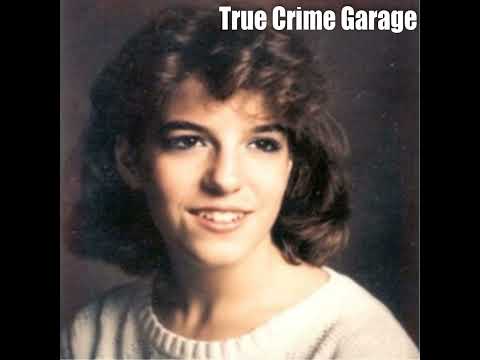
Free Roaming Predator /// Part 1 /// 939
Episode Description
Free Roaming Predator /// Part 1 /// 939
Part 1 of 2
www.TrueCrimeGarage.com (http://www.truecrimegarage.com/)
In 2006, the Greenville, South Carolina Police Department announced that they had connected one of their unsolved homicides from 1990 to two unsolved homicides that had occurred hundreds of miles away in Missouri. This meant that investigators were not dealing with isolated, unrelated crimes. They were dealing with a linked series. Events connected by a single source, a single method, a single offender who traveled. Yet, the announcement came with a crucial limitation: they did not know the identity of the killer. But they knew the nature of the threat.
Beer of the Week - Way Bird Hazy IPA from Half Acre Beer Company
Garage Grade - 4 and a half bottle caps out of 5
More True Crime Garage can be found on Patreon and Apple subscriptions with our show - Off The Record. Catch dozens of episodes of Off The Record plus a couple of Bonus episodes and our first 50 when you sign up today.
True Crime Garage merchandise is available on our website’s store page.
Follow the show on X and Insta @TrueCrimeGarage / Follow Nic on X @TCGNIC / Follow The Captain on X @TCGCaptain
Thanks for listening and thanks for telling a friend. Be good, be kind, and don’t litter!
Hosted by Simplecast, an AdsWizz company. See pcm.adswizz.com (https://pcm.adswizz.com) for information about our collection and use of personal data for advertising.
Read the full transcriptHide the full transcript
- Relax. [music] Apple Pay is secure by design. When you pay with a physical debit or credit card, you're handing
- your card number over. With Apple Pay, your card number is never shared with the merchant. [music] Apple Pay uses a
- device specific number and unique transaction code to help process your payment instead [music] of your actual
- card number. Plus, Apple Pay doesn't keep transaction information that can be tied back to you or sell your data to
- third parties for marketing or advertising purposes. Shop with confidence when you check out with Apple
- Pay. Terms apply. Geigo presents a 30 secondond podcast between your podcast. Today's story is
- shared by one of our listeners. It's called Betrayed by Bill. [music] It was in that moment I caught who was staring
- back at me in betrayal or more like what? My insurance bill. With trembling [music] hands, I grabbed my phone and
- switched to Geico, saving about $900 in the process and never to [music] be betrayed again. Now that was bloody
- riveting. >> It feels good when the story ends with savings. It feels good to Geico.
- [music] >> [music] >> Welcome to True Crime Garage. Wherever you are, whatever you are doing, thanks
- for listening. I'm your host, Nick, and with me as always is a man who loves fast [music] cars and freedom. Here is
- the captain. >> I love my freedom. and it's good to be seen and [music] good to see you. Thanks
- for listening. Thanks for telling a friend. This week we are sipping on a darn good
- one here. This is Waybird Hazy IPA brewed and canned by the good folks over at Halfacre Beer Company. I love the
- hops level here. Halfacre used both El Dorado and HBC 586 hops. Also a good amount of citrus and stone fruit. I
- really like this one. ABV 6.5% garage grade four and a half bottle caps out of five. And here's some people that
- I really like as well. First up, a cheers to Kaye from Louisville, Kentucky. And a big we like dip goes out
- to Jennifer in Bentonville, Arkansas. And a big tall hands in there goes out to our good buddy Bob Ruff. [music]
- Congratulations on your bachelor's degree in criminal justice. Cheers to you, Bob. Hope to see you soon, my
- friend. And last, but certainly not least, we have a longdistance cheers here, Captain To Candace Shaw, all the
- way over in Mission, British Columbia. Everyone we just mentioned went to true crimegar.com and contributed to this
- week's beer fund. And for that, we thank you. >> Yeah, BW beerun. Make sure you're
- following us on social media on Twitter, [music] on Facebook, Instagram, and Tik
- Tok. And that's enough of the [music] business. >> All right, everybody, gather around,
- grab a chair, grab a beer. Let's talk some true crime. [music] [music] [music] >> [music]
- >> In 1990, a homicide occurred that would not stay neatly contained within the boundaries of a single town, a single
- police department, or even a single state. At the time, it was simply an unsolved
- killing. Another case file opened, another life lost, another set of questions that did not yet have answers.
- No one looking at that one case in 1990 could have easily predicted that the story it belonged to would stretch
- across multiple jurisdictions, span roughly a decade, and remain relevant all the way into this year. To
- understand why this kind of case can slip across borders and years, [music] it helps to start with a broader idea.
- Free roaming predators. In North America, the phrase often brings to mind adaptable native carnivores. Animals
- that can travel far and survive in changing environments. The number one free roaming predator in
- the United States, measured not by how intimidating it looks, but by the scale of its impact, is the domestic and feral
- cat. Ecologists estimate that free roaming cats kill up to 4 billion birds and up to 22 billion mammals every year
- in the United States. That amount of predation repeated day after day across neighborhoods, fields, and woodlines
- makes cats the leading cause of unnatural wildlife mortality. Now, consider the white-tailed deer.
- They're beautiful and peaceful. They're not known for attacking people. Yet deer
- are estimated to be responsible for 150 to upwards of 400 human deaths annually in the United States. Deaths that are
- almost exclusively the result of motor vehicle collisions. Finally, this idea lands where true crime always lands when
- it gets honest. The most dangerous predator of humans in the United States is not an animal at all. It is man.
- The majority of homicides in the United States are caused by men. And while wildlife statistics can be staggering
- and deer collisions can be deadly, nothing compares to the deliberate violence people can inflict on each
- other. Especially when the person doing the harm is mobile, opportunistic, and capable of disappearing into the
- ordinary flow of life. This is the unsettling bridge between free roaming predators in nature and the kind that
- appear in criminal case files. Individuals who move across communities, cross state lines, and leave
- consequences that different agencies may not immediately connect. Even so, there
- is one piece of good news. According to preliminary FBI estimates for 2025, approximately 14,000 homicides occurred
- nationwide in the United States. That figure represents a historic year-over-year decrease of roughly 18%
- or more from 2024, marking the largest single-year drop in murders since 1937. Those national numbers matter because
- they tell one kind of story. But the case that began in 1990 tells a different kind of story. One that
- doesn't move in smooth lines. It moves in fragments. An incident here, a report there, a victim in one place, a suspect
- or no suspect in another. It moves through the gaps between departments and the limits of what any single
- jurisdiction can see on its own. The violence was not confined to one town. But that recognition would not come
- right away. It would take until 2006 when the Greenville, South Carolina Police Department announced that it had
- connected one of its unsolved homicides from 1990 to two unsolved homicides that
- occurred hundreds of miles away in Portageville, Missouri. This meant that investigators were not dealing with
- isolated unrelated crimes. They were dealing with a linked series, events connected by a single source, a single
- method, a single offender who traveled. Yet, the announcement came with a crucial limitation. They did not know
- the identity of the killer, but they knew the nature of the threat. They were dealing with a serial rapist
- and serial murderer. One man, one offender responsible for hurting, harming, and killing several women and
- girls across multiple jurisdictions spread out over multiple states over the span of one decade. The idea of the free
- roaming predator is more than a metaphor. It is a practical description of how some criminals operate, moving
- through the open spaces between agencies. slipping past the invisible fences of jurisdiction and leaving behind a trail
- that only becomes visible when distant dots are finally connected. This is True Crime Garage.
- [music] Greenville, South Carolina sits in a stretch of land in the southeast roughly
- equidistant between Atlanta, Georgia and Charlotte, North Carolina with Colombia,
- the capital of South Carolina, about a 100 miles to the southeast of Greenville. In the late 1980s, it was
- the kind of place where people moved for work, found their routines, and if they
- were lucky, they found their people. For Genevieve R. Zutri, known to everyone as
- Jenny, Greenville quickly became that kind of place. Jenny was 28 years old. She was born in 1961
- and grew up in Youngstown, Ohio. People who loved her described her as magnetic,
- someone with momentum. Her brother Philillip would later call her a force of nature and a firecracker, saying that
- she was a bundle of energy that didn't fade into the background. Jenny loved fishing and softball. She loved her
- family and she loved the Cleveland Browns enough so that she joined the Browns backers club once she was in
- Greenville as if she would carry a piece of home with her into her new city. In June of 1988, Jenny and her husband
- moved to Greenville sometime after the marriage ended. And Jenny was recently divorced by 1990, stepping into a
- version of adulthood that was both newly independent and newly social. She worked
- as a systems programmer analyst. So this is a described as a computer programmer
- in the payroll department at Michelin at their North America headquarters which is located in Greenville.
- >> Sounds like a fancy title. She played softball for the Michelin company team and she taught at a local school. This
- as like a hobby, donating some of her time to teach at this local school. She lived alone at the Hidden Lake
- Apartments. This is an apartment complex described as being filled with young professionals. So, this is people that
- worked hard through the week and then looked forward to the weekend, socializing, night life, and there were
- plenty of pool days, swimming pool days, when the weather turned warm. >> Nothing better than getting a box of
- lemon heads after a cold dip in the pool. Jenny's unit was apartment number 227 at Hidden Lakes Apartments located
- at 15 Villa Road. So, the sliding glass door at the back of her apartment faced the complex's swimming pool. Now, that
- detail will matter later, but at the time it was simply just part of the lifestyle,
- >> right? >> There were pool parties frequently, friends dropping by, people drifting in
- and out of the apartment. Jenny was extremely outgoing and extremely well-liked. She was the kind of resident
- that would even open up her door during these pool parties so that guests could use the restroom so they wouldn't have
- to walk all the way back to their apartments or if they were guest of people that lived in the apartment
- complex, they could just simply use her restroom which was located right by the pool.
- >> Yeah. No thanks. I'm not letting you drip on my carpet. She had a wide circle
- of friends, acquaintances. You know, some of these are people that she knew from local bars, socializing. These are
- also people that are involved in different teams and departments at work and at church. She attended the Buncom
- Street United Methodist Church. So to very many people at work, at the apartment complex, at church, and
- socializing in the evenings, on the weekends, she was a familiar face. And so it was a
- full life, busy and bright. And it made the events of early April 1990 all the more jarring because what happened did
- not resemble the kind of violence that the city of Greenville was used to. Investigators would later describe most
- local homicides as personal and domestic, often involving people who knew each other. Jenny's murder. Her
- killing was personal in another way. It was intimate, invasive, brutal, and baffling. Let's get to some of the
- events leading up to the night in question. On April 3rd, 1990, Jenny had something ordinary and happy
- on the horizon. and she was going to be in a wedding that coming weekend on April 7th. And she had already prepared
- for it the way that people do when they're excited for something that they're looking forward to. Her dress
- had already been freshly dry cleananed and it was laid out and draped over a chair in the living room of her
- apartment waiting there like a a promise of the coming weekend. That evening on April 3rd, she didn't go out on the
- town. Instead, she spent time in a nearby apartment inside the same complex, gathered with some of the
- wedding party friends. So, they had a couple drinks. They talked about the upcoming wedding. The energy was good.
- It's just a small get together, the kind of weekn night socializing that feels like a reward after the workday.
- Sometime around midnight, Captain, moving from late April 3rd into the early early hours of April 4th. This is
- just before midnight. Jenny left that nearby apartment. She walked home. It's just a short walk,
- >> right? >> This is a quiet complex. It's a safe complex. And she goes into her
- apartment. She locks the door behind her. Now, once she's home, she did have one more thing that she wanted to do
- before going to bed before turning in for the night. She called a girlfriend and the two talked for about 30 minutes.
- The girlfriend says it was a normal call. Everything sounded fine. The kind of just the kind of call that rounds off
- a night, >> right? >> And at the end, Jenny said she was going to go to bed and she hangs up the phone.
- Now, that call unfortunately was the last time anyone would hear from her alive. Now, there's a bit of gap in time
- here. So, April 4th to April 6th, we have more than a day that passes in which Jenny is unaccounted for. That gap
- became one of the first grim measurements of this case. The space between the last known moment she was
- alive and well and the moment that she would later be found. So concerns started because Jenny was very reliable,
- very dependable, and something happened that was out of character. She did not show up for work.
- >> Yeah. >> It was the kind of absence that makes people pause, then you worry. Then
- somebody picks up a phone and makes a phone call. >> Yeah. When there's a no call, no show
- when somebody is a responsible employee, that's always a giant red flag. >> Yeah. She's Yes, she's in her 20s, but
- she's 28. She's a college graduate and she has a highlevel position. She This is not a job. She has a career with a
- with a very reputable company and a actually a company that's known around the world. On April 6th, this would be a
- Friday, maintenance workers at the Hidden Lake Apartments entered Jenny's unit. This is after receiving phone
- calls to attempt to check on her, and they found what no one was prepared to see. This is Jenny's lifeless body in
- the bathtub of the apartment. The bathtub was filled with water. >> Jenny was in it and she had been killed
- very violently. The way that her body was positioned struck investigators immediately. Reports described her as
- floating in the tub placed so that the water from the spout ran between her legs. It was and it doesn't seem to have
- been an accidental posture. It looked arranged >> almost like maybe they're trying to
- clean off the body. >> Yeah. Well, there's a lot going on here at the scene. So, this this scene
- there's very much of it that feels intentional. someone doing something after the death, not merely leaving the
- body where the attack occurred, just going above and beyond and in a grotesque way. So, investigators believe
- that Jenny was beaten in her bedroom and then dragged to the bathroom. So, they have a trail of blood that ran
- from the bedroom to the bathroom. This is about 20 feet away, >> right? And the killer had used panty
- hose tied around her neck knotted to provide a a grip to pull her through the apartment. So the act of dragging the
- body left its I mean for detectives this is going to leave its own kind of message not only of violence but also of
- effort, time and control. The water, as you're talking about here, Captain, matters, too, because authorities
- believe that Jenny's body had been submerged in water in an attempt to cover up physical evidence. Yeah. Which
- will make the investigation a lot more difficult. >> The running water in the bathtub wasn't
- the only water in the apartment to be concerned with. Jenny's purse had been dumped into the sink and its contents
- had been emptied out. And then that sink was also full of water covering all of the spilled items,
- >> right? >> And then there were signs that felt like they belonged to a different category of
- evidence altogether. There was something written and something placed and all of
- this very much meant to be seen. Okay, so someone had taken a permanent marker and wrote on a mirror, don't [ __ ] with
- my family. Now the something placed was a book was also found near the bed. >> Now [clears throat] it's been said that
- it was either dropped there or placed there. You listen to and read the detectives words. They all seem to think
- that this was placed there intentionally. Investigators described the book as having a title that is
- suggestive in a way that made them think that it was intentionally positioned by
- the killer. Well, when you have the body put in a position, some form of staging,
- then you have this message written on the mirror, it's not out of realm of possibilities that there's other things
- in the apartment that are staged as well. Yeah, we have the purse and I don't know exactly where in relation to
- the bed that this book was found because when when I first reviewed the crime scene and what information had been
- released publicly, my first thought was I mean how many of us have read been reading in bed and we you just kind of
- sometimes you doze off and drop the book. >> Yeah. The worst is when you drop it on
- your face. >> Yeah. And the book title, I believe, going off of memory here because I
- didn't put this in my notes, I believe the book title had had the word [ __ ] in
- it or something to that nature. And I think that the investigators believe that the killer had found the book
- someplace else in the apartment and purposely put it near the bed. as look a lot of this is done to not just cover up
- evidence but also to further degrade the victim even after death. >> Yeah. But also possibly to point law
- enforcement into other directions. >> Yes, that could be the situation as well. So what we do learn is that the
- marker that was used to write that message on the mirror belonged to the victim. This is confirmed by detectives.
- Detectives also confirmed that the book that was found near the bed belonged to Jenny. So, these were both items used
- and moved by the killer, but not brought to the scene by the killer. >> Right. >> This would seem odd to me in the moment
- as we would learn that nothing obvious appeared to have been stolen from the home. So, there it's noted that jewelry,
- expensive jewelry was found in plain view where anybody could have have found it. It's still sitting there when
- detectives are going through the scene. The apartment, they say, did not look like a typical burglary scene where a
- person ransacks for valuables and then flees. They said that it looked instead like a staged aftermath. Water turned
- on, items arranged, surfaces wiped, and that message left behind on the mirror. >> Yeah. Not to jump to conclusions, but if
- I'm law enforcement and I find a victim in the bathtub, I'm assuming that maybe the motive is sexual. So, the the back
- sliding glass door had been pried open. So, we have forced entry here and police
- believed that a pry bar or crowbar had been used to pry this sliding glass door open. This is that sliding door that
- faced the pool, the place where, you know, people gather for these pool parties and where Jenny was often at
- these pool parties. What investigators were saying about this case early on is that they said that they started to form
- a theory that the person who entered did not stumble into the wrong apartment, >> right? They said that they believe that
- the killer knew who lived there or at the very least knew that a woman lived there. And I think that's key to pay
- attention to here because they're they're they're kind of stating like we think that the killer knew that a woman
- lived there alone, >> right? >> But necessarily didn't know Jenny. Yeah. Well, and that's one of the problems
- with these apartment complex pools is you normally are allowed to bring guest. So, there's a lot of people at these
- pools that don't belong to the apartment complex. >> Yes. And then with this too, I mean, if
- you were looking and you said sexually motivated homicide, sexually motivated sexual assault motivated breakin, one
- could watch the pool. Yeah. >> area during these pool parties and pick out a victim. That was a lot of thought
- that that went into this investigation and who they could be looking at here. Detectives concluded that it was likely
- that Jenny was attacked while still sleeping. This based off of blood found on the wall near the head of her bed.
- Blood splatter that suggested the first violence happened there. And then this idea is both terrifying and grim, but
- it's all but in a way it might be a little bit of mercy here, right? I She likely did not wake up and she didn't
- even know what had happened. >> Right >> now, the coroner determined that Jenny died from strangulation and blunt force
- injuries to her head and face. Investigators later learned that she had also been sexually assaulted. An autopsy
- would describe six blows to the head inflicted with what was suggested to be a large screwdriver or a tire tool.
- Police theorized that the same instrument used to pry open the back door may have been used as the murder
- weapon. >> Right. But so that murder weapon is brought by the murderer, but it's not
- left at the scene. >> Correct. So the way that this would go down is killer breaks in using that
- sliding glass door. Same instrument is then used as the murder weapon. After the killing, the killer moved the body,
- dragging her from the bedroom to the bathroom with panty hose around her neck. Then the body is placed into the
- bathtub. Water is turned on and then the killer did not hurry in a way that suggested fear of being caught. Instead,
- he he lingered. The killer the killer lingered there. He stayed long enough to do more to the crime scene to dump her
- purse in the sink to fill the sink with water right on the mirror, wipe down the
- bathroom surfaces. >> Yeah. >> And that was one of the most striking parts of this to the crime scene
- technicians. Okay. So, they had said that they they were checking the apartment for Prince.
- Look, Jenny lived there. The apartment was lived in obviously guests had been there in an apartment like that occupied
- especially by a social individual a used apartment people in and out. Investigators expected to find
- fingerprints on doorork knobs, counters, bathroom surfaces, furniture, mirrors, everything.
- >> Yeah. You think the problem is going to be too much information. >> Exactly. Instead, they get no
- fingerprints, surfaces wiped down. This suggests that somebody systematically erased not only their own prince but the
- prince of everyone else including Jenny's. >> Right? >> So to detectives that indicated
- forethought, time and a certain amount of coldness. A person who could commit a brutal and violent murder and then slow
- down enough to clean up the scene. Now, on April 8th, this is just a two days later, police returned to Jenny's
- apartment to collect and seek out additional evidence. The during this time, Captain the forced entry through
- the rear sliding door was reaffirmed. The blood evidence still told the same story. The attack likely began in the
- bed, right? >> Blood on the wall near the headboard suggested heavy blows delivered where
- she was lying when she was sleeping. Detective Steve Bis of the Greenville Police Department assigned to the case
- described the struggle in a way that implied how quickly it unfolded. He said if she fought it was minimal. So
- that's the implication that she never had the chance either because she was asleep because she was overwhelmed
- immediately or because the assault was too sudden and too violent. Well, these attackers have this this aggression and
- this rage inside them that I think it's really hard for the common individual to
- even wrap their heads around. >> Well, and one thing to be clear here as we try to speak and live in the moment,
- the at the time some of this information was not made public. Okay. So, the the wiping down of the surfaces or at least
- as they believed the the lack of fingerprints suggests that that was not made public. The other thing that was
- the additional pieces of evidence left behind by the killer, items that would not be fully described publicly at the
- time. Those items were would be the mirror message, don't f with my family, and that book that was found near the
- bed. They kept that as hold back information. and investigators were left with a scene that felt both loud and
- silent all at the same time. Loud in its violence, silent in its lack of clear motive or clear amount of evidence. One
- problem for this investigation early on would be that when this investigation begins, there were too many names and
- really just not enough answers. >> [music] >> This show is sponsored by BetterHelp.
- Are you somebody that thrives or just survives during the summer season? For some people, summer is their favorite
- season. Travel picks up, kids are out of school, and adventure is in full swing.
- Juggling everything summer demands can be tough and can lead to feeling overwhelmed and counting down the
- minutes until the kids are back in school. Whether you're someone who thrives or just survives in the summer,
- make sure you take care of yourself during the warm months. Treat yourself. Therapy with BetterHelp, the world's
- largest online therapy platform, can help you understand your needs, feel more confident setting boundaries, and
- create a version of summer that actually feels good. Just take a short questionnaire to identify your needs and
- preferences and BetterHelp will handle the initial therapist matching work for you. Feel confident knowing BetterHelp's
- therapists work according to a strict code of conduct and are fully licensed in the US. You don't have to say yes to
- everything this summer. Find support and therapy. Sign up and get 10% off betterhelp.com/g.
- That's betterhp.com/g. This show is proudly sponsored by BetterHelp. >> So many people are focused on where
- their money is today. Acorns is the financial wellness app that cares about where your money is going tomorrow. And
- with the Acorn's potential screen, you can find out what your money is capable of. Acorns is easy. You can sign up in
- minutes and start automatically investing your spare money, even if all you've got is spare change. Sign up now
- and Acorns will boost your new account with a $5 bonus investment. Join the over 14 million all-time customers who
- have already saved and invested over $27 billion with Acorns. Head to acorns.com/g
- or download the Acorns app to get started. Paid non-client endorsement compensation provides incentive to
- positively promote Acorns. Tier 2 compensation provided potential subject to various factors such as customers
- accounts, age, and investment settings does not include Acorn's fees results do not predict or represent the performance
- of any Acorn's portfolio. Investment results will vary. Investing involves risk. Acorns Advisors LLC and SEC
- registered investment advisor. View important disclosures at acorns.com/g. This message is sponsored by Greenlight.
- Every true crime story has money somewhere in the mix. Financial stress pushes people to desperate decisions.
- And a lack of financial literacy is what makes people easy targets. Teaching your
- kids about money isn't just smart parenting, it's protection. Greenlight helps keep your family's financial and
- personal safety from becoming another cautionary tale. Greenlight is a debit card, an app for families. But it's more
- than a money tool. It's a safety net for teaching kids about money while also helping protect them before bad habits,
- bad actors, or realworld risk take hold. We have been telling you about Greenlight for years because we love
- Greenlight and so do millions of parents and kids. Why? It is the best parent teen kid wallet out there. You can send
- money fast and kids learn to invest. Families invest together with Greenlight. Every day they're handling
- money without guidance is a missed opportunity. Start your risk-free Greenlight trial today at
- greenlight.com/g. Don't wait to teach your kids realworld money skills. That's greenlight.com/g
- to get started. greenlight.com/g. Mint mobile plans are only $15 per month. Wondering what's the catch? There
- isn't one. There are no gimmicks and no gotchas. Just unlimited talk, text, and data. fast, reliable coverage on the
- nation's largest 5G network and an awardwinning care team. That makes Mint Mobile a catch. Since switching to Mint
- Mobile, I am getting the same great service as I got with the bigger, more expensive carrier, but I'm saving $10 a
- month. And to be honest with you, the service might even be better. To get your new wireless plan for just 15 bucks
- a month, go to mintmobile.com/tcg. That's mintmobile.com/tcg. Cut your wireless bill to 15 bucks a
- month at mintmobile.com/tcg. That's it. There's no catch. $45 upfront payment required, equivalent to $15 a
- month. New customers on first 3month plan only. Speeds slower above 40 gigabyte on unlimited plan. Additional
- taxes, fees, and restrictions apply. Cement mobile for details. [music] >> All right, we are back. [music] Talks in
- the air. Cheers to you, Colonel. Cheers to you captain and cheers to the people in the back.
- >> One of the things you were saying earlier was [music] that this is a level of violence that this community is not.
- It's not a normaly. So I would think that would hinder the investigation because what are the investigators
- normally looking for? Somebody in the inner circle, not a crime that is stranger on stranger.
- >> Yeah. So really something that's going to overload the detectives here and this is
- really from the beginning of the investigation. They had a problem that was also once part of Jenny's charm. She
- knew a lot of people. She almost knew too many people for the investigator. So the police started with the most common
- path that you would in a homicide case. They first started trying to look at people that knew Jenny and knew her the
- best. Now, her wide social net meant a wide suspect net, >> right? >> Officers ran criminal background checks
- on people that live near her. The wedding party, all the wedding party people were heavily scrutinized. A lot
- of people were asked to take lie detector tests. Jenny's ex-husband was interviewed and described as extremely
- cooperative, and he was cleared relatively quickly in this investigation. Well, that makes it more
- difficult because as we know, the husband normally did it. But the way I see this going down is like you were
- saying, we have this apartment right by the pool. We have strangers to the apartment community coming in, coming
- and going. But think about this. If this sick individual saw her, that at some point later, maybe it's months later, I
- can drop by my buddy's house. I could stay there for a little bit, but hey, I'll see you later. And when I leave
- now, I go to the victim's place. >> Yep. And what do we always say here? When if someone is actively going out
- and looking for a victim, especially if they're looking for a victim to attack at a later time and date or later
- location, >> what are they looking for? They're looking for the three abilities that
- killers always look for when they're looking for prey. Desiraability, vulnerability, and availability. And so
- you could spy on some women at the pool or in a social setting in this apartment
- complex and find someone that you think is desirable. And if you can watch them and learn that they live alone, well
- then now you have their both their vulnerability and then their accessibility, especially in the middle
- of the night during a work week. right >> now. So, while all this is going on, the
- early stages of looking at people that knew her the best, of course, they're going to be looking for that murder
- weapon, and they used divers to search the nearby lake. So, there was a there was a a lake that is right by the
- apartment complex. This this would be a really cool, highly desirable complex to
- live in if especially if you're like Jenny, a young single professional. That's what that's who filled this
- apartment complex. And that's what was probably so cool about it. It was you didn't have to go out on the town to
- have a night out. You could just gather with people that were all about the same
- age and all working as young professionals in that area right there in your apartment complex. So, they're
- attempting to look for this tire tool, crowbar, pryar, whatever it may have been, the heavy object that was used to
- kill the victim and also break into the apartment. They look in the lake. They don't find it in the lake. They don't
- find it on the grounds, but they were also trying to interpret what the killer had done at the scene after the killing,
- >> right? And at some point they begin to speak of this in a way that that you and
- I would be picking up on the word staging. So they were trying to figure out and discussing behind closed doors
- the staging raised questions that would split the case into competing theories. Right? So was the water in the bathtub a
- practical attempt to destroy evidence including evidence of a sexual assault? Was it psychological?
- An act meant to cleanse, to humiliate, to display control? Was dumping the purse into a sink full of water and
- attempt to ruin contents, to hide something, to destroy possible trace evidence? Or was that possibly symbolic,
- another violation layered on top of the physical one? And some of these thoughts
- and theories and questions that detectives have in this investigation would make their way to the public and
- to the newspapers. Now, the message on the mirror, don't f with my family, added another dimension to this.
- Detectives didn't know what it meant, right? Was this a warning? Was it a grievance? Was it revenge?
- >> Yeah. Or is this just to build confusion? Right. So, now we have the the crime scene, which is the bed. Now
- we have another part of the crime scene being the bathtub. Then we have all the stuff going on in the bathroom. We have
- this weird message that implies that this killer is it's very personable to the killer. And then we have these books
- and other things again maybe staging to look like a a burglary. So disguising the motive of
- the crime or again maybe it's just the concept was let's just add confusion and chaos to the crime scene
- >> right and that's I think where maybe their minds were going after a while because looking into Jenny and looking
- into her life >> right >> her life didn't pres present any obvious scenario where that message would fit
- neat and cleanly into her world at all >> but we all have skeletons in our closet,
- my friend. >> So now they're they're thinking is look, if this if this message is real, then
- what family is being referenced here? But if it were made up and just simply staged,
- why did the killer choose that particular phrase? And so they consult a whole bunch of experts on this case. And
- what turns out here is that the experts, even the experts did not agree or could
- not come to a full agreement on what the crime scene and the murder suggested to
- them as far as psychological makeup of the perpetrator. So, investigators consulted specialists from across the
- country, about two dozen of them, according to later reporting. A couple of these people were professors. One
- professor suggested that the killer was male. Another suggested that the killer was female,
- >> right? >> So they some of the the experts couldn't even agree on the gender of the killer.
- Some experts advised that the signs left behind were deliberate misdirection for
- the investigation. Others argued that the signs meant something deeply personal and pointed toward motive.
- Yeah, it's odd here because I guess I'd lean towards statistically that it's a male, but also like they said, there's a
- brutality here. And then they also said if she put up a struggle, it wasn't for long. Okay. Is it more likely that she'd
- be overtaken quickly by a male or a female? >> Right. And I think the thought and
- theory, the theorizing that maybe it was a female was a lack of understanding of
- the murder and the crime scene. So >> yeah, >> like this kind of went under the rug
- here a little bit in our reporting and it did everywhere else as well, but as I had said earlier, it was later learned
- by the detectives that she had also been sexually assaulted. So, when they're presenting their crime scene evidence
- and autopsy information to these experts, uh, some of them were with the FBI, some of them were professors and
- such. They're they weren't armed with that confirmation of sexual assault at that time.
- >> But, you know, there was one detective after they get this information that thought it was a female. After this
- information, they're sticking to their guns. Nope. I don't care what the evidence tells me. This crime was done
- by a woman. >> Jenny's obituary captured the official outline of who she was and how she was
- known to those who loved her and to those that she socialized with in Greenville. Genevieve R. Zatriki, only
- age 28, better known as Jenny of Hidden Lakes Apartment, died April 5th, 1990. She was a graduate of Youngstown State
- University and a systems programmer analyst for Michelin Tire Corporation. She was a member of the Michelin
- softball team and the Browns Backers Club of Greenville. And she attended the Methodist church.
- She was survived by her parents Edward and Rosemary Dickinson who were still living in Ohio and her brother
- Philillip. And the family said that memorials could be made to the Jenny Zawiki Memorial Fund in care of the
- Brownsbackers Club of Greenville. I can't get past the idea that she was going to be involved in this wedding.
- And when you think of weddings, you think about one family merging with the other family. And I know that she wasn't
- a family member, right? She was just a friend. But the message on the mirror makes it feel like it is connected to
- this wedding. But I guess there's a possibility that if somebody was stalking their prey that they knew about
- this and that was the additive of confusion. >> Yeah. It's it's a confusing crime scene.
- >> Yeah. >> I think again it goes to Yeah, she knew a lot of people, but she did she didn't
- it's not like she grew up in the area. one, and two, she's she's only been there a couple years, which I think for
- me would play a role in my understanding of what this message may or may not mean.
- >> Yeah. And I also wonder too because a lot of these killers have this fascination with crime and these old
- detective comic books and and unsolved mysteries. And I think sometimes, and I'm not
- saying that this is the case here, but I think with some crimes, they're, oh, I have to have a signature. I have to have
- this. I have to do these things. The It's like this serial killer folklore. >> Well, yeah. I mean, Detective Magazine
- was a was a big deal, especially to uh a lot of these serial offenders. Let's fast forward to November of 1991.
- So, now we we still the murder is still unsolved. The city still waiting. The police are still searching,
- >> right? >> This is approximately a year and a half later. The Greenville News published a
- lengthy Sunday article about the case written by staff writer Toby Moore. The headline described what the police and
- the public were still living with. It says 1990 slaying that left Greenville police looking for answers. The article
- included a diagram of the crime scene, Jenny's apartment. The story described Jenny as a young divorce a celebrating
- independence, a social person with a busy life on Greenville's east side. And it recounted the last ordinary details.
- The gathering that night, the wedding dress draped over a chair, the short walk home around midnight, the 30 minute
- phone call, then the quiet act of going to bed. This article also repeated the horrific discovery two days later. the
- maintenance worker finding her in the bathtub, water positioned to run between her legs. The article emphasized how
- brutal and baffling the crime remained even a year and a half later. Now, by this time, police said that they had
- interviewed hundreds of people. They had fingerprinted more than 150 people, >> right? They had circulated descriptions
- of the crime across the country and Crimestoppers had reenacted the slaying on television and Jenny's family offered
- up their own reward for information in the case and still there's no suspect, no murder weapon, no clear motive.
- Detective Steve Bis, still close to the center of the investigation, said the case fascinated and frustrated not only
- detectives but behavioral scientists. Sergeant Tim Conroy. >> Does that mean they reached out to
- Quantico? >> They did. Yeah. They had at least three profilers that had taken a look at this
- case in this year and a half time period. >> Tell me Wrestler was one of them. I do
- not know what who >> they never state that. Okay. >> Who took a look at it. They those names
- were not uh provided. Sergeant Tim Conroy of the Greenville Police expressed a belief that it wasn't
- random, that Jenny was targeted, likely because of her visibility at the poolside apartment and her outgoing
- trusting nature. Others other officers promised they would not let the case vanish into silence. The police sergeant
- who had been one of the first on the scene stated that it was a solvable case and that it would not be forgotten.
- Investigators said that they wanted phone calls even if they turned out to be nothing because the smallest
- recollection might matter. They they were saying basically like we we don't care if we get too many phone calls. you
- know, you you we we've reviewed plenty of cases where they're like, "We we couldn't keep up with the number of tips
- going in and we have to vet each one of these phone callers. We have to we have to go out and investigate each one of
- these leads and these tips and it becomes overwhelming." They're saying the opposite. They're like, "We don't
- care if we're overwhelmed or inundated with a crazy amount of tips. We we want tips to come in. Please call. Please
- call." And in fact, the detective here is saying, I think that we got enough evidence that if the right name comes
- across my desk, I'm going to recognize this as the person being responsible. >> Well, with this time passing, it makes
- you start leaning towards the idea that she didn't know her killer. But I think it I think the fact that it's an
- apartment complex makes it that much more difficult because you have so many more people coming and going to this
- location. I think it does make it maybe easier because it was on a work day, but
- maybe that's indicative of something as well. For Jenny's mother, Rosemary, the time did not erase the absence of her
- daughter. You know, the not knowing became its own ongoing injury. >> Yeah. >> With no explanation as to why. And
- really what was settling in here was the fear that she might die without ever learning what had happened to her
- daughter and why it had happened. And in fact, in 1990, the family endured another massive blow. So 8 weeks after
- Jenny's murder, Rosemary lost her husband, Jenny's father, to cancer. The 1991 November article recalled a family trip
- to Las Vegas that took place in February of 1990. A trip taken because doctors had told Rosemary's husband his time was
- running out. >> Yeah. >> And in that moment before April arrived and everything changed, Jenny had tried
- to protect her mother from a future of loneliness. you know, she's up in Ohio and this is to show how devoted this
- daughter was. She said, "Look, she told her mom, you are not going to be alone at Christmas.
- We are going to go back to Vegas." She told her that while her father was running out of time. And so in February
- of 1990, no one knew that Jenny herself only had six weeks left to live. >> Yeah. So what remained in this case?
- Jenny's life as we've described it was full full of work, friends, sports, faith, family. The wedding that was
- going to take place on April 7th. Then came the forced door open, the bedroom attack, the dragging, the water, the
- wipe down surfaces, the message on the mirror. This tragedy didn't make sense to the
- people of Greenville. It was true, too brutal, too deliberate, and a lot of unanswered questions. Investigators were
- left with an apartment full of puzzle pieces. Some clearly connected, others possibly planted. And it was it was
- truly truly a mystery, >> but also we have theories that are going in multiple directions.
- >> Absolutely. Now, we need to fast forward quite a bit here, Captain. So, this is
- going to take us to April 17th, 2006 when readers of the Greenville News in South Carolina opened up their
- newspapers to a story by staff writer Claire Anderson. The headline was stark and unresolved,
- stating, "Victim's family still seeks answers." Beneath it ran a subtitle that made the passage of time feel both heavy
- and unfinished. It had been 16 years since Jenny Zatriki was found killed in her bathtub and police still hope to
- solve the case. Now labeled a cold case, though never truly set aside. So this is
- 16 years of not knowing, but it's not necessarily 16 years of not working the case.
- >> Yeah. But we all have our pet cases that we've been looking at for years. And
- what is surprising to me when we started in the garage, I just thought, okay, well, we're we're both into true crime.
- It'll be and it it would be an interesting conversation, but will it affect anything? Will brain
- upon change? And we've seen in so many cases, whether it's covered by us or another podcast or somebody on YouTube
- or somebody in the media, that these cases need people talking about them because if you make a big enough if you
- shine a big enough light on the case, more information will come out. Now, that doesn't mean it's going to solve
- the case, but it adds more pieces to the puzzle. for this article. Some of Jenny's family was interviewed.
- One in particular is her cousin Carol Gillingham who had said that even after all of this time, even after all of
- these years, she said the family was still in shock and they they simply wanted what is simple but seemed
- unreachable. They wanted answers. Now, as for the case in the investigation, >> yeah,
- >> it's [snorts] as said, it's a case that's called or labeled cold, but not really forgotten because in this
- article, the lieutenant, police lieutenant, Mike Gambrell, explained that Zatrikey's death was technically a
- cold case, but he said the word cold, however, didn't mean abandoned. And investigators, he said, had never
- stopped looking for new leads. Now, there's a statistic here that underscores how rare this kind of open
- case is for this area. So, of the 15 homicides that took place in the city of Greenville in 1990, as of this article,
- which was 16 years later, >> Jenny Zatriky's was the only one that still remained open. In fact, after two
- years in 1992, all the other homicides, 14 of them, had been closed out in just two years time, but Jenny's remained
- open. The department also noted in the article that they had filed charges in 103 of the 110 homicide cases that had
- taken place since 1990. in that 100 in that 16 years. I mean, only seven of them they hadn't filed charges for in 16
- years. And as said, Jenny's case, the only one open from that year. But it'll also be tough to as a detective cuz like
- you said, it's it's cold in nature as far as we're not getting any new information, but it's sitting on your
- desk. It's something that you're pondering. It's something that when you're heading off to lunch or or
- leaving for the day, it's a case that's going to cross your mind and did you miss anything? And you're constantly
- running these thoughts and theories through your brain. >> So the reason why we being the public
- would learn about what was, you know, so they had the hold back information of the message on the mirror,
- >> right? they had to hold back information about the book. The reason why that information makes its way eventually to
- the public is because of the efforts of the investigation. Okay, so they interviewed and talked to hundreds of
- people. What they were doing, this is this is great detective work in my opinion here. We had said, you know, you
- and I know that the crime scene was wiped down or they believe it was wiped down because they didn't find
- fingerprints where they should be finding fingerprints. >> Correct. >> People they interview and the public
- don't know that. So they they fingerprinted dozens and dozens of people. And somebody could look at that and go,
- "Well, what the hell? You have no fingerprints. Why are you bothering to fingerprint people?" Because the person
- that says, "No, I'm not going to give you my prints." or gets nervous and starts sweating bullets all of a sudden
- when you ask about fingerprints, that might be an indicator that you want to keep talking to that person,
- >> right? >> And so the the public doesn't know that you don't have any fingerprints. And so
- they're fingerprinting the >> killer doesn't know. >> They're lied to they're they're doing
- polygraph examinations on some. So, these are all maybe not necessarily tools that are
- going to solve your case for you, but it's going to help you narrow down your suspect pool. Remember, we said that a
- large social net makes a large suspect net here. And so, when you go, all right, well, I I'm going to talk to
- person A, B, and C. And every one of them, I'm going to ask them where they were that night, how they knew Jenny,
- and what was their history together, had they ever been in the apartment. Can we
- take your fingerprints? Will you take a lie detector test? Oh, and if they if they're hesitant on any of those or
- refusal on any of those, now you're in a different category than the people that
- agree to all of that. >> Yeah. >> The other thing the reason why the message gets out to the public is
- another thing that they were doing when interviewing people, especially people that they thought it was necessary to do
- so, they would have them write that message down. So they were comparing handwriting analysis, looking at
- handwriting analysis in this case, trying to figure out who wrote that message on the mirror. Well, and I have
- some in insider information about those categories. So if somebody's not nervous
- and giving their fingerprints and taking the lie detector is maybe not a piece of
- [ __ ] But if they got nervous and was sweaty and was combative to everything, they put him in a category of maybe as a
- piece of [ __ ] Very sophisticated labeling. The story also tracked how the investigation continued to move forward,
- and stall, move forward, install. It would keep moving at times and then it would it would stop at times. And I
- found these details of the investigation very intriguing. So it says four years after the killing of Jenny Zatriki,
- authorities explored a possible connection between Zatriki's death and a man arrested in Charlotte, North
- Carolina charged with strangling 10 women. Interesting. And they said that the lead carried a kind of grim logic
- here, right, that detectives can't ignore. Detectives said there a pattern, a method, and a known suspect with
- multiple victims. So that all interest detectives. The article stated that the connection did not hold. However, they
- go on to say that the following year, investigators reached out again, this time to authorities in Kentucky and the
- state of Kentucky after a serial killer was arrested whose victims had sometimes
- been left in water. Again, the similarities sounded promising on the surface. And again, the lead didn't pan
- out. And so what remained here all these years later, 16 years later, was the original question. Who had done it? And
- the nagging awareness that time might be hiding the answer rather than revealing
- it. One thing I did not love here, Captain, for for some mysterious reason, the article does not name these serial
- killers that were interviewed by Greenville police detectives in possible connection with the Jenny Zatriki
- murder. And of course, we want to know who they're talking about. Well, that's why you drop by the old true crime
- garage once a week, right? Well, I'm here more than once a week, but >> yeah, I I'm a guy that does not know a
- great deal about many things, but I am a guy who knows a great deal about serial
- killers. >> Yeah. >> And so I had I had to figure out >> for that >> who were they talking about? And without
- them naming them, I can't say with 100% certainty, but but believe you me, if you want to place a wager on these
- statements, I think you're good to go. >> He's betting a Franklin again. So, I have every reason to believe that they
- were referring to the Taco Bell strangler >> and the cross country killer. So, in
- order, let's do a quick overview of these pieces of [ __ ] right here. So in 1994, Charlotte, North Carolina, police
- arrested Henry Lewis Wallace, who is would be a serial killer, later dubbed the Taco Bell strangler, who confessed
- to raping and strangling 10 women in the Charlotte area between 1992 and 1994 alongside one prior murder that took
- place in South Carolina. Wallace worked at very fast various fast food restaurants. He did personally know most
- of his victims, managed to blend into their lives, too. Like he he knew them through work or through an acquaintance,
- through maybe running errands. And we do know that he even attended some of their
- funerals before he was caught. After this 2-year killing spree, he was arrested March 13th, 1994, just as he
- was planning to leave the city of Charlotte. Following his confession to the murders, he was convicted in January
- of 1997 and sentenced to nine death sentences. >> Wow. He must be a cat. >> I believe that he is remains
- incarcerated in North Carolina's on their death row. So, nine of these murders, nine or 10 of them took place
- in the Charlotte area in that 2-year time period. So, it looks like he got nine death sentences for uh some of
- these. So, for nine of the 10 murders anyway. >> Yeah. And he he said at his because he
- has nine death sentences, he gets nine last meals. He wants combo number one, combo number two, combo number three,
- all the way to combo number nine. He is a big boy. Uh he's not he's not missed very many meals, I'll tell you that.
- Then we have the other individual that was interviewed and I believe this to be American convicted serial killer Glenn
- Edward Rogers, also known as the c the crosscountry killer or the Kasanova killer. He was convicted of firstdegree
- murder in two separate trials in the deaths of two women in different states. >> We talked about him
- >> first. We've never done a profile on him. He's come up the Casanova killer. I
- thought that was an episode. >> You're thinking of a Unfortunately, there's a different individual that
- you're thinking of. [laughter] There's no shortage of these guys. Unfortunately,
- >> we need to make sure that we're coming up with unique names like the Taco Bell
- strangler. That's a awful name. I mean, you're sitting in prison nine death sentences. And good for you and good for
- society because we gave you a shitty serial killer name. So, better known probably as the crossount killer, we
- should say, Glenn Edward Rogers was first convicted in Florida in 1997 and then again in California in June of
- 99. Hence the uh hence the name Cross Country Killer. You can't get much further apart than California and
- Florida. >> Well, isn't this the guy that they thought maybe was connected to OJ?
- Absolutely. Absolutely. So, he's suspected in numerous other murders throughout the United States. He was
- involved in a crime spree that began in September of 95. They were aware of who he is and who was committing these
- crimes, which ultimately ended with them placing him on the FBI's 10 most wanted
- fugitives list. >> Yeah. >> Rogers, Glenn Rogers was arrested in Waco, Kentucky. He was caught driving
- one of his victim's cars. He was about 40 miles from Lexington. This is November of 95. And as you just said,
- Captain, he is the serial killer rumored to be OJ's accomplice or the actual killer of Nicole Brown and Ron Goldman
- with OJ as the getaway driver. >> Hold on one second. This is kind of strange. I'm getting a a text message
- right now. Breaking true crime news. OJ did it. >> Yeah. Uh, well, you know what? Let's do
- a an off the record on this very soon. Um, with Glenn Rogers, we'll look at him more and
- >> yeah, that'd be fascinating >> and and whatever with this OJ thing because it's it's something that we've
- touched on time to time over the years because it it seems to keep coming up. So, let's let's do a real examination of
- it. Now, last year, the Associated Press reported that on Thursday, May 15th, Glenn Rogers, then 62, received a lethal
- injection at Florida State Prison and was pronounced deceased at 6:16 p.m. So, while they did not name these
- two serial killers, who are very interesting to the story in this article, they just hinted at them. I
- think that's who they were talking about here. The article really pointed to a reminder of the possibility that this
- could still be solved. We have detectives, lieutenants on record in these various articles and this one too
- saying this is a solvable case. And the article ends with a reminder to the public that look, we need a tip, we need
- a lead here. If we get the right one, we think we will recognize it and recognize
- the perpetrator rather quickly. We just need a little bit of information here. We just need one last push.
- [music] [music] Thanks for being our friends. Thanks for joining us here in the garage. So much
- more to get to in this true crime story. Stick around for part two. Until then, >> be good. Be kind and don't litter.
- [music] >> [music] [music] >> Geigo presents a 30-cond podcast between your podcast. Today's story is shared by
- one of our listeners. It's called Betrayed by Bill. It was in that moment I caught who was staring back at me in
- betrayal or more like what? My insurance bill. With trembling hands, I grabbed [music] my phone and switched to Geico,
- saving about $900 in the process and never to be betrayed again. Now that was bloody riveting.
- >> It feels good when the story ends with savings. It feels good to Geico. >> This is a monday.com ad. The same
- monday.com [music] helping people worldwide getting work done faster and better. The same monday.com designed for
- every team and every industry. The same monday.com with built-in AI scaling your
- work from [music] day one. The same monday.com that your team will actually love using. The same monday.com with an
- easy and intuitive setup. Go to monday.com and try it for free. Yes, the same monday.com.
Brief Summary
The episode discusses the unsolved murder of Jenny Zutri in 1990, exploring the investigation and potential connections to a serial killer.
Key points
- Betrayed by Bill. A listener shares a story about switching to Geico and saving $900.
- Jenny's Vibrant Life. Jenny Zutri was known for her magnetic personality and love for life.
- The Nature of the Crime. Jenny's murder was intimate, invasive, and baffling, unlike typical local homicides.
- A Shocking Discovery. Maintenance workers find Jenny's lifeless body in her bathtub after she goes missing.
- The Investigation Begins. Detectives believe the killer knew Jenny lived alone, indicating premeditation.
- A Terrifying Discovery. Blood evidence suggests Jenny was attacked while sleeping, raising the stakes of the investigation.
Episode highlights
- Betrayed by BillA listener shares a story about switching to Geico and saving $900.“With trembling hands, I grabbed my phone and switched to Geico.”0:46Jun 30, 2026
- Jenny's Vibrant LifeJenny Zutri was known for her magnetic personality and love for life.“Jenny was a bundle of energy that didn't fade into the background.”11:05Jun 30, 2026
- The Nature of the CrimeJenny's murder was intimate, invasive, and baffling, unlike typical local homicides.“Her killing was personal in another way. It was intimate, invasive, brutal, and baffling.”14:41Jun 30, 2026
- A Shocking DiscoveryMaintenance workers find Jenny's lifeless body in her bathtub after she goes missing.“This is Jenny's lifeless body in the bathtub of the apartment.”18:04Jun 30, 2026
- The Investigation BeginsDetectives believe the killer knew Jenny lived alone, indicating premeditation.“They think that the killer knew that a woman lived there alone.”24:24Jun 30, 2026
- A Terrifying DiscoveryBlood evidence suggests Jenny was attacked while sleeping, raising the stakes of the investigation.“Blood splatter suggested the first violence happened there.”25:18Jun 30, 2026
- Confusion at the Crime SceneThe message left by the killer adds layers of complexity to the investigation.“Don't f with my family adds another dimension to this.”40:56Jun 30, 2026
- The Unsolved Murder of Jenny ZatrikiJenny Zatriki's brutal murder remains a mystery, leaving her family seeking answers for 16 years.“The not knowing became its own ongoing injury.”51:10Jun 30, 2026