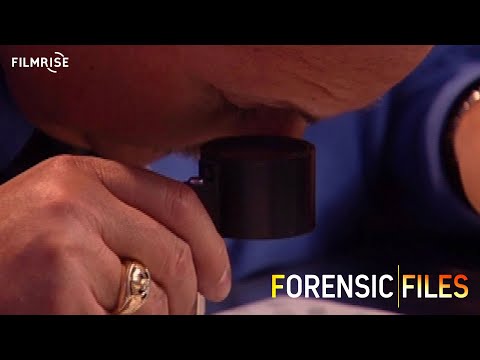
Forensic Files - Season 7, Episode 32 - Sleight of Hand - Full Episode
Read the full transcriptHide the full transcript
- [Music] in 1981 police found a partial Print near a door knob at a crime scene but without a suspect police had
- no way to compare the print to the 1 million prints on file 17 years later new forensic
- technology changed that breathing New Life into what was a very old crime [Music]
- [Music] [Applause] [Music] Charles Whitty was one of this country's outstanding architects in the early
- 1900s he was the first to design poured concrete structures he designed and built all the
- train stations clear across the United States Albuquerque is one of his most famous and the next most famous I guess
- would be El trar at the rim of the Grand Canyon which he built in 1902 eltar is a hotel and resort overlooking
- the Grand Canyon Whitt's design was eclectic a combination of the Swiss Chalet and
- Norway Villa Styles Charles had four children but his oldest daughter Enid identified with her
- father's free spirit and creativity more than the others she was very stately very pretty woman slender tall beautiful
- hair a big white smile with her flashing teeth Enid shunned family pressure to attend college and instead headed to
- Vaudeville at age 17 she began her career as a Marian Morgan dancer she was also a singer performing
- with the San Francisco Opera Enid never married but she loved children as she grew older she eventually found work as
- a governance but by the 1950s she retired and moved into a family home on simmeron street in Los
- Angeles she never owned a car but was a fixture in the neighborhood riding on her bicycle stopping to talk and
- sometimes play with the neighborhood children she would relate to them a lot more so than she would to
- adults she had kind of a almost a childlike quality about her the neighbors all called her the bicycle
- lady and uh everybody spoke highly of her she was pleasant she would talk to people even into her 80s she still rode
- her bicycle through the neighborhood but as she Grew Older something changed she was quite concerned about uh
- Intruders breaking into her house to the point where she had built kind of a Jerry rigged alarm system out of wires
- and threads and cans to alert her if anybody tried to come in a window or a door on March 13th
- 1981 one of the neighbors noticed Enid's front door was open inside the doorway was
- blot paramedics found 86-year-old Enid Whitty in her upstairs bedroom dead from multiple stab wounds Frank Bolan was the
- first detective on the scene the lady being of a small frame there just no way that I could believe that she offered
- much resistance uh there was no need for uh the amount of injuries you that this
- woman was subjected to the bedroom was ransacked the motive appeared to be robbery several of the drawers were open
- a lot of the items were pulled out there was blood on various items in and out of
- drawers Bolen also noticed blood drops leading down the left hand side of the stairs person leaving these blood drops
- was in fact leaving the area of the body going downstairs and going to the front
- door at the front door was a blood smear and print leading to area of the doorknob of the
- door investigators hoped that the fingerprints and the blood drops would lead to the
- [Music] killer the entire neighborhood including the children were shocked and saddened
- by the murder of 86-year-old Enid Whitty despite her cheerful disposition her friends knew she was particularly
- fearful of crime whether it be a premonition uh whether just a coincidence uh but uh there was
- something that um that did trouble her a lot she had always lived a very kind life that had never bothered anybody
- this was just not fair that someone so dear and sweet would have to end her days this way it was just was not fair I
- mean to be mutilated like she was inside the home was a wealth the forensic evidence which told the story
- of what happened during Enid's last moments alive we believed that the person had
- come up on the front porch open a window on the front porch had crawled in the open window stepped on the dusty piano
- had left the footprint a knife surfaced at some point we worked our way upstairs
- where she was in the bedroom it was just it's always very s the victim was severely cut um and stabbed in different
- parts of her body she had a defensive wound on the outside of her right wrist which to me showed that when the
- defendant was trying to stab her she was putting up her arm in defense and he got
- her wrist and at some point the suspect was also injured it's not uncommon when a
- knife is used that the attacker slides um because the blood is slippery they'll slide over the blade and cut themselves
- it appeared the suspect walked back down the stairs bleeding from his left hand the forensic evidence revealed that the
- killer left through the front door and stole Enid's beloved bicycle from the front porch to make his getaway it's
- especially sad to see someone all those years lived in their house and not to be
- even safe in their own home Michelle kler was assigned to collect the blood drops from the home
- she started with the grand piano because it was dry and Flaky I used a clean disposable scalpel and just collected it
- into a clean piece of white paper and made it into a Bendle and closed it so it could breathe and put it in a coin
- envelope Kesler used a different technique on the blood stains on the front door well in those days we used
- claw squares dampen with water and disposable tweezers or clean the tweezers in between with
- alcohol fingerprint specialist lifted three partial prints from a window a fourth print was discovered on an
- archway leading to the front door they thought it might be a partial uh of a palm
- print investigators photographed the footprints using oblique lighting it's when you take a flashlight
- and you shine it on an angle on an oblique angle it's kind of like at home when you can't see handprints on your
- furniture but you turn on the light and you're looking sideways at there's the [Music]
- fingerprints the forensic evidence told police how the crime was committed but the evidence couldn't identify the
- killer this was 1981 5 years before DNA was first used in a criminal case police could find no witness to the
- crime none of the neighbors had seen anything suspicious detectives then looked to
- other areas for leads I was conversing with other detectives and we were comparing notes we were comparing
- Prints but as far as a specific suspect we had none comparing the fingerprints in Enid
- whitty's home to others arrested for similar crimes in the area wasn't difficult
- but comparing them to everyone in the file was impossible you would have to search just
- over a million cards if there was a known suspect we can easily pull a card and then do the comparison but without a
- known suspect it would be very difficult without a full pattern type and without a fingerprint match the
- case remained unsolved all investigators knew was that the killer had tipe B blood and was
- left-handed we knew that there was an ongoing investigation that it was quite thorough
- and we were a little bit surprised that uh time went by and it didn't result in anything it would take another 16 years
- before a new technology gave police their first solid lead [Music] all homicide cops would like to solve
- their crimes kind of take it personal you know and uh they usually have put a lot of time and effort into it Enid
- whitty's murder case was one of several unsolved cases that languished in Frank bolan's Cold Case file I remember him
- telling me that during his 30-year career there was a handful of cases maybe three cases that wanted him that
- he wanted to solve before he retired and this was one of them he had the Killer's blood from the
- crime scene and some of his fingerprints but little else but in the years since Enid's
- murder in 1981 there had been more technological advances in forensic science than in any
- other time in history in this age of personal computers it's hard to remember that in
- the 1980s very few people had even seen a computer let alone used one large expensive mainframe computers were the
- standard with an eye to the Future the FBI and the Lockheed Martin company experimented with using computers to
- analyze and compare fingerprints when scanners were developed to capture the prints and the
- files could be compressed and formatted the afis was born a this is actually an acronym for automated fingerprint
- identification system and it's a computer system and what it does it photographs a Laten print it scans it
- and then it'll give us a candidate list usually of 10 people who have similar characteristics to the one that we
- entered into the system this new technology revolutionized fingerprint analysis not
- only for new cases but for old ones I occasionally revisit a lot of my old cases and ask for a recheck of the
- prints so detective Bolan sent the four prins found in Enid whitty's home back to the forensics
- lab afis found no match for the three prints taken from the window but the afis had better luck with the partial
- palm print the partial print was such a small area that you weren't sure if it was actually from a fingerprint or if it
- was from a palm area of the hand in this case the afis determined that the print
- was a partial fingerprint and not a palm print and the computer identified 10 individuals whose prints needed to be
- examined further we're then able to pull the cards of those candidates and do a comparison and we do a side by-side
- comparison using a special magnifying glass the latent print examination identified
- the owner of the print Carl Stewart I immediately began a background search and found him to live within a
- half mile of the victim he had a length the record within the Wilshire division having been arrested several times for
- theft and things of that nature ironically Carl Stewart was sitting in the Los Angeles jail
- following an arrest on domestic abuse charges I went and found the spouse that had filed the charges on him I sat down
- and I interviewed her through her I had learned that he was a person that didn't
- really care for elderly people uh that he had been a burger she also told police that Stuart
- targeted seniors in Beverly Hills Culver City and Wilshire near his home and she
- said one more thing that Stuart was left-handed on December 26th 1996 detective Bolan and two others
- interviewed Carl Stewart I basically started off with asking him about the area he lived and some of his background
- of his life then I kind of got into the crime and this lady was hurt to the point where she died okay I didn't I
- didn't I didn't do that me I didn't do that you know it no at first Carl Stewart claimed he knew nothing about
- the robbery or Enid Whitty then he changed his story I've seen her in the neighborhood
- I remember and she would wave at the kids playing when we was little like when you you would see her rideing the
- bike she would wave at you and stuff and you know everybody would pretty much weave back at her or something like that
- as my partner and I would release some information on bits and pieces of evidence he would rethink his
- statement and make it work around the evidence that was obtained and how it got there when told his fingerprint was near
- Enid's front door steuart said he had once been inside her home briefly but had nothing to do with her
- murder did district attorney Hayden Zaki would make the decision on whether to take this case to trial the crime
- happened on March 11th of 1981 when I was Stone High School and uh I thought to myself boy this is an old case um you
- know are we still going to have witnesses available for instance uh did we preserve all the evidence
- properly even with the print zachi knew it wasn't enough to convict Stewart for Enid's murder all he had is a a
- fingerprint I mean I guess in theory we could have prosecuted with only a fingerprint but I mean he could have
- explained the fingerprint away pretty easily all of the other evidence had been in the police property room for the
- 16 years since the murder but one important piece was not the coroner's reference sample of
- Enid's blood was missing it would take another forensic breakthrough not available in 1981
- to solve that problem and bring Carl Stewart to [Music] Justice and Carl Stewart was taken to
- the dispensary at the county jail and blood was drawn that blood was labeled and given to me for uh typing
- purposes investigators wanted to make sure that it was Carl Stewart's blood inside Enid whitty's home
- to do that scientists needed a sample of Stewart's blood as well as Enid Whitty but the Swatch of Enid's blood
- taken at her autopsy was missing from the evidence file so what we did in lie of the Corner's blood Swatch we used
- Enid whitty's pajama top that was what we were hoping would serve as her reference blood sample cuz it was
- heavily Blood Stained small dried samples of that pajama top were placed in sterile water
- water dissolves the stain and it also causes any cells that are present for example white blood cells which contain
- DNA to lice they break open spilling of their contents including the DNA out into the
- water The Next Step was to clean the DNA I had to pass it through uh something called a centricon tube it's basically a
- filter and what it does is it accomplishes two things it cleans the DNA and it also concentrates it into a
- smaller volume of of water the DNA is then replicated multiple times into a workable sample
- through a polymerase Chain Reaction or PCR six genetic markers were typed and illuminated by a blue color attached in
- the PCR process I had one stain that actually matched the genetic profile of Enid whittles SE on the remaining items
- I believe there were eight other blood stains from throughout the residence that matched Carl Stewart's genetic
- profile the evidence finally proved that Carl Stewart left the blood trail inside
- Enid whitty's home Carl Franklin Stewart left his blood at that crime scene it's
- his blood what's the defense going to do on May 17th 1999 Hayden zachi presented presented
- the forensic evidence of Enid whitty's murder to a jury Zachy believes that Carl Stewart
- first noticed Ena during one of her bicycle rides through the neighborhood later Stuart broke into
- Enid's home through her front window leaving his footprint on the dusty piano underneath the motive was robbery
- [Music] upstairs Enid confronted Stuart a fight ensued causing the defensive wounds to
- Enid's arms and hands during the encounter Stuart cut his left hand which left the trail of
- blood down the left hand side of the steps Stuart left his partial Print near the front door as he left the
- scene a print originally thought to be a palm print but later identified as a partial fingerprint by the automated
- fingerprint identification system we knew he got our man we knew that Carl Franklin stur was in that house because
- he left a fingerprint and he left blood so that's how we knew we had our man it took the jury just 2 hours to
- find Carl Stewart guilty of first deegree Murder She certainly didn't deserve to
- die as she did he was sentenced to life in prison with no chance of parole this was the first homicide
- investigation assigned to Frank Bolan despite taking 17 years he refused to give up he will give 110% to every
- investigation that he participates in sometimes he's a little bit of a pain but you know it's all for a good cause
- and uh um I I enjoy working with him I can't say it's a happy thing but I did take a person off the street
- that was responsible for horrendous vicious crime and I would say that the world uh elderly people females whoever
- in general is a little bit safer today because this person is behind bars so many disappointments so many cases that
- gone unsolved that you couldn't do you couldn't do anything with and then Along Comes new
- technology I think it is so wonderful to think that after all these years that they would go back when they got better
- equipment and uh new technological things and try to solve these unsolved crimes and put these people where they
- belong I think it's marvelous [Music] w [Music] [Music]
Brief Summary
Enid Whitty's murder was solved 17 years later using advanced forensic technology, leading to Carl Stewart's conviction.
Key points
- The Murder of Enid Whitty. Enid Whitty, an 86-year-old beloved neighbor, was found murdered in her home in 1981.
- Technological Breakthrough in Forensics. New forensic technology in 1996 finally leads to a breakthrough in the cold case.
- Carl Stewart's Conviction. After years of investigation, Carl Stewart was found guilty of Enid's murder in 1999.
Episode highlights
- The Murder of Enid WhittyEnid Whitty, an 86-year-old beloved neighbor, was found murdered in her home in 1981.“It was just not fair that someone so dear and sweet would have to end her days this way.”5:51Sep 16, 2024
- Technological Breakthrough in ForensicsNew forensic technology in 1996 finally leads to a breakthrough in the cold case.“It took another 16 years before a new technology gave police their first solid lead.”10:22Sep 16, 2024
- Carl Stewart's ConvictionAfter years of investigation, Carl Stewart was found guilty of Enid's murder in 1999.“It took the jury just 2 hours to find Carl Stewart guilty of first-degree murder.”20:50Sep 16, 2024
Tension
75/ 100High tension