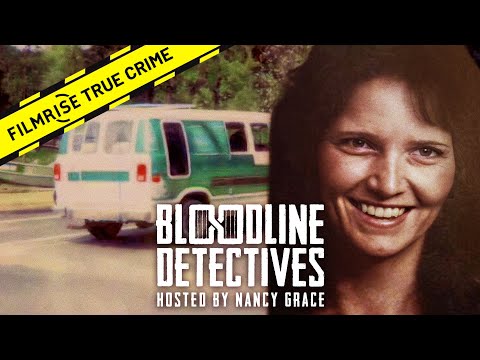
Bloodline Detectives - Episode 20 - The Williamsburg Rapist
Read the full transcriptHide the full transcript
- NARRATOR: Tonight, a serial rapist claims four victims near the amusement park, Busch Gardens Williamsburg, Virginia.
- CODIS, the National DNA databank will be of no help. So when and how will the rapist ever be captured?
- It's September 2001, a student's attacked in Williamsburg, Virginia. NATE GREEN: She was scared for her life.
- She then decided to be compliant in hopes that it would mitigate any harm that was being done to her.
- Beat her up fairly well, too. I mean she had some, it wasn't just a rape. She had some pretty significant physical injuries.
- LANG CRAIGHILL: She had dirt and leaves on her. She had no shoes on. She had some red marks on her face and her neck.
- NARRATOR: Within months, there's a second violent attack. Based on the description and the circumstances,
- we were pretty sure it would be the same person that had raped the other young lady a few months before.
- Kind of sent chills up my back, honestly. I was quite disturbed by it. I had never been through something like this
- and I thought we were under attack. NARRATOR: Despite an extensive investigation,
- the perpetrator evades detection and accumulates more victims. LANG CRAIGHILL: Two foreign females came in contact
- with a man that pulled up in a pickup truck and offered them a ride. And one of the girls end up having report of a rape
- with her. NATE GREEN: Now, we have this individual involved in a third crime. LANG CRAIGHILL: We had some guy that
- was able to evade the police and repeatedly commit violent crimes and avoid detection.
- We start to, I guess, lose all hope that we're going to be able to identify this individual.
- NARRATOR: A serial rapist creates a wave of anxiety and fear in Williamsburg, Virginia.
- This is the story of four innocent victims. Their attacker who eluded justice for years
- and how Bloodline Detectives use revolutionary DNA methods to finally make the hunter become the hunted.
- I'm Nancy Grace, and this is Bloodline Detectives. [THEME MUSIC] September 12, 2001, police in Williamsburg, Virginia
- got a 911 call. LANG CRAIGHILL: The caller was a female that had knocked on the door of a residence
- in the Zelkova neighborhood. It's a small kind of community off of Parkway drive,
- and reported that she was raped. NARRATOR: Patrol officers are dispatched to the residential address to interview the victim.
- There was the lady that called the phone for the female, and a female who was initially not very communicative.
- EDWARD SCHNEIDER: Pants had been pulled off. She had been in the woods so she was all
- covered with leaves and such. Because it was September, the leaves were falling.
- And she was very disoriented and very upset. [MUSIC PLAYING] NARRATOR: The victim is still petrified.
- But officers gently uncover the events surrounding the attack. NATE GREEN: This young woman who was an employee
- at Busch Gardens, working there on their cultural exchange program. Every year Busch Gardens will bring a whole slew
- of college-aged kids that will come here from Europe, and they live in this converted motel.
- They call it the Student Village. LANG CRAIGHILL: English was her second language,
- but she was from Hungary. She said that she had been walking home from the Food Line back toward
- the international village. LANG CRAIGHILL: She walked down the Parkway Drive where this occurred.
- And on the way back from Food Line, the grocery store, she was approached by a man.
- NATE GREEN: Someone had come up from behind her, grabbed her over the mouth and forehead,
- and ended up pulling her into the woods, and sexually assaulting her. She was scared for her life.
- She was willing to fight to a point, and then when she realized that that was not
- going to be successful, she then decided to be compliant in hopes that it would mitigate any harm
- that was being done to her. She suffered some scrapes and abrasions to her wrist,
- to her neck, to her-- there was redness and bruising around her eyes and around her forehead as well.
- She had a fanny pack on that he ended up finding when he disrobed her and took the contents of it, which
- included her passport and cash. NARRATOR: Stunned from the attack, the victim gradually collects herself
- and runs to a neighbor's house. Once she felt it was safe and he was no longer, you know, hovering above her or behind her,
- she ran to an apartment complex that was somewhat adjacent to those woods and went to the first building
- she could find. PATRICK KELLEY: This is actually pretty important than any rape case, is that she makes what's
- called a fresh complaint. In other words, you know, she didn't wait two or three days to come up and say, hey, I was raped
- or something or just go back home and cry or anything. She ran straight to this other house.
- NARRATOR: Officers believe the victim has given them vital information for now, and they
- escort her to the hospital. NATE GREEN: The paramedics take her to the hospital where
- a SANE nurse meets her and begins the process of collecting evidence from her. And that's how they were able to determine
- some DNA from the person who had raped her. The nurses are trained not only to do the examination
- but also to talk to the persons that are in that position that she was in, and try to help us obtain
- all the details that we missed. NATE GREEN: The PERK kit that was collected by the SANE nurse
- was sent off as well as other items that were found at the scene. And what they're looking for is some trace evidence
- of who possibly could have done this to her. NARRATOR: While the victim is treated,
- detectives visit the scene of the crime. We had to find the location where it actually happens.
- It was nighttime initially, and she had left from the area so we had to go back and find the scene
- where it occurred to see if maybe there's clues left. At that location, they found a shoe
- and they did find her socks. And they found the pair of underwear that she had previously described as having been torn
- from her, and they did find that underwear torn in a area of leaves and woods. There were some physical signs that people had been there
- and laying on the ground, like the leaves had been pushed around and pushed away.
- It looked like that was consistent with what had happened. NARRATOR: A full investigation is launched
- with a canvas of the area and a sketch of the attacker released. She did describe this individual is not
- skinny, not fat, but sporty. An athletic built, and she said he was strong enough
- that he overpowered her and was able to pull her into the woods despite her trying to fight him off.
- She did give the description of a Black male, 5'10 or so, slim build. NATE GREEN: Even from her description,
- I think the police knew early on that she probably wasn't going to be able to identify this individual because of the way
- he had controlled her and stayed behind her or stayed in kind of in darker areas.
- So they were looking for some biological evidence that could help them identify who did this to her.
- [MUSIC PLAYING] EDWARD SCHNEIDER: We did a composite description and we put it out there for everybody.
- We, in fact, put out there more than a few times throughout the years. FRANK GREEN: They'd have looked for people with similar MOs
- who were not behind bars. They would certainly knock on a lot of doors. NARRATOR: With no other immediate leads,
- investigators are hoping the rape kit sample will yield a hit. The results were, as far as the investigation goes,
- outstanding. They were able to find very clear, more biological evidence than we get in most cases.
- And so they were able to develop a very clear, very unique DNA identifier for whoever
- had sexually assaulted her. EDWARD SCHNEIDER: It did go into CODIS. And at the first time it went in, we didn't get anything.
- There was no known suspect at that point. NARRATOR: With no solid lays, the case gradually winds down.
- But then the attacker claims another victim. We knew the DNA of this offender but we just didn't know his name.
- NARRATOR: The good news is that investigators have DNA of the rapist. The bad news, they can't find a match.
- Just as the investigation begins to wind down, suddenly the perpetrator strikes again.
- That's next on Bloodline Detectives. [MUSIC PLAYING] It's March 2002, and investigators in Williamsburg,
- Virginia are searching for a sex predator who six months earlier rapes an international student
- in a surprise attack. NATE GREEN: They were able to find very clear, more biological evidence
- than we get in most cases. EDWARD SCHNEIDER: It did go into CODIS. And at the first time it went in, we didn't get anything.
- There was no known suspect at that point. NARRATOR: Then on March 23rd, police got a call.
- Another student has been attacked in the same area. EDWARD SCHNEIDER: A student from one of the local colleges
- was walking home late one night. It was a rather cold night. After she walked through campus, she was going down Jamestown
- Road, heading towards her home. As she was walking, she heard somebody behind her.
- And she termed it as somebody running. And then as it caught her attention, the subject slowed down and started to walk
- and then caught up to her. He then engaged in some conversation and talked to about, she said how cold it was that night.
- And he had told her, well, I can warm you up. And then they continued. And at that point, he put his hand over her mouth.
- LANG CRAIGHILL: His hand ended up being positioned by her face and she bit him. Beat him on the hand hard enough to draw blood.
- He released her and she was able to run into the roadway where a car was coming down the road and stopped that car.
- The person that stopped end up calling the police. And she gave a description that was pretty consistent with what
- the victim told us about what he looked like, his clothing and general appearance.
- NATE GREEN: This was a situation that was eerily similar to the incident that the police had been investigating
- from September of 2001. LANG CRAIGHILL: In this case, she was American. She was a college student.
- She was similar in age and height and weight and general physical characteristics
- to the first victim. NARRATOR: Investigators interview the victim and search the area where the attack occurred.
- She described where he ran to and we look for him. We also followed the direction where he went.
- Ended up calling a dog out. EDWARD SCHNEIDER: The officers on scene were able to help her out, start getting statements,
- and they got initial description of the subject wearing a red jacket with a white stripe.
- One of the local college police officers heard what was going on, came to assist,
- and actually found the jacket a short distance away from where the attack occurred.
- PATRICK KELLEY: He ran across Jamestown Road into a church parking lot right there,
- and took his coat off and left. But it was covered in blood and he took his coat off and just
- left it in the parking lot. In this case, there wasn't a completed rape. There wasn't a robbery.
- There was just an attempted abduction. But based on the description and the circumstances,
- we were pretty sure it would be the same person that had raped the other young lady a few months before.
- NATE GREEN: Once that is sent to the lab, same thing as the September case. It's an excellent sample, the lab
- is able to identify the DNA profile of this individual. But this individual is not in any known database.
- And so they can't identify it by a name, but what they can do is say, this is the same DNA profile as your suspect
- on the September 2001 case. NARRATOR: The second attack creates a wave of fear throughout the student community.
- LANG CRAIGHILL: There was a lot of fear. There's a lot of concern about it occurring again.
- There was a lot of anxiety put toward the police department for us to figure out who he was.
- We did have the feel of a serial rapist that we did not know going around our community
- and attacking young women. EDWARD SCHNEIDER: And when it came back that there was a match, it kind of sent chills up my back,
- honestly. I was quite disturbed by it. I thought we were under attack, quite honestly.
- I had never been through something like this and I felt very compelled that this case need
- to be worked for our community. NARRATOR: Now, police have a serial sex predator on the loose and the investigation
- kicks into high gear. We looked at recent arrest data with new offenses that might either
- show the same sort of crime but something that could be like a precursor crime or an associated crime,
- like a lesser offense like a stalking or a peeping tom. Possibly a trespassing, or even just a complaint that
- didn't lead to a charge of, you know, of a suspicious nature that might seem like somebody
- hunting for a victim. NARRATOR: The perpetrator continues to avoid detection and appears to have gone quiet.
- But then there's a third, even more brazen attack. LANG CRAIGHILL: It was on a summer evening in 2006 of July.
- Two foreign, younger females were walking from a bar in the city of Williamsburg
- called The Library Tavern, and walking back to their lodging. And they were taking a shortcut through Bypass
- Road, which is in York County. NATE GREEN: It was a little bit different in that it
- involved a vehicle as opposed to walking along the side of the road. LANG CRAIGHILL: They came in contact
- with a man that pulled up in a pickup truck and offered them a ride. And they ended up going with the guy in the pickup truck.
- And he took a turn that they hadn't asked him to make. And one of the girls was able to bail out
- of the truck and while it was moving, jump out of the truck and escape with minor injuries.
- The other female wasn't able to escape. The next day, she was found with injuries far away from where
- she was supposed to be at. Another part of Williamsburg, and ended up having a report of a rape with her.
- NATE GREEN: The culprit in that York County case left the biological evidence as well, and that evidence
- was sent to the lab. And now, we have this individual involved in a third crime.
- The, again, the DNA profile is an exact match. NARRATOR: The boldness of the third attack
- is deeply disturbing for investigators. Williamsburg is a sleepy town where we want to be able to walk along the wooded roads in
- this community and feel safe. And we didn't feel safe because we knew this individual is
- still out there. I believe that sexual assault is horribly unreported. Even when it's not someone you know,
- even when it is a stranger. The prospects of talking to the police about this horrible event, the prospects
- of being put in front of a jury and telling the story of what happened to you, that's not something that I think people
- get excited about. And so I think there are a number of women who have been sexually assaulted, who just live with it
- rather than sharing it with anyone that helps bring justice to that act. NARRATOR: Another investigation is launched
- into the latest attack. But once again, detectives hit a dead end. We now have a vehicle description
- that we could superimpose with our physical description. And by the way, the physical description was very similar.
- These victims reported that the suspect was wearing eyeglasses like our second victim did.
- EDWARD SCHNEIDER: We then, you know, we started working with York County and saying, hey, listen,
- this is what we have. And we started going back through old cases and trying to just drum up some more leads on this.
- LANG CRAIGHILL: It was sort of like, you know, the Williamsburg's boogeyman. You know, we had some guy that was able to evade the police
- and repeatedly commit violent crimes and avoid detection. So I wanted to say, not on my watch, you know.
- I wanted to be able to figure out who the guy was if I could. NATE GREEN: The number of leads start
- to diminish we start to, I guess, lose all hope that we're going to be able to identify this individual.
- NARRATOR: For another six years, there's no movement in the case. But in 2012, a new DNA method becomes available.
- Can it finally help police solve the crime? EDWARD SCHNEIDER: Hey, we got it-- we got a new idea,
- and it's called Familial DNA and we're going to see what maybe we can do with this.
- NARRATOR: A serial rapist remains on the loose. Three innocent victims traumatized by their ordeals.
- And investigation goes cold for six years. But as we see next, Bloodline Detectives
- revive the hunt for the rapist with a brand new forensic weapon. [MUSIC PLAYING]
- It's 2012, Williamsburg, Virginia Police are still trying to identify a sex predator
- who's responsible for three separate rapes between 2001 and 2006. It did have the feel of a serial rapist
- that we did not know going around our community and attacking young women. NARRATOR: But this year, a new DNA searching tool
- becomes available. LANG CRAIGHILL: I called one of the scientists from the DNA lab
- that I'd gotten to know over the years of doing this, named Bob Scanlon, and I asked him if he could help me figure out
- for sure if this one particular offender was in the databank and if we could eliminate him.
- And he did that. And then he asked me if I was open to possibly participating in a project.
- I would see Lang crossing the halls and we just started talking, goes, hey, we got it-- we got a new idea,
- and it's called Familial DNA and we're going to see what maybe we can do with this.
- ROBERT SCANLON: A familial search is a deliberate search that is not looking for a direct match to the DNA,
- but rather it's looking for an indirect type of association. Either parent offspring type relationship,
- or a sibling type relationship. NARRATOR: The Williamsburg investigation team makes the decision to utilize it in the hope
- it will identify new leads. NATE GREEN: My initial reaction was this is going to be it.
- They're going to be able to give us a report and that's going to lead to us making an arrest.
- And science is going to be the hero of this case. Lang felt very good about this.
- And I know we kept in touch with Bob Scanlon through the years, and Bob was another one who really
- wanted to see this case solved. This was a collaborative team effort with everybody involved.
- NATE GREEN: We get a call that we have a strong candidate here. We can say the name, but just know,
- it is not this individual. NARRATOR: Finally, a hit on the database, and investigators get a name.
- We came up with Kenneth Holloway. Mr. Holloway, Kenneth Holloway, could not have committed these crimes.
- I believe he was actually incarcerated at the time that some of these incidents took place.
- They're able to identify a number of brothers that Kenneth Holloway has. They're able to pretty quickly eliminate some
- of those brothers, either because of age, how old they would have been in 2001, 2006.
- They are also able to eliminate some because of where they were located at those times.
- There was a brother that was in Europe, I believe, stationed in the army. And so they were able to eliminate all of the brothers
- except for one. Tyrone Holloway appeared to be the most likely person. He also was the person who lived closest to the Williamsburg
- jurisdiction at the time. NARRATOR: To prove he is the perpetrator, however, detectives must obtain a sample of his DNA.
- NATE GREEN: They knew that they could not use what information had been provided by the lab
- to just get a warrant. We had made that agreement. So they were going to have to keep working this lead.
- Their idea of working it was to observe him and try to find a time that he discarded something that could be
- usable evidence, some piece of garbage that would not be the subject of a search warrant because he had thrown it away,
- but rather they could collect it and then send that item to the lab and see if they could get a result.
- Not enough of the familial DNA, but rather a direct result from something that they knew Mr.
- Tyrone Holloway had discarded. They've modeled what they did after what happened
- with the Grim Sleeper in California where they followed him around, got a piece of slice, piece
- of pizza that he discarded and were able to get a DNA sample that way. EDWARD SCHNEIDER: They tracked him down to South Carolina.
- They were following him around, trying to catch up with him to get something he would discard.
- LANG CRAIGHILL: We watched him throw a small, like a plastic bag you might get at Walmart full of trash
- into a dumpster. And I climbed in the dumpster and pulled the bag out. s was a fast food cup with a straw in it
- and stuff like that. It wasn't good news, though. They developed a female profile on a two or three of the items
- that I submitted and then a mixture on one. They basically told us there was not enough there,
- that we were on the right track but they couldn't definitively say yes or no. NARRATOR: For bloodline detectives, frustration mounts.
- Their surveillance of the suspect is getting investigators very close to obtaining
- the DNA they need, but still not close enough. But as we see next, their determination to get that DNA
- saves the investigation. [MUSIC PLAYING] December 2012, investigators from Williamsburg, Virginia
- returned to South Carolina determined to catch the serial rapist who's been on the run for six years.
- After weeks of surveillance, followed by repeated searches of the suspect's trash, they're close to obtaining
- what they need. GREG RILEY: We made arrangements to go back a second time. At this point, we knew where he worked.
- We knew where he was living. And so we continued to surveil him in between his residence
- and his place of work. LANG CRAIGHILL: He went through a drive-through of a Zaxby's restaurant.
- As he leaves there, he ran a light and I didn't push it. I let it go because I thought he was going to work.
- Well, when I went to his work, his car wasn't there. I was in a position he parked like right behind me,
- I could see him clearly. Didn't have anything in his hands, he went right the front door, and didn't
- look like he dropped anything. So I went and looked anyway. I went and looked in the trashcan by the door.
- And I went and looked at his windows and of his car. GREG RILEY: We went up to the vehicle.
- We didn't see the meal bag or any of the remnants of that. What we did see, some garment, racks that
- were in the back of his car. So we looked up where you can get a central home clothing
- racks, and essentially, we found it was could be any big box store. It was like Walmart was listed, Lowe's, Kmart, like pretty
- much any of the big box stores. NATE GREEN: Investigator Craighill, Investigator Riley
- spend the next few hours going around to these locations to try and find where did he buy these.
- GREG RILEY: We searched for approximately an hour every store in the area that could
- possibly contain these racks. And we were just unable to figure out where he had gone.
- He had been to Pizza Hut a couple of times for dinner. Well, we went to the same pizza, like right up the street
- from this publishing center where we worked, and we have had the same waitress. Again, I'm not sure I can ever understand how Lang had
- the instincts to do this, but he asked his waitress and he shows her a picture of the boxes,
- and says, have you ever seen anything like these? Do you know where I could buy these around here?
- And she says, well, they might be sold at the Kmart. They had already checked a Kmart, the Kmart
- that was on the internet. GREG RILEY: She said, why would you go there? There's one just around the corner.
- And [LAUGHING] we were kind of stunned, [LAUGHING] you know. LANG CRAIGHILL: So we went and looked,
- and the trash had been pulled-- there was two cans right in front of the doors, and the trash has been pulled.
- It was sitting outside of the cans, like it was waiting to be collected. And I went to one can and Greg went to the other one.
- I heard Greg make this like little, ah [LAUGHING] noise when he opened the lid of it.
- And right on top of the not very much refuse was a Zaxby bag. GREG RILEY: I looked down and the only thing in the garbage
- can was a Zaxby's bag with the discarded meal and the receipt which was timestamped, and we knew instantly we had what
- we were coming to look for. I went inside the store to talk to the management. They provided us with video surveillance
- showing him entering the store, purchasing the garment racks, and leaving the store.
- In all my years, it's the most amazing piece of police work and instincts and doggedness
- to just stay after it. And they were rewarded. We were rewarded. NARRATOR: Police send the material back to Virginia
- for forensic analysis. I couldn't get a hold of Bob so I called my lieutenant from investigations who does forensics,
- and I asked for advice on packaging the stuff, preservation, and he said, basically, ice it.
- EDWARD SCHNEIDER: They do submitted the evidence where it would then get sent to the Department of Forensic Science
- where the scientists would then do a DNA test on it, try to collect off of it. NATE GREEN: The DNA on those chicken bones
- matches the DNA on the blood, on the coat, matches the DNA from the semen, from the rape in the woods.
- This is the guy. NARRATOR: Investigators immediately began preparations for Holloway's arrest.
- LANG CRAIGHILL: But essentially, he was gone. Every place we look for him, we couldn't find him.
- We then went through the process to track him by his phone, by his cell phone, to figure out where he might be.
- NATE GREEN: We started pinging his phone, and wouldn't you know it, he was no longer in South Carolina.
- They had gone the wrong direction. He was now north of Virginia in Philadelphia.
- LANG CRAIGHILL: We were concerned that maybe he was hunting. You know, maybe he's doing what he does.
- But we realized we had absolutely no idea what he was driving. Every vehicle we knew about, we had accounted for
- and it was in Marion. The following morning, we were able to obtain a ping that was within 7 meters of a hotel in Philadelphia.
- We continued to monitor his pings. One of the pings showed him at a repair shop.
- We called Philadelphia PD. They sent an officer, and Mr. Holloway was placed under arrest.
- They asked him if he wanted to speak to the investigators from Williamsburg. He said yes.
- They transported him to their local jail facility and we made the long drive from South Carolina to Philadelphia.
- LANG CRAIGHILL: They took him on custody, and we had charged him at that point with abduction
- but attempted to file rape and robbery. NARRATOR: Williamsburg investigators arrive in Philadelphia to interview Holloway.
- NATE GREEN: He was conniving. I could just see the wheels were turning on how could
- I explain away these facts. NARRATOR: Almost always at a moment like this, investigators wonder what kind of suspect
- they're going to make, what will they learn about him, will he confess to the crimes.
- Next, on Bloodline Detectives, we get the answers to those questions. [MUSIC PLAYING]
- On December 23, 2012, Tyrone Holloway is tracked down and arrested all the way to Philadelphia
- for raping three women in Williamsburg, Virginia between 2001 and 2006. We're about to get the full picture on Tyrone Holloway
- and hear his side, too. I think he really thought he got away with it and he was never going to get caught
- and he would never be caught. NARRATOR: So who is Tyrone Holloway? And how has he not come to police attention before?
- GREG RILEY: Mr. Holloway's about 5'8, Black male, rather thin, wore glasses. Not a rather imposing figure.
- NATE GREEN: He is intelligent. He is manipulative. He's conniving. NARRATOR: Williamsburg detectives
- who have been working the case over a decade finally get to question him. But we decided to be not direct about how
- much we actually did know. Not mentioning anything about forensics but to go with essentially that he was accused of a rape
- by someone that had seen his composite and identified him. He acted like he didn't know anything
- that we were talking about. I even, at one point, showed him a photograph of one of the victims,
- the first victim actually. And he told me he remembered her. He told me that was one of the young ladies
- that he had sex with at some point. I don't know why I'm here, you know, why are you guys doing
- this, but in the course of our discussion, he did make some statements that implicated him in the crimes.
- We were advised to arrest at that point based on that amount of evidence with that type of charge.
- Once he was charged, they went and took an official sample, you know, with the buccal swabs
- and whatever. And, you know, went back and ran it again. NARRATOR: The swab comes back a 100% match.
- And Holloway's brought to Williamsburg to stand trial. [MUSIC PLAYING] NATE GREEN: Our strongest and most serious case
- was the September 12th rape that took place in the woods. I made the decision that we would split the prosecution
- into two stages. He was arrested on both assaults. The one in September from 2001, as well as
- the assault and the attempted rape from 2006. We went forward on the preliminary hearing
- for the 2006 incident so that we could be sure to hold him over for a trial in the circuit court.
- Once we were able to do that in circuit court, I indicted the case from 2001. So we did a preliminary hearing from the 2006 case,
- but the trial was on the 2001 case. NARRATOR: On December 18, 2013, the trial for the 2001 attack
- begins. NATE GREEN: We had had what's called a motion to suppress. His claim was that he did not throw
- the Zaxby's bag of garbage and chicken bones away. LANG CRAIGHILL: They accused the police of improper conduct,
- accused me of improper conduct. They tried everything to try to get out of it. And then Mr. Holloway testified,
- and that's somewhat rare for a suppression hearing for the defendant to actually testify.
- But he did. PATRICK KELLEY: He, all of a sudden, tells me that he finally remembered what happened
- that night and that he had sex with this young lady but it had been consensual sex.
- And she had only cried rape when he had refused to give her any money after they were done.
- And that he had a star witness who was there for the whole thing. LANG CRAIGHILL: They attacked the credibility of the witness.
- They made up a scenario which wasn't true, accusing the witness or the victim of improper conduct.
- NATE GREEN: He claims that after the act was done, she's demanded money and he told her I don't ever pay for sex.
- And that upset her. He then said, because she was upset and he was done, he decided to take her to the Food Line,
- give her $20 to go buy him and his friend beer, and as soon as she was out of the car, he drove away.
- PATRICK KELLEY: His star witness is a young man named Christopher Chestnut. And when he told me that, I can't remember if I laughed
- or not, but I had to tell him, I said, you know, Tyrone, I've known Chris Chestnut for a long time.
- I prosecuted him when he was a juvenile. He's simply not a credible person. NARRATOR: The victim who's waited 12 years
- and traveled thousands of miles to give her testimony finally faces her attacker and holds him accountable.
- NATE GREEN: There's a hope that giving them that opportunity gives them also a sense of closure.
- But I'm not obtuse to the fact that I am reopening an old wound and making her talk about this, not
- with her friends or with her family, but with 12 strangers, and describe this horribly violent act
- that was committed against her. Not only does she have to, you know, recreate the event for other people and strangers,
- she had to relive it for herself. She had to face him directly, the person, and accuse him.
- It had to be just awful. All survivors of sexual assault that have to come into a courtroom
- and relive the worst moments of their life are incredibly brave. She did get emotional, but she maintained her composure.
- She was great. NARRATOR: The jury returns after just two hours of deliberations.
- LANG CRAIGHILL: When they came out and found him guilty, it was a huge relief. And when they gave the amount of time,
- that was also a huge relief. And I'm certain that was a vindication for the victim.
- Not just the one that was in court, but the other ladies too, I'm sure. PATRICK KELLEY: What I was surprised about a little bit is
- that, you know, after they found him guilty, I was at least somewhat surprised that he only got 33 years.
- NARRATOR: So is there justice or closure for the victims? PATRICK KELLEY: When somebody who's gotten up
- and they've actually gone through this and testified, and gotten it over with, you know, and gotten some vindication from the sentence,
- well, I mean, I suppose there's closure. NATE GREEN: Her life was not going to be defined by the horrible acts of this man on this night.
- She didn't forget it. She did not-- it was part of her, but she was able to have it only be a part, not
- the sum total of who she is. NARRATOR: Another case that would likely have remained
- unsolved has come to a successful conclusion with the help of Familial DNA. The science of familial DNA was invaluable to the lead that
- identified Tyrone Holloway. PATRICK KELLEY: 10 out of 10 in importance because that's how they figured out who he was.
- NARRATOR: The Williamsburg Police can finally close the case, proud they put Holloway behind bars.
- The elation we feel that, you know, our victims now can move on with their lives
- and they can have a better life knowing that they're safe and everyone is safe, that's a closure we're looking for.
- NARRATOR: The DNA of Tyrone Holloway's incarcerated brother allows investigators to build a case against Tyrone Holloway.
- But Holloway's defense can't match the power and certainty of Familial DNA. This technique has become an incredible forensic
- breakthrough for investigators. The ability of Bloodline Detectives to pinpoint and navigate family trees of perpetrators
- is a significant weapon in their fight for justice and for victim's rights. I'm Nancy Grace.
- Thank you for joining us here for Bloodline Detectives. [THEME MUSIC]
Brief Summary
A serial rapist evades capture for years until familial DNA leads to his arrest and conviction in Williamsburg, Virginia.
Key points
- The Investigation Begins. After a series of attacks, police launch an extensive investigation to catch the rapist.
- A Serial Rapist Strikes. In September 2001, a serial rapist terrorizes Williamsburg, Virginia, leaving victims in fear.
- New DNA Methods. In 2012, a new DNA method offers hope in solving the cold cases of multiple rapes.
- The DNA Match. The DNA on the chicken bones matches the evidence from the rapes, confirming Holloway's guilt.
- Holloway's Arrest. Tyrone Holloway is tracked down and arrested in Philadelphia after years on the run.
- Trial Begins. The trial for Holloway's 2001 attack begins, with the victim finally facing her attacker.
Episode highlights
- The Investigation BeginsAfter a series of attacks, police launch an extensive investigation to catch the rapist.“Despite an extensive investigation, the perpetrator evades detection and accumulates more victims.”1:28Apr 1, 2021
- A Serial Rapist StrikesIn September 2001, a serial rapist terrorizes Williamsburg, Virginia, leaving victims in fear.“A serial rapist creates a wave of anxiety and fear in Williamsburg, Virginia.”2:06Apr 1, 2021
- New DNA MethodsIn 2012, a new DNA method offers hope in solving the cold cases of multiple rapes.“Can it finally help police solve the crime?”19:01Apr 1, 2021
- The DNA MatchThe DNA on the chicken bones matches the evidence from the rapes, confirming Holloway's guilt.“This is the guy.”29:21Apr 1, 2021
- Holloway's ArrestTyrone Holloway is tracked down and arrested in Philadelphia after years on the run.“He was no longer in South Carolina.”29:42Apr 1, 2021
- Trial BeginsThe trial for Holloway's 2001 attack begins, with the victim finally facing her attacker.“On December 18, 2013, the trial for the 2001 attack begins.”35:28Apr 1, 2021
- Verdict DeliveredAfter two hours of deliberation, the jury finds Holloway guilty, bringing relief to the victims.“When they came out and found him guilty, it was a huge relief.”38:46Apr 1, 2021
Tension
85/ 100High tension