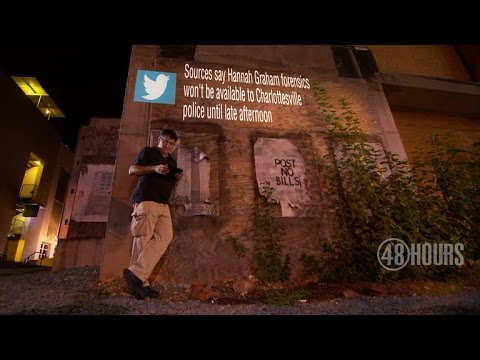
Fallis case: Local reporter on becoming part of the story
Episode Description
In 2014, Justin Joseph was a reporter Fox-31, KDVR, in Denver, Colo., when he got a tip about the death of Ashley Fallis. It had been ruled a suicide and the case had been closed for almost two years, but his investigation uncovered previously unreported ear and eyewitnesses. His reporting led to the case being reopened, and Tom Fallis charged with his wife's murder. Joseph, now the Assistant News Director at CBS affiliate WTKR in Hampton Roads, Va., describes what it was like to have his reporting become part of a major murder trial.
Read the full transcriptHide the full transcript
- what was that that made you decide this was a case worth investigating well you know as a reporter uh you have to fish
- through stories every day that's all you do is get news tips and you have to decide which of these tips is worthy of
- your time and your resources to really go forward um in this case the fact that he was a sheriff's corrections officer
- um the fact that um there was a lot of things they pointed to in terms of the evidence that didn't make sense you've
- found that as we have that unless the police do a very thorough examination of the
- death scene or the crime scene on the night it happens that can really cause a problem later on down the road for
- finding Justice absolutely and all of the sides agree these types of cases you have to look at them as a homicide from
- the beginning and if you look at the facts of the case it does not appear this was treated like a homicide
- investigation from the beginning he wasn't separated from his children he wasn't separated uh he wasn't
- immediately treated as a suspect and is allowed to roam around the property using his phone um that's not how you
- treat someone who you uh suspect of a homicide I think that they were from the beginning the Evans Police Department
- was out of their league was it hard knowing when this trial started that it wasn't just Tom FS who was really on
- trial in some way you were and your reporting sure it was that was difficult it was difficult to listen to um my
- reporting become part of the defense Theory as to why we were all courtroom when I knew that wasn't true I'm curious
- to see what you'd say with this you're not reporting right now did you move into Management in part because this
- case involved more uh than you ever expected or ever encountered before in a case you know it's a question I've asked
- myself a lot um it it was grueling and it was draining I mean that's one of the reasons why in the end I I decided it
- was I I needed a break and I want to try my hand at something else yeah it's definitely part of the reason I don't
- know what happened that night I don't know whether Tom thas had a role in his wife's death I can tell you what the
- facts suggest but ultimately the jury didn't feel like there was enough investigation and so that's an
- indictment on the system more than it's an indictment on Tom phas
Brief Summary
A reporter discusses the challenges and implications of a homicide investigation involving a sheriff's corrections officer.
Key points
- The Importance of Investigation. Thorough examinations at crime scenes are crucial for justice.
- The Role of Reporting. The reporter's work became part of the defense theory, complicating the case.
Episode highlights
- The Importance of InvestigationThorough examinations at crime scenes are crucial for justice.“Unless the police do a very thorough examination...”0:30Oct 22, 2016
- The Role of ReportingThe reporter's work became part of the defense theory, complicating the case.“It was difficult to listen to my reporting become part of the defense theory.”1:24Oct 22, 2016