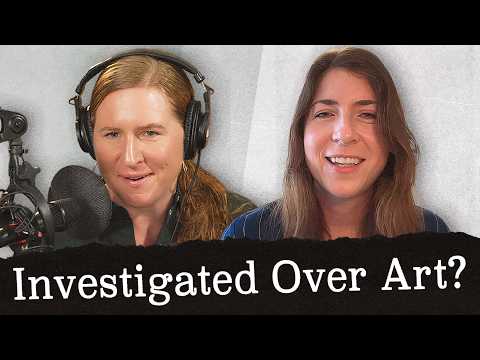
A Prime Minister's Murder, a Cult Expert, and the Moonies (with Tammy Kim)
Episode Description
Former Japanese Prime Minister Shinzo Abe was shot and killed in 2022. Soon after, a Korean investigative journalist named Eito Suzuki started drawing connections between his murder and the Unification Church - whose followers are known as the “Moonies.” Phoebe Judge interviews New Yorker writer Tammy Kim about the story.
You can read Tammy Kim's story for the New Yorker here: https://www.newyorker.com/magazine/2026/02/02/how-shinzo-abes-assassination-brought-the-moonies-back-into-the-limelight
This is the latest video in our new series, What Happened Next? Follow us for more videos coming soon.
Get even more from us by joining Criminal Plus on Patreon: https://www.patreon.com/Criminal
Chapters: 0:00 Intro 0:40 The assassination of Shinzo Abe 1:23 Reactions to Shinzo Abe's death 3:40 The Unification Church and the "Moonies" 7:11 Journalist Eito Suzuki's reporting on the Unification Church 10:03 How the Unification Church recruited its members 14:50 The church's illegal financial practices 16:15 The relationship between the church and Japanese politicians 18:28 How Shinzo Abe was connected to the church 20:39 Who was Tetsuya Yamagami, the man who shot Shinzo Abe? 23:30 Yamagami's connection with Eito Suzuki 27:12 Yamagami's mother and the church 31:00 The public reaction to Yamagami's actions
Listen to every episode of Criminal on your favorite podcast platform: https://pod.link/809264944
Follow Criminal on Instagram (https://www.instagram.com/criminal_podcast), Facebook (https://www.facebook.com/thisiscriminal), and TikTok (https://www.tiktok.com/@criminal_podcast)
Sign up for our newsletter: https://thisiscriminal.com/newsletter
We also make the podcasts This is Love (https://pod.link/1337100398) and Phoebe Reads a Mystery (https://pod.link/1503921457).
Check out our online shop: https://shop.thisiscriminal.com/
Read the full transcriptHide the full transcript
- As soon as he heard the news about somebody killing Shinszo AB in this particular way with what emerged to be a
- handmade gun, he thought this is probably unification church related. This is criminal. I'm Phoebe Judge and
- today I'm joined by Tammy Kim. She's a contributing writer to the New Yorker. Earlier this year, she wrote a piece
- called How Shinszo AB's assassination brought the Mooneyies back into the limelight.
- Tammy Shinszo Aab was shot and killed on July 8th, 2022. Do you remember when you
- first heard about it? I heard about it immediately. I um report somewhat frequently on the Koreas and um he is
- was a rather notorious figure in in the Koreas because he was very sort of pro, you know, Japanese nationalist and he
- had a lot of ideas of revising the peace constitution that had been instituted after World War II. Um I couldn't
- believe the news of his assassination. And we're talking about the longest ever serving prime minister of Japan, a man
- whose whose power and sort of dynastic connections throughout his family were really unrivaled. Um, and so this news
- of him being shot in the street was just sort of mind-blowing. >> What was the public reaction in Japan?
- >> As far as I could tell, yeah, I was on I was on YouTube. I was, you know, on the
- Japanese news trying to m machine translate my way through everything. Um, definitely shock. Um, there were a lot
- of conspiracy theories as well. Maybe this isn't real. He was shot outdoors at a political rally in the city of Nara.
- Um, so there were also, you know, people saying, "Oh, maybe there were his opponents were trying to get him." He
- had been out of office, um, you know, for over a year, um, but was still obviously um, quite powerful
- politically. And so um for weeks there was quite a lot of confusion around the actual cause of of his death.
- >> I don't remember all I remember is that yes it was shocking that there was an
- assassin assassination but also the the method of which you know it was it felt very public the way in which he was
- actually shot. >> Exactly. Um, so although there were these conspiracies swirling for some
- time, the actual video that that we had was released pretty quickly. I mean, basically there was a sort of
- middle-aged man who had a bag on and a mask on. This is still during the pandemic. And he had used some sort of
- really weird sort of homemade device to shoot Abbe. you know, in Japan, unlike in the United States, there aren't
- really guns um held by civilians except for like hunters in the countryside. And
- so, um the idea that somebody would do a shooting in the middle of a large city was just kind of unthinkable. Um and
- from the video, what you could sort of see is there was this man who had this device that he had pulled out of a bag
- and then, you know, it was sort of like an explosion, like a firework, and then he was tackled by security. Um, but what
- exactly happened remained unclear. >> For your article, you spoke with a Japanese journalist um who goes by
- Suzuki. Um, he's an expert in cults and the Mooneyies. He told you that when he heard the news,
- he suspected that there was a connection to the Mooneyies, also the unification church.
- I think people have heard mooneyies maybe but maybe not unification church. What is the unification church? So this
- was church that was much more sort of popular and in the popular imagination I think in the in the 80s and '9s. Um but
- this is a is a church that is often considered a cult that was founded by a Korean man um whose last name is Moon
- after the Korean War. It was a sort of mix of you know Christianity and shamanism a bunch of sort of like
- theological um you know bits and bobs jumbled together. Um it also in its early days was like a lot of cults a sex
- cult. Um but it had this really weird trajectory um in Asia. It became very popular in Japan. And Korea was very
- aggressive about exporting missionaries there. And it had this sort of idea built into it that because the holy land
- was Korea, it was a church and a cult that whose idea was sort of like centered on the Korean peninsula that
- Japan because Japan had colonized Korea was sort of uniquely guilty, had a lot of indemnity to pay down in the language
- of the church. Um, and so it became very popular there. It also was very popular
- in the United States in California and New York. It was kind of part of that sort of like 70s8s trend in um you know
- in different kinds of like lifestyle cults. Um and so people probably know about the mooneyies from the pictures of
- mass weddings. Um in the 80s 90s even into the 2000s there were different mass wedding events like even um in large
- stadiums. There's a scene that I quote from a Dond Dilo novel where um there's brides and grooms being sort of matched
- on the spot in Madison Square Garden and this is part of Moon's sort of vision of
- world peace achieved through that church. That's what I remember. I remember these pictures of these mass
- everyone's in white mass weddings. Was this part was there some population? What was why these mass weddings? What
- was the ceremonial importance of it? So Moon and his wife, who's still alive, um
- they had this idea that they were the true father and the true mother of humanity. And they could sort of pick
- out pairs that were destined to be together. And some of it was this kind of like in a way a sort of idealistic
- kind of multi-racial like crossnational vision of heaven, which is that they could pick out like a black man from the
- United States to be married to an Asian woman, you know, that had just shown up in this stadium that day. Um, and so it
- it was it was both like the fulfillment of some sort of like ideal that was embedded in their theology and a way to
- to sort of, you know, make money and um to to sort of lift themselves up because
- they were presiding over this gigantic ceremony. So this became a routinized ritual um in in the religion.
- >> How big is the church? I mean the heyday I mean what are we talking about? So in
- the 70s and 80s they boasted of having tens of millions possibly hundreds of millions of members all over the world
- and it does appear that they did have you know some presence on all of the major continents but now we're talking
- about a very much diminished church and so at the time of the assassination even
- in Japan where again the church had always been very powerful we've gone down from a height of maybe half a
- million members to about 60,000 and that could also be a very generous estimate because he's a sort of like a
- you know a mix of what the church is self-reporting and what journalists were able to find. So after a assassination
- you you speak to Suzuki um a journalist who has suspicions that somehow this is connected to the unification church to
- the mooneyies. What kind of a journalist? Why did you go to him? Basically, since the early 2000s, Atou
- Suzuki, he's like a a kind of cool chill former rocker type, had devoted himself
- to doing citizen journalism on the unification church. And there are a sort of uh there's like a a kind of group, I
- would say, like in Tokyo and in other Japanese cities of journalists who track cults. I mean, like in any society,
- there are cults who do various kinds of damage. Um, and in Japan, the unification church just because of its
- strength and its political connections had been something that he had been had been tracking. And I brought actually
- like a couple of his little books where you can see his kind of like very unique
- and, you know, kind of cool retired rocker style. Um, at Suzuki was kind of one of the most vocal um, journalists
- who came out after the assassination of a to say, you know, I think this is this
- is going to blow open what's been happening with the unification church. As soon as he heard the news about
- somebody killing Shinszo Abbe in this particular way with what emerged to be a handmade gun, he thought this is
- probably Unification Church related. And that was because Abbe and his family for
- many years, for decades, had had ties to the Unification Church and had used its
- members to support his politics. Wh Why had to Suzuki gotten interested in in the unification church?
- What what why had he made this his beat? >> His story is sort of like origin story
- about why he became interested in cults is that in the early 2000s there was reporting about this new tactic that
- Unification Church was using to try to recruit members which is to send out women um who were sort of like sweet and
- soft spoken to you know get to lonely souls in the subway stations of Tokyo. and he saw that report on TV and he says
- the very next day he went to a subway station and saw a woman approaching some stranger and saying, "Hey, can I read
- your palm? Can I talk to you?" And this was like their method of kind of like outreach. And he sort of described it as
- like doing an intervention or an interception where he sort of yelled out and said, "Hey, that's the unification
- church." Because the missionaries wouldn't identify themselves that way. Um later on in our correspondent and and
- also through my research, you know, I learned that Atu Suzuki also had an older sister who had been recruited into
- the church. Um and he had seen her sort of slip away from the family, become more and more involved in the church
- activities into his 20s. And so clearly that was, you know, part of the motivation of his obsession. Tell me
- more about the recruitment tactics that the church used. Palm reading, what else? Sure. So it evolved over the
- decades of the church and it looked different in different parts of the country but some of a sort of sampling
- of what they would do or you know like many religions they would would sort of go after younger people, people who were
- isolated, people who seemed lonely. So for instance, they had a very um big presence on college campuses where they
- would see people, you know, freshmen who were kind of like isolated and needed a
- friend and they would do a practice described as lovebombing where you would just go and shower this person with
- love. You would bring them to gatherings and meetings. In Japan, the the church also operated for a time these places
- called video centers where people would bring in their recruits and they would watch a video that wasn't bu like a
- video about religion obviously not about moon or this church in particular but was more about peace or you know how to
- how to solve the problems of war in the world. Um, and so it was always kind of connected to kind of peace politics in
- some places also like anti-communist politics. Um, so it would have a kind of slightly writist or conservative appeal.
- Um, but they would bring in people and slowly it would be revealed that this actually was a religious practice. Um,
- and the palm readings were kind of like an extension of that. It was hey come come to this meeting like we you know we
- can introduce you to friends and let me see what your your future holds for you.
- money uh was also a big part of the unification church. How how did the church get
- members followers to give them money and and what role did that act play in the church?
- >> Yeah. So it eventually when when somebody is absorbed into the church there was um there would be somebody who
- would say hey you know in order to support the church's activities and also to cleanse yourself and your ancestors
- of sin you need to pay into this kind of system and you can do various things there there was a kind of like um you
- know sort of mystical element to a lot of the church practices and so for example there would be like a catalog of
- objects that you could buy you could buy like a very special like vase or you know they were often like Asian objects
- that were connected to Korean culture obviously or like a replica of a little statue or jinseng tea and these were all
- sort of like sacred objects that would sort of heal you. And so um it was both a kind of like um yeah a kind of um a
- cleansing you know sort of ritual for the individual and if you purchased enough things or donated enough money to
- the church you could absolve your ancestors going back x number of generations depending on the amount
- spent of their particular sins. Um, and so this became like a very important part, especially in Japan, of the
- religious practice of the church. And once people came into the community and became very devout and were surrounded
- by other people doing this, they were spending extraordinary sums on various rituals, objects, trips, community
- gatherings, hundreds of thousands of dollars. >> Yeah. In the case of the assassin of of
- Shinszo Abbe, his his mother at one point her entire sort of donation total donations was was measured to be about
- $700,000. >> What was the church using the money for? >> So the church Hanhukja who is is the
- widow of Samyangmoon the founder. They had many many children and they had this sort of like big kind of corporate you
- know organization that was the church and they used those donations to do all sorts of things to seed businesses. Um
- they in the United States are still connected to some of the largest sushi distribution wholesalers. It's kind of
- an incredible story. Um and they have a son who oversees a gun business. There were all kinds of corporations that they
- were investing in. So the believers monies would be used to fund those practices. In Korea, obviously the
- family was living extremely lavishly. They had mansions there. They had mansions in about like just north of New
- York City. Um they also have a kind of a whole village where the church is headquartered in Korea and that was both
- a site for the church to you know do various sorts of activities administrative activities spiritual
- activities but also to bring believers for purification retreats. So all of the the believers money was needed to
- constantly keep all of these things going around the world. And and has the church ever gotten in trouble for for
- these financial practices? Has anyone ever looked in looked into it? >> Yes. So, in fact, the founder of the
- church, Samyang Moon, found he actually served jail time in Connecticut for tax evasion. So, there was a congressional
- committee um in the 70s and 80s that was like looking at the moon's practices and
- what the unification church was doing to scheme so many people out of money. In Korea and Japan as well, there had been
- investigations. In the late 80s, in fact, there was a whole network of volunteer and proono
- lawyers that was set up to try to represent people who had claimed that they had been defrauded out of their
- their finances by the church. So, all of that is kind of going on and there are,
- you know, ups and downs in that, but nothing ever fundamentally happens to the church. like even its founders
- imprisonment didn't fundamentally knock the wind out of the church. Um and and so it just sort of there would be like
- audits, there would be prosecutions, there would be lawsuits, but still the church kind of managed to keep going. It
- just had such an incredible foundation of corporate wealth. At Suzuki started reporting on and investigating the
- unification church. What and you mentioned this earlier that the church was started in Korea but had
- this big influence and many followers in Japan. What are some of the things that
- uncovered about the unification church's influence not just in Japan but in Japanese
- politics. So his particular obsession was trying to figure out the precise relationship between the Japanese
- church, the Korean church headquarters and Japanese politicians. And the the dominant party since World
- War II in Japan has been the Liberal Democratic Party, which is a rather conservative party um that is, you know,
- quite attached to um some of the imperial Japanese um figures who who in fact were like AB's ancestors in some
- cases. And they have long had a relationship with the unification church. In fact, when Samyong Moon had
- had sort of first started the church and was getting it going in the 50s and 60s,
- he was already sending missionaries to Japan and he himself was meeting with people in Japanese politics, including
- Shinszo Abbe's grandfather. Um, and so what what Suzuki in the 2000s is interested in is tracking donation
- patterns. um the names of particular church officials and members who are working in LDP parliamentary members
- offices as volunteers, the way that the church was organizing people to go to rallies. Um there was just like a huge
- especially like um in terms of of just um kind of like the analog work of Japanese elections, showing up to
- rallies, doing door knocking, leafletitting, a lot of that was powered in fact by volunteers from the church.
- And so he was tracking that and he would post investigations on blogs and kind of
- you know in newspapers whoever would sort of run this stuff. There wasn't much interest in the unification church
- in the '9s and 2000s and in the 2010s when he was really getting going but he would sort of publish wherever he could.
- Um he was like also had developed a bunch of sources within the church were disclosing documents to him. So it was a
- lot of just really traditional sort of muckreking around what exactly the church and its members were doing for
- LDP members and and what was Shinszo AB's connection to the church. >> So Shinszo AB's connection in a way was
- inherited. So his grandfather who was a former prime minister himself had been again close to some moon um had
- encouraged LDP members to rely on the unification church for leg work. Um and then Abbe himself had had connections
- where he was having private meetings with church officials. He also um during and after the time he was in office was
- doing things like sending letters and video messages of greeting to the church leaders for unification gatherings. And
- in fact, Shinszo AB's assassin, Yamagami, had seen Shinszo Abbe deliver one of these messages to the church in
- 2021. And and that was potentially one of the things that kind of made him, you know, really want to go after Shinszo AB
- because he was very open about his admiration for and links to the church. When uh H Suzuki
- started publishing these connections between the church and Japanese politics politicians, did the church push back at
- all? They did. They, you know, obviously they would issue denials in the papers and
- there were other, you know, obviously newspaper and other journalists who were looking into some of these issues. In
- the case of uh At Suzuki too, because he he did it in such a kind of like independent journalist mukbreaking way.
- um according to him and of course the church denies this but there would be church members who would follow him
- around town who would come to his home and harass him and his family. There was a lot of sort of um I don't know
- brinksmanship I I guess um you know at Suzuki sometimes had fun with it. Um there were flyers made that had his face
- on it. He would sort of like make fun of those in public speeches. Um, so, so he
- sort of enjoyed like the I think the chase to some extent with the church, but um, yeah, there were there were both
- sort of like official ways that the church was, you know, lashing out at Suzuki and then and then sort of like
- unofficial streetwise ways they were doing so. It Suzuki had been writing and talking to the man who shot uh, Shinszo
- AB before before it happened. Um, tell me a little bit about Tetssuya Yamagami. Uh, who was he and and what was his
- connection to the church? You met me, you mentioned his mother, but >> Yeah. So, so Yamagami
- um is a a 40-some year old man now who grew up in the city of N, which is where the assassination occurred. And he grew
- up in a rather wellto-do family, but had a series of tragedies befall the family.
- So his father had um killed himself. Um his mother had sort of you know then gotten really involved in in the church
- and you know to sort of because she was so depressed. Um Yamagami's brother had gotten sick with cancer. There were
- various sort of tragedies in the family that led to to kind of emotional vulnerabilities as he saw it for his mom
- to get involved in the church. And Tati Yamagami was reportedly a very good student, a very bright boy. But his
- mother as she became more deeply entrenched in the church and his brother was sick and all these things were
- happening. He became quite depressed quit school, worked a series of sort of manual jobs and and became rather
- fixated on the church because in his eyes it was the church that sort of led to all of his family's misfortunes. You
- know, his mom gives away all his money, his sister doesn't have money to go to school, he himself has to drop out of
- school, all this stuff. Um, and so he starts thinking about how he might be able to like assassinate the widow of
- Samyang Moon or some highab church officials. And then at some point the the fixation turns against Shinszo Abbe
- again because Shinszo AB being the sort of most powerful politician and power a powerful politician who's connected to
- the church was like an obvious symbol in Japanese society and was accessible because after Shinszo Abbe was had left
- office he was still kind of around like you would see him at political rallies just like events on the street and that
- was how Tatsuyamagami started to sort of scheme and so we now understand that for
- months He was kind of plotting about how he was going to get access, where he was
- going to get access to Shinszo AB. He's building this handmade gun out of different parts that he's sourcing from
- the internet and and stores in his home. And he was following a lot of writers and journalists and bloggers online who
- were thinking about the church, were following the church. And he had actually DM'd over X, you know, when it
- was in its Twitter days. um Itto Suzuki shortly before the assassination um and he was in touch with other you
- know bloggers as well but he and at Suzuki had established a correspondence that Hos Suzuki didn't realize you know
- was significant until of course he was identified as the assassin >> what were what were they talking about
- initially he had contacted him to sort of give him a tip he had said hey you know I'm an admirer of your reporting on
- the unification church and I just wanted to let you know I was looking through some of the church's announcements and
- it appears now that the pandemic has become a bit less um you know chronic that they're starting mass events again.
- What do you think about this? And he sent a link to you know one of some information on one of the upcoming
- events. Um and so you know basically you know of course at Suzuki gets a lot of tips from different people especially
- people who have family members connected to the church and said thank you you know I'll look into it. And then days
- later, the assassination happened. >> What was A2 Suzuki's reaction when he realized who Shinszoab
- shooter was? >> When he when he started to realize how much correspondence he had had with
- Yamagami, I guess there were like, you know, it's not like they had an extended correspondence, but they had exchanged
- quite a few messages over X and he knew that Yamagami also had been reading his his writings online. He felt a a deep
- sadness and also as he described it a sense of responsibility or even liability that somehow he had not
- contributed to Yamagami's decision to kill Abbe but hadn't somehow intervened that you know he of course through his
- writings and tracking of the church had wanted to inspire accountability but of course had never wanted to inspire
- violence and felt sad that um you know people who had whose lives had been destroyed by the church were acting out
- in this particular way. Um so he started contacting Yamagami and Yamagami's legal
- council. He wanted to to sort of understand where Yamagami had come from. He wanted to know also for himself
- whether his work had played some kind of role in motivating the assassination or
- like how Yamagami had been thinking about his work. Um he tried for a couple of years to visit him in prison where
- Yamagami was awaiting trial and Yamagami did not agree to see him. But he continued to write him letters, send him
- his published books, uh talk to his attorneys over that period. I was struck by Yamagami's
- not only, you know, did he not deny that he had done this, he he was just absolutely open about the fact that he
- was the one who who had shot Abbe. He he he he didn't deny anything. I think on on the scene, it it was it was pretty
- clear what had happened. I mean, again, there there were conspiracy theories about, you know, a second or third
- shooter in the way that there often are in political assassinations, but the evidence on the ground was pretty clear.
- A shot, a very strange thing being held up, photos, videos, he was tuckled to the ground. So, I think from his
- perspective and his lawyer's perspective as well, there was never going to be, you know, any any real reason to deny
- that he had done it. I think according to Suzuki, for a time the attorneys had considered whether, you know, some sort
- of like insanity plea was on the table, but he really, you know, he was quite in
- his right mind and he had a story about why he did it and and what he meant to to do and the attention he meant to draw
- to a particular, you know, church, to this cult, to the controversies around AB's party. Um the question though at at
- trial really became, you know, what is the punishment going to be and what are the jury the jury members going to see
- in his story and from the testimony of him and his family members? >> His mother testified at at the trial. Um
- what did she talk about? Did she talk about the church? >> Yeah. So his mother is still very much a
- committed member of the church and and so much so in fact that not you know a few years before um uh the
- assassination. I mean he they were no longer in touch but she was still you know basically donating all of whatever
- monies she had to the churches is just an ongoing thing. And what she said actually at trial was quite
- heartbreaking because she said um you know don't basically don't blame the church blame me like whatever tragedies
- have befallen my son it's because of me it's not because of the church. She still wanted to you know have the the
- church be in this sort of blameless um posture. Um it was apparently a very very I I wasn't I wasn't present for her
- testimony but was um incredibly um sort of searing testimony. And she also at one point made reference to the fact
- that Abbe's spirit, his ghost, was present in the courtroom. What about his sister's testimony?
- >> Yeah, Yamagami has a younger sister who he had always endeavored to protect and
- and try to uh work for, send money to so that she could go to school when the mother had had sort of depleted the
- family's finances. And um the sister basically spent the bulk of her testimony talking about the mother, what
- she had done, the church's brainwashing of the mother, the life sort of, you know, that the family had suffered in
- the wake of her commitment to the church. Um and I think that was probably the most affecting testimony of the
- entire trial. Um the jurors were in tears, the you know, people in the courtroom were in tears. Um and Yamagami
- just sort of looked down the entire time. You you spoke with other families um in the church and and this this was a
- common experience in some ways that the the children had a very different feeling than than the parents.
- >> Yeah. Ever since um I guess over the the past 10 years or so, there's been the
- emergence of what we might call like a second generation believers movement. um because so many people had been wrapped
- up in the church in in the sort of 80s and 90s. Now obviously their children are are sort of you know adults
- themselves now and are talking about their experiences and there were a lot of people who said after the
- assassination wow Yamagami's experience is exactly mine. I was the sort of you know forced son or daughter who was
- dragged into the church by my parents or I never really believed but my parents give away everything we had. Um, the
- church also had a tendency to target in Japan at least a lot of the women who, you know, were were housewives who would
- have some time to devote to the church and also were in charge of the family's household finances. Um, so I interviewed
- quite a few people who were at varying degrees of removed from the church in the second generation. Um, some of them
- were still sort of, you know, felt a pull, a tug from the church and their their previous membership or at least
- their because of their parents like the the pressure that they felt and others were very much now sort of like
- evangelically against the church were engaged in all sorts of activities to speak out against the church. Um but
- there's been a blossoming of this kind of like second generation believers um sort of self-identification movement
- work political advocacy and I would say not just among unificationists but also um from for example Jehovah's Witnesses
- that has been an emerging population in Japan that's been sort of following this
- lead of litigation of speaking out. >> How do people in Japan view what Yamagami did?
- I was surprised by the level of public sympathy for him. Um, I might compare it to uh in a way the way people reacted to
- Luigi Manion in the United States, I think, with some compassion, but much more so. And I was also surprised that a
- figure like Shinszo AB, who we might compare to, I don't know, like one of the bushes or, you know, just a a person
- who had this incredible um family legacy and political presence in Japan, wasn't
- mourned more acutely. You would have thought that there would be just this huge like uprising over his
- assassination and there there seemed to be much more actually sympathy on Yamagami's side. I
- think you know he he the fact of of of his poverty the way that he had suffered under his mother the way that he was you
- know he had so sympathetically um talked about what had happened to his siblings.
- It really tugged on the Japanese conscience. I think also people were sort of sick of the LDP and of you know
- AB the A family the the um his his whole sort of like extended lineage hold on Japanese politics for a while it seemed
- actually that the political fallout from the assassination was going to be deadly
- for the LDP because the prime minister resign had to apologize and then resign citing in part the unification
- um connections. I mean it there was a huge fallout. There was also a fallout in Korea which is ongoing. The head of
- the unification church is currently being prosecuted and could be behind bars for some time. We're talking about
- the widow of the founder. Um so but then actually in Japan there the the current
- prime minister the new prime minister um Takaichi she actually was in the sort of
- a camp of the LDP and was able to achieve that I think because her connections to unification church were
- much murkier much more minor. Um, but in any case, um, I think the public sympathy was was sort of like this mix
- of kind of like the the individual story of this this poor boy turned man under,
- you know, his mother's um, mass donations and then a kind of skepticism about Japanese politics more generally.
- After the shooting, at Suzuki told you police installed a surveillance camera near his home. Was he and is he worried
- about the unification that's blaming him for the shooting? I >> think because of his reporting over the
- years, he had had lots of uncomfortable interactions with unification church members, people just lurking around his
- house or, you know, following members of his family around. And so, I think at the time of the assassination, he was a
- bit much, you know, sort of more on guard about what the unification church could potentially do to him. Um that
- didn't really stop him from continuing his reporting and um nothing you know sort of dramatic or physical has
- happened to him. Um the church now is of course in an extremely weakened state. It has been stripped of its tax status.
- Its members are quite embarrassed to be out and proud about their membership. And so I think at at this point he he's
- probably quite safe. But there there was a time where he was he was monitoring uh
- the situation. Well, Tammy, thank you very much. >> Thank you so much.
Brief Summary
Tammy Kim explains how Shinzo Abe’s assassination exposed the Unification Church’s financial and political ties, and why many Japanese sympathized with Tetsuya Yamagami.
Key points
- A handmade gun, and a suspicion. When journalist Eito Suzuki heard Shinzo Abe had been killed with a handmade gun, he suspected a connection to the Unification Church. Abe and his family had ties to the church, which had supported his politics.
- Recruitment by lovebombing. The church sought out people who seemed isolated or lonely, including college freshmen, and showered them with attention before gradually revealing its religious purpose.
- Donations to cleanse ancestors. Members were told that donations and purchases of sacred objects could cleanse them and their ancestors of sin. In the assassin’s mother’s case, donations reportedly totaled about $700,000.
- Church volunteers in politics. Suzuki tracked how church members volunteered in politicians’ offices and powered campaign work, from rallies to door-knocking. The church’s political ties stretched back decades and included Abe’s family.
- Harassment of a journalist. Suzuki said church members followed him and came to his home to harass him and his family; the church denied the allegations. He sometimes mocked the flyers made about him in public speeches.
- A family’s tragedies and a son’s fixation. Yamagami’s family faced suicide, illness, and financial hardship as his mother became deeply involved in the church. He came to blame the church for his family’s misfortunes and eventually focused on Shinzo Abe.
Episode highlights
- A handmade gun, and a suspicionWhen journalist Eito Suzuki heard Shinzo Abe had been killed with a handmade gun, he suspected a connection to the Unification Church. Abe and his family had ties to the church, which had supported his politics.“he thought this is probably Unification Church related.”8:20Nov 10, 2026
- Recruitment by lovebombingThe church sought out people who seemed isolated or lonely, including college freshmen, and showered them with attention before gradually revealing its religious purpose.“You would just go and shower this person with love.”10:28Nov 10, 2026
- Donations to cleanse ancestorsMembers were told that donations and purchases of sacred objects could cleanse them and their ancestors of sin. In the assassin’s mother’s case, donations reportedly totaled about $700,000.12:00Nov 10, 2026
- Church volunteers in politicsSuzuki tracked how church members volunteered in politicians’ offices and powered campaign work, from rallies to door-knocking. The church’s political ties stretched back decades and included Abe’s family.17:24Nov 10, 2026
- Harassment of a journalistSuzuki said church members followed him and came to his home to harass him and his family; the church denied the allegations. He sometimes mocked the flyers made about him in public speeches.19:58Nov 10, 2026
- A family’s tragedies and a son’s fixationYamagami’s family faced suicide, illness, and financial hardship as his mother became deeply involved in the church. He came to blame the church for his family’s misfortunes and eventually focused on Shinzo Abe.21:01Nov 10, 2026
- The journalist who heard from the future assassinBefore the assassination, Tetsuya Yamagami messaged journalist Eito Suzuki about the Unification Church. Suzuki only understood the significance of their correspondence after Yamagami was identified as the shooter.“And then days later, the assassination happened.”23:30Nov 10, 2026
- A sister’s testimony moves the courtroomYamagami’s sister described the toll their mother’s church involvement took on the family. Tammy Kim says jurors and others in the courtroom were in tears.“the jurors were in tears”28:18Nov 10, 2026