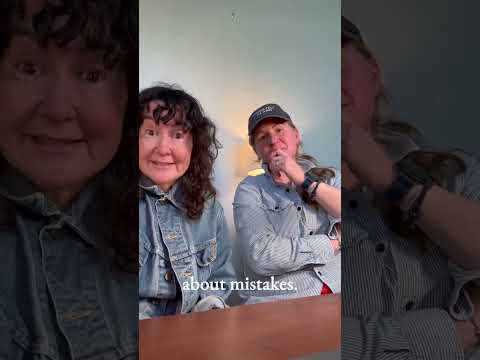
An Artist Became a Private Investigator. Then the State Investigated Her. (with Julia Weist)
Episode Description
A few years ago, artist Julia Weist - whose work is in museums like the MoMA, the Met and LACMA - decided to become a licensed private investigator. She began making artworks about the tools and systems she had access to as a PI. But when it came time to renew her license, she realized she herself was the subject of an investigation.
Julia Weist's website is: https://work.deaccession.org/
This is the latest video in our new series, What Happened Next? Follow us for more videos coming soon.
Get even more from us by joining Criminal Plus on Patreon: https://www.patreon.com/Criminal
Chapters: 0:00 Intro 0:55 Why become a private investigator? 2:57 How do you get a PI license? 6:27 Exploring the tools available to private investigators 9:00 What can you learn by inputting a license plate number? 10:30 A shocking amount of private information 13:43 What kind of art can you make from these systems? 15:58 Surprising searches - like astrological signs 17:50 What happened when Julia renewed her PI license 21:30 A conversation - or interrogation 25:30 A missing recording 28:16 Was Julia's license renewed?
Listen to every episode of Criminal on your favorite podcast platform: https://pod.link/809264944
Follow Criminal on Instagram (https://www.instagram.com/criminal_podcast), Facebook (https://www.facebook.com/thisiscriminal), and TikTok (https://www.tiktok.com/@criminal_podcast)
Sign up for our newsletter: https://thisiscriminal.com/newsletter
We also make the podcasts This is Love (https://pod.link/1337100398) and Phoebe Reads a Mystery (https://pod.link/1503921457).
Check out our online shop: https://shop.thisiscriminal.com/
Read the full transcriptHide the full transcript
- I went to this address that they had given me, and they took me up to the 11th floor, and um ushered me into this
- windowless conference room, and then I realized something else was going on that was not what I had anticipated.
- [music] [music] >> I'm Phoebe Judge, and this is what happened next. Today I'm talking with
- Julia Weist. She's an artist, and in 2022 she became a private investigator. Today she's the only licensed private
- investigator in America whose work is in the permanent collection of the Museum of Modern Art. Julia, thanks for being
- here. >> Thank you for having me. >> So let's go back a couple of years. Um how did you get to this
- point of wanting to become a private investigator? >> So for many years in my artistic career
- I made work with libraries and archives. So essentially information that was in the public
- record and was offered to and made accessible to the public through collections of public
- institutions. Um in the course of that work I made several projects that had kind of
- scoops, but they were historical scoops. So something maybe that I found about a time period or um something even
- linguistic or about um political or historical figure that maybe hadn't been presented prior to my presentation of it
- in in a work. In the course of exhibiting those pieces people began saying to me things like it's like
- you're an investigative reporter, but it's coming out as an artwork instead of an article.
- And it sort of caught my attention, but I didn't connect the dots until someone explicitly said to me you would
- make a really good private investigator. And >> What a compliment. >> I mean, it sort of I didn't even take it
- as a compliment as more a prompt of what does that mean? Like who are private investigators? How does one become one?
- What does the credential signify? Um, and what kind of access does it provide you? I had no answers to any of those
- questions, so I sought out the answers. And it turned out that um it's there's a
- very straightforward process, at least in New York State. It does vary from state to state, but
- I'm I'm based in New York. And the process, although rigorous, was very clear. You take an exam, you uh do
- a fingerprint-based background check, you submit an application, you provide a lot of documentation about your work,
- and then they decide if they feel that you've met the threshold and deserve uh to be
- credentialed as a PI. And so I began that process. >> What type of a of a test did you have to
- take in did you study before did was there a book? >> I did study. Yes. The test is basically
- on the licensing law that will apply to you if you attain the license. Um, so it's a PDF essentially that the state uh
- provides that obviously it's important for you to know the information, so it's good that there's this test. But it was
- very much like I had a flashback to being in school because it was a Scantron, you know, with the little
- uh the little bubbles and the number two pencil. And I took it in a government building in Albany at a little desk in a
- room full of lots of other people taking licensing exams, not necessarily just for private investigation licenses. So
- there were people who were there potentially getting their real estate license or their notary public license
- or their home inspector license. So it was a big group of people and we all had these individual you know, specific to
- our profession uh tests and our number two pencils. >> And you said that one of the the parts
- of the application you had to give your credentials and did you have to kind of explain what you were hoping to do with
- this license? Was that part of the decision of whether you would be granted it? >> It does not The application does not ask
- for motive or plans or intent. It does paint a picture of who you are as a professional because many parts of the
- application ask for documentation about the work you've already done and for whom,
- what your job duties were, how many hours you worked, the manner in which you were paid for this work and by
- whom. And then there is a section for people to affirm those statements. So there's both
- character witnesses as well as they call it like experience verification other than employer. So in
- my case, it wasn't like I was on staff at another PI firm training underneath a licensed investigator. I was an artist
- who was who was out in the world getting commissions and doing projects that involved extensive investigative
- research. And so people who worked with me on those projects were the ones that signed off on that affirmation.
- >> I wonder what the woman or man at the office thought when your application came over their desk. If they looked at
- each other and thought, what's she going to do with You know, Hey Bob, this is the oddest one I've
- ever seen. >> Yeah, I mean, from that perspective, I actually did anticipate that I would
- need to be initially rejected for the application and they go through their appeal process, which is also very
- clearly defined and would allow me to kind of explain some of the nuance that they were seeing, because I assumed my
- application did look very different than the other ones that they were receiving
- from folks who were police officers for 20 years and then retired and went private. You know,
- those are [clears throat] some of the typical applicants. So yeah, I was anticipating a kind of funny
- conversation or uh on their end or some kind of follow-up where I would have the
- chance to explain in more detail what these projects were. Um but in fact I just opened the mail one day
- from in an envelope that had the return address of the Department of State and there was my
- private investigator license that was good for a two-year term. >> What was the first thing you did when
- you got the license? >> The first thing I did was I signed up for free trials, sort of exploratory
- access to a whole variety of different databases that are created and marketed to investigators. So these are really
- powerful digital tools where you can look up an individual or a car's license plate,
- any number of other searches and receive information in return that's not typically accessible to a you know a
- private citizen. I should say here that there are uh regulations around when you can do
- those searches. There's a list of legally permissible use cases. So for example I can't leave our interview and and go
- look up your social security number. Although I have the technical ability to do that legally I'm not allowed to
- unless it met one of these uh purposes that have been defined as like uh an allowed use case for that search.
- >> Tell tell me what would be an allowed use? So that would allow you to go and look up
- my social security number? >> Sure. So, if I was representing someone who was involved in litigation that you
- were also involved in, um, if you had consented to a background check as part of an employment matter or housing
- matter, um, matters related to fraud or insurance investigations like, not necessarily in a criminal context but
- let's say, like a, an insurer thinks that you submitted a claim for your car insurance from a fender bender and
- they're not sure if it's really a true claim. Um things related to estates and financial
- relationships. So there's a broad range, but the thing in my work that I really focused on is there certain searches
- that are not governed by these regulations. So for example, the license plate search that I mentioned is
- actually not currently governed by federal law. So I don't need a legally permissible purpose. If I saw you
- somehow leaving your you know the recording studio in a car and I wrote down your license plate,
- I could do that with full freedom in these systems. And that for example was one of the things I identified
- as potentially an issue where there's just um a great ability to access personal information without any kind of
- oversight. >> So legally you could put in my license plate or anyone's and it would and and
- what with your license on this database for private investigators uh what would come up just with my license plate
- number? >> Yeah, so it's um a system that's both visual and textual. So I would see
- photographic images of where your car had been captured by the surveillance system that fuels this database company,
- which we can talk about because it's very detailed and I learned sort of how this system operates in terms of
- aggregating those images. Um but for the last 36 months on average, sometimes it
- goes back longer than that. And then with that picture proof is what they call it. Uh
- there's a lot of metadata. So for example, this is a location, you know longitude and latitude or geographic
- address where this car is frequently seen at night or during the day between the hours of 9:00 to 5:00. So a an
- attempt at a kind of metadata analysis that would allow the user to see, okay, this is probably where this person works
- between 9:00 and 5:00 or potentially where this person lives because it's where their car is often parked
- overnight. And then on the police side of this tool, which private investigators don't
- have access to, there's sort of other layers. For example, algorithmic policing that allows um
- assumptions to be made and then presumably further investigated where it would say,
- you know, this car has been spotted with this other car that was involved in some
- kind of alleged crime or was part of some conviction. So maybe these people are associates.
- >> Were you kind of shocked by just how much information you had access to? >> I was definitely shocked. In fact, the
- thing that really was immediately apparent in the license plate system and that I made I wanted to
- make a lot of artwork about was that there was the ability to do textual searches beyond a license plate. So the
- input is set up. So it has the ma I think maximum characters maybe was 10 characters and
- then you would identify a state that the license plate was issued from. But if you entered other text that was 10
- characters or less, you could use the system to do a search on that text in public space.
- And what it would return was not just presumably what the tool was designed for, a license plate hit on that text
- string or text and numbers, you know, often in the case of a license plate, but anywhere that text was seen by the
- surveillance system. So for example, bumper stickers, uh lawn signs in front of houses,
- text on clothing when people are sort of walking down the sidewalk and they're captured by these photographs,
- any number of things, advertisements, um even handwriting. Like I found I did a search and I found all of these
- lost cat signs just by searching the word lost because they were on, you know, telephone poles and they were
- caught by the camera. So we have tools um that are in the public realm, like Google Street View, that
- would allow you to search an address and see a picture of that location over time.
- What those tools don't have is the ability to free text search in public space and see returns for that query. So
- for example, if you were to search pro uh abortion terminology, you could do that and see registered
- vehicles, registered homes uh that would be or again, someone wearing a tea a pro uh
- pro uh Planned Parenthood t-shirt, let's say, walking down the street. Um and in Google Street View, um those
- sensitive pieces of identifying information are blurred out. So people's faces, um actually license plates are
- blurred out as well. Um and this seems quite terrifying as a tool for being able to locate
- ideological affiliations in public space. Now, some people may say if you're advertising your ideas on a bumper
- sticker or on a lawn sign in front of your house or on clothing, you're asking to be identified. Um I don't know that
- most people who do that understand that this type of surveillance is happening and stored in such a way that it could
- be um called back uh after a great period of time. So those are some of the things that I was hoping
- to um make visible in the artworks that I created from these tools. >> What what Tell me some more about about
- the artwork. You You mentioned license plates. What what were you doing with this information that you were
- gathering? >> So one series that's quite easy to explain without seeing it visually was
- that I basically used the license plate system and the cameras that operate within it as if
- they were cameras I used myself as an artist. I wasn't pressing the shutter button to take the image, but I was
- staging scenes for the gaze of those cameras so that they would take the photo and I could retrieve it from the
- system, but without actually using the camera myself. So I'll give you an example.
- So I figured out a location that was heavily surveilled by this license plate lookup tool.
- I sat on the curb outside of the location, sort of headquarters of this um the vehicles actually because they're
- tow trucks mounted with cameras that are participating in this network. And I sat on the curb and and waited for
- the tow truck to drive by and or several of them they which they did over many hours.
- I ran the license plate of the car I was sitting next to and I uh retrieved the images they took of me
- and I presented it as a self-portrait. So that's not a traditional self-portrait in the sense that I put a
- camera on a tripod, I sat down in front of it, I had one of those, you know, buttons to allow me to take the picture
- from 20 ft away. Um but in every other way it was equivalent. I thought about the
- backdrop, I thought about where to position my body, I thought about the time of day and the season and I um
- orchestrated this self-portrait that was then captured by the surveillance network.
- Sometimes I would put objects, text signs, um arrangements on cars that would also be
- captured in this way. And then I would run the car's license plate to get the image of the thing I had arranged next
- to the car or on the car, and those became photographs that I exhibited in galleries and museums.
- >> What were some kinds of searches that you found searches that you could do that you
- found most surprising that you didn't know going into this? So you mentioned you could put in lost and cat things
- would come up, but but what else would surprise someone? >> So the things that I found most
- surprising were these searches that cast a net that seemed so wide that most any
- average person would say it was an overreach because we have, as I mentioned, these permissible purposes
- when you can do a search. But then there were these things called wildcard searches, where you had a legally
- permissible purpose because you knew one person that was involved in your use case that met a certain criteria, but
- the tool would allow you to see everyone that met that criteria. So, for example,
- you could do a search for astrological signs. So, for example, I'm an Aries. I could do a search for every Aries in a
- geographic region because I have the legally permissible purpose of consenting to a search on myself, and I
- am an Aries in that geographic region. So, I'm looking for myself. But in looking for myself, I get
- everyone else who also meets that criteria. And you see, again, date of birth, partial social security number,
- address history for the last 30 years, a ton of information about those people that have absolutely no relation to your
- permissible search. Um, if you do a basic search as well, you get, you know, without that kind of wildcard
- technology, you get information about landlords, neighbors, associates, you know, people who are in the orbit of the
- subject of your search, and they are totally outside of your use case. They just happen to have like lived above
- this person, and what you can see about them is a phenomenal amount of personal data that theoretically shouldn't be
- allowed, but is returned in your results. >> In 2024, you applied to have your license renewed. What happened?
- >> Yes. So, it's a two-year term, as I mentioned, and I was interested in continuing the work I
- had done. So, I submitted the paperwork that was required for the renewal. I hadn't heard anything, um,
- immediately. Most of the correspondence related to a license happens through the
- mail. So, I sort of keeping an eye on my mailbox. But I got a phone call um from the
- Department of State that said there were some loose ends related to the renewal.
- There's a lot of paperwork as I mentioned before. So it's not uncommon that you're like you need to sign
- something, you need to submit a notarized paper from someone that um is issuing a
- bond for your PI firm. You know, there's lots and lots of kind of detailed things that are are
- always in the mix. So I received a call that basically there were some of these loose ends and I needed to come to this
- building again in Albany and take care of them. Um so I assumed it would be something of
- of that nature like signing a piece of paper or something of that of that kind. Um but I I went to this address that
- they had given me and they took me up to the 11th floor and um ushered me into this windowless conference room and then
- I realized something else was going on that was not what I had anticipated. So in that room was the deputy chief
- investigator for New York State and also present in the meeting was New York's supervising attorney and a senior
- investigator for the Division of Licensing Services. Um, and what took place was a really
- fascinating, um, really complicated interrogation where they, uh, asked me questions about the process
- of attaining the license and what I did with it as part of a, um, administrative investigation
- as to if I was ever really qualified for this to begin with, if there was any misuse of the license which would
- entail criminal liability for me, um, and then if I deserved a renewal. >> Had had some of your
- artwork come out in so it was already out there some of your work. Did did do you think that they knew that you'd
- been kind of critical or were were making some sort of comment or statement on the way the system operates? Um did
- you get that sense at all in in in their line of questioning? >> Yes, it was very clear that they were
- aware that I was critical of the field in general and specifically in the license and the regulation that
- surrounds these tools we've been discussing. Uh because I wrote an op-ed calling for more regulation that was
- published in the Albany Times Union. So the reason I published it in that particular paper was because in New York
- that's where laws are made. That's where our state capital is. That's where all state legislature
- um activities take place. So if somebody were to issue a um a bill to bring to the floor to potentially make some of
- these tools illegal within the city of New York, that's where it would happen. So I wrote this op-ed um with a a real
- focus on the automatic license plate readers that allows PIs to look up cars um saying that there needed to be some
- scrutiny as to whether or not we were comfortable with the fact this was unregulated in New York. So I was aware
- that they had read this op-ed because they asked me a lot of questions about it. So from that perspective I assumed
- they understood my my criticality. >> What was the tone of the conversation? Was it a fun conversation? Was it
- [laughter] a light conversation? >> Uh well I should say that I have actually made this conversation into a
- play. Um so if people who are listening are interested there is an opportunity to experience
- this conversation. Um but it's it really ranged from professh I was always very professional
- um and a bit contained compared to maybe the sort of stereotypical idea of somebody, you know, banging a fist on a
- table and saying, where were you on this date, right? It wasn't um it wasn't pulled straight from a Law and Order
- episode, but it was um it was both precise and wide ranging in terms of the conversation. We had both
- kind of big picture conversations around for example, what is the difference uh this syntactically? What is the
- difference in the definition between the terms research and investigation, which
- I would classify as a really like kind of intellectual broad-ranging discussion to really specific queries like
- you know, what was your job title for this artwork payment you received from this gallery on this date? Like how did
- they understand your role? How did they put down on their tax forms, you know, who you were and what your relationship
- was? So it was a real it was a real wide range. >> Were you allowed to ask them questions
- or were you just answering? >> So I asked them two questions. Both were the same question, but I asked it at the
- beginning and at the end, which was how do I receive a copy of the recording you're making of this interrogation?
- Because in my mind, although obviously I took it very seriously and I understood the personal
- risk involved in this exchange, I also was seeing it as an artwork. I thought I would take the recording that they were
- making and put it in a museum, uh, as part of an exhibition that I would, you know, participate in at some point in
- the future, because it was such an interesting conversation around all these ideas that I had been
- exploring in the work for years at that point. Um and because it was so nuanced,
- it was like the range that we discussed from things that are really difficult for anyone to answer with certainty like
- what is the role of an artist? How do people understand what you're doing and what its purpose is? To these also kind
- of really interesting looks at the mechanisms of the art world. How are artists paid and by whom and for what?
- So, I asked them, as when I first sat down, "How do I get the copy of this recording?" And then at the end um,
- which I'm glad you asked, because it's worth mentioning that when I did exercise the Freedom of Information Law
- rights that I had to access that recording, uh the state did inform me that they couldn't find it.
- So I did not get a copy of the recording, but I had recorded the audio on my cell phone when I sat down I had
- pressed record, uh which is totally legal in New York State uh in terms of privacy laws. California, for example, I
- would have um had to expressly say, you know, potentially I'm pressing record, but not
- in New York. But also maybe not even in California because they had told me they
- were making a recording. Everyone was informed recording was happening because they were making recording
- uh which was what I was had been trying to access. >> So when you when you asked that question
- at the beginning, what was their answer? >> They said so at the beginning they said
- we can give you instructions for how to go about obtaining that information. Uh and then that's why I asked again at the
- end I said okay I'm ready for that information about how to go about obtaining this recording and at that
- time they said you can do a Freedom of Information Law request for your entire case file. I did get my case file. It
- just was missing this recording and it included um the research they had done prior to this exchange. Um it included
- you know printouts from the internet where they were monitoring my activities as an artist and what I was doing with
- the license. There's about 250 pages, but there were a lot of repeats. So like there were whole sections that were
- repeated. So it wasn't 250 unique pages, but it was really interesting to even just aesthetically see
- kind of the nature and texture of the type of material they were producing about me and this situation because of
- course I was producing information on my end uh as part of my art making process.
- >> Who was the better investigator? >> Um that's a good question. I mean I'll say
- that they um they did drop the case. They weren't able to make the case that they were hoping to make. Now that's not
- to say it's because they weren't a good investigator. I think it was because I had never done anything wrong to begin
- with. Um but it's interesting. I mean I really think of us as collaborating because we
- are both participating in a close observation of the license, who should have access,
- what I did with it, and how that fits in their understanding of what it's role is
- in our society. And together we're sort of making meaning around those questions.
- Even though this was a unexpected turn of events in my life, I also think it was
- really fascinating and allowed me to continue to go deeper into these urgent questions that I was hoping to ask
- around these topics. >> That must be have been something for them to find out if they do that the
- play and they Well, we had we got her in here to ask what she was doing and now she's doing
- Now she's doing it to us. >> I mean, if I were them, I would be excited. I mean, I sent um I sent them
- letters letting them know this was happening. Unfortunately, the letter I sent to the Department of State was
- returned to me um because it included an artwork and by according to their Office
- of General Counsel by state ethics laws, they can't accept artwork because it has
- value from someone who they previously investigated. But one of the investigators actually retired after um
- my case. And so as a private citizen, it wasn't the same issue. I did invite them
- and said, you know, I'd love to talk to you about the process of casting you, finding actors who could embody you as
- part of this project. Um you know, if I if that were me, I would just be so curious. I would I would want to come
- and I would want to be involved. >> Did you find out in in that meeting that your license would be renewed?
- >> So they left it open-ended. They said basically that they needed to conclude their investigation before they could
- make that determination. And as I mentioned, they did keep it open for about nine months. Um eventually they
- renewed it and I am currently licensed through 2027. >> Were you surprised that they renewed it?
- >> I mean, I wasn't surprised because I from the very beginning thought that my work fully met the criteria for
- professional experience. It was very different than the typical applicant, but that I had done um the exact type of
- work that they were looking for just with a very different spirit. Like I was doing this work not to incarcerate
- people, but to make artworks that would circulate publicly and you know, ask and present questions to a
- public audience. Um so I thought I was qualified to begin with, although understanding I would
- probably have to do some explanation. And then I knew that I had never violated the terms of the license
- because actually the artwork was designed to show the rules so that the public could be aware of
- these legally permissible purposes, things that fell outside of them as being unregulated. Like I was so
- so heavily uh embedded into the details, sub statutes of all of these uh laws so that I could present them in
- the artwork that I knew that I had followed them to a T because that was the whole point. So I wasn't necessarily
- concerned that there would be some, you know, criminal uh outcome for this conversation we had.
- And I figured that artists are so strange and so outside of our normal types of character uh categorizations
- for workers that they would have a hard time saying authoritatively that what I did was different than what a detective
- does. Um so the outcome was not unexpected. >> Do you think you'll renew it again?
- >> It's so funny. People always ask me this question and I guess my answer always is
- we'll have to see where we are in 2027. [laughter] I mean, if there's if there's
- more to be done, I will renew it. And we'll see what happens at that time, you know? Every time you go for a renewal,
- there's a chance that they that you get denied. Um, but I have continued to follow every
- rule and statute uh and make that part of the work, and I continue to do activities that again are very similar
- to that of private investigators, just with a very different spirit. So I don't see why I wouldn't be
- renewed. Uh and if it makes sense in 2027, I will definitely do that. >> And and for the record, you are not
- going to go right now and look me up, so we don't have to worry about that. You could, but you would never do that.
- >> I I could again if I wanted to break the rules, but the project is about following them. Um, so I will not do
- that. And of course, I can't you know, I can't see your license plate cuz you've
- got your blinds drawn behind you. [laughter] >> Um, Julia, thank you very much for being
- here. >> Yeah, thank you so much for having me. [music] [music]
Brief Summary
Artist Julia Weist used her New York PI license to make surveillance art, then faced a state investigation when she applied to renew it.
Key points
- Searching Public Space for Words. A license-plate system could search text captured by surveillance cameras—not just plates, but bumper stickers, signs, clothing, and even lost-cat notices. Julia saw the potential for locating ideological affiliations in
- A Self-Portrait Made by Surveillance Cameras. Julia staged herself for cameras mounted on tow trucks, then retrieved the images through a license-plate database. She exhibited the resulting surveillance photographs as self-portraits.
- Searching for Every Aries. A wildcard search could use one legitimate search as a pretext to reveal information about everyone matching a criterion, including their birth dates, partial Social Security numbers, and address histories.
- The License Renewal Becomes an Interrogation. Julia expected to handle routine paperwork in Albany, but instead faced senior state officials questioning whether she had been qualified to hold her PI license and whether she had misused it.
- The State Lost the Recording. Julia requested the recording of her interrogation, but the state said it couldn't find it. Her case file included about 250 pages of research and monitoring instead.
- The Investigator Becomes the Artwork. Julia describes the investigation as an unexpected collaboration that let her keep probing who should have access to a PI license and what it means. She even turned the conversation into a play.
Episode highlights
- Searching Public Space for WordsA license-plate system could search text captured by surveillance cameras—not just plates, but bumper stickers, signs, clothing, and even lost-cat notices. Julia saw the potential for locating ideological affiliations in10:49Nov 24, 2026
- A Self-Portrait Made by Surveillance CamerasJulia staged herself for cameras mounted on tow trucks, then retrieved the images through a license-plate database. She exhibited the resulting surveillance photographs as self-portraits.“I presented it as a self-portrait.”14:17Nov 24, 2026
- Searching for Every AriesA wildcard search could use one legitimate search as a pretext to reveal information about everyone matching a criterion, including their birth dates, partial Social Security numbers, and address histories.“I could do a search for every Aries in a geographic region.”16:39Nov 24, 2026
- The License Renewal Becomes an InterrogationJulia expected to handle routine paperwork in Albany, but instead faced senior state officials questioning whether she had been qualified to hold her PI license and whether she had misused it.“I realized something else was going on that was not what I had anticipated.”18:58Nov 24, 2026
- The State Lost the RecordingJulia requested the recording of her interrogation, but the state said it couldn't find it. Her case file included about 250 pages of research and monitoring instead.“They couldn't find it.”24:24Nov 24, 2026
- The Investigator Becomes the ArtworkJulia describes the investigation as an unexpected collaboration that let her keep probing who should have access to a PI license and what it means. She even turned the conversation into a play.“I really think of us as collaborating.”26:30Nov 24, 2026
- Her License Was RenewedAfter keeping the investigation open for about nine months, the state renewed Julia's license through 2027. She says her work followed the rules, even though its purpose was to make art rather than incarcerate people.“I am currently licensed through 2027.”28:27Nov 24, 2026
- A Different SpiritJulia says she continues doing work similar to that of private investigators, but with a different purpose. She plans to decide in 2027 whether to renew again.“Just with a very different spirit.”30:51Nov 24, 2026