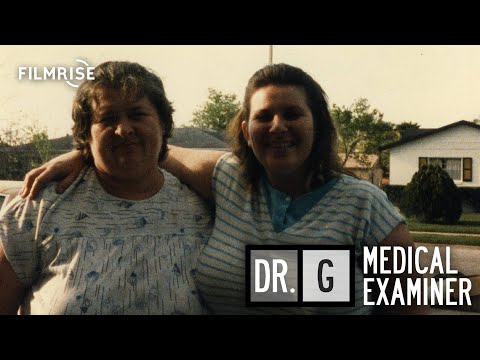
Women Behind Bars in HD - Season 3, Episode 5 - Teresa and Jennifer - Full Episode
Episode Description
One woman killed, dismembered, and burned a 19-year-old boy while another woman shot her husband to death while having an argument with him.
Read the full transcriptHide the full transcript
- NARRATOR: On this episode of "Women Behind Bars," Dion Harris is convicted in the grisly murder
- and dismemberment a 20-year-old man. I was facing the front, and the gun went off again.
- And Rogers said, I just blew his F-ing brains out. I cut his chest open, just take the blade
- and cut through the sternum, stuck my hand in there and pulled his heart out. Then Jennifer Freels claims she shot and killed
- her husband in self-defense. 911 DISPATCHER (ON RECORDING): 911. JENNIFER (ON RECORDER): There's been a shooting,
- and I need someone here right away. 911 DISPATCHER (ON RECORDING): Has anyone been hit?
- JENNIFER (ON RECORDING): Yes. Jenny, she did have the personality of a person that you don't screw with.
- And if you did, don't turnaround because she's going nail ya. NARRATOR: Two women, two brutal crimes.
- These are the stories of Deion Harris and Jennifer Freels. [THEME MUSIC] On the afternoon of July 30, 1993,
- officers from the Tennessee Bureau of Investigations found the scorched and mutilated corpse
- of 19-year-old Dennis Brooks, Jr. still smoldering in his truck. We've never had anything like that to happen here before.
- NARRATOR: Detectives questioned 22-year-old Deion Harris and her boyfriend Walter Smothers,
- along with their neighbor Stacy Ramsey. Deion confessed, but placed all the blame on Walter.
- All three were arrested for the murder and taken into custody. She was saying that, uh, I held a gun on her
- and I forced her to do this, which wasn't true. As soon as he put a bullet in this boy's head,
- if he'd done it to him, somebody he didn't even know, he would do it to me. JIM CHANDLER: She admitted that she stabbed the body once
- because Smothers told her to. And the DA asked her, if he told you to stab your kids,
- would you stab them? Well, I-- you know. NARRATOR: Was Deion Harris a willing accomplice
- to a gruesome crime? Or was she forced to participate because she feared for her life?
- Teresa Deion Smith Harris, known to everyone as Deion, grew up in a small town in Western Tennessee.
- Deion's mother struggled with chronic health issues, so the little girl spent much of her time with her grandmother.
- DEION: My grandmother was-- she was a very nice lady. She had a strawberry patch, and we
- would pick strawberries and eat the strawberries right as we were picking them. NARRATOR: Deion was the middle of three children,
- and her life revolved around family, school, and church. BILLY SMITH: She played softball, and I was her coach,
- and we had a good time. In seventh grade, Deion's world fell apart when her beloved grandmother
- was killed in a car accident. She changed during that time. She just wasn't the same person.
- After that, it's like, I didn't have that safety anymore. And I just-- I had to go my own way.
- NARRATOR: Searching to fill the emotional void left by the loss of her grandmother, the 12-year-old began to spend
- time at her older sister's. When I was over at my sister's and her husband's house,
- there was a lot of drinking and drugs. BILLY SMITH: I did not know Deion was drinking with her older sister.
- And if I'd a knew it, I would put a stop to it. DEION: I would get so drunk that I would go into a blackout.
- And when I did, my sister and her husband would let these men have sex with me. I remember waking up and someone on top of me.
- NARRATOR: Deion fell deeper and deeper into alcohol and drug abuse, telling no one about the alleged sexual assaults.
- DEION: I felt like that if no one stands up for you, then evidently, I'm the one who's doing something wrong.
- I still went to my sister's even after all that. NARRATOR: When Deion turned 15, her parents
- placed her in rehab. In this therapeutic setting, she was able to discuss the years
- of alleged sexual abuse. WILMA: It was horrible. I cried every day for a year. NARRATOR: After hearing their daughter's revelations,
- Wilma questioned her older daughter and son-in-law. I confronted the people that had sex with Deion.
- And they said, no, they did not. I thought she would press charges, but that's all she did.
- If things like that happened, you just go on. And you don't talk about them. TIM: For Deion's parents, the culture
- here seems to be that it is most important to fit in. You never confront family members
- because you want to get along. NARRATOR: Deion graduated from rehab clean and sober.
- Feeling betrayed, she soon slipped back into her old ways. DEION: Back then, I could see myself doing
- drugs the rest of my life. No good for anybody. NARRATOR: Two years later at age 17,
- Deion's self-destructive lifestyle led to a pregnancy. When I had my son, the first night I came home,
- I left Drew there. I was out partying. WILMA: I'm not saying she was a perfect mom.
- She was a young mom. DEION: Having a child after you have slept with so many people,
- they're going to look at that child and say that her mother was a whore. My son didn't have a chance.
- NARRATOR: The high schooler managed to graduate, but quickly became pregnant with her second child,
- a little girl named Savannah. She married the father, Jimmy Harris, and they attempted to create a home for the children.
- The marriage to Jim didn't last. And so I was living there in the house by myself with my two kids.
- NARRATOR: During this vulnerable time, the 22-year-old ran into 25-year-old Walter Smothers,
- a petty thief at a local bar. Despite Walter's reputation as a tough guy, Deion quickly let him move in with her.
- I even went over there one night, and I made Walter leave. But he came back. She wasn't going to stay there by herself.
- NARRATOR: Walter and Deion's relationship was volatile from the start. One time right after we had had sex,
- that he went and got a knife, and he started cutting his chest. And he told me to do it, but I couldn't do it.
- And so he put the knife in my hand, held my hand and made me cut. WALTER: We was both feeding off each other's dark side.
- And there's nobody to keep in check. My entire life of growing up, men abused me,
- and I was codependent on men. I did whatever they told me to do. NARRATOR: At what was to be their last party,
- the couple was joined by their neighbor, 22-year-old Stacy Ramsey. DEION: We were drinking tequila, and I think
- some other kind of whiskey. And we were taking Valiums. WALTER: Everybody would do a shot chaser with beer.
- Did it till the whole bottle was empty. I was so drunk and one of my ex-boyfriends,
- if you want to call it an ex-boyfriend, a guy I had sex with called. JIM CHANDLER: When Walter Smothers gets on the phone,
- they curse one another and threaten one another. And, uh, the decision's made to fight.
- Stacy said he had a shotgun over there. We'll take it with us just in case. NARRATOR: Armed with Stacy's shotgun,
- the three set off on Highway 114 in search of Deion Harris' ex, David Hampton. WALTER: As we enter, I think Deion
- realizes that this is getting to be a serious situation. NARRATOR: Deion claimed she was too drunk to recall what took
- place, but the three then drove aimlessly around the dark country roads getting more and more intoxicated.
- It might have been better if we smashed into a bridge, you know, and maybe been better off than what
- happened afterwards. NARRATOR: When "Women Behind Bars" continues-- DEION: It's like he was playing some kind of game.
- Then you have to play the game, too, or something bad's going to happen. NARRATOR: On July 29, 1993, 22-year-old Deion Harris
- and her new boyfriend, Walter Smothers, were drinking and partying with neighbor Stacy Ramsey.
- After Walter intercepted a telephone call from one of Deion's former lovers, Walter became enraged
- and the three took off with Stacy's shotgun to confront Deion's ex. After hours of driving, Walter's truck broke down on Highway 114
- just after midnight. According to Smothers, they decided they were going to hijack the next vehicle that came along.
- And he also said that they figured they'd probably have to kill whoever was driving.
- NARRATOR: Deion claimed she never knew that murder was part of the plan. DEION: Walter had said, you're a pretty girl,
- stop and get us a ride. I'm like, OK. NARRATOR: At 12:30 AM, a blue truck did stop for Deion.
- The driver was Dennis Brooks, Jr., a 19-year-old honor student and freshman at Jackson State College.
- Dennis was a very dependable young man. You could take his word to the bank. His last two years, he had planned to go
- to Memphis State University. NARRATOR: Dennis was coming off his shift at a local sandwich shop.
- JIM CHANDLER: She got the truck stopped, and then they ran around the truck screaming at the boy
- and pulled a gun on him. WALTER: As soon as he stops, rolled down the window, I rolled out from behind the vehicle with a shotgun,
- and Stacy comes flying out from the same side of the road I'm on. And I put the gun on him and sat there
- with the window rolled down. Don't move, don't move, get out or we're going to shoot.
- Dennis is hollering all the time, don't shoot, don't shoot. Me, I was running up.
- He was down on the ground. I just started. Slapping him in the head, telling him to shut up,
- shut up. I was acting like I was hitting the boy so it would be OK for me. It's a sick way of thinking.
- But I yelled at the boy telling him to shut up, because Walter was telling him to shut up.
- NARRATOR: Dennis Brooks was forced to lie in the bed of its hijacked truck. Seconds later, he was critically injured by a shot in the hip.
- Walter alleges that both he and Deion were holding the gun when it went off. She denies having any part in the shooting.
- Stacy was forward and I was forward. And the gun went off. I turned around, like what the-- happened.
- And Walter's like, I slid and fell and the gun went off. With pellets piercing his liver, intestines, and iliac artery,
- Dennis began to scream in agony. He begged his captors to take him to a hospital.
- DEION: In my mind, I'm thinking it was an accident. He seriously going to take him to the hospital.
- I told him to be calm, be still, you know, we're going to take you to a hospital.
- You know, anything just to keep him there. JIM CHANDLER: As they got closer to town,
- there were street lights showed up, and victim, apparently, the victim thought they might be getting into a more populated place
- and began to scream more. So at that point, Smothers stuck the shotgun under his chin
- here and blasted him. DEION: I was facing the front again, and Stacy, of course,
- was driving. And the gun went off again. And Walter said, I just blew his F-ing brains out.
- That stopped all of his resisting or trying to get away. I was thinking we were taking him to the hospital.
- I just turned my head and looked at Stacy. We didn't say anything. It was just like a stare.
- NARRATOR: The three sped through the night with the corpse of Dennis Brooks, Jr. in the back
- of the stolen pickup. A patrol officer saw them run a red light and attempted to pull them over.
- I'm glad the officer lost us because my whole plans was whenever he walked up to the truck
- that I was going to shoot him. NARRATOR: After evading the police, the three returned to Deion's house
- where Walter turned his attention to Dennis' lifeless body. I thought, well, we've got a corpse here,
- so time for experimentation. So, I popped him in the head a few times with a knife to see how hard it, you know,
- how hard it is to stab somebody in the head. I knew that if Walter got the least little inclination
- that we were scared, or we might tell, I wouldn't be here today. It's like he was playing in some kind of game.
- You have to play the game, too, or something bad's going to happen. NARRATOR: They gathered several knives, an axe,
- and a gallon of gasoline. Deion then followed Stacy and Walter in her own car as they drove Brooks' body out to an isolated
- area known as Haunted Bridge. JIM CHANDLER: They came across the bridge. They pulled in down here at the pull off.
- They removed the body from the back of the truck down to the ground. DEION: Walter was in charge.
- He was telling both Stacy and I what to do. It was like we did move until he told us to.
- WALTER: I told Stacy, well, look, we've got to cut him up, cut a leg off, while he's saying, I don't know how.
- I said, well, you cleaned a deer before, it's just common sense. NARRATOR: Walter believe Dennis would be easier to bury
- it they dismembered him. He cut off one leg with the axe, then held the gun while Stacy hacked at the boy's remaining limbs.
- Deion claimed she stood watching nearby. One of thoughts was I was just going to get rid of all three
- of them. That way, you know, they can't say nothing to nobody. If I had of said, no, then Walter would have thought
- you're not doing what you need to do. If I didn't play some part in it, then I would be like the boy.
- I wouldn't be here. JIM CHANDLER: According to Harris, Smothers then began to stab the body
- and talk to it like it was still alive. He cut the boy's penis off. NARRATOR: What happened next would lead Smothers,
- Harris, and Ramsey to be accused of ritual acts of devil worship. Yeah, I, uh, cut his chest open.
- Stabbed him here, just take the blade and run it up through there, cut through the sternum.
- Stuck my hand in there and pulled his heart out. He said you wanted the heart, didn't you?
- And I said, yes. I wasn't going to say no. I had to. I was scared, but I could not let him know that I was scared.
- And so he handed the heart to me. I mean, it was just pure silence while this was going on.
- So I give her the heart. It's put her lips and it's held there for several seconds.
- And she passes it to me. I stick it to my mouth, more like a kiss or something. I just stuck it to my lips and took it away.
- NARRATOR: Walter then passed the heart to Stacy. WALTER: Then I handed it to him, and I said you've got to do it.
- Everybody else done it. You couldn't stand on the outside. It was a terrible and serious thing we was doing,
- so everybody had to participate. So he takes it and sticks it in his mouth. NARRATOR: Two hours after murdering 19-year-old college
- freshman, Dennis Brooks, Walter, Deion, and Stacy piled their victim's remains into this truck
- and drove it to a nearby field. The doused the corpse in gasoline and set it a light,
- then headed back to Dion's house. DEION: I did go to sleep, but I remember laying there
- awake for a long, long time. I was just scared. I was scared to death. NARRATOR: When "Women Behind Bars" continues--
- DEION: I remember Gus Radford looking at me and saying, do you think you're guilty?
- And, of course, I feel guilty. It was just a senseless-- senseless thing that happened.
- NARRATOR: And later-- 911 DISPATCHER (ON RECORDING): Has anybody been hit? JENNIFER (ON RECORDER): My husband.
- 911 DISPATCHER (ON RECORDING): Do you think he did this to himself? JENNIFER (ON RECORDER): No, I did it.
- NARRATOR: On July 30, 1993, 22-year-old Dion Harris, her boyfriend, Walter Smothers, and their neighbor, Stacy
- Ramsey, took part in the murder and mutilation of 19-year-old college freshman Dennis Brooks
- Jr. Desperate to dispose of the body the threesome stuffed the corpse into the teenager's truck
- and set it ablaze. I had a thing for fire. I burnt my house that we had. I burnt another house across the row from us.
- NARRATOR: At around the same time Dennis' family reported him missing, Stacy, Walter, and Deion were busy creating their alibi.
- We all sit-in the living room, and Walter's like, when the TBI comes, he said, you tell them that a black man in a black car
- picked us up, brought us home because Stacy's truck quit. NARRATOR: At 4:00 PM, a passerby called
- Carroll County Sheriff's Department to report a smoldering truck. The officers who converged on the crime scene
- were horrified by what they found. It was the most grisly, heinous murder that has ever, ever happened in our county
- and has not happened since. NARRATOR: It would take investigators approximately 18 hours to narrow down a list of suspects.
- The following morning, agents from the Tennessee Bureau of Investigation visited Stacy Ramsey.
- Their next stop was Deion's house. DEION: The TBI knocked on the door. Again, Walter is on top of everything.
- He runs to the door. He's in control. WALTER: I said, keep your stories straight.
- And TBI comes in, so we go and set in the room another officer comes and goes back and gets her.
- DEION: That TBI man, I told him, if he promised me that he would keep Walter away from me, that I
- would tell him everything. NARRATOR: Stacy, Walter, and Deion were arrested and charged
- with first degree murder. Deion signed a statement holding Walter entirely responsible for the murder.
- I kept my mouth shut the whole time until they showed me a statement that Deion wrote.
- NARRATOR: Walter countered by saying that all three were equally culpable. In exchange for his statement, the prosecution
- spared Walter from the death penalty and he plead guilty. You start putting it all on me, then I'm going to speak
- up and tell what the truth is. DEION: If I hadn't of been with Walter, nothing like that
- would've happened. I'm thinking, you didn't kill this boy, Deion, and I honestly thought justice would be done.
- But evidently, you don't have to kill anyone to be charged with felony murder. You just have to be there and not do anything about it.
- SHIRLEY: Most of the town thought that she was just as guilty as the other two, because she flagged the boy down.
- They thought she was-- she was one of them. NARRATOR: The prosecution questioned Deion on the stand.
- I remember Gus Radford looking at me and saying I you killed the boy, didn't you?
- And I said, no. And then he looked at me, and he said, well, do you think you're guilty?
- And, of course, I felt guilty. And it was just a senseless-- senseless thing that happened.
- And he asked me, are you guilty? And I said, yes. Because I do feel guilty. Not of murder, but for a lot of things that I didn't do.
- It's hard for anybody to understand why they all three didn't get the death penalty.
- But Dennis Brooks, Jr.'s father got on the witness stand and begged for Dion's life because of her two children.
- And I can tell you, there was not a dry eye left in that courtroom. NARRATOR: Once Deion began serving her sentence,
- she resolved to turn her life around. I was clean. I saw life in a completely different way.
- I got my job where I'm working at now, and it's been the best thing that ever happened to me.
- It helped me to be independent and I could do things my children without depending
- on men and drugs. NARRATOR: After serving six years at the Tennessee Prison for Women, Deion developed a pen pal correspondences
- with Tim McDonald, a retired airplane pilot, who was interested in her case. Three years later, the couple were married in June, 2003,
- at the prison chapel. I didn't want to marry somebody in prison but I loved her.
- She just happened to be in prison. He has made a huge impact on my life and my children.
- I was in visitation watching her deal with her children when I saw her. And I said, any woman working as hard
- as you to raise children from a prison cell deserves help. And I guess I'm it. NARRATOR: With Tim's support, Deion
- has been able to build a better life for her kids and herself behind bars. My mom has been in my life, and it almost
- feels like she's not in prison sometimes because she's so involved. I went to parenting classes here.
- I knew I could not let my daughter or my son be codependent on people like I was.
- NARRATOR: In the early years of her incarceration, Deion received a letter from Walter.
- It gave her hope of being released from prison. DEION: Walter wrote a letter, basically,
- saying I was innocent. He said something about holding the gun on us. And I'm like, please call my attorneys,
- because Walter's admitting right here that I did not kill this boy. NARRATOR: But at her appeals trial,
- Walter stated that the letter was a lie. So he could get a ride to the courthouse to break
- the monotony of prison. The judge dismissed Deion's appeal. DEION: The judge didn't care.
- Basically, he was just like, I've wasted my time. NARRATOR: Dion's husband refused to be defeated,
- has been the instigator behind many subsequent appeals. Dion's daughter, Savannah, remains a steadfast advocate
- for her mother's release. I hope that I can experience a relationship with my mother
- like outside of prison. She's made so much progress. Whether Deion gets out or does not get out,
- her life has meaning. What more important thing is there for any adult to do than raise children?
- NARRATOR: Deion is now 39 years old. She will remain in prison for the rest of her life.
- DEION: I've heard so many people. I do ask for their forgiveness. They deserve their son back, which will never happen.
- I hope and pray that they will find peace. But sorry's not good enough. It's just, I'm sorry, no.
- It's just not. NARRATOR: Next up on "Women Behind Bars," a woman fatally pulls the trigger on her husband.
- JENNIFER (ON RECORDER): He throws the knife-- He sees something and he picks it up,
- and he's going to throw it and I shoot him. I think. NARRATOR: For more information about "Women Behind Bars,"
- go to WETV.com. At 1:00 PM on November 2, 2007, Northglenn Police received a frantic 911 call from 47-year-old wife
- and mother, Jennifer Freels. 911 DISPATCHER (ON RECORDING): 911. JENNIFER (ON RECORDER): There's been a shooting.
- And I need someone here right away. 911 DISPATCHER (ON RECORDING): Has anybody been hit?
- JENNIFER (ON RECORDER): Yes. OFFICER BROWN: When I turned onto Coring Place, I then saw a female standing in the middle of the roadway
- talking on the phone. NARRATOR: Officers found the victim, 53-year-old, Roger Freels, sprawled
- in his blood-spattered basement. His wife of 13 years admitted to the shooting, but claimed it was in self-defense.
- JENNIFER (ON RECORDER): He had a very big knife. He threw it at me. All I could think about was that he was going to kill me.
- She mumbled a couple of different things about I don't know what I was doing. I don't know what I was doing.
- DA KOWERT: She felt that Roger Freels was threatening her and was going to hurt her kill her,
- so she felt that she had to shoot him. NARRATOR: But the evidence would later contradict Jennifer's story.
- DET. GESI: We would expect to find gunshot residue on that phone. But we shouldn't find any on the handle
- of the knife, unless, my belief was, is that she planted it later. And confronted with the fact that it was my belief that she
- shot Roger in the back of the head when he was holding that picture against the wall.
- I think her response was something to the effect, well, that sounds crazy. NARRATOR: Did Jennifer Freels kill
- her husband in self-defense after he came at her with a knife? Or did she shoot him in the back of the head
- in cold blood, execution style? Farmer Jennifer Freels, the second child of four,
- was a shy tomboy. She describes her mother is a sadist and her father as an alcoholic.
- She claims her parents routinely beat her and her siblings with belts and a broomstick.
- My ex-husband, Jenny's brother, told me that living in his house as a child, his parents,
- particularly his dad, was rough. They would get thrown down the stairs and that type of stuff.
- RUSSELL: There were things going on that she just could not deal with, and she did leave the house at approximately 15 years
- old and, uh, never went back. NARRATOR: After dropping out of high school, Jennifer supported herself through menial jobs.
- At 18 she got married but divorced a year later. Determined to succeed at something,
- Jennifer moved to Ogden, Utah, to train in welding. It was at her night job in a bar where she met her husband
- Russell Maffet in 1982. RUSSELL: We had a great time. We were very good friends when we were sober.
- Jenny and I did a lot of camping. We went up into the mountains, went shooting. NARRATOR: Russell was a hunter and marksman.
- He introduced Jennifer to guns and taught her to shoot. It opened a whole new world for her.
- She was just totally fascinated. I had Uzis. I had assault rifles, many, many pistols, shotguns.
- She loved them all. About the first year into the relationship, and then the alcohol took its toll.
- NARRATOR: The couple stayed together for five tumultuous years, during which time
- they both claimed the other was violent. On one occasion, Russell says the drunken
- violence climaxed when Jenny allegedly pulled out a gun. She pulled out a 38, and pointed it at me,
- and told me that, uh, you know, back off or I will shoot you. And I had no doubt in my mind that she'd have done it.
- NARRATOR: In 1987, Jennifer left Russell and moved back home to Colorado. She stopped drinking and tried to get her life on track
- earning her high school equivalency as well as a scholarship to study free engineering
- at Red Rocks Community College. TAMMIE: She was a different person. She was more conscientious.
- She was a very smart, smart woman. And I think she wanted to use that skill and use her smarts and her brains
- for something that can lead to success. NARRATOR: Jennifer went on to study mechanical engineering
- at the University of Colorado. Four months before graduating, at age 31, she got married for the third time
- to fellow engineer Roger Freels. DORONNA: Roger was a very intelligent person. He was a little shy, kind of quiet.
- TAMMIE: Jennifer and Roger appeared to have a very good relationship. They had like interests.
- They both kind of had bizarre sense of humors. They had fun together. NARRATOR: Newly married and with a good job
- as a control systems engineer, Jennifer was ready to start a family. After a difficult pregnancy, she gave birth three months
- prematurely to a little girl. Jennifer had always wanted to be a mother, but we didn't think she could because she
- had some health problems. So when she had her daughter, it was a miracle to us. DORONNA: Roger was a very devoted father,
- and he really wanted to spend time with her. TAMMIE: Jennifer was a very good mother.
- Her child was the whole world. They seemed happy and on the outside, it seemed like a perfect family.
- NARRATOR: But behind closed doors, the couple argued about the best way to raise their daughter.
- TAMMIE: Jenny was more let's redirect, not scold, and Roger was more, hey, don't throw mud at her, you know,
- and kind of yelling. DORONNA: Jenny was overprotective because she was a preemie.
- And I know at times Jenny and her daughter would sleep together just because Jenny
- worried about her so much. Her child was the whole world, and sometimes that was just a little too much for those around her.
- NARRATOR: Over the years, disagreements about child rearing became a constant source of conflict between the couple.
- Eventually, their relationship deteriorated to the point where the Freels were rarely speaking to each other.
- TAMMIE: Jenny would tell us that her and Roger didn't talk for months at a time.
- And we kind of thought it was weird. Basically, that they were mutually staying together
- for the sake of the child and the marriage was not good anymore. NARRATOR: After 13 years of marriage,
- Jennifer confronted her husband about ending the relationship. JENNIFER (ON RECORDER): I asked him for a divorce.
- And then we fought. Because if you try to talk to Roger about anything more than superficial, anything important, like our marriage
- or big stuff, if he feels threatened in any way, he just gets mad. She claims they were trying to discuss it
- and it made him very angry. JENNIFER (ON RECORDER): He was in a rage. He screams, turns red in the face.
- NARRATOR: Jennifer alleges she ran to the basement, while Roger followed threatening
- to kill her, their daughter, and then himself in a murder-suicide. She thought that Roger was going upstairs
- to get a knife to throw at her. So she went and she opened the safe that her gun
- was in and just had it ready. JENNIFER (ON RECORDER): I was scared that if I shot,
- I might miss him. All I could think about was that he was going to kill me. DET.
- GESI: She said Roger came down with what she described as a knife from the movie Halloween.
- She said that Roger threw the knife at her. And that Roger picked up a picture frame
- and that he came at her with it. NARRATOR: Jennifer claims that what happened next was purely self-defense.
- Jenny, she did have the personality of a person you don't screw with. And if you did, don't turn around,
- because she's going to nail ya. NARRATOR: When "Women Behind Bars" continues-- Roger Freels dropped like a sack of potatoes, right there
- when he was shot. NARRATOR: In the afternoon of November 2, 2007, twice divorced software engineer, Jennifer Freels,
- confronted her husband Roger about ending their marriage. According to Jennifer's statement to police,
- Roger then became enraged, grabbed a knife, and follow Jennifer to the basement.
- DA KOWERT: She felt that Roger Freels was going to hurt her or kill her. And claimed that he threw a knife at her.
- She gets scared, she gets a gun. She describes that he grabs this picture. JENNIFER (ON RECORDER): I don't know
- if he was trying to keep me from shooting him, or if he wanted to just hurt me, or if he
- wanted to knock the gun out my hand, and get the gun, and kill me. ASST. DA PILMER: And in an effort to defend herself, she shoots him.
- JENNIFER (ON RECORDER): I can see him curled up, and then I saw a tooth on the floor,
- and I tried to get a little bit closer, and I saw a puddle of blood. And I didn't know what to do.
- But I was pretty sure that he was dead, because I sat there and I-- and I looked to see of he was going to move,
- and he didn't move. I don't think he even twitched or anything. NARRATOR: Roger died instantly from a gunshot wound
- to the head. Minutes later, Jennifer called 911. 911 DISPATCHER (ON RECORDING): 911.
- JENNIFER (ON RECORDER): There's been a shooting and I need someone here right away.
- 911 DISPATCHER (ON RECORDING): Has anybody been hit? JENNIFER (ON RECORDER): Yes.
- 911 DISPATCHER (ON RECORDING): Who's been hit? JENNIFER (ON RECORDER): My husband.
- 911 DISPATCHER (ON RECORDING): All right, where is he hit? JENNIFER (ON RECORDER): In the head.
- I think. He's laying down and I think so. 911 DISPATCHER (ON RECORDING): Do you think he did this to himself?
- JENNIFER (ON RECORDER): No, I did it. NARRATOR: Jennifer was already handcuffed and in the police car when Detective Gesi arrived.
- He then entered the residence. You can see on the kitchen counter, we found a 357 Ruger revolver.
- I then went downstairs into the basement and to the left was a male, obviously dead, later to be identified as Roger
- Freels, Jennifer's husband. He was lying in kind of a fetal position, and tucked kind of between his legs was a picture frame.
- NARRATOR: The couple's daughter was given the news that her father was dead. And that her mother was in police custody.
- DET. GESI: The 11-year-old acted as you could expect. I characterize it as shock, really.
- I think she was trying to form some questions to bring some understanding to it but really couldn't.
- NARRATOR: During the interrogation, Jennifer was unable to provide clear details about what
- led up to the shooting. One of the things I was looking for was motive. The only thing she would go back to
- is that they were going to get a divorce. Try to tell me how it started, and then
- what led him to do what you said, which led you to do what you did. JENNIFER (ON RECORDER): I thought
- that Roger would try to kill me and/or kill my little girl. DET. GESI: And why would he do that today?
- When she tells me that there wasn't any prior domestic, I asked her what was it about November 2, 2007, that
- made things so different that you felt compelled to kill him, as you state, Jennifer, in self-defense?
- JENNIFER (ON RECORDER): He throws the knife. Goes looking for something. He sees something and he picks it up,
- and he's going to throw it, and I shoot him. I think. DET. GESI: What do you mean, you think?
- You know you shoot him. JENNIFER (ON RECORDER): Oh, I know. I'm not saying I didn't.
- I don't remember seeing the wound happen. It's like, it was like one minute he was there
- and the next minute he was on the ground. DET. GESI: There's quite a few officers
- that I know that couldn't make that shot. To me, that looks like a placed shot. In other words, you knew what you were aiming at.
- JENNIFER (ON RECORDER): Yeah, I was aiming at Roger. DET. GESI: Roger's head? NARRATOR: With a shaky story and no evidence
- of any prior domestic violence against Roger, police charge Jennifer with first degree murder.
- DET. GESI: It was the first day of trial that the defense stood up and said, we're going to tell you something
- that Jennifer's going to testify to that even this detective didn't know. NARRATOR: Jennifer took the stand
- and told jurors that on the day of the murder she did ask her husband for divorce.
- But she also told him that two weeks before, she had seen him inappropriately fondle
- their 11-year-old daughter. She demanded full legal custody of the child. DET. GESI: The description of this touching
- was that Roger had come up behind the 11-year-old and hugged her inappropriately.
- Even in Jennifer's testimony, she said that the 11-year-old would probably not know that it happened.
- There was no one that we could call into the courtroom who could've confirmed or denied it, because she said
- her daughter didn't know what was going on and Roger Freels is dead. Obviously, I thought it was frivolous and convenient
- for her to bring this up a year later, when she had every opportunity to tell me about that and didn't.
- NARRATOR: With no witnesses to confirm her accusations of inappropriate behavior, the trial
- moved on to examine the forensic and pathological evidence. DET. GESI: According to her, she said Roger came out her
- with a knife, threw the knife. Where did that knife go? I don't know, it went behind me.
- Then you didn't touch it afterwards? No. DA KOWERT: Gunshot residue is made up of barium, antimony, and lead.
- And you had two of those particles on the knife, and the same two particles on the cordless phone.
- And we knew she touched the cordless phone, so obviously, our argument to the jury
- was that she had touched that knife after she had shot the gun. DET. GESI: We would expect to find gunshot residue on that phone,
- but we shouldn't find any on the handle of the knife, unless, my belief was that she planted it later.
- NARRATOR: Jennifer's defense team countered with the argument that the gunshot residue could have gotten on everything
- in the small basement. The prosecution turned their attention to Jennifer's claim
- that she shot Roger when he came at her with a picture. She testified that he had that picture in his hand
- was coming after her and kind of turning towards her as she pulled the trigger. NARRATOR: But the prosecution maintain
- that Jennifer's story was inconsistent with the evidence. The pathologist reconstructed the blood spatter wall
- from the house to make their case. DET. GESI: This is a view of that basement, and you can see approximately about six feet
- or so from the staircase lies Roger Freels. This wall here becomes significant in telling
- the story. DA KOWERT: When he was shot, the blood spatter went against the picture, and what you could see against the wall
- where the picture had been is, essentially, a void area where there was no blood spatter.
- DET. GESI: In other words, this is the area that the picture captured the projected blood.
- And then when the picture was removed, there is no blood in this area. NARRATOR: Based on the evidence, the prosecution
- suggested that Roger had been holding the picture against the wall, not wielding it as a weapon
- as Jennifer claimed. The picture didn't actually have any hanging equipment on the back of it.
- And there were other items very near were Roger Freels was standing that included
- picture hanging equipment. DA KOWERT: Death was consistent with Roger Freels standing,
- holding a picture, trying to figure out if this was a good spot for it to be. NARRATOR: Jennifer testified that she
- was eight to 10 feet away from Roger when she shot him in self-defense. But the bullet hole in the wall also told a different story.
- The bullet went through the back of his head and came out the front. Went through the picture frame and then into the wall.
- DET. GESI: This photograph depicts the bullet path that was determined by the pathologist.
- His findings was that the bullet was back to front at an upward angle. Roger was about 5'10" and Jennifer was approximately
- 5'4", which accounts for upward angle because of the height difference, so she was right behind him.
- NARRATOR: The jury had to decide if Jennifer was acting in self-defense or if she walked up behind an innocent man
- and shot him execution style. DA KOWERT: We were able to present quite a bit of forensic evidence to the jury.
- And part of that was that Roger Freels died from a gunshot wound to the back of the head, meaning
- that the gun was literally placed touching the back of his head. The soot inside the wound confirmed
- that the barrel of that gun was touching the skin of Roger Freels when Jennifer pulled the trigger.
- NARRATOR: After several hours of deliberation, the jury was unable to agree on a verdict.
- And the judge set a new trial date. Freels requested that her second trial should be without a jury.
- DET. GESI: In my 25 years, I'd never heard anybody charged with first degree murder ask for a trial
- to the judge. But she did. ASST. DA PILMER: At the second trial, he deliberated, reviewed
- all the evidence, all the interviews that he had and found her guilty of first degree murder.
- NARRATOR: Jennifer was sentenced to life without parole and is now serving time at the Denver
- women's correctional facility. She's appealing her case in the Colorado courts. Jennifer has not seen her beloved daughter
- since the day of the murder. TAMMIE: Jennifer never expressed remorse for her actions that day, but she
- did express remorse that her daughter lost her father. DORONNA: I don't call this a crime.
- I don't know if anyone really knows what happened besides Jenny and Roger. And I just look at it as a terrible tragic accident.
- DET. GESI: The evidence speaks strongly in this case. The unbiased witness speaks strongly.
- And the judge's finding, in my opinion, were correct.
Brief Summary
Deion Harris and Jennifer Freels face severe consequences for their violent crimes, revealing complex personal histories and the impact of domestic violence.
Key points
- The Shocking Confession. Deion's chilling admission about her role in the murder raises questions of culpability.
- Deion's Troubled Past. Deion's childhood trauma and struggles with substance abuse lead her down a dark path.
- The Grisly Murder of Dennis Brooks. Deion Harris and her accomplices commit a shocking murder that horrifies the community.
- Deion's Hope for Release. Deion's husband fights for her appeals, while their daughter advocates for her release.
- Jennifer's Self-Defense Claim. Jennifer claims she shot her husband in self-defense during a heated argument.
- The Murder Trial. Jennifer's trial reveals shocking accusations against her deceased husband.
Episode highlights
- The Shocking ConfessionDeion's chilling admission about her role in the murder raises questions of culpability.“I cut his chest open, just take the blade and cut through the sternum.”0:19Sep 23, 2014
- Deion's Troubled PastDeion's childhood trauma and struggles with substance abuse lead her down a dark path.“After that, it's like, I didn't have that safety anymore.”3:19Sep 23, 2014
- The Grisly Murder of Dennis BrooksDeion Harris and her accomplices commit a shocking murder that horrifies the community.“It was the most grisly, heinous murder that has ever happened in our county.”18:50Sep 23, 2014
- Deion's Hope for ReleaseDeion's husband fights for her appeals, while their daughter advocates for her release.“Walter's admitting right here that I did not kill this boy.”23:56Sep 23, 2014
- Jennifer's Self-Defense ClaimJennifer claims she shot her husband in self-defense during a heated argument.“All I could think about was that he was going to kill me.”26:27Sep 23, 2014
- The Murder TrialJennifer's trial reveals shocking accusations against her deceased husband.“She had seen him inappropriately fondle their 11-year-old daughter.”38:35Sep 23, 2014
Tension
75/ 100High tension