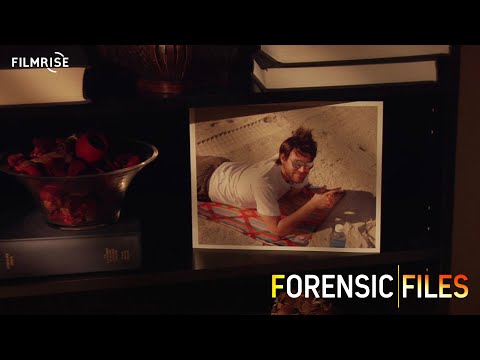
William Devin Howell | World's Most Evil Killers
Episode Description
William appeared to be a friendly gardener, but his battered van hid a horrifying secret. It served as a mobile prison where he killed women before dumping their bodies in an isolated area he chillingly called his "garden.”
An in-depth look at the lives and crimes of some of the world's most evil killers, including Jeffrey Dahmer, Richard Ramirez, Cary Stayner, Leonard Lake, Dorothea Puente and more.
For More FilmRise Check Out Our Other Channels: FilmRise Television: https://www.youtube.com/@FilmRiseTelevision FilmRise Movies: https://www.youtube.com/@FilmRiseMovies Highway to Heaven - Full Episodes: https://www.youtube.com/@HighwaytoHeavenFullEpisodes
Read the full transcriptHide the full transcript
- [audio logo] [ominous music] narrator: In a deserted, swampy patch of woodland in New Britain, Connecticut, in 2007,
- the scattered remains of several women were discovered. ♪ ♪ Kristen Madel: I have never had a case
- where I had seven possible victims at one crime scene. Narrator: For 10 long years, detectives
- worked to discover who the victims were and who'd killed them. - After the bones were found, I think it was clear that there
- was a serial killer. ♪ ♪ narrator: The investigation zoned in on a battered blue van belonging to local gardener
- William Devin Howell. ♪ ♪ - And they just started to pick that van apart fiber by fiber, droplet by droplet.
- ♪ ♪ Geoffrey Wansell: It is a positive gold mine, a treasure trove of DNA of all manner of clues.
- ♪ ♪ narrator: When the true nature of Howell's crimes were revealed, they were breathtaking
- in their brutality. - Physical violence, strangulation. Probably some of the most violent behavior
- that I've ever handled as a lawyer. narrator: 14 years after the first innocent victim
- was snatched from the street, William Devin Howell was finally confirmed as one of the world's most evil killers.
- [theme music] ♪ ♪ [intriguing music] In 2017, a case that had gripped and horrified a quiet
- corner of New England, concluded with one of Connecticut's most prolific serial killers,
- 47-year-old William Devin Howell, being locked away for life. But when the story began, 14 years earlier,
- it had gone largely unnoticed. Dave Altimari: The media hadn't really covered it very much.
- No one had really put together that we had all these missing women. Prof. Jane Monckton-Smith: If she
- was a drug taker with addictions, if she was a sex worker, it's not unusual for them to go missing and not be reported
- for quite a long time. narrator: When stories of the missing women's fate were finally told, it exposed a dark underbelly
- that many in this leafy part of Connecticut did not know existed. William Paetzold: Central Connecticut
- was more of a manufacturing area back in the '30s, '40s, '50s. And over time, drugs has infiltrated those areas.
- And with drugs is prostitution. narrator: But above all, the story showed the world a truly monstrous people
- are sometimes able to hide in plain sight. William Paeztold: Bill Howell is one of those individuals that was convicted of committing
- horrific acts of violence. And yet he's a likable man, that you think about and you say, how could he have done this?
- ♪ ♪ narrator: This killer's story begins on the 11th of February 1970. William Paeztold: He grew up in Newport News,
- Virginia, which is a population of about 200,000 people. ♪ ♪ - His mother was 40 and his father
- was 45 when Howell came along. narrator: William Devin Howell, known as Bill, was the youngest of four children.
- Despite a stable childhood, in his late teens, Howell began to take the wrong path.
- - He went to school. He dropped out of school. - Towards the end of his adolescence,
- Bill Howell drifted into drugs and he then got drawn into petty crime. William Paeztold: He had some motor vehicle violations that
- ultimately caused his license to be suspended, and it became a vicious cycle. He continued driving, kept getting arrested,
- and it resulted in jail time. ♪ ♪ narrator: By his mid-twenties, Howell had collected convictions for drink
- driving, forgery, reckless driving, and public drunkenness. ♪ ♪ In 2001, aged 31 years old, he left Virginia.
- William Paeztold: He met a woman, and she was from Connecticut, and he ended up coming to Connecticut.
- narrator: Moving in with his girlfriend, Dorothy, in New Britain, William Howell took
- on a veneer of respectability. - Howell appeared to be quite settled. He had a relationship, a girlfriend.
- He had a job. - He had this landscaping business that he seemed to seem to be doing OK with.
- ♪ ♪ William Paeztold: He cut people's lawns. It was not the kind of lawn mowing service that you see,
- landscapers in affluent communities, just a small 22-inch lawn mower. And it was in the more urban areas of older people that
- stayed in those communities. And they hired him. And they said he was very nice, reliable,
- he'd come on a weekly basis. - He had a dark blue 1985 Ford Econoline van. It was pretty smashed up.
- He'd had plywood over some of the windows. He had on the side "Quality lawn work, call Devin,"
- and his cell phone. narrator: But criminality was never far away. In 2002, Howell picked up more convictions for minor offenses.
- ♪ ♪ By this time, he was a frequent visitor to the Berlin Turnpike area, a 10-minute drive from the home
- he shared with Dorothy. James Wardwell: The Berlin Turnpike has many, many commercial establishments,
- uh, restaurants, hotels, motels, different shopping centers. ♪ ♪ William Paeztold: The Berlin Turnpike
- was one of the main roads that used to go between New York and Boston, so there were a lot of little hotels,
- and over time, those hotels stopped being used by conventional travelers and ended up being used by-- by hookers and Johns and more
- nefarious type of activity. narrator: William Devin Howell was drawn to the area where drugs and prostitution
- went hand in hand. William Paeztold: Many people who are females who are drug addicts,
- they end up prostituting themselves in order to get the money. And Mr. Howell was able to get some drugs
- and party with these women. ♪ ♪ narrator: In April 2003, a young woman was reported missing from a town
- some 25 miles from the Berlin Turnpike. James Wardwell: Melanie Ruth Camilini, she
- was from Seymour, Connecticut. Uh, she went missing from the city of Waterbury. Uh, she was the mother of two, uh, dearly loved by her family.
- narrator: When 29-year-old Melanie's mother reported her missing to Waterbury Police, she hadn't seen her
- daughter for several months. James Wardwell: Waterbury PD was taking point on and the missing person report.
- Terrific investigators. narrator: Despite an investigation, there were no leads into Melanie's disappearance.
- A month later, there was another missing persons report in the same town. ♪ ♪ - Marilyn Gonzalez was 26.
- She too was a mother of two. narrator: Last seen on the 15th of May 2003, Marilyn was reported missing by her mother a few days later.
- James Wardwell: Her loved ones were just frantically trying-- what happened to her?
- ♪ ♪ narrator: On the 24th of June, another desperate mother went to the police,
- this time in New Britain. James Wardwell: Janice Roberts is a transgender woman.
- She was in her 40s at the time. Her family thought that she went to New York City, um,
- and possibly ran into some trouble down there. They just didn't know. narrator: No one knew if the missing women had chosen
- to leave the area or if something more sinister had befallen them. Prof. Jane Monckton-Smith: Even when all of these women
- were reported missing, they weren't linked by the police. Things are made more complicated
- when people go missing from different police jurisdictions, because they don't necessarily always share that information.
- They won't be looking at the missing person lists from neighboring jurisdictions.
- ♪ ♪ [tense music] narrator: By the summer of 2003, three women were missing from towns
- in the Berlin Turnpike area. There was no uproar, no panic. Women weren't safe on the streets, but they had no idea.
- ♪ ♪ [intriguing music] ♪ ♪ narrator: In July 2003, 33-year-old William Devin Howell was living with his girlfriend in New Britain,
- Connecticut. ♪ ♪ On the 31st of July, the mother and sister of 33-year-old Nilsa
- Arizmendi walked into Wethersfield Police Department nine miles away and reported that they hadn't seen
- Nilsa for almost a week. ♪ ♪ Geoffrey Wansell: Nilsa Arizmendi had an on-and-off relationship with her childhood sweetheart
- was always known as Ace, and they were living in a motel in New Britain. William Paeztold: She was a drug user, might have engaged
- in some prostitution also. Prof. Jane Monckton-Smith: She had quite a stable life, actually.
- So her disappearance was flagged up as this is out of the ordinary for Nilsa. ♪ ♪
- narrator: Nilsa's boyfriend, Ace, a convicted drug dealer, was first on the list of people to question.
- Insisting he had no idea what had happened to Nilsa, Ace passed a polygraph test.
- Worried sick about his girlfriend's disappearance, Ace was desperate to help. - He gave the police all the information he had.
- narrator: Ace told detectives about the last time he'd seen Nilsa. It was late at night after the couple
- had been hanging out with a man they knew only as Devin. Dave Altimari: Nilsa, her boyfriend, and his guy
- were doing drugs in a parking lot at a supermarket in Wethersfield. After that, her boyfriend saw her
- get into this weird looking van that was partly blue, partly black, and had wood boards with side windows.
- Should have been. narrator: It was the first solid lead into working out what had happened to Nilsa.
- - The blue van became a target of the Wethersfield Police Department's investigation.
- narrator: The name Devin and the description of a van were all police had to go on in the search for Nilsa.
- But two months later, a sharp-eyed patrol officer spotted the vehicle in Wethersfield.
- ♪ ♪ [ominous music] Geoffrey Wansell: So they trace the van. The van is traced back.
- The owner is Dorothy Holcomb. William Paeztold: And that's when they went to Ms. Holcomb's residents
- trying to interview her. ♪ ♪ narrator: Police records showed a man had been living at Dorothy's address, one
- with an outstanding warrant for an assault on his girlfriend. His name was William Devin Howell.
- - When the police arrived to talk to Dorothy, she said, oh, well, Bill has the van most of the time.
- It's just registered in my name. William Paeztold: He tried to dodge the interviews,
- and she kind of protected him from-- from the police. You know, they come in the front door,
- he'd go out the back door type of thing. narrator: Detectives were desperate to interview
- the man last seen with Nilsa, but he kept evading them. Meanwhile, they turned their focus on the van Nilsa
- had climbed into the night she disappeared. - They got a search warrant for the vehicle.
- narrator: But when they returned in November to seize the battered blue van, neither Howell nor the vehicle
- were anywhere to be seen. In January 2004, Wethersfield Police finally caught up with William Devin Howell.
- The gardener denied any involvement in Nilsa Arizmendi's disappearance. And his van, which they hoped might hold some clues,
- was still nowhere to be found. - Part of the problem was they didn't have her body.
- They didn't know what happened to her. She could have taken off. No one knew that she was dead at that point.
- narrator: With no van, no evidence, and nothing to tie him to Nilsa beyond the word
- of her boyfriend, detectives had no choice but to let Howell go. [eerie music] Weeks later, another young woman was reported
- missing by her family. Geoffrey Wansell: Joyvaline, also known as Joy, Martinez-- she's 24.
- Joyvaline was a popular girl at school. She was a track star. narrator: Born into a large and loving family,
- somewhere between her late teens and early 20s, Joyvaline had fallen into drugs.
- She'd last been seen in October 2003. Geoffrey Wansell: She doesn't appear for her birthday, which her mother finds quite strange.
- And then she doesn't appear at Thanksgiving. narrator: On the 29th of March 2004,
- Joy's mother reported her missing to police in East Hartford. Two days later, in Wethersfield,
- the team who were searching for Nilsa Arizmendi finally had some luck, 600 miles away from Connecticut.
- ♪ ♪ - They found the vehicle in North Carolina, the blue van. They then got a search warrant, and then
- they had the van towed back. narrator: The van had been hidden on a property belonging
- to one of Howell's associates. Eight months after Nilsa Arizmendi vanished, would it hold any clues about what had happened to her?
- - The crime scene investigators are let loose on the Ford Econoline van. William Paeztold: They noticed that the back seat,
- the cushions had been, uh, replaced, and they ended up pulling those cushions back.
- And then they found what they believed was blood and then reddish brown stains on the carpeting.
- narrator: This disturbing find suggested that someone had lost a large amount of blood
- in the back of the battered work van. The question was, who? Kristen Madel: The police department
- submitted a piece of the car seat back and a piece of the carpet from the van to the laboratory.
- narrator: Forensic science examiner Kristen Madel was part of the team at the state
- forensic lab tasked with analyzing the stains on the upholstery. The first set of tests confirm the stains
- were, in fact, human blood. The next step was to find out who the blood had belonged to.
- When the results came back, there was a shock. - From the initial testing of those two samples,
- they were two different DNA profiles. [ominous music] [intriguing music] narrator: It appeared that at least two people had
- come to harm in Howell's van. As is common in missing persons cases in the US, Nilsa Arizmendi's mother had given the police a DNA sample
- when her daughter disappeared. Kristen Madel: DNA gets passed from parent to child,
- where you get half your nuclear DNA from your mother and half your nuclear DNA from your father.
- narrator: If human remains were found, the authorities would be able to say if the victim was likely to be a close relative
- of Nilsa's mother. ♪ ♪ [somber music] Sadly for Nilsa's family, there was a match.
- - The mother of the missing person did match the DNA profile from the van. narrator: It was an important breakthrough for the case,
- but a body blow for Nilsa's anxiously waiting family. - The medical examiner said she couldn't have
- survived that much blood loss. narrator: It seems certain that Nilsa Arizmendi was dead.
- Police had no idea who the second DNA profile belonged to. With more questions than answers
- about what had happened in Howell's van, investigators needed to tread carefully.
- [dramatic music] Geoffrey Wansell: It takes a long time for the prosecutors to be absolutely sure that they can charge
- Howell with Nilsa's killing. Blood in the van, opportunity, the fact that they had
- seen her getting into the van. But the difficulty is there's no body. narrator: On the 14th of May 2005,
- William Devin Howell was arrested in connection with Nilsa Arizmendi's death. Three days later, he was charged with her murder.
- But the police knew getting a conviction would be tough. ♪ ♪ Dave Altimari: The problem was they didn't
- know what happened to her. They knew something bad happened in the van, but there was no weapon, there was no trace of the body.
- ♪ ♪ Narrator: Howell was remanded in custody until his trial. For now, a suspected killer was off the streets.
- But would it be for good? [intriguing music] Almost four years after Nilsa Arizmendi's disappearance,
- 36-year-old William Devin Howell stood in the dock at New Britain Superior Court in Connecticut.
- Geoffrey Wansell: On the 24th of January, 2007, William Devin Howell stands trial for the murder
- of Nilsa Arizmendi. The DNA evidence is produced. Witnesses, including Ace, are produced.
- narrator: Howell's defense was that it was her boyfriend, Ace, who'd attacked Nilsa, arguing the couple had
- fought in the back of the van. The prosecution highlighted the amount of blood spilled in the van and the fact that Nilsa hadn't
- been seen since that night. On the fifth day of the trial, Howell changed his plea.
- Prof. Jane Monckton-Smith: He did a plea bargain, and he used something called the Alford plea.
- William Paeztold: What the Alford doctrine stands for is you'd say, I understand if I go to trial,
- there's a significant chance I'll be convicted and face harsher punishments. So in order to avoid that, I'm going
- to plead guilty, even though I'm not admitting my guilt. ♪ ♪ narrator: On the 30th of January, Howell pleaded guilty
- to first-degree manslaughter. Still refusing to give any information about what had happened to Nilsa Arizmendi
- or where her remains could be found, Howell was jailed for 15 years. ♪ ♪ Just months later, on the 20th of August 2007,
- local police got a phone call that had the potential to shed light on Nilsa's fate.
- James Wardwell: The New Britain police department got a call from a resident who was walking through some woods off
- of Harford Road in New Britain, and he said he found what he thought were human remains.
- I was a lieutenant in the Bureau at that point, so we responded. We canvassed the scene.
- ♪ ♪ William Paeztold: That area is very commercial. It was like a little strip mall,
- and in the back is a little parking area, and right below that is a steep drop-off.
- And then there's a wooded area. ♪ ♪ James Wardwell: It's really not a place you would easily
- walk through because of the brier, some of the wildlife that's there or completely swampy.
- It gets-- goes underwater quite a bit. It's not where someone would want to walk and go have a picnic.
- narrator: More officers were brought in to search the densely wooded area. ♪ ♪
- [ominous music] - We found a few more remains that evening and into the next day.
- And that's when we discovered it wasn't the remains of one person, but it was the remains of two females.
- narrator: Confirming that they had found the partial remains of two adult women, the state medical examiner
- gave an estimate as to how long the scattered bones had laid there. James Wardwell: It gave us a very wide
- range, with the caveat is-- it depends on weather, it depends on animal activity.
- So we knew there weren't hundreds of years old. We knew that they were a year old.
- ♪ ♪ narrator: A couple of days later, a third partial skeleton was recovered. There was nothing with the bodies to identify them.
- But one conclusion seemed inevitable-- the women had all likely been murdered and almost certainly
- by the same assailant. - We certainly were working on, uh, the strong possibility that we had a serial killer.
- ♪ ♪ [intriguing music] narrator: With William Dean Howell's conviction fresh in the minds of local law enforcement,
- the question on everyone's lips was, could any of the bodies be Nilsa Arizmendi's?
- The state forensic lab was brought in once again. - They submitted a sample from the three
- different possible bodies for us to do DNA testing on. narrator: DNA profiles were developed from the bones,
- but when they were run through the DNA database, there was more disappointment for Nilsa's family.
- - We did try to make a connection, um, with Nilsa, but there were no matches there.
- narrator: In fact, there were no matches in the system for any of the women. Without knowing who they were, investigating the women's
- deaths would prove difficult. Prof. Jane Monckton-Smith: If you don't know who the person is that has been killed,
- it's near on impossible to identify your suspects. There's always a motive for every murder.
- You're never going to find out what that motive is unless you identify the body.
- ♪ ♪ narrator: New Britain police threw themselves into working out who the women were.
- James Wardwell: Looking at unsolved missing persons reports and just try to chase them all down.
- The FBI down in Quantico offered their services to create an approximation of two of our victims.
- We put it in the newspapers, gave it to the media. narrator: It was a slow and frustrating process.
- And as James Wardwell and his team worked to identify the victims, they couldn't shake the suspicion that there might be more
- bodies lying in the woods. - Never stop believing there was more in there. Still believed in our heart of hearts,
- Nilsa was in there, still believing that there might be more victims. narrator: Were police on the right track?
- Was William Devin Howell, in fact, a serial killer? Was Nilsa just one of his victims?
- - We certainly were keeping all options open because we don't know yet, but that was definitely
- a working theory that there was a connection, and Nilsa was also connected to our site.
- [ominous music] [dramatic music] ♪ ♪ narrator: In December 2010, New Britain PD
- got their first breakthrough, when a woman called introducing herself as the sister-in-law of New Britain resident Diane Cusack.
- ♪ ♪ She'd seen the photo in the papers of the facial reconstruction of one of the unidentified women.
- ♪ ♪ James Wardwell: She said the face sure looks like Diane. The hair is wrong, um, but the face looked right.
- Dave Altimari: Diane Cusack lived alone in New Britain. I don't think she really was in contact with her family.
- She wasn't reported missing right away. ♪ ♪ - So we were ultimately able to make that connection
- through dental records and DNA and made our first positive ID. ♪ ♪ I remember going and sitting down at their kitchen table
- and sharing that news with them. I know it brought them pain, but I could see it
- also brought them some relief. I remember it like yesterday, that part, because it's, uh--
- nobody deserves what happened to her. [ominous music] narrator: The tragedy for Diane Cusack and her family
- was nonetheless an important step forward in the investigation. [intriguing music]
- James Wardwell: Really started opening everything because then we could start retracing her steps,
- placing her in places. narrator: 53-year-old Diane hadn't been seen since July 2003.
- She'd lived in the same neighborhood as William Devin Howell, and the police believed
- they may have crossed paths. But there was no proof or evidence to link Diane to Howell.
- The investigation went cold until 2013. ♪ ♪ - Connecticut state's attorney's office has a cold case unit, and they
- put a task force together. narrator: DNA from the remains in the woods was resubmitted to the state forensics lab.
- And in September 2013, there was another positive ID. James Wardwell: To Evelyn Martinez.
- She was actually the first remains that were found, um, that first day in 2007. narrator: The breakthrough also provided
- crucial evidence that William Howell had killed more than once. The second person's blood found along with
- Nilsa's in the back of Howell's van was proven to be 23-year-old Joyvaline's. The case was building, but detectives suspected there was
- much they still did not know. In 2014, they tried something new. Dave Altimari: One of the things
- that state's attorney's cold case squad did was make playing cards of unsolved homicides
- that they distributed in all of the prisons. James Wardwell: They're free for the inmates to use
- and asked, if anyone has information, please call to spark conversations. Narrator: One inmate couldn't believe the hand
- he'd been dealt. William Devin Howell, who was a decade into his sentence for the manslaughter
- of Nilsa Arizmendi, was about to blow the investigation wide open. [tense music]
- [intriguing music] At Connecticut's Cheshire Correctional institution in 2015, 45-year-old William Devin Howell opened up to his
- cellmate, Jonathan Mills, revealing what had really happened to Nilsa Arizmendi 12 years earlier.
- Around 3:00 AM that night, in July 2003, Nilsa and her boyfriend, who sometimes
- took drugs with Howell, met him in a supermarket car park. - Ace sees Nilsa to climb into Bill Howell's dark
- blue Ford Econoline van and drive off. narrator: Shortly after Nilsa entered Howell's van,
- he attacked her, punching her in the face, causing her nose to bleed heavily. He then grabbed her around the throat.
- - She is strangled, and she is dumped behind the shopping mall. [ominous music] narrator: But Nilsa had not been his first victim.
- Geoffrey Wansell: He tells Mills that, I didn't just kill Nilsa, I killed six other people as well.
- narrator: Howell told Mills his first victim, early in 2003, had been Melanie Ruth Camilini.
- Howell had raped and strangled her in the back of his van. - It was too cold to bury her body,
- and so he literally drove around with her body in the van for several weeks. - He used to sleep next to her, calling her his baby.
- Dave Altimari: And he cut off her fingertips and tore off the bottom of her jaw to take her bottom teeth out and put him in a garbage bag
- and throw him in a dumpster. He told Mills that once he had killed the first woman, that
- was like, crossing the Rubicon, and it became easier after that and he perfected his method, I think how he put it.
- ♪ ♪ narrator: Over the next 10 months, William Devin Howell had targeted women
- on the fringes of society. - Most of all, these focused around drugs, whether Howell was providing them or people--
- they were getting in his van because they were going to do drugs with him. narrator: Once in the back of the vehicle
- that Howell called his Murdermobile, the women were brutally attacked. - There was a lot of violence-- physical violence,
- strangulation, hitting them with objects, a hammer, for instance. - He controlled these women.
- He was a big guy. narrator: With his second victim, 26-year-old Marilyn Gonzalez, restrained through
- the night in the back of his van, Howell drove around the local area. - He actually went through a drive-through
- to buy her her last meal. She ate the meal, and he raped her and killed her. ♪ ♪
- narrator: Referring to himself as a sick ripper in his disturbing confession to his cellmate,
- Howell also shed light on the fate of a woman who'd been reported missing in June 2003.
- - Howell's third victim, who picked up on the 18th of June 2003, was Janice Roberts.
- But actually, she was transgender. [dramatic music] William Paeztold: While a sexual act was being performed,
- Mr. Howell realized it was a trans person doing it, which caused him to become very angry.
- narrator: Howell strangled 44-year-old Janice to death. ♪ ♪ [suspenseful music]
- After the orgy of violence, Howell would dispose of his victims' bodies. Dave Altimari: Howell told them about what
- he called his garden. And Mills realized what he was talking about was where he buried victims.
- ♪ ♪ - The victims were just discarded, like objects and not as people. Like yesterday's rubbish.
- Just awful. narrator: Howell told Mills that after Melanie, Marilyn, and Janice,
- he'd murdered Diane Cusack. The next victim was Nilsa Arizmendi, followed by Joyvaline Martinez.
- Then Howell confessed to a final victim from October 2003, a 40-year-old woman from Waterbury who'd never
- been reported missing. - Mary Jane Maynard went out to buy cigarettes, and I suspect she just encountered Howell,
- who was often driving around the area, possibly looking for victims. Mary Jane's daughter was serving overseas at the time,
- so nobody noticed that Mary Jane had gone missing. narrator: Mary's partial remains
- were amongst those found in 2007 and had finally been identified in September 2014.
- Geoffrey Wansell: One of the tragedies of Mary Jane Maynard is that, although she'd had a substance abuse problem,
- she'd turned her life around and she'd in fact, become a counselor, making her death all the more
- tragic and all the more cruel. narrator: Having heard William Howell's horrifying story,
- Jonathan Mills hoped it might gain him some goodwill with the authorities. - Mr. Mills contacted his lawyer, lawyer
- contacted the prosecutors. narrator: Howell had boasted of six murders in addition
- to Nilsa's death. The problem for the police was that they only had three bodies.
- All of them had been identified, and none of them were Nilsa. ♪ ♪ Incredibly, Jonathan Mills had the information
- the police needed. ♪ ♪ [dramatic music] Dave Altimari: He showed him this map of what he believed
- where Howell's garden was. Howell had described, like, they were electrical wires and
- telephone poles and certain things in the air where he had buried them. ♪ ♪ - Between April and May in 2015,
- 12 years after the killings, they return to the swamp. - With the assistance of this amazing cadaver dog,
- within days, we had found the burial sites of all of our victims. - They found an additional four different human remains.
- narrator: Once again, the state forensics lab played a crucial role. - So they submitted a sampling from each of the four
- different bodies in order to try and determine who they were by doing DNA testing on those bones.
- DNA profiles were developed. William Paeztold: They tracked down family members,
- got their DNAs, and then compared those DNAs to the bones that were recovered, and then were able to identify the individuals.
- narrator: By June 2015, the bodies had been identified as Janice Roberts, Melanie Ruth Camilini,
- Marilyn Gonzalez, and the one victim Howell had been convicted of killing, Nilsa Arizmendi.
- After more than a decade, the families of the women were learning of their fate.
- James Wardwell: They were waiting for answers, praying that these were not the answers they were going to get.
- We couldn't change what was done, but we could change the way their loved ones were
- treated from then on out, and that justice is, uh, brought for them. narrator: But to get justice, detectives needed
- to build a case against William Devin Howell, the only suspect in the six murders.
- ♪ ♪ [intriguing music] They believed the key to the case was Howell's battered blue work van.
- - So we got a search warrant, got the van that was held in storage by the Wethersfield Police Department.
- So it was still just sitting there, like, as if in a time capsule. We brought in the state police evidence technicians
- because their skill level is just tremendous, and they just started to pick that van apart fiber
- by fiber, droplet by droplet. Kristen Madel: They submitted a whole bunch more evidence
- from the van that consisted of cigarette butts, hairs, hairbrush. narrator: There was a rock that appeared to have blood on it,
- as well as six graphic home-made videotapes. - There was over 200 pieces of evidence submitted
- from the ban at this point. narrator: The results of the DNA analysis were damning.
- Blood, hair, and other traces were found in the back of the van that matched with six of the seven victims.
- [ominous music] - In September 2015, Howell is charged with six murders. narrator: For the next two years,
- the police and prosecution prepared their case against Howell. [intriguing music]
- James Wardwell: We wanted to convict. We wanted absolutely whoever was responsible for what happened to these ladies
- to be brought to justice. We wanted to make sure every T was crossed, every I was dotted, so it was meticulous work.
- narrator: William Petzold was appointed as Howell's defense attorney, faced with the mammoth task
- of defending Howell against the prosecution's claims. - So they put the case together,
- and it was a mountain of evidence. It was, in my opinion, an insurmountable mountain
- to overcome. narrator: Presented with the evidence against him, Howell and his attorney came to a decision.
- - He ultimately pled guilty and was sentenced to 360 years. [emotional music] ♪ ♪
- Families were emotional, certainly some relief that justice is being served, but anger, too, sadness.
- No matter what, none of what the court system was going to do was going to bring
- their loved ones back. ♪ ♪ narrator: 47-year-old Howell's statement at the sentencing
- hearing at New Britain Superior Court was the first time any of the families had heard him speak.
- Prof. Jane Monckton-Smith: He started to cry. And he said, I'm going to stay in prison.
- I'm not a well man. I'm going to die a slow, painful death. There is-- in no way was he actually
- trying to give any comfort to the victims' families. [somber music] - He was thinking of himself.
- We were sitting with the families. Um, maybe some thoughts should have been for them.
- That's not where he went. narrator: In fact, one of Howell's comments to his cellmate had betrayed his true feelings
- about the seven victims. - Howell said that his victims should have known that they were going to die,
- you know, just because of the kind of lives that they led. - He didn't think of these beautiful people as people.
- This is my take on it. ♪ ♪ narrator: In a 10-month killing spree across 2003, Howell abducted, brutalized, and killed seven women
- in the van he callously called his Murdermobile, before dumping their bodies where he
- hoped they'd never be found. His victims' loved ones waited 14 years for justice,
- but when it finally came, they were left with no doubt that William Devin Howell is one of the world's
- most evil killers. [theme music] ♪ ♪ [audio logo]
Brief Summary
William Devin Howell murdered seven women in Connecticut, evading capture for years before being convicted based on DNA evidence.
Key points
- Discovery of Remains. In 2007, the remains of several women were discovered in Connecticut, revealing a serial killer's brutality.
- Media Neglect. The case of missing women went largely unnoticed by the media until it was too late.
- Howell's Arrest. William Devin Howell was arrested in 2005 for the murder of Nilsa Arizmendi, but evidence was scarce.
- Plea Bargain. Howell pleaded guilty to manslaughter using an Alford plea, avoiding harsher punishment.
- Discovery of Remains. In 2007, human remains were found in New Britain, raising questions about their identities.
- Breakthrough in Investigation. In December 2010, police received a call that led to the first positive ID of a victim.
Episode highlights
- Discovery of RemainsIn 2007, the remains of several women were discovered in Connecticut, revealing a serial killer's brutality.“The investigation zoned in on a battered blue van belonging to local gardener William Devin Howell.”0:41Jul 29, 2026
- Media NeglectThe case of missing women went largely unnoticed by the media until it was too late.“No one had really put together that we had all these missing women.”2:31Jul 29, 2026
- Howell's ArrestWilliam Devin Howell was arrested in 2005 for the murder of Nilsa Arizmendi, but evidence was scarce.“They knew something bad happened in the van, but there was no weapon, there was no trace of the body.”20:31Jul 29, 2026
- Plea BargainHowell pleaded guilty to manslaughter using an Alford plea, avoiding harsher punishment.“He did a plea bargain, and he used something called the Alford plea.”21:51Jul 29, 2026
- Discovery of RemainsIn 2007, human remains were found in New Britain, raising questions about their identities.“We discovered it wasn't the remains of one person, but it was the remains of two females.”24:09Jul 29, 2026
- Breakthrough in InvestigationIn December 2010, police received a call that led to the first positive ID of a victim.“The face sure looks like Diane.”28:33Jul 29, 2026
- Confession of a Serial KillerWilliam Devin Howell revealed to his cellmate that he had killed multiple women.“I didn't just kill Nilsa, I killed six other people as well.”33:04Jul 29, 2026
- Justice ServedWilliam Devin Howell pled guilty to six murders and was sentenced to 360 years in prison.“Families were emotional, certainly some relief that justice is being served.”42:54Jul 29, 2026