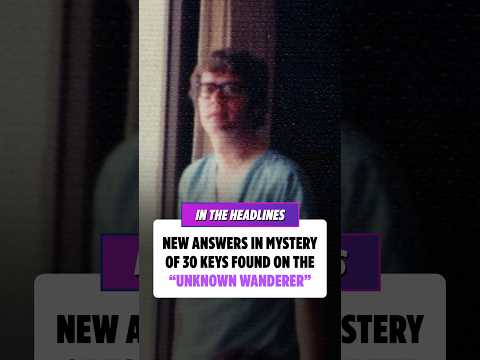
Why Did the Unknown Wanderer Carry Nearly 30 Keys?
Episode Description
On September 23, 2026, the Ada County Sheriff’s Office in Boise, Idaho, announced it had solved a 40-year-old mystery, the identity of the man known as the “Unknown Wanderer”.
On December 4, 1982, parishioners at Sacred Heart Catholic Church found him slumped over in the fifth pew during a confession service. No one knew who he was. He was carrying nearly 30 keys and an envelope with 19 $100 bills and a typed note signed “W.m. L. Toomey,” a name investigators determined was fake.
The cause of death was cyanide poisoning. His name was Dr. Mathew Betkouski. And what investigators learned about him next may connect him to one of the most infamous unsolved crimes in American history.
In this look into the headlines, Crime Junkie’s breaking news reporter Briana Whitney breaks down how the Unknown Wanderer was finally identified, with details from Ada County Sheriff’s Office cold case Detective Tim Cooper.
You’ll hear about the hidden final line on the Wanderer’s note, the “Mills Court” etching on one key that led investigators to Jacksonville, Florida, the DNA match that confirmed his identity, Dr. Betkouski’s PhD in organic chemistry and his work on a NASA project at the White Sands Test Facility in Las Cruces, New Mexico, the unsolved 1982 cyanide death of Dessie Wilson, and the bottle of homemade cyanide found next to a map of Chicago.
Could the Unknown Wanderer be connected to the Chicago Tylenol murders?
Seven people died in the Chicago area in the fall of 1982 after taking Tylenol capsules laced with potassium cyanide. But the cyanide in Dr. Betkouski’s desk tested positive as sodium cyanide, and investigators have only placed him in Chicago in December 1981. Detective Cooper says he has been trying to access the Tylenol murder files for at least five years. Michelle Rosen, whose mother, Mary Reiner, was one of the seven victims, has been sharing her own research with the sheriff’s office since 2020.
The Ada County Sheriff’s Office has not named Dr. Betkouski a suspect in the Tylenol murders. -------- Follow Crime Junkie: Instagram: https://www.instagram.com/crimejunkiepodcast Facebook: https://www.facebook.com/CrimeJunkiePodcast/ Twitter: https://twitter.com/CrimeJunkiePod Crime Junkie is created anAmerican Idol Contestant Arrested For Murder!? The Case Of Ashley Flynn d hosted by Ashley Flowers.
About Ashley Flowers Ashley Flowers is the top female podcaster in the U.S. and the host of Crime Junkie, the #1 podcast among women and the #1 true crime podcast globally. As the Founder of Audiochuck, she has built a top-tier podcast production company that has garnered over 2.6 billion downloads, captivating audiences with its gripping storytelling through 10+ chart topping podcasts. Ashley and her team are dedicated to creating responsible true crime content that respects victims and their families.
Follow Ashley: Instagram: https://www.instagram.com/ASHLEYFLOWERS/ Twitter: https://twitter.com/ash_flowers TikTok: https://www.tiktok.com/@ashleyflowerscrimejunkie Facebook: https://www.facebook.com/ashleyflowers.af/
Check out these other great crime channels: @annieelise Netflix's THE WIDOWER: The Disturbing Footage They Didn't Show You | Thomas Randolph https://www.youtube.com/watch?v=9lCTNtMafmo @kallmekris The Russian Sleep Experiment Deep Dive https://www.youtube.com/watch?v=IA4OaZUF2pM @KendallRae Snapchat Affair Ends In Devastating Murder: The Case Of Ryan Cooper https://www.youtube.com/watch?v=uT_O4RdbHug @ParkPredators What Turned the Search for Two Campers Into a Homicide Case?https://www.youtube.com/watch?v=NYjFql6gIi0
Read the full transcriptHide the full transcript
- Nearly 30 mysterious keys, a bolo tie, and cyanide. That has got to be the most bizarre combo of things. Yet, it's some
- of the only pieces of evidence Idaho detectives had for decades to try and identify a man they came to know as the
- unknown wanderer. A man who just dropped dead of cyanide poisoning in the middle
- of a church pew in December of 1982. Now, in this day and age, it's not surprising that police were able to
- finally put a name to this man just 2 weeks ago. But what no one could have predicted was that he might be tied to
- one of the most infamous unsolved crimes in American history. Now, I've been working directly with the detective in
- this case who gave us some new exclusive details you'll only hear on Crime Junkie. And his department needs your
- help. So, crime junkies, I'm Brianna Whitney, and in the headlines this week, we're diving into the jaw-dropping case
- of the unknown wanderer. September 23rd, 2026, the Ada County Sheriff's Office in Boise called this
- major press conference. They had solved a 40-year-old cold case. How? Well, like
- all good things are, the sheriff said this case was fueled again by a subpar cup of coffee. I'm not joking. The
- sheriff said back around 2018 and 2019, a member of the Sacred Heart Church in town happened to bump into Detective Tim
- Cooper as he was sipping a cup of coffee he had just bought from the gas station.
- And the church member mentioned a case to him. Hey, whatever happened to that mysterious case? The unknown wanderer.
- Detective Cooper was actually a canine handler for the department doing drug stops on the interstate, but he knew
- exactly what case the church member was talking about because he remembered watching a 1990 Unsolved Mysteries
- episode about it. So, let me turn back time for a sec. On December 4th, 1982, the Sacred Heart Catholic Church was
- holding a confession service when some of the parishioners noticed a man who was slumped over in the fifth pew. But
- he wasn't just sleeping. He was dead. Now, everyone was so confused, not only by this death itself, but no one seemed
- to even know who this man was. No one had ever seen him before. And once the Ada County Coroner determined the cause
- and manner of death, it only fueled a million more questions. Manner of death, suicide.
- Cause of death, cyanide poisoning. What? And it was weird. Detectives were specifically struck by his appearance.
- His hair looked recently dyed and styled. His pants looked brand new, like they were just pressed, had never been
- worn. And he was wearing a turquoise and silver bolo tie. He also had a deep tan,
- the kind you'd get from being outdoors somewhere warm, which made no sense at all. I mean, this was Idaho in December.
- He was also carrying two key rings holding nearly 30 keys. That was weird. Why 30 keys? Like, who needs 30 keys?
- And then the detail that had detectives most perplexed. In his pocket, they found an envelope with 19 crisp $100
- bills and a typed note. The note said, quote, "In the event of my death, the enclosed currency should give more than
- adequate compensation for my funeral or disposal, preferred to be cremated, expenditures. What is left over, please
- take this as a contribution to this church. God will see to your honesty in this." The note was signed, "Wm L to
- me." Now, there was also a line at the end that was marked out in black ink, like the guy wrote one final thought,
- then decided he didn't want people to read it and crossed it out. Now, investigators quickly figured out that
- WML Tumi name was a fake identity. So, with nothing else known about him, he became known as the unknown wanderer.
- Enter Frank Richardson. He was the original Boise PD sergeant on the case. And as he tried to put all of this
- together, he thought maybe this guy was linked to other crimes. Now, two priests
- had recently been killed in Odessa, Texas and Yuma, Arizona. They were Catholic, so maybe that was something
- like maybe there was a tie there. And then Richardson had another thought, too. This was only months after the
- Chicago Tylenol murders, where multiple people died after taking Tylenol capsules laced with cyanide. So maybe
- this was somehow related. But despite his best efforts for many years, no evidence ever linked this mystery man to
- any of those crimes. And Richardson eventually retired and passed away without ever knowing who the unknown
- wanderer was. So, in 2019, after his gas station coffee encounter with a church member,
- Ada County Sheriff's Detective Tim Cooper, who was now working cold cases, officially reopened the investigation
- into the unknown wanderer. And buckle up for the most unexpected twists and turns
- that could possibly come. He said he started by cross- refferencing everything he had in the file against
- more than 17,000 missing person's records nationwide. I mean, he figured nearly four decades later, search and
- database technology, or even just namely the internet, could help find a lot more
- now than it could back then. And here's the strange part. The wanderer had never
- once been reported missing. Not anywhere, not by anyone. So Cooper went back to the evidence vault to see if
- there was anything at all they could go back over or check again. And he saw that note the wanderer had left with
- him. Remember I said that last line was inked out? Well, Cooper told me Frank Richardson had actually used chemicals
- to lift the ink off. It revealed one final message that said, "Yes, there is record of this communication." Okay,
- weird. What did that mean? It made Cooper think maybe one of those dozens of keys held the clue. Like, what did
- those all go to? Could one of them lead to whatever record he was referring to? So, Cooper laid them all out on the desk
- and started looking at them one by one. And he saw something that caught his eye. He looked closer and realized there
- was a tiny etching on one of them. It said Mills Court. And there was a hardware store stamp on the key, too.
- Now, they were able to trace that back to a store in Jacksonville, Florida. And sure enough, they found a Mills Court
- there. Now, this is my question. This was not a new piece of evidence. So, why didn't investigators in the8s get that
- street name? It was there the whole time. Did they just not look at the key or what happened? Well, Detective Cooper
- said they did look at it, but actually misread what it said. They thought back then it said Mills CTS and had no idea
- what that meant. They never figured out it actually said court. So once the current investigators did, Cooper's team
- pulled all the property deeds for all of the houses on that street going back to
- the late '7s and the 80s and then tediously worked name by name through every person who had ever owned property
- there. And one name stood out, a man whose death had been recorded in 1989. Now, Cooper knew the wanderer died in
- 1982, but you never know. So, he was going to track this guy down. And he found the man's surviving brother living
- in Los Angeles, California. That brother told investigators, "Yeah, his brother had lived in Jacksonville." And here's
- the kicker. He had actually disappeared back in 1982. The only reason his death was recorded in 1989 is because that's
- when he was declared dead in absentia. So, they got the brother's DNA. They were able to pull DNA from the
- wanderer's old wallet that they had in the evidence vault. And boom, it was a match. They believed the men had the
- same father. Finally, after decades, they now knew who the unknown wanderer was, a man named Dr. Matthew Beckowski.
- What they never could have predicted was what they'd learn about him next. Cold case detective Tim Cooper said Dr.
- Matthew Beckowski came from a very prominent Los Angeles family. His grandfather had served as president of
- the LA city council and even as interim mayor and his father was a senior official with the city's department of
- water and power. And then there's Beckowski himself. He had a PhD in organic chemistry. Cooper said this guy
- was like genius level brilliant. But he said when it came to emotions and actually connecting with people, Dr.
- Beckowski struggled his entire life. Detective Cooper told me once he got Beckowsk's name, he started trying to
- learn everything he possibly could about him. And one could ask, why keep going so hard on this? I mean, you solved the
- case of the unknown wanderer. You uncovered his identity. But something told Detective Cooper there was just
- more to this story. So he connected with people who went to school with Beckowski
- or spent time with him as a teen and a young adult. Cooper was not quite prepared for what they had to say. They
- told him Beckowski was called the mad bomber in high school and college because of his major fascination with
- chemistry and explosives. And I am not just talking like little science experiments. Cooper told me Beckowski
- would blow up cats in high school, would blow up foam booths, and made homemade rifles. So, you had that. But Cooper
- said that only got worse in 1974 when Dr. Beckowski suffered a serious traumatic brain injury from falling off
- a retaining wall fence and landing headirst on the concrete. And people told Detective Cooper that Matt
- Beckowski was just never really the same after that. But he was naturally so smart that in 1975 he was hired as a
- chemist to work for a flavors and fragrances company in Jacksonville, Florida. And it was there that true
- major concerns about him really started to mount. Cooper said co-workers reported this really creepy thing Dr.
- Beckowski started talking about. They said he claimed to know how to pull off the perfect crime by using cyanide as a
- clean and quiet way for a person to die. Who says that? But did a lot of writing
- during these years, like pages and pages and pages of writings. And Cooper told me he started charting and graphing his
- own moods and behaviors and approached his own mental illness as a case study more or less to gather data points from.
- He was also having delusions and believed he was being tracked. So things were obviously going downhill fast. His
- family and co-workers tried to get him help. And in 1978, he spent two and a half months in a psychiatric treatment
- facility at the UCLA neurossychiatric institute. While he was there, Cooper told me Beckowski wrote that if he did
- what he was actually thinking while at UCLA, they would have lost a few buildings that day. So like, was he
- planning to plant explosives at UCLA? Detective Cooper doesn't really know. Thankfully, and important to note,
- nothing ended up happening while he was there. But Cooper said when Beckowski went back to work in Florida after
- getting out of the facility, nothing improved and he was just let go from the job. Now, we reached out to that company
- trying to learn more, but they got back to us and said they won't comment on past or present employment per their
- company policy. Detective Cooper said Beckowsk's writings from that time started escalating more and more into
- this really eerie and chilling idea that imagining scenes of violence could bring
- him a kind of euphoria that might cure him of his mental illness. Major red flag of concern. A year later,
- he dealt with the death of his mom, did another stint in a psychiatric treatment
- facility in Florida. So, all of that makes what I'm about to tell you extremely surprising and honestly left
- me with like 50 burning questions. In 1979, Loheed hired him and he moved to Los Cruus, New Mexico to work on a NASA
- project at the White Sands test facility. I'm still so confused with his history of documented mental illness and
- comments made to former co-workers about possibly poisoning people. how he was hired onto a job working on a NASA
- project. And what do you know? He made another weird comment there to a coworker. Detective Pooper said this
- time he told his colleague that poison could easily be put in over-the-counter capsules. And not just that, he was also
- conducting home experiments in his garden, too. Police were actually called to a local Los Cruus pharmacy because
- Dr. Beckowski was acting bizarre trying to get pills or capsules from the pharmacy for one of these experiments.
- The pharmacy called police who then escorted Beckowski home where according to detective Cooper they found he had
- actually also been taking home unauthorized material from the NASA lab. So in March of 1982, to nobody's
- surprise here based on all of that, he was fired. Now as part of trying to unlock every piece of who Dr. Beckowski
- was Detective Cooper and his team were like, "We have got to visit the White Sands testing facility and figure out if
- anything else happened there." And interestingly enough, the Los Cruus PD was like, "Hey, you know what? We do
- have an unsolved case from May of 1982." Okay, ready for this? A woman living in
- Los Cusus named Desi Wilson who got her supplements from the localarmacies there
- died from cyanide poisoning that was in a medicine capsule. What are the odds? And whether it was a
- coincidence or not, they found out Beckowski hopped on a flight and left town to go to a convention in
- Pennsylvania on the day Desi Wilson died. But there's one problem with being able to truly solve her case. The
- medication she took was never tested and ACSO said the evidence and records from
- her case have since been purged. You'll figure Dr. Beckowski has never been named a suspect in her death, but it's
- certainly still a possibility he was involved. So, for the last 6 to 7 years, the public has had no idea any of this
- was going on. This was all happening investigative-wise behind the scenes because police needed to get a handle on
- just how extensive Beckowsk's possible involvement in nefarious activity or possible poisonings went before they
- just let the public in. And then the brother who broke the case open in the first place with his DNA was about to
- unintentionally lead investigators to major break number two in the case. Detective Cooper had first connected
- with Dr. Beckowsk's brother a couple years prior, but he had been dealing with health issues ever since they met
- him. And sadly, in 2021, that brother passed away. Other family members weren't totally sure what all the
- brother had kept of Matthew's things, but they gave Detective Cooper and the Ada County Sheriff's deputies the green
- light to go out to LA and check out the house. It was strange once they got inside, to say the absolute least. The
- brother had definitely kept Matthew's things at his house, but I don't mean like knick-knacks and relics. Like all
- his bedroom furniture had been sitting completely untouched. His bed, his dresser, his desk, all of that was next
- to where the brother had been sleeping, like in the same room. Cooper told me he
- felt like he walked into a time machine back to the 80s. Everything was preserved just like it was back then.
- Even Matt's shoes were tucked under the bed as if he had just taken them off for
- the night, except he had been dead for nearly 40 years. So, investigators started going through the stuff, and
- when they looked inside Matt's desk, at first, the things kept in the drawers looked pretty mundane. They found some
- old photos, some old letters, his UCLA medical services card, but I don't think anything quite prepared them for what
- they found inside next. Sitting next to a map of Chicago was a small glass bottle of homemade cyanide. Now, first
- off, that means this brother unknowingly just casually had a bottle of poisonous
- cyanide sitting in his house untouched for 40 years. Enter the mindb blown emoji.
- But if the whole cyanide part of this investigation didn't exist, then they wouldn't have even thought twice about
- the map of Chicago in the drawer. But now they couldn't help but think, "Oh my god, was Dr. Beckowski involved in the
- infamous Chicago Tylenol murders?" Seven people died in the Chicago area after taking Tylenol capsules that had
- been secretly laced with potassium cyanide at the end of September into October of 1982, aka just 3 months
- before Dr. Beckowski took his own life with cyanide. That crime literally changed the way we take medicine. It led
- to tamperproof packaging we all have today. Now remember Frank Richardson, the original investigator on the unknown
- wanderer case. If you recall, he had a suspicion very early on about the wanderer possibly being involved in the
- Tylenol murders case. And Cooper told me part of the reason why is because at the
- time Quanico sent out a message to keep an eye out for someone who would come to
- a place they didn't live, take their own life, and not leave a reason as to why.
- Well, Richardson was like, "The wanderer checks off literally every single one of
- those boxes." So, he reached out to the FBI back then. But Cooper said at the time they were focused on the longtime
- suspect named James Lewis, who was never actually charged with or convicted of the Tylenol murders, only extortion. And
- he said the FBI just never entertained the info Richardson had. Well, turns out the Unknown Wanderer had also come on to
- at least one other person's radar about the Tylenol murders in 2009. Michelle Rosen was very interested in his cyanide
- death and she started deeply looking into him in 2009 because her mom, Mary Reiner, was one of the seven Tylenol
- murders victims at just 27 years old. Now, Michelle has been doing her own research alongside authorities for many
- years, and she told me typically she hates when her mom's case explodes in the media, but she said this time
- there's genuine reason to make headlines. In her opinion, the mystery of the unknown wanderer was intriguing
- from the start. She more or less figured he took his own life because of the overwhelming guilt he had for the
- Tylenol murders. And 11 years after she started looking into him, she said authorities came calling to find out
- what she had uncovered about him. She told me the Ada County Sheriff's Office reached out to her specifically about
- Beckowski back in 2020. So for 6 years now, she's been working behind the scenes with them to share her research
- as they've tried to piece together Dr. Beckowsk's life. But she said there is a massive obstacle for everybody here. The
- investigative records regarding the Tylenol murders are not public because authorities still refer to the case as
- open and active. So, in Michelle's POV, it's going to be near impossible to actually determine whether or not
- Beckowski was responsible for the Tylenol murders if the public has no idea what critical evidence, documents,
- and reports the Illinois police departments have. And my first thought was like, yeah, I definitely agree, but
- I also know law enforcement can be super protective of especially high-profile cases. I mean, maybe there really is
- stuff in there they just don't want everybody to know. But the public is different than law enforcement. I mean,
- surely they were working with Detective Cooper, right? Wrong. I double backed with Cooper to
- ask him, "Hey, you've at least seen some of these records, right? Like once you identified Matthew Beckowski, learned
- all this wild stuff, the Chicago authorities had to be extremely interested in him and all of your work."
- He told me he has had zero access. Zilch. and he has been trying to get any sort of access to the Tylenol murders
- files for at least 5 years. He even offered to fly to Chicago and just review the evidence without taking
- anything. That was also met with a no. And he knows the case file contains documents, travel receipts, airline
- manifests, hotel ledgers, rental car receipts, and surveillance footage from at least one of the victim's. And when
- you have a case like this that severely lacks any DNA or fingerprint evidence, that stuff literally is the case. If
- there's surveillance footage of a victim buying Tylenol at the pharmacy, Cooper is like, "What does the rest of that
- surveillance tape look like? I mean, they could at least view it and see if Matthew Beckowski is seen on it at all.
- That would at least confirm whether he was there or not." Given what we now know about Beckowski and what they found
- in the desk, the timing of all of this feels impossible to ignore. But it's not all a perfect match. They found writings
- that Beckowski was interested in visiting Chicago, but they only could link him there concretely in December of
- 1981 after they found a picture of him there. As of now, nothing puts him there in September of 82, at least not from
- the evidence they've found so far. And according to a New York Times article, the task force investigating the Tylenol
- murders determined the capsules were only tampered with shortly before the victims took them. There's also
- something else. The homemade cyanide they found in the desk tested positive as sodium cyanide, which was different
- from the potassium cyanide used in the Chicago case. Now, that doesn't mean Dr. Beckowski wasn't making other forms of
- cyanide. He was doing all those experiments, yada yada. But at this point, at least as far as the Ada County
- Sheriff's Office goes, they aren't naming him as a suspect in the Tylenol murders. They said they'll leave that up
- to the Chicago authorities. They were able to come to one hard conclusion, though. Remember the two unsolved priest
- murders in Texas and Arizona? The sheriff's office said they have ruled Beckowski out in those crimes because
- once they actually identified who he was, he didn't fit the descriptions of the suspects or the persons of interest
- in those crimes and there was no evidence he was ever in those locations. But let's talk location because how did
- Matthew Beckowski end up in the Idaho church at all? Good question. We talked to the Sacred Heart Church for this
- episode who confirmed that Dr. Beckowski was never a member of the parish. and as
- far as they know, never even a Boise resident. We still don't know if he actually made it to confession before he
- died. Detective Cooper told me, "Father O'Grady, who was the priest at the time doing the confession service, has never
- given a statement to police or anyone for that matter because he could be excommunicated if he revealed anything."
- But Cooper did say they talked to someone whose mother worked at the church on the day Beckowski died and
- relayed that when she asked Father O'Grady if the mystery man confessed to the Tylenol murders before his death
- that Father O'Grady said nothing and just smiled. I got chills hearing that. Father
- O'Grady is of course dead now, so he went to the grave with whatever he knew. But detectives think you guys, the crime
- junkies, could actually really help the investigation quite a bit. Now, the sheriff's office said the last time Dr.
- Beckowski was seen at his Los Cusus, New Mexico home was on October 15th, 1982. They believe he left New Mexico and
- actually made it to Brownsville, Texas, near the Mexico border to sell his car. But until his death, nobody knows where
- he went or what he did. The only possible clues they have are a couple phone calls he made before he
- disappeared and birthday cards. Yes, birthday cards. Stick with me. Let's start with the phone calls. On September
- 14th, 1982, they believe he made a call from his home to a chemical supply company, but it's not one that
- manufactured cyanide. So, they have no idea why he was calling them. Then there's one more call on October 4th,
- and this one was made to Smith Klein's research and development division in Pennsylvania, which was a pharmaceutical
- company and a competitor to Johnson and Johnson. But that is literally all there
- is. The detective said there are no other documented calls in that time frame. And then the birthday cards.
- Detective Cooper told me, "Dr. Beckowski stayed in touch with his aunt here and there, and both of them happen to have
- birthdays in October. So every year they'd send each other birthday cards the same month. So when Matthews to her
- he wished her a happy birthday in mid-occtober and said he was still working at the White Sands testing
- facility, which was a lie. And then he said to her that he'd been doing quite a bit of traveling to quote, "No place
- you'd want to vacation." Odd thing to say. So in her birthday card back to him, she asked what he meant by that and
- where he had been going. And she dated that card October 11th, 1982. But it was returned to sender. It never made it to
- him because poof, he disappeared. No one ever saw him again after October 15th. And no one to this day knows where he
- had been traveling to. By the time he walked into that Boise church in December, he had completely changed his
- hair color and his look. So investigators very much believe Dr. Beckowski took intentional steps to
- conceal his identity, his cause of death, and the reason for his death. And truly, we will never know why he took
- his life that day. But detectives say this case is nowhere near over. Dr. Matthew Beckowski lived in at least five
- different states: California, Texas, New Mexico, Ohio, and Florida. And that's not to mention all the other states he
- visited or passed through. So, here's where you come into play. Call to action item number one. Do you know anything at
- all about Dr. Matthew Beckowsk's whereabouts from October 15th, 1982 to December 4th, 1982? They are desperately
- trying to figure out where he went and what he did in those missing 7 weeks before his death. But really, they will
- take any info you have at all about his whereabouts in 1982 before he died. Call
- to action item number two. They're asking anyone with knowledge of unsolved cyanide poisoning deaths from the late
- 1970s through the early 80s anywhere in the country to reach out to them. Because here's the thing, Cooper did
- extra research on this and he told me according to the CDC there were less than 10 cyanide poisoning deaths between
- 83 and 84 combined because it is rare. But lo and behold, in 1982 alone, he said there weren't just the seven
- Chicago Tylenol murder deaths, but 11 more. Now, we know Dr. Beckowski accounts for one of those and Desi
- Wilson's unsolved case in New Mexico, but who else? Cooper brought up one particular case to me, William Pasqual
- out of Philadelphia. Now, he was a 26-year-old grad student in business school who died of cyanide poisoning on
- April 3rd, 1982. According to Time magazine, analysis of three Tylenol capsules from a bottle found in a shoe
- in his closet didn't show any poison. But when they tested the rest of the capsules in police storage, they did
- have cyanide in them. Now, his death has been ruled a suicide for many years. According to Time, he left behind a note
- that said, "Dear mom, it wasn't your fault. It was mine." But Cooper said any unsolved cyanide death or one that
- nobody saw happen warrants another look. And I'm going to end this episode where
- it began. The final CTA here for you guys with those nearly 30 keys because where do those keys lead? Like we all
- need to know and they do have some clues. Detective Cooper told me at the time Dr. Dr. Beckowski had a patent for
- an anti-tampering lock mechanism. He invented something that would prevent lock pickers from being able to enter a
- home. They think some of the keys could have been linked to that. One key they believe is more than 160 years old. No
- idea where that goes. But he told me there are a couple that went to safe deposit boxes at a bank. Say it with me.
- What is in those boxes? Cooper said they found one of them, but he said they got
- to it too late. And I was like, "What do you mean you got to it too late?" Well,
- he said the bank verified the existence of the box and it had been paid up until
- the death of Dr. Beckowsk's brother, but there were insufficient funds once he died. And Cooper said he was told by the
- bank that the contents were not preserved. So, they still don't know what was in the box. Guys, I have to say
- I was super impressed with the press conference and just the response I've been getting overall from the Ada County
- Sheriff's Department. Detective Cooper and his team are on it. So, rest assured, if you know anything at all, if
- you have any tips or any leads, any new information about Dr. Matthew Beckowski,
- they will read it, they'll look into it, and they'll follow up. Here's where you
- can send info to. You can email tips directly to acsotips adacounty.id.gov. Crime junkies, we will absolutely be
- watching this one closely. So, make sure to subscribe and hit the bell icon for additional updates on this case and
- other cases our team covers. Crime Junkie is an audiochuck production. I think Chuck would approve.
Brief Summary
DNA identified the Unknown Wanderer as chemist Matthew Beckowski, whose cyanide death and belongings raise unanswered questions about the Chicago Tylenol murders.
Key points
- A Cold Case Rekindled by Gas-Station Coffee. A church member’s casual question over Detective Cooper’s coffee brings the unknown wanderer case back to life decades later.
- The Key That Finally Had an Address. A tiny etching on one of the wanderer’s keys points investigators to Mills Court in Jacksonville, opening a path to his identity.
- A Brother’s DNA Solves the Mystery. A surviving brother’s DNA matches material from the wanderer’s wallet, identifying him as Dr. Matthew Beckowski.
- A Time Capsule—and a Bottle of Cyanide. Investigators find Beckowski’s untouched bedroom preserved for decades, with homemade cyanide beside a map of Chicago.
- The Tylenol Murders Connection. Beckowski’s cyanide death and Chicago map revive questions about whether he could have been involved in the infamous Tylenol poisonings.
- The Files Cooper Still Can’t See. Despite years of investigating Beckowski, Detective Cooper says he has had no access to the Tylenol murder files.
Episode highlights
- A Cold Case Rekindled by Gas-Station CoffeeA church member’s casual question over Detective Cooper’s coffee brings the unknown wanderer case back to life decades later.“This case was fueled again by a subpar cup of coffee.”1:20Oct 14, 2026
- The Key That Finally Had an AddressA tiny etching on one of the wanderer’s keys points investigators to Mills Court in Jacksonville, opening a path to his identity.6:46Oct 14, 2026
- A Brother’s DNA Solves the MysteryA surviving brother’s DNA matches material from the wanderer’s wallet, identifying him as Dr. Matthew Beckowski.8:17Oct 14, 2026
- A Time Capsule—and a Bottle of CyanideInvestigators find Beckowski’s untouched bedroom preserved for decades, with homemade cyanide beside a map of Chicago.17:09Oct 14, 2026
- The Tylenol Murders ConnectionBeckowski’s cyanide death and Chicago map revive questions about whether he could have been involved in the infamous Tylenol poisonings.17:39Oct 14, 2026
- The Files Cooper Still Can’t SeeDespite years of investigating Beckowski, Detective Cooper says he has had no access to the Tylenol murder files.“Zilch.”21:26Oct 14, 2026
- A smile instead of an answerA witness said Father O'Grady stayed silent when asked whether the mystery man confessed to the Tylenol murders, and simply smiled. O'Grady has since died, taking whatever he knew with him.“Father O'Grady said nothing and just smiled.”24:35Oct 14, 2026
- The seven missing weeksInvestigators are trying to learn where Beckowski went after disappearing from New Mexico and before turning up in Boise. They are asking the public for any information about his whereabouts in 1982.27:30Oct 14, 2026