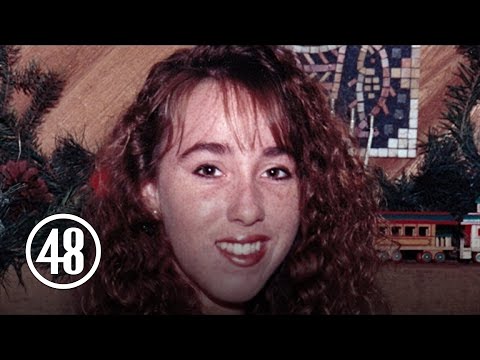
Vital Murder Clues | 48 Hours" Full Episodes
Episode Description
“48 Hours" reports on cases that experts say may contain important clues. Watch the YouTube mini-marathon, which includes "The Hunt for Sarah Yarborough’s Killer," "Murder at the Mall: The Michelle Martinko Case" and "The Yogurt Shop Murders."
00:00 The Hunt for Sarah Yarborough’s Killer 42:08 Murder at the Mall: The Michelle Martinko Case 1:22:48 The Yogurt Shop Murders
YOGURT SHOP CASE UPDATE: In September 2025, the Austin Police Department identified Robert Eugene Brashers, a serial killer and rapist, as the suspect in the Yogurt Shop murders. Brashers, who is deceased, was tied to the murders through DNA testing. In February 2026, a judge declared innocent the four men who were wrongfully accused of the murders — formally exonerating them. Attorneys for the men indicated they are discussing restitution and considering a civil lawsuit.
True crime. Real justice. "48 Hours" investigates the most intriguing crime and justice cases that touch on all areas of the human experience including greed and passion. "48 Hours," which premiered in 1988, has developed a rich history of original reporting and impact journalism that has helped exonerate wrongly convicted people, caused cold cases to be reopened and solved, and along the way changed lives.
For video licensing inquiries, contact: [email protected]
Read the full transcriptHide the full transcript
- [Music] [Music] [Music] 16-year-old Sarah Sarah Yarborough is being remembered as talented, creative,
- and kind. Sarah was an A student at the high school. Whenever you saw Sarah, she
- always had a smile. This case is about a 16-year-old girl who had the right to grow
- up. This case is about Sarah and everything that she should have been allowed to become.
- It was Friday the 13th in December of 1991. Her parents were out of town for her brother's soccer game. She stayed
- home. I was reluctant to leave Sarah. She didn't want to come, of course, cuz she
- had her whole weekend planned out. So, she had a friend come over and stay with her that weekend.
- We went to a basketball game, went and got junk food at the grocery store, a little bit of fast food. You know, we're
- 16. We were carefree. There was absolutely nothing that would make any of us think that the next morning
- everything would change. So, Saturday morning, Sarah woke up kind of in a panic.
- She woke up and said, "I'm late for practice." She put on her drill team uniform and
- ran out the door. She went to the school and discovered that she was early, so she parked in her
- car and waited for the rest of her team to show up. Shortly after the phone call started,
- where's Sarah? Do you know where she is? Sarah was found within an hour. Where was her body discovered? So, her
- car was still in the parking lot. Her body was approximately 100 yards away, still on the school property. Part of
- her clothing was removed. She had nylon stockings tied in a ligature around her her neck.
- [Music] I just remember just saying, "Not Sarah, not Sarah, not Sarah." over and over again.
- The suspect is a white male, 6 feet tall, with a medium build. They had DNA evidence. They had everything. They had
- witnesses. In that first week or so, it sounded like they had so much evidence for at least a short while. It felt like
- he said, "Of course they're going to catch him." And then when they didn't and they
- didn't, your expectations change. You don't know if it's your next door neighbor. You don't know if it's some
- random stranger. There was that constant fear of is this going to happen again? We literally had a monster in the
- community and we just we didn't know who it was. [Music] [Music] How often do you think about December
- 14th, 1991 and what happened on that day? quite a bit. It's a very traumatic thing
- to go through. [Music] It's been over 30 years, but the details of that day have never faded for Drew
- Miller. I had my friend spent the night at my house. We woke up that morning, watched cartoons, ate cereal, left to go
- skateboarding. Drew, who was just 13 at the time, lived down the street from Federal Way High School near Seattle,
- Washington. The school grounds have changed quite a bit, right? Drastically, yes. The tennis court's the only thing
- that's still here. Drew often took shortcuts through the school to go skateboarding, as he and his friend did
- that day. We used to hop the fence right here and cut through here. It was freezing cold that day. I
- mean, there was ice in all of the mug bubbles. We just, you know, started smashing them cuz it's fun. You know, it
- sounds like breaking glass. That's when Drew says they noticed a man in the bushes.
- Right where you see the edge of this dugout right here. That was all bushes that were probably this tall. So, we
- couldn't see him until he stood up. He's just staring at us from the bushes. That was pretty jarring. But
- then he just walked out of the bushes. So, then we just assumed he's just smoking weed or something. The
- mysterious man kept to himself and walked ahead of the boys. Drew says they didn't think much of it until they came
- across a horrendous scene. There in the bushes where the man had just been was the body of a young
- woman. It was horrible. Absolutely horrible. The way that he left her body, she clearly fought for her life.
- Drew says his shock turned to fear when he realized the man who was still just feet in front of them was now staring
- directly back at him. Does that look still haunt you? Oh yeah. Yeah. It's frozen in my mind. The boogeyman then.
- Legitimate boogeyman. The boys raced to Drew's house and police were called to the scene.
- [Music] When we approached the victim on one of the pieces of clothing, we saw the name
- Sarah. Detective Scott Strathy with the King County Sheriff's Office was one of the first officers on the scene. And of
- course, later we found out that that was Sarah Yarborough. [Music] Even for experienced
- investigators, this scene was really hard to deal with. Just the innocent nature of this
- young woman in her school drill team uniform with her hot curlers still in her hair. This was just pure unadulterated
- evil. [Music] Investigators believed this was a sexually motivated murder. She was
- partially clothed. Her jacket, her undergarments, her bra had been removed and placed next to her body. Police
- discovered that the car Sarah had driven that morning was parked in the school parking lot about 300 ft from where her
- body was found. There didn't really appear to be any sort of a struggle in the car itself. Detective John Free with
- the King County Sheriff's Office Major Crimes Unit would later join the investigation.
- She had a container of orange juice that she had made that morning. It was just sitting in the front seat. Nothing was
- tipped over. So, the question was, how did she get from her car to this hill? What led her there?
- Sarah was one of these people that would help anyone with anything at any time. And part of our working theory was, was
- she coaxed into following, you know, the suspect? Did he say something like, "I'm
- looking for my lost dog," or, "I can't find my car keys." Perhaps Sarah in an attempt to assist
- this person may have followed him to that area. Tell me about this one. That was less
- than a week, I think, before she died. I said, "Could I take your picture cuz your great grandma really wants a
- picture of you and your drill team?" And she goes, "Okay." It was just too incredible to believe
- that it could even happen. Sarah's parents, Laura and Tom Yarborough. I mean, who thinks that your
- daughter's going to be murdered? Tom and Laura had the excruciating task of having to tell their two sons the
- tragic news. Sarah's youngest brother, Andrew, was just 11 years old at the time. At that age, you probably never
- seen or heard your parents cry much, but that that pain in the voice is very, very vivid. Sarah, who had just started
- her junior year in high school, had big plans for her future, starting with college. She didn't want to go to a
- state school. She wanted to go to a school far away. She loved to travel. I actually would hear her say, "I can't
- decide if I want to be a museum curator or an engineer like my father." Yep. And
- I was always rooting for the museum curator. Liberty Barnes, Christy Gutierrez, Amy
- Perero, and Mary Beth Tommy were some of Sarah's closest friends. So, this was after the last day of 10th grade. And
- we're just kind of goofing around afterwards. And that totally I mean, you can see there's Sarah right in the
- middle of it being goofy. [Music] The fiery red hair. Was that her personality a lot? Yeah. She was
- artistic. She was creative. She was smart. She was feisty. imaginative, all of those things. She would be the last
- one to wait for someone, always be there with a smile. She would help with homework. It was her ultimate
- kindness. After Sarah was ripped from their lives, they say their sense of safety was gone forever.
- You grow up getting all the safety conversations with your parents and bad things can happen and it's all this sort
- of like vague possibility out there and then all of a sudden it was like no no no no it can really happen. It really
- did just happen. It was all hands on deck. The sheriff's office put everything they had into
- solving this case as as soon as they could. And the killer left behind important
- evidence. Sarah had not been raped, but the killer's DNA was found on pieces of her clothing.
- There was semen found on her underwear and on her jacket. We had a full male DNA profile.
- DNA technology was new back in 1991, but investigators hoped that DNA would someday lead them to Sarah's killer. In
- the meantime, they had eyewitnesses. I thought for sure somebody would know him. Drew and his friend who was with
- him the morning they found Sarah's body worked with police and a sketch of the man they saw in the bushes was released
- to the public. Police would later release a more elaborate sketch. I very vividly remember going through yearbooks
- going, "Okay, who looks like this sketch?" Everyone, it felt like at one point was was a suspect. But as days
- went by and as leads dried up, police kept coming back to Drew and his friend. They just made me feel like I was the
- only person that could help them solve this. I know that wasn't the intent, like, you know, the officers are just
- doing their best. How much pressure were you feeling? It's unimaginable pressure.
- And despite everyone's best efforts, it would take years to find Sarah's killer.
- This case was never forgotten. [Music] [Music] In early June of 1993, one and a half years after Sarah
- Yarro's murder, local media were there as students gathered in the courtyard of Federal Way High School to honor her.
- Bill Fuller, a family friend who helped spearhead the move for a memorial to remember Sarah, unveiled it with help
- from Sarah's younger brother, Andrew. It was quite a day. A lot of tears as they
- looked at it and could could see Sarah in that bench. Bill Fuller has known the Yar Bros for
- years and his daughter was in Sarah's class. Sarah was fun to be around. That was probably what we missed the most is
- she was fun to be around. The bench reads carpedium sees the day. A mantra Sarah lived by. Encased in
- bronze are some of her favorite possessions, ballet shoes, a replica of Sarah's beloved dog, Gibby, and books.
- Nice that people cared about her so much. Andrew Yarro, now an adult, admits that he struggled as a young teenager.
- It was especially difficult to see those sketches around town of the man police believed murdered his sister. You know,
- there was drawings of the person's face all over in businesses in town. You know, I do recall that quite a bit. Just
- having that kind of a constant reminder. Looking back, I feel like we didn't do a
- very good job with the boys. I think that we were so consumed by our own grief that we didn't take time to help
- them. I think we didn't really know how to help them. I mean, it wasn't something we had experience with. We
- didn't know anything about grieving ourselves or how to help them through it. And they weren't alone in their
- grief. Shannon Grant, the last friend to see Sarah alive, says she lived with constant regret. I wish we could go back
- and do it all over again. That I would have asked the other drill team members what time practice
- was, you know, maybe dropped her off. I mean, there's a lot of the whatifs. The milestones were especially painful.
- There was survivor guilt. Like, why am I filling out my college applications when
- Sarah wanted to go to college? This isn't fair. Every joyful occasion had this Yes. sorrow that went with it. That
- was There's one missing from the crowd here. Graduation Day, June 12th, 1993, was an
- emotional day, but even more so since it fell on what would have been Sarah's 18th birthday. Laura Yarro came to
- support her daughter's friends. I do not know where she found the strength to do
- that. She loved that green dress, right? Yeah, she wore green quite a bit with her hair.
- Lori Yarro says Sarah's friends helped ease her grief somewhat and she thinks she filled the void for them as well.
- Sometimes they would say, "Well, I'm going to date this person and I just wanted to let you know cuz I wasn't sure
- if Sarah would approve of this person." So, they would seek approval through you. You became sort of their surrogate.
- Yes. As life slowly moved forward, investigators kept working the case. I describe it as like a relay race where
- the baton was handed off from one detective to the next over the years and decades. I kind of refer to myself as
- the fifth beetle in this investigation. By the early 2000s, investigators had received over 3,000 leads, and advances
- in technology made them hopeful. They entered the DNA from the crime scene into the recently established KOTUS
- system, a national DNA database that includes profiles of convicted offenders. The strategy was to
- continually try to see if there would ever be a match while also investigating leads. But over time, there appeared to
- be no match. For us to have DNA evidence from the suspect, but not have that linked to anybody, it just didn't make
- sense. It it seemed hard to believe that the suspect hadn't committed any other prior
- crimes where his DNA wouldn't be in the system. That's when he says detectives realized
- they had to go in a different direction. My name is Colleen Fitzpatrick and I'm one of the pioneers of forensic genetic
- genealogy. In 2011, investigators reached out to Fitzpatrick to inquire about using
- forensic genetic genealogy, the practice of using software to compare unknown DNA
- profiles to information from public DNA databases and searching family trees to identify suspects. Genetic genealogy is
- well known now and has been used to solve numerous cold cases, but at that time it was in its infancy. When I
- started in this field, it didn't exist. Fitzpatrick says most police agencies had been skeptical of this new
- investigative tool. The police thought I was crazy. You know, this little old lady with a crazy idea, and I was
- actually almost laughed out the room, but the King County Sheriff's Office took a chance on Fitzpatrick. It was for
- free. I just wanted to see if it worked. What are you going to lose if you try something? The Yar Bros were encouraged.
- I think it wasn't until we met Colleen Fitzpatrick that I really began to think, oh, you know, that they're going
- to find this person. And it didn't take long before Fitzpatrick came up with the name of a
- possible suspect that surprised just about everyone. Everyone went, "No way. From the beginning, it was very
- promising and the story took some really bizarre twists. In 2011, 20 years after Sarah's murder,
- when forensic genetic genealogologist Colleen Fitzpatrick started working the Yarborough case, she traced Sarah's
- killer's family tree back to a man named Robert Fuller, whose family had come to
- America on the Mayflower. I found numerous matches to the name Fuller. When Fitzpatrick gave the name Fuller to
- the King County Sheriff's Office, they immediately knew of one person with that last name. Bill Fuller, the Yarro's
- close family friend who helped get that memorial bench built for Sarah. Naturally, that piqu our interest.
- From the beginning, Sarah's family and friends believed Bill Fuller had nothing to do with Sarah's murder. He didn't
- look at all like the suspect. The wrong hair color. He's short. He's not tall. He just didn't fit the profile at all.
- Fuller's age didn't match the profile either. He's 79 years old now, but was 48 years old at the time of Sarah's
- murder, at least two decades older than the man Drew Miller described. There was
- no way that I could be even remotely connected to the case. He fully cooperated with police and
- voluntarily gave them a DNA sample. It didn't match the DNA found at Sarah's crime scene. Yet, Fitzpatrick remained
- optimistic. The good news is that we came up with a possible last name to investigate, and this was the first
- break in the case in 20 years. Fitzpatrick knew that Sarah's killer was in the Fuller family tree
- somewhere. So, she and her team went back to work. And as the years went by, she knew she was only getting closer,
- especially after 2018 when forensic genetic genealogy was used to identify the Golden State Killer. Golden State
- Killer really started the big revolution. Things had evolved that we had the data to work with. The
- technology was in place that we could go for it. Then in September of 2019, Fitzpatrick's team made a breakthrough.
- They came up with two new possible suspects. Brothers Edward and Patrick Nicholas, who as the DNA showed, were
- distant cousins of Bill Fuller. You know, this is 8 years of on and off and looking at it, never giving up. This is
- it. This is exciting. Edward Nicholas was a registered sex offender. His DNA was in the system. It
- was in COS. But Edward's DNA wasn't a match. So they zeroed in on his brother Patrick, who in
- 2019 was a divorced loner who lived a couple of towns away from Federal Way. We learned that he was working at a at a
- auto parts store. Lived alone, uh, no children, no friends or acquaintances that would even visit him. Everything
- that he did was mostly by bus. He wasn't driving. Detective Re says he discovered that
- when Sarah was murdered, the bus route Nicholas often took happened to go past Federal Way High School. Back then,
- Nicholas was just 27 years old and around that time looked very much like the description of the sketch.
- It looked promising at that point, but we still needed to get a DNA sample from him to match up to the DNA evidence that
- we had. So, in late September 2019, investigators came up with a plan. We assigned a team of undercover detectives
- to start doing surveillance on Patrick Nicholas in the hopes of obtaining a surreptitious DNA sample. Eventually,
- undercover detectives followed Nicholas to a laundromat. They saw him go outside
- and smoke a cigarette. And Patrick Nicholas was seen throwing the cigarette butt on the ground that was collected by
- our detectives. That's what you needed right there. That cigarette butt. Yes. Actually, he dropped two cigarette butts
- and a napkin that fell out of his pocket and all three items were collected. The DNA samples were rushed to the crime
- lab and within days, detectives received the call they had been waiting for. The
- DNA matched. This was our suspect. Perfect match. Yes, Patrick Nicholas was arrested. There
- were so many suspects over the years. Was Patrick Leon Nicholas ever named as a suspect? Out of 4,000 tips, he was
- never named. I was I was pretty in shock. The news was a relief for Sarah's family and
- friends who had never given up hope that they would get answers. One thing the detectives kept telling us was
- eventually technology is going to solve this case. I trusted that and they turned out that they were
- right. And I remember going out to my car and balling, just balling. Finally, finally they got him.
- When Drew Miller, who had seen Sarah's killer back in 1991, saw Patrick Nicholas's face, he
- says he knew they had the right person. What did he look like? The same guy, just older. Just the same evil eyes.
- Those evil eyes stayed the same all these years later. Yeah. But it was not over yet. Why do you
- think you're here? I have no clue. During his interrogation, who am I being charged for? When detectives
- specifically asked him about Sarah's murder, he gave an alarming response. What we're investigating is is the death
- of a young girl named Sarah the young girl. Interestingly, he asked what year this
- was. And that really sent up a flag. Why? Why would you ask that? He's being told this is a murder case. We're
- wondering at this point, are there other victims? This is it. I'm not going to say anything. After one and a half
- hours, Nicholas asked for an attorney and stopped talking. But his criminal record would speak volumes.
- I am the one that got away. On a quiet morning in June 1983, 8 years before Sarah's murder,
- 21-year-old Anne Crony was sitting by her car along the Columbia River in Richland, Washington, when a man
- approached her. He seemed normal, kind of friendly, actually. Just friendly. I had asked him
- if he'd done any water skiing yet because he said he had just moved to town and he said he couldn't swim. And
- he said, "My name is Pat Nicholas." After a few minutes of small talk, she became uncomfortable. I noticed his
- voice was getting shaky and I told him I had to go. I went to close the door and he put
- a knife to my throat. Everything kind of stopped at that moment. He told me to take my clothes
- off. Nicholas stuffed Anne's underwear into her mouth to prevent her from screaming, forced her out of the car,
- and led her to the riverbank. We got about halfway down the bank, and he told me to stop. I ran and dove in the river
- cuz I was thinking he couldn't swim. Swam as hard as I could. Swam for your life. I swam for my life.
- Passers by found Ann at a dock nearby and called police. As it turns out, 19-year-old Patrick Nicholas was no
- stranger to law enforcement and had a record. He had raped two women and attempted to rape a third. He'd been
- convicted of rape as a juvenile and had actually only just been out for a few months when he attacked
- me. Days after Anne's attack, he was tracked down, arrested, and plead guilty to attempted rape. He told authorities,
- "I realized that I have a problem concerning raping girls." At his sentencing hearing, Anne
- spoke out. I was actually very angry and asked the judge for the maximum sentence
- and the judge did agree and sentenced him to 10 years. So I thought it was over. I thought that justice had been
- served. But Patrick Nicholas did not serve the full 10 years in prison. He was released
- after just 3 and 1/2 years and was never notified. She barely thought of him again until October 2019.
- The police knocked on my door and said that there were detectives in Seattle that wanted to talk to me about
- a cold case. They informed Anne that Patrick Nicholas had been arrested again, this time for the murder of Sarah
- Yarro. They told me that there were similarities in the cases and I was crushed.
- It had never occurred to me that what I escaped from was a murder. What's more, if Nicholas had served his
- full prison sentence, he would have still been behind bars that December morning in
- 1991, unable to murder Sarah Yarro. How angry are you to hear that he was released that early? And very, it
- brought up a lot of the old anger and even more anger because the system failed.
- King County Deputy Prosecuting Attorneys Celia Lee and Mary Barbosa describe him
- as a serial predator with a clear pattern. All of the women were approached at or near their car. He
- would strike up conversation and then pull a knife and tell them that they needed to walk where he would order them
- to take off their clothes and then rape them. Nicholas had also been convicted of sexually assaulting a minor in 1994.
- 3 years after Sarah's murder, five sexual assaults that investigators knew of, none of which had required him to
- submit his DNA. So, there was no record of him in the Cotus database. But in pre-trial hearings, the judge ruled that
- Nicholas's criminal history could not be entered in as evidence. She found that it would be unfairly prejuditial to the
- defendant. But the prosecutors were hopeful their case was strong enough. All right for the jury. In early 2023,
- more than 30 years after Sarah Yarro's murder, her accused killer, now 59 years old, went on trial. Sarah's childhood
- friends were there. I so clearly remember the morning before the trial started just going, I don't know if I
- can do this. It's like, you know, I had so many different emotions flowing through and it was like, no, we need to
- be there. There was this absolute love for Sarah and the Yar Bros that was so strong. Did you feel like they were a
- lifeline for you? Yeah. Be seated. You weren't in it alone. You were all in it together. As the trial got underway, the
- focus was on the DNA. What was your strategy then in trying this case? Well, we needed them to trust the science.
- There was a field that was emerging called forensic genetic genealogy. Patrick Nicholas's public defender,
- David Montes, challenged how forensic genetic genealogy was used to first identify Nicholas. I want to dig into
- the science because the first time that kind of defense had been used in Washington state. They used technology
- that is not only unproven, but just whack really. He's not the person that killed Sarah. The police needed an
- answer more than they needed the right answer. And so they turned to new novel, untested technology. Genetic genealogy
- is a new field. It really hasn't been tested out. Should we be making important decisions based on something
- that is not well or deeply understood? But the prosecutors said that argument was moot because Patrick Nicholas's DNA
- matched the DNA found at the Yarro crime scene. And Detective Free says the numbers were astronomical. The odds were
- one in 120 quadrillion that quadrillion. Yeah. Right. That it it was somebody else.
- If the numbers pointed to Nicholas's guilt, law enforcement says so did evidence found at his house near the
- time of his arrest in 2019. It was almost like a layer. There was no working electricity at this house.
- Stacks of pornography all throughout the the place. We also found a newspaper from 1994 that had on his front page an
- article about the Serbo case. And going through one of the kitchen drawers, we found a torn photograph taken from a
- magazine, a woman in a cheerleading outfit. When the prosecutors showed that photo in the
- courtroom, the oxygen left the room. Yeah. Montes downplayed their significance. I think both of those
- pieces of evidence were not especially strange given the general state of his house. There were stacks and stacks of
- newspapers all over his house. This is evidence tape. Patrick Nicholas didn't flinch as the evidence was shown,
- showing no emotion throughout the trial. But Sarah Yarro's presence was felt, especially when now retired Captain
- Scott Strathy carefully unpackaged and displayed Sarah's clothing that had been in storage for over 30 years. her drill
- team jacket, shoes, sweater, even her nylon stockings. This was like opening a a time capsule. All of a sudden, they
- were real things. They weren't even photographs. They were the things she had on her body when she
- died. You just you sort of felt yourself crumble. After nine long days of testimony, the
- case went to the jury. All eyes for the jury. It took them just over a day to reach a verdict. I was shaking and like
- just that like there was so much adrenaline and so much anticipation. We the jury find the defendant Patrick
- Leon. Everything just dropped and it's like what? [Music] Why do you think it took law enforcement
- so long to identify Patrick Nicholas as a suspect? Take a look at a timeline of the case at 48 hours.com.
- This is the state of Washington versus Patrick Leon Nicholas. Sarah Yarro's loved ones had waited over 30 years for
- this moment. We the jury find the defendant not guilty of the crime of murder in the first degree premeditated.
- Patrick Nicholas was found not guilty of the first charge premeditated firstdegree murder. I remember dropping
- my head to my hands. I was angry. I was in disbelief when that first one came in
- not guilty. I closed my eyes. But there were other charges and there was still hope of a conviction. Guilty
- of the crime of murder in the first degree. Guilty in the second degree. Patrick Nicholas was found guilty of
- firstdegree murder and seconddegree murder. The jury ruled both had been committed with a sexual motivation. I
- remember hearing the family behind me cryur and I made eye contact with the jurors
- and nodded at them. You know, they got it. They got it right. I feel so grateful for those detectives, for the
- boys, for the previous victims, for every witness who took the stand. So grateful that all these people came
- together. Two weeks after Nicholas's conviction, dozens of people who had been involved
- in every part of Sarah's case gathered back at the courthouse for his sentencing hearing. Prosecutors asked
- the judge to impose extra time to take into account all of Nicholas's crimes. The sentencing hearing was exhilarating
- in a way that I never expected. M it was probably the most raw human courage I have ever seen in my life.
- [Music] Sarah's death left our family broken and we've never been the same. The pain in
- my father's voice over the phone telling me Sarah was dead. Person after person took to
- the podium to say all that Patrick Nicholas had taken from them. Coming face to face with pure evil that day has
- deeply impacted my entire life. He took her life and what was sure to be a brilliant future from
- her. In taking Sarah, he took the innocence of every one of us to face Patrick Nicholas and to say what they
- had been wanting to say to his face for 30 years. Patrick Nicholas is pure evil.
- There was so much power in the room. It was electric. And then Anne Crony, who wasn't allowed to testify at Sarah's
- trial, started speaking. He just did like a double take and shuddered when Anne stood up. Like he saw a ghost. Yes.
- I'm sure he didn't expect to ever see my face or hear my name ever again. We rely
- on a system of justice that is designed to protect us from predators like Nicholas. And this system failed me. It
- failed Sarah, her family, friends, and countless others. I asked the court to please not make the same mistake. After
- everyone spoke, Judge Josephine Wigs addressed the court. And when I think about this poor
- child, this poor child, what she experienced fighting for her life. Judge Wigs put her fist on the thing and said,
- "This was a child." She kept saying that and all I could think was, "Oh my gosh,
- that's right. We were children." Yep. Nicholas received a sentence of almost 46 years. For Sarah's family and
- friends, the sentence brought mixed emotions. I don't know that this is justice. It is a verdict and it is
- putting someone away for something that they did. But he got 30 years that she didn't get. It makes me mad that he was
- free for so many years. And who knows however many other people were hurt during that time. I I don't know that
- we'll ever know and that could have been avoided. Forensic genetic genealogy helped solve Sarah's case, but
- prosecutors say similar technology could have identified Patrick Nicholas years earlier if only familial DNA searches
- were allowed in Washington state. In a familial DNA search, an unknown DNA sample is compared against profiles
- already in Kotus to search for possible family members. Remember, Patrick Nicholas's brother's DNA had been in
- Cotus for years. The legislation just doesn't exist in this state to allow that search. California uses it. the UK,
- as I understand, York, New York, Wisconsin, Minnesota, Colorado, Florida. Do you think it's time to get that law
- changed? We do. We do. The Yarboroughs agree and hope that Sarah's case can make a difference. I would like to know
- that other parents don't have to wait 30 years. What do you hope her legacy is? I think
- her legacy is she was always someone who brought people together. She's brought all the people together that attended
- the trial. That's the kind of person she was. For Drew Miller, who at 13 found Sarah's body, the connections made at
- trial finally brought him some peace. Knowing he's in prison is fantastic, but knowing her family and friends is way
- more important to me cuz that's what's given me the actual healing that I needed. This is probably the beginning
- of our junior year. Sarah's friends will always remain bonded by the past and Sarah's stolen future.
- Not only was she beautiful, her soul was beautiful. And the grace and the beauty
- that she carried and left with all of us, we won't forget her. We will never forget her.
- [Music] New CBS Next. He's not breathing. A surgeon's girlfriend found dead. Provided those drugs. Was this a case of
- a controlling doctor's depravity? This was not just some simple accident. This was much more. A new 48 hours next on
- CBS and streaming on Paramount Plus. [Music] On December 19th, 1979, Michelle Marteno was a 18-year-old
- high school senior. She was impossible to miss. She had the big blonde hair. She was that striking. She was
- striking. Just a smart, kind, nice person. She was a member of the concert choir.
- They had a banquet which she attended. Afterwards, Michelle ended up going to the mall. So did a bunch of her friends
- from the choir. The mall had just opened. It was 2 months old. It was the place to be in
- Cedar Rapids at the time. So she would have been parked right in this area. Yeah, she would have been
- parked facing this direction. She left the mall shortly before it closed. It closed at 10 p.m. that night.
- You're talking December in Iowa. It's very dark. It's very dark. Michelle walks out and gets in her
- car. This person snuck up on Michelle, opened the door, and climbed in. She was stabbed and cut a total of 29
- times. This was a real fight. It looks personal. It's a lot of stab wounds. It's
- overkill. It's always the boyfriend, the girlfriend, the husband, someone really,
- really close to the person. Did either of you know Andy Sidell? I knew Andy through Michelle. That was her
- boyfriend. I took an instant dislike to Andy. He was very possessive of Michelle. I
- believed Andy did it. I did not see anything from the men in her life that would give any of them motive to do
- something like this. I definitely didn't see that from Andy Sidell. Entire police force dedicated time and
- energy to try to find answers to what happened to Michelle. After a couple of years, the leads were
- starting to dry up. The case then goes cold. Yeah. We really had given up hope. We truly had. These guys never gave up.
- The investigation never really stopped. I've been through every piece of paper in here, probably close to 8,000 pages
- of reports here. The biggest break came in 2005. The DNA was the key. We collected DNA from 161 people.
- We were looking for a needle in a hay stack. We just need to get lucky. It took us 13 years until we had a
- suspect. We immediately call up the lab. Is this our guy? What was the answer? Yes. What are you doing in that moment?
- I don't know what I was doing. I was speechless. So, do you think he just all these years
- thought he got away with it? Well, yeah, cuz he did. [Music] [Music] this tragic case that's been haunting
- this community for years. Just before Christmas in December 1979, every single police officer in
- Cedar Rapids, Iowa, was called to work on the horrific murder in the parking lot of Westdale Mall. I never seen
- anybody stabbed that many times, including now retired detective Harvey Deninger. Something like that was
- unheard of around here. Michelle Martino, an 18-year-old high school senior, had been found violently
- stabbed in the front seat of her car. Her killer unknown, confounding generations of investigators. We
- couldn't come up with anything. And we just kept plugging away. How old were you? I was 5 years old. Do
- you remember the case? No, not not from when I was little. Harvey's son, Matt. But every single year on December 19th,
- Michelle Martino was a brighteyed blonde. The local news would have a Michelle Martino segment. 27 years ago,
- her life was cut short. So, it was really hard to miss the severity of it. Decades later, Matt, now a detective
- himself, joined the investigation into Michelle Martino's murder. I love how old this map is. 36 years after his
- father had begun working the same case. Wouldn't it be something if I could find
- our suspect and my dad is still alive. And as he dug into the thick files, the son went to his father to help him make
- sense of it all. I wanted someone to talk to about it and I wanted someone that really understood it.
- The crime had stunned the small city of 110,000. It scared the hell out of us. Tracy Price went to high school and sang
- in the choir with Michelle. It just hit me like a brick. It was just shocking. Mike Hyrick had dated Michelle in high
- school and says her murder shattered the city's all-American image. If that could
- happen and the person wasn't caught, anything could happen. This one, I think, is one of our
- favorite pictures. She's sleeping with her dog. So cute. Here we're into the hair stage. Lots of hair pictures. Yep.
- Janelle Stonereaker is Michelle's big sister, 12 years older. Michelle was the flower girl at her wedding. She and her
- husband John say nothing could have prepared them for the horrible news they got the morning after Michelle was
- killed. We just hugged and we couldn't believe she was gone. My dad was very stoic about it, but he
- was angry and my mother was just brokenhearted. It was a devastating blow to parents who had been through so much
- with Michelle already. Janet Martino had suffered five miscarriages and was 44 years old when Michelle was born. It was
- great. I mean, it was just so exciting when my sister was born and she was the miracle baby. When she was 12, Michelle
- was diagnosed with scoliosis, a curvature of the spine. She had to wear a brace that went from her neck to her
- hips. She felt very different, very self-conscious. So, that was a tough period.
- But at age 14, she was able to shed the brace. And then Janelle says everything changed for Michelle. Farrah Faucet was
- in with the hair and my sister always had the long blonde hair. So she thought, "Okay, I can do I can do the
- hair." You know, Michelle was blissfully unaware. She was of all this uh attention that she was
- getting from men. She caught the eye of Andy Sidell, who at 16 was a year older than Michelle. We
- met him roller skating. Michelle's friend, Gail Dawson, remembers him, and there was this
- flashy sports car guy, you know. Michelle and Andy were together for 2 years and then broke up. Friends say she
- didn't want to be in a committed relationship. And Andy apparently didn't take it too well. After they broke up,
- he wanted to know her every move, who she was dating, why she was dating that particular person. He would talk to her
- friends. He just wouldn't go away. Police learned Andy had run into Michelle at the mall that fateful night.
- They brought him in for questioning. Did he have an alibi? Andy did have an alibi. Andy was at home shortly after
- the mall closed and his mom uh provided an alibi. The problem with Andy's alibi,
- though, is that moms would say a lot to protect their children. Every male that knew her
- was a suspect that they had to clear. You must have been a suspect. I was. Mike Hayrick was questioned as well. And
- even though he was more than a 100 miles away at college when Michelle was murdered, police knew he had also dated
- her. All of it was a little intimidating. It was hard. It was scary. Mike says the police were tough on him.
- At one point they thought that I wasn't telling them everything and they laid the crime scene photos out in front of
- me and it was hurtful. Mike was never considered a serious suspect because he was not in Cedar
- Rapids at the time of the murder, but Andy was. And Andy's behavior at Michelle's funeral only reinforced many
- people's suspicions about him. He was almost in the casket. He was so emotional. He has arms around her and he
- was just sobbing. And he said to me, "I have to know who she loved when she died. Did she love me or did she love
- Mike? Who did she love when she died?" But police had no hard evidence pointing to Andy Sidell. He left Cedar Rapids
- soon after high school and joined the Navy. There's a large amount of us that were convinced that he did kill her.
- I thought it was just a matter of time before he was arrested and charged. There was no one
- else. There really wasn't another suspect. [Music] As police investigated those closest to
- Michelle Martino, looking for potential suspects, they were also looking at the possibility that Michelle may have been
- killed outside the mall by a stranger. She was out there and she was looking for a coat that her mom had put on
- layaway for her for Christmas and she was going to pay it off. Michelle had $186 with her to pay for
- the coat, but ultimately decided she didn't want it. Tracy Price had run into her at the mall that night and gave her
- a protective warning when he saw her holding the cash. Put that away. You know, don't be flashing money out here
- in the middle of everybody. Tracy only learned later that Michelle was a little anxious that night.
- She was nervous about going out to the mall by herself and that she had told someone that she felt like she was being
- followed. You didn't notice anybody watching her, paying close attention to her. I never got that feeling.
- Michelle headed to her car in the dark. So, she was parked pretty far away. Yeah, she was parked a ways out here. I
- think she gets in. I think she probably turned that car on herself and and was warming it up for a minute to get the
- frost off the windows. And I think that in that moment before she puts it in drive and leaves, I think he's at the
- door, pops it open, pushes her over, and climbs in. Sounds like a robbery. On the
- surface, it would sound like a robbery, but she did have cash on her. It wasn't taken. She did have a a bag with some
- items she had purchased in the back seat. Those weren't taken. So, is it a sexual assault? It very well could have
- could have been the plan. Although the autopsy showed she was not sexually assaulted, Michelle had defensive slice
- wounds on her hands and body. You have to assume that that pretty much any motive that you can logically think of
- was a possibility and that Michelle decided she wasn't going to allow that to happen. She fought.
- Whatever the motive, the asalent had come prepared. They found rubber glove indentations on the outside of the car
- in dirt. They found them inside the car in blood. It was clear that that person was trying to conceal their identity.
- Investigators had no fingerprints, no witnesses, and few leads. Although they had a blood soaked crime scene, DNA
- technology was still years away. It's frustrating. By 1986, this case is sitting on ice. It's that cold. No one
- can think of anything uh more to do at that point. Michelle's family was even more frustrated. It seemed that
- everybody had been looked at. We thought the investigation was pretty much dead in the water. It would take almost two
- decades, but the case would come alive again. In 2005, Detective Doug Larrison was in
- charge. Coincidentally, he had gone to high school with Michelle. Although they were not close, her murder had deeply
- affected him. So that had been on your mind since you were 18 years old. How do we get this solved? Right. I felt the
- responsibility towards my classmates actually to get this crime solved. In the years since Michelle's murder,
- DNA had emerged as a forensic tool. Technology changes, science changes, so I wanted to proceed and move the case
- forward. And Larrison did just that. He was reading Michelle's file when he discovered that sometime earlier,
- another detective had sent blood scrapings found on the gear shift of the car out for testing, but nobody had
- followed up on the results. And it just stays in the file until somebody finds it and it can get lost in the file. And
- until somebody actually sits down and reads the file, do they go, "Oh, wow. We have DNA." Those different investigators
- don't necessarily network with one another. But Larrison found that lab report and
- it showed that not only did the gear shift have DNA, it was male DNA. He had probably cut himself and that's
- how his DNA and his blood got mixed with her blood on the gear shift selector. Larrison then sent Michelle's dress,
- which had been safely tucked away in an evidence locker, to the lab for further testing.
- What did they find? A spot of blood on her dress with a full male. DNA profile and uh it was consistent with the male
- DNA profiled on the gear shift selector. Larrison had identified a crucial piece
- of evidence. I think it's just common sense that that's probably your killer right there. Detectives had the
- evidence. Now all they needed was the suspect. We know we just need one person. We just need to get get lucky,
- you know, have the sunshine on us just one day when we find one person that matches that. But it would take many
- days, more than a decade. And it wasn't luck. It was cops who wouldn't quit until they finally narrowed in on one
- very surprising suspect. Oh boy. This is it. We have finally gotten down to the wire on this.
- [Music] [Music] here in America's heartland for friends like Tracy Price who saw Michelle
- Martino the last night of her life. Every anniversary it goes through your head. You know, here's another
- year. Still don't know. For ex-boyfriend Mike Hyrick, we all were victims in a way. Well, your
- innocence was stolen. Yeah. Yeah. Exactly. Then the fear set in. And for close friend Gail Dawson, Michelle's
- murderer left a mark on all their lives. You're scared. You're afraid to go places.
- The killer had vanished. But by 2005, investigators were on to something new. Science. And that male DNA profile in
- Michelle's dress and the DNA from the blood on her car's gear shift. Would it be fair to say you found a needle in a
- hay stack? I think there was a lot of needles in in a lot of hay stacks in this case. For lead investigator Doug
- Larrison, old evidence suddenly had fresh potential. He shipped the blood samples to Cotus, the nationwide
- database of DNA collected from arrested offenders. If Michelle's murderer had a previous record, Cotus will give us a
- hit and tell us who matches the profile. So, you send it to Cotus and what happens? Well, we never got a hit.
- Dead end. The DNA from Michelle's dress and car did not match up with anyone in the
- huge government file. So, now we had a job to do. Starting with locating all the people
- Cedar Rapids cops had originally interviewed. We collected DNA samples from over a hundred different people.
- Cops had to convince them to take a DNA test. It was timeconuming. Mike Hyrick and Tracy Price were tested. Both came
- up negative. At the top of Larrison's list was Michelle's old boyfriend, Andy Sidell. I think he was probably the main
- suspect from the very beginning of this case. Andy Sidell had lived for 27 years
- with many in his hometown believing he was a killer. I said, "Listen, Andy, if you give us your DNA and it doesn't
- match, then you're eliminated. You're cleared." So, he voluntarily gave his DNA and he was eliminated.
- But whoever ended Michelle's life left a different but lasting mark on Andy. Michelle's parents both died before that
- DNA test exonerated him. They likely went to their graves believing Andy was their daughter's killer. I feel very bad
- about that. Andy was a victim himself because many, many fingers were pointing at Andy.
- Larrison moved on. classmates, friends, family searching for a match with that male DNA. So, you do a 100 different
- people. What comes back? Everybody's eliminated. No matches. It had been 10 frustrating years for detective Doug
- Larrison. I was kind of burned out. So, I went to my supervisors and I said, "Hey, I think you need to get somebody
- to replace me on this case." One of these had the FBI profile in it. And that's when Matt came in. Matt Deninger,
- Harvey's son. that second generation searching for Michelle's killer. In 2015, he took over as lead detective.
- They would tell you our computer records only go back to 1990. Facts hadn't changed, but DNA technology had once
- again advanced further, offering tanalyzing possibilities. We've got this DNA profile. How can we get more
- information from it? Can we find out eye color, hair color, race? Deninger reached across the country to Virginia's
- Parabon Nano Labs and they said, "Yeah, we know what you're trying to do and guess what? We can make a picture of a
- potential suspect from that DNA sample." Did you think that that could be possible?
- No. No. I had no good concept that that was possible. Um, it sounded a little bit sci-fi, but I was ready to try. We
- had to do something. The portrait was striking. Parabon called the technique snapshot. It put a
- face on a phantom. What we learned from that is our suspect was probably a white
- male, blonde hair, blue eyes. This first image, let's show you here. And so we had a press conference. Investigators
- had narrowed down the suspect's genetics, but they did not know his age or have a clue as to how he wore his
- hair. So different sketches were created, each with a different look. [Music] A town hungry for justice searched its
- memory for a match. Do you get a lot of tip calls? We got hundreds. Any of them pan out? No. It's every blondhaired,
- blue-eyed guy that ever walked the face of the earth and step foot in Iowa. Are you just confused? I was really confused
- and I did not know where to go next. That answer came from an infamous but totally unrelated case. California's
- so-called Golden State Killer. Joseph D'Angelo was arrested in 2018. Charged with a decadesl long spree of serial
- murder and rape. That was big news. That was big national news. Then I read the article and it talked about genetic
- genealogy. And you went bingo. I went bingo. Genetic genealogy. the charting of DNA
- from one family member to another, a DNA family tree. Parabon was ready to test that same DNA one more time. They said,
- "We'll use the sample you already gave us for the uh snapshot images." I said, "Let's do it."
- Parabon searched a public national database called Jed Match of people who submitted their own DNA voluntarily to
- trace their own personal family tree. And in July of 2018, we got a report back from him. They said, "Good news. We
- found a relative of your killer." Brandy Jennings is our gal in Vancouver, Washington. She's the second cousin,
- right? Once removed. Exactly. Brandy Jennings, an office manager and single mom, was a distant relative to the male
- whose DNA was found on Michelle's bloody dress and in her car. So, you start with
- her. We start with her. Deninger spent months building Bry's family tree all the way back to her great great
- grandparents. We used genealological records, birth records, marriage records, gravestone records, anything we
- could find to fill in a bunch of these unknowns. As more blood relatives of Brandy Jennings provided their DNA, a
- genetic puzzle filled in and the detective reached out to Parabon once again and they recalibrated things and
- said, "Listen, we think your best odds are these three brothers who live in Iowa.
- Three brothers, all from Iowa, all likely sharing some DNA with the blood found in Michelle Martino's car. A
- 38-year trail was heading straight back home. 20 minutes away. I was pretty excited about this
- [Music] one. By October of 2018, Detective Matt Deninger's painstaking ancestry searches
- had narrowed the suspects down to three brothers in Iowa, and all of them were still alive. We immediately started
- doing research on these three brothers. Donald Burns, Kenneth Burns, and Jerry Burns. Deninger and his team set up a
- plan. They would collect DNA samples from the brothers to see if any were a match.
- and they would do it without them knowing. You think one of them is a suspect, you can't tell any of the
- three. Not only can I not tell any of the three, but I was careful who I told in general. Iowa is not the biggest
- state in the union, and you never know who knows who. They followed one brother to lunch and grabbed his straw. For the
- second, a toothbrush was collected from his garbage. And then the third brother,
- Jerry, we drove up to Manchester. We had already established kind of a pattern or
- or some locations to try to find him. After a couple of hours, he spotted Jerry Burns at this pizza restaurant.
- And he drank at least two sodas out of a glass with a straw. All three brothers samples were sent to the lab. Don and
- Kenneth were not a match, but the results showed Jerry Burns's DNA was an exact match. For Deninger, the message was
- clear. I I was definitely speechless. I'm almost speechless today thinking about it. It turns out that Parabon
- sketch of the suspect was very similar to a young Jerry Burns. But Burns wasn't an obvious suspect. We are
- not finding any connection at all. No connection to Michelle. No connection to that car.
- Even more baffling, Jerry Burns's resume was the opposite of a cold-blooded killer. He had no criminal record and
- was even a respected businessman with a wife and three kids. Deninger picked a particular day
- to interview Burns at his business. Hello. December 19th, 2018. Hey, how are you today, Jerry? My name's Matt. The
- Cedar Rapids Police Department. exactly 39 years to the day after Michelle was murdered. I wanted to rattle him. I
- wanted to bring that up during the interview and see if that would do anything to him. Copy of the Using a
- hidden camera inside a coffee mug. Deninger tried to get a confession. The reality is we have your DNA at the crime
- scene and so we know you were there that night this happened. How would we get your DNA at the crime scene there,
- Jerry? I don't know. But Jerry acknowledged he had been to the mall with his family in the past. Did you go
- to Westdale Mall? Oh yeah, we've gone to Westdale Mall. Although Jerry couldn't remember when he was at the mall,
- Danglinger continued to press him. Terry, what happened that night? I don't know. Despite Burns's denials, the DNA
- was enough to arrest him for the murder of Michelle Martino. Anything you say can will be used
- against you in a court of law. On the ride back to Cedar Rapids, a camera was rolling again. This time in the police
- car and Deninger believes Jerry offered something revealing. He said a few things about blocking stuff out,
- traumatic events. I think it's possible it's happened. I'm sure something like that would be
- possible to block things out your memories. You're a homicide detective. Your gut tells you something. What does
- your gut say? My gut told me the second he refused to deny it or give me a plausible explanation that we had the
- right guy. For Michelle's sister Janelle, news of the DNA match and the arrest signaled
- hope. And a day she and her husband John thought would never come. We were just hooping and hollering and we were just
- talking and talking. We were just so excited. But for the Burns family, it all came as
- a complete shock. Jerry's daughter Jennifer and his brother Dawn could not believe the man they know and love could
- ever be capable of such a gruesome act. We did not believe it. This could not be
- our dad. He couldn't have done it. There was just no way. I mean, he was he was always there for his family.
- Circumstances just made it highly improbable from our perspective. First of all, there was no connection between
- Jerry and Michelle Martino. None. Leon Spees is Jerry Burn's attorney. He believes his client's demeanor during
- the police interview wasn't out of the ordinary. I challenge anybody to to predict how any person is going to
- react, let alone react being caught out of the blue with an investigator trying to attribute them to a a horrible,
- horrible crime. He did not commit this murder. In February of 2020, Michelle Martino's
- accused killer went on trial more than four decades after her murder. Due to the buzz surrounding the case in Cedar
- Rapids, the judge granted a venue change to Davenport, Iowa, an hour away. The evidence will show that Michelle Martino
- was murdered that night by the defendant, Jerry Burns. Prosecutor Nick Maybanks felt the weight
- of his hometown on his shoulders. A lot of eyes on this case. There are generations that grew up with this story
- and the generation who lived through the horror and suspicion. Always seemed to be a happy Several of Michelle's friends
- were called to testify, including Michelle's ex-boyfriend and once prime suspect Andy Sidell, who says he and
- Michelle were on good terms the last time they saw each other. There was no reason for us to to part ways in a bad
- way. We just kind of grew apart as we evolved growing into adulthood. Do you swear or Mike Hayyrick was also called
- and had to relive Michelle's murder all over again. This trial was hard on me for a lot of us. Brought it all back
- into focus in a way that it hadn't been in focus since those early, early days. This was a random act of violence
- committed by a stranger. From the start, the prosecution faced a number of hurdles. The case and the evidence were
- decades old. Tried to take 40 years of investigation and condense it into a story. And a lot of things about this
- suspect didn't make sense. What's that like for you? You have a suspect who has no criminal background that we're aware
- of. Mhm. And this heinous crime that looks extremely personal, right? Yeah. You have no story. I don't. Yeah. And
- after he was interviewed, we didn't have much of a story either. A story the Burns family believes was problematic
- from the start. They wanted an explanation of how his DNA got there. Well, how is he supposed to know from 40
- years ago? You know, I can't even remember what I did last week every day. So, would you say it's impossible that
- Jerry murdered Michelle? I'd say it is. There's absolutely no way it could have happened. I don't think there's any way
- that my dad could have done this. The prosecution's case hinged on that one critical piece of evidence. Jerry Burns
- DNA. We got the science. We got the guy. There's a one in 100 billion chance that
- it could be somebody else's. There's only 8 billion people or so in the world. But Lean Spees argues the DNA
- evidence isn't foolproof. There are lots of misconceptions about DNA. It's not the silver bullet that law enforcement
- often portrays it to be. As the state's case wound down, prosecutor Nick Maybanks had one last
- card to play. He called a new witness, Michael Allison, a drug offender who had become friendly with Jerry Burns in
- jail. Yes, I do. I asked him directly if I asked him, Jerry, did you do do the crime? And he said, I can't talk about
- this. But Burns did say something curious. He feels like uh no matter what happens in
- this case that he he wins because he had had the opportunity to be out there with
- his family all these years. Allison said Jerry later made another comment while they were playing cards
- that disturbed him so much he volunteered to testify. He had told me if I keep beating him in
- peuckle he was going to have to take me to the mall. It disgusted me. In his defense case, Leon Spees calls
- only one witness, Dr. Michael Spence, a molecular biologist. He says while there
- is no doubt the DNA in Michelle's car belonged to Jerry Burns, how it got there was another matter.
- Is it Dr. Spence a plausible explanation that the DNA of Jerry Burns could have come about
- by a transfer? Yes, that's a distinct possibility. Every time you come into contact with something, you're shedding
- DNA. You're leaving a biological trail of yourself. She was in a shopping mall before she was killed. A shopping mall
- that the Burns family had used. She sat down with a friend at a food court, a food court that Jerry Burns and his
- family may have sat at. But how did Jerry's DNA end up on the Buick's gear shift? Jerry's brother, Don Burns,
- believes there could be an innocent explanation. He worked in a dealership that sold Buick cars. So there is a
- possibility that if if records show that that car went through that dealership, his DNA could be in that car. But
- Detective Matt Deninger isn't buying it. My question for them would be, did the dress go to the dealership, too? This is
- this fantasy world. Common sense says that that's not the case. Impossible. Impossible.
- Ladies and gentlemen of the jury, good morning. In his final arguments, prosecutor Maybanks tells the jury there
- was only one way Jerry Burns's DNA got into that car. There was no chance of outside
- contamination on this dress. We know how it happened and we know who did it. In his closing
- argument, SPE attacks the integrity of the investigation. you can consider not only the evidence but also the lack or
- the failure of evidence produced by the prosecution. And he tells jurors to consider how unlikely it is that a man
- like Jerry could commit a crime like this. The state scenario here is that Jerry
- Burns a married man with two young children at home leaves drives to Cedar Rapids, Iowa in the night, leaving his
- wife and children behind armed with a knife, armed with rubber gloves, goes to a Westale Mall on
- the chance that he's going to encounter Michelle Marteno, designs to kill her, and then
- leaves and drives back home splattered with blood, presumably with a knife wound in his hand. That's the scenario
- the government wants you to believe. The jury begins deliberations on a Monday afternoon. Remember, you are the judges
- of the facts. Nerves are on edge. I was not thinking slam dunk. All it takes is one juror to have a hung jury. But just
- 3 hours later, I said, "We have a verdict." So, we rush into the courtroom, sit down, and we wait.
- [Music] Thank you. We, the jury, find the defendant, Jerry Lynn Burns, guilty of the charge
- of murder in the first degree. Guilty. The courtroom was silent. We almost couldn't breathe. It
- was just amazing. It was fabulous. We were aware of how quiet it was on Jerry's side and that there was
- no reaction. Unfair. I'd say I was stunned. The verdict came back so fast. I don't
- know if the jury really took time to look at the facts. What do you feel in that moment? Extreme relief. The weight
- of the world was off my shoulders now. Harvey Deninger, the investigator who was there at the beginning of the case
- 40 years earlier, saw his son help end it. I'm proud as heck of him. I really am proud to to get an answer,
- you know, while he can he can still appreciate it. He said today how proud he is of
- you. Well, All right, we're going to take a break. Finally, there was an answer to the
- question that had haunted Cedar Rapids for so long. But there is a lingering question. Was Michelle Martino Jerry's
- only victim? I just seen something about Jodie Hus and Troop recently. In his interview with Deninger, Burns
- randomly mentioned the name of Jodie Husen Troop. You are watching News Channel 3 Daybreak. She was a blonde
- news anchor kidnapped near her car in a parking lot in 1995 and never found. She
- worked in Mason City, Iowa, 2 hours from where Burns lived, though there is no evidence he knew her. Do you suspect
- that Jerry Burns was involved in other crimes? I don't know the answer to that. My gut
- tells me there's probably something else out there. Mason City police will not disclose
- whether they are investigating Burns in the Who's Andrew disappearance and his DNA is not connected to any other cases.
- But in Michelle Martino's case, she played a unique role in revealing her killer. She fought so hard that she
- caused the murderer to cut himself. He left his DNA and so Michelle helped solve her own murder.
- This human right here Four decades after Michelle's death, her friends, family, and generations of
- investigators gathered to celebrate her memory. This case wasn't isn't just about her
- death, it's about her life. Nick Maybanks worded it the best. I mean, he said it's not about how she died, it's
- about how she lived. You can't help but wonder where life would have led her. Her name will be forever etched in local
- history as part of Cedar Rapids most haunting crime. You've been a prosecutor for 20
- years. Is this the biggest case you've ever had? Yeah. Every case you want justice, but a case like this touched so
- many people over so many years. There'll never be another one like it. [Music] [Music]
- every year marks another year, you know, that there's no closure. I still have insomnia 30 years
- after the fact. I wish I'd solved the crime for the families. We tried. I was a cop for 32 years at Austin PD.
- I'll always be associated with that case. There's no getting away from that. I just hope one of these days we can put
- this thing to bed. [Applause] Jumpy. Yeah. Uh, you hear about the call 2900 West Anderson? Yeah, I'm headed
- over there. The call occurred at 11:27 p.m. Homicide 4. Homicide 4. Did you get my in there?
- I was the lead investigator on the I can't believe it's yoga shop murder case. On December 6th,
- 1991, there was a robbery, fire, and murder committed. It's all right. I'll make the call
- myself. The victims were Jennifer and Sarah Harbison, Eliza Thomas, and Amy Heirs. I can still see them. I can still
- see the inside of that place. That stuff's indelibly burned in my mind. There has never been in Austin a more
- gristly, ugly crime. There's four girls in there and they're all beautiful girls
- and they're very young. They're cleaning up. They lock up the yogurt shop and then we believe it to be two individuals
- came in. They force them to the back room at gunpoint. I lost my sister Eliza Thomas in the
- yogurt shop murders. I was 13. Yeah, I was 13 when my sister [Music] died. The whole city was in
- shock. Everywhere we drove, there were these billboards with a picture of my sister on it. And so it's like you just
- hold on to anything you can to get through these moments that are so impossible.
- We went where the case took us. Open the door. Police. We're either going to charge some people and get them
- in jail or clear them from this case. I don't know how many murders I've tried. It's unlike anything I've ever
- done before. It's nothing but one unexpected twist after another. Do you believe that there is right now
- some evidence that could lead to the killers? Yes. Yes, I know who did this. I just don't know his name. Is this the
- end of the beginning or the beginning of the end? [Music] [Music] So, what is all of this here? These are
- my notes. It's been more than 30 years since John Jones began the painstaking search for the killers of four teenage
- girls in an Austin yogurt shop. Oh, that's the big book. This one u is really from day one. He has long since
- retired from the Austin Police Department and moved out of Texas, but copies of some of the case files moved
- with him. Hypnosis, polygraph, and confessions. You know, I noticed this sitting here.
- Yep. We will not forget. You haven't? Nope. Can't. The images of December 6th, 1991 remain all
- too vivid. I can definitely still see it. What do y'all got out there? I'm in route 35.
- It started with that call from dispatch. Okay, I'm copying the fire part. You cut
- out on the first part of that to go to a scene of a fire that would turn into something far worse. Apparently a lovely
- homicide is three fatalities. Last half. [Music] And then about halfway out there, they
- called me again on the radio and said, "We found a fourth body." A local TV news crew happened to be
- filming Jones on a ride along that night. What place of business is this? This is the uh I can't believe it's
- yogurt. Okay. Fire department had just knocked down the fire. I mean, there was still a lot of water in there, a lot of
- smoke still. It was all muted grays and blacks. There was no color in there with
- the exception of the girls. The girls were quickly identified. Two had been working at the shop, closing up
- that night. Eliza Thomas and Jennifer Harbison were both 17 years old. Jennifer's 15-year-old sister Sarah and
- their friend, 13-year-old Amy Heirs, had met them there to head home. The four girls have been gagged,
- tied up with their own clothing, and shot in the head. Investigators would learn that at least one of the victims
- had been sexually assaulted. The yogurt shop had also been set on fire, destroying potential evidence. There was
- smoke and soot on every surface, so kind of made fingerprinting kind of difficult. This was a crime like none
- Austin had seen before. Jones knew he needed help and from the scene contacted the Bureau of Alcohol, Tobacco, and
- Firearms, the FBI, and the Texas Department of Public Safety. Soon as we knew what type of guns we were looking
- for, that information went out nationwide. Gunshot wounds showed two different types of guns were used, leading
- investigators to believe that there were at least two pillars on the loose. What
- were the two guns? 380 and a 22. And we recovered all of the rounds. The weapons
- though were not found and a task force worked to come up with potential suspects. They were from all spectrums.
- I mean, we looked at everybody from family members to drifters. And while police tracked down leads, the
- families and the city of Austin grieved. The Harbison family lost their only children. Daughters Jennifer, a
- hardworking high school senior, and Sarah, who was enjoying sports and clubs as a high school freshman. Their mother,
- Barbara, spoke with us in 1992. My life was sort of focused around them for from here until eternity. Someone
- took eternity away from me. I lost my daughter. I lost my first dance. Bobs is the father of the youngest victim, Amy.
- A country girl with a love for animals. I want to see her graduate. I want to see her become a
- veterinarian. She was a daddy's girl. I remember the shock. Sonora Thomas, 13 years old when her
- only sibling, Eliza, was murdered, had a hard time dealing with the loss of the sister she looked up to. I remember
- fantasizing for days that my sister had somehow escaped and run away and that she was going to come back. And so
- that's what I was kind of holding on to. Her parents struggled as well. My family
- never talked about my sister after she died. Never? No. It's too It's too painful.
- Sonora did as best she could picking up some pieces of her sister's life. Eliza,
- an animal lover, had a pig she planned to enter in a livestock show. Just a few months after the murders, Sonora took
- over those duties. Third place, Sonora Thomas. While Sonora may have seemed to be coping, the reality, she says, was
- far different. You had to grow up quickly. Very quickly, I would say I fell apart under that pressure. We knew
- they were hurting because, you know, we were hurting, too. Here you go. Open your little mouth. Jones, a parent
- himself, felt the family's grief. He promised to do all he could to help them. We told them what we could, and I
- assured him that we would keep them a prize as to everything that was happening. And and we did. Jones also
- made a pledge to the families involving the shirt he wore on the night of the murders. I kind of made a promise to
- them the next time they saw me with that green and white shirt on that that was a
- signal to them that, you know, we knew who did it. And Jones seemed assured they would find the killers. And we
- stayed in constant contact with the behavioral science unit at the FBI and Quantico. They said that I should, as
- the face of the investigation, project an air of confidence that would cause the the bad guy to shiver in his boots.
- So, look in the camera and be confident. And when we followed him working the case in
- 1992, he did just that. You know, let me just say this. Whoever you are out there, you're going to be mine one of
- these days. Where you at? Okay. I'm right here. But trying to figure that out was daunting.
- 342 people that have been uh listed as suspect, but we're looking at pages and pages of suspects here. One of those
- early suspects was a teenager named Maurice Pierce. He was arrested 8 days after the murders at a mall near the
- yogurt shop carrying a 22 caliber gun, the type used in the murders. The 22s were unmatchable.
- So, you can't say it wasn't his gun? No. But there was no way to prove that it was his
- gun. Um, he gave a statement. A matter of fact, I took his statement and he implicated three other
- boys. Joan says Maurice Pierce claimed that he was driving a getaway car and that three acquaintances, Forest
- Wellorn, Michael Scott, and Robert Springsteen, were involved in the murders. But Pierce's story began to
- fall apart. It started to crater when we wired him up to go talk to Forest and we were listening in on the
- wire and it it was pretty obvious Forest didn't know what Maurice was talking about. And when Scott and Springsteen
- were brought in for questioning, they too denied any involvement. It was decided there was just not enough
- evidence to charge them. I stop right here. Right here. And the search for other suspects continued. Get down on
- the ground. Get down. Get down on the ground. [Music] Information flow. Anyway, 2 months after the yogurt shop murders,
- with no viable suspects, police were chasing leads, no matter where it took them. They're into vampires, uh, the
- occult, graveyard rights. The task force became aware of a counterculture type group of local
- residents known to be into the supernatural. They go out and dance and take pictures on tombstones.
- and investigators began to hear that this group might be connected to something far more serious. The the tips
- were that they were talking about um the murders. Talking about the yogurt shop murders, the yogurt shop murders. Yes.
- There was one woman in particular whose name kept coming up in connection with these tips. She got stopped at Oakwood
- Cemetery. The task force planned a raid on her home. Look at my computer. Hoping
- to see if any evidence might be found there. Stop right here. Right here. Unlock the door.
- Police. Police off. Get down on the police. Get on the ground. Police. It was creepy in there. All that stuff back
- there. But as it turns out, a lot of that stuff was rat bones and theatrical parts, but it was a good lead. So we
- finally figured out that they're just living a make believe life. This Sergeant Hook could be out the task
- force. The raid may have been a bus. But it wasn't long before the task force had
- its eyes on another person of interest. This sketch shows a man that multiple eyewitnesses told police they saw
- sitting in a car outside the yogurt shop on the night of the murders and it was somebody we really wanted to talk to.
- So, we put it out there and the response they got came from an unexpected source.
- A couple other investigators from the sex crimes unit came up and go, "We have a sketch that looks just like that."
- Three weeks before the yogurt shop murders, a young woman in Austin had been kidnapped and sexually assaulted.
- Police had released this sketch of three men wanted in connection with that crime. One of those suspects bore a
- striking resemblance to that man witnesses reported sitting in a car outside the yogurt shop.
- You know, I just kind of went when I saw the the composite. A tip came in that the men wanted in the
- kidnapping and sexual assault case had fled to Mexico. Two were caught and arrested, one who resembled the person
- of interest in the yogurt shop sketch. The development made national news. When they got caught in Mexico, we went down
- there to interview him. Jones's team questioned the men and so too did the Mexican authorities.
- But the Mexican government announced to the whole world that they confessed and they were going to try him for the
- murders down there. They confessed to the yogurt shop. Yes, they did. But Jones learned those confessions had
- details that didn't match the crime scene. Even the caliber of guns they claimed to use was wrong. There was too
- many inconsistencies in the confession. So Jones's team reintered the man. And he says this time they recanted just
- about everything. It made Jones and other investigators wonder if those confessions were coerced by the Mexican
- authorities. The once promising lead fell apart. It was depressing. Over the following years, there would be
- other confessions, ones that were willingly given. You know, we've faced six confessions. Six people who
- confessed. Yeah. Written. That confessed to this crime. Yes, they did. And they didn't do it. Nope.
- [Music] In 1994, after nearly three years of leading the investigation, John Jones
- was moved out of the homicide division. He says it was a mutual decision. Austin
- police wanted fresh eyes working the case, and Jones felt it was time to move on. Other detectives took over, and as
- time passed, the victim's families were left wondering why no one had been arrested. Amy's mother, Pam, spoke to us
- in 1996. They're probably out there leading the life as normal as they've ever had, and ours is never going to be the
- same. That same year, Eliza Thomas's mom moved away from Austin, and the painful
- reminders. Running into people who were constantly asking how the case was going was very
- hard on me and especially my daughter Sonora. Sonora's life had taken a downward
- spiral. In my high school years, things really deteriorated. Drugs, using alcohol, being hospitalized, going to a
- boarding school for, you know, disturbed teenagers, things like that. The case seemed stalled until October
- 1999. Some breaking news. Austin police have arrested four men in connection with the
- yogurt shop murders of 1991. There were finally arrests. But would it answer the question on the billboard
- that had been haunting Austin for nearly a decade? [Music] After nearly eight years off tonight are
- getting some answers in the case of the yogurt shop murder. I want to start off by thanking y'all for joining us here
- today. For almost eight years, we've all waited to hear the words that our police
- department is close to a point of solving a crime that has haunted our very souls. Today, we finally get to
- hear those words. When four men were arrested in the fall of 1999 for the yogurt shop murders,
- relief was felt citywide. Sarah, Jennifer, Amy, Eliza, we did not forget. The girls families struggled to
- take it all in. There had been so many false leads for such a long time. It was hard
- to know how to think about it and how to feel about it. But there were finally names and faces to blame. Maurice
- Pierce, Forest Welbborne, Michael Scott, and Robert Springsteen. To the task force, they were familiar names and
- faces. They were the same young men that John Jones and his investigators questioned just 8 days after the
- murders. Did you do this? I have no comment. And ultimately released for lack of evidence. I was confident and
- remain confident to this day that we got as far with him as we could then, but that doesn't mean that there wasn't
- something developed later that would cause them to actually go out and arrest him. So, I was going, "Yes, good job." I
- was ready to dig out the hideous green and white shirt. But before that shirt could come out of
- the closet, the one he promised the girl's families he would wear when the case was solved, Jones wanted to know
- more about what led to the arrest. There was no physical evidence. Nothing. Joe James Sawyer was appointed as Robert
- Springsteen's attorney. What made them go back and charge these guys? Because the new officers when they when they
- reopened the cold case convinced themselves that we let them slip through our fingers. We had to have had the
- murderers in the beginning. In part they decided that because they had nothing else.
- There was no new physical evidence suddenly tying any of the four men to the crime. But what police did have were
- two newly obtained confessions. One from Michael Scott and another from Sawyer's
- own client, Robert Springsteen. Michael Scott's confession came first. He was questioned over 4
- days. Come on, Michael. You're doing good. Tell us. Let's do this today. Let's do it. Remember seeing girl? I
- remember one girl screaming, terrified. Scott told investigators that he and the
- others only intended a simple robbery. He said they cased the yogurt shop earlier that day and then after dark. He
- said they came back armed with two guns. I hear the gun go off. I only pulled the trigger once. I
- hear another gun go off. Investigators claimed that Springsteen later corroborated much of what Scott said.
- How you doing? Is that correct? But after intense questioning, he went further. You know
- how didn't say it. Springsteen told them he shot one girl and raped her. He was so tired of this.
- He'd already been questioned. He'd already been uh through that mill. He thought, "You know what? I'll tell you
- any damn thing you want." Sawyer maintains his client is innocent and says the confession was coerced. In
- 2009, Robert Springsteen explained to 48 Hours why he would admit to doing something so horrible, something he says
- he didn't do. I was bered and bered and bered by the police officers until they obtained what it was they wanted to
- hear. They were not going to allow me to leave. And I I basically they they broke
- me down. Let me just ask you, did you have anything to do No. with the murders at the yogurt shop? No. Never. Even
- though Joe James Sawyer didn't have Michael Scott as his client, he says he has serious concerns about his
- confession, too. Is that the gun you shot somebody with, Mike? I don't. Is that the gun you walked up
- behind somebody with and shot in the head? I frankly couldn't believe it. They terrorized him and he was afraid to
- say no. Forest Wellelbborne denied having anything to do with the murders, but police were convinced he was the
- lookout that night and Michael Scott placed him at the scene. Hi, I'm Aaron with CBS. I spoke to
- Wellbourne in 1999 in jail shortly after his arrest. Were you there that night? No.
- Were you there as a lookout? No. I'm answer it. You had nothing to do with this. Nothing at all. Well had been
- questioned multiple times by investigators over the years, and he never wavered. He, like the others,
- first came on police radar when in 1991, just days after the murders, Maurice Pierce had been caught with that 22
- caliber gun at the mall near the yogurt shop. PICE told the detectives back then
- that he had given the handgun to Wellbborne and that it had been used in the yogurt shop murders. Why would he
- say that? I don't know. Well has always maintained his innocence despite pressure from the police. They'll get
- right in my face and, you know, tell me everything I said was a lie. Remember, false confessions
- in this case were nothing new. Jones said that six written false confessions were obtained when he was in
- charge. So when he learned that the two confessions were all the new investigators seem to have, it gave him
- pause. I go, "Well, maybe I shouldn't get that shirt out just yet." It wasn't long
- before the case against the man began crumbling. Charges against Forest Wellorn were dismissed after two grand
- juries failed to indict him. And later on, charges were dropped against Maurice Pierce for lack of
- evidence. Everything fell apart except the cases against Michael Scott and Robert Springsteen. And with Scott and
- Springsteen's confessions, the victim's families felt prosecutors had a strong case. These young men have been
- implicated and they have confessed and they can withdraw it. But the truth is they actually were there and they
- actually did the [Music] murders. In 2001, nearly 10 years after the murders of Eliza Thomas, Amy Ays,
- and Sarah and Jennifer Harbison, the yogurt shop murder trials began. Both defendants, Robert Springsteen and
- Michael Scott, faced the death penalty. The only thing that ever tied Robert or Mike Scott to that crime scene were
- their confessions. Confessions that both defendants said were coerced. The two were tried
- separately. Springsteen's trial was first. Neither of the men would testify against one another. So instead,
- prosecutors used their confessions against one another, reading parts of the confessions to the juries. Spring
- seats lawyer, Joe James Sawyer, was frustrated that he couldn't cross-examine Scott. I thought the trial
- was massively unfair to my client and that it was being done systematically and with deliberation. The trial lasted
- three weeks. The jury deliberated for 13 hours. Defendant, please rise. And then
- reached a verdict. We the jury find the defendant, Robert Springsteen IV, guilty
- of the offense of capital murder. Guilty. Springsteen was condemned to death row. In 2002, Michael Scott went on
- trial. He was convicted as well. He was sentenced to life in prison. But the case didn't end there. 15 years after
- the murders came a shocking turn of events. In a 54 decision, the court behind me said that Michael Scott's
- constitutional rights were violated during his trial and therefore should get a new one. Both Scott and
- Springsteen's convictions were overturned on constitutional grounds. The Sixth Amendment gives defendants the
- right to confront accusers. And remember, in Scott and Springsteen's trials, their confessions were used
- against one another, but they weren't allowed to question each other in court. And the relief, the relief was
- incredible. But that relief for the defendants came as a devastating blow to the victim's
- families. We later spoke to Eliza Thomas's mother, Maria, about that moment. Every time I hear those words
- that their rights were violated, just feel like I'm going to go insane. Their rights were
- violated. Our girls were murdered. It ruins your sense of fairness. It ruins your sense
- of that we live in a just world. Even though their convictions were overturned, Scott and Springsteen were
- not released. A new district attorney, Rosemary Lmberg, was determined to retry them. In an effort to find more
- evidence, her office had ordered DNA tests on vaginal swabs taken from the victims at the time of the murders.
- It's called YSTR testing and was fairly new in 2009 when we spoke with DA Lmberg. This technology searches for
- male DNA only. A partial male DNA profile was obtained from one of the victims believed to have been sexually
- assaulted and no one expected what it would reveal. Does that DNA match any of the four young men who were originally
- accused and two of them who have been convicted? It does not. The DNA did not match any of the
- original four suspects, including Scott and Springsteen. And that's significant because Springsteen in that confession
- he said was coerced, told investigators he raped one of the girls. CC Moore is a DNA expert and genetic
- genealogologist whom we asked about the case and the role of YSTR DNA in criminal
- cases. It is a tool that can eliminate almost everyone. It should eliminate everybody but the suspect. If their YSDR
- does not match, they did not contribute that because where that DNA was found. Yes. In this case, it's very important.
- The district attorney was focused on finding the source of that DNA. She wondered if Springsteen and Scott had
- another partner. I remain really confident that both Springsteen and Scott were responsible for killing those
- poor girls. But in 2009, with no matches on that DNA, Lmberg dropped charges against Springsteen and Scott. After
- nearly 10 years behind bars, they were released but not exonerated, leaving open the possibility they could be
- retrieded at a later time. This was a difficult decision and one I'd rather not have to make. The question remained
- though, whose DNA was it? I know who it is. They're killers. You're convinced that that that is a certain truth. Amber
- Fairley was part of both Scott and Springsteen's defense teams. She came up with a theory that the mystery DNA might
- belong instead to two never identified men who witnesses reported seen sitting in the yogurt shop just before it
- closed. Those two men were described wearing fatigued colored jackets. They were very slouched over whispering like
- they were it was a very close conversation in a booth. Officials tried to track down
- those two men as well as the source of the DNA. And then in 2017, an Austin police investigator
- searched a public online DNA database to see if he could get a hit. And unbelievably, he did. I thought, my god,
- we actually have a chance, a shot to solve this crime after so many [Music] years. I really thought this was it. I
- really thought we had a chance to solve it. US Congressman Michael McCall, like so
- many others from Austin, hoped that the recently uncovered DNA in the yogurt shop murder case, might finally bring
- answers to the victim's families. We'll never forget that tragic day. It's stained in my memory.
- 25 years after the murders, the Austin Police Department went searching for a match to the YSDR DNA that had been
- found on the yogurt shop victim believed to have been sexually assaulted. And in
- 2017, they got a break. On a public DNA database used for population studies, investigators thought they had found a
- match. I've seen DNA prove homicide cases. The DNA evidence is really the key here.
- But that sample from the crime scene was not a complete DNA profile. It was just
- YSTR, the male portion of DNA. And it was not a very detailed sample having just 16 markers. 16 STRs is not a very
- powerful match. There could be millions of people with that same profile. So in genetic genealogy, we usually use 67 or
- 111 markers or maybe even more. But isn't it a place to start? It is. It's not absolute, but if there's nothing
- else to work with, it is certainly something to look into. Still, it seemed to be the most promising lead in years.
- But there was a problem. The seemingly matching sample on the public database had been submitted anonymously by the
- FBI. That meant it came from a federally convicted offender, arresty, or detainee, but had no name attached to
- it. When Austin authorities tried to get that name, the FBI would not provide it,
- citing privacy laws. There are some restrictions on privacy. So, it gets into some very sort of uh, you know, uh,
- dicey issues. Frustrated, officials reached out to Congressman McCall for help. And so I pressed the FBI very
- hard. Finally, in early 2020, the FBI agreed to work with the Austin Police Department to see if further testing
- could be done on that YSDR DNA from the crime scene. I was very excited about it. The idea that we could bring this
- case to a to closure for the families and bring those responsible to justice. More advanced testing came up with
- additional markers, 25 instead of the original 16. But as so often happened in this
- case, what seemed so promising turned into disappointment. Some of the additional
- markers did not match the FBI sample. In other words, what seemed to be a match was not. In a letter to Congressman
- McCall, the FBI explained the new results, quote, conclusively exclude the male donor of the FBI sample. As such,
- the FBI YSDR profile is not an investigative lead. And that was the greatest disappointment because we
- really thought we had it. If it didn't match that individual, does it still mean there's somebody out there? This
- DNA belongs to somebody, right? It does. It does. Um, and that's why we're we're
- not going to arrest till we find the match. How important then is this DNA profile that exists to solving this
- case? I mean, it's um it's everything. With DNA research advancing so quickly, there's real hope that one day
- that sample of DNA obtained 30 years ago may finally solve this case. Still, it will not erase the pain or the loss of
- lives. Every year that goes by, I get farther and farther away from my sister, you
- know, and I worry about losing memories. Sonora Thomas struggled for years with panic attacks and physical
- pain until with the help of therapy, she realized it was connected to the murder
- of her sister, Eliza. With a unique understanding of what trauma victims experience, Sonora wanted to help others
- like her and became a therapist. There's so many moments, you know, when your heart is open. You know, you're joyful,
- but there's also this loss that's always accompanying your life. Senor found it helpful to look for ways to remember
- Eliza. When we got married, we have flower and an empty chair at our ceremony and my sister was mentioned.
- Compounding Sonora's pain, her mother died in 2015. Maria Thomas passed away with so
- many unresolved questions about the murder of her daughter. There is a kind of torture that continues by the fact
- that it's unsolved and it's ongoing. It's always there. John Jones is still haunted by the fact
- that the case is unsolved and by what he saw that gruesome night. He has suffered from PTSD through
- the years. I had completely shut down uh to where all my energy was directed at at the case. It took a toll on you,
- didn't it, John? even 30 years afterwards. Well, yeah, it would on anybody. I think not as much as the
- families, you understand? I know whatever pain I'm having pales in comparison to what
- they what they're going through [Music] these days. Jones finds solace singing in his church choir. I can relax when
- I'm in church. Leave the world behind. Leave outside. No, I I know it's just past the door.
- And when he's in that outside world, the families of Amy Heirs, Jennifer and Sarah Harbison, and Eliza Thomas are
- never far from his thoughts. I feel bad for them. That is still not solved. But Jones has hope. He has kept that
- shirt he wore the night of the murders. only worn once. The shirt he promised to
- never wear until the case was solved. More than 30 years later, still sitting in there. Still sitting here. It is.
- And sometime soon, John Jones looks forward to wearing it [Music] again. I just hope one of these days we
- can put this thing to bed for the family's sake. [Music] 48 hours. Don't miss an episode.
- [Music] Heat. Hey. Hey. Hey. [Music]
Brief Summary
The episode details Sarah Yarborough's murder, the investigation, and the eventual capture of her killer, Patrick Nicholas, through DNA technology.
Key points
- The Horrific Discovery. Drew Miller and his friend stumbled upon the body of Sarah Yarborough in the bushes.
- A Breakthrough in the Case. In 2011, forensic genetic genealogy was used to trace Sarah's killer's family tree.
- The Alarming Interrogation. During his interrogation, Nicholas's strange questions raise suspicions about other victims.
- The Verdict. After years of waiting, the jury delivers a verdict in Sarah Yarro's murder case.
- The Emotional Funeral. Andy Sidell's emotional display at Michelle's funeral raised suspicions about him.
- DNA Evidence Breakthrough. Detective Larrison discovers male DNA on Michelle's dress, linking to a suspect.
Episode highlights
- The Horrific DiscoveryDrew Miller and his friend stumbled upon the body of Sarah Yarborough in the bushes.“It was horrible. Absolutely horrible.”6:11Apr 5, 2025
- A Breakthrough in the CaseIn 2011, forensic genetic genealogy was used to trace Sarah's killer's family tree.“This was the first break in the case in 20 years.”21:13Apr 5, 2025
- The Alarming InterrogationDuring his interrogation, Nicholas's strange questions raise suspicions about other victims.“Why would you ask that?”25:47Apr 5, 2025
- The VerdictAfter years of waiting, the jury delivers a verdict in Sarah Yarro's murder case.“We the jury find the defendant not guilty of the crime of murder in the first degree premeditated.”35:20Apr 5, 2025
- The Emotional FuneralAndy Sidell's emotional display at Michelle's funeral raised suspicions about him.“I have to know who she loved when she died.”52:09Apr 5, 2025
- DNA Evidence BreakthroughDetective Larrison discovers male DNA on Michelle's dress, linking to a suspect.“I think it's just common sense that that's probably your killer right there.”57:44Apr 5, 2025
- The Shocking ArrestJerry Burns is arrested for Michelle's murder, shocking his family and community.“This could not be our dad. He couldn't have done it.”1:10:37Apr 5, 2025
- Jerry Burns Found GuiltyThe jury finds Jerry Lynn Burns guilty of first-degree murder, bringing closure to a long case.“We, the jury, find the defendant, Jerry Lynn Burns, guilty of the charge of murder in the first degree.”1:18:41Apr 5, 2025