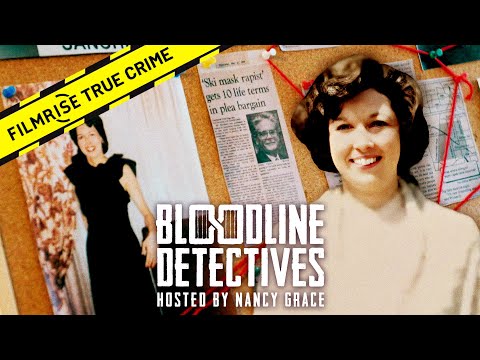
Unmasking the NorCal Rapist | Bloodline Detectives with Nancy Grace
Episode Description
Sacramento, California, 1991. Northern California is plagued by a series of sexual assaults, all perpetrated by the same offender. For decades the elusive assailant remains unidentified until almost 20 years later when groundbreaking investigative genetic genealogy uncovers the NorCal Rapist’s identity at last.
Now in its fourth season, Bloodline Detectives is the leading true crime series that explores how police departments harness genetic genealogy to solve crimes that were once considered "unsolvable," bringing long-awaited answers to victims' families.
=============== Like, comment and subscribe if you’re ready for more true crime. Your favorite shows like World’s Most Evil Killers, Meet Marry Murder, Forensic Files, Unsolved Mysteries, Murdered At First Sight and Bloodline Detectives are all available to stream 24/7 for free via the FilmRise Streaming Network. You can access The FilmRise Streaming Network through most free App Platforms and Smart TV portals such as Amazon Fire TV, The Roku Channel, Android, iOS and many more.
Read the full transcriptHide the full transcript
- [THEME MUSIC] NANCY GRACE: June, 1991, it seems like a quiet summer evening in northern California, but in reality, a terrifying
- crime spree is just beginning. It's the absolute most frightening thing that any woman could ever experience.
- And all I'm thinking is, how do I get this psychopath out of my house and not get shot?
- I was 21, and I'm just going to be a statistic. NANCY GRACE: It's the beginning of a 27-year search
- for a sex predator who will become known as the NorCal rapist. He is a monster and definitely a boogeyman.
- NANCY GRACE: He strikes in small towns across northern California, Rohnert Park, Martinez, Davis,
- Chico, places that rarely make the news, until the NorCal rapist goes there. We just needed to go out and do good
- old-fashioned police work, which was knock on the door, talk to people. NANCY GRACE: The NorCal rapist identity plagues investigators
- for nearly three decades. This rapist took a number of her personal items, heart
- necklace, pajamas, comforter, things that maybe years later, days later, he could fixate on
- and relive what he had done to this woman. NANCY GRACE: When cases go cold, investigators now turn
- to new ground-breaking technology, investigative genetic genealogy. Genetic genealogy is definitely a game-changer.
- It means you can be held accountable at any time. The scope of the NorCal rapist sex assaults is staggering.
- Only with cutting-edge science and determined police work is there any hope at all he will ever be stopped.
- I'm Nancy Grace. This is "Bloodline Detectives." [THEME MUSIC] June, 1991, Rohnert Park in California's Sonoma County.
- A quiet town, which on June 23, 1991, finds its sleepy reputation shattered. NICOLE EARNEST-PAYTE: I woke up to a hand over my mouth
- and a gun at my temple. I thought this was a joke at first. I thought somebody was playing some weird prank.
- He told me to stay quiet. I'm not going to hurt you. I'm just here to rob you. And I immediately, when I started to sort of come to,
- like, oh, this is-- what's happening right now? One, panic started to kick in. I was very scared.
- And then, I immediately thought about my robe. Because it was a very-- it was the summertime,
- so it was a really short little robe, and I was completely unclothed underneath.
- And I just thought, I have this strange person in my house. I don't know who this is, and I was incredibly vulnerable.
- And I was thinking, he's just here to rob me. I kept thinking that over and over in my head.
- And then, he tried to pick me up at that point, he tried to swoop me up still with the gun on me.
- And I sort of shook my head like, don't pick me up, because my robe was going to come open.
- And he let me kind of get myself up, and then he put my hands behind my back and kept the gun on my head and walked me upstairs.
- He put duct tape over my eyes, my mouth, and then, he hogtied me. He was incredibly monotone and calm the whole time,
- until he couldn't find this very expensive video camera that my ex-boyfriend borrowed from my mother, who
- had a commercial production company. The video camera was returned to my mother probably three to four weeks before this happened,
- so I was starting to put together the timeline of how long, from things he was telling me,
- the timeline of the camera, how long he had been watching, because he told me he had been
- following me and stalking me. And he knew what my ex-boyfriend looked like. He knew what the guy I was hanging out with looked like.
- He knew my patterns. He knew where I worked. So I knew that he had been watching
- me for probably six weeks. NANCY GRACE: The intruder seems to have planned his crime well
- in advance, though the victim has yet to discover his true intentions. He cut my feet loose, kind of turned me over.
- My hands were still underneath me. And then, opened up my robe, and then, that's
- the first time he raped me. After, he told me this isn't going to be as bad as you think.
- He was sort of in this fantasy that we were in a real relationship. He turned on love songs.
- You know, he would cuddle. And all I'm thinking is, how do I get this psychopath out
- of my house and not get shot? I kept thinking about my parents. And that's still, to this day, the thing that makes me cry.
- Because I was 21, and all I could think of was, my parents are going to get that call,
- and I'm just going to be a statistic. I'm going to be another woman who was raped in her house
- and killed by some stranger, and I don't want to be that. And so I actually laid there picturing, like, OK,
- it's summertime. It's warm. No one's expecting me tomorrow. No one's expecting me at work until Tuesday.
- How long is it going to be until someone finds my body? What condition is it going to be in?
- How many flies are going to be on me? These are the things I was thinking about,
- because I didn't want my mother and my father to have to suffer that. AVIS BEERY: When he was inside the house,
- he turned the radio on. And he would change the channels, and put music on, and then, when he left, he told her
- to wait through a certain amount of songs, three or four songs, before she did anything or tried to escape.
- And I waited three songs, for three songs to go by, and then ripped the duct tape off.
- As a survivor of sex assault, Nicole chose to waive her right to anonymity so she could share
- her story, the story of how she and other survivors suffered at the hands of the NorCal rapist.
- She hopes that her public testimony will help other survivors of sex assault overcome their trauma.
- After she reports the crime, Nicole is invited to the local police station, but what happens next is disheartening.
- It's appalling. And unfortunately, not at all unheard of in 1991. The police officers didn't believe her.
- They thought that she was making this up. NICOLE EARNEST-PAYTE: I was there for many hours.
- And it agitated the female detective more and more every minute. It felt like-- I'm thinking, why is she getting aggressive?
- This is really strange. It escalated. It just kept escalating from there. And it just got really, really bad to the point where,
- you know, you're not normal. You're not reacting right. Nobody reacts like this.
- This is insane. This doesn't happen. NANCY GRACE: Eight long months pass, and Nicole's case
- hits a dead end. Then, February, 1992, another woman is sexually assaulted in the town of Vallejo
- in the San Francisco Bay Area. It's just 20 miles from the first attack. Is there a link between the two sex attacks?
- We find out next on "Bloodline Detectives." [MUSIC PLAYING] 1991, Sonoma County, California.
- Detectives investigating a sex assault in Rohnert Park by a man who will become known as the NorCal rapist.
- But six months after that attack, he strikes again in nearby Vallejo city. I lived there for a couple--
- month or so by myself, and I was going to school and working. She worked for FedEx, and she had certain days off,
- and so she was sleeping in that morning. She always kept her door locked at night.
- And so she unlocked her door and she came out, and she went down the hallway and she saw this person
- hiding in her bathroom. He jumped after me, and then, I went into the bedroom, and he had--
- had a knife, and I grabbed the knife and just tried to just stab him with it. And we fought for a while, and then, I
- tried to run out the window. It was like a bad horror movie where she runs toward the window to try to either escape or scream
- for help, and then she trips. And then he was on top of me and on the ground. And so he put his hand, you know, over my mouth,
- and just, like, wouldn't let go. So then, I kind of-- I just was like, having a hard time breathing,
- and I guess I just couldn't fight anymore. After the third or fourth time after he raped me,
- I remember just saying, lay there and try to be strong. But I wasn't, in that moment, constantly
- thinking he was going to kill me, just what he was going to do with me. NANCY GRACE: The attacker threatens
- not only the woman he just assaulted, but her loved ones as well. AVIS BEERY: He put an arrow toward her family
- that she had in her address book, indicating to her that he knew who her family was, where they
- lived, that he could come back at any time, hurt them, or hurt her. I was able to get out of the bindings,
- and then, I called the cops instantly. But I remember saying, you know, I don't know
- if he's still in the house. NANCY GRACE: Police arrive, and this time, they immediately
- offer support to the victim. They also began to gather evidence. KRISHNA ABRAMS: Most important is the well-being of the victim
- who, as you know, in this case, when the police get there, she's crying. She's just been raped.
- And the first thing is to get her to a point of safety, and also, to get her to the hospital,
- because they obviously do want to do a sexual assault examination of her to see if there was any evidence left
- behind from the sexual assault. NANCY GRACE: It's disturbing to both detectives and victims
- that the rapist leaves with a number of the victim's intimate personal belongings.
- ANNE MARIE SCHUBERT: This rapist took a number of her personal items, heart necklace, pajamas, a comforter,
- things that maybe years later, days later, he could fixate on and relive what he had done to this woman.
- She was able to tell law enforcement that he had some kind of Southern drawl. THERESA LANE: I remember trying to get the mask off.
- I remember seeing that he was white. And I remember seeing some kind of like, blondish hair.
- And I did feel like he was tall. AVIS BEERY: He stole her car when he left, which is how he got out of the neighborhood.
- At that point, it was broad daylight. So if he had just left on foot, there was a chance that the police would
- have found him walking on foot. ANNE MARIE SCHUBERT: Law enforcement did everything
- they could in the immediate days following this, but once they ran out of leads, then the case became cold.
- Even though it was 30 plus years ago, they have the training to make sure that they preserve
- that scene so that even if the tools are not available now, or then, that perhaps,
- later on, they can use it. Halloween night. Once again, in northern California, a rapist strikes.
- This sex assault has all the hallmarks of the NorCal rapist. She had answered the door thinking-- this was like,
- 9:00ish or so in the evening, that it was probably a late trick-or-treater. And but when opened the door, he was there
- and wearing a Halloween mask. AVIS BEERY: He barged into her home and immediately took control of her.
- He told her that he was not going to hurt her, that he wanted money, not to scream.
- And he took her upstairs. He used some of her dog leashes and he bound her with the dog leashes, and then, he sexually
- assaulted her multiple times. NANCY GRACE: Again, the assailant slips away silently.
- She luckily called 911 and reported this so that officers could respond right away.
- Every piece of evidence that may have been relevant, everything he touched, everything he left behind,
- the sexual assault kit, all of those things became critical pieces of evidence later for identifying who this man was.
- NANCY GRACE: Then, in 1997, another copycat attack takes place in Davis County. We quickly decided that, most likely,
- it was the same suspect. There is a brutal serial sex attacker on the loose. Can police track him down this time before he strikes again?
- Next, on "Bloodline Detectives." [MUSIC PLAYING] Northern California, January, 1997.
- Three vicious sex attacks with striking similarities have already happened, all since 1991,
- and now, a fourth attack occurs. I was called at home, it was on a Saturday morning,
- and asked to respond to the address because of a rape. I talked to the victims, who were
- still present in the apartment, and introduced myself. And also, I had them show me around the apartment,
- downstairs and upstairs. Both girls were Vietnamese, conversant in English, but not real good.
- So I told them, feel free to write it in Vietnamese, and then we could later have it translated.
- The suspect had hogtied both women in the downstairs of the apartment. One of them tried to escape.
- She ran up the stairs and tried to jump out the window, and he grabbed her before she was able to get away
- and dragged her back downstairs. And then, proceeded to rape them both. The evidence that was left behind
- was some of the duct tape, some that was still on their hands. But all the other bindings and everything
- were removed and were not present at the time. NANCY GRACE: Before leaving, the NorCal rapist
- takes his victims' bank cards and then uses them at a nearby ATM. Police are alerted and immediately
- examine the footage from the bank machine security camera. I then went to the nearest bank
- and talked to them about it. They indicated that they-- when they came to work on Monday morning,
- they found that the camera lens had been spray painted black. But they figured it was vandalism,
- and then, they reported that to the police, who then came and asked for the tape.
- And it does show the suspect wearing an opaque plastic hard surface mask. At one point, he even turns his head up
- and away so that the camera could show, kind of indicating it's a mask. And gave me the impression is, OK, guys, catch me if you can.
- NANCY GRACE: Police do what they can to unmask this elusive suspect. We had quite a few leads, actually.
- But I wouldn't call them success, since any suspect we identified was all eliminated,
- mostly by DNA. NANCY GRACE: Six long months go by. The NorCal rapist appears to be lying low.
- But then, in Chico, California, he strikes again. AVIS BEERY: That case in Chico was
- another feisty little firecracker of a victim who was not going to let this guy get the best of her.
- She was able to get loose from some of the bindings on her wrists and she was able to grab some scissors on the nightstand.
- She was able to stab him with the scissors, and he was bleeding pretty good. He was aware of DNA and blood testing,
- and he knew that he was going to leave something behind, and he didn't want that.
- So he got towels and he tried to clean up the blood with the towels. He did the same thing to her that he did the other victims.
- He raped her repeatedly, sexually assaulted her in other ways, stole things from her home.
- Investigators just might have the ingredients for a breakthrough in the case. The NorCal rapist's efforts to remove all his DNA evidence
- fails, and the latest victim is able to help detectives with a description of the perp.
- They had some basic information, enough to put out a sketch of a potential perpetrator,
- but it was very, very basic. There was not enough that led them to any particular individual.
- NANCY GRACE: Detectives still cannot crack the case, and once again, it goes cold.
- Then, 2006, the case is reopened. Why? Because of cutting-edge advances in forensic science.
- AVIS BEERY: Was there evidence that we could go back and we could get DNA from now with the advancements that
- had taken place by the time 2006 rolled around? Was there bedding? Were there towels?
- Was there underwear or clothing, anything that we could retest to try to get a better profile, or, in some of the cases
- that were linked strictly by MO, we were really hoping that we might be able to get DNA from those cases
- and find out if this was, indeed, our suspect, as we suspected that he might be.
- NANCY GRACE: Three police forces in three different areas are investigating these horrific attacks.
- And then, a detective in Davis County connects the dots. My first real break came from an FBI agent
- from San Francisco who had seen that initial teletype that we put out, talking about a case in Martinez.
- Martinez police were aware of a case in Vallejo. So I called and talked to detectives there.
- And it just kind of snowballed at that point. Most likely, it was the same suspect.
- If it's the same suspect, it's very possible his identity can be determined from the Combined DNA Index
- System we all know as CODIS. CODIS collects DNA samples from criminals all across the US,
- and it has over 15 million samples on file. We don't have a name. We don't have any idea who he is.
- His DNA has been entered into CODIS. But the second thing we learn is that he's also
- responsible for at least six other rapes throughout the state of California. Then it was realized that they have this serial rapist running
- around northern California who was ultimately dubbed the NorCal rapist. NANCY GRACE: News that a serial rapist
- is operating in northern California intensifies. So far, DNA is yielding no leads.
- Investigators return to his previous victims to look for clues. AVIS BEERY: Once I was assigned the case,
- I made contact with them and re-interviewed to introduce myself and let them know, you know,
- that I was taking over the case, and let them know what we had done so far so that they understood
- that things were happening, that we weren't just forgetting about the case and not doing anything.
- All the victims told me that their whole life, they looked over their shoulder. I remember going into a hospital,
- and, you know, I learned a lot. I learned that there's so many people in this world that--
- that things happen to, and they-- they don't share, you know? And I've always been very open about this, you know?
- And I just always kept saying that-- because, you know, I haven't had the greatest life before that,
- and just different things, you know, but I just used to say, he's not going to put me in my own jail.
- So I said, I'm going to move to Washington. And I'm like, because he's not going to be there.
- Because I never knew who he was, what he looked like. So I moved to Washington, lived there for two years.
- And just, it helped me through a lot, you know? NICOLE EARNEST-PAYTE: I came home.
- It was like, 8 o'clock at night. There was a card on my door, and it said the Sacramento Police
- would like to talk to you. The sex crimes division. And my heart sank, because I thought,
- oh, my god, they caught him. They caught him after all these years. And so I left him a voicemail.
- He called me right back. And he said, you know, I just want to give you the heads up.
- There's going to be a press conference tomorrow. And he just started talking about this press conference.
- And I said, whoa, whoa, press conference about what? And he said, well, you are Nicole
- Earnest that lived in Rohnert Park in 1991 and this happened? Yeah. Yeah. That's me.
- What are you talking about? And he said, the press conference to talk about the case.
- And I said, what case? What are you talking about? And he said, the man who attacked
- you is a serial rapist. He's done this 10 times. He's connected by DNA in every case.
- It happened in Sacramento a few weeks ago, and we're going to have a press conference
- tomorrow to talk about it, to get publicity on the case to try to get him caught.
- I went into absolute shock. I was bowled over, shaking, crying, I'm sure screaming at this point.
- And he said, Rohnert Park never called you to tell you? They never re-interviewed you?
- They didn't tell you there were more victims? And I said, no, they've not said a word for 15 years.
- And then that pain just started all over again. NANCY GRACE: The press conference takes place,
- but still, the rapist appears untouchable. Then, detectives try another approach,
- the use of familial DNA. AVIS BEERY: About a year after the crime occurred in Sacramento, all I did was work
- that case for that entire time. I didn't do anything else. That's what I focused on.
- Once that case went cold, then we started to do what we called familial DNA. I had actually solved a previous rape series with familial DNA.
- The DNA that's in CODIS, it gets compared on a weekly basis to new samples that come in, and if there's anything that looks
- remotely close to your suspect, you get notified by DOJ, and then, you can do some work up on that
- and see if you can come up with a suspect. Well, we did that regularly, and we never
- got anything that matched. Never got anything close. So that didn't help. But that was really--
- that was really my last hope, was that we'd get a familial DNA hit, or that, unfortunately,
- if he struck again, he might get caught in the act. Neither of those things happened.
- NANCY GRACE: 25 long years have passed since the NorCal rapist claims his first victim.
- Yet, he still evades capture. In those 25 years, a remarkable new scientific technique
- called investigative genetic genealogy now offers investigators a glimmer of hope.
- That idea came about in late 2017 and was used in the Golden State Killer case. When that case was happening, and we started
- to think that this might work, the NorCal rapist case was right there on the top of the list as well.
- Can the NorCal rapist be exposed by his own family tree? Will science help put one of California's
- most dangerous sex offenders behind bars, where he belongs? That's next on "Bloodline Detectives."
- [MUSIC PLAYING] Sacramento, California, 2018. Detectives investigating a serial rapist
- who is thought to have committed over 10 sex assaults between 1991 and 2006 in northern California.
- The national DNA database, CODIS, has yielded no matches. Now, investigators turn to a new forensic science
- that caught one of North America's most notorious serial killers. Forensic investigative genetic genealogy
- is a tool that was really brainstormed during the Golden State Killer case. And essentially, what it is is you're taking your DNA
- and you're sending it to a laboratory to develop 700,000 to a million markers on the DNA chromosome that gives you
- much, much more data points that you can then try, through genealogy, to link it to a family member.
- NANCY GRACE: Finally, a victory for detectives. Investigative genetic genealogy breaks
- this cold case wide open. The hunt for the NorCal rapist is on. AVIS BEERY: We had the genetic DNA done through the district
- attorney's office. We had an analyst and an investigator over there who submitted it, worked the tree.
- And they called us up and said, we have a couple of people that you guys might want to take a look at.
- So we got a meeting together, we all gathered around the table. And they laid everything out and they said,
- we have a very close match to a half sister. It could be either of these two individuals, two males.
- I looked at the one suspect and I thought, he looks really similar to the composite.
- There are some similarities there. And then, we looked into his background, his criminal history.
- Because now, we had an actual name, a person we could we could run in the system and figure out
- what his previous arrest history was. And he did, in fact, have a previous arrest history
- for picking up a prostitute, and also, from stealing a purse from a prostitute. And I thought, wow, that really kind of fixed his MO,
- doesn't it? You know, he's stealing something from one of his victims. It's not uncommon for serial rapists
- to act out on prostitutes, because they usually don't report the crime. And it's a way for them to have their needs
- and their urges met if they can't find another victim. So I was like, that sounds really like something
- that we need to look at. And so I think we knew pretty quickly on that that was the person we wanted to focus our efforts on.
- I see a lot of cases, and I've been a DA for 27 years. I've seen hundreds of thousands of crimes.
- But this was one that was always at the top of my mind. We need to catch this guy.
- And it was because of the viciousness, the brutality of the rapes. And I just never forget when I got that call
- that we had a DNA hit. KAY LIPELT: My wife and I, we were driving through Arizona
- when we got a call on the cell phone from the DA's office telling me, we have a suspect identified.
- JEFF REISIG: Unfortunately, it's a name I'll never forget, Roy Charles Waller. NANCY GRACE: So who exactly is Roy Charles Waller?
- He graduated from high school. He didn't go any further than that. He didn't have any college education,
- no college credits or classes. He worked for a while in a gas station when he was out of high school, and then, he got
- married very early, very young. He had a daughter with his first wife. He had another girlfriend for a while that he had a child with,
- but they never got married. He had actually had multiple long-term relationships
- with other women. One woman he was with for quite some time. He worked at Jiffy Lube for a while,
- and then, he ended up getting a job with some sort of petroleum company there in the Bay Area, like Martinez,
- Richmond area. And then, he was working for Berkley. And he had been there for 26 years.
- NANCY GRACE: Roy Charles Waller is actually living in the nearby city of Benicia
- in the North Bay region of the San Francisco Bay Area. He lived in Benicia. Quiet little neighborhood.
- And they essentially went and got an abandoned DNA sample. KRISHNA ABRAMS: They were able to surreptitiously go
- and get some discarded trash. It was a half eaten pear and a straw. And they were able to collect DNA off of those discarded
- items, and those came back to an absolute match to the evidentiary profile from these six crime scenes.
- So then, they-- so that was fantastic, right? So it was a huge break in the case.
- And then, they obviously-- once they arrest Mr. Waller, they would have to get a DNA sample from him
- to make sure to confirm that it was the right person. The detectives themselves weren't on the phone to me.
- It usually came from the deputy chief, but they gave updates like, he's driving to work.
- And so they actually arrested him as he parked in the parking lot at work. Because somebody like this, you don't know
- how they're going to react. You know, this person probably knows that when the police catch up to him,
- he's going to spend the rest of his life in prison. So if he's at home and has guns, will he then have a shoot
- out with the police? And so how do we take him into custody in the safest way possible?
- And so they decided, as soon as he got out of his car when he got to work, they would run up on him
- and take him into custody before he could get anywhere. After 27 years, investigators finally
- have a prime suspect in the serial sex attacks going all the way back to 1991. That suspect?
- Roy Charles Waller. Now, detectives need to apprehend him. Next, on "Bloodline Detectives."
- [MUSIC PLAYING] September, 2018. Benicia in northern California. After 27 long years, detectives move in
- to arrest Roy Charles Waller for a long series of brutal sex attacks dating all the way back to 1991.
- During the arrest, officers make a disturbing discovery. AVIS BEERY: When we arrested him, he had this big backpack,
- and he had zip ties in there, he had tape, he had sex toys, he had condoms. Just really odd, you know, that you would carry
- that around on your person. He had a flashlight. I mean, for all intents and purposes, he had a rape kit.
- NANCY GRACE: Detectives interview Roy Charles Waller. AVIS BEERY: We systematically show him pictures
- of every victim in every case, every house in every case, and in every case, he says, I don't know those women.
- I have never been with them. I've never been in their house. So now, I have established that, OK, he's
- denying ever having been there. Multiple opportunities for him to say, yeah, I had a date with her, or, yeah,
- she could have been somebody I met online, or, yeah, I think I remember having sex with her,
- or, yeah, I went into her house to do some handyman work. I mean, multiple opportunities for him to say something,
- and he just denied, denied. And so, at that point, that's when I started asking him about his DNA.
- Why would your DNA be in any of these houses? He says, I don't know. It's not mine.
- It can't be mine. And then, he got very uncomfortable. He said, you know, you're accusing me of something
- that I didn't do. I said, no, I'm not accusing you of anything. I'm just telling you what the victims have said.
- These victims are saying that you did this. And he's like, well, I just think, you know, at this point,
- I need to have a lawyer. So at that point, he lawyered up, and I really couldn't ask him any more questions.
- And that's where the interview ended. There's a metal piece that opens and closes the door that's up
- high, and he went over and stood up on a chair and tied the hoodie string around that,
- and then tried to tie it to his neck. And then, when he pulled on it, it completely came apart.
- It wasn't strong enough to hold him. So that really made us think, wow, you know,
- he's really feeling the heat. He's really feeling guilty about this. Like, he knows that we have him.
- NANCY GRACE: After Roy Charles Waller fails in his suicide attempt, investigators
- prepare for a lengthy trial. They can now notify victims their attacker is in police custody.
- I was at work, and Detective Beery called. I went outside, and-- and was pretty hysterical, you know?
- Because you just kind of wondered if they're ever going to find him, you know? Because a lot of these people that
- do stuff that don't have a record or anything, they might never find them. Until now, this awesome, with the DNA and stuff.
- NICOLE EARNEST-PAYTE: I get this call, and it's an unknown number, and I picked it up,
- and this woman identified herself, calling from the Sonoma County District Attorney's Office.
- And as soon as she said that, my mind kind of went to, OK, that seems odd. And I sort of went blank as soon as she said that.
- I didn't remember her name. And she said, we have a suspect in custody in the NorCal rapist
- case, and I fell to the floor. And I started saying, thank you. And she said, there's going to be
- a live press conference in Sacramento, and she started giving me details. And she said, I'll email you the details.
- And I said, I have to go. I have to call my family. ANNE MARIE SCHUBERT: I think about these victims, not just
- the bravery of surviving these assaults, the bravery of picking up their lives and moving forward.
- But then, when they get the phone call that this guy has been caught, and knowing that they have to then face him in a courtroom,
- that is a level of bravery that is remarkable. It's something that we ask of people that they're
- willing to do, but imagine what it's like to relive it all, you know, years and years after it happened.
- When you've waited that long, it was so critically important for this, for me to get my day in court.
- It felt good to just look at him and tell him what I went through. NANCY GRACE: A Sacramento jury convicts Roy Charles Waller
- on 46 counts for the series of sex attacks that terrorized northern California. He receives one of the longest recorded
- sentences in US history. AVIS BEERY: So in the end, he was found guilty by all of the jurors,
- and he was sentenced to 897 years. I've had some big numbers, but that's the biggest number I've
- ever had in any of my cases. It really couldn't be a large enough number for what he
- did to these women, you know? I mean, it doesn't-- it doesn't at all take away what happened to them.
- Knowing that he's probably never going to get out of prison is great. NANCY GRACE: The case is finally cracked
- because of investigators who never gave up, and because of remarkable advancements
- in investigative science. What is a fact, that without the forensic DNA genealogy,
- we would have never solved this case, period, hard stop. It would have remained a cold case.
- It's a game-changer. And I am hoping it operates as a deterrent moving forward, because you're probably not going
- to get away with anything. - You can run. You can hide. You can try to cover your tracks, like this guy did.
- But eventually, dedicated people will catch up with you. When somebody such as detective Avis Beery, or people
- like Kurt Campbell, or Monica Zajkowski, or a DNA analyst, they quietly sit either behind their desk or behind a computer
- or behind a lab bench, and they work on these cases for years. Then, we have to be willing to stand up and recognize
- the dedication and the persistence by law enforcement in finding the answer. It means a lot, you know, that everybody did their job
- and worked really hard for us, you know? Even the girls that would not speak up, you know?
- I just felt like-- that's what makes me sadder than anything. Like, I just-- I wish to God that, you know, I could just tell people,
- please, you know, talk. You know, tell your story. Don't-- don't hold it in. If someone came into my home and tied me up and beat me up
- with a baseball bat and left, robbed me and left, not one person would question why I talked about it openly.
- But because the weapon that was used was rape, we're not supposed to talk about it.
- Talk about it. What makes the case of the NorCal rapist even more remarkable is that the perp, Roy Charles Waller,
- remained on the loose for so long. His terrified victims lived through their horrible ordeal,
- afraid he would return and possibly silence them forever. It took the incredible science of
- investigative genetic genealogy to put this evil doer away for good. I'm Nancy Grace.
- Thank you for joining us here on "Bloodline Detectives." [MUSIC PLAYING] [THEME MUSIC]
Brief Summary
The NorCal rapist terrorized northern California for decades until genetic genealogy led to his capture in 2018.
Key points
- The Beginning of Terror. In June 1991, a quiet California town is shaken by the NorCal rapist's first attack.
- A Survivor's Story. Nicole Earnest-Payte shares her harrowing experience of being attacked in her home.
- The Police Response. Nicole's case is met with disbelief by police, leading to frustration and despair.
- Familial DNA Approach. Detectives turn to familial DNA to catch the elusive NorCal rapist after years of investigation.
- Investigative Genetic Genealogy Breakthrough. A new forensic science technique offers hope in the NorCal rapist case.
- Roy Charles Waller Arrested. After 27 years, detectives move in to arrest the prime suspect.
Episode highlights
- The Beginning of TerrorIn June 1991, a quiet California town is shaken by the NorCal rapist's first attack.“It's the absolute most frightening thing that any woman could ever experience.”0:25May 17, 2024
- A Survivor's StoryNicole Earnest-Payte shares her harrowing experience of being attacked in her home.“I woke up to a hand over my mouth and a gun at my temple.”2:57May 17, 2024
- The Police ResponseNicole's case is met with disbelief by police, leading to frustration and despair.“The police officers didn't believe her.”7:19May 17, 2024
- Familial DNA ApproachDetectives turn to familial DNA to catch the elusive NorCal rapist after years of investigation.“We started to do what we called familial DNA.”24:46May 17, 2024
- Investigative Genetic Genealogy BreakthroughA new forensic science technique offers hope in the NorCal rapist case.“Finally, a victory for detectives.”27:41May 17, 2024
- Roy Charles Waller ArrestedAfter 27 years, detectives move in to arrest the prime suspect.“The hunt for the NorCal rapist is on.”27:47May 17, 2024
- Conviction of Roy Charles WallerA jury convicts Waller on 46 counts, sentencing him to 897 years.“He was sentenced to 897 years.”38:04May 17, 2024