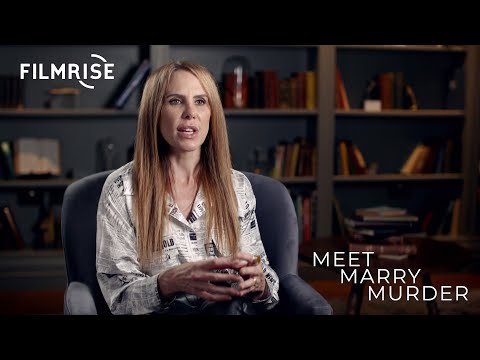
Meet, Marry, Murder - Season 1, Episode 16 - Clark - Full Episode
Episode Description
Melanie and David Clark's marriage was volatile, passionate and sometimes abusive. It ended when one of them snapped and picked up a knife.
Though wedded couples vow to stay together until death do they part, this new true crime series looks at what happens when a groom or bride causes their beloved's death.
Read the full transcriptHide the full transcript
- [fireworks] NARRATOR: On New Year's Eve, 2017, as revelers across the country counted down to midnight,
- David Clark became enraged with a WhatsApp message from his wife, Melanie. And then he picked up a knife.
- BENJAMIN AINA: Why would a man leave his own separate bedroom with a knife, in the course of an argument,
- and then go to his wife's room? NARRATOR: Is this the final play in a marriage fraught
- with abuse, infidelity, and rows? Even when they are dysfunctional, and they've broken up and separated
- or they're seeing other people, they are still having sex with each other. NARRATOR: Thrown into a volatile marriage, a lesbian fling,
- and a chance for blackmail. A sexual encounter had taken place. She told her husband out of a sense of guilt
- and out of a sense of shame. It gave him control back, because he was going to threaten to expose her.
- He threatened to tell everybody. NARRATOR: Playing out in a picturesque corner of middle England, a drama to the death.
- [theme music] Melanie and David Clark in 2011 settled in England after a life-changing decision.
- They were both from South Africa. They met in South Africa. She already had children from a previous relationship.
- NARRATOR: They had seen too much crime to feel comfortable in parts of that country, so a small, middle England town
- looked just right for them. TRISTAN HARRIS: Bromsgrove is, you know, it's a small commuter town.
- It's a market town. People come here because they want a nice place to live. They want their-- their dream life.
- NARRATOR: The Clarks lived in a place called Stoke Prior on the edge of Bromsgrove.
- Safe, clean air, good schools, the ideal place for a family of six to settle. TRISTAN HARRIS: It's a lovely village,
- picturesque countryside. It's got canals. It's got a parish council. It's got a village hall.
- It's got a great community spirit, and I think they would have been looking for that--
- that quintessentially English village life. NARRATOR: When they had married in 2005,
- Melanie and David were both enjoying a second chance at love. They had a familiarity, because they'd known
- each other as young people. And even though they got married to other people, when they
- reconnected, that shared history is quite a powerful connector in relationships.
- They'd both gone off their own separate ways for many, many years. Melanie had married and had had four children.
- Both going through divorces at the same time, they encountered each other again and formed a relationship.
- We tend to be less idealistic going into a second relationship. We make compromises, you know, because, you know,
- you've been through a relationship. You know that most relationships are about compromise.
- So they both would have gone in perhaps seeing the faults of the other person and thinking, yes, OK.
- I accept that. And it's only later on that perhaps Melanie would have seen that the eccentricities in David were
- actually very difficult to deal with and hid bigger problems. NARRATOR: Benjamin Aina is a leading Queen's Council who
- would one day become very familiar with the story of Mr. and Mrs. Clark. He was very regimented.
- When he first met Melanie, he had his own way of doing things, like many people.
- Even though he was regimented, he and his wife got on to begin with at the beginning.
- She knew he was regimented, and she was able to cope with that, and there weren't difficulties.
- David Clark was ex-military. He was a medic in the South African armed forces. When he moved to the UK, he began
- working in a chartered surveyors office and later became an estate agent. NARRATOR: The life led by the Clarks
- could not have become more standard, middle England. Bromsgrove was affordable, and the nearby tourist
- mecca of Stratford-on-Avon became the place where David worked. He was an estate agent and good at it, intimately
- knowing the selling points of properties that he would market. David Clark was a detail man.
- He was just a man who was very tidy. His shirts had to be in a particular way. His ties had to be in a particular way, had to be
- stored in a particular way. There's not a doubt in my mind that David Clark was a particular type of controlling individual.
- There's lots of evidence to show us what type of person. He was he was obsessive in his neatness and in his order.
- NARRATOR: When David and Melanie married, they had become a family of six. David's previously well-ordered world instantly shattered.
- When he was entering into a relationship where she already had a number of children, and he-- he was
- happy to enter into that arena. So he knew what he was taking on. The step-parenting relationships
- can be quite challenging. You know, you're walking into an already set family unit,
- and there are different kinds of expectations on you, as a stepparent, and it can
- be quite a challenging and stressful experience. NARRATOR: Even more challenging, perhaps, for a man obsessed
- with order and routine. He would very easily become angry with his children. His anger would be demonstrated by insulting them, swearing
- at them, bursting their balls in the garden because it hadn't been cleared away.
- It even-- to one extent when they had friends around, swearing at the-- their guests because one of them
- had left a door open. NARRATOR: Things were tense inside the Clark home. It's always very difficult with a controlling person
- like this when they are in a relationship with somebody and stepchildren. They don't have always a great affinity
- with their biological children. Bring in stepchildren and the whole thing gets a lot more difficult.
- It sounds very much like David had a very short fuse. His desire for order, his desire for routine
- meant that living with four children and a wife who didn't share his desire for that type of routine
- meant that he was an easy target. Small things could cause an explosion, and we often see this in domestic situations.
- NARRATOR: David might have tried to exert control over Melanie and her children, but he
- was not always successful. She's not a shrinking violet. She's somebody who stands up for herself.
- Melanie doesn't present as what we like to think of as our typical domestic abuse victim.
- She's not quiet. She's not submissive. She's not in the corner. She stands up for herself.
- She's a very normal, confident woman. She would fight back. She would give him push back, and, of course,
- he didn't like it. This was a tempestuous and toxic relationship. NARRATOR: Melanie refused to accept her husband's
- rules and regulations. In fact, she rebelled against them. A marriage which had started as an answer
- to a range of challenges was disintegrating. Clark claimed that Melanie would exploit his need
- for order, that she would deliberately mess up his shirts that he liked to have in-- in order of color.
- If he upset them, if he was bullying them, and I can't imagine he wasn't, it would have been very easy to get back at him
- by just quietly messing with some of his routines. Perhaps, like he said, moving his shirts out
- of color order, for example. NEIL LANCASTER: A man like David, who was meticulous, ordered, routine-driven and
- process-driven, it would mean that he was extremely easy to put off his stride. You know, if simply by reordering someone's shirts
- or upsetting their sock drawer you can send them into a rage, then it doesn't bode well for the future.
- NARRATOR: Living in a new country, unable to control his wife and stepchildren as he wanted,
- David Clark's behavior became increasingly unpleasant. Communication breakdowns inside their Bromsgrove home
- meant that the married couple turned to their phones to exchange insults. The last three years of the relationship
- was all caught in a series of WhatsApp and text messages, which the couple sent to each other.
- And what those messages showed was that the relationship from about 2015 onwards became turbulent.
- Mr. Clark had a bad temper. When they get into arguments and altercations, there's this real escalation where his language
- becomes deeply offensive. And whilst it tends to be projected at her, it does get spilled over and get projected onto the children
- as well. The wife of a friend comes to visit them. I think she goes to the toilet or goes to the kitchen.
- She leaves the door open, and he swears at her, shut that effing door. Shut that effing door.
- So these are examples of a man who-- he's not in control of himself. You wouldn't behave like that if you were.
- NARRATOR: The Clarks' marriage had, by 2015, become toxic. From the very beginning, this man was
- dangerous in that relationship. It's almost that the-- the-- the way that they were, the dynamic between them,
- was kind of clouding his dangerousness. If Melanie had been a less confident person,
- he would have been judged differently much earlier on. NARRATOR: They had swapped South Africa to escape violence,
- but in picturesque middle England, Mr. And Mrs. Clark were creating their own brand of conflict.
- How bad would things become? In 2015, 10 years into their marriage, David Clark's
- controlling behavior began to take its toll on his wife, Melanie. Can you imagine what it must have
- been like to live with him? He drove her to drink. It must have been like walking on eggshells, living with him,
- waiting for him to just blow up at the-- at the next thing. NARRATOR: Melanie was often drunk.
- David tried to control her drinking. Clark claims that Melanie had a problem with alcohol,
- that she drank too often and to excess, and that she wasn't a pleasant person to be
- around when she was drinking. He would do such things as leave Post-It notes around
- the house, reminding her whether she was allowed to drink or not, not to smoke. When I look at the relationship between Melanie
- and Clark, there is a high level of dysfunction and toxicity. She's drinking too much.
- He's being relatively abusive towards her. But there's also some retaliation on her part.
- NARRATOR: One of the things Melanie found hardest to accept was the way David treated her children.
- The relationship between Clark and Melanie's children was very strained. In particular, his relationship with Melanie's youngest
- daughter. Within the family home there was a 14-year-old daughter of Melanie Clark.
- And-- and she did not have a good relationship with David Clark. He would regularly swear at her and use the C-word.
- That was one of the matters that Melanie Clark drew to his-- his attention. That it's not appropriate for you, in a parental position,
- to be using the C-word when swearing at a 14-year-old girl. As a mother, there is nothing more distressing than watching
- an adult who is meant to take care of your children be abusive towards them. That must have been very, very upsetting for her.
- He would be physically abusive. Melanie's eldest two children reported how he would fly into a rage, shouting and swearing at them.
- BENJAMIN AINA: One of the sons in the relationship, he would describe him as being fat in a swearing way.
- Was that really appropriate for him in a parental way to be describing somebody as a fat prick?
- NARRATOR: In a town which was supposed to help her children escape issues in South Africa, Melanie Clark
- told friends that she was living in a worse world. She was not willing to accept her husband's behavior.
- She retaliates. She responds. She refuses to lie down and take it. In 2015, 2016, Mrs. Clark began to tell him that he
- couldn't behave in this way. Melanie didn't hold back. She fought back. She would belittle him.
- She would ridicule him. She would accuse him of having a small penis and various ways
- of mocking him. He was humiliated. Melanie was somebody who, at times, was quite cruel.
- We often get like that in relationships, you know, even with people that we love.
- We say things that we know really hurt and upset them, because we want to, in that moment,
- make them feel the pain that we might be feeling. NEIL LANCASTER: In my opinion, Melanie had every right
- to fight back Why should she be putting up with all these years of abuse? Why should she be putting up with his control,
- coercive control, all the time? She was a strong woman. She didn't hold back. NARRATOR: Despite so much conflict and hurt,
- the Clark's marriage struggled on. There is an anger in the relationship. They want to hurt each other.
- They want to emotionally abuse each other. And in spite of the fact that that would suggest a pulling
- apart of their relationship, they seem so fixated on wanting to hurt each other that clearly somewhere within it they
- want to be together. Because otherwise, they would just walk away. So they're hurting each other.
- They're punishing each other. It's fundamental to that toxicity. They love each other, but they hate
- each other at the same time. NARRATOR: In 2016, not long after celebrating their 10th wedding anniversary, Melanie and David's marriage
- hit a new low. The relationship seemed to start deteriorating when Clark became completely convinced that his wife was having an affair.
- Now they-- he confronted her with this, and she completely denied it. He decided that he would forgive her,
- whether or not she actually did it, for something that she had or hadn't done. Now, I believe this would have given
- him a huge sense of martyrdom, the sense that he's forgiven her. And you can see how that might set him on the road
- for the way things turned out. NARRATOR: Believing he had been wronged by his wife,
- David appears to have decided that he had a free pass to do the same. He had at least two affairs, and the relationship
- deteriorated because he tried to hide those affairs from his wife. And she found out, and he kept on lying about it.
- And she knew that he was having affairs. NARRATOR: Melanie was devastated, and the arguments between them became even more bitter.
- One led to David asking for help. NEIL LANCASTER: So in December 2016, David Clark called the police.
- NARRATOR: Melanie had demanded that he change his behavior. She wasn't going to have him in the house,
- going on dates websites and having affairs. And he contacted the police and said his wife
- was trying to kill him. He said that she had threatened to slash him with a knife, and he even went to the extent
- of saying he was going to record it on his telephone. But then she wouldn't say it again,
- which seems preposterous to me. He told the police that Melanie tried to control him,
- and that she didn't let him do the things he wanted to do. The police quickly came to the conclusion
- that this was nonsense. The police fully investigated. They found no evidence that anything
- had happened whatsoever. NARRATOR: The very next day, another cry for attention,
- a suicide threat. He also then said that he was taking some pills and tried to kill himself.
- Melanie was concerned enough to call the paramedics to come and see him. NARRATOR: Amidst the gentle fields of England's Cotswolds,
- a story of not-so-gentle domestic turmoil. It's really common for controlling people,
- especially at the point of a really serious challenge like a separation, to start using
- every control method they can. And one of the most common is a threat to kill yourself,
- or even a kind of a para-suicide attempt where you may cut yourself but not enough.
- You may take some pills but not enough. But it's very, very common way at the point of a separation
- of trying to gain sympathy, trying to gain control back over the person that you're separating from.
- NARRATOR: For criminologist Jane Monckton Smith, who has researched dozens of domestic homicides,
- this incident should have been a clear red flag. Often a suicide threat in this context made to control someone
- is a veiled homicide threat as well. And we always advise that that's how it should be treated.
- NARRATOR: Indeed, just a few days later, David's abuse of Melanie turned physical.
- This was on the 14th of December, so it was three days after the alleged suicide.
- He went into her bedroom and he punched her in the chest. And there was an injury, which was photographed by her
- of the mark on her chest. And he would only leave that bedroom when her sons came into the room and said, dad, leave the room.
- Leave mum alone. Come out. This is a sort of flavor of where the relationship was
- in December 2016. NARRATOR: At her wit's end, Melanie kicked David out. David Clark would move out periodically for a number
- of weeks, days, whatever. He would then be allowed to come back, but it was very much on the basis of, you can stay
- or you can go. He left the matrimonial home. But by March 2017, he was back. And the real issue, the real complaint,
- was that once he came back, his wife was not prepared to have him having affairs.
- So she said if you're going to come back, I'm going to need to know where you are on a daily basis.
- I'm going to need to see what was on your mobile phone. I'm going to need to see your--
- your emails. And for a man who liked to be in control, he found this very difficult. And then
- that was the real problem, the real difficulty in the relationship. When a controlling person gets into a relationship
- with somebody, there are rights and responsibilities. So the way they see it, the rights are all theirs
- and the responsibilities are all their partners. So they will very often feel completely justified in having
- affairs outside relationships. But the other person only has responsibilities, so it's their responsibility to tolerate this.
- Here was a man who was having affairs and wanted to carry on having affairs, wanted to carry on going on dating websites
- and stay in a matrimonial home. And she wasn't prepared to have it. NARRATOR: In fact, during one argument about his infidelity,
- Melanie treated David to a taste of his own medicine. Now at this stage, this is an open relationship,
- but so far it only seems it's an open relationship on David's part. So Melanie is not happy with this,
- and strangely she makes him sign a declaration saying that she's allowed to have affairs with other people.
- DR. JANE MONCKTON SMITH: I think Melanie was incredibly frustrated with David Clark.
- He was operating a double standard. He was having affairs. He was saying to her, I don't care if you have an affair,
- and she kind of called his bluff. Because he-- he was controlling her, so she's saying, all right.
- If you're serious, write it down. NARRATOR: At the time, Melanie may not have intended to act
- on that written contract. But just a few months later, she found herself calling
- her husband's bluff, a sexual clench, not with another man but with another woman.
- The key thing here is that she was having, maybe in his eyes, an affair under his nose on terms
- that he could not compete with. This is another woman. This isn't another man. NARRATOR: Already feeling threatened by his wife's
- refusal to buckle to his controlling ways, was a lesbian fling about to bring things to a head in the apparently
- calm world of rural England? It was early in 2017 when one of Melanie's children
- made a decision to escape the toxic atmosphere of the Clark family home. The fact that the youngest daughter, the one who
- was having real problems with David Clark, moved out of the country, went back to South Africa
- to live with her father, tells us that there were a lot of problems in that household.
- Not just the relationship, the household. As her presence had caused Clark a great deal
- of frustration, this, perhaps, relieved some of the tension, and he stayed living with Melanie in their home,
- although they often slept in separate rooms. In fact, Clark moved in to Melanie's youngest daughter's
- bedroom, a small room in which he slept when he wasn't sharing Melanie's bed. People are often in relationships
- where they don't get on well after a few years or many years, and they stay together
- for a variety of reasons. They might stay together because of the-- because of the children.
- And indeed, this couple had adapted their lifestyle so that they were sleeping in different bedrooms.
- By the time we got to 2017, they each had their own bedroom. NARRATOR: David Clark's obsessions around the house,
- meanwhile, were getting worse. Something of the character of David can be seen by the way he kept his bedroom.
- Apparently, he would keep cutlery and sharp knives, but in some type of an order in his bedroom.
- Not probably because of arming himself, possibly just because that's how he was.
- He had this strange character. The fact that he kept knives within his room of itself
- was not that important. Because one has to remember he came from South Africa. That was where he was brought up.
- In South Africa, he was entitled to own a gun. He was entitled to own knives. It's a different regime than in England.
- NARRATOR: It was a sense of entitlement to have weapons nearby. That would become very significant.
- On the 28th of December, an incident happens which will have lasting ramifications.
- David's best friend comes round for dinner, and he comes with his 30-year-old daughter.
- There is a lot of drink taken, drinking games, and then something happens later on that evening that will have
- effects that will enable David to exert control on his wife for the remainder of her life.
- One of Clark's best friends came round for dinner. He brought with him his daughter Katie, a journalist.
- NARRATOR: That simple fact throws more conflict to the relationship in a way nobody
- could have foretold. Whilst the men were downstairs, the daughter and Mrs. Clark were upstairs.
- They obviously got on very well, and they spent a considerable amount of time upstairs,
- and I think into the night and into the morning. The 29th of December, Melanie Clark
- told her husband that she had kissed the daughter, and from that a sexual encounter had taken place.
- She told her husband out of a sense of guilt and out of a sense of shame. Now this gave David everything he needed.
- It gave him control back, because he was going to threaten to expose her. He threatened to tell everybody.
- He threatened to tell Katie's father. It's something that he can't control, doesn't understand, can't compete on the same terms.
- It must have been difficult for him, but also opportunistic. It's something that he could have used against her
- to-- to leverage some control. BENJAMIN AINA: She was embarrassed, and she made her husband promise that he
- would not tell any family or friends about what had taken place. And Mr. Clark gave his promise that he wouldn't do that.
- They made up. They made love that particular day. And the prosecution's case was that he was now in control.
- For the first time in a long time, he was now in control. His wife had done something that she considered was wrong.
- She was asking him not to reveal this to the family. She was indebted to him for him agreeing,
- and he was now in control. NARRATOR: Just three days later, David saw his golden opportunity to use
- his newfound leverage to score points against his wife. On New Year's Eve, Melanie's oldest child drove Melanie
- and Clark to a friend's house. They were in good spirits. They played drinking games, board games.
- They laughed. They joked. Everything seemed fine. And at half past 10:00, Melanie and Clark
- took a taxi back home. They have a great night together. They drink heavily, as often is the case on New Year's Eve,
- and they do celebrate. So this is testament to a toxic relationship where they have good times together,
- but whether it's to do with the alcohol, whether it's to do with the wounds that's going on
- within their relationship for some reason, they start arguing about the relationship
- that Melanie had with Katie. When they got home that evening, there's immediate evidence of a very, very loud, noisy argument
- from within the premises that a neighbor hears. And this argument continued both with vitriolic verbal
- abuse, but also in the form of WhatsApp messages sent to each other from within the confines
- of the same house. There is taunting going each way around the alleged tryst, and it seems that this is the beginning
- of the fateful incident. During this argument, Clark claims that Melanie taunted him
- again, that she threw in his face the alleged affair she'd had with Katie, that she
- mocked him for his sexual prowess and attempted to get him angry. And it is clear that during the course
- of the argument, Mr. Clark decided, I'm going to teach you a lesson. And that started with him sending a message to his friend
- and telling his friend about the sexual encounter which had occurred between the friend's daughter and his wife.
- For some reason, those messages don't go through. Most likely because it's nearly midnight on New Year's Eve.
- And he sent that message three times. There was no response from the friend. The revenge was not working.
- And so Mr Clark decided to send a message to his sister. Again, there was no response from his sister
- that made him feel that the revenge was working. And so he then decided to send a message
- reporting the sexual encounter to one of his sons. And, again, there was no response.
- And finally, he decided to send a message to his wife to say, I've told the family about the sexual encounter.
- NARRATOR: The purpose of his message was to humiliate his wife, but it backfired.
- Eventually it seems these messages do get through, but there's no response. Melanie decides now is the time to really press home.
- She sends messages back to David, indicating that, everyone's laughing at you, David.
- They've been laughing at you for the last 10 years. And it was in those circumstances
- that she told him to leave, that he was to leave in the morning. So essentially, everything he had done to try and get revenge
- and to punish his wife had not worked. Every bit of control David thought he had over this relationship was gone.
- Melanie had taken it all away from him in his eyes by those text messages going through,
- being told that everyone's laughing at him. And the clear theme of her messages was that she'd had enough, and that if he
- didn't leave in the morning, she would call the police. And she also made it clear in the messages
- that she wanted to end the conversation, probably because she wanted to go to sleep.
- NARRATOR: If Melanie wanted to hurt him with these words, it had the desired effect, but she could not have
- predicted what happened next. Clark couldn't handle this rejection. And just before midnight, as the country was preparing
- to bring in the new year, he walked into the small bedroom that he'd been using and picked up a knife.
- What man leaves his bedroom with a knife to go into another bedroom to see his wife whom
- he's arguing with? There can only have been one intention. NARRATOR: For local journalists, New Year's day
- 2018 was not the usual tale of drunken revelers going too far. I'd woken up on New Year's day 2018,
- and I always check my phone. It just comes with the job. You always want to know what's going on,
- even when you're off duty. Obviously, not the best time in the morning after-- after New Year's Eve.
- And I was just shocked to see on the West-- West Mercia Police websites this report
- that there'd been a stabbing in Stake Prior, which is one of the-- one of the safer
- areas in Bromsgrove. NARRATOR: Local news editor, Tristan Harris, doesn't get many murders on his patch.
- Right at that point, there was not much known about it. It was mainly reported as a police incident,
- and that a man had been arrested at the property, a 49 and 44-year-old victim. You start thinking, is it a burglary that's gone wrong?
- Is it a robbery? You don't really know at that point. It could be a domestic incident.
- NARRATOR: For local police officers, there was little mystery about who had killed Melanie Clark.
- David then calls the police. In an expletive-laden 999 call, he just admits it, explains that he did it.
- He said that she did his head in. He said, I've killed my wife. I love her. I hate her.
- I'm going to kill myself. The police arrived just after midnight. They found Melanie dead.
- They found Clark in his pajamas, crouched by the side of the house. He asked police to kill him.
- NARRATOR: Searching the house, police confirmed that Melanie was beyond saving. Melanie herself was soaked in blood.
- Part of the lobe of her right lung was penetrating from the wound in her chest. The clearest evidence that this was murder
- was the evidence from the pathology. The pathologist describes a single blow with a knife that went through her pendant,
- through cartilage, through her ribs, eight centimeters downwards. There were no defensive injuries,
- which meant that she didn't put her arms up to defend herself. There was no struggle, evidence of a struggle.
- It was just a straightforward attack with a knife. She didn't resist. Firstly, she wouldn't have been aware
- that he was going to do that. But secondly, even though he's been abusive, this is out of character.
- She doesn't have an expectation that this is a man who could kill her, so she's completely unprepared.
- And that one stab wound goes straight through her heart. So he kills her instantly.
- Melanie's eldest son's arrived home from their own New Year's Eve festivities to find the house cordoned off,
- emergency services everywhere, flashing lights outside the home, and their mother dead.
- TRISTAN HARRIS: In the Bromsgrove community, I think there was shock, sadness, regret for the family,
- wanting to help in any way they could, make life better. Obviously, nobody could bring Melanie back,
- but they just wanted to do what they could for-- for the children. NARRATOR: Clark was not about to accept responsibility
- for what had happened. David Clark never accepted full responsibility for this crime.
- He claimed that his wife's taunts caused him to have a momentary loss of control,
- which made this happen. It was a difficult case to prosecute. Cases involving the death in a relationship
- are always difficult, particularly where the husband is-- or the wife is saying that they have carried
- out the act because of a loss of control or a sudden burst of anger. NARRATOR: Charged with murder in June 2018,
- a jury at Birmingham Crown Court heard Clark's version of events. Clark's defense hinged on the belief
- that he was the victim in an abusive relationship. He claimed that for years Melanie had belittled
- and humiliated him, and that that abuse had caused him to lose his temper and lash out.
- It was on that basis that he felt he was guilty of manslaughter, but not of murder.
- BENJAMIN AINA: In the trial, David Clark remorselessly attacked his wife's character.
- He called her dishonest. He suggested that she'd been unfaithful, that she was manipulative, and that her parenting
- skills were not very good. He tried to make out that she was controlling, and that he was an abused man who simply snapped.
- Even after the murder when he's talking to people about what happened, he's not taking responsibility
- for his own actions. He's saying things like, well, you know, she was being horrible to me.
- She was saying things to me that were horrible. So he's actually putting the blame on her
- for her own murder. And then he says things like, I just can't remember what happened.
- I don't remember picking up the knife. Anything, anything to take away any blame from him
- and put it onto somebody else. Now because of this, the children of the marriage
- were forced to come to court to give evidence about his long periods of systematic abuse
- against their mother. NARRATOR: Also crucial to the prosecution's case were telephone records.
- There were over 300 messages, if I can remember rightly, in this trial. NARRATOR: Using data mined from Melanie and David's
- mobile phones, prosecutor Ben Aina was able to trace for the jury the course of this turbulent marriage through control,
- infidelity, temporary separation, reconciliation, blazing rows. What those messages showed was that the relationship
- from about 2015 onwards became turbulent. Mr. Clark had a bad temper. He liked to be in control.
- He would very easily become angry with his children. His anger would be demonstrated by insulting
- them, swearing at them. The messages showed that he wanted to control his wife. And when he couldn't control his wife, he had affairs.
- So the suggestion that he was being bullied by her or cowed by her was just nonsense.
- NARRATOR: This back and forth communication continued right up until the very moment
- before Melanie Clark's murder. BENJAMIN AINA: The text messages and WhatsApp exchanges
- between them in the last hour of her life showed that he was trying to provoke her,
- not the other way around. Most of his abusive messages to her go unanswered, and at the end she-- it's almost like she gave up.
- I just want to go to sleep. Just be gone in the morning. And I think it's the fact that she--
- she didn't rise to his bait. She didn't react. She didn't explode. She just laughed at him, and I think
- that that was the final-- the final straw for him that I've lost control again. Every bit of control David thought
- he had over this relationship was gone. Melanie had taken it all away from him, in his eyes,
- by those text messages going through, being told that everyone's laughing at him.
- He just lost it, so he just went in there and he stabbed her till she was dead. The prosecution's case was one of murder.
- His case was, no, this is manslaughter by reason of loss of control. And those are always difficult cases.
- There was a single stab wound. There had been an argument. It had been a turbulent relationship.
- And so the prosecution had to show, make a jury sure, that he intended to kill his wife,
- or he intended to cause her really serious harm. I do believe that Clark went into that room with that knife
- to kill her in that moment. NARRATOR: This was the prosecution's case. Would the jury be convinced?
- It's actually really, really difficult to convict somebody of murder with one stab.
- Really difficult. NARRATOR: David Clark rejected all of the evidence put to him.
- In his eyes, he was the victim in this marriage. He gave evidence in a muted voice.
- He-- there was no eye contact between me and him. He would look down. And when the abusive text messages were put to him,
- his stock answer was, that's just me, an example of me sticking up for myself. He couldn't see that there was anything wrong with it.
- I think that at some level, he has succeeded in putting some of the blame for this murder
- at Melanie's feet. Because, you know, she-- she has been described as somebody who was provocative to him.
- You know, that-- that kind of language says to us she was pushing him to doing something
- that any reasonable person would have done. It's really interesting in cases like this
- where a woman gets murdered, and when you dig into the information, you find that she didn't
- take it lying down, you know? She fought back. She was nasty and cruel at times, as so many of us
- are in relationships. And suddenly, there is this suggestion that somehow because of her unwillingness to behave
- as a lady, she deserved to die. NARRATOR: This was the version of events that QC Ben Aina effort to convince the jury to reject.
- If he could not, there really was a chance that Clark would get away with murder.
- Everyone has been in a relationship which is difficult, so you know that you're going to have to persuade the jury that a crime has been
- committed rather than someone losing their temper in the course of a relationship.
- Juries will give the benefit of the doubt to a spouse who has killed another spouse if they think
- that that person has been browbeaten and has been treated in a very bad way. Nobody was suggesting that Melanie Clark was a saint,
- but I don't think the jury liked him. They weren't prepared to give him the benefit of the doubt,
- because they didn't like him. They didn't like how he behaved in the relationship.
- And as I've said, which man leaves a room with a knife and an argument to go to his wife's separate bedroom?
- On the 27th of June, the jury rejected this defense. They found him guilty of murder.
- The court completely rejected his version of events. He was sentenced to 15 years imprisonment.
- The judge ruled that when Clark went into his bedroom and fetched the knife, he had every intention
- of murdering Melanie. NARRATOR: A marriage of less than 11 years, a second chance at love for a couple in their 40s,
- had ended in bloodshed. Four children were left without a mother. These are still young people, still in their formative years.
- And even Melanie's oldest son has struggled with her death and with living independently as a result.
- I can't see a way out, he said in his victim impact statement, and sometimes I wish I wasn't alive.
- TRISTAN HARRIS: It was a sad, sorry situation. And this, which was a street in picturesque Worcestershire,
- will now forever be known for a brutal murder. [music playing]
Brief Summary
David Clark murdered his wife Melanie on New Year's Eve 2017 after years of domestic abuse and conflict over infidelity.
Key points
- A Marriage in Turmoil. David and Melanie Clark's relationship is marked by control, conflict, and dysfunction.
- The Turning Point. In 2016, David's controlling behavior escalates, leading to severe conflict.
- A Dangerous Dynamic. David's threats and controlling behavior reveal a toxic marriage on the brink.
- A Night of Revelry Turns Dark. New Year's Eve celebrations escalate into a violent argument, revealing deep-seated issues.
- The Fatal Decision. In a moment of rage, David Clark picks up a knife, leading to tragedy.
- The Aftermath of Violence. The community is left in shock as news of the murder spreads.
Episode highlights
- A Marriage in TurmoilDavid and Melanie Clark's relationship is marked by control, conflict, and dysfunction.“This was a tempestuous and toxic relationship.”7:39Jun 8, 2022
- The Turning PointIn 2016, David's controlling behavior escalates, leading to severe conflict.“Can you imagine what it must have been like to live with him?”10:46Jun 8, 2022
- A Dangerous DynamicDavid's threats and controlling behavior reveal a toxic marriage on the brink.“Often a suicide threat in this context made to control someone is a veiled homicide threat.”17:23Jun 8, 2022
- A Night of Revelry Turns DarkNew Year's Eve celebrations escalate into a violent argument, revealing deep-seated issues.“Everything seemed fine until it wasn't.”26:21Jun 8, 2022
- The Fatal DecisionIn a moment of rage, David Clark picks up a knife, leading to tragedy.“There can only have been one intention.”30:20Jun 8, 2022
- The Aftermath of ViolenceThe community is left in shock as news of the murder spreads.“This will forever be known for a brutal murder.”41:43Jun 8, 2022
Tension
85/ 100High tension