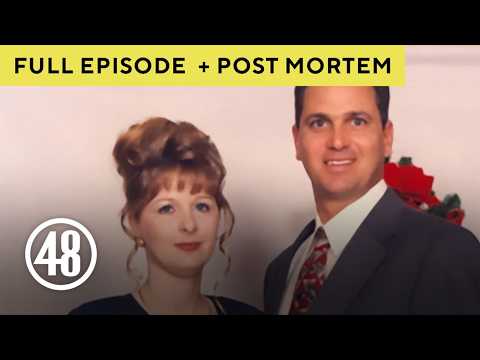
Man convicted in Etan Patz 1979 murder case ordered new trial | "48 Hours" report
Episode Description
"48 Hours" correspondent Richard Schlesinger goes inside the investigation of 6-year-old Etan Patz's 1979 murder case. Watch more full episodes of "48 Hours" on Pluto TV.
CASE UPDATE: On July 21, 2025, a federal appeals court ruled that Pedro Hernandez must have a new trial or be released. On Nov. 25, 2025, the Manhattan District Attorney announced he intends to retry Hernandez.
True crime. Real justice. "48 Hours" investigates the most intriguing crime and justice cases that touch on all areas of the human experience including greed and passion. "48 Hours," which premiered in 1988, has developed a rich history of original reporting and impact journalism that has helped exonerate wrongly convicted people, caused cold cases to be reopened and solved, and along the way changed lives.
For video licensing inquiries, contact: [email protected]
Read the full transcriptHide the full transcript
- [Music] We are trying to locate a lost child by the name of Eton Pate. He is only 6
- years old. He weighs 50 lb, 40 in tall, blonde hair, and blue eyes. It's not like a case, you know, nowadays
- where you may have surveillance video, you may have social media. So, if this case was going to get
- solved, you guys had to solve it. You had to walk. You had to talk to people. >> We had to look at everything over again,
- take a fresh look, and we just kept pressing forward. We just kept looking at everything over and over and over
- again. >> Every missing child case is very important, but this was one of the oldest ones we had. It was 30 something
- years worth of investigative steps. It's a six-year-old boy, you know, six [Music]
- I think it was one of the most significant unsolved cases in the history of New York City
- when Eton was lost in 1979. I think the city was in more of an innocent state of
- mind. I mean, this is the first day he walked to the school bus. You could stand at
- that door and you could see the school bus stop. It's like right there. >> We have always felt that he's alive. We
- have always kept up our hope that we would get him back. We can't determine when it's going to
- end or if it's going to end. And we will keep hope and we will keep looking. [Music]
- That photo will always haunt me. And every single day that I sent my son out to school,
- I thought of a ton paid. And I was one of 8 million New Yorkers like that. This is Washington Square Park. And this
- is significant because Joseé Ramos, who was the main suspect in the case, said he met a boy over there by the fountain,
- molested the kid, and then said he let him go. >> They're trying to hook me up with paint.
- That's bull. When you looked at the evidence concretely about Joseé Ramos, it was it
- was lacking. >> Look at this. See this here? Back in 2010, Lieutenant Zimmerman had
- approached me and he says, "Hey, you mind taking another look at this case?" >> Cadaavver dog. Kada dog indicated the
- presence of human remains. Human remains. Search here. >> The case was always open. Always looking
- for the needle in the haststack. >> We have a suspect in dead end that forced the truth out of hiding. The
- disappearance of Eton, page 30. >> The call comes into our office onto the phone right next to my desk.
- >> Did you ever heard the name Pedro Hernandez before? >> No, sir. >> I grabbed him by the neck.
- >> Mhm. >> And I started to choke in him. >> Is Do you recognize this person? >> Yeah, that's him.
- >> The facts of that confession make no sense. He's unreliable because of his psychiatric condition.
- >> You thought that you were looking at the man who killed Eton Pates? >> Yes. [Music]
- 48 hours. The Lost Boy. [Music] After more than 30 years, it took a new team of investigators and a new
- prosecutor to breathe new life into an old case, trying to find out what happened to Eton Pays. District Attorney
- Cyrus Vance Jr., >> you really should never close the book on a case if you think there's the
- possibility that it can be solved. [Music] In 2012, investigators were literally
- digging for clues just blocks away from where Eton was last seen. After thousands of deadend leads, the public
- held its collective breath, hoping this time the case might finally be solved. >> Yes. I wish I hadn't let him go to the
- bus step that morning alone. >> Eton Pates was just 6 years old and like many kids that age, he wanted some
- independence. It was 1979, the last day of school before the Memorial Day weekend, and
- Eton's mother, Julie, finally agreed to let Eton walk alone to the school bus stop. It was just two blocks away from
- their Manhattan apartment. [Music] Uh my feelings that morning were very positive about his going.
- >> Eton was carrying a book bag and a dollar to buy a soda at the corner store near the bus stop and then he seemed to
- vanish. [Music] [Music] Julie and her husband Stan didn't realize their son was missing until that
- afternoon when he didn't come home from school. Julie called the school and learned Eton never arrived and his
- friends never saw him at the bus stop. So she called the police. >> I didn't want to start with something
- bad happened to him. I would rather start in my mind in my heart that it was just a missing person.
- Former NYPD detective Patrick Ianelo immediately headed to the Pates's home >> and then we started to uh knock on
- doors. Anyone see this boy? We worked all that day. We worked all that night and then the following day I got home
- and uh I I was ready to break down myself >> because because I I saw my son >> and he was Eton's age.
- >> Mhm. >> A command center was set up right in the P's apartment. Both my wife and I are
- continue to be confident that he is alive and uh we hope he's being cared for by
- someone who um might want a child as adorable as he. >> The police did not know us. We had to be
- cleared of suspicion as well as many other people. >> Eton's image was splashed on storefronts
- and in newspapers. Eton's father is a professional photographer and took many photos of his
- son. These pictures captured the public's heart and captured Eton's spirit. >> He's just bubbling over with life and he
- always saw the positive side where other people saw negative. It's just he's just
- an incredible person. >> Our six-year-old boy is a loving, trusting child. We think an adult could
- have convinced him to come with him. >> The police canvas the neighborhood talking to people on the street.
- >> Huh? >> Interviewing workers at a corner store near the school bus stop. >> Hi.
- >> Hi. You heard anything? Anything? She just [Music] >> Anybody talking? Anybody?
- >> No. >> Saying anything? >> Nothing at all. >> Okay. Thanks a lot. Keep your ears open.
- >> The longer we've gone without any bad news. >> I think that's good. >> Detective Bill Butler was Ianello's
- partner. >> Uh he was last seen at uh 7:55 a.m. >> We have leads, but we don't know where
- we're going to end up on the leads that we have now. >> They pronounce it eight times. Well,
- >> when you go this long on something like this, you do you feel like you're looking for your own son.
- [Music] The search for Eton dragged on. Detective Butler, a father with six children, lived and breathed the case.
- >> How did this case influence Bill Butler, >> more than I could imagine. He was very,
- very tied into the case. In 1986, Bill Butler took his own life, and there was speculation his
- frustration with this case may have been part of the reason why [Music] the search went on without Butler.
- Julian Stan had two other children to protect. Eton's older sister and younger brother. We keep saying we we try to
- lead normal lives but in so many small ways uh it's just totally impossible. I mean
- we have his belongings all over the house and yet uh to put them away is saying to to us and to our children that
- uh he's gone and he's not coming back >> and if we're patient we'll get him back.
- >> But their patience went unrewarded. The pates did everything they could to keep
- their story in the news and that helped other missing children. >> Everyone says how many, where, why, what
- happens to them. >> In the 1980s, milk cartons showed Eton's face and then those of others, but Eton
- remained among the missing. By 1998, a new detective was heading the missing person squad. Phil Mahoney was
- drawn to the case by, of all things, a poem titled The Missing Boy. It's about a mother and son looking at Eton's
- missing poster. >> I read that poem and I said, "That's it. I want to work on the Eton Pates case."
- It was pretty much inactive. It had been inactive for many years. >> It was cold.
- >> It was colder than gold. We had to find the the the reports, put them back together.
- >> Mahoney sorted through nearly two decades worth of work and some bizarre tips.
- >> This tip about this cult in Westchester. >> Did that source say that Eton was there?
- >> Yeah. That Eton was killed by that cult and dumped. >> The leads led nowhere, but there was
- someone who police were very interested in. Joseé Ramos, the man who said he may
- have encountered a boy in Washington Square Park not far from where the Pateses lived.
- >> Did he say it was Eton Pates? >> He has said he was 90% sure it was Eton Pates.
- [Music] You ever have a kid named Anton Pototts? >> Yeah, that was in the papers in 79.
- >> In 1982, Joseé Ramos was picked up by police for stealing some books from children. He was homeless, living in a
- drainage tunnel in New York City. And former Lieutenant Phil Mahoney recalls Ramos had some disturbing photos.
- >> He had a bunch of photos of kids that look like Asan Pates. He was a shaky character, so he enjoyed looking at
- these photos. >> So Ramos was questioned by investigators about the photos. >> What is it about that people say looks
- like he >> the smile? I think. >> How about the hair? >> Maybe the hair. Not that much. Susan
- used to take care of him. Susan Harrington. >> Susan Harrington, Ramos's girlfriend,
- walked Eton to school during a bus strike shortly before Eton disappeared. >> Did you know when he lived in Soho?
- It was in the papers. >> Investigators suspected Ramos was a pedophile who could have ties to Eton.
- >> There was enough there. There was a lot there to draw attention to him. Certainly,
- >> Eton often played in Washington Square Park, a place Ramos was known to visit.
- Joseé Ramos has said several times that on May 25th, 1979, he was here and a young small 7ish blonde kid came up to
- him and started talking to him. And Joseé Ramos said at that point, he eventually took the kid back to his
- apartment. Ramos told that story to federal prosecutor Stuart Grawa, who had been working the case since 1985.
- Grabis and the FBI had through the years tracked leads around the world, but they
- always came back to Ramos. In June 1988, Ramos was uh brought to my office and uh
- proceeded to state that he was 90% sure that the young boy he took that day, May
- 25th, 1979, was the same boy whose picture he saw both in newspaper and on television, that being Tom Pates.
- >> Investigators learned Ramos had sexually molested children around the country.
- One of the things he did was to travel around the United States in a converted school bus, giving out matchbox cars and
- toys and baseball cards to children to young boys to entice them onto the bus. >> Grab wanted to prosecute Ramos even if
- it wasn't for the Eton Pates case. He succeeded in Pennsylvania. In 1990, Ramos plead guilty to molesting an
- 8-year-old boy and was sentenced to 10 to 20 years in prison. You've got a known pedophile who says that he's 90%
- sure that he picked up >> Eton Pates, you know, around the time that he disappeared. Why didn't you just
- go, "Okay, case closed." >> Because you didn't have that corroborating evidence. You didn't have
- that one person who said, "Yeah, I saw him and Eton in Washington Square Park." >> You got the information.
- >> Investigators hunted for more evidence. In 2000, Mahoney ordered a search of an
- apartment building Ramos lived in when Eton disappeared. Ramos had allegedly told a fellow inmate this is where he
- disposed of Eton's body. When he was in jail, Jose Ramos said that he put Eton into the furnace in the basement of this
- building. >> This building and you know, burned up the body. But like so many tips in the
- Eton Pates case, nothing came of it. >> There was just never that next thing to make you say, "Yep, that's it. Close the
- books. We got the guy." >> Mahoney felt they didn't have enough on Ramos to charge him with Eton's
- disappearance. Neither did the Manhattan DA at the time, but Stan Pates and Stuart Grabis were becoming more
- convinced Ramos was their man. >> I believe this man stalked my son. I believe he lured him back to his
- apartment. I think he used him like toilet paper and I think he threw him away. Brian Odwire is a prominent New York
- attorney and started representing the Pateses. He was friends with Stuart Grabis and in 2000 he approached Grabis
- with an idea. I said, "You know, you have a an opportunity. You may not have thought about it, but of taking a civil
- case against Ramos. >> It would be a wrongful death suit. Odoire hoped Ramos would be subpoenaed
- and might say something incriminating to help bring a criminal case. But before the wrongful death case could proceed,
- Odoire had to ask the Pes to officially give up hope. They would have to ask a court to declare their son dead.
- >> It's one of the toughest things I've ever done in my practice. >> And on June 19th, 2001, a judge declared
- that Eton Pates was officially dead. I used to have fantasies of of a taxi cab pulling up in front and
- a time coming out of it, but uh that was a long time ago. I don't entertain those
- fantasies anymore. >> The Pates's attorney went to the Pennsylvania prison where Ramos was
- being held to interview the man he believed had killed Eton Pates. >> This was evil incarnate. If I met him on
- the street, I would have been very scared. >> And what did he say? >> He said that yes indeed he was on the
- street that day and he picked up a little boy by the name of Jimmy. >> This time Ramos did not say Eton's name.
- >> Were you convinced that Ramos was the guy? >> Absolutely. >> Ramos would never answer more questions
- or testify in court and the Pes won the civil case against him. once and for all
- at least have a final declaration by a court of law that Joseé Antonio Ramos caused the death of Eton Pates.
- >> It was a victory, but it was not the end of the fight. >> The ultimate objective was to get a
- criminal prosecution. >> Did you think it was enough to prosecute him criminally?
- >> I did. >> The Manhattan DA disagreed. He still would not charge Jose Ramos. >> He thought he couldn't prove it beyond a
- reasonable doubt. Do you keep thinking about this case or did you move on? >> No, I never moved on.
- >> Never really done. >> No. >> Jose Antonio Ramos was in prison unpunished for what he believed was the
- death of Eton Bates. >> But 33 years after Eton disappeared, there was a tip. >> This is where it all started.
- >> And it could change everything in this case. [Music] I think about my son every day. He's
- he's he's gone, but I I will never forget him. As time passed for Stan and Julie Pates,
- Eton was and is frozen in time as a six-year-old gone missing. They remained convinced that Joseé Ramos, the
- pedophile who was behind bars in Pennsylvania, was responsible for Eton's death.
- >> I send them a a poster twice a year and I write on the back, "What did you do to
- my little boy?" From the time Eton disappeared in 1979 until 2009, one man held the position of
- Manhattan DA Robert Morganthaw. He never felt there was enough evidence to indict
- Ramos, but Morganthaw was retiring. >> I support Sianance. >> And Cyrus Vance Jr. was running for the
- office. >> The Pates family reached out to me and Stan asked me if I would look into the
- case. And when Vance became Manhattan DA in 2010, he did look into it. >> Side Vance was like, "Listen, we'd like
- to re, you know, fresh set of eyes, reook at it, go backwards, see what was missed."
- >> Lieutenant Chris Zimmerman headed the missing person squad at the time. And part of the fresh look included another
- look at Joseé Ramos. We looked at the case for quite a while and I never was convinced that there was proof beyond a
- reasonable doubt that Jose Ramos was Eton's killer. [Music] >> And so the search for another suspect
- continued. The FBI had been involved on and off since Eton's disappearance. In April of 2012, investigators took
- another look at this handyman who used to work for the PES. Along with the NYPD, they started that dig. It was at
- the former site of the handyman's workshop. >> We're executing a search warrant regarding the disappearance of Eton
- Pates. >> It was not far from where the Pateses still live. >> Excuse me. The dig went on for 5 days as
- investigators sifted through subterranean spaces and decades old dirt. It was starting to look like there
- might finally be some answers. >> We're cautiously optimistic we'll find evidence.
- >> In the end, nothing was found. The handyman was cleared. At >> this point, there's no obvious human
- remains. But this was not just another dead end. Far from it. In fact, it led to the first major turning point in this
- case. >> The call comes into our office onto the phone right next to my desk. >> It came from Joseé Lopez who called
- police after he watched news coverage of the dig. >> Can you Can you tell us what brought you
- to the police? Thank you very much, Jose. >> Okay, that's what I went. He said his
- brother-in-law might be involved in the case. Detective Dave Ramirez helped lead
- the investigation. >> And who was his brother-in-law? >> Pedro Hernandez. >> Did you ever heard the name Pedro
- Hernandez before? >> No, sir. No. >> What did he tell you about his brother-in-law?
- >> Um, that he had made statements to various people about him having done something really bad to a child in New
- York. Pedro Hernandez worked as a stock boy at that corner store by the bus stop. He
- was 18 when Eton disappeared. And soon after, Hernandez left that job and moved home to New Jersey. Over the years, he
- had been divorced, remarried, and had children. He worked on and off at menial jobs and had no criminal record, but he
- had told people about hurting an unnamed child. So, who had Hernandez spoken to?
- >> There was a religious group. Apparently, there was a retreat that they had gone
- on. They all had information to the fact that Miss Hernandez did something to this child.
- >> Ramirez learned Hernandez also told his ex-wife and a friend similar stories.
- Detectives notes from 1979 show police at the time knew Hernandez worked at the store, but it is unclear if he was ever
- questioned. Why do you suppose he was not a suspect before? >> I don't have the answer for it. I wasn't
- there. You know, I I never got clarity on that and I don't think we did either. About 2 weeks after they learned about
- Hernandez, on May 23rd, 2012, police went to his New Jersey home to talk to him.
- >> I had uh told him that we were investigating an old missing person's case in New York City. At that point, he
- like he lost all the color in his face. >> Still, Hernandez readily agreed to go to
- the prosecutor's office in Camden, New Jersey to be questioned. Was it hard to get him talking? No. No.
- >> He talked for 6 hours without a lawyer or a recording of the conversation. And
- during that time, he was shown a missing poster of Eton Pates. Later, the video camera was turned on.
- >> Can you start telling us again exactly what you just told us before about what
- happened? >> And Hernandez told them about seeing a boy outside the store where he worked.
- He was waiting for the school bus. >> Who was waiting for the school bus? >> The kid.
- >> What's her name? >> Bates. >> These are the words that changed the course of one of America's most
- heartbreaking cold cases. Hernandez went on telling police he offered Eton a soda.
- >> I asked him I asked him to go to the in the basement with me to get a soda. It
- is hard to listen to his story. >> What happened after that? >> Then I shot him.
- >> Yeah. When I shot him, he went like this. >> What made you do this? >> I don't know.
- >> I don't know. >> It was something that just happened. >> He signed Eton's missing poster writing,
- "I am sorry." And choke him. >> You recognize this to be the boy that you choked that day?
- >> Yes. After the confession, Hernandez showed investigators where he said it happened
- 33 years earlier. Lieutenant Zimmerman recorded the walk with his cell phone. So Hernandez told you here that this was
- the basement entrance. >> Yes. >> So according to Hernandez, Eton was that way from where we are.
- >> Yes. >> And he lured him in into the basement through this door. >> Yes, sir. Hernandez said he put Eton in
- a box after choking him. >> Put him in a box and then put the box on his shoulder.
- >> Carry the box up out of here. At this point, I said, "Could you show us exactly the way you walk that day?"
- >> We cross the street onto the other side. >> And how far down did he go? >> Then he went down to the corner.
- >> He went this way, right? >> Yes. He crossed the street here and um he stops here at this location. He said
- he went down some steps. He He took the body down here. Yes. And then he put the
- box down. >> Police believe the box was picked up by garbage collectors. >> Hernandez was interviewed again.
- >> Hey, Hernandez. >> Hi. Hello. >> Hours after the Soho walk, this time by a prosecutor in the Manhattan DA's
- office. >> And I choked him and I tried to let go, but I just couldn't let him go.
- >> He repeated the same story. And later that day, Pedro Hernandez was arrested.
- >> We have a suspect in custody who has made a statement to the NYPD implicating himself in the disappearance
- of Eton Pates 33 years ago. >> He had confessed to killing Eton Pates. It was a credible confession.
- >> So says the prosecutor. But soon questions were being asked about the 6 hours when Hernandez was questioned.
- before the videotaping began. Why weren't those first hours videotaped? [Music] [Applause]
- It was a day or two shy of the 33rd anniversary. It was a day or two shy that we made the
- arrest. >> This evening, the New York City Police Department is announcing the arrest of
- Pedro Hernandez, age 51. >> Mr. Pace was taken back. Uh, a little surprised and I would say overwhelmed.
- You know, it had to sink in. You know, 30 something years had to sink in. You know, I can't imagine not having an
- answer for that many years. >> For decades, Stan and Julie Pates believed another man was responsible for
- their son's disappearance in 1979. >> I believe this man stalked my son. I want him to admit it.
- >> Now, someone was admitting it, but it was this man, Pedro Hernandez. He was waiting for the cameras. Then he
- went down the steps. Right there he went. >> After Hernandez was arrested, he was
- thought to be a suicide risk and taken to Belleview Hospital. >> I met him at uh the prison ward.
- >> Harvey Fishbine is Pedro Hernandez's courtappointed attorney. >> I walked out of there and I said, "The
- man has an issue that needs to be addressed." uh hear voices sometimes talking to me.
- >> A defense psychiatrist diagnosed Hernandez with a personality disorder that can leave a person unable to
- differentiate between what's real and what's not. >> I had uh visions. >> Do you think Pedro Hernandez knows if he
- killed Eton Pates or not? >> I I I think he knows he didn't. >> And that's Are you sure? It's hard to
- look into someone's mind, which is one of the real problems we have here. >> The diagnosis of mental illness would be
- a major part of Hernandez's defense. And in January of 2015, 2 and 1/2 years after his arrest,
- Hernandez went on trial for the murder of Eton Pates. Eton Pace's father walks silently past
- reporters in the courthouse, finally hoping to see justice served nearly 36 years after his young son's
- disappearance. At trial, the defense would argue that Hernandez's mental illness made him make
- up the whole story of murdering Eton, starting with seeing him by the bus stop. >> Pedro says, "I saw him standing there.
- >> He was waiting for the bus." Yet no parent that was at the bus stop that morning who knew Eton
- saw Eton that morning. So the fact that Pedro said that he saw the child there when no one else did immediately raises
- questions as to did this actually happen or not. >> Hernandez told investigators he tried to
- hide Eton's book bag in the basement of that store. >> So I took the book bag and I threw it
- behind the freezer. But Fishbine says the police would have searched that store and if they did, they should have
- found the bag or some other evidence. >> That bag was never recovered. >> The defense also argued that Hernandez
- has a low IQ and is susceptible to suggestions. We argued to the jury he's unreliable because of his low intellect,
- because of his psychiatric condition, and because the story in the end does not make sense.
- >> But the prosecution experts interviewed Hernandez. >> I'm going to say some words.
- >> And concluded he is not mentally ill and that the jury could believe his words.
- Prosecutors had home videos showing Hernandez socializing like anyone else, and they pointed out that Hernandez
- never reported any mental illness on a driver's license renewal form he filled out.
- >> Do you believe that he was competent to confess? Absolutely. I think there was
- ample evidence that Pedro Hernandez was not fabricating this uh homicide as the product of
- mental illness, but that he in fact was admitting to something that had tortured
- him and he confessed. >> But Fishbine wants the jury to wonder what happened during those 6 hours
- before this videotaping began. >> Can you start telling us again exactly what you just told us before? There was
- an affirmative decision not to videotape what was going on. All it would have taken was the pushing of a button.
- >> Why wasn't that taped? >> Uh I think it was not taped because there was no legal requirement that it
- be taped. >> How do you know that they didn't feed him information? How do you know they
- didn't berate him? >> The way you assure yourself is by talking to the witnesses who were there.
- Uh after speaking to those who were present and being informed of what happened, I did not doubt that uh there
- was uh anything but a fair handling of Mr. Hernandez and uh the appropriate questioning of him.
- >> Did you give him any information about the crime when you were talking to Mr.
- Hernandez? >> No. >> Did you try and influence him? >> I wouldn't say no. >> This was all him just talking to you,
- volunteering this stuff. Yes. >> The defense argued police prayed on Hernandez's vulnerability and
- manipulated him to confess. >> Pedro is a very religious person. One of the detectives says, "Thank you, Pedro.
- >> I can't begin to tell you how proud I am of you." >> That's the strength of the Lord.
- >> Right there is strength. That's the strength of the Lord. >> What's the strength of the Lord? that he
- said something that they said they needed in order to make people feel better, that family to resolve it.
- >> But the police would counter and the prosecutors would counter that this guy confessed to so many people over the
- years that he corroborates his own words. >> Well, they they would like to say that.
- That's accurate. I know. And I don't think that's accurate. >> The prosecution called those church
- members. Hernandez's ex-wife. >> Who would you tell? You said you told your ex-wife,
- right? >> And his friend who all said Hernandez told them he did something bad to a
- young boy. But at the time, they never reported anything because they didn't know whether to believe him.
- >> If it was one statement in isolation, that would be one thing. There were a number of people to whom he unburdened
- himself. But Fishbine told the jury those accounts varied and Hernandez may have been making them up to look tough.
- And he offered the jurors another suspect. The man many including the pates first thought killed Eton. Joseé
- Ramos, the known pedophile whose girlfriend knew Eton. >> I feel certain that if the district
- attorney's office tried Joseé Ramos, he would be convicted. The evidence against Pedro Hernandez was
- much stronger than it had ever been against Jose Ramos. >> The prosecutors had one piece of
- evidence they considered critical. It was something Hernandez said when he showed police where he said he dumped
- Eton's body. He noticed there was a door where he didn't remember one. >> And he says there wasn't a door there.
- When they researched the building's history, prosecutors discovered Hernandez was right. The door was added
- after 1979. >> That's a fact that was not known publicly that we believed only the
- killer would know. >> But the defense says Hernandez wasn't even sure which building it was.
- >> He said, "I thought maybe this is it." And then he looks and he says, "No, this
- is it. This is one, right? >> It was a lot for the jurors to sift through. The trial took nearly 3 months.
- And in April 2015, they began deliberating and deliberating for 18 days. What happened after that? Then I shot
- him. >> Yeah. When I shot, he went like this. >> For 18 days, the jury considered Pedro
- Hernandez's confession to the murder of Eton Pates. >> A big bone of contention was the mental
- health issue. We debated that for days. >> Adam Sirwis was one of the jurors. The
- other issue that was very sticky at first was the confession. Everyone felt very upset about not being able to see
- the entire interview. >> The jurors disagreed on whether the confession could have been coerced.
- Twice they told the judge they were at an impass. And the third time they reported they could not reach a verdict.
- On May 8th, 2015, >> this has been a very long trial and a very long deliberation.
- >> The judge declared a mistrial. Our long ordeal is not over. >> When they said they were unable to reach
- a decision, we believed it was going to be 11 to1 for a quiddle. >> It was 11 to1, but not for a quiddle.
- Only one juror voted not guilty. It was Adam Surir. >> Do you remember the date?
- >> No. >> Oh, yes. The date on the 25th. He found the confession hard to believe, not
- knowing what went on before the camera started rolling. >> You know, it's very hard for people to
- wrap their minds around the idea that somebody would confess to murdering a child
- >> if he didn't actually do it. >> Yeah. And a lot of the jurors said that in our deliberations. But the whole
- reason why you don't just throw someone in jail when they confess is that there's a lot of people out there with
- mental illness that could confess to lots of crimes and it doesn't mean they're all guilty. But the rest of the
- jurors believed Hernandez was guilty. >> Pedro Hernandez, you know what you did.
- >> Still, 11 out of 12 is not enough to convict. And Stan Pates was obviously disappointed.
- >> This man did it. He said it. How many times does a man have to con confess before someone believes him?
- >> Stan was uh was unequivocal in his support that the case should be retried. And so he did. About a year and a half
- later, Pedro Hernandez went on trial again. The evidence and the issues were the same as the first trial. And like
- the first trial, it was long, more than 3 months. And this trial also ended with
- a long deliberation, 9 days. Did it start feeling like the first time to you? >> Um, nothing felt like that 18 days the
- first time, but yes, it was reminiscent of that. and we were just trying to understand what was going on. It it's
- impossible to try to read a jury. >> But unlike the first trial, this jury reached a verdict. Pedro Hernandez was
- convicted of killing Eton Pates 37 years after the first grader left home and vanished.
- The P family has waited a long time, but we finally have found some measure of justice
- for our wonderful little boy, Eton. I am truly relieved. And I'll tell you, it's
- about time. It really is. It's about time. >> Pedro Hernandez was sentenced to 25
- years to life. Why do you think this case was so hard to solve? Why did it take so long?
- >> I think people had great intentions. I think people got focused on people like
- Ramos, not criticizing anybody independently cuz it made a lot of sense. He's an evil man. He's just not
- our evil man. It's a feeling now shared by others who were once convinced Joseé Ramos murdered Eton Pates before police
- found Pedro Hernandez. >> If I were on the jury, I would have come with the same verdict.
- >> Do you still think of Eton Pates? >> I do. >> What do you think about? >> It could have been my son.
- >> That is the thought that still haunts so many involved in this case. My kids are like 22 and I still think
- about it when I'm when they're out of sight and out of mind. >> We were kind of hoping that it would be
- like a movie ending where the the boy would eventually walk in the door, but it didn't work out that way.
- >> I noticed a couple of times you've looked down at this >> Why do this still mean something to you?
- >> Yeah, this this is this is the poster we remember the most. I would say this is
- the kids looking right at you. I feel for the family. I'm a father myself and so is Dave.
- >> Case is solved but solved but I never give them complete closure. I couldn't give their son back.
- Would have loved to give their son back. [Music] Heat. Heat. [Music]
Brief Summary
Eton Pates went missing in 1979; Pedro Hernandez confessed to his murder decades later, leading to a conviction.
Key points
- The Disappearance of Eton Pates. Eton Pates, a 6-year-old boy, vanished on his first day walking to the school bus alone.
- A New Suspect Emerges. Pedro Hernandez, a former stock boy, becomes a person of interest in Eton's disappearance.
- The Search for Answers. After decades, a new team of investigators reignites hope in the cold case of Eton Pates.
- The Civil Case Against Ramos. The Pates family pursues a civil case against Joseé Ramos, seeking justice for Eton.
- The Pain of Uncertainty. The Pates family struggles with the uncertainty of their son's fate for over three decades.
- Confession to a Tragic Crime. Pedro Hernandez confessed to the murder of Eton Pates, revealing haunting details.
Episode highlights
- The Disappearance of Eton PatesEton Pates, a 6-year-old boy, vanished on his first day walking to the school bus alone.“It's a six-year-old boy, you know, six”0:54Jul 21, 2025
- A New Suspect EmergesPedro Hernandez, a former stock boy, becomes a person of interest in Eton's disappearance.“Did you ever hear the name Pedro Hernandez before?”2:56Jul 21, 2025
- The Search for AnswersAfter decades, a new team of investigators reignites hope in the cold case of Eton Pates.“You really should never close the book on a case if you think it can be solved.”4:22Jul 21, 2025
- The Civil Case Against RamosThe Pates family pursues a civil case against Joseé Ramos, seeking justice for Eton.“It was a victory, but it was not the end of the fight.”18:21Jul 21, 2025
- The Pain of UncertaintyThe Pates family struggles with the uncertainty of their son's fate for over three decades.“I think about my son every day. He's gone, but I will never forget him.”19:22Jul 21, 2025
- Confession to a Tragic CrimePedro Hernandez confessed to the murder of Eton Pates, revealing haunting details.“Then I shot him.”25:40Jul 21, 2025
- A Long Wait for JusticeAfter decades, the Pates family finally sees justice served with Hernandez's conviction.“It's about time.”40:28Jul 21, 2025
- The Struggle for ClosureDespite the conviction, the Pates family grapples with the pain of loss.“I never give them complete closure.”42:03Jul 21, 2025