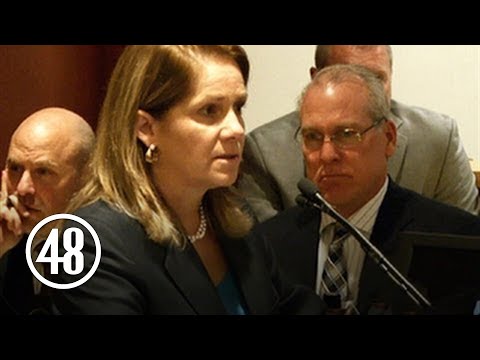
Guilty, Innocent, Not Guilty | "Married to Death" | "48 Hours" Podcast
Episode Description
Raynella Leath’s defense attorneys Josh Hedrick and Rebecca LeGrand paint David Leath as a man in decline, introducing medical records and anecdotal evidence to provide a motive for his alleged suicide. They attempt to chip away at the prosecution’s arguments, using the same evidence to construct a different story of what happened the night David Leath died. The defense also brings its own medical expert, who introduces a key idea: the difference between the concepts of being innocent and not guilty. Join "48 Hours" correspondent Erin Moriarty as she revisits the murder investigation of Raynella Leath. Listen to "Married to Death from My Life of Crime with Erin Moriarty" on Amazon Music or wherever you get your podcasts: https://link.chtbl.com/MTDYTE4
Crime. Social justice. Impact. "48 Hours" investigates the most intriguing crime and justice cases that touch on all areas of the human experience including greed and passion. "48 Hours," which premiered in 1988, has developed a rich history of original reporting and impact journalism that has helped exonerate wrongly convicted people, caused cold cases to be reopened and solved, and along the way changed lives.
Read the full transcriptHide the full transcript
- you don't know for certain whether the gun was opened or the cartridges manipulated prior to that photo being
- taken I do not didn't have toxicology didn't have ballistics didn't have medical records I
- was very confident and 14 years later I'm even more so confident and so there's a difference between
- innocent and not guilty I have no idea if she's innocent I truly believe she's not guilty
- I'm Aaron Moriarty 48 hours this is married to death part four in March of 2003 57 year old David Leith
- was found dead at his Tennessee home of what it first appeared to be a suicide but when the evidence didn't add up to
- investigators his wife reynella Leith was charged with his murder she was actually tried three times the
- first ended with a hung jury the second trial reynella Leith was convicted but that conviction was
- overturned her third trial began in May of 2017. and this time we were in the courtroom and that's where we pick up
- the story in part four of married to death may I please the court ladies and gentlemen of the jury
- good afternoon [Music] as in most murder trials is more than one way to look at the evidence here at
- the County Courthouse in downtown Knoxville Tennessee it's now the defense's turn before we can talk about
- March 13 2003 we have to go back and understand how we got to that point attorneys Josh Hedrick and Rebecca
- Legrand feel their client has never had a fair shot that she never received any presumption of innocence every good
- thing she's done every normal regular everyday thing she's done is Twisted into some sort of sinister
- Act part of a vast complex plan to engineer the death of David instead of a fair trial they believe
- they're up against a decade of presumptions of guilt here's my producer Josh Gainer
- some of the trial was carried live on uh television and were plastered across the
- front page so their concern was how are you going to find people within this County who had not in the very least
- heard about what happened and at the very worst knew these people personally and we heard during jury selection there
- were some folks who whether their kids went to school with other kids or it's it's not a tiny town but it's not a big
- place either and I think the bigger concern was okay you knew her name but did you also attach that phrase Black
- Widow that's all you needed her hope for the justice system not failing her a third time is kind of on us is on us
- yeah and that's a terrifying responsibility she's got hope that the justice system isn't so broken that it
- won't eventually realize the truth which is that she's an innocent woman the defense tells the jury that there
- wasn't a murder at all it was suicide but before they attacked the state's evidence they first go after the motive
- as we've discussed in previous episodes prosecutors don't have to prove a motive
- in a murder case but the defense knows it's in the jurors Minds so attorney Josh Hedrick suggests
- to the jury that there was only one person with a reason to kill David Leith and it was David Lee himself
- see in the year 2000 David gets sick and goes to the hospital after being discharged from the hospital
- he's really never quite the same they say David was a man whose mind was failing him he began getting confused
- and forgetful he was going to lose who he was he was starting to lose his abilities
- he couldn't work anymore he struggled with fence Clips lifetime farmer can't do it
- it's frustrating demoralized but David Leith was also a proud man never wanting to appear vulnerable he
- was able to hide his problems from almost everyone give us your name please ma'am Katie Butler
- Ms Butler your reynella leith's daughter am I right I am raynella's youngest daughter Katie was just a teenager back
- then still living at home he just stopped being active um he would sleep in really late he stopped working out he
- just kept to himself more she told a story of finding David at the house watching TV
- he was eating ice cream he was lifting the spoon up and he thought he was making it to his mouth
- and it was just dropping so things like that out of character yeah did he have trouble with uh confusion
- yeah medical records show David was hospitalized several times and began seeing a neurologist he never told his
- friends or even his daughters Cindy there was something wrong with David's head the specific type of dementia isn't
- important what's important is he couldn't do the things he used to do and he talked to his neurologist and he
- knew this was a condition that was not going to get better it was going to get worse
- he was going to lose who he was the defense says it was that desperation that led David to do the unthinkable to
- take his own life and with that motive established the defense then focuses on the three shots
- discovered at the crime scene we go back to defense attorney Josh Hedrick that each and every one of these shots
- each and every one of these trajectories could have been accomplished by David Leith himself
- multiple shot suicides are not impossible they have the biggest challenge for the
- defense really has nothing to do with trajectories or multiple shots it's countering the compelling argument
- from the prosecution that the third shot was fired after David Leith was already
- dead cylinder remember prosecutors showed jurors picture taken at the crime scene of the guns open
- cylinder showing what they say was the order of shots what was that picture actually taken when investigators say it
- was one thing we'll do too what if we put after unloaded here we'll check make sure what the rotation is on the
- cylinder because that might be important if you have two on the right and it rotate you almost get brought right into
- the scene because that lead detective Perry Moyers had this recording device with him and turn it on and then go
- through his investigation so you sort of hear what he's thinking and seeing in real time
- the defense paints a picture of a crime scene in chaos with police and First Responders streaming in and out of the
- house this happened a long time ago it was 14 years so of the two first officers one is now who responded to the
- scene one is now deceased it didn't seem like there was a really organized chain
- of command if you will and the defense tried to paint that as a picture it's like we don't know if things were found
- exactly as a prosecution said so can the jurors be certain that the gun and bullets weren't picked up and
- moved before investigators snapped that picture Don Carmen is the state's expert
- he's a former agent with a Tennessee Bureau of Investigation you don't know for certain whether the gun was opened
- or the cartridges manipulated prior to that photo being taken I do not and as a result you're unable to say and I mean
- this with all due respect you're unable to say with any degree of scientific certainty
- in what order the shots were that's correct because in my particular discipline that is they would be not
- testable if the state is right and the shots were fired exactly as the investigators say
- they were the defense had an explanation for that too I'm Greg Davis I'm a forensic pathologist at the University
- of Kentucky and I was asked to review the evidence in this case as a defense expert on behalf of Ms Leith
- Dr Greg Davis is a medical examiner for the state of Kentucky I've known him for years and I've seen
- his work on quite a few cases so I asked him could someone who was already shot in the head with his brain
- stems severed be capable of firing that third and final shot when somebody receives a gunshot wound to the Head
- they don't unlike John Wayne movies and that sort of thing they don't just fall down and are still they actually seize
- they have a seizure so the muscles involuntarily could have been clenching in his hand to fire off a third shot
- I'll I'll give it to you it's unusual but to say because of that it has to be a homicide
- I just can't go that far there is a phenomenon called catavaric spasm where a person can actually their
- hands can squeeze immediately upon death what would you have ruled this I would have ruled this undetermined if we want
- to say the death was consistent with a homicide I agree however if we want to say this death is
- consistent with a suicide I absolutely agree with that too all the term consistent with means is that there's
- nothing to rule it in or to rule it out and at the end of the investigation you just don't know
- [Music] okay Dr Davis is not saying that David Leith wasn't murdered he's saying we
- can't tell for sure and that the manner of death should have been ruled as undetermined not homicide
- remember within 24 hours of David Lee's death the medical examiner Dr darinka malusanec called it a homicide even
- though she had not yet seen records from his neurologist nor had she received a complete medical history
- didn't have toxicology didn't have ballistics didn't have medical records it went from
- can we figure out what happened to can we prove this was a homicide what's more tests showed traces of three medications
- in David's system a painkiller an antidepressant and an anti-nausea drug in a previous trial Dr malusinik
- testified that the combination of drugs would have rendered David Leith wrote unquote
- incapacitated in other words she says he wouldn't have been able to get out of bed let alone handle a weapon and kill
- himself but according to Dr Davis her analysis was wrong again you can't predict human
- behavior just because there's some antidepressant and painkiller in a person some people can have huge amounts
- of those drugs in their system and you might not even know it based on their tolerance the example I used with my
- early medical students is how many times have you been to a class party and somebody drinks a six pack of beer
- and they look kind of normal you know they're they're acting fairly normal and then there's their buddy over in the
- other Corner who drinks two beers and is a complete obnoxious yelling drunk jerk
- well we we've all experienced those types of discrepancies well the same applies to other drugs that have central
- nervous system depressant effects so for me to look at a chart and to say based on that chart there's no way that person
- X could have taken their own life or walked from one room to another is just speculation and is often completely
- wrong [Music] thank you [Music] it's interesting to note that in trial number three Dr milusic did not repeat
- her claim that David Leith was incapacitated so to give her the benefit of the doubt
- perhaps she just read up on the science and got it right this time he was wrong the first time and her being wrong sent
- our client to prison for six years defense attorney Rebecca Legrand is referring to raynella's previous trial
- for the murder of David Leith in 2010 reynella had been convicted of first-degree murder and sentenced to
- life in prison and Legrand believes it was in large part due to Dr malusanex testimony
- and Legrand says it may not have even been the first time that Dr malusinik was mistaken in court testimony
- she's referring to the case of Elizabeth Ogle a Tennessee woman charged with murder in 2010 after an alleged lethal
- dose of morphine was found in a terminally ill friend whom she was caring for Ogle spent 27 months in jail awaiting
- trial after Dr melusinek the medical examiner in that case as well ruled it homicide
- but Dr Davis testified there too he said Ogle's friend died from her disease not a drug the judge agreed and
- threw the case out Dr Davis is still angry about what happened to Ms Ogle and what I saw was
- an injustice in this case where a woman was accused of murder where I saw no evidence whatsoever that it was even a
- murder I was hoping to discuss the Ogle and leaf cases with Dr melusinek but she
- declined 48 Hours request for an interview still it's clear from her testimony in
- reynella's third trial that she still believes that David Lee's death was a homicide
- I was very confident and 14 years later I'm even more so confident Dr Davis can you say unequivocally that
- she didn't kill her husband no I cannot but there's not enough evidence to say she did right and so there's a
- difference between innocent and not guilty I have no idea if she's innocent I truly believe she's not guilty so I
- have no idea as a human being whether she's innocent or not as a forensic pathologist at least on the evidence
- that I've been privy to there's no way on Earth I think she's guilty but there's more to the case that Dr Davis
- was not privy to if anybody has any doubts as to whether David was murdered by Renault
- maybe they need to talk to Steve Walker I see a killer because she tried to kill
- me I'm Aaron Moriarty 48 hours and that's married to death part four this podcast series Married to death is
- developed by 48 hours in partnership with CBS News Radio Judy Tigard is executive producer Nancy Kramer is our
- executive story editor Mike filet and Alan Pang are the series producer editors this episode was produced by
- Josh Gainer Lisa freed and Luis Geraldo and edited by Mike McHugh Dwayne Tollison Jamie Benson and Meghan Marcus
- things to composer Richard fioka for his original scores Gabriella de mergian and Morgan Canty
- are our associate producers Kayla cadell is our production associate thank you to Craig swagler the vice
- president and general manager of CBS News Radio and finally a shout out to all of you
- our fans we owe it to all of you the millions of fans of 48 hours in the U.S and around the world don't forget to
- join me online I am at EF Moriarty on Twitter and we are at 48 Hours on Twitter Facebook and Instagram see you
- soon
Brief Summary
Raynella Leith's murder trial raises questions about evidence and mental health in her husband's death.
Key points
- The Trials of Reynella Leith. Reynella Leith faced three trials for the murder of her husband, David Leith, with varying outcomes.
- The Defense's Argument. The defense argues that David Leith's death was a suicide, not a murder.
- Medical Testimony Controversy. Conflicting medical opinions arise regarding David Leith's ability to commit suicide.
Episode highlights
- The Trials of Reynella LeithReynella Leith faced three trials for the murder of her husband, David Leith, with varying outcomes.“She was actually tried three times.”0:58Jul 5, 2023
- The Defense's ArgumentThe defense argues that David Leith's death was a suicide, not a murder.“The defense tells the jury that there wasn't a murder at all.”3:35Jul 5, 2023
- Medical Testimony ControversyConflicting medical opinions arise regarding David Leith's ability to commit suicide.“Dr. Davis can you say unequivocally that she didn't kill her husband?”16:29Jul 5, 2023