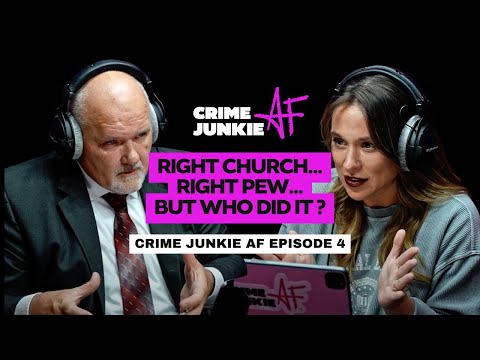
FULL EPISODE: Patrick "Zip" Zirpoli is Crime Junkie AF
Episode Description
Ashley Flowers talks with Patrick "Zip" Zirpoli to talk crime assessment vs profiling, what motivates people to commit crimes, and some of the biggest cases in the headlines!
Source materials for this episode cannot be listed here due to character limitations. For a full list of sources, please visit https://crimejunkieaf.com/
Crime Junkie AF is hosted by Ashley Flowers.
Instagram: https://www.instagram.com/ASHLEYFLOWERS/ Twitter: https://twitter.com/ash_flowers TikTok: https://www.tiktok.com/@ashleyflowerscrimejunkie Facebook: https://www.facebook.com/ashleyflowers.af/
Don’t miss out on all things Crime Junkie!
Follow audiochuck: Instagram: https://www.instagram.com/audiochuck Facebook: https://www.facebook.com/audiochuckllc/ Twitter: https://x.com/audiochuck
Follow Crime Junkie: Instagram: https://www.instagram.com/crimejunkiepodcast Facebook: https://www.facebook.com/CrimeJunkiePodcast/ Twitter: https://x.com/CrimeJunkiePod
Have you heard yet? Your newest obsession and the ultimate destination for 24/7 true crime, Crime Junkie Radio, is here and exclusive to SiriusXM’s app!
On Crime Junkie Radio, you’ll hear episodes from not only Crime Junkie, but from some of audiochuck's other chart-topping titles like The Deck. But the best part is… it will also feature Ashley's brand-new show, Crime Junkie AF, where she’ll explore cases that are unfolding right now, and even feature special guests.
Crime Junkie AF offers listeners a one-of-a-kind experience to explore cases that are unfolding right now, alongside the Queen of True Crime. Ashley will not only keep listeners on the pulse of what's currently happening in true crime, but she'll also invite special guests to sit down and weigh in on the headlines she can’t stop thinking about. Get ready, because Crime Junkie AF is about to become your newest obsession!
Ashley Flowers is the Founder and Chief Executive Officer of audiochuck, an Indiana-based, award-winning, independent media company with 10+ chart-topping podcasts and over 2 billion listener downloads. Best known for her inaugural podcast Crime Junkie, named Apple Podcasts’ #1 show of 2022 and 2023, Flowers also hosts and executive produces The Deck and The Deck Investigates and Crime Junkie AF. In 2022 she authored her first novel, All Good People Here, which became an instant #1 New York Times Bestseller. She is committed to giving back and is the founder of nonprofit Season of Justice, which is dedicated to solving cold cases
Read the full transcriptHide the full transcript
- This episode contains mentions of graphic or sensitive material that may be triggering. Listener discretion is
- advised. Hi everyone and welcome back to the show made by the crime junkie Ashley Flowers
- for those who are crime junkie AF. I'm so excited cuz I'm back with a very special guest for you.
- Many cases that end up in the headlines are also some of the most mysterious ones leaving unanswered questions like
- who did it and why did they do it? And when these cases go cold, investigators will often seek assistance from crime
- assessment specialists and profilers in an effort to fill in those blanks to answer the why and the who.
- So, we are bringing in one of the best crime assessment specialist around. He's spent over 20 years with the
- Pennsylvania State Police with his last duty assignment as unit supervisor of the criminal investigation assessment
- unit. He's also lectured for law enforcement. He is currently bleed expert at the Sherry Black Foundation.
- Should I also mention that he is no stranger to the crime junkie verse exploring cases alongside of me. I'm
- obviously talking about Patrick Zip Zerpoli. Welcome. I'm pleasure to be here. Pleasure to be here. Uh this isn't
- our first rodeo. It is not. We've had many rodeos. Many rodeos. before. Uh we were just talking my brother was
- in the studio a second ago. I I met you back when I was a baby podcaster. Yes. You were you the little
- girl with the backpack. That's exactly what you were to me. And I and it's funny that's how I still see you. I
- still see you sitting in the back of the room when we were at Purdue teaching and
- that's the first time I met you and you were just brand new to this scene and you're just starting up.
- Yeah, I was I weaseled my way into a law enforcement crime assessment training. You did and you made Richard Walter mad
- too to be honest with you cuz he's like what's that little girl doing in this room? I'm like
- why is she here? These are secrets we can't let her know. I went to two of those trainings.
- And then you and I have you've been wonderful and helped us kind of work on a number of cases. So you if people have
- listened to our shows, you did an assessment on the Pelley case for CounterClock.
- Yes. Um we worked on Darlene Hults together for Deck Investigates. So I mean we've done this once or twice. We
- have and you know what? I like this collaboration with you because it just kind of brings in a whole different
- world for me. Like I came to see you live in Philly. Um which was like there these crime junkies They're for real.
- They are for real. Like I was like I was sitting there with my wife like I was like oh my gosh look at these people
- here. And and you know you and I have we did a live show last year on the Sherry
- Black case. We did the Sherry Black case again as a podcast and I just I I think we have a great
- relationship and like I said you're you're still that little girl to me that I met however many years ago. But you're
- still true to that and I think that's a big thing. Oh thanks. So and true to your passion I
- guess. And do you want to talk about the so you're with the or not exclusively but you work a lot with
- the Sherry Black Foundation right now. I do. Yeah. And you mentioned the Sherry Black case
- was one that we covered. We did an episode on the deck about it. We did kind of a live show together.
- What what's your work with the Sherry Black Foundation? What is the foundation set out to do? Well
- and I'll go back to the to the case itself. First off Sherry Black is the mother of Heidi
- Miller. The Millers are the wealthiest family in Utah. And you know when you live in the ivory tower all of a sudden
- horrific horrible things happened to them and they're Heidi's mother was brutally murdered and you know that.
- So they even before the case was solved I had the opportunity to work on the case for years but they created this
- foundation to teach law enforcement and to work on other cases. Like we do a lot
- of consultation on other cases. So they pay me to go just go and help other law enforcement and
- that's kind of the crux of all what we're doing plus the the training side of it also.
- Which I love because I think one of the things if I recall correctly is this happened in an area where they didn't
- see that kind of crime. I mean you I mean you said it was brutal and that's an understatement. And instead of just
- being angry, I think it like it's very inspiring to see a family who said okay let's not be angry that these small
- departments don't know what they're doing. Let's try and go teach them. And so is it it's kind of been my
- understanding that the mission has been to go like let's go take this training to the people who may never see this
- case. I think that's something you said in the training. Like you may never see this in your whole career but the one
- time you do you'll know what you're looking at. I always that's what you said that when I when we started I just
- finished teaching three days at Purdue for law enforcement and that's my very first comment. You know I'm going to
- show you things that again you may never see before. They're horrific. They're horrible but when you see it at 2:00 in
- the morning you've already seen it before and you understand what you're looking at and I think that's the big
- purpose of all of that. And I tell everybody it's not a PG show. It's a and you know that you sat through. It's a
- rated R show if not worse than that. So but but again it's it's getting them to understand you know evil lives where we
- live and people and some of these big cases that we've seen through the years people don't want to wrap their head
- around that and people don't want to understand hey evil lives down the street from me and that's what we try to
- get people to understand and try to really open their minds to that and it's not always the wandering psychopath.
- That's what we want it to be but it's never you know when it you really comes down to brass tax like the offender in
- the Sherry Black case was 19 years old when he committed the crime and I said that in 2012 that he was a young kid and
- he ended up being 19 when he committed the crime. So you know it's we have to understand that. We have to understand
- and and kind of it's interesting because you want to understand the mannerisms and the behavior of the offender from
- the evidence at the scene. So that's what we kind of really push at people. So And
- the other thing that you always say too is like it's a lot cuz it's a lot to take in. I've taken the class twice and
- I if I took it a third time I would probably still pick up something that I didn't get the first time before but
- like you want people to know who to call cuz you're like I'd rather be there day
- one than 20 years later looking at pictures. Yes. Call pick up the phone and call me.
- Like I tell everybody that all the time. Like you send me an email, give me a call. It doesn't matter. Like we want to
- help you solve it now versus come in and I've I've I was I've been asked hey will
- you call these people and go help them with their case and I we don't do that. You call me I'll come if it's your case
- but I'm not going to call you and say hey can I come work on your case? And you know some of those things if you
- call within those you know first week or first two weeks and we get involved we can move it down the road a lot quicker
- you know and so it doesn't go unsolved. Give me a a little history on uh Patrick
- Zerpoli. LIKE HOW DID YOU HOW DID YOU you've always know this is what you wanted to do? Did you wake up
- like as a kid and were you playing cops and robbers or like No it's it's funny because
- you know I went graduated high school, went in the military, went in the Marine Corps and
- came out and I actually applied to the New Jersey State Police because I lived in New Jersey at the time.
- And you know Pennsylvania State Police and Pennsylvania Department of Corrections all at the same time. So
- Pennsylvania Department of Corrections called first so I'm like I need a job. I'm going to go work for them. I'll take
- it. I'm in. So I worked for them for a minute like a two two years give or take.
- Was it just like natural coming out of the Marines like that you stayed in law enforcement?
- My father was was a local police officer in New Jersey he he got hurt on the job and he retired
- in the mid-70s but it was always an interest to me. You know I and I think it's all about public service. Like I've
- I've been a public servant since I've been 18 years old. So between the military, you know, Department of
- Corrections, the State Police and even what I do now and I think that's a big piece of it. Like in
- what I do now I just kind of fell into this. Like this wasn't oh I want to be an expert in crime assessment and sexual
- sadism and all of these other crazy things. dreaming of that as a kid? No I wasn't dreaming I don't think
- anybody does. They end up in a different a different path. they do. They end up doing life
- somewhere. They're in life in prison somewhere. So but like and I kind of just fell into that. I fell into that.
- You know when I got in the State Police you know everyone starts in uniform and then you know the crime side of it
- really started to that was where my interest lied. So I kind of focused on that.
- or did you like did you get involved with a particular case or Well you know what? At the beginning of my career when
- I first went in the in the crime unit in the criminal investigation unit I I worked a lot of child abuse cases. So I
- was an I I'm an expert in child abuse. In in investigating child abuse and after we had the whole scandal with Penn
- State in Pennsylvania, I helped rewrite all of the laws on child abuse and that really like being able to do that and
- just helping the most innocent was really a big thing to me and then it just kind of developed from there. Um
- you know when I got into the criminal investigation assessment unit and then became the supervisor of the unit. So I
- just kind of grew and I had the that opportunity to meet Richard Walter and meet Bob Keppel and you know Bob Ressler
- and really learn from them and and become who I am. So So you didn't invent crime assessment. It's been a thing.
- It's a thing. It's been a thing for a long time. It's been a thing since probably I always tell everybody one of
- the very first people they did a an assessment on was Hitler back in the 30s and the 40s. Like they assigned a whole
- unit to do a crime do an assessment on him a psychological profile on him, and that's where it really started. Then it
- comes up through the '50s, you know, they used it on the Boston Strangler, Metsky who was doing the bombings in New
- York, they they used crime assessment and criminal profiling on him. Um and then the FBI kind of picked it up
- in the '70s with the serial killers, with Bundy and people like that. Interesting, I didn't know that. Yeah.
- Yeah. So what's the difference you you tell me there is a difference between crime assessment and profiling. I feel
- like everyone knows profiling, I mean it's like it's literally mainstream TV. But there is a difference, right?
- It is. The the big difference between the two is profiling is psychological and crime assessment is evidence-based.
- So what we do is we look at the evidence at the scene. Um and I tell people this all the time.
- Like you know, when we break it down into different categories, but everyone has mannerisms about themselves.
- Everyone has behavior that that that kind of grows with them and develops with them through through life. And
- those behaviors come out when they commit a crime. And that's what we look for in the evidence, what's there,
- what's not there, you know, why is something like this in a lot of cases is why is that person the victim? Like why
- did they choose this person versus somebody else to do this to? So and it's really evidence-based that we go off of
- what we see at the crime scene or don't see. And it's not like like if you look at some of the older profiling, like
- they're given, you know, hey, we think this is a you know, a white male and they're given an age and some of these
- other things. We don't go down there. Like I always say and you know this, I can get you into the right church, I can
- get you into the right pew. It's your job to figure out which one of those five people did this. And that's what it
- comes down to. So. So why do you, if you will, give the Crime Junkies maybe a a crash course?
- Crash course, here. Crime Junkies University, that's what we're going to have here. So.
- Crime assessment 101. 101. I I I think I think the what I sat through twice was like a
- multi-day seminar. Uh we've got 1 to 2 hours. Teaches everything we need to know.
- Yeah. I'm going to solve crime tomorrow. Um so I and I'll start and like I always
- tell everybody, um Richard Walter, Bob Keppel, those guys are really big about um the titles of these different things,
- the titles of the subtypes. I'm not. I'm very big about understanding that there's differences between these
- individuals. So when we start looking at crime and looking to how to break things
- down, we start with organized and disorganized. The FBI calls it planned and unplanned now, but still the same
- thing. You know, is the is the crime scene organized? Does it seem that this person had a plan when they came there
- to commit this crime and they're able to carry that plan out? Um or is it disorganized where it's just kind of
- knee-jerk reaction, opportunistic type thing. going to say, is that is is that the
- difference between premeditated and not premeditated? And that's exactly what it comes down
- to. Is the crime planned or is it unplanned? Do I just knock on your door and you end up being that right person
- at the right time I'm going to do this to. I've been thinking about it for a long time, but now all of a sudden they
- knock on Ashley Flowers' door and I'm like, oh yeah. And I'm going to commit that crime. So that's the difference and
- you can see it and it and it plays out in the evidence at the crime scene. You know.
- Because if it's if it's organized, if I'm organized, I'm going to bring a weapon with me. I'm going to make sure I
- have everything I need with me to commit that crime. I'm not going to hope that you have duct tape. I'm not going to
- hope that you have a knife that I can use. So we start looking at those things, you know, does the does the
- offender bring things with him and leave with those things or does he get them from the scene and leave them at the
- scene? They're two big and again, it's it's the difference between planning it and all and and not being planned. So we
- start breaking it down like that and like I I I always tell everybody we kind of silo things. We start, you know, and
- it's it's weighted. Um the the the difference the problem is, you know, for years people have always said to me,
- hey, create me a checklist. Create me a checklist so I can now just check these things off and I can figure out what it
- is at the end of the day. But the problem is this is thinking man's game. Like you'll have it has to
- be weighted. You'll have the aspects of the crime scene that may be organized, but
- other things are disorganized, which is the the overwhelming one. Is it organized or disorganized? So
- um and and it really like I always tell people it's a thinking man's game. It's not, you know, you can just check off
- boxes and say this is what this is. So. Interesting. Does um how does the you you had said
- that the person or who they choose can also tell you something about them? So like how do you how do you view
- victimology? Well, I mean victimology is probably one of the most important things to do. Um we we look at two
- different things, victimology and then the sucks the suspect themselves, what it takes to commit the crime. Is it high
- risk or low risk for him to commit the crime? But you know, we always take a step back and say why is that person the
- victim? When I ran Ambler in Pennsylvania, um I always stepped back and looked at that. Why is it the
- 5-year-old, not the 12-year-old if they're both at the same location at the same time? Um so we always look at
- victimology as far as what how does that person become a victim? You know, and and they you kind of break them down
- into low risk victim, moderate, and then a high risk victim. And you know, are they do they have behaviors themselves
- that put them in at risk of being a victim of a crime? So we really try to look at that as far as the victimology.
- And then a lot of cases that we look at and we get involved in and all and you know, you know, the
- Sherry Black case, the Delphi case, Kohlberger, um they're all low risk victims. You
- wouldn't expect them to become the victims of those violent crimes, but they do. So it's it speaks volumes about
- then the offender and that high risk that the offender has to take to commit the crime.
- So what you there are within the crime assessment, there are four types of offenders. Four subtypes, yes, of
- offenders. Yes. What's the difference between a type and a subtype? Nothing. Cool.
- I just got the word wrong. You just got the word wrong. What are the four subtypes?
- We can look at this in in I I always tell people just when I was teaching at Purdue, I told them the same thing.
- Behavior in all these subtypes apply to every crime. It just doesn't apply to violent crime, it applies to theft, it
- applies to everything we see and it just applies to just human nature. Like criminal behavior mimics normal human
- behavior. The only difference is it's criminal. That's it. Like, you know, if you're an organized person, like you're
- I was just in your office. You're an ultra-organized person. If I go in your office and there's stuff all over the
- place and it's a mess and you're a disorganized person, if you commit a crime, it's going to be the same thing.
- So that mannerism is going to come out in in when you commit a crime. So when we look at the subtypes themselves, it's
- really power subtypes and anger subtypes, whichever the crime. And you can have spikes into
- anger, but you know, the first one is power assertive, meaning that normal guy want to have control. We all
- know people like that. Um want to be in control all the time, macho, um kind of acts like that. And that that mannerism
- and that that that individuality will come out in the crime scene. And come out in the victim selection, come out in
- all of that. So um then we have the power reassurance, which is kind of a fantasy-driven
- individual. So I'm going to fantasize about doing things and and this is where like our child abusers sit, this is
- where our child abductors sit in this fantasy side of things where I'm going to fantasize about doing this. And when
- I actually come into reality to commit the crime, it's never the same. Like it's great in my head, but
- now in real life, it kind of falls apart. Um and then it spikes into that that homicide or that violent crime
- piece. Why is it called power reassurance? Because they want to be the power assertive guy, but they have to do
- it through fantasy. That's why it's reassurance. That's why they call power reassurance. So that's the difference
- between the two. They kind of sit in the same thing, but one is just I'm I'm and
- again, this is where like our people who commit domestic violence, things like that sit in that power side of it, but
- the other guy, it's more fantasy-driven. Like you'll see, you know, postmortem mutilation, you'll see, you know,
- postmortem sexual acts happen with those power reassurance person. Because hey, you're cool. I fantasize about doing X,
- Y, and Z with you, but once I'm in face-to-face with you, you're kind of scary. So I'm going to wait until after
- you're deceased. And then even with child abusers, like a lot of the times you're not going to have them actually
- like have sexual intercourse with a child. You're going to have them abuse them and then masturbate later
- fantasizing about what they did. So um so it's kind of that difference between that. And the big thing and like I'm
- very big about you have to understand it because when you interview these people and you talk
- to these people, you can't come in there and be appalled by anything they say. Like I'm good with everything. I really
- am um because of that. Because I want to make sure if I go in an interview room with somebody
- Can't look shocked. Can't look shocked. I'm good. Do you know what I mean? And usually when I get
- in a in a in a conversations with offenders like this, I always lead that conversation because
- I understand it. So I can explain to them why they did it. I can explain to them what they did and this is the
- reason why you did it. So. How are you actually good after the conversation? Is it like a lot of Jack Daniels or like
- A lot of a lot of good Irish whiskey. That's what it I mean you just you know, it's funny
- because like I've I've gotten very good at like separating myself from it. I I got very good about putting my emotions
- to the side and being able to focus on that task at hand. And like for me, it goes back to that public service. I want
- to if I can get that person off the street now before he commits 20 other crimes, that's what my goal is, you
- know, and I want to get them as soon as possible and get them locked up. So, that's always my goal. And for me and I
- always tell everybody and I just said this when I was teaching, that confession is the golden nugget. Having
- them confess to you what they did is is that is the golden nugget of all of it, you know. So, I think that to me is
- another big piece of it that I want people to tell me what they did. It's what I say about like even doing
- this, people ask, you know, this is a on a far smaller scale, but like how do you
- talk about true crime all day every day? And I say that I I couldn't do it if I didn't feel like I was making the world
- a better place because of it, but it still like gets to you, doesn't it? Like how did you how have you done this for
- this long and not been like, oh, the world's a place I should give up on? Yeah, that's why I want to move to
- Italy. That was our conversation last night. give up Yeah. So, I I I don't know. I I
- guess I just set it aside. I understand how evil people are, but I look at it from the victim side of it. I look at
- the victim's family side of it. I want to, you know, like with the with the Millers. Um
- and you know them, nicest people in the world. They really are, you know, and they this tragedy came to them and I I
- said to them the very first time I met them, I'm not here for you. I'm here for Sherry Black.
- Mhm. And I don't care who you are. Um because it's all about them. It's all about the victims and it's all about
- doing right by the victims and and we know that in society when we're dumping almost, you know, 8, 9,000 unsolved
- cases into that huge number every year, every victim deserves something. Every victim deserves to have their case
- looked at and you know, and it's it's funny like I just was teaching and you know, day two, the analysts from the
- Indiana State Police were like, oh, here's a case for you. Um can you look at this for us? And like and I don't
- have a problem with that. I probably have 10 cases sitting at home that I have to get to when I get home, but it's
- hoping that I can just move it a little bit further down the road, you know, and
- then be able to and and I do. I I really have trained myself and learned to kind
- of just all set it aside, you know, I've seen horror, I've seen horrible, horrible things and you just learn to
- just put it to the side and you don't don't dwell on it. So. Some people are built for it.
- Yeah. You're wired for it. Yeah. You're wired to be able to do this. Like and we
- always talk about like even, you know, when we we taught sexual sadism at the American Academy of Forensic Science and
- I said the same thing there. Like if you get in the room, you have to be wired to
- be able to talk to one of those guys. You have to be wired the right way to be able to talk to a Ted Bundy or or or BTK
- or some of those other people because if you're not, you're done, you know, they're going to go up one side of you
- and down the other. So. Speaking of BTK, have you seen he's in the news these days? No.
- Oh, dude, we've got something to talk about in a minute because he's like back in the headlines big time. Oh, really? I
- didn't even they could probably use your help. I actually have a question. So, talking about power reassurance, you you
- talk about that being the fantasy person. We talked about victimology. Something I see like a misconception all
- the time is that people think they'll a perpetrator will have a specific type of victim. Just children, just elderly
- women, just young women. But I've also seen a lot of cases where it can be across the board. It's just someone that
- they can overpower. Is that a power reassurance like someone who's just going to target the elderly or young
- people because they know they can't take someone their own age? Yes, they're vulnerable to them. Like and I always
- tell people like if unless they're diagnosed as a pedophile, like true pedophilia, I'm only sexually attracted
- or attracted to 12-year-old girls. Um they will just go after someone vulnerable. They'll go after someone
- that they can overpower and control. Like we've had people before who will victimize children, but also victimize
- someone who's you know, has a diagnosed with some mental health issues or is 80 years old. So, they'll they'll it's all
- across the board. Um as long as they can overpower that person. Um they're not going to go after someone their own age,
- they're not going to go after someone who might beat them up. They're going to go look for that vulnerable person.
- your power reassurance or can they fit in multiple? Well, they can fit in multiple. They really can. But but
- really with power reassurance, that's their focus. Their their focus is because they're not that power type
- person that they want to the and everything's done through that fantasy script that they want to make sure they
- can overpower that person. Like we've had and I've seen in the news before um individuals who have abducted and
- murdered children have also attempted that on older women and and didn't complete it because they ended up
- beating them up. Um then they're like, oh, no, I got to go back to this over here. So, it's it's the and they learn.
- Um you know, all all criminals learn through that life of their of their crimes that they learn from
- crime to crime to crime how to better commit things and how to better do things. So. All right, so we have power
- assertive, power reassurance. What's the next one? We get into the anger continuum. We get into
- So, power and anger is the the reasons everyone kills? Yes. And power and anger are the reasons
- all the crimes are committed. Think about that. If I'm going to come to your house and steal your stuff, I'm going to
- take control and have power over you by stealing your stuff. So, when we look at
- this, really you can you these these power and anger, you can almost put every crime that we see into one of
- these two categories. Mhm. You know, when you really take a step back and look at it. And I've done that
- before when I first because when I first was was in introduced to this and like I
- thought it was silliness and nonsense to be honest with you. It's the truth. Um you know, I listened to Richard Walter
- and I'm like, that dude is crazy. Like I don't know what he's talking about, but
- then when I took a step back and really looked at it, it's really common sense. Like I tell people like it's it goes
- back to the whole Sherlock Holmes thing. Like if I tell you how I got to this answer or my conclusions, you're going
- to once I tell you, you're going to be like, oh, that wasn't really that hard. Mhm. Um that's why I don't tell people
- how I got to this. I just say this is what it is. So, but but it is power and anger. So, the next ones are anger. The
- next ones are anger retaliatory is and we see a lot of spikes into that. Like um
- anger is a an emotion and what happens is um when when crimes are committed and and
- we call it the paralogical reasoning um that we all have. Like we all have cognition and emotion are intertwined
- and that is how you kind of function every day. Um when emotion takes over, actually your IQ comes down um when you
- think about it. And think about this. No, it's so true. It is true. Like when have you ever said
- something stupid to the person that you loved when you were mad? Absolutely. And
- it's all and it's because emotion took over. You know, and I tell people that all the time and we have that same thing
- and when crime is committed, that emotion will take over. And that's where anger is and you'll do
- things that you never I mean, these anger retaliatory people, you know, will stab someone a hundred times, will do
- horrible things and you know, the crime isn't finished until the anger is sated. So, what will happen is you'll
- have all of these postmortem injuries because they're still mad. I mean, we had someone who shot his wife
- and he was still mad, so he takes her in the basement and beheads her and quarters her. So, that's anger. You
- know, we had an Amish gentleman who who stomped his wife to to death and was still mad, so he went and got a butcher
- knife and and eviscerated her. Um cut her stomach open and pulled all of her organs out. So, that's anger and that's
- what we talk about and that's what you see and that's why it's so important to train these people because when you go
- to one of those scenes, you don't want your own emotions to take over. You want to be able to
- set all of that aside and look at that case and say, look, same thing happened in Sherry Black. Horrible, horrible
- crime scene. You know, stabbed multiple times, you know, postmortem activity happened and
- that just overwhelmed everyone and that's why it goes unsolved for so long. So, that's why it for us it's so
- important to teach people about this and have them understand. Like and again, evil lives down the road. You know, evil
- lives next door. We don't want evil to live in our neighborhood with us, but there's individuals out there who'll do
- this. to live in someone's neighborhood. to live in someone's neighborhood, you know, so they got to be there. You know,
- and it's it's interesting when you I can come in and look at a case. I can even look at a case from afar not even being
- involved in it or really looking at the case and say, hm, I know where that guy's from, you know, just by looking at
- the details that may be in the news or looking at the details that someone may tell me about the case, you know, and
- these people if you if you're looking in the wrong direction, you're never going
- to find the person that you're looking for. So, like and like I said, these anger things and we've all seen crimes
- like that. We've all seen where we have these anger crimes where someone I'm mad
- and I'm going to come and I'm going to stab you a hundred times or stab you fifty ti- you know, and it's it's it's
- overwhelming. It is to see it. Um but you have to be able to again, step back, calm down and look at it
- right. So, that's anger retaliatory. Yes. What's the last one? Last one is the the the the top of the mountain.
- We're here now is sexual sadism, anger excitation. So, they are your Bundys, your Gacys, individual BTK,
- things of that nature. Um that's where those guys sit and it's all about dependence, dread dread and degradation.
- It's all about you know, these are guys who will come take you and keep you for 30 days and do horrible horrible things
- to you just for their own amusement and pleasure. These are guys who will strangle you just to give you CPR so
- they can strangle you again. That's these types of individuals, you know, and they are sexual sadists. And it's
- funny because there's like a you know, Richard Walter put together a like a helix or a continuum that these
- guys follow this path and kind of the top of that mountain and the ceiling of it all is cannibalism and necrophilia.
- So, when we see some of these individuals like we'll use BTK as an example. He didn't kill for 20 years or X amount
- of years. Um, but what he did is he practiced autoerotic sex where he would dress
- himself up like his victims and take pictures of himself and he was able to fantasize about what he had done before.
- Um, because he wasn't He was a sadist and sadist sits here, necrophilia is right above it, cannibalism is above
- that. He wouldn't go to necrophilia. You know, he was fine where he was at so he
- wouldn't take that next step. But some of them we see out there will take that next step. You know, you have the
- Dahmers who will get into cannibalism and they'll take that next step. But but they've come through all of them to get
- there. But it's anger that's driving them though. It is anger. Anger at women wanting to have control over women and
- men anymore. Um, you know, before it was just because of how society is. Um, you know, if we go back to the 70s
- and go back to the 80s it was all like, you know, men would do this and women are always the victims. But now it's can
- be anybody. We have a lot of people who, you know, will target young men and target, you know, young females. It
- doesn't matter anymore with these sadists. So, and the problem is the internet. Not that it's not a good
- thing, but it normalizes this behavior and we have to think about that. Like, if you think about 30 years ago, if I
- did this if I if I dressed up like a raccoon every Thursday night to have sex, I would think that was weird. But
- if I go on the internet today, we can read all about that. We can we can see all these clubs and all the furriers who
- go to Las Vegas and all of these other things and that normalizes that behavior. So that becomes some of these
- issues. You know, if you look, I mean there there's BDSM websites. They've made movies about it. So it's really
- normalized that that behavior. But you know, a sadist is someone who's going to do that for pleasure. And I always say I
- was talking with a a lady a couple years ago and she said that she has a friend um, who practices BDSM and like she
- interviews him and she thinks she's an expert in in sadism. And I'm like, well, that's all consensual. You know, the
- sadist is going to come knock on your door, drag you to his house and tie you up in the basement for 30 days. That's
- the difference between the two. Um, you know, and do horrible horrific things to
- you. But like so with the other one with anger retaliatory, you talk about the anger like spiking and so it
- takes over controls their cognitive thinking. It seems like this anger excitation they like they're very in
- control of themselves. 100% super planned, super organized, are going to and and So you're never going to see a
- disorganized anger excitation. No. No. No. When you and you and think about them. Like you know, we have Bundy
- who's who's abducting multiple women off the same college campus in the same day.
- You know, if you anybody's ever seen his vehicle when it was at the museum in Washington D.C. I think it's in Kentucky
- now somewhere. He had the front passenger seat out of it and he had an eye bolt up through the floor. So he can
- abduct someone, tie them to the floor and then take them away. So super planned, super organized, will come and
- do these horrible things and if they come to your house they're going to take everything with them. They're going to
- wash your body, make sure there's no evidence and then move on to the next one. So and that's why they go you know,
- it goes unsolved for so long. You know, look at the Golden State Killer. I mean that that's where he sat. You know, and
- it took how many years to finally catch him. You know, and even like with BTK it
- took a so long to catch him. Bundy was the same way. You know, they just they're so organized and so planned at
- what they do that it's so hard to identify and catch them. Do those people normally or do you find that they blend
- into society more? They do. Than than the others? They do. They're normal. You look at them like and and look at this.
- You know, Bundy had multiple degrees. You know, John Wayne Gacy has pictures taken I think it was with with President
- Nixon's wife cuz he was big in the Democratic Party. So a lot of them just blend in and you know, you can think
- about that. You know, and all the like you know, BTK worked for the for worked for the government out there doing
- something. Um, just kind of blended into society but had this other life that they were living. Wild. And they're
- married a lot of them are married. You know, if you look at the bike path killer up in Buffalo, New York, married
- for 20 some odd years, happy marriage, wife didn't know anything about it and all of a sudden he's out raping
- murdering women. Do they do they always not know anything about it cuz I I feel like there are a lot of times though
- where you like when you start peeling back the onion, they're like they're they were they're not very nice husbands
- or fathers or Yeah, no. And I think they always you you always get it to they have an inkling. I think something's
- wrong and we all know that. Like you work with a bunch of people all the every day. So if something's going wrong
- with somebody, their behavior changes, their attitude changes and I think you'll get that. You'll get them saying,
- oh, I thought something was wrong but really couldn't put my finger on it. And like you said, you know, when you start
- peeling back that onion, um, you know, then all of a sudden And I always tell people like I do a lot of and and did
- when I was at the state police, um, work with Department of Corrections and people who work with Department of
- Corrections doing bad things with inmates they shouldn't have been doing. Mhm. But every time that comes to light,
- all of a sudden you start interviewing people and they're like, oh, I I I could see that. You know, and when they take a
- step back and they think about it, they're like, oh, we saw this this this and this which probably led up to that
- happening. And we saw that behavior change. So a lot of people can see that in people. They see that behavior change
- especially your significant other. Mhm. You know, and and even with you. You know, your
- your husband sees your behavior. He knows when you're mad, knows when you're sad, knows when you're happy Yeah, it's
- pretty obvious. Yeah, cuz again, it's it's that it's that change of behavior that you have.
- So So let's talk about some of the the cases that are in the headlines now. I want you to give me the your assessment
- on that. And this first one we've already talked about. But Idaho. Okay. Bryan Kohberger. So we we know who he is
- now. Yes. But one of the questions there there has been this why for so long. He goes into
- this house where seemingly he knows no one. He kills four kids. And then the strangest part to so many people is that
- he walks out of that house, passes one of the other kids that lives there and does nothing to them.
- Who is he? I I'm when we start looking at the subtypes and we start trying to place
- him in um, and you can even hear it cuz during the interview with that last girl
- who heard conversation that he was having about with the last victim, oh, I'm here to help you. I'm going to take
- care of things. He's a fantasy driven guy and his fantasy was for that one girl. And I'm going to tell you right
- now, you probably wouldn't have had four victims if he got to her first. You would just have one victim. Okay? And I
- think the whole thing is as he's there and as he's going through that house, he spikes into anger and he
- spikes into that So he started as power reassurance? Yes. Yeah, he is and it spikes into that anger level of it. It
- ends up killing three people before he gets to the person and and it could have just been an interaction. He could have
- seen that girl one time and she said hello to him and that was all it took. Because they're so fantasy driven.
- That's like you. Like if you Is that like me? Is that like me? No. No. No. I'm just I'm saying like this.
- But if you say hello to somebody and everyone knows who you are and people and all of a sudden they're like, oh my
- gosh, Ashley Flowers said hello to me. I'm now I'm going to build this fantasy about she's wants to be with me just cuz
- she was nice to me. And and that's how fantasy driven these people are. Like, oh, this girl said something nice to me.
- She wants to be with me and and then he goes and wants to live that out. That's why he's having this conversation with
- her at the end. But just happens the other three are just byproducts to get to her. And you can see that. And but
- then when we talked before about the anger, once the anger is over with, he's and he sates, he's done. That's why he
- walks past the last person. Like why would when I heard that you left a live witness, I'm like, that's the only
- explanation there could be is that he spiked into that anger and then once that anger sates, he's good and he walks
- out the door and doesn't do anything to her cuz you're leaving a fifth person alive at the scene. Is is this where you
- might also see you talked about seeing organized and disorganized together? Is this where you might see that where
- he came in organized, came in to do this fantasy, but when he spikes into anger he's all out of sorts?
- Yes. And that's what happens here. That's why he leaves the knife sheath. That's why things like that happen
- because he spikes into that and when things go out of control, I don't think he planned to have to
- interact with all of these other people. And when he did, he just became a disorganized scene and became kind of
- all over the place. He didn't plan for that to happen. I planned to be able to go there and get
- this girl and that was that was going to be my thing. Um, and you know, it's interesting like
- in in for me, um, the why is always the big thing. The why with the crime because and I tell everybody when you
- look at an investigation, the why can get you the confession. The why can get you If you understand what happened and
- why it happened and you're in that room with that person, you can then explain to them, I understand why you did this
- and this is why you did it. So let's just talk about the details of it. So, it's it's super important um because if
- you don't have the right why, you're going to go in the wrong direction all the time. So.
- What about another big one um that have been in the headlines and I know you are
- familiar with this one is Delphi. Oh, I know that case. You know that case a little bit? Yeah, just a little bit.
- So, um very interesting case. Um and I'll tell you kind of without I I actually I think I signed my
- firstborn away just to look at the case cuz I signed confidentiality agreement I
- ever have in my life to look at that case when it was still open. But Well, and I'll I'll say like what's been known
- in the public is that two young girls in Indiana, they go for we had we had a makeup snow day or something. It's like
- February, it's beautiful outside. They go for a hike in Carroll County, Indiana middle of nowhere. There's Snapchat
- pictures of them on this bridge and they go missing. They're and they're found somewhere in that area deceased later
- on. And there's actually cell phone picture video audio that one of the girls took in the moments before their
- death. All that has been released to date was this grainy picture of a man walking on a bridge. You can see, you
- know, his outline. You can't really see his face. He's got a hat. He's got a coat. And then you what police released
- of however much video they have was just a tiny clip of the perpetrator telling them to go down the hill.
- And for 5 years it went unsolved. And now recently in the last year a man has been arrested.
- The only thing that's been released linking him is that there they released now that they found a bullet at the
- scene. It was unspent if I'm correct. Yeah. And they it came from or was cycled through a gun that he owns.
- Yeah. So, what did that crime without being able to like talk about more than is is
- known to the public? I know there's that they actually released more or there's been some defense documents that have
- gotten a little more detailed. But was that planned? Was that power? Was that fantasy? Was that
- No, that that that's a planned when you look at the whole case, it's a planned attack. And I think it was just whoever
- happened upon him at that moment was going to become the victim. I think that's really what happened there. And
- it's interesting because I first got introduced to that case right after it happened. We were teaching in Utah and
- there was actually two coroners who had come to the training from Indiana. And they're like, will you please go work on
- this case? And I said, that's not how this works. They have to call me. I'm not going to call them.
- And we we looked at we we talked about the case. And I said from the very beginning that person lives there.
- They live in that community just because of the remote location of where this had
- happened. And you know, when you go there and I walked the bridge and I walked the crime scene.
- Um I would have just stopped on the other side of the bridge not knowing there was
- houses 50 yards away. So, whoever did this and you had that intent of taking them even further away cuz they knew
- those houses were there. So, that's what we were and you know, that was another one of those cases
- where everyone wanted it to be the wandering psychopath. Everyone wanted to be some guy who was driving down the
- interstate, stopped on the side of the interstate and just happened upon these girls. And it ends up not being that.
- Um and that was I think one of the big things about that case is that you know, super planned, super organized and you
- know, it was just ends up being someone from there. Um and you know, who I think you know,
- from what everyone's saying was dismissed early on in the investigation um because he was married, because he
- had kids of his own. Oh, it can't be that guy. Um and ends up being that guy. Cuz he
- came forward like right away, right? And was like, I was on the bridge that day just FYI.
- Yeah. It's like and they said and in in in in in in the news they said that like
- he comes in like day two or three and he's interviewed and they talk to him. And he says, hey, I was there. I saw
- them da da da da da da and you know, and they're like, oh, not you. Let's move on
- to someone you know. And that's the shame of it. That's that's the shame of it. When you
- look at these things and and when you look at that crime and I won't get into the details, but I I know the why. I
- know the overall over what this was all about here. And if you understood that piece of it, you'd be able to pause. And
- I always tell people, if when you're investigating a case, if something causes you to pause, it's a problem. So,
- same thing there. That would have caused me a pause with this guy and said, well,
- let's look at him a little bit better, a little bit more in depth. So. Hm. Let's uh let's circle back. I had
- mentioned BTK's in the news. Uh we don't need to talk about his crimes necessarily, but when you think about
- him as a perpetrator having having known his crimes, knowing who he is and that he's caught,
- they're suspecting now they they've come across some old journal entries and logs and
- stuff that had been kept in evidence for a long time that actually might point to
- a lot of other victims who are actually just missing people. And the police in I believe Oklahoma are
- trying to talk to him. I know his daughter has even gone trying to get him to talk.
- What would be the way that someone like that would talk? Obviously, if this is true, he's gone a long time without
- saying a word. You know, it's again being able to understand him, being able to understand why he
- committed his crimes and and being being all right with that. You're not going to
- get the normal cop to go in a room with him. And you got to get him to to want to
- brag about it. And and it the interesting part about it is him and any other sadist,
- their crimes are so fantasy driven that every time they talk about it, they're reliving the crime. And that's where you
- got to get him to the point where he wants to talk about it, but sometimes the problem is their very first victims,
- their very early on victims are the ones that are most special to them and most important to them. It's almost like
- they're unicorns that they're not going to talk about them. Oh, really? Yes. Yes. They're going to hold them
- close to my heart and not want to talk about them. I mean, it's interesting with that.
- Because it's their first ones. It's that's my first kill. You know what I mean? And and it feels that special to
- them. So, they're not going to want to talk about them. I'll talk about these other 20, but I'm not going to talk
- about the first two. So, and that's the interesting part about that. You got to really get in
- there and get them to to see that you understand what they did, why they did it. And again, that's the big piece is
- the why. You know, I understand why you did this. You know, and I'm all right with you doing X, Y, and Z to that
- person. So, let's kind of have this conversation about it. Interesting. So, and it is. I mean, and when you see a
- lot of them, they won't When when you had Leonard Lake and Charles Ng in California, there was some of those
- early on victims that like no one knew about. It was the same type of thing because they kind of held them special.
- You know, and their drive cuz they would used to take driver's licenses and their
- driver's licenses were in a different place than the other 20 because they were that special to them as far as
- their victims. I feel like I've heard before that maybe they're like, oh, they're just not proud of it. It didn't
- go as planned. But you're saying that's that might not be the case. not be the case cuz criminal behavior
- mimics normal behavior. Okay. We've all had fantasies before. We've all have fantasies about other people, okay? And
- we all have sexual fantasies about other people. That doesn't always live up to our
- fantasy. Right or wrong. I mean, it just happens. And I always used to the whole
- thing of the very first time you have any type of sexual relation with somebody. That first time never lives up
- to what you expect it to be. But you rework it in your mind and you're like, yeah, that was all right. Same thing
- with them. If it doesn't go the way they want to, they'll just rework it in their
- mind afterwards and and and make it look or in their own mind it's going to be a
- successful thing. So, and that's how they work. And especially even with these sadists, they're the same way.
- They'll just rework it. But like we I said before, like they're learning and going down this path of, you know,
- voyeurism and picarism and fetishes and all of these other things. So, they're jumping from one to the next to the
- next. Like What is picarism? Picarism is the slicing or piercing of the skin for sexual gratification.
- That's what picarism is. So, so if anybody ever runs up to you in the street and sticks you with a pin, that's
- a problem. Keep track of that. Keep track of that. So. Deal. Make sure make sure you call
- somebody about that. But that's and they're they're called picures. Um that's what they're called. But we say
- heard voyeurism a zillion times. I've never heard of picarism. Picarism, yeah. Yeah. Yeah.
- like we we should know what that is. I feel like We should know what that is. You know what I'm saying? We should know
- what that is. And we've seen a lot of and over my my career and again, that's why it's it's important. I don't expect
- everyone to have the level of knowledge I do. But I want everyone to have that understanding that all you need to do is
- pick up the phone and call me. You know what I'm saying? We can have that conversation because that's that's
- that's that if you deal with an individual like that, you have to understand that he's getting sexual
- gratification from doing this. Like we had a guy one time like he he would slice females' jeans. He'd walk up
- behind them, you know, and slice their jeans and and cut them here or cut them there while they're doing it. And again,
- he was a picure. He was a in the picarism and that he got sexual gratification from doing that.
- Yeah. You know. Does that always escalate if it's not stopped? Yes. Yes. And think about it.
- And again, this behavior mimics normal behavior. We we do not have sex or have whatever
- now like we did when we first started. We things change, what we like changes. You hit the ceiling. And especially with
- these guys, you'll hit the ceiling with this doesn't satisfy me as much as it did before, I'm going to take the next
- step. And that's why we have and like we always say, that's why cannibalism and necrophilia are those top two because a
- lot of people will hit that I'm a sexual sadist but can't go into the necrophilia. Can't go into the
- cannibalism. So, they hit the ceiling right there. Mhm. And won't take the next step.
- Let's uh I got a couple old cases for you. So, another one you're familiar with, Burger
- Chef. Okay. So, for those who don't know, it's the '70s, four young teenagers, young adults, they're
- working at a Burger Chef, like fast food restaurant, closing up one night. They go missing. Someone comes to the store,
- they're just gone. And they're found the next day or two in another county, you know, still in
- Indiana. And they've been murdered, all four of them. Two of them shot, one of them
- stabbed, one of them, I believe, beaten to death. What does that tell you? Well, I again, I had the opportunity
- just like you, you did a podcast I think on that. And I had the opportunity to review the case. Um you know, not as
- in-depth as as I'm I'm going to, but I I met with them and looked at the case, but
- the interesting thing about that case, when everyone saw that case at first, they're like, oh, this had to be a
- robbery gone bad. And the focus was on the the the restaurant and them being taken from there. But when you look at
- the case, the most important piece of that is where the bodies are dumped. Because, you know, they're
- where they're at doesn't mean anything as far as like they're taken 20 miles away or I think it was 25 miles away and
- then dumped in some remote location. And I And like I when I saw it, I'm like, well, that's the most important piece to
- this versus where they were abducted from. You know, and then the level of injuries to the four victims. Like you
- have to look at those four victims and you have to say, okay, which one of these victims caused this
- to happen? Okay? And there has to be a focus to one of those victims and whoever is, you know, stabbed more or
- beaten more or shot more, that's probably the focus of what this was all about. And you have to look at that.
- Can you tell what what subtype this fits or are there or are we in a scenario where there's potentially more than one
- person and then there's different subtypes or Well, first off, there has to be more than one person because they
- moved the manager's car. So, someone has to be controlling the four people and someone has to be moving the car at the
- same time. So, you know, it has to be at least two people who did this and I even
- think it's more than that, you know, I'm thinking three to four people. But when
- you look at the the subtypes, there's always a leader of the pack. So, when you have multiple offenders, there's
- always that one person who's in control. So, that that this is a this is a power
- assertive offender and probably all of them are. Because you see this there's no
- deviance, there's no sexual deviance, there's nothing like that. It's very specific as far as we're going to take
- you and we're going to do X, Y, and Z to you for this reason. So. I'm working on a case right now um
- where, you know, this is one you've never looked at. So, limited information. Woman is at her home in a
- very nice neighborhood, middle of the day. She has someone over at her house, like
- that person leaves 2:00 2:30. By 3:20 when her son gets off the bus, she's gone.
- A neighbor says that they saw her doing some yard work. There's like people out and about in this neighborhood. No one
- sees anything. No one hears anything. Her front door's locked, the back door is open.
- And they 3 years later find her 10 miles away in this very like densely wooded area. It makes sense that they didn't
- find her for 3 years. No clothes around. They think her body was there the whole time. Some skull
- fractures. Okay. What do you think? Knowing absolutely nothing I just told you in 30 seconds.
- No, no, no, no, no, no, no. Ready, set, go. Um I I I think it's it's one or two things. I First off, she was taken for
- sexual reasons. No clothes, nothing on her. So, the question being is, you know, and the problem is her being there
- for 3 years. So, it either is going to fall into, you know, power assertive or power reassurance. It's all according to
- the reason why she was taken. Mhm. Is which one is it. So, that's more than likely what it is. Um she's not just
- taken for no reason at all. There's a there's an I And obviously when you find her and there's no clothes there, that
- takes you immediately down that road of sexual assault. That someone took her and did something to her and and and
- murdered her. And it could be, you know, and and a lot of times we see this like
- my intent is to take you and I'm going to do this to you, but I my intention isn't to murder you. Sometimes that'll
- happen because all of a sudden you're going to get scared and I'm like, Yeah. gosh, I don't want to get caught. And
- then you're going to do something to them. Or you start fighting back and all of a sudden now I have to
- seem like she was buried or they attempted to like cover things up in any way. They just I don't know if they just
- knew this place was easy easy place to hide her or what. Well, and then when you start looking at
- that and think about that yourself, like you have to know what's there. You have
- to know that remote location's there. You have to know people aren't going to It took 3 years to find her body. So,
- they have to have a level of familiarity with that area, you know, just like a lot of these other cases like with
- Delphi. They had to know about that area and that area where they were in. You know, and all of these just like with
- with Burger Chef we just talked about, they had to know about where they dumped those bodies cuz they they knew I can
- take them here and feel safe murdering these four people without being seen or being someone driving by. Mhm. So, the
- same thing here. You know, they had to have that knowledge of where they were dumping the body.
- Think you're going to do this till the day you die? I don't see you giving up anytime soon.
- You keep saying you're going to move to Italy. You're never going to move to Italy.
- No, I'm not going to move to Italy. No, I You know what? It's it We're at that spot or I'm at that place right now
- where I'm really looking for the next generation. I'm looking for to to build that interest where, you know, cuz the
- problem is it's like everything is IGG and DNA. It's all that flash in the pan stuff right now. And yeah, it's going to
- solve cases. Yeah, it's going to help identify victims, but it's not going to solve all of them. And like I always
- say, I'd rather solve it within 48 hours versus waiting 10 years to use IGG to solve the case. So, because in in my
- mind, what else are they going to do over those 10 years? What other crimes are they going to commit? So, um and now
- that's where I'm at. Like I was I was mentored by people. Now they are done. Like they Eventually this will turn in
- on you. And I I say that all the time. I saw it with Bob Keppel. I saw it with Richard Walter. It's so intense and this
- high level of thinking and this high level of looking at cases and looking at all of this horror like we talked about
- before. And eventually, you know, you start it kind of turns in on you a little bit.
- And I think with um you know, some of the people, Richard especially with COVID, with not having that social
- interaction like you normally would for 2 years, um you know, really he took a couple steps back, but
- I I have to stop at some point. Once I find someone to hand this off to, um and I'll still work. I'll probably still
- work till the day I die. Um you know, cuz there's always cases and people always call me. And I I think
- in my mind if I can help someone just move that case down the down And I don't I I have no ego. You know me. You know,
- um I don't tell people what I do. Like none of my wife's friends know what I do. I I I helped publish a book a couple
- years ago. No one knows I did that. I don't tell people that because And I said to you last night, I don't want to
- come in here and talk about myself because I'm not that that kind of guy. Um but I I'm I'm I'm just super like
- want to make sure we can pass this on and make sure someone's going to pick up the torch and move move with it before I
- walk away. How do How do you do that? Like I mean, as somebody who's listening who's like,
- man, like I don't like I don't want this to be a dying I would love to do that. I
- know I was that person at one point and I I didn't even know where to start. I didn't want to be a cop.
- No, I understand. You know, and you don't have to be a cop. You know what I mean? This is an
- expertise. This is, you know, and I I tell people all the time, this is me taking you and mentoring you and
- exposing exposing you to as much as I possibly can. But there's a lot of work behind it. There's a lot of, hey, I'm
- going to go down all these crazy rabbit holes. I'm going to go And even you, like when you first got into podcasting,
- you didn't think you were going to see all of this crazy stuff that you've seen and, you know, and like you can't unsee
- it. You can't unhear it. And same thing here. Like they you just need to find that right person who has that drive to
- say, I want to do that. I want to be that guy or I want to be the next generation. And But they they need some
- kind of credentials, right? Like otherwise no one takes them seriously. No, they do. You know, like Richard
- Walter's a He's got a master's degree in psychology. You know what I mean? Never
- a cop. Never worked a crime scene before. He does everything from afar. So, really like if someone like someone
- needs to have some kind of like psychology something, but they need to find someone to mentor them.
- They do. And they need to be able to be exposed to this stuff. Like I I always joke, you know, about starting Crime
- Junkies University um to expose people to this. To say, hey, you know, I want to learn. Like right
- now, as we're teaching, we're starting to allow college students in the rooms. Just like we let you come in the room.
- Yeah. You know, under Richard's screaming and yelling. You were there. And he's like, I don't want her here. Um
- but but again, it's, you know, we're cuz I'm trying to get them to be interested
- in this field and really you know, as you're a junior in college, say okay, I want to do that. So now you can adjust
- your career path to where you want to be, you know, so I could probably get thousands of kids in a room. I I know
- you can. No doubt. If I was like, "Hey, come to this weekend long seminar." And we're going to talk about this. They
- would like they would like it would sell out. They couldn't sign up fast enough.
- I couldn't sign up fast enough. and we've done it. Like I've when I was with the state police, we used to go
- teach college kids. We used to teach the public. We have a you know, a a water-down version. You're not going
- to see the horror horror things, but you're going to see it and you're going to understand it because I look at it
- this way. I want people to know and understand. I want people to because the public is where we get our juries from.
- The public is the ones who are going to say, "Hey, this is what I think about this case." and give their opinion and
- I'd rather have them give their opinion from a level of I've been educated to this point where I can understand what
- I'm looking at versus not. Yeah, I didn't even think about it from a like a jury's perspective.
- Yeah. Yeah. You just never know. You never know. All right. Well, Crime Junkie University coming at you. Coming at you.
- In 2027. Well, let's say thank you again for coming. I this will not be the last time
- people hear your voice. I so appreciate it. Um anywhere people can find you. We have
- a lot of law enforcement that listens. If somebody wants to pick up the phone and give you a call, how do they find
- you? It's it's simple. I have my own website. It's patrickjzerpoli.com. Um has my background on there,
- everything I've done. Plus one of the Sherry Black Foundation website is is out there and it's Sher- Sherry Black um
- dot org and or sherryblackfoundation.org. And it has my bio, all my contact information is on there and my cell
- phone's right on my website. Like I tell people, call me. Like I don't like You should take that off. No, I don't
- care cuz I guess if I don't know you, I'mma hang up on you. So but I I tell people you got to reach out
- and say, "Hey, you know, even law enforcement or whoever." And we do a ton of training and you know, that's just a
- phone call. You call and say, "Hey, I I'm I'm in a police officer here and we could probably get 40 people in a room.
- Can you come and do three days of training for us?" what the foundation does. They'll just
- show up and put it on. that's what we do. We come and put it on. You know what I'm saying? And you
- know, it costs it costs a couple dollars for the agency, but at the end of the day, like I always tell somebody,
- think about if you can solve a crime faster and be able to get it done in 48 hours instead of letting it sit for five
- years, you paying for this training, really you're making it up tenfold because you're not going to pay now
- someone to work on something for 10 years or have to spend all this money for lab
- testing and spend all this money for these other things when we could teach them that hey, this is when you this
- caused you a pause, Yeah. that's going to be where you have to look for your answer to the crime.
- So. All right. You heard it here first. Text him. Text him. All right, you guys don't forget to
- follow the show, add it to your library and don't forget to follow Crime Junkie.
- You're going to have brand new episodes every last Friday of the month, but if you can't wait until then, you can hear
- Crime Junkie radio on the SiriusXM app for your 24/7 true crime fix. And you can follow me at Ashley Flowers on
- Instagram and Ashley Flowers Crime Junkie on TikTok. I will see you guys next month.
- Crime Junkie A A A A A A
Brief Summary
Patrick Zip Zerpoli discusses crime assessment, profiling, and high-profile cold cases like Sherry Black and Delphi.
Key points
- Introduction of Patrick Zerpoli. Ashley Flowers welcomes crime assessment specialist Patrick Zerpoli to the show.
- The Sherry Black Case. Discussion about the Sherry Black case and its impact on crime assessment training.
- Understanding Crime Assessment. Patrick Zerpoli explains the difference between crime assessment and profiling.
- Understanding Power Reassurance. Explores the difference between power reassurance and fantasy-driven violence.
- The Importance of Confession. Discusses how confession is crucial in criminal investigations.
- The Nature of Evil. Examines how evil can exist in everyday life.
Episode highlights
- Introduction of Patrick ZerpoliAshley Flowers welcomes crime assessment specialist Patrick Zerpoli to the show.“Welcome. I'm pleasure to be here.”1:12Jul 5, 2024
- The Sherry Black CaseDiscussion about the Sherry Black case and its impact on crime assessment training.“They created this foundation to teach law enforcement.”3:54Jul 5, 2024
- Understanding Crime AssessmentPatrick Zerpoli explains the difference between crime assessment and profiling.“Profiling is psychological; crime assessment is evidence-based.”10:30Jul 5, 2024
- Understanding Power ReassuranceExplores the difference between power reassurance and fantasy-driven violence.“It's kind of that difference between that.”18:51Jul 5, 2024
- The Importance of ConfessionDiscusses how confession is crucial in criminal investigations.“Confession is the golden nugget.”20:11Jul 5, 2024
- The Nature of EvilExamines how evil can exist in everyday life.“Evil lives down the road.”28:24Jul 5, 2024
- The Organized Nature of SadistsDetails how sexual sadists meticulously plan their crimes.“Super planned, super organized.”32:51Jul 5, 2024
- The Blending of Criminals into SocietyHighlights how some criminals can appear normal and blend into society.“A lot of them just blend in.”34:12Jul 5, 2024