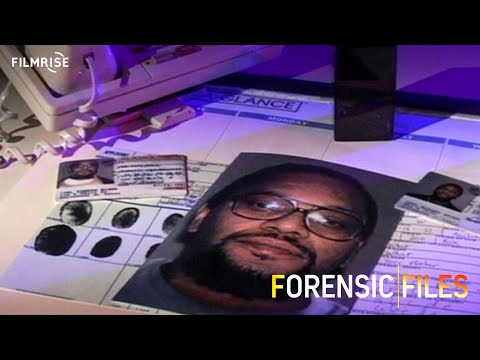
Forensic Files - Season 2, Episode 1 - The Common Thread - Full Episode
Episode Description
Ten bodies had been found between the months of May and November, 1984, in Florida. A 17-year-old female named Lisa McVey was abducted but released, leading police to the perpertrator, Bobbie Joe Long.
Forensic Files is the longest-running true crime series in television history. Evidence and interviews with experts help solve real crimes, disease outbreaks and accidents around the world.
Read the full transcriptHide the full transcript
- [dance music] PETER THOMAS: There were many eyes on Lana Long as she walked out on stage for her nightly routine.
- She was a popular performer at the Sly Fox Lounge, a club well known for beautiful exotic dancers.
- Sometime after the performance, Lana Long had an unexpected encounter. [eerie music]
- The crime committed that might have gone unsolved had it not been for a common thread.
- [screams] [theme music] [music playing] It's going to be great. Give it to me. PETER THOMAS: One Sunday afternoon,
- two boys were playing together on an abandoned highway. Ready? 3, 2, 1-- [wind rushing]
- Cool. PETER THOMAS: As they ran through a field chasing a parachute, they discovered a horrible sight--
- the nude, decomposed body of a young woman. She was lying face down with her hands bound behind her back.
- A cord was wrapped three times around her neck like a leash. Under her body lay a white silk scarf tied in a knot.
- CHARLES DIGGS: This killer was trying to make a statement. He could have killed this woman with a lot less trauma.
- But the deepness of this bruise, the prominence of this bruise indicated that he applied a lot more force
- than it was necessary to end this woman's life. He was violent. PETER THOMAS: The victim was identified as 20-year-old Lana
- Long, an exotic dancer who worked at the Sly Fox Lounge in Tampa. Detectives found some faint tire tracks near the body,
- but little else. Homicide investigators interviewed Lana Long's boyfriend John Corcoran.
- Corcoran hadn't reported Long missing even though they lived together and he hadn't seen her for three days.
- He had an explanation of why he didn't report her missing. It was kind of vague.
- We were concerned about that. PETER THOMAS: Corcoran admitted that he argued with Long
- on the day of her disappearance about the number of men who were calling her at home, asking her out on dates.
- Two weeks later, a second body was discovered in a deserted location. GARY TERRY: I can vividly recall getting in the car,
- driving to the crime scene, saying to myself, "Please don't let her be bound. Please don't let her be tied up."
- It felt like a ton of bricks had just fallen upon me. Because here we go from rarely having
- a victim bound to now two within two weeks of each other. PETER THOMAS: The victim was identified as 22-year-old
- Michelle Simms, a former beauty contestant who had turned to prostitution to support a drug habit.
- Near the body, police discovered some fresh tire prints in the soft sand, but there was something
- unusual about the tire impressions. The vehicle had three different tires. Detectives made plaster molds of the tire impressions
- for analysis, hoping they would provide some clue to the identity of the murderer.
- Because of the similarities in these two cases, investigators believed that both murders were
- committed by the same person. This time, however, John Corcoran had an alibi and was no longer considered a suspect.
- In the forensics lab, when Michelle Simms' clothing was analyzed, they discovered a tiny clue--
- a mysterious red fiber. It was similar to a red fiber discovered at the Lana Long crime scene on the white silk
- scarf found under Long's body. On September 18, 1984, the nude body of a third woman
- was discovered. The victim, 18-year-old Chanel Williams, who had a prior arrest for prostitution.
- This particular case, it was a black female. Her body had been dumped on the roadside.
- She was completely nude. She was not bound in any way. There was some clothing found next to her, tied in a knot.
- She had suffered a gunshot wound to the back of the head. So when you look at this case, it's totally
- different than the other cases. Or is it? PETER THOMAS: The forensics lab found the answer.
- Tiny red fibers were discovered on Williams' clothing-- fibers similar to those found on the other two victims.
- While detectives launched a full scale investigation, they hoped that these mysterious red fibers
- would lead them to their serial killer before he struck again. [music playing] PETER THOMAS: The Hillsborough County Sheriff's Department
- wanted to know all they could about the mysterious red fibers found on the three murdered women.
- Each of the tiny fibers was microscopically analyzed and compared. Under a scanning electron microscope, magnified
- more than 1,000 times, scientists noticed an unusual size and shape to the fibers.
- Instead of being round or square, the fiber looks more or less triangular, but like a triangle
- that's been pinched so that you see the three legs sticking out from the core of the fiber.
- PETER THOMAS: The fibers from the three women were all triangular or trilobal. The next task was to identify whether the fibers
- were natural or man-made. Since man-made fibers are made from chemicals, scientists use what is called a melting point apparatus
- to determine the temperature at which the fiber would break down. The results revealed that the red fibers were nylon.
- And by microscopically measuring the light reflected through the fibers, scientists determined that all three
- trilobal nylon fibers were dyed the exact same color and were from the same dye lot.
- The conclusion, the red nylon trilobal fibers found on the three victims were all from the same source.
- Nylon trilobal fiber is used mostly in carpet-- high durability, inexpensive carpet.
- Since this fiber masks dirt, it's often used in automobiles and hotels. Next, homicide detectives turned their attention
- to the tire impressions found near the bodies. Tire tread experts noticed that there were three
- different tires on the vehicle. The impression of the front tire was simple to identify.
- It was an extremely common model made by the Goodyear Tire company. The right rear tire was manufactured by the Goodyear
- company as well. It was a low price model called the Viva. But there was something unusual about the tread.
- It was a white wall tire and was on the rim with the white wall side facing inward.
- The left rear tire could not immediately be identified since it was not among the thousands
- of known tire treads in the FBI's computer database. So investigators sent the tire impression to the Goodyear Tire
- Company in Akron, Ohio, to see if they could help identify it. Goodyear's tire expert recognized
- that it was a specialty tire and a very expensive one not sold in retail stores.
- It was a model called the Vogue made by the Vogue Tire and Rubber Company and was used exclusively on Cadillacs.
- The tire impression showed that it too was a white wall tire, which was placed on the vehicle with the white wall
- side facing inward. If the detectives could find the vehicle with this unusual combination of tire treads,
- they would have the vehicle which left the tire tracks at two of the murder scenes.
- They also suspected that this vehicle would have red nylon trilobal carpet. Gary Terry decided not to release
- this important information to the press. GARY TERRY: Serial killers watch the news
- and read the newspaper just like anybody else. We were aware of the experience up in Atlanta, Georgia,
- with the Wayne Williams case. I had personally talked with the investigators up there.
- He changed his pattern after he saw it described in the newspaper. He began reading about trace evidence,
- so he began dumping the bodies in the rivers to wash the bodies and destroy latent or trace evidence.
- PETER THOMAS: Deputies believed that the killer was cruising for victims along Nebraska Avenue, where
- prostitutes usually congregate. Female police decoys walked the strip dressed as prostitutes in an attempt to lure the killer.
- The number of patrol cars in the area also was increased. Author Anna Flowers described the search for the killer
- in her book, "Bound to Die." ANNA FLOWERS: I've talked to a lot of officers who say, "I have to think like the killer
- in order to catch him. I worry, what would it take for me to become the killer?"
- Interesting thought. PETER THOMAS: Despite police efforts, a fourth nude body was discovered in a deserted area.
- The victim, 28-year-old Karen Dinsfriend, who had turned to prostitution to support a drug habit.
- Deputies knew that the serial murderer had struck again when they found red nylon trilobal fibers
- in Dinsfriend's clothing. The pattern that we saw here, the way that these bodies were
- left, the way that they were strangled, the way that they were tied indicated that we had a serial killer.
- PETER THOMAS: Despite leaving behind the fiber and tire track evidence, the killer was smart.
- But his next target, a 17-year-old girl, outsmarted him. [suspenseful music] PETER THOMAS: 2:30 AM.
- After working the night shift at this donut shop in Tampa, Florida, 17-year-old Lisa McVey rode her bicycle home
- along a dark, deserted street. Suddenly, a man jumped from behind a parked van, knocked Lisa off her bicycle, grabbed her by the hair,
- and forced her into his car. LISA MCVEY: God help me. I was thinking I was going to be killed.
- Oh, my god. Just help me. PETER THOMAS: He drove McVey to an apartment. Over the next 24 hours, she was repeatedly raped and sodomized.
- Blindfolded, petrified, and convinced she would die, Lisa McVey made an important decision.
- I had the life of God in me. I wanted-- I had the willingness to live, to survive.
- That's it, the survival part. When you're in something like that, you would be surprised yourself what you're capable of.
- [suspenseful music] PETER THOMAS: While still blindfolded, McVey was permitted to use the bathroom.
- She left her fingerprints everywhere she could-- under the toilet seat, around the sink, on the hair dryer.
- LISA MCVEY: If I had died, if I was killed, I want them-- as far as the police or whoever found me-- to know that I was there and I tried.
- GARY TERRY: Lisa was a very sharp young lady. I personally feel what saved her life was her actions.
- And those actions were to say yes sir and no sir to every demand that the suspect made of her.
- PETER THOMAS: At 3:00 in the morning, after 24 hours of captivity, Lisa, still blindfolded,
- was forced back into the car at gunpoint. ANNA FLOWERS: She was very street smart.
- Although she had been blindfolded, she could see under the blindfold enough to give police very important data.
- LISA MCVEY: I was trying to get a good clue, idea of what area I was in. I wanted to know where I was coming from.
- And I remember leaning back in the chair-- I could see under the blindfold-- that I saw two hotels side by side each other, practically.
- I remember the 275 goes in between them. And it was a Howard Johnson's and a Quality Inn.
- PETER THOMAS: Lisa noticed the word "Magnum" on the dashboard, saw that the seats were white and that the car
- had red carpet. Her abductor stopped the car for a few minutes and Lisa heard a familiar sound--
- [beeping] A 24-hour bank teller machine. LISA MCVEY: I heard the sound of the keys, of the buttons
- on the machine. PETER THOMAS: A short drive later, he stopped the car, opened the door, put Lisa on the street along with her clothes,
- warned her not to remove the blindfold for another five minutes and drove away. LISA MCVEY: Freedom.
- Wow. I'm alive. I'm here. What do I do now? I look both ways. And I fell to my knees and I started crying.
- PETER THOMAS: Lisa McVey was taken to the hospital and her clothing sent to the forensic lab for analysis.
- But before it could be analyzed, detectives were called to another homicide. Another nude body found near a highway overpass.
- GARY TERRY: And you could tell it was him. There were actually no ligatures on the body,
- but you could see ligature marks where he had removed the ligatures. PETER THOMAS: When the forensic lab analyzed the clothing
- from Kim Swann and Lisa McVey. They discovered a shocking piece of information. Kim Swann's clothing contained the same red nylon
- trilobal fibers as the other victims and the same red fibers were found on Lisa McVey's clothing.
- It was disbelief. We couldn't believe that we have-- for some reason, the killer has not killed--
- he's let a victim survive. PETER THOMAS: Lisa McVey's courage and determination made her the first known survivor of this serial killer.
- Could she provide enough information to find him? PETER THOMAS: When police realized that Lisa McVey's
- rapist was the serial killer, the clues she provided took on a new importance. She saw the word "Magnum" on the dashboard of his car.
- Only one car had the word "Magnum" on the dashboard, the 1978 Dodge Magnum. A computer search of Dodge Magnum owners in the area
- revealed a list of 486 names. McVey also told investigators that her abductor used a 24-hour bank teller machine shortly
- before she was released. When the records of all bank machine transactions for November 4 were compared with the list
- of Dodge Magnum owners, only one name was on both lists, Robert Long. Robert "Bobby Joe" Long was a 31-year-old part-time X-ray
- technician. Separated from his wife, he was the father of two children. Since Lisa McVey was blindfolded during most of her captivity,
- she could not positively identify him from photographs. So Bobby Joe Long was immediately placed
- under 24-hour surveillance. Long was followed to this movie theater. And when he went inside, deputies
- inspected the tires on his car. On the right rear side was a Goodyear Viva. On the left rear side, the expensive specialty tire,
- the Vogue. Both tires were inverted with the white wall side facing inwards. They were the same tires and in the same position
- as the tire impressions found at two of the murder sites. When Long walked out of the movie theater,
- deputies immediately arrested him and confiscated his car for further analysis. The tire treads match the plaster impressions taken
- from two of the crime scenes. Long's blood type matched a semen stain found on one of the victims.
- But it was the carpet inside the Dodge Magnum that linked long to all of these crimes.
- The red nylon trilobal carpet fibers inside Long's Dodge Magnum matched the fibers
- found on the murdered women. And they also matched the red fibers on Lisa McVey's clothing.
- How was he getting so much fiber evidence on the clothing of the victims? Well, he was stripping his victims down in the car
- and he was throwing the clothes in the floorboard of his vehicle. And the victim was kicking the clothing,
- kicking it and kicking it. It was picking up the fiber evidence out of the floor of his vehicle.
- Fiber evidence is often referred to as a silent witness. It doesn't say a thing, but it just speaks volumes.
- PETER THOMAS: When told of this evidence against him, Bobby Joe Long confessed to the rape and abduction of Lisa
- McVey, as well as the murders. He also confessed to two additional murders the police knew nothing about and led them to the bodies.
- In all, he confessed to 10 murders. BOBBY JOE LONG: It's sad what happened to them
- and that I could do something like that to somebody. All the victims, all of them, you know-- and you're talking
- about a lot of them, a lot. A lot of lives have just gone right down the tubes because of me, you
- know, in one way or another. And it's not a good feeling. It's not a pleasant feeling.
- I'm not proud of anything I've done. And the worst thing is I don't understand why.
- I don't understand why. Yes, it was bad. Yes, it was very traumatic to my life. But it's made me who I am today.
- The challenges in my life, the weaknesses that I had then, it's made me a stronger and better person today.
- And that's how I'm able to survive. [music playing] I'm a firm believer that this is not all the homicides
- Bobby Joe Long did. You don't start killing the way Bobby Joe Long started killing.
- Have we found all the victims? No. Are we going to find all the victims? I doubt it.
- Not unless some day he decides to give us the rest of the information and the rest of the story.
- [eerie music] [music playing]
Brief Summary
The episode details the investigation of serial killer Robert Long, focusing on his victims and survivor Lisa McVey's crucial information.
Key points
- The Discovery of Lana Long's Body. Two boys discover the nude, decomposed body of Lana Long, an exotic dancer.
- Lisa McVey's Abduction. 17-year-old Lisa McVey is kidnapped and faces a harrowing 24 hours of captivity.
- The Serial Killer is Identified. Detectives connect the evidence from Lisa McVey to Bobby Joe Long, a known suspect.
Episode highlights
- The Discovery of Lana Long's BodyTwo boys discover the nude, decomposed body of Lana Long, an exotic dancer.“This killer was trying to make a statement.”2:05May 27, 2021
- Lisa McVey's Abduction17-year-old Lisa McVey is kidnapped and faces a harrowing 24 hours of captivity.“God help me. I was thinking I was going to be killed.”11:54May 27, 2021
- The Serial Killer is IdentifiedDetectives connect the evidence from Lisa McVey to Bobby Joe Long, a known suspect.“The red nylon trilobal carpet fibers matched the fibers found on the murdered women.”18:41May 27, 2021
Tension
75/ 100High tension