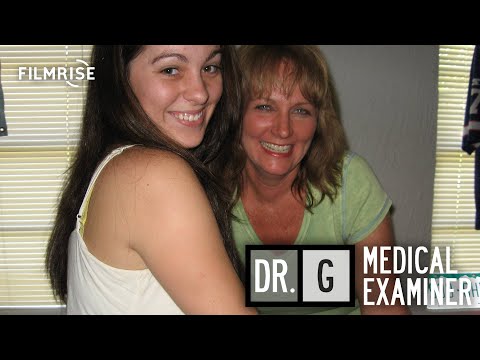
Dr. G: Medical Examiner - Season 6, Episode 3 - Deadly Decent - Full Episode
Episode Description
It’s up to Dr. G, along with the National Transportation Safety Board, to piece together how and why a plane crashed, leaving the pilot dead.
A Florida medical examiner takes viewers through puzzling cases while explaining procedures and conclusions.
Read the full transcriptHide the full transcript
- [MUSIC PLAYING] NARRATOR: When a routine flight turns deadly, Dr. G is faced with a gruesome challenge.
- It's not pretty when you hit the ground at a high rate of speed. NARRATOR: And as the autopsy unfolds,
- she begins to wonder if the pilot could have made a deadly mistake. I was a little surprised.
- That's probably two things that pilots shouldn't be doing. NARRATOR: Then, a woman is found dead in her home
- down in a pool of blood. This could be foul play. NARRATOR: And it looks like the person closest to the victim
- could be the chief suspect. The detectives suspect this is a domestic, violent homicide.
- [MUSIC PLAYING] NARRATOR: Altered lives, baffling medical mysteries, shocking revelations.
- These are the everyday cases of Dr. G, medical examiner. [MUSIC PLAYING] Throughout her 20 year career, Chief Medical Examiner Dr. Jan
- Garavaglia has seen her fair share of unusual accidents, from car wrecks and boating deaths,
- to train fatalities and even the occasional plane crash. It's probably about every other year, every couple
- of years, that a plane crash death will come through your morgue. NARRATOR: And while each accidental death presents
- its own unique set of challenges, plane crashes can prove to be especially difficult.
- I have had some devastating plane crash, where a plane goes into the side of the mountain
- at a high rate of speed. The people are in pieces, and your skin is inside out. I mean, they can be devastating.
- NARRATOR: One such case occurred in August 1995, while Dr. G was working at the Bexar County
- morgue in San Antonio, Texas. We have a 49-year-old Hispanic male from rural West Texas.
- And he was flying an airplane, and nobody knows what happened. It crashed and burned, and that's about as far as we know.
- [MUSIC PLAYING] NARRATOR: It's just before 4:00 PM on Thursday afternoon when someone reports a grass fire to the Upton
- County Fire Department. [SIRENS] So the volunteer fire department goes out there,
- and lo and behold, it's not a grass fire. It's a plane crash. NARRATOR: Firefighters scramble to extinguish
- the burning wreckage. And inside, they find the pilot's severely charred body. They quickly ID him as 49-year-old Richard Garcia,
- and immediately begin searching the area for clues. Nobody witnessed this plane go down.
- NARRATOR: Following standard operating procedure, the fire department turns the investigation
- over to the NTSB, or the National Transportation Safety Board. Investigator Hector Casanova is assigned to the case
- and his first order of business is to gather more information about this recreational pilot.
- The pilot was very experienced. I think he had 14,000, 15,000 hours of total flight time.
- So he was extremely familiar. But for some unknown reason, he hits the ground. NARRATOR: Now, it's up to the NTSB
- to find out exactly why the plane went down. They're looking, is it something to do with the person?
- Is it something to do with machine? Meaning your airplane, or is it something to do with the environment, the weather?
- NARRATOR: And is the NTSB prepares to conduct a full inspection of the aircraft,
- Richard's body is transferred to the Bexar County morgue, where Dr. G will perform a complete autopsy.
- My job is the pilot, that person aspect of the investigation. The NTSB, they want us to give them information
- about the pilot that may help them piece together what happened in that cockpit prior to hitting the ground.
- Maybe something human has something to do with the accident. But isn't that the way with everything?
- How often is it the car that malfunctions, causing the accident? It's usually the person.
- OK. So. NARRATOR: As a first step, Dr. g combs through the investigators report, looking for anything that could shed
- light on Richard's accident. We know he's married. We know he's 49 years old, Hispanic fellow.
- But we don't have direct contact with the family. So we don't know anything about his medical history,
- his social history. We don't know anything about him. NARRATOR: Yet despite the lack of background information,
- there is one thing that Dr. G does know. By law, all pilots must undergo routine physical exams.
- He can be a private pilot. You can be a commercial pilot. Each of them have different medical requirements.
- If you are a private pilot, you can be good for one year. NARRATOR: This means that Richard
- was given a clean bill of health sometime within the past year. That said, Dr. G still can't rule out the possibility
- of a natural death. Just because pilots have to have physicals doesn't mean there's not some silent killer
- going on in your body. When we see that, every day in this morgue. They've gone to the doctor.
- They've given a clean bill of health. And then they die. NARRATOR: With this in mind, Dr. G
- will be on the lookout for any signs of natural disease. I'm worried about a stroke, or maybe a heart attack.
- He didn't necessarily have the die of a heart attack. Maybe he's distracted by the severe chest pain.
- And that's caused him to lose control of the plane. NARRATOR: Dr. G must also take into consideration
- the possibility that Richard's judgment was somehow impaired. We need to know if he's under the influence
- of drugs or alcohol. And if that could have affected his decision making. NARRATOR: With a number of theories in hand, and the NTSB
- eagerly awaiting the results of the autopsy, Dr. G knows only one thing for sure,
- she has her work cut out for her. Many die from blunt impact. Did he have any natural disease that could have contributed?
- Was he impaired in some way with drugs or alcohol? So all of those will be that person component.
- [MUSIC PLAYING] OK. Let's see. Yeah, let's go for it. Our general appearance is he is intact.
- That's the good news. The problem is he is partially charred. He was clearly in a fire.
- NARRATOR: The burns and extensive trauma covering Richard's body make him completely unrecognizable.
- Because of the condition of the body, we're clearly not going to be able to do a visual ID.
- So we're going to try to fingerprint him. Although some of his portions of the hands are burned,
- his finger ridges in some of his fingers are still intact. NARRATOR: Dr. G's morgue technician
- pulls prints from his undamaged fingers, and sends them off to be analyzed. And it doesn't take long to confirm
- that this is indeed the body of 49-year-old Richard Garcia. Dr. G begins with the overwhelming task of
- documenting Richard's injuries. He's clearly got trauma. You can see broken extremities that aren't
- quite in the right place. His legs and arms aren't going in the right direction.
- Oh, gosh. These are broken. His upper arms are fractured. His forearms are fractured.
- He's got upper leg fractures. The femurs, lower leg fractures. Fractures by the knees, fractured by the ankles.
- His face he's got trauma, a lot of lacerations. His nose is actually kind of torn off.
- So a lot of fractures, and dislocation to the bones of the extremities. All right.
- NARRATOR: It's a sobering laundry list of injuries, and one that suggests even more extensive trauma on the inside.
- If you have broken every single long bone in your body, chances are there's something wrong
- with your internal organs, too. NARRATOR: But despite the myriad of burns and fractures,
- it's still anyone's guess what actually killed a 49-year-old pilot. And more importantly, why his plane
- went down in the first place. So we'll see. You know, we don't know until we open him up.
- This is going to be a mess. [MUSIC PLAYING] NARRATOR: The remains of 49-year-old Richard Garcia
- have just been pulled from the burning wreckage of a small engine plane. Now, Dr. G is faced with the daunting task
- of looking inside the charred and battered body. It's not pretty when you hit the ground
- at a high rate of speed. So I don't know exactly what I'm going to find. [MUSIC PLAYING]
- Well you know, even though in some areas, the skin is almost completely burnt off,
- you'll still do your y incision. I then start looking for trauma, and he had a lot of trauma.
- All of his ribs were fractured in the front. All of them were fractured on the side, and all of them
- were fractured in the back. NARRATOR: As a first step, Dr. G carefully clears the pieces of broken ribs from Richard's chest cavity.
- Then, she surveys the organs in situ. His lungs you have so many lacerations from the edges
- of the ribs sticking into him, his pericardial sac is torn open. His heart is multiply lacerated.
- Big tears the muscle of the heart. NARRATOR: But while Richard's heart is severely damaged,
- Dr. G is still able to collect vital blood for toxicology tests. I certainly will take blood for toxicology.
- NARRATOR: She sends the samples off to the lab for a rush analysis. Then turns her attention to Richard's abdominal cavity.
- His diaphragm has large tears. See, that's his diaphragm. And his internal organs were just in disarray.
- That's not good. NARRATOR: The diaphragm is a thin sheet of muscle that stretches across the bottom of the rib cage,
- and separates the organs in the chest cavity from those in the abdominal cavity.
- But Richard's torn diaphragm acts as an open door, allowing his abdominal organs to enter his chest cavity.
- His spleen is no longer in his abdomen, because it went through the tear in his left pleural cavity.
- And that's in multiple pieces. That's a lot of trauma. Part of his bowels are in his left pleural cavity,
- where his lung should sit. His abdomen has multiply torn liver. His aorta is torn.
- His back is in two pieces, and one's on top of the other. That's not good. His pelvis, believe it or not, doesn't have any fractures.
- That was intact. His bowels are contused. NARRATOR: But despite this damage, Dr. G is still able to spot a subtle clue.
- He's got some problems here. He had a lot of blood in the soft tissue, a lot of hemorrhage associated with those fractures.
- A lot of hemorrhage in the bowels. What it tells me is his heart was beating, and he was alive when he hit the ground.
- NARRATOR: This is a critical finding. It confirms that Richard's death stemmed from injuries sustained
- in the crash itself, but it still doesn't explain why the seasoned pilot drove his plane into the ground at over 270 miles per hour.
- We've got some answers from the autopsy, but we don't have all the answers. He clearly died from his injuries.
- But I don't know if he's incapacitated or using drugs and alcohol. And we're worried about natural disease.
- NARRATOR: With that in mind, Dr. G turns her attention to an organ high on her list of suspects.
- Using an isolated saw, Dr. G's morgue technician cuts through the skull to expose the brain.
- When we do the head exam, we find he's clearly got some devastating trauma which would have been enough to kill him in and of itself.
- But not as much trauma, honestly, as the rest of the body. NARRATOR: She removes the organ and carefully
- dissects the brain tissue, searching for any abnormalities. See what we have here.
- NARRATOR: But she comes up empty handed. No natural disease in his brain, either.
- No strokes, no infarcts. Nothing that I could find that would have incapacitated him.
- NARRATOR: With the brain ruled out, Dr. G's next stop is Richard's badly damaged heart.
- Although it's multiply torn, we can still look at his heart for natural disease.
- NARRATOR: Carefully, she dissects the organ, slicing through the tissue and into the coronary arteries.
- The heart muscle looked good. It wasn't enlarged. Coronary arteries were fine. Everything looked normal.
- So he clearly didn't have a heart attack. NARRATOR: But this search for natural disease
- is far from over. Dr. G's next stop is Richard's lungs. When I open his windpipe, his trachea, his bronchi,
- there is no evidence of soot. He was not breathing in any smoke. So he's burnt on the outside, but that happened
- after he hit the ground. There was no evidence that he was exposed to smoke or soot
- prior to the crash. The fire clearly was post-crash. NARRATOR: She slices through the lung tissue,
- and it isn't long before something catches her attention. Although I couldn't put my finger on it,
- the lungs didn't look quite right to me. They are very dry. Parts of the lungs looked a little over inflated.
- NARRATOR: Not exactly sure what this could mean, Dr. G takes samples of the tissue
- so she can get a closer look. I needed to look under the microscope. NARRATOR: Then, just as she's wrapping up
- the internal autopsy, Dr. G receives crucial new information from the NTSB's investigator.
- There appeared to be nothing wrong with the plane, and they really don't have an explanation for the accident
- yet. So at that point, they're ruling out mechanical failure. They're ruling out weather.
- What's left is the person aspect of this equation. So at the end of the autopsy, we know he died from blunt trauma.
- He had no natural disease. And at this point, I don't see any incapacitating problems he could have had.
- NARRATOR: Now the investigation is hinging on one thing, Dr. G's lab results. I still have my toxicology to go,
- and I still want to look at that lung tissue under the microscope. At this point, the only thing they have left
- is anything I can find. [MUSIC PLAYING] It's been three long weeks since the autopsy
- of 49-year-old Richard Garcia, who died in a small engine plane crash. So far, the NTSB investigation has
- ruled out whether in mechanical failure as the cause of the accident. And Dr. G's autopsy has yet to uncover
- why Richard's plane would have taken a sudden nosedive into an open field. I found nothing that would have incapacitated
- him prior to the accident. Did drugs or alcohol incapacitate him? I don't know, but the tox may answer those questions for us.
- [MUSIC PLAYING] When we get the toxicology report, I was a little surprised. He has a little bit of alcohol, at about a six
- grams per deciliter. So he clearly probably had a beer at lunch. I don't know if you can drive a plane with a 0.06,
- but I don't think I'd want my pilot with any alcohol. NARRATOR: But Richard's alcohol level
- isn't high enough to convince Dr. G that it's to blame for the crash. And as she continues to scan the report,
- she spots something else that raises a red flag. He had a little bit of diphenhydramine on board.
- That's the kind of antihistamine that kind of puts people to sleep. It would take a boatload of diphenhydramine
- to incapacitate you, but it can make you sleepy at high enough levels. But his level really wasn't that high.
- I don't know why he took it, but maybe he was having seasonal allergies. Maybe he was having some type of allergic feeling.
- NARRATOR: Although the level is low, it's possible that this, along with the alcohol
- made for a deadly combination. He had a beer, and he was taking some diphenhydramine, probably two things
- that pilots shouldn't be doing. NARRATOR: But for Dr. G, the pieces of this puzzle
- aren't quite fitting together. And there's only one tool left in her arsenal, the microscopics.
- We still need to look at that lung tissue. [MUSIC PLAYING] NARRATOR: Dr. G places the slide of Richard's lungs
- under the microscope. And adjusts the dial to bring the image into focus. When I look at the lung tissue under the microscope,
- I was really surprised. I'll get that again. It really all points to one thing. NARRATOR: And in an instant, Dr. G
- knows exactly what caused the plane crash that killed Richard Garcia. That microscope doesn't lie.
- [MUSIC PLAYING] NARRATOR: It's Thursday afternoon, and pilot Richard Garcia is about to indulge
- in his favorite pastime. But before he takes to the skies, he grabs a quick lunch.
- I think he probably had a beer at lunch. After eating lunch, I don't know if he was having
- problems with a dry cough, or what he thought were seasonal allergies. But he takes a diphenhydramine, an antihistamine.
- NARRATOR: Richard then boards his small engine plane and prepares for takeoff. He gets in that plane, probably
- with some mild symptomatology of a dry cough. Maybe somebody thought was seasonal allergies.
- While he's flying at 500 feet, he probably starts to get shortness of breath. NARRATOR: But Richard isn't only suffering
- from seasonal allergies, instead microscopic results confirm he's in the midst of an asthma attack.
- He was clearly having acute asthma at the time of the incident. The airways in his lungs were clogged
- with mucus, the characteristic that we see with asthma. Asthma is a reactive airway disease of the small vessels
- that contracts the airways. And mucus starts coming out of the lining of the airway,
- and it blocks those airways. As those airways start contracting he's having difficulty breathing.
- He can't get oxygen to his blood, and he's feeling like he's short of breath. NARRATOR: As Richard gasps for air,
- he focuses all of his attention on his next breath. And it isn't long before his plane begins
- to careen toward the ground. He hits that ground so hard that it breaks every long bone in his body.
- It tears his diaphragm. It tears his heart, fractures all his ribs. A fire ensues, and he gets partially burned before they
- can put out the fire. NARRATOR: With this, Dr. G closes the case on Richard Garcia, and report your findings to the National
- Transportation Safety Board. I don't think he died from asthma. But if you get distracted with shortness of breath
- from an asthma attack, it's not a stretch of the imagination that that was a contributing factor, if not
- the cause for that accident. So the blunt trauma is the cause of death, but really the initiating problem was the asthma.
- NARRATOR: This information allows the NTSB to complete their investigation and rule the pilot at fault.
- The cause of the accident was the pilot's failure to maintain clearance with terrain.
- NARRATOR: Then Dr. G, reaches out to local authorities to deliver the information to the family.
- I give the information to the justice of the peace, and they relay that to the family.
- I would think that the reaction would be surprised, considering that most likely
- nobody knew he had asthma. But maybe it helps them at least understand it wasn't a failure in decision, or failure in something
- he necessarily did. I just don't think he knew he had it, and clearly this may have been one of his worst attacks.
- A lot of people think that asthma is just for children, but a lot of adults get asthma.
- And a lot of them don't have it diagnosed, because they must take their symptomatology of asthma
- for something else. It just goes to show that oftentimes, the autopsy may not show anything important.
- Sometimes it plays a small piece of the puzzle. But sometimes it's key. NARRATOR: And in Dr. G's next case,
- the autopsy proves to be the missing link in a homicide investigation. The detective was very worried that this woman was murdered.
- Now, it's my responsibility of truly prove why she died. [MUSIC PLAYING] NARRATOR: Sunny skies and world class attractions.
- Together, they draw more than 30 million visitors a year toward Orlando, Florida.
- But inside the District 9 morgue, Dr. G is witness to the darker side of this lively city.
- Even though it's a wonderful city, there's a lot more violence in Orlando than you would think.
- There's stabbings, and shootings, and things going on that I see on a daily basis.
- Overall, about 10% of our cases are homicides. But actually, everybody that comes through our office
- is a potential homicide until proven otherwise. Just don't throw anything away yet until we
- figure out what that is. [MUSIC PLAYING] NARRATOR: It's a muggy Sunday evening in Orlando
- and [INAUDIBLE] has just returned home after a weekend away with friends. He gets home about 5 o'clock in the evening,
- he finds that the kitchen door is unlocked. Rosie? DR. JAN GARAVAGLIA: And as soon as
- he walks in he sees a struggle. BEN: Rosie! NARRATOR: Ben's girlfriend, Rosie [INAUDIBLE]
- is lying face down and emotionless on the floor. He's obviously startled. He calls the police, who come and pronounce her dead.
- NARRATOR: And as police examine the scene, a gruesome scenario begins to emerge.
- There's some blood pooled around her face. And she's got kind of a black eye. This could be foul play.
- NARRATOR: Although Ben seems genuinely shaken, police can't help but wonder if he may have
- played a role in Rosie's death. The detective is very worried that this woman was murdered.
- Keep in mind, 30% of women that are murdered are murdered by an intimate partner, by their boyfriend,
- by their husbands, by their ex-husband. The boyfriend is clearly upset, but is it an act, or is it not?
- Did he have something to do with her, or did he not? The police are very suspicious of him.
- NARRATOR: But there's one problem, without physical evidence linking Ben to Rosie's death,
- police have their hands tied. They left a law enforcement officer at the scene to guard the crime scene until my determination at autopsy.
- So I do want to make sure that I get this case done as quick as I can. So I can either tell them it is a homicide,
- or tell them it isn't a homicide. [MUSIC PLAYING] NARRATOR: Rosie's body arrives at the District 9 morgue,
- and as a first step Dr. G reached through the investigators report. We have a 44-year-old African-American
- woman that the police are suspicious might be a homicide. NARRATOR: But Dr. G knows better than to jump to conclusions.
- Just because the police thinks it's homicide, doesn't mean I have to think it's a homicide.
- There's another possibilities. It could be an accident. She could have collapsed from natural disease.
- We don't know. NARRATOR: And right away, she spots a few details in Rosie's medical records that raise a red flag.
- She's not just overweight, she's obese. And there's a lot of problems with obesity.
- You certainly have more heart disease. It's certainly going to predispose you to high blood pressure.
- She smokes. There's no good reason in the world to smoke, and it's going to affect your heart.
- It's going to affect your lungs. And she drinks heavily. She could have been drinking and fell very suddenly
- and hit her head. NARRATOR: She also wonders if Rosie may have indulged in another dangerous habit, one often
- associated with sudden death. She already smokes, she drinks. Her boyfriend's out partying and drinking.
- Who knows what else she's doing? It could even be drugs. It could be a homicide.
- It could be an accident. It could be natural. I'm keeping all of my options open.
- [MUSIC PLAYING] Did you see that nice shiner she's getting? So when I start my external, the detective is there with me,
- giving me more information, and just waiting for me to tell him what I found. It's really actually very important
- that when I'm doing a suspicious death, that the detective who's investigating, or one of his partners is there at the autopsy.
- But you guys have to give me information. Oh, that too. NARRATOR: Dr. G's first order of business
- is to try to piece together the chain of events leading up to Rosie's death. She's already starting to get some very early
- days, compositional changes. She's been there over 24 hours. So we at least know whatever happened was
- closer to the Saturday morning. The boyfriend leaves Saturday morning, comes back Sunday night.
- NARRATOR: Given the timeline, it's possible that Ben killed Rosie before he left on his trip.
- So we certainly haven't ruled out the boyfriend. NARRATOR: Next, Dr. G inspects Rosie's skin inch by inch,
- searching for forensic evidence. I look very carefully for any kind of trace on her body
- itself. Hairs, fibers, anything strange. But I didn't find any trace evidence. NARRATOR: She also checks for needle marks
- on the arms and legs that could tell her if drugs somehow played a role. We don't see any evidence of drug use.
- But I may not see that, if she does it orally, or she sniffs it, or she smokes it.
- So I can't rule out drugs. NARRATOR: Then Dr. G turns her full attention to Rosie's bloody head.
- Oh, gosh. She's a mess. Her face is still matted in blood. So I can't really see what's going on.
- NARRATOR: Morgue technician Brian Machulski is assigned the gruesome task of cleaning her head.
- Slowly, the veil of blood over Rosie's face falls away. And what lies underneath takes Dr. G by surprise.
- There is no laceration, or tearing of the skin. I don't see where this blood is coming from.
- NARRATOR: But while Dr. G can't pinpoint the source of the blood, she does spark another clue.
- She's got a lot of ecchymosis. That's blood which is gone into the delicate tissues
- of the upper and lower eyelid. Maybe she fell. Maybe it's a blow to the eye, or maybe it's due to the fact
- that she's just face down, and she's starting to decompose. At this point, I can't really tell you why she died.
- It could very well be a homicide. [MUSIC PLAYING] NARRATOR: Dr. G is investigating the mysterious death
- of 44-year-old Rosie [INAUDIBLE] who was found lifeless in a pool of blood just a few hours earlier.
- This is a case at right off the bat came in as suspicious. NARRATOR: And police can't help but wonder
- if the victim's live in boyfriend, Ben [INAUDIBLE] may have been involved. He's worried that this is a domestic, violent homicide.
- NARRATOR: So far, the external exam has raised many questions but yielded few answers.
- And with no proof of murder, the police investigation remains at square one. The hunt for the culprit must now
- continue inside Rosie's body. We have to see what the internal findings are. [MUSIC PLAYING]
- NARRATOR: Dr. G slides her scalpel across Rosie's torso in a Y-shaped incision. People always think the Y incision is at the beginning
- of the autopsy. The beginning of the autopsy starts when I first look at the body.
- So by the time I finally get to the y incision, the body is cleaned, I've documented
- everything I could find. At least an hour and a half has gone by. I'm looking specifically for any trauma underneath the skin.
- I'm looking for bruising. I'm looking for rib fractures. I'm looking for maybe blood in her abdomen.
- She doesn't have any. So we don't see any other trauma. There's no free blood in the belly.
- Yeah. NARRATOR: Next, she takes blood and urine samples to send out for toxicology tests.
- The tox is important with her because she died suddenly and unexpectedly. When anybody has a sudden death, we will check toxicology
- to see if drugs played a role. Good. NARRATOR: Moving deeper into the chest cavity,
- she cracks open the rib cage and removes the lungs. Her lungs are not in that bad a condition,
- considering her habits of smoking. At 44, she still had a long way to go before those cigarettes
- would get to her. NARRATOR: Then, Dr. G turns her attention to the heart, and immediately she spots an alarming clue.
- Oh, something here. We have a big heart. The first thing I noticed, it's enlarged,
- and it's much heavier than it should be. 800. That's a big heart. What is it that's causing her heart to be like that?
- NARRATOR: To find out, Dr. G begins a careful dissection of the organ. And it isn't long before she gets her answer.
- Oh, what's this? But when I cut the heart muscle, her heart muscle was thickened.
- And in her case, that indicated high blood pressure. NARRATOR: High blood pressure forces
- the heart muscle to work harder, causing it to grow abnormally thick. The heart muscle passed a pump against that elevated pressure.
- And over time, the muscle thickens. Well, suddenly the large heart is severe enough
- to have given her a sudden cardiac arrhythmia, but did that kill her? I don't know.
- NARRATOR: An arrhythmia leaves no physical evidence in the body. So the only way to know if Rosie's heart is to blame
- is to first rule out every other possible cause of death. When you do an autopsy, it's a process for elimination.
- I would have to rule out everything else before I could make that determination.
- All righty. But unless I find something else to trump that, that very well may be her cause of death.
- NARRATOR: Now Dr. G must finish your examination of Rosie's abdominal organs. And given the 44-year-old's history of alcohol abuse,
- she begins with the liver. Her liver is slightly enlarged. It appears to be a fatty.
- This could be partly due to her drinking, and it could be partly due to her obesity.
- But it doesn't look bad enough that it would have killed her. NARRATOR: She then examines another organ that's
- often destroyed by alcohol. DR. JAN GARAVAGLIA: We look at her pancreas. A pancreas is that organ that helps regulate your glucose.
- It also provides a lot of digestive juices into your small intestine. That will be affected in some people
- with chronic alcohol use. But again, her pancreas looked pretty good. NARRATOR: Dr. G's next stop, the kidneys.
- Look at that. NARRATOR: And there, she spots something odd. I notice that her kidneys have a lot of a granularity
- to its surface. That indicated years of high blood pressure. NARRATOR: And there's more.
- Just above the kidneys or the adrenal glands, tiny organs that produce hormones crucial to the regulation of bodily functions.
- In Rosie, these glands are strangely misshapen, and with Dr. G cuts them open, she can see why.
- She has adrenal adenomas. So what an adenoma is, it's a small tumor. And that tumor could be cancer, or could be benign.
- NARRATOR: Dr. G doesn't believe the tumors directly caused Rosie's death, but it is possible they contributed
- to her high blood pressure. And in some circumstances, those adenomas can be a cause
- for high blood pressure. But most of these little tumors are just incidental findings.
- They don't mean anything. All right. So let me think what I still need to do. OK.
- NARRATOR: As the abdominal exam comes to an end, the spectre of foul play still looms large.
- Why does she have the blood around her? I still can't rule out foul play. At this point, they're not holding the boyfriend.
- They're not interrogating him until they know it's a homicide, and I can give them some specific information.
- NARRATOR: And she has one last place to look for the final piece of the puzzle. At this point in the game, I'm hoping the answer
- is going to be in the head. [MUSIC PLAYING] NARRATOR: Dr. G and her team are preparing for the cranial exam
- of 44-year-old Rosie [INAUDIBLE] who died under mysterious and highly suspicious circumstances.
- On the one side, I have a possible cause of death. Her big heart could have caused her
- to go down suddenly and unexpectedly with an arrhythmia. On the other side, I still have to contend with this blood
- around her head. I still can't rule out foul play. I'm hoping but the final piece of this puzzle
- is going to be in her brain. [DRILLING SOUND] [MUSIC PLAYING] So when I go to the head, I'm looking
- for any kind of bruising. She didn't have that, and I don't see any skull fracture
- to the calvarium, the skullcap. NARRATOR: But in some cases, fatal trauma is only
- evident on the brain itself. Morgue Technician Brian Machulski ski saws open Rosie's skull.
- Then Dr. G steps in for a closer look. Let's see. NARRATOR: And just beneath the dura,
- the outer covering of the brain, she spots an alarming clue. I see a little bit of blood.
- Something's going on here. NARRATOR: Carefully, Dr. G extracts the organ and dissects it.
- And deep within the tissue, she finds her answer. She has bleeding into the deep structures of the brain.
- And of course, swelling of the brain. The questions are over. This trumps anything else I found.
- [MUSIC PLAYING] NARRATOR: It's Saturday morning and Rosie's boyfriend, Ben has just gone off on a trip with friends,
- leaving Rosie to enjoy a quiet weekend at home. So what we thought was a homicide,
- and what we thought was his bogus alibi, turns out to be really what happened. And Meanwhile, this poor woman is enjoying
- the weekend by herself. Probably starts getting a headache. NARRATOR: Little does she know that inside her head,
- a ticking time bomb is about to go off. In this case, everything pointed to high blood pressure.
- NARRATOR: Over the years, Rosie's untreated high blood pressure has wreaked havoc on her body.
- Beat by beat, the increased pressure strains the heart, causing it to enlarge. You get a thickened heart from it having to pump so hard
- against that high pressure. NARRATOR: But the fallout from this chronic condition
- is not confined to Rosie's heart. It also affects her entire vascular system. High blood pressure has effects on your brain.
- It has effects on your heart. It damages the kidneys. It affects all your blood vessels.
- NARRATOR: And on this fateful Saturday morning, the pressure becomes too great inside a blood vessel
- deep within Rosie's brain. She probably had a horrible headache. NARRATOR: Then suddenly, the vessel burst.
- DR. JAN GARAVAGLIA: That causes bleeding inside her brain causing it to swell. NARRATOR: The swelling puts unbearable pressure
- on the organ depriving it of vital oxygen. Soon, her brain can no longer function, and she collapses.
- Tragically, almost two days pass before Rosie's boyfriend returns from his trip and finds her body
- decaying in a pool of blood. That blood around her face is caused by her being face down,
- starting to decompose. And then, the delicate blood vessels of the nose are breaking down, and the blood is just oozing out.
- NARRATOR: Finally, with all the pieces in place, Dr. G's ready to share her findings with the police.
- I know this isn't a homicide. So the boyfriend's off the hook. We've got the killer, and the killer was high blood pressure.
- Anyway, well you already knew some. The detective is like all smiles. You mean, because that made his day.
- He is not spending the rest of his day interviewing the boyfriend. He's not spending the rest of the day looking
- for a perpetrator, because her perpetrator was their high blood pressure. NARRATOR: It's possible that the tumors Dr. G found
- on Rosie's adrenal glands could have caused her elevated blood pressure. The adrenal glands may or may not have been the cause
- of their high blood pressure. NARRATOR: Special tests do exist that could have identified the adenomas as the source
- of Rosie's high blood pressure. But unfortunately, she never sought medical attention.
- It would be interesting to find out, but now there's nothing I can do about it. If she was alive, that would be wonderful.
- If you're alive with high blood pressure, and they find the cause for high blood pressure, and something
- like taking out that tumor to get rid of your high blood pressure, that would by all means,
- be worth it. But she's already dead. When we run a medical examiner's office, we have to kind of allocate our resources
- on what's important to find out, and what's not. And unfortunately, that's the reality of the situation.
- And those are the kind of calls I have to make. NARRATOR: And although Dr. G takes comfort in the fact
- that Rosie wasn't murdered, this case is yet another example of an unfortunate and premature
- death. She could have prevented her death by stopping smoking, and losing weight.
- NARRATOR: There are also effective medical treatments for high blood pressure. We have good medications to control high blood pressure.
- And if one doesn't work, they try another. Some cases are just sadder than others.
- High blood pressure can be a silent killer. That is why knowing your blood pressure
- is one of those essential numbers you need to know, if you want to live to old age.
- Anyway, so not a bad today. Just tragedy. There is no excuse for you to have high blood pressure,
- and not treat that aggressively, unless you don't want to live. [MUSIC PLAYING]
Brief Summary
Dr. G investigates a pilot's fatal crash and a woman's suspicious death, revealing asthma and high blood pressure as key factors in both cases.
Key points
- A Deadly Flight. When a routine flight turns deadly, Dr. G faces a gruesome challenge.
- The Investigation Begins. The NTSB investigates the crash of Richard Garcia's plane, looking for answers.
- The Cause of Death. Dr. G discovers that Richard's asthma attack may have contributed to the crash.
- The Mysterious Death of Rosie. Rosie is found dead in her home, raising suspicions about her boyfriend Ben.
- The Autopsy Begins. Dr. G starts the autopsy, searching for clues to Rosie's sudden death.
- The True Cause Revealed. Dr. G discovers that high blood pressure was the cause of Rosie's death.
Episode highlights
- A Deadly FlightWhen a routine flight turns deadly, Dr. G faces a gruesome challenge.“When a routine flight turns deadly,”0:18Jun 22, 2021
- The Investigation BeginsThe NTSB investigates the crash of Richard Garcia's plane, looking for answers.“Now, it's up to the NTSB to find out exactly why the plane went down.”3:54Jun 22, 2021
- The Cause of DeathDr. G discovers that Richard's asthma attack may have contributed to the crash.“But really the initiating problem was the asthma.”24:00Jun 22, 2021
- The Mysterious Death of RosieRosie is found dead in her home, raising suspicions about her boyfriend Ben.“Did he have something to do with her, or did he not?”28:19Jun 22, 2021
- The Autopsy BeginsDr. G starts the autopsy, searching for clues to Rosie's sudden death.“I can't really tell you why she died.”33:50Jun 22, 2021
- The True Cause RevealedDr. G discovers that high blood pressure was the cause of Rosie's death.“The killer was high blood pressure.”46:35Jun 22, 2021
Tension
75/ 100High tension