Dr. G: Medical Examiner - Season 3, Episode 2 - Dark Secrets - Full Episode
Episode Description
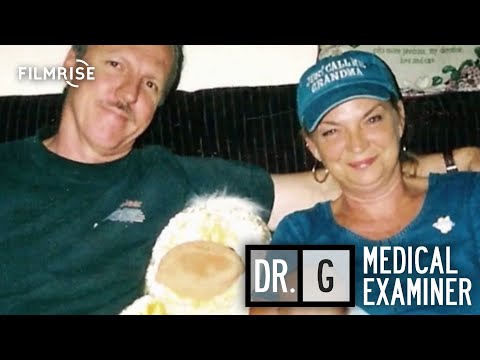
A diabetic man dies after a night out. Meanwhile, an elderly man's decomposing body is found in his son’s home. Dr. G realizes that finding the causes of death will be anything but straight-forward.
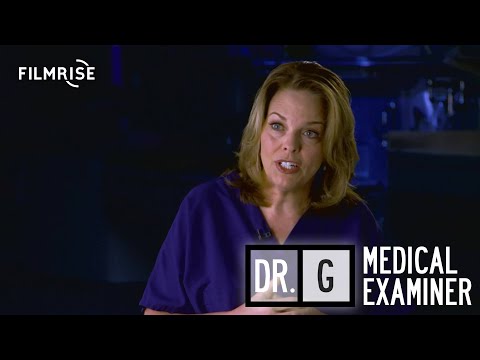
A Florida medical examiner takes viewers through puzzling cases while explaining procedures and conclusions.
Read the full transcriptHide the full transcript
- NARRATOR: A 29-year-old father comes home intoxicated and passes out on the couch, but when his daughters try
- to wake him in the morning-- He has no pulse, no blood pressure. He's basically dead.
- NARRATOR: Dr. G. suspects his medical history played a key role in his death, but she uncovers
- a far more twisted killer. This is somebody who just needed a slap across the face.
- I mean, there's something wrong with this fella. NARRATOR: Then, the police discover an elderly man's
- decomposing corpse in the home where he lived with his stepson. The body was completely covered with a comforter
- and a large plastic tarp. NARRATOR: And Dr. G. is the only one who can unlock the mystery behind this horrifying family
- tragedy. Was there an argument that went on and he killed his father, and he's trying
- to just hide it with blankets? The whole situation just sounds bizarre. NARRATOR: Altered lives, baffling medical mysteries,
- shocking revelations. These are the everyday cases of "Dr. G-- Medical Examiner."
- It's another hectic morning for Dr. Jan Garavaglia, chief medical examiner for the District 9
- Morgue in Florida. As a working mother, 24 hours a day are never enough. I need to know what we have today.
- Do you know? Is it bad? NARRATOR: And multitasking is the secret to survival. Eight bodies.
- You know I have to go to court this morning. NARRATOR: But once she gets to the morgue,
- it's all about the job at hand. This one sounds like it might be straightforward.
- We've got a 29-year-old man who's a really bad diabetic. NARRATOR: It all started the previous evening.
- Tony Solito, a father of two young girls, is coming off a long, hard day at work.
- He makes plans to go out drinking with his buddies to unwind. But his wife, Sandra, is concerned.
- Thanks, mom. What's interesting about this, he is a diabetic, and the wife's worried that he goes out
- and drinks with his diabetes. NARRATOR: But Tony assures his wife that he won't be out long
- and he'll be fine. They eat dinner together, but then he leaves and goes parties with his friends.
- NARRATOR: When Tony gets home many hours later, he's incoherent and seems drunk.
- He comes home fairly late about 4:00 in the morning, and he decides to sleep on the couch.
- We get the story from her, so we don't know if they argued or if he didn't want to wake her,
- or why he slept on the couch. NARRATOR: The next morning, Tony's daughters run into the living room to wake their father.
- Tries to wake up dad, and he's cold and unresponsive. NARRATOR: In a panic, Tony's wife calls 911.
- My husband, he won't wake up. He's passed out. NARRATOR: Paramedics soon arrive and try to revive him.
- 1: Sir? PARAMEDIC 2: Go ahead, take-- [INTERPOSING VOICES] PARAMEDIC 1: Ma'am, I'm sorry.
- I can't say, but we're doing the best we can. PARAMEDIC 2: He does not have a pulse.
- NARRATOR: But their efforts are in vain. SANDRA: WIFE: Is he breathing? NARRATOR: Tony Solito is already dead.
- [OMINOUS MUSIC] DR. JAN GARAVAGLIA: Yeah, his wife seems to be concerned about him being not
- taking care of himself because of the diabetic problems he's got. So she really is, I get the sense
- that she's worried that he may have died from the diabetes. NARRATOR: Overcome with guilt, she wonders if she
- could have saved her husband had she tried harder to keep him home. She knows all too well that consuming alcohol
- could be dangerous for Tony because of its high sugar content. [MUSIC PLAYING] Diabetics like Tony have trouble processing
- sugar or glucose because their bodies don't manufacture insulin-- a protein produced in the pancreas.
- Without enough insulin, glucose levels can skyrocket, wreaking havoc in the body.
- Sometimes even resulting in death. DR. JAN GARAVAGLIA: They have to have the insulin because pancreas doesn't make insulin.
- NARRATOR: To make up for this lack of natural insulin, Tony, like many diabetics, undergoes a daily regimen
- of unpleasant injections. DR. JAN GARAVAGLIA: We do know that he is on insulin. We know he's on insulin on twice a day.
- NARRATOR: This ensures that his glucose levels or blood sugar won't climb too high.
- But it seems that Tony was not giving his condition the attention it deserved. DR. JAN GARAVAGLIA: So we get his medical records
- and find out that he doesn't really like to take care of himself. His blood sugars are always very high.
- His doctor was worried about, told them to increase his insulin. NARRATOR: Now that she's reviewed
- all the information available to her, Dr. G. formulates an initial hypothesis. DR. JAN GARAVAGLIA: I mean, certainly
- diabetes is high on my list. NARRATOR: But only an autopsy will lead her to the truth.
- [MUSIC PLAYING] [CAMERA SHUTTERS] As Dr. G. begins the external exam, she considers how diabetes could have killed Tony.
- And the primary suspect is a condition known as ketoacidosis. DR. JAN GARAVAGLIA: If he had missed his insulin, if he
- was drinking, yeah, that could put him into ketoacidosis certainly. NARRATOR: Ketoacidosis often begins with an abnormally
- high blood sugar level. DR. JAN GARAVAGLIA: They get very high glucose levels. But the problem is, they don't have their insulin to get
- the glucose into the cells. And so you can't utilize the glucose as energy. And so you start almost in a starvation mode.
- NARRATOR: Desperate for a source of energy, the body begins burning fat instead of glucose as fuel.
- The fat then breaks down into acids called ketones. DR. JAN GARAVAGLIA: You get fatty acid and filled up
- and that turns into ketones, which make your blood very acidic. And that's what makes you so sick and you end up dying.
- NARRATOR: If Dr. G. finds both ketones and a high glucose level in Tony's body, she can be almost certain
- that ketoacidosis took his life. To find out, she'll need to send samples of Tony's blood, urine, and eye fluid to the toxicology lab.
- They will also test for Tony's blood alcohol level. Unfortunately, Dr. G. will have to wait six to nine
- weeks for the lab results. In the meantime, she looks for additional clues with her standard external exam.
- DR. JAN GARAVAGLIA: I look at his arms. I look for needle tracks. I look for trauma.
- And I don't see anything. His external examination is pretty benign, pretty negative.
- We can find a lot when we go in there but I don't like surprises. NARRATOR: She now hopes that the internal exam will yield more
- clues so that she can soon provide some answers to Tony's grieving widow. [MUSIC PLAYING]
- Coming up next, Dr. G. explores another possibility. Did Tony Solito fall victim to his own reckless drinking
- habit? DR. JAN GARAVAGLIA: It's very rare to drink yourself to death, but it certainly happens.
- I mean, he's with his buddies. We'll have to see. NARRATOR: When "Dr. G-- Medical Examiner" continues.
- [MUSIC PLAYING] Dr. G. reexamines the investigator's report on Tony Solito as morgue techs prepare his body
- for the internal autopsy. DR. JAN GARAVAGLIA: We just know he does have a family on one
- side and a wife and two kids. But yet, he goes out and parties pretty heavily with his buddies.
- His wife says he's going out drinking. NARRATOR: Tony also has a bad case of diabetes
- and his wife Sandra is concerned that the drinking, combined with his disease, finally did him in.
- DR. JAN GARAVAGLIA: She is right to be worried about him not taking care of himself.
- Him drinking is just one component of that. Him not taking his insulin, him not watching his diet.
- He sounds like he's having a very reckless lifestyle. [OMINOUS MUSIC] NARRATOR: Dr. G. performs the Y-incision
- and opens up Tony's chest plate. She will begin by checking Tony's heart for atherosclerosis, or coronary artery disease,
- which is common to diabetics. DR. JAN GARAVAGLIA: This will be interesting. DR. VICTOR ROBERTS: The major cause
- of death of people that have diabetes across the board is cardiovascular disease.
- DR. JAN GARAVAGLIA: He's got a lot of blood? MORGUE TECH: Yes. DR. JAN GARAVAGLIA: Down there, and I need to--
- WOMAN: OK. DR. JAN GARAVAGLIA: Certainly, I'm going to look for atherosclerosis,
- see how his heart looks. NARRATOR: Atherosclerosis occurs when plaque accumulates inside the coronary arteries,
- restricting the flow of blood. If Tony's coronary arteries show extensive narrowing from plaque
- build-up, it could mean that the blood flow to his heart was blocked causing a deadly heart attack.
- As a first step, Dr. G removes Tony's heart for a closer examination. Any extreme narrowing of the arteries
- may overrule her ketoacidosis theory. DR. JAN GARAVAGLIA: The heart muscle. Again, her tissues are starting get maroon and soft.
- It looks OK. NARRATOR: But after a thorough dissection, she finds nothing. DR. JAN GARAVAGLIA: No coronary artery disease.
- That's easy to see. Lo and behold, he doesn't have any atherosclerosis. Even though he is a terribly controlled diabetic.
- NARRATOR: Immediately, she can rule out one possible cause of death, a heart attack
- caused by atherosclerosis. [OMINOUS MUSIC] However, as she continues her examination of Tony's heart,
- she makes a critical discovery. DR. JAN GARAVAGLIA: Normal heart should-- for him, it should be over 400.
- His is 550 grams. His is enlarged. It weighs more than it should. And the left ventricle that pumps blood to the rest
- of the body is thickened. And that tells me that he's probably has some high blood pressure.
- NARRATOR: High blood pressure often causes the heart muscle to thicken because it has to work harder to pump
- the blood throughout the body. High blood pressure can also be deadly. DR. JAN GARAVAGLIA: Sometimes with high blood pressure,
- we certainly can see arrythmias with the heart. NARRATOR: An arrhythmia occurs when the heart loses its beat,
- quivering ineffectively instead of pumping blood throughout the body. If Tony had an arrhythmia that lasted over a minute,
- his organs would have become starved of blood and then ceased to function. It is a quick and sudden way to die.
- But arrythmias leave no physical evidence in the heart. To conclude that Tony's death was a result of an arrhythmia,
- Dr. G. must first ruled out every other possible cause of death. DR. JAN GARAVAGLIA: OK, well, I will cut it out.
- Our work is cut out for us. NARRATOR: Everything else appears normal until she gets to Tony's liver.
- DR. JAN GARAVAGLIA: Oh, is this one big liver. One of the other things I found was a very enlarged liver,
- kind of round and fatty. NARRATOR: This could be a result of his diabetes but it could also be the result of drinking heavily.
- [OMINOUS MUSIC] If Tony had such a serious drinking habit, maybe that fateful night, he simply drank more than
- his body could handle. DR. JAN GARAVAGLIA: It's very rare to drink yourself to death, but it certainly happens.
- It wouldn't be the first one I had. You're with your buddies. You're drinking. Maybe they took also another drug with it,
- like a sleeping pill with the alcohol, or like to central nervous system antidepressants,
- or anti-anxiety medication with the drinking could put him over the edge. [OMINOUS MUSIC]
- NARRATOR: Dr. G. now has several possible causes of death-- ketoacidosis brought on by Tony's high blood sugar;
- alcohol poisoning; or an arrhythmia caused by his high blood pressure and enlarged heart.
- Dr. G. won't get answers to these questions until the toxicology report comes back.
- But she has one more place to look internally for clues-- Tony's lungs. DR. JAN GARAVAGLIA: And the left lung?
- NARRATOR: And there, she finds a crucial piece of evidence. DR. JAN GARAVAGLIA: When I looked at his lungs,
- I noticed they're very heavy. They're 907 grams. NARRATOR: This finding indicates that Tony lingered in a coma
- before he died, which typically causes the lungs to fill up with fluid. Dr. G. now knows he did not die suddenly.
- DR. JAN GARAVAGLIA: A person who just died suddenly, let's say from an arrhythmia, maybe 350 grams max.
- NARRATOR: An arrhythmia would have killed Tony in a matter of minutes. So right away, she can rule that out
- as a possible cause of death. But this finding is consistent with ketoacidosis, which often causes victims to go into a coma before death.
- DR. JAN GARAVAGLIA: The body just gives me this feeling that he laid there in a coma for a while,
- whether that was due to diabetic ketoacidosis or maybe he really drank a lot. NARRATOR: Dr. G's final ruling now hinges on the results
- of the toxicology report. She eagerly awaits their arrival, hoping to get to the bottom of this perplexing case.
- DR. JAN GARAVAGLIA: Because I am worried about how high that alcohol is going to be because his wife
- seems to be concerned about it. He was gone for quite a long time with his buddies.
- [OMINOUS MUSIC] NARRATOR: Coming up next, the results come back from the lab with troubling implications
- about Tony's Solito. DR. JAN GARAVAGLIA: When I look at the tox report I'm very surprised on many levels.
- NARRATOR: When "Dr. G-- Medical Examiner" continues. [OMINOUS MUSIC] Dr. G. is counting on the toxicology report
- to shed light on the mysterious and sudden death of 29-year-old Tony Solito. DR. JAN GARAVAGLIA: I have some suggestion that maybe he kind
- of lingered in a coma somewhat. So far, things aren't looking good for the cause of death.
- After the internal exam, I've made the rounds of the organs. I don't have a clear cut cause of death.
- NARRATOR: She hopes the report will contain the answer she's been seeking. If she finds that Tony's system contains ketones
- and a high blood sugar level, she'll know that he died from ketoacidosis resulting from his diabetes.
- If Tony's blood alcohol level is extremely high, she will conclude that he poisoned
- himself to death with alcohol. [OMINOUS MUSIC] Finally, after several weeks of waiting,
- the toxicology report arrives. But it's not at all what Dr. G. was expecting. DR. JAN GARAVAGLIA: When I look at the tox report
- I'm very surprised on many levels. First of all, the first thing I'm looking at is the alcohol.
- And the blood shows none. None at all. NARRATOR: Dr. G, now knows for sure that Tony
- did not drink himself to death. Next, she flips through the report to find Tony's ketone and blood sugar.
- And again, she is shocked by what she does not find. DR. JAN GARAVAGLIA: He does not have any acid bodies,
- no ketones, or acetone. He doesn't have that. He does have an elevated blood glucose in 200.
- So it's probably higher, but probably not enough to kill him. NARRATOR: Which can only mean one thing.
- DR. JAN GARAVAGLIA: We have ruled out diabetic ketoacidosis. Poorly controlled diabetic, yes.
- But that isn't killing him acutely. NARRATOR: But the toxicology report reveals very clearly
- what did kill Tony Solito. DR. JAN GARAVAGLIA: Well, I'm only surprise at in the tox report is it's
- giving me my cause of death. An unexpected answer. NARRATOR: And that unexpected answer is heroin and cocaine.
- DR. JAN GARAVAGLIA: He's not going out drinking with his buddies. He's going out using drugs with his buddies.
- We're talking hardcore drugs-- heroin and cocaine-- in levels enough that caused him his death.
- NARRATOR: The heroin level alone was high enough to kill Tony. The cocaine only further irritated his heart,
- possibly finishing the job and causing it to stop beating completely. PARAMEDIC 1: He does not have a pulse, and he's not breathing.
- NARRATOR: Dr. G. now has a definitive answer from the tox reports. Tony Solito died of heroin and cocaine intoxication.
- DR. JAN GARAVAGLIA: I was shocked to see heroin and cocaine in this supposedly family man.
- I guess I have the view that once you have children, at the very least, get your life together
- as an example. And you have responsibilities to live to take care of your children.
- Using cocaine and using heroin is not conducive to a healthy life for living. But maybe this guy didn't care.
- He wasn't taking care of his diabetes either. NARRATOR: Dr. G. braces for a difficult phone
- call to Tony's widow, Sandra, to explain how Tony died. But first, she lays out the events
- leading up to Tony's death. [OMINOUS MUSIC] TONY SOLITO: Great cooking, mom. Everyone thank your mom.
- DAUGHTERS: Thanks, mom. NARRATOR: It's Sunday night and Tony Solito, a diabetic father of two,
- is having dinner with his family. TONY SOLITO: It was good? DAUGHTER: Ah, no. TONY SOLITO: No?
- NARRATOR: When he announces that he's going out drinking with some friends, his wife Sandra objects.
- SANDRA: You already went out last night. TONY SOLITO: So? NARRATOR: But Tony goes out anyway.
- TONY SOLITO: I'll be back late. SANDRA: Yeah. DR. JAN GARAVAGLIA: But his wife thinks he's drinking, just
- having a few beers with his buddies, although she seems to be a little worried that maybe he drinks too much.
- TONY'S FRIEND: Oh, you did. TONY SOLITO: I thought I'd never get out of the house tonight.
- NARRATOR: But on this night, Tony never does go out drinking. DR. JAN GARAVAGLIA: Instead of drinking with his friends,
- he's out using drugs. NARRATOR: Tony snorts a large amount of cocaine and heroin, which immediately begins
- to break down into morphine. The morphine, attaches to receptors in Tony's brain,
- causing his bodily functions to grow slow and lethargic. [OMINOUS MUSIC] TONY SOLITO: I got to go.
- No, thank you. Thank you. TONY'S FRIEND: All right, see you again. TONY SOLITO: All right.
- NARRATOR: By the time he gets home, hours later, he's completely incoherent and appears drunk.
- DR. JAN GARAVAGLIA: Eventually, he comes home around 4:00 in the morning. Appears to just go on the couch to sleep.
- NARRATOR: But Tony is not sleeping. Instead, he slips into a deep coma. DR. JAN GARAVAGLIA: The heroin attaches to the receptors
- at his brain to the point where it depresses it enough or he's probably no longer breathing.
- NARRATOR: And soon after Tony stops breathing, he dies. [OMINOUS MUSIC] The news is a shock to Tony's wife.
- She now knows that his drinking did not kill him, but the full extent of his recklessness
- is difficult to accept. Dr. G. sees many deaths that are senseless and cruel. But in some cases, when death seems so avoidable,
- she can only wonder what drives people to make such bad decisions. DR. JAN GARAVAGLIA: This guy needs a slap across the face,
- and to be shaken, to be A, not taking care of himself with his diabetes, letting his glucose
- get that high, not eating right, not taking his insulin when he should be. With two kids, and then on top of that
- using cocaine and heroin. I mean, there is something wrong with this fella. It really always bothers me, tremendously
- bothers me when I see people dying of drug deaths when they have kids. It has a tremendous impact to people who love you
- and to your life. [SANDRA LAUGHING] [OMINOUS MUSIC] POLICEMAN 1: Break it. NARRATOR: Coming up next.
- Police are baffled when they discovered the decomposing body of an elderly man in the home
- he shared with his stepson. DR. JAN GARAVAGLIA: Did he just let his dad die and then doesn't know what to do with the body,
- thinking maybe I'll just cover it with a tarp and nobody will notice? NARRATOR: Now, they are counting on Dr. G.
- to help them piece together this morbid puzzle. DR. JAN GARAVAGLIA: Something needs to be investigated here.
- NARRATOR: When "Dr. G-- Medical Examiner" continues. [MUSIC PLAYING] After a long morning of challenging cases, Dr. G,
- Enjoys a break with her medical investigator, Steve Hansen. It's a welcome diversion.
- DR. JAN GARAVAGLIA: There's a lot of stress and sometimes you have to get out of this office.
- Unfortunately, sometimes I can't. I've got so much work to do. But occasionally, lunch is a little oasis for me
- that I can just say, OK, let's put this aside for a minute and go out to lunch. It's kind of set up like American Idol.
- And I was one of the judges. There's three judges, it's not-- Sometimes when we go out for lunch, we talk work.
- I hate that. But when I go out and we can just talk about our families and talk about our lives, that's a lot more relaxing for me.
- NARRATOR: But the break from work is short lived. DR. JAN GARAVAGLIA: I daydream of taking the afternoon off,
- but unfortunately, it's no fun because then you start thinking about all the work you
- have to do back in your office. Unfortunately, people don't stop dying. NARRATOR: Back at the morgue, a rather unusual corpse awaits.
- DR. JAN GARAVAGLIA: We have a man that's dead in the middle of his living room covered with tarp.
- The whole situation just sounds bizarre. Sometimes you cannot make these stories up.
- [OMINOUS MUSIC] NARRATOR: Once in the exam room, Dr. G. gets more details from the investigator's report on 78-year-old retiree,
- Alonzo Garcia. [MUSIC PLAYING] A recent widower, Alonzo lived alone in a small retirement
- compound in Kissimmee, Florida, until his stepson, Miguel, abruptly lost his job and moved in with him.
- DR. JAN GARAVAGLIA: They live on a golf course, at a nice community. NARRATOR: But one day, this seemingly peaceful life
- is cut short. [MUSIC PLAYING] Alonzo's sister, Leah, is the first to sense that something is amiss.
- Her brother hasn't returned her calls in a week and she can't imagine why. DR. JAN GARAVAGLIA: The sister who lives in another state
- wants to know where he is. NARRATOR: But Miguel was evasive and incoherent. MIGUEL: No, I got to go. I will talk to you later.
- He could hear from you. I got to go. Bye. NARRATOR: Alarmed, Leah contacts a friend
- on the local police force who agrees to check in on him. And as soon as the detective arrives at the house,
- he knows something's wrong. DETECTIVE OLSON: Hi, I'm Detective Olson. DR. JAN GARAVAGLIA: They actually smell a horrible odor.
- MIGUEL: What are you doing here? NARRATOR: And when Miguel opens the door, he is paranoid, jittery, and extremely agitated.
- DR. JAN GARAVAGLIA: He looked like he was high. DETECTIVE OLSON: The neighbors-- the neighbors have
- said they haven't seen him. MIGUEL: He's probably on vacation. He's on vacation.
- DETECTIVE OLSON: He's not here now? MIGUEL: No. DR. JAN GARAVAGLIA: Then he becomes very belligerent,
- doesn't want anybody in the house. [OMINOUS MUSIC] NARRATOR: They return a few hours later with a search
- warrant, but the house is mysteriously silent and Miguel is nowhere to be found.
- POLICEMAN 1: Break it. NARRATOR: As they enter the house, they encounter an appalling scene.
- DR. JAN GARAVAGLIA: The place is a mess. There are bugs all over the place. There is roaches all over.
- There's really not much food in the house except alcohol. NARRATOR: And in the middle of the living room
- is the source of the fetid stench. The decomposing body of Alonzo Garcia. [OMINOUS MUSIC]
- BILL STRATTON: He was sitting in the recliner completely covered with the comforter
- and a large blue plastic tarp. NARRATOR: Investigators thoroughly searched the house for evidence that could shed light
- on this bizarre discovery. What they find next has troubling implications. DR. JAN GARAVAGLIA: There is evidence
- of drug use in the house-- crack, cocaine use. BILL STRATTON: There was a pipe or smoking device that
- had ash on it and charring. [MUSIC PLAYING] NARRATOR: Investigators wonder if Miguel is a drug addict.
- And if so, could his father's death be a result of neglect or abuse? DR. JAN GARAVAGLIA: I have seen drugs
- totally destroy people to the point where they cannot function. NARRATOR: Perhaps Miguel was so incapacitated
- that he couldn't adequately care for his aging father. DR. JAN GARAVAGLIA: There is no real clear explanation
- on why he would just cover the father with tarps. Did he just let his dad die and then
- doesn't know what to do with the body, thinking maybe I'll just cover it with the tarp and nobody
- will notice. [OMINOUS MUSIC] NARRATOR: But then the team finds a disturbing clue about Alonzo's mysterious death.
- DR. JAN GARAVAGLIA: My investigator at the scene thought he saw maybe some contusion on the forehead.
- NARRATOR: Now, they must consider a terrible and tragic scenario. DR. JAN GARAVAGLIA: So there is this worry--
- could he have done something to the father? It's very possible it could have been a homicide.
- NARRATOR: But before police can accuse Miguel of any crime, they need proof. Evidence that can only come--
- [OMINOUS MUSIC] --from Dr. G. DR. JAN GARAVAGLIA: I mean, was the man murdered or did he die a natural death?
- And so that's going to be pivotal right here. Their investigation is hinging on what
- we provide them at autopsy. I just need to give them the facts. [OMINOUS MUSIC] NARRATOR: One glance at Alonzo's body and Dr. G.
- can tell that this autopsy will not take place in the morgue's usual exam room. Rather it will be in the decomp room,
- a separate room where she performs autopsies on decomposing bodies. DR. JAN GARAVAGLIA: We've got a separate autopsy
- room because he smells. And people don't want to be exposed to it. [MUSIC PLAYING]
- NARRATOR: Determined to unravel this case, she begins the meticulous search for trauma,
- starting with the head. DR. JAN GARAVAGLIA: Now my investigator thought since he's possibly saw some contusions or bruising
- on the head. Well, it's very difficult when a body has decomposed to find external trauma.
- We will be looking for discoloration, a darker kind of bruise. But the skin has already kind of green
- to black so it's difficult to interpret that. NARRATOR: But a careful inspection yields no marks.
- DR. JAN GARAVAGLIA: I don't see it. I just see a lot of decompositional changes.
- NARRATOR: Nevertheless, 20 years experience tells her trauma can be extremely elusive in the external exam.
- DR. JAN GARAVAGLIA: So we really have to look internally. I really cannot rule out foul play at this point--
- for scars. NARRATOR: Next, Dr. G. shifts her attention to the rest of the body. First, a search for the hallmarks of violence.
- DR. JAN GARAVAGLIA: We're going to look for any type of trauma. I obviously don't see any knife wounds.
- I don't see any gunshot wounds. NARRATOR: Then a search for possible signs of neglect.
- DR. JAN GARAVAGLIA: I'm looking for bedsores. Was he confined to a bed and nobody checked on him
- or move him? NARRATOR: Dr. G. painstakingly examines Alonzo's eroding skin. On his elbows, on his hips, until finally, she's satisfied.
- DR. JAN GARAVAGLIA: I don't see any drama. So we're going to look internal, and look
- on the inside for trauma. Certainly you can miss some. NARRATOR: There are no antemortem defects
- of any kind on his body. DR. JAN GARAVAGLIA: At this point, I'm no longer really thinking that it
- was a neglect situation. NARRATOR: But for Dr. G, eliminating neglect only heightens her primary concern.
- The haunting possibility of homicide. DR. JAN GARAVAGLIA: There is a body here that's being hidden.
- What did he really die of? [OMINOUS MUSIC] NARRATOR: Coming up next, Dr. G. makes a killer finding.
- DR. JAN GARAVAGLIA: His lungs actually have a lot of blackening. There's also a breakdown of the tissues of the lungs.
- NARRATOR: When "Dr. G-- Medical Examiner" continues. [MUSIC PLAYING] Dr. G. reflects the scalp of Alonzo Garcia,
- keeping a sharp eye out for any sign of trauma. DR. JAN GARAVAGLIA: Now, I have to make sure he doesn't
- have a blow to the head. NARRATOR: Yesterday, police discovered the 78-year-old's rotting corpse under a comforter
- and large plastic tarp. Allegedly, Alonzo's stepson, Miguel, had simply covered his father's dead body
- and left him on a recliner in the living room. DR. JAN GARAVAGLIA: We don't know what happened.
- Why is he trying to cover up the body? Did he do something? NARRATOR: Alonzo's sister in California
- fears that her nephew, once the pride of the family, may have spiraled out of control after losing his job.
- BILL STRATTON: There were some older photographs of him that show that he was well-built, rather
- muscular, neat. DR. JAN GARAVAGLIA: He was an educated professional, nothing what he looks like now.
- He's very thin, unkempt, very ill-looking. NARRATOR: Dr. G. wonders if drugs could be behind this tragic transformation.
- And as an unemployed man, Miguel would need money to feed his habit. DR. JAN GARAVAGLIA: The deceased man
- receives a check that gets automatically deposited to his account. NARRATOR: Police cannot discount the theory that Alonzo could
- have been killed for his money. [MUSIC PLAYING] Dr. G. inspects the skull for fractures.
- DR. JAN GARAVAGLIA: A little congestion over here, but I don't think that's-- I think that's just the way he was found.
- It doesn't look like a bruise. NARRATOR: And finds none. But an injury to the brain itself may be lurking beneath.
- [OMINOUS MUSIC] DR. JAN GARAVAGLIA: So I have to open up the skull, take the calvarium off.
- NARRATOR: It's a procedure she's done more than 1,000 times. But this time, she faces a formidable challenge.
- Once again, decomposition. DR. JAN GARAVAGLIA: Yeah, you have to look at these really
- quickly because they'll disintegrate right in front of your eyes. At this point, the brain is going to be very
- soft and kind of semi-liquid. It'll hold its shape for about a split second when
- you take that calvarium off. So you got about a split second to look and make sure there's no blood on the outside of that brain.
- It just kind of all part on me. There's not a whole lot of forensic pathology you got to be quick on.
- But when you're opening up the calvarium of a decomposed body, you got to be right there and you got to be quick.
- NARRATOR: And her concerns are justified. As soon as she extracts the organ, it begins to fall apart.
- DR. JAN GARAVAGLIA: Semi-liquid, it's like a toothpaste. You know, toothpaste just doesn't keep its shape.
- It's almost semi-liquid. We just got to look at them quick. It's partially liquid over there.
- NARRATOR: But Dr. G. can see enough to tell that there's no blood. DR. JAN GARAVAGLIA: So it looked like a normal decomposed brain.
- And so I don't see any trauma to the head at all. NARRATOR: Despite the investigator's earlier
- suspicions, if Alonzo had suffered a violent death, it was not from a blow to the head.
- DR. JAN GARAVAGLIA: No blood inside the brain, no blood in the brain stem. NARRATOR: Now, Dr. G must dig deeper for clues,
- inside his body. DR. JAN GARAVAGLIA: When we open them, all bets are off. I don't know what I'm going to find.
- [OMINOUS MUSIC] Take some of that. We could squeeze all that off of there. NARRATOR: Dr. G. makes the standard Y-incision
- from Alonzo's shoulders to his torso. Any injuries found in this area could indicate a struggle.
- DR. JAN GARAVAGLIA: An old person may die from trauma that is a lot less severe than somebody
- who is 20 and healthy. NARRATOR: Dr. G scours his decomposing abdomen. But soon ends her search empty handed.
- DR. JAN GARAVAGLIA: All I can say is there is not one bit of trauma in the skella.
- There is no blood in there. I don't see any rib fractures. NARRATOR: These negative findings
- shed light on at least one aspect of Alonzo's mysterious death. DR. JAN GARAVAGLIA: He did not die from trauma.
- Basically, it looks at this point that it's unlikely that the son overtly killed his father.
- NARRATOR: But the unsettling question remains-- what could have possibly been the motive behind Miguel's
- inexplicable behavior? DR. JAN GARAVAGLIA: You just don't let your loved one rot in the middle of your house and just
- keep putting blankets and tarps over him because he's smelling bad. NARRATOR: To completely exonerate
- the stepson in the eyes of the investigators, Dr. G. must scientifically prove what did kill Alonzo Garcia.
- And there's only one way to do it. DR. JAN GARAVAGLIA: I have to continue the autopsy
- to make sure that he has some natural disease to determine why he died. NARRATOR: She inspects the liver, the stomach, the spleen.
- None show more than a hint of disease. DR. JAN GARAVAGLIA: Everything here looks normal, except for the decompositional changes.
- His kidneys show evidence of high blood pressure, but we're not coming out of it too much.
- NARRATOR: She quickly moves on to his respiratory system. And suddenly, she makes an alarming discovery.
- Skella had anthracotic pigment. Hard to say if the disease. DR. JAN GARAVAGLIA: His lungs actually have
- a lot of blackening pigment. There's also emphysema breakdown in the tissues of the lungs.
- NARRATOR: Both the blackening and the emphysema are serious lung diseases. Doctor G's findings suggest that at some point in his life,
- Alonzo had a very unhealthy habit. DR. JAN GARAVAGLIA: He must've smoked at one time.
- NARRATOR: Emphysema alone affects almost two million people in the US. 10 times more common than lung cancer,
- it's the most deadly respiratory disease. But Dr. G. doesn't think this is what killed him.
- DR. JAN GARAVAGLIA: Certainly, you can die from emphysema. But we usually don't see it in the morgue
- because you don't die suddenly from emphysema. It's usually a slow process. You're needing more and more oxygen.
- So you're followed by a doctor. He usually signs the death certificates. It's not somebody who just dies suddenly in an old easy chair.
- NARRATOR: Now, as Dr. G. approaches the end of her autopsy, Alonzo Garcia's cause of death
- remains elusive. [OMINOUS MUSIC] Coming up next. The clues add up to one big mystery.
- DR. JAN GARAVAGLIA: All we have proof of is that the man is dead. NARRATOR: When "Dr. G--
- Medical Examiner" continues. [OMINOUS MUSIC] Now, Dr. G. is left with only one of Alonzo Garcia's organs
- to inspect-- the heart. DR. JAN GARAVAGLIA: So I'm not really finding anything clear cut killing him.
- So then it's important to go to the heart. NARRATOR: The 78-year-old man's stepson, Miguel,
- had been a suspect in his father's death. But Dr. G. found no signs of foul play.
- But without forensic evidence proving what did happen, this family may always question how Alonzo died.
- [OMINOUS MUSIC] DR. JAN GARAVAGLIA: Say, I think we're going to take a chance. We're going to see--
- sometimes you can see a few things in the heart. We're going to see if we can see anything.
- NARRATOR: Like the rest of his body, Alonzo's heart is soft from decomposition. But to her expert eye, something about its shape
- doesn't seem right. DR. JAN GARAVAGLIA: His heart looked like it was starting to dilate or get bigger.
- NARRATOR: As a next step, Dr. G. begins to dissect the organ. [OMINOUS MUSIC] And suddenly comes face to face with Alonzo's killer.
- DR. JAN GARAVAGLIA: I look at his native heart or natural coronary arteries, and they're very severely
- narrowed, all of them, very filled with the cholesterol plaque. NARRATOR: It's clear that Alonzo had been suffering
- from a dangerous condition that afflicts 2.3 million Americans-- atherosclerotic coronary artery disease or atherosclerosis.
- DR. JAN GARAVAGLIA: The arteries that supply blood and oxygen to the heart build-up with plaque,
- and they build up with plaque-- cholesterol plaque. They calcified atherosclerosis stays.
- The rest your heart can decompose but the atherosclerosis will stay there. [OMINOUS MUSIC]
- NARRATOR: If severe enough, this illness can stop blood from flowing through the heart
- altogether, triggering an arrhythmia-- an irregular and fatal heartbeat. DR. JAN GARAVAGLIA: Unfortunately he
- may not have had any symptoms. You certainly can die suddenly with this. We see that all the time.
- NARRATOR: Looking back at the other findings from the autopsy, Dr. G. can see how Alonzo was at high risk
- for this heart disease. DR. JAN GARAVAGLIA: High blood pressure will accelerate it.
- Smoking certainly will accelerate it. NARRATOR: Now there's no doubt what killed Alonzo Garcia.
- An arrhythmia brought on by blocked arteries. DR. JAN GARAVAGLIA: Because of the severe nature of his heart
- disease, with no evidence of trauma, no other natural disease, it appears that he probably just died in his sleep
- while he was sitting on that recliner. There is no other cause of death. NARRATOR: At last Dr. G. has enough forensic evidence
- to describe what-- not who-- killed Alonzo Garcia. [MUSIC PLAYING] Lonely after his wife's death, Alonzo welcomes his stepson,
- Miguel, into his home. According to the medical investigator's report, Miguel is unemployed and unstable.
- But Alonzo appreciates the company. He never suspects he's now living with a killer.
- Not his stepson, but a formidable enemy lurking much closer inside his heart. DR. JAN GARAVAGLIA: He's got the narrowing
- to his coronary arteries. So arteries that supply blood and oxygen to the heart build-up with cholesterol plaque.
- NARRATOR: Over time, his smoking and hypertension accelerate the problem. As the arteries close up, Alonzo's blood
- must struggle harder and harder to reach his heart. Until one day, while Alonzo naps in his easy chair,
- the condition turns deadly. DR. JAN GARAVAGLIA: The blood is not going to the heart.
- It's starting to fail. The muscle just isn't contracting. It probably isn't pumping enough blood.
- NARRATOR: His heart falters and his pulse degenerates into a fatal arrhythmia. DR. JAN GARAVAGLIA: The heart starts to quiver, and die.
- [OMINOUS MUSIC] NARRATOR: With no circulating blood, his vital organs shut down one by one.
- And slowly, peacefully, Alonzo Garcia dies. [OMINOUS MUSIC] Dr. G. makes her final ruling--
- a natural death due to heart disease. Now, with these autopsy results, police can officially close the case.
- To the family's relief, Alonzo's stepson is cleared of all suspicion. Still, there's one aspect of the case that troubles Dr. G.
- DR. JAN GARAVAGLIA: There is no real clear explanation on why he would just cover the father with tarps.
- We don't know exactly why he's going to leave a body there. NARRATOR: In the end, police find no evidence
- that Miguel was collecting his stepfather's social security checks. Why Alonzo's stepson left him in that chair,
- is one mystery that even forensic science will never solve. DR. JAN GARAVAGLIA: So we don't know exactly what went on.
- We just don't know. We'll never know. The sad part is that he has a son that lets him decompose.
- And this is a son that's educated. He knows better. The man is dead. Has been left there dead, and his body has been covered
- with tarps and death ignored. That's really sad. [MUSIC PLAYING]
Brief Summary
Tony Solito died from drug intoxication; Alonzo Garcia from heart disease.
Key points
- A Father's Reckless Night. Tony Solito, a diabetic father, goes out drinking but ends up dead. His wife is concerned about his health, but he reassures her.
- The Shocking Discovery. Dr. G uncovers that Tony's death was not due to diabetes but heroin and cocaine intoxication.
- A Life Cut Short. Tony's reckless lifestyle leads to his tragic death, leaving his family in shock.
- A Bizarre Discovery. Dr. Jan Garavaglia encounters an unusual corpse covered with a tarp.
- The Mystery of Miguel. Alonzo's stepson Miguel exhibits strange behavior after his father's death.
- The Cause of Death Revealed. Dr. G uncovers that Alonzo died from heart disease, not foul play.
Episode highlights
- A Father's Reckless NightTony Solito, a diabetic father, goes out drinking but ends up dead. His wife is concerned about his health, but he reassures her.“Thanks, mom.”2:34Jun 8, 2021
- The Shocking DiscoveryDr. G uncovers that Tony's death was not due to diabetes but heroin and cocaine intoxication.“I was shocked to see heroin and cocaine in this supposedly family man.”17:57Jun 8, 2021
- A Life Cut ShortTony's reckless lifestyle leads to his tragic death, leaving his family in shock.“This guy needs a slap across the face.”20:46Jun 8, 2021
- A Bizarre DiscoveryDr. Jan Garavaglia encounters an unusual corpse covered with a tarp.“The whole situation just sounds bizarre.”23:12Jun 8, 2021
- The Mystery of MiguelAlonzo's stepson Miguel exhibits strange behavior after his father's death.“You just don't let your loved one rot in the middle of your house.”35:13Jun 8, 2021
- The Cause of Death RevealedDr. G uncovers that Alonzo died from heart disease, not foul play.“Because of the severe nature of his heart disease, it appears that he probably just died in his sleep.”40:19Jun 8, 2021
Tension
75/ 100High tension