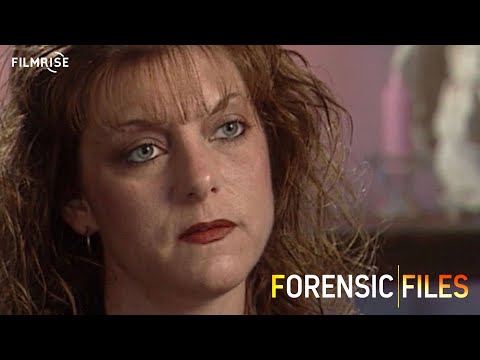
Diane and Rachel Staudte | World's Most Evil Killers
Episode Description
In 2012, Diane Staudte orchestrated the murders of her husband and son as well as the attempted murder of one of her daughters. With the help of another daughter, Rachel, she poisoned them by putting antifreeze in their drinks.
An in-depth look at the lives and crimes of some of the world's most evil killers, including Jeffrey Dahmer, Richard Ramirez, Cary Stayner, Leonard Lake, Dorothea Puente and more.
For More FilmRise Check Out Our Other Channels: FilmRise Television: https://www.youtube.com/@FilmRiseTelevision FilmRise Movies: https://www.youtube.com/@FilmRiseMovies Highway to Heaven - Full Episodes: https://www.youtube.com/@HighwaytoHeavenFullEpisodes
Read the full transcriptHide the full transcript
- [audio logo] [foreboding music] narrator: In June 2013, the churchgoing Staudte family
- from Springfield, Missouri, had suffered three devastating blows. Mark Staudte and his son Shaun had died
- within months of each other. And Mark's daughter, 24-year-old Sarah, was now critically ill in hospital.
- Essam Elkady: She was in a deep coma, was not responsive. Her kidneys shut down, her liver shut down.
- But she was very young, so that was a very confusing. narrator: When police received a tip about Sarah's mother,
- Diane Staudte's strange behavior in the wake of all this tragedy, an investigation was launched.
- Neal McAmis: There was definitely suspicion that just kept mounting and mounting.
- But at the same time, you don't want to think or believe that something so sinister could be going on.
- narrator: What was revealed during Staudte's his police interview would leave investigators speechless.
- narrator: And it turned out Diane Staudte wasn't acting alone. narrator: In a crime that shocked
- the whole nation, mother and daughter, Diane and Rachel Staudte, had been unmasked as two of the world's
- most evil killers. [theme music] ♪ ♪ [suspicious music] ♪ ♪ In January 2016, Diane Staudte was sentenced to life in prison
- without parole for the murders of her husband and son. Her daughter, Rachel, whom she colluded with,
- was sentenced to life with the possibility of parole after 39 years. At the time, Sara Forhetz was a TV news reporter
- in Springfield, Missouri. Sara Forhetz: This type of crime within not only a family unit, but even
- larger than that, a community of faith, it's absolutely unheard of. ♪ ♪ narrator: The man who cracked the case
- was Detective Neal McAmis from Springfield Police Department. Neal McAmis: Diane Staudte is a cold-blooded killer.
- One by one was eliminating her family members and doing so without any remorse whatsoever.
- Sara Forhetz: Diane groomed Rachel to be a willing accomplice in the murder of the entire rest
- of the family. Neal McAmis: Rachel Staudte is so much like her mother, very cunning, very manipulative,
- very narcissistic. They are two of the most evil people that I have ever dealt with.
- ♪ ♪ narrator: This killer's story begins on April 5, 1962. Diane Elaine Richter was born in Springfield, Missouri.
- ♪ ♪ Geoffrey Wansell: Diane is brought up in the Bible belt in the United States, a strict religious upbringing.
- The most proper person you can imagine until you scratch the surface. narrator: In 1984, Diane Richter
- met Mark Staudte when they attended the same college in Winfield, Kansas. A year later, the 22-year-old fell pregnant.
- Sara Forhetz: I can imagine the shock of two people who were raised in very religious families getting
- pregnant out of wedlock. It seemed like they genuinely loved each other. Geoffrey Wansell: They get married late in 1985,
- and indeed the first child, Shaun, the son, is born the following year, 1986. narrator: The Staudtes set up home in Springfield.
- Sara Forhetz: Springfield, Missouri, is a very big small town. There's a church on every corner,
- and to a lot of people in this town, church is a very big part of their life. Neal McAmis: Mark and Diane Staudte
- were married for many years. It appeared that they had a good life and a good marriage.
- They had four children. Their oldest was their son, Shaun, and they had three daughters.
- And they were really no different than most families. ♪ ♪ Geoffrey Wansell: Shaun had learning difficulties.
- He wasn't particularly sociable. He liked staying indoors. He liked playing video games and watching videos.
- ♪ ♪ narrator: The Staudtes' eldest daughter, Sarah, has fond memories of her brother Shaun
- when they were children. Sarah Staudte: He made me laugh when I was little. Sometimes I would go into his room
- and hit his light switch, [chuckles] and that would get him mad. narrator: Sarah was born two years after Shaun
- on August the 10, 1988. She went on to major in French at Missouri State University.
- Sarah Staudte: I love translating and I love reading French literature. But most importantly, I like speaking the language.
- Sara Forhetz: She had big dreams. She had big hopes. She wanted to travel. Sarah Staudte: I wanted to be a translator,
- but life had other plans. ♪ ♪ narrator: The Staudte's middle daughter, Rachel, was
- two years younger than Sarah. Neal McAmis: Rachel was also attending Missouri State University and was a very successful student.
- She was on the honor roll at the school and was doing very well. Narrator: The Staudte family was
- complete when their youngest daughter was born. And to the outside world, they seemed like the perfect family.
- - They were super involved in the community in music. And it seems like they enjoyed it together.
- It was something that really could bring them together as a family unit. Neal McAmis: Diane was the organist at the church,
- and Rachel would play instruments and sing. Geoffrey Wansell: Diane is a pillar of the community.
- She was a nurse, and then she became an advisor to an insurance company about medical claims.
- [grim music] - Mark Staudte was pretty much a stay-at-home father. Diane was the breadwinner in the household,
- but Mark would also bring some money in. He was the lead singer in a band. Sarah Staudte: He would play gigs, he'd write songs,
- and he also took care of us kids. I remember him cooking food for us and taking us to school.
- He would comfort me. As for my mom, she did absolutely nothing. The only kid she cared about was Rachel, her favorite.
- [foreboding music] ♪ ♪ narrator: In the spring of 2012, 61-year-old Mark's health started to decline.
- Sara Forhetz: Mark starts getting sick, flu-like symptoms. He's not eating. He's not sleeping well.
- [grim music] Sarah Staudte: I noticed he was not quite himself. It's like he's losing coordination,
- getting clumsier each day. I knew something wasn't right. narrator: Mark's condition deteriorated rapidly.
- Neal McAmis: In April of 2012, officers responded to the Staudte household. Diane Staudte had called in saying that her husband
- was unresponsive. When officers arrived on scene, paramedics were attempting CPR,
- but Mark was ultimately declared deceased. Diane told officers that Mark had been
- ill for several days prior. She stated that he had been vomiting, and she even described him having
- seizures during the morning of the day he passed. Geoffrey Wansell: The only slightly odd thing
- was that blood was found around his mouth, but nobody paid a great deal of attention to that.
- narrator: Mark's death was attributed to natural causes. No autopsy was performed, and he was cremated
- shortly after his passing. Sarah Staudte: I was sad when he passed. I bawled my eyes out.
- [suspenseful music] narrator: The community of Springfield was saddened by Mark's death, but
- it wouldn't be long before the Staudte family were hit by another tragedy. And this one would shock everybody.
- [dramatic tones] [dramatic tones] On April the 8th, 2012, 61-year-old Mark Staudte had passed away.
- His death was sudden and unexpected, and it had devastated the community in which he'd lived.
- Sara Forhetz: After Mark died, I would 100% understand why nobody thought that was suspicious.
- He apparently hadn't been feeling well. His own family had said he doesn't really work out much.
- He doesn't eat very well, so there were a lot of compounding factors. narrator: Friends of the family noticed, however,
- that Diane Staudte didn't seem to be mourning the loss of her husband. Sara Forhetz: But I think in that moment,
- you give someone the benefit of a doubt. You say you know what, everybody's grief looks different.
- [suspicious music] narrator: Staudte used the money from Mark's life insurance policy
- to move the family to a new home in Springfield. - The original home where the Staudte family
- lived on West Page is probably best described as a lower middle class area. After Mark passed, they moved to a home on West Swan's.
- It was a significant upgrade for them. - They're in this new home. They're in a new routine.
- All of a sudden, it's life without Mark. narrator: But just five months after Mark passed away,
- his 26-year-old son, Shaun, started experiencing some of the same flu-like symptoms his dad had felt
- in the days before his death. [ominous music] - He's not feeling well. He's losing weight.
- The fact that his father had died surely was also weighing on him. Now, all of a sudden, he's sick.
- narrator: On Sunday, September the 2nd, 2012, Diane Staudte left Shaun at home with Sarah while
- she and Rachel went to church. Sarah Staudte: He was suffering. I did not know what to do.
- I was frozen in fear. I was helpless. - Diane, she had returned home from church,
- and she went to check on him. She said she found him curled up, almost in the fetal position of the floor of his bedroom.
- There was no pulse or signs of life, and she called 911 at that time. narrator: Emergency services responded to the Staudte house
- for the second time in five months, but there was nothing they could do for Shaun.
- ♪ ♪ Neal McAmis: When officers got there, Shaun was already declared deceased. His mother, Diane, had informed them
- that Shaun had been very sick and had experienced seizures leading up to his illness.
- narrator: Because of Shaun's young age, his body was sent to the medical examiner
- for an autopsy. Neal McAmis: It was determined during that autopsy that there was a lesion on Shaun's brain,
- and he suffered from a seizure disorder. And ultimately, that was noted as his cause of death.
- narrator: Shaun was cremated quickly, and the community was left in shock at the awful tragedy that had befallen the Staudte family.
- Jane Monckton-Smith: It must have been absolutely dreadful, and for the children living in the house
- to have that double bereavement coming so fast as well. [grim music] ♪ ♪ narrator: Nine months later, in June 2013,
- with the family and the community still struggling to come to terms with Mark and Shaun's deaths,
- 24-year-old Sarah's previously good health took a turn for the worse. Sarah Staudte: I do remember puking and feeling unwell,
- like I wanted to sleep a lot. And all of a sudden, there was this period I just don't remember at all.
- It was like darkness. Sara Forhetz: Sarah started to really go downhill, and this was a girl who was perfectly healthy before this.
- She probably knew, something is happening to me. Jane Monckton-Smith: I think at that point,
- people must have been looking at the family and thinking, how can one family have so much bad luck?
- Neal McAmis: Sarah Staudte had become totally unresponsive and she was brought to the hospital for treatment.
- narrator: Sarah's doctor, Essam Elkady, remembers how serious the 24-year-old's condition was
- when her mother and sister, Rachel, dropped her off at the hospital. Essam Elkady: She was very sick.
- She was already requiring life support and her kidney has shut down. She was very young thing, so that was
- really very confusing to me. narrator: The following day, Sarah's condition showed no signs of improvement.
- Essam Elkady: She was in a deep coma, was not responsive. Her kidneys shut down, her liver shut down.
- She was just basically living on life support. When you're in multi-system organ failure,
- unfortunately, the chance of you making it is maybe 1%, 2%. So the odds were against her at that time.
- narrator: Diane Staudte returned to the hospital to visit her daughter. Essam Elkady: She did not show any interest.
- She was talking to the nurse about going to vacation and how is this going to affect her vacation.
- Then later on during the day, she came to the nurse and saying, I think she's not going to make it.
- And let's just withdraw her from life support. That's when the nurse came back to me and told me that.
- I said, I'm not going to give up on a 24-years-old healthy patient. Legally, Diane had the power to withdraw life support.
- So what I did is I avoided meeting with her as much as I can because it would have
- been a big ethical dilemma. If she insisted, we're obligated to just take life support off and let Sarah die.
- ♪ ♪ narrator: Dr. Elkady wasn't the only one with concerns. On June the 11th, 2013, Springfield
- Police were alerted to the deaths in the Staudte family. [suspicious music] ♪ ♪
- Neal McAmis: We received a call from a subject that wanted to remain anonymous. The individual essentially said he
- was suspicious of some deaths and illnesses in the Staudte family. I immediately began researching the deaths of Mark and Shaun
- to see if I could locate any similarities or anything at all that might seem suspicious or nefarious.
- In reviewing photos from the incidents, Mark and Shaun had blood around their mouth.
- There was definitely suspicion that just kept mounting and mounting. But at the same time, you don't want
- to think or believe that something so sinister could be going on. narrator: As the investigation continued,
- it wasn't long before the anonymous tipster revealed himself to the police. It was none other than the Staudte family's church pastor.
- Sara Forhetz: This is a pastor who knows his congregation. He recognizes this family unit, something is breaking down.
- This is not normal. You just don't lose three people in a short time frame for no reason.
- Neal McAmis: He detailed that prior to the incidents, there was nothing alarming, nothing suspicious.
- They were just another family that attended church. When Mark passed, he was very surprised.
- He knew that Mark had some health issues, but nothing that would be alarming in terms
- of an expected passing. And when Shaun passed, he was also extremely surprised about that.
- - It's a brave thing to call police on just a feeling. He has no evidence, but he just has this inner sense
- that something is awry. [grim music] - After the deaths of Mark and Shaun, pastor told me that he would meet and speak with Diane.
- Part of his suspicions was how she reacted during those meetings. She didn't seem moved, didn't seem bothered,
- and just seemed completely calm and fine with the deaths that had occurred. narrator: It was when 24-year-old Sarah fell ill
- that the pastor decided he actually had to act on his suspicions. Neal McAmis: Sarah was a very healthy individual.
- There was nothing at all in her life that would have made anyone think that she was sick, especially at the point of near death.
- I made contact with the hospital where Sarah was being cared for. They did not know what was going on with Sarah,
- but they said it was a very, very bad situation. Essentially, her body, her organs, everything
- had just shut down. And all the tests that they were performing were coming back negative.
- narrator: On June the 13th, 2013, Neal went to the hospital to try and find out more information.
- Essam Elkady: As a rule of thumb, when we don't know what's going on, in critical care,
- we have to always think about something introduced from outside your body. [ominous music]
- - Through process of elimination, he said that poisoning was about the only thing
- left on the table that he could think of. narrator: Neal questioned Dr. Elkady about Staudte's behavior
- in the hospital. - Everybody knew just how dire Sarah's condition was, and it was not expected that she was going to survive.
- And they detailed to me that Diane, she just seemed unconcerned, very calm, and even had talked with them about taking a trip if Sarah
- was in the hospital or not. [suspenseful music] Sara Forhetz: This is not how a mother should act.
- Whether this person is a Christian or not a Christian, this is just not how a mother acts when one of her daughters
- is critically ill. ♪ ♪ narrator: With his suspicions growing stronger by the day,
- Neal knew it was time to speak to Diane Staudte. But was she a grieving wife and mother?
- Neal McAmis: What do you think? - I've been trying to rack my brains, trying to figure out what happened.
- narrator: Or something far more sinister? ♪ ♪ Within the space of 14 months, Diane Staudte's husband Mark
- and son Shaun had both passed away, and her eldest daughter, Sarah, was in a critical condition in hospital
- and not expected to survive. Alerted to Diane Staudte's strange behavior in the wake of all this tragedy,
- Detective Neal McAmis had been investigating the Staudte family. And with his suspicions of foul play growing, he knew he had
- to speak to the 51-year-old. ♪ ♪ Neal McAmis: She was cooperative. She agreed to follow me down to the police station, where I did
- a formal interview with her. [grim music] I had no idea what she was going to tell me.
- I knew I just had to be very careful, because I did not know if I was dealing with a person that
- was involved in the deaths, or a grieving mother and widow. narrator: Staudte's behavior immediately
- raised more red flags. Neal McAmis: She just seemed very unconcerned about Sarah's well-being.
- She was just very casual and laid back when talking about what was going on. - It was very obvious that she was
- not going to bring up Mark or Shaun without my prodding. So I asked her about Mark, and she told me about the situation
- of Mark's passing. ♪ ♪ - With essentially each passing moment with Diane in the interview room,
- my suspicions just grew more and more. And she made a couple statements throughout that I thought, this really is happening.
- This is the real deal here. ♪ ♪ - In speaking with medical professionals, I knew that they needed to know what kind of poison
- this situation could be. So my focus then became on how can I get her to tell me, either directly
- or indirectly, what kind of poison we need to look at. As the interview progressed, she began to open up more.
- She discussed the possibility of Sarah drinking antifreeze. ♪ ♪ ♪ ♪ - It was at that point where I was
- fairly certain that this was going to be an antifreeze poisoning case. ♪ ♪ narrator: Neal decided to push Staudte a little bit harder.
- Neal McAmis: I knew that Diane was getting closer and closer and closer to a confession.
- She had told me that Sarah had been contemplating suicide, and Sarah had discussed with her about taking
- antifreeze to kill herself. And that was where I really went in on her and confronted her.
- ♪ ♪ - It was a completely surreal feeling. My heart was pounding, you know, my pulse was through the roof.
- But I knew I can't let Diane see what's going on. Sara Forhetz: She says it out loud, which is really what
- was her nail in the coffin. I mean, had she not said this out loud, I think there would have always been this question as
- to we think something has gone awry here, but we don't actually have the evidence that we need.
- narrator: Staudte started to explain her reasons for poisoning her family. Neal McAmis: Diane described that she
- essentially was at wit's end. She told me she'd gotten to the point in her relationship
- with Mark that she hated him. ♪ ♪ Neal McAmis: She described Shaun as a burden,
- and she just was tired of dealing with him. And then when discussing why she poisoned Sarah,
- she said that, you know, Sarah had graduated college and she wasn't getting a job.
- She wasn't out looking for work, and she was frustrated by that. Sara Forhetz: This girl was going places
- and Diane couldn't see it. All Diane could see was the money. Neal McAmis: To hear a mother talk like that,
- it was beyond shocking. ♪ ♪ narrator: Staudte started talking about her weapon
- of choice, antifreeze. Neal McAmis: She was just very matter-of-fact. She said she would put it in their drinks.
- She even told me that at one point, Mark wasn't getting sick enough fast enough so she
- started to up the dose for them, and even did further research about how much should she give them to make them pass.
- [suspenseful music] Neal McAmis: It was not a quick and immediate passing by any stretch.
- And knowing that she was doing nothing to give them help, it was torturous what each one of them went through.
- ♪ ♪ Sara Forhetz: It's a slow and painful death, and I almost think it actually helped
- justify in her mind the whole process, like, oh, look how sick he's getting. He's never going to be able to recover.
- It's like she almost was talking herself into the ultimate outcome. [grim music]
- narrator: Neal pushed Staudte for a motive for the murders. Neal McAmis: She tried to portray herself as a victim.
- She had mentioned to me about possible domestic violence between her and Mark. There was never any evidence of that located.
- I think that was just a way of Diane trying to get sympathy and somehow, as crazy
- as it sounds, to justify what she did. Sarah Staudte: She's basically playing God.
- People are not supposed to do that. [suspenseful music] That's murder. [grim music]
- Neal McAmis: I wanted to know if it was more to that. Was there financial motivation?
- Diane admitted to me that she did have life insurance policies on all of the family members,
- but she was very adamant that money had nothing to do with it. I don't know if that was the primary reason in Diane doing
- what she did, but with the passing of each one, she ended up moving into a new home.
- She got a new car. And then there was discussion about her taking a big vacation
- after Sarah died. ♪ ♪ - I don't know how there's any price on one of your own children's lives, in what world.
- narrator: With Sarah still in a critical condition, Neal immediately contacted her doctors with the news
- that Staudte had confessed to poisoning her own daughter with antifreeze. Essam Elkady: The antifreeze is ethylene glycol,
- and that goes inside your body and change into an acid. Can you imagine having acid in your body that basically will
- just eat your organs alive? Our organs have to have a certain pH. When that pH goes down, the cells will die.
- So we're treating the acidosis to make it neutral, which helped a lot. narrator: Back in the interview room,
- Neal was starting to get the feeling that Staudte's middle daughter, 22-year-old Rachel,
- may also be involved. - Their relationship had a totally different dynamic than Diane and the rest of the family.
- I confronted Diane about that and she was very, very adamant that Rachel had absolutely
- nothing to do with it. narrator: On June the 20th, 2013, Diane Staudte was arrested, but officers searching
- the family home were about to blow her story about Rachel wide open. Neal McAmis: I was contacted by crime scene processors,
- and they told me that they wanted to show me a journal that was found in Diane's room.
- The journal was actually Rachel's journal, where she had written that she knew that both her father and
- Shaun were going to die. The journal really took another huge twist in the case,
- and so I knew I had to get Rachel in the interview room as quickly as possible. ♪ ♪
- narrator: The following day, Rachel Staudte agreed to come down to the police station
- to be interviewed. Neal McAmis: She started to describe her disbelief at what had happened and how upset she was.
- Neal McAmis: Rachel was highly intelligent, but she really was not good at acting.
- It was very obvious that she was not nearly as upset as what she was trying to portray herself.
- - I was of the firm belief that she was involved. Neal McAmis: OK. Narrator: When Neal told Rachel that he'd read her diaries,
- it didn't take long for her to start talking. Neal McAmis: Initially, Rachel tried
- to minimize her involvement. [suspenseful music] - I continued to prod at her and confront
- her with additional details. And it was then that Rachel admitted to being an active and willing participant
- in the entire scheme. ♪ ♪ She planned this with Diane and that she was also serving drinks to the victims right alongside Diane.
- narrator: Detective Neal McAmis had uncovered a murder plot so bizarre, it almost didn't seem real, a mother and daughter
- working together to systematically eliminate their family members one after another.
- But with their scheme now exposed and all trust seemingly gone, would their special bond withstand?
- Or would one of them turn on the other? ♪ ♪ In June 2013, 51-year-old Diane Staudte had confessed
- to killing her husband and son and attempting to kill her eldest daughter by poisoning
- their drinks with antifreeze. In a shocking turn of events, another of Staudte's daughters,
- Rachel, had admitted to helping her mother with the murderous plot. ♪ ♪ Neal McAmis: Over several months,
- they researched and talked and discussed and planned on how to carry out their ideas.
- ♪ ♪ - She was detailing how the ultimate goal for her and Diane was to just ride off together.
- Rachel was, without a doubt, a willing participant in this, and was just as evil as what Diane was.
- narrator: On June 21, 2013, just a day after her mother, Rachel Staudte was also placed under arrest
- and taken into custody. Neal McAmis: After I arrested Rachel, her belongings were searched.
- And she had a purse with her. And inside that purse was another one of her journals.
- ♪ ♪ She had written a poem. And it said, "once upon a time, there were six. Now there are only three.
- Only the quiet ones will be left. My mom, my little sister, and me." narrator: With Rachel Staudte's confession fresh in his mind,
- Neal went back to talk with her mother behind bars. Neal McAmis: When I told Diane that Rachel had confessed
- and was arrested, that was when Diane finally started to tell me bits and pieces
- about Rachel's involvement and how they did conspire together to commit the murders.
- narrator: There was one detail that was bothering Neal. Neal McAmis: I asked Diane, why did
- you let the others die in the house but you took Sarah to the hospital? And she just matter-of-factly told me
- that they didn't want to have another person that died in the house, that it was kind of a weird vibe.
- Diane and Rachel carried Sarah to the car and drove Sarah there to the hospital and dropped her off,
- believing that she was going to die at the hospital. narrator: But the Staudtes underestimated
- what a fighter Sarah was. And against all the odds, the 24-year-old's condition
- started to improve. Essam Elkady: She was in a coma for three days. And then day four, we started waking her up,
- stopping the sedation. And I was so excited to see her opening her eyes and looking at us.
- That was the best moment. Sarah Staudte: I do remember I couldn't move. I felt like I was paralyzed and I
- thought that I went to heaven. But then I realized angels don't wear scrubs. [somber music]
- Essam Elkady: She was extremely weak, and there was some damage to the brain. And the brain cells when they are damaged,
- they don't recover completely. And I figured that this is going to be a very long journey.
- Sara Forhetz: I seriously admire the nurses in that room, the doctor in that room, the pastor
- who was willing to call police and say something isn't right because Sarah would be dead.
- There's no question about it, she would not have survived to tell about it. narrator: Despite the Staudtes' confessions,
- Neal knew he still had to find more evidence of their crimes. He hoped Sarah's medical tests for antifreeze
- would yield some results. Essam Elkady: The results came back negative. When we send the blood for antifreeze,
- it was already metabolized and not in her blood anymore. It was undetected. narrator: But there was still one more
- avenue Neal could explore. During Shaun's autopsy, samples were taken from his brain,
- and those samples had been retained by the medical examiner. Neal McAmis: It was discovered that Shaun
- did, in fact, have antifreeze crystals on his brain. It was obviously huge. It was hard evidence for us.
- narrator: The news of Diane and Rachel Staudte's arrests shook the community of Springfield, Missouri,
- to its core. Sara Forhetz: At the time, I was with KYTV News. This was just the craziest story
- to be a reporter on because it kept getting more and more unbelievable by the day.
- And this community was not prepared for that level of evil in a murder. narrator: Despite her initial prognosis,
- Sarah's recovery continued at the hospital. Sarah Staudte: Weeks later, I was piecing things together of what happened
- and I found out I was poisoned. ♪ ♪ It was so awful. ♪ ♪ narrator: On June 24, 2013, both Diane and Rachel Staudte
- were arraigned at the Greene County Circuit Court in Springfield, Missouri. They were charged with two counts of first-degree murder,
- one count of first-degree assault, and armed criminal action. Sara Forhetz: I mean, the prosecutor
- in the case talked about the level of premeditation. And I think that you see that level of premeditation
- long before they were even doing internet searches on antifreeze. I think premeditation started with planting in Rachel's head
- that the rest of the family members were just burdens. These people aren't contributing anything.
- These people are just dragging us down. Our life would be better off without them.
- [suspenseful music] narrator: On May 5, 2015, Rachel Staudte pled guilty to second-degree murder, first-degree assault,
- and armed criminal action. In return for the lesser charge of second-degree murder,
- Rachel agreed to testify against her mother. ♪ ♪ Neal McAmis: The deal that she was
- offered based on that would give Rachel the chance, after many decades, of being eligible for parole.
- Jane Monckton-Smith: Perhaps she's realizing, this woman has not protected me. Why should I protect her?
- Neal McAmis: She was essentially given a life sentence, but she will be eligible for parole
- when she turns 65. narrator: The following year, on January 21, 2016, it was Diane Staudte's turn in court.
- Neal McAmis: Diane's case was a death penalty case. It was going to go to trial until Diane decided
- to take a plea deal that would take the death penalty off the table, and she agreed to plead guilty and face
- life in prison without parole. Sara Forhetz: So she takes the Alford plea, which is to say,
- I recognize that there's enough evidence to say that I did this thing, but yet I'm not going to admit it.
- I'm not going to take responsibility for it. I'm not going to apologize for it. I'm just going to concede that you have enough to charge me.
- narrator: Diane's guilty plea meant that Rachel was no longer required to testify
- against her mother in court. Jane Monckton-Smith: I don't think Diane suffered a day's guilt, shame,
- or remorse for what she did. It's always been about her, and it will still be all about her.
- Sara Forhetz: Judge Holden did not hold any punches when he was saying this was cold, this was calculated,
- this was betrayal at the deepest level. This is a mother, a mother betraying her children like this.
- narrator: Against all the odds, Sarah Staudte survived the attempt on her life,
- and in a move that surprised everyone, chose to forgive her mother and sister.
- Sarah Staudte: I forgive them. I just don't want them in my life right now. Neal McAmis: Sarah's condition, what
- she sustained from the poisoning and the brain damage, she will, unfortunately, have to live
- in an assisted living facility for the rest of her life. Sarah Staudte: I miss being independent.
- I wish I could get my independence back. Sara Forhetz: Sarah is serving her own life sentence.
- She's no longer able to pursue all of the hopes and the dreams that she had in front of her because of the damage
- that this poison did to her brain. Essam Elkady: I hope she's happy. I think life is life.
- I am glad that her life was saved. Sarah Staudte: I was angry at first, but now I'm at peace.
- I'm not going to let them stop me from following my dreams. I am a strong person.
- And I'm glad to be alive. ♪ ♪ narrator: Diane and Rachel Staudte murdered two of their family members
- in the space of just five months. And had it not been for the brave intervention of doctors
- and the family's own church pastor, Sarah Staudte would also surely have died.
- This mother and daughter murder team's crimes will go down in history, and seals
- Diane and Rachel Staudte's place as two of the world's most evil killers. [theme music]
- ♪ ♪
Brief Summary
A church pastor’s tip exposed Diane and Rachel Staudte’s antifreeze plot, which killed Mark and Shaun and left Sarah with lasting brain damage.
Key points
- A Family’s Sudden Tragedies. Mark and Shaun die after similar illnesses, while Sarah is left critically ill. A pastor’s suspicions prompt police to investigate the family.
- The Interview Turns. As Detective Neal McAmis questions Diane, she brings up antifreeze and suggests Sarah had considered using it to kill herself. The revelation points investigators toward poisoning.
- Diane’s Reasons. Diane describes Mark as someone she hated, Shaun as a burden, and Sarah as a source of frustration over money and work. Her explanations leave investigators stunned.
- A Journal Changes Everything. A journal found in Diane’s room revealed that Rachel knew her father and brother were going to die. The discovery led investigators to bring Rachel in for questioning.
- Rachel Confesses. Confronted with details from her diary, Rachel admitted she willingly helped plan the murders and served poisoned drinks alongside Diane.
- “Once Upon a Time, There Were Six”. After Rachel’s arrest, investigators found a poem in her purse that chillingly described the family shrinking to three: her mother, little sister, and herself.
Episode highlights
- A Family’s Sudden TragediesMark and Shaun die after similar illnesses, while Sarah is left critically ill. A pastor’s suspicions prompt police to investigate the family.“You just don't lose three people in a short time frame for no reason.”17:24Nov 25, 2026
- The Interview TurnsAs Detective Neal McAmis questions Diane, she brings up antifreeze and suggests Sarah had considered using it to kill herself. The revelation points investigators toward poisoning.“She discussed the possibility of Sarah drinking antifreeze.”24:09Nov 25, 2026
- Diane’s ReasonsDiane describes Mark as someone she hated, Shaun as a burden, and Sarah as a source of frustration over money and work. Her explanations leave investigators stunned.“To hear a mother talk like that, it was beyond shocking.”25:54Nov 25, 2026
- A Journal Changes EverythingA journal found in Diane’s room revealed that Rachel knew her father and brother were going to die. The discovery led investigators to bring Rachel in for questioning.31:37Nov 25, 2026
- Rachel ConfessesConfronted with details from her diary, Rachel admitted she willingly helped plan the murders and served poisoned drinks alongside Diane.“Rachel admitted to being an active and willing participant”34:12Nov 25, 2026
- “Once Upon a Time, There Were Six”After Rachel’s arrest, investigators found a poem in her purse that chillingly described the family shrinking to three: her mother, little sister, and herself.“once upon a time, there were six. Now there are only three.”37:12Nov 25, 2026
- Sarah Wakes UpAfter three days in a coma, Sarah began opening her eyes. She later remembered thinking she had gone to heaven—until she noticed the scrubs.“But then I realized angels don't wear scrubs.”38:35Nov 25, 2026
- Hard Evidence at LastBlood tests could not detect the antifreeze because it had already metabolized. But samples from Shaun’s autopsy revealed antifreeze crystals on his brain.“It was hard evidence for us.”39:58Nov 25, 2026