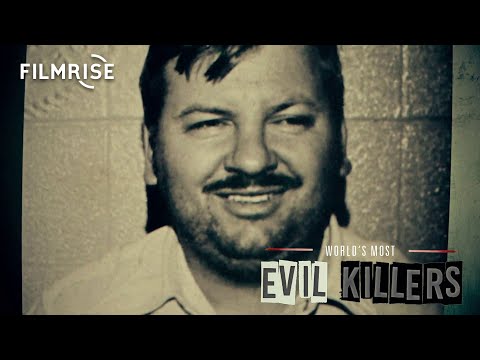
Charles Cullen | World's Most Evil Killers
Episode Description
Charles seemed like a helpful nurse, moving easily between hospitals. However, behind the façade, he had been secretly killed patients for years, avoiding suspicion by constantly changing jobs until investigators uncovered his deadly pattern.
An in-depth look at the lives and crimes of some of the world's most evil killers, including Jeffrey Dahmer, Richard Ramirez, Cary Stayner, Leonard Lake, Dorothea Puente and more.
For More FilmRise Check Out Our Other Channels: FilmRise Television: https://www.youtube.com/@FilmRiseTelevision FilmRise Movies: https://www.youtube.com/@FilmRiseMovies Highway to Heaven - Full Episodes: https://www.youtube.com/@HighwaytoHeavenFullEpisodes
Read the full transcriptHide the full transcript
- [tense music] narrator: In the summer of 2003, medics in New Jersey were perplexed.
- Patients under their care were becoming gravely unwell, with no logical explanation.
- Charles Graeber: Nurses were noticing that their patients were mysteriously crashing.
- Strange things were happening. narrator: When the alarm was raised, investigators quickly came to a horrifying conclusion.
- Bruce Ruck: When you have cases of high digoxin levels, with low blood sugar, with high potassium, with no explanation,
- you have to think somebody is doing this on purpose. narrator: The investigation zoned in on experienced nurse
- Charles Cullen, but detectives faced an uphill struggle to stop him. - At that point, the chase was on
- to try and stop Charles Cullen from killing again, from killing more. narrator: It would take the help
- of Charles Cullen's best friend to finally bring him to justice. Amy Loughren: So I said, I'm going to get him,
- and I'm going to get a confession out of him, and I did. narrator: Suspected of murdering as many as 400
- patients over a 16-year career of killing, Charles Cullen was finally exposed as one of the World's Most Evil Killers.
- [theme music] ♪ ♪ [somber music] ♪ ♪ narrator: It was a case that shocked America.
- Experienced nurse Charles Cullen had moved from hospital to hospital without suspicion, leaving a trail of death behind him.
- Bruce Ruck: From place to place where he went, strange things would happen. No matter what happened, they tended to let him go.
- And each time, he basically resigned, so this way he could move on to another job.
- ♪ ♪ narrator: Author Charles Graeber met with Cullen behind bars and delved inside the mind
- of the callous murderer. - He's a serial killer on a massive scale, someone who was given the trust of the public
- to protect the most vulnerable amongst us, to protect our loved ones, to care for them.
- And he violated that trust in the most horrific manner. And he sat coolly by as they suffered horrible deaths.
- And that is surely a raw sort of evil. ♪ ♪ narrator: This killer's story begins on the East Coast
- of the United States. Charles Graeber: Charlie Cullen was born in New Jersey in West Orange, February 22, 1960.
- West Orange was a bit of a rough area. It was a bit of a poor area in an otherwise
- affluent area of New Jersey. He had eight brothers and sisters and was the youngest of the family,
- a sort of late life mistake. narrator: On the 17th of September 1960, when Charles Cullen was only seven months old, his
- father died at the age of 56. Geoffrey Wansell: His mother struggled desperately to keep
- the family going and together. They existed on almost nothing. Welfare checks and charity and handouts.
- narrator: Young Charles Cullen struggled to deal with his environment. Geoffrey Wansell: At the age of nine,
- he horrifyingly tried to commit suicide by drinking part of a chemistry set. He was a deeply, deeply disturbed child.
- Jane Monckton-Smith: Cullen was possibly predisposed towards personality disorder.
- And if you put that into that unstable background, that can have catastrophic effects.
- narrator: The troubled child also sought revenge for how he and his family were being treated.
- Charles Graeber: One of his sisters was pregnant. The boyfriend would come around quite often,
- and he was abusive to Charlie. He beat his girlfriend, Charlie's sister, relentlessly to the point of miscarriage.
- And Charlie tried to poison him with eye drops in his drink. [tense music] narrator: The one person that Cullen seemed closest to
- was his mother. But on the 6th of December 1977, tragedy struck. Geoffrey Wansell: His mother, Florence,
- was killed when he was 17. Charles Graeber: She died in a car accident with his sister behind the wheel.
- She had a seizure, and his mom ended up dead. narrator: Cullen made his way to Mountainside Hospital
- in nearby Montclair in the hope of seeing his mother. Charles Graeber: By the time he went to the hospital,
- they'd already taken her body away. And he never forgave the hospital for doing that,
- for not allowing him to see his mother, for somehow stealing his mother from him.
- And that is a theme, I think, that really resonated through his life, the sense of loss
- and his sense of grievance with hospitals. ♪ ♪ narrator: Devastated, Cullen once
- again attempted to take his own life, but was unsuccessful. ♪ ♪ He dropped out of high school.
- And in 1978, the 18-year-old sought a new path in life. - He decided that perhaps he should find a family,
- and the family he chose was the US Navy. He enrolled, enlisted, and indeed was sent to work on a submarine,
- the USS Woodrow Wilson. narrator: But the Navy didn't end up being the safe and secure place that Cullen hoped for.
- Charles Graeber: And I think he felt that submarines would be that exciting war movie version of subs and
- life abroad. But really, the submarine life couldn't have suited Charlie Cullen any less.
- He was trapped in a metal tube for months at a time with the sort of guys that would give him
- a hard time in high school. Jane Monckton-Smith: Cullen complained that he was bullied in the Navy.
- He would have been a little bit of an outsider. He wouldn't have mixed well, made friends.
- If he's got that victim mentality, he's going to perceive any kind of rejection as bullying.
- narrator: On the 30th of March 1984, the Navy released Charles Cullen from service.
- - They didn't give him a dishonorable discharge, essentially neutral references, you might say.
- And then he went home to West Orange, where he started working in a department store as a clerk
- without any real sense of purpose. narrator: Life as a store clerk didn't appear to suit Cullen,
- and soon the 24-year-old decided to embark on a surprising career path. Charles Graeber: Charlie Cullen ended
- up going to nursing school. And the place he chose to go was Mountainside. So the place where he lost his mother
- was the very same place he started his career. Jane Monckton-Smith: In 1984, it wasn't normal for men
- to sign up for nursing. Perhaps he thought in a female profession, there would be less bullying, or
- he would be in a group of people who would be more supportive of him, and he would have more power.
- [dramatic music] narrator: June 1987 was a busy month for Charles Cullen. The 27-year-old graduated from nursing school,
- got married after a whirlwind romance, and started his first nursing job in Livingston, New Jersey.
- Charles Graeber: He actually cut their honeymoon short so that he could start work
- at the St. Barnabas Hospital burn unit. And Cullen's job was to essentially scrub
- dead and dying skin off of burn victims so that they could grow new skin. And it's a horrific job for anyone, especially someone
- fresh out of nursing school. narrator: In June of 1988, 72-year-old Judge John Yengo
- had been admitted to St. Barnabas with severe sunburn and was under Cullen's care.
- Judge Yengo was hooked up to an intravenous drip and given treatment, but unfortunately didn't make it.
- [tense music] Over the coming years, the hospital faced a worrying trend. - Nurses on staff were noticing that their patients
- were mysteriously crashing. And it was happening with great frequency. Patients would be prepared for surgery,
- have an IV bag hung, and all of a sudden, they'd become incredibly sick. They were essentially instant hypoglycemics.
- narrator: As nurses disconnected the IV bags, the patient's condition would immediately start to improve.
- [machine beeping] Staff at the hospital were perplexed about why this was happening.
- Charles Graeber: They started examining the bags, and they found that some of them
- had tiny pinpricks, as if they'd been injected with something. And then they tested those bags,
- and they found that they were supposed to just contain saline solution, but instead, they also had insulin in there.
- In fact, a lethal dose of insulin. narrator: Staff at the hospital were faced with a horrifying situation.
- Was there an innocent explanation about how this had happened, or was something more sinister afoot?
- It was a terrifying prospect, but there was a real possibility that someone who was charged with caring for patients
- was actually trying to kill them. [suspenseful music] [light music] narrator: By January 1992, investigators
- at St. Barnabas Medical Center in Livingston, New Jersey, were at a loss as to how so many IV bags had
- been lethally contaminated. 31-year-old Charles Cullen was interviewed as part of the investigation.
- Geoffrey Wansell: He was a participant as a nurse who was often offering his services to go
- and fixing the IVs. narrator: Cullen was unhappy that he'd been spoken to about the situation,
- and he left St. Barnabas Hospital. The following month, Cullen secured a new job
- in nearby Phillipsburg, New Jersey. Charles Graeber: He just goes down the road to another hospital, where he's quickly hired.
- There's a nursing shortage, and his recommendations are neutral or positive. At this point, there's no reason not to hire him.
- narrator: Cullen was working on a ward in August 1993 when a 91-year-old woman was admitted.
- Charles Graeber: A patient named Helen Dean, she was on the Ward, but she wasn't his patient.
- Helen Dean's adult son, Larry, would visit with his mom quite frequently. He remembers being at her bedside when a nurse he hadn't
- seen before entered the room. And this nurse said he had to do something with Larry's mother.
- Could he please leave the room? Larry came back in a bit later, and his mother said,
- he stuck me. And Larry took out his little microscope on his Swiss army knife and could see
- a little pinprick on her leg. narrator: Larry left the hospital, but before he could return, his mother had died.
- He mentioned to staff about the pinprick. Charles Graeber: And they started an investigation
- and then tested Helen Dean's blood. And they tested for dozens of drugs that might have killed her, and they found nothing
- in her system, because the one drug they for some reason did not test for was digoxin.
- Bruce Ruck: Digoxin belongs to a class of drugs called cardiac glycosides. These drugs increase the force of the heart.
- And it is also thought to do something else with the electrical activity of the heart, which
- will slow down the heart rate. narrator: Larry was convinced that something untoward had
- happened to his mother, but the hospital couldn't find evidence to back this up.
- Geoffrey Wansell: And that investigation of Helen Dean's death, Cullen and another two nurses
- were asked to take lie detector tests. [tense music] Well, Cullen passed. There was no sign that he'd done anything.
- narrator: Away from work, Cullen, now the father of two daughters, had started drinking heavily,
- and his wife had had enough of his unpredictable behavior. In January 1993, she ended their marriage.
- Cullen's life was spiraling out of control, and he was soon in trouble with the police.
- Geoffrey Wansell: He was arrested for stalking the house of a colleague, a nurse, and her son.
- He was found to have gone into the house while they were both asleep. narrator: Investigators charged Cullen with trespassing
- rather than stalking, to which he pleaded guilty? He was given a year's probation.
- ♪ ♪ Charles Graeber: Charlie Cullen attempts suicide a few more times. He's in and out of mental institutions,
- and this is a pattern that continues for the next five, six years. He moves hospital to hospital.
- Each time he starts off as a great nurse. Everything's fantastic. He's an ideal hire.
- He is the good nurse. narrator: But no matter where Charles Cullen went, death seemed to follow him.
- ♪ ♪ By November 1998, the 38-year-old had started another new role, this time at Easton
- Hospital in Pennsylvania. The following month, 78-year-old Otto Schramm was admitted.
- Charles Graeber: Mr. Schramm was an older man. He wasn't doing particularly well.
- His daughter would visit quite regularly and was especially surprised then when a nurse she hadn't seen before
- asked her to leave the room. And the next day, when she came in, her father was dead.
- ♪ ♪ narrator: It was time for the transient nurse to move on again. And by June 2000, 40-year-old Charles Cullen had started
- working at yet another hospital, St. Luke's in Bethlehem, Pennsylvania. Charles Graeber: It was a particularly prestigious job.
- It was a well-paid job. He started off as a nurse that everyone was glad to have
- available to them. He worked nights and weekends. He would take other people's shifts.
- He was always happy to help out. narrator: On one overnight shift, two nurses observed Cullen going into a closet
- where medicines were being kept. Cullen left the room a few minutes later, and the nurses walked in.
- - They found that the fully stocked shelves of medicine, many of them had been thrown away.
- narrator: Another nurse was going to dispose of a used needle in a sharps box,
- but found it full of vials of drugs to treat heart and blood pressure. Geoffrey Wansell: The nurse reported Cullen to the hospital
- officials, but rather than face an investigation, Cullen decided to resign. narrator: After a brief two-week stint
- at another hospital where he didn't get on with his colleagues, Cullen found a job in September 2002
- at Somerset Medical Center in New Jersey. Charles Graeber: He begins to make friends there.
- He falls in with two other nurses, Amy and Donna. Donna Hargreaves: Amy and I were very
- close, as well as Charles. We were called the Three Musketeers, and we loved working together.
- Amy Loughren: He was just a friendly guy, a little bit shy, a little bit reserved.
- But he was someone that I knew that I was going to be able to bond with quickly.
- Charles Graeber: Charlie Cullen really leaned into that relationship, a mothering relationship,
- and so she took him under her wing and protected him from the world. Amy Loughren: We were fast friends and became very close.
- I trusted him, and we trusted each other. We had a really, really good, trusting relationship.
- ♪ ♪ narrator: Cullen worked alongside Donna and Amy in the intensive care unit, where code blues were
- a regular occurrence on shift. [machine beeping] Amy Loughren: Code blue is a resuscitation,
- so when someone stops breathing or their heart stops, or they go into a dangerous dysrhythmias that is life
- threatening, we start CPR. We start giving medications. We do everything possible to save their lives.
- Donna Hargreaves: We were a team. And if an emergency was going on, or if you needed to act quickly with a patient and other nurses
- would just jump in and help you. narrator: It was on one such night when a patient began to crash in front
- of Cullen and his colleagues. Amy Loughren: There was one particular patient that
- had started to code and was in a certain dysrhythmia, and Charlie was in the room when I arrived.
- He had given a medication called lidocaine, and I remember thinking, why would you be giving lidocaine?
- narrator: Lidocaine was an older medication that was no longer used for particular dysrhythmias.
- As the patient passed away, a doctor arrived on the ward, wanting to know who had given them the outdated drug.
- - Because I was the code leader, I needed to take responsibility for it. And I said, I gave lidocaine.
- And he said, that patient is allergic to lidocaine. And I just trusted Charlie because he's so brilliant.
- I trusted that there must have been a reason why he had given that medication. narrator: The three friends continued
- to support each other through the good times and the bad. At one point during their shifts
- together, Amy was shocked by blood test results from patients in her unit. Amy Loughren: There were lab results that were coming back
- that were blood sugars that were too low, digoxin levels that were too high. Donna Hargreaves: And we thought, oh, my gosh, there
- must be something going on with the lab because this lab work is just crazy. narrator: One of the patients showing high levels of digoxin
- was being looked after by Donna. Donna Hargreaves: They actually questioned me about,
- thinking did I give the wrong dose or trying to figure out, like, exactly what happened.
- But I always would check with another nurse just to make sure I was giving the right dose
- just because I know it's a dangerous medication. Because people's lives are in your hands,
- and you can kill them, so you really have to know what you're doing. Amy Loughren: We really thought that there was something
- wrong with the lab, or there was something wrong with the pharmacy. We just thought something was malfunctioning.
- narrator: But it soon became clear that the lab results were, in fact, accurate.
- ♪ ♪ - As we get into 2003 at Somerset Medical Center, more and more sudden, unexpected deaths take place.
- narrator: In June 2003, one of the nurses from Somerset contacted the New Jersey Poison Control Center with a concern.
- The nurse had a query about digoxin levels in a patient who was no longer taking the cardiac drug.
- Poison expert Bruce Ruck took the call. Bruce Ruck: At that point, the only explanation
- that we had as a team was that somebody accidentally gave the patient the wrong medication.
- And all we are thinking at this point is medication error. narrator: But two weeks later, a pharmacist
- at the same hospital called the Poison Control Center with similar concerns. Bruce Ruck: And I said to the pharmacist,
- do you have any patients that have hypoglycemia, low glucose, blood sugar? Do you have any patients with very high potassium
- and some other things? And then there was the dead silence. And the answer, yes.
- And that's when I said it sounds like you have a police matter on your hands. narrator: There was no doubt in Bruce Ruck's mind
- that something sinister was going on, and that somebody was deliberately harming vulnerable patients.
- ♪ ♪ The hospital was told to find out who was responsible before any more patients wound up dead.
- [somber music] narrator: In the summer of 2003, Bruce Ruck from the New Jersey Poison Control Center
- knew that time was of the essence to find out who was poisoning patients at Somerset Medical Center.
- Bruce sat down with some of their top team, but he wasn't met with the expected response.
- Bruce Ruck: They were doing a lot of yelling and screaming at us, and there was a lot of discussion on their end
- that we should mind our business. narrator: Bruce explained the severity of the situation.
- Bruce Ruck: When we said, when you have patients who have two cases of high digoxin
- levels with no clear explanation, patients with low blood sugar, with high potassium,
- you have to think somebody is doing this on purpose. Somebody really needs to investigate it.
- - It must have come as a frightful shock to the hospital authorities. You mean we've actually been employing someone who's
- interested in killing our patients and not helping them to live? That's a very difficult thing to take on board.
- narrator: On the advice of Bruce Ruck, the police were contacted by the hospital
- and were told there had been a number of unexplained medical incidents. Two detectives were briefed by hospital bosses, who told them
- that their four-month investigation had been found to be inconclusive. [tense music]
- Then on the 31 of October 2003, seemingly without warning, 43-year-old experienced nurse Charles Cullen
- was moving on once more. ♪ ♪ Amy Loughren: Charlie was fired absolutely out of the blue.
- No one could believe it because here was one of our best nurses being fired. - We just couldn't believe it.
- We didn't understand it. It didn't make sense. narrator: Cullen told his friends
- that there was a perfectly good explanation for what had happened. Unopened medication vials had been disposed of,
- and he had been wrongly blamed for it. - I was just really concerned and really sad for my friend.
- And I actually told him that I would give him a reference to go to another hospital.
- narrator: Amy and Donna were devastated that their friend had been treated so unfairly,
- but there was more turmoil to come. Donna Hargreaves: I came into work, just my regular scheduled shift, and I was told that there's
- some detectives here. They want to ask you some questions. And I was like, why? For what?
- narrator: With little evidence in relation to the deaths, detectives needed to interview members of the nursing staff
- who had so far been kept in the dark about an investigation taking place. - What the detectives needed now was more.
- They were trying to talk to all the nurses one by one, and they were forced to conduct those interviews
- in the presence of the risk manager, essentially the bosses sitting in on every interview.
- - I was the last nurse to be interviewed. And I sat down in front of the lead detective.
- narrator: To Amy's surprise, detectives wanted to know more about her friend and former colleague,
- Charles Cullen. - I decided I was going to say, this is a witch hunt, and this is bullshit.
- And there's no way that there was anything going on with Charlie Cullen because he was a great nurse.
- narrator: The risk manager was called away from the interview room unexpectedly, and one of the detectives
- seized this opportunity to have a more open conversation with Amy. He slid a report across the table,
- data listing all medication removed by nurses from their dispensing machine Pyxis.
- Amy Loughren: And I saw Charlie's printouts, what he was actually taking from the Pyxis.
- There was one particular medication that normally, you take out one vial every two weeks to reconstitute that particular drip.
- And one particular night, he took out 12 of those vials. When I saw the evidence, it was absolutely glaring.
- There was no way around it. I had to accept it. There was no possible way he was taking them out,
- except for sinister purposes. ♪ He had been harming patients. # ♪ narrator: It was a bombshell moment.
- Amy was now faced with the realization that one of her closest friends may have been killing patients
- under their joint care. - It was that moment in my life that everything changed.
- I remember just blanking out. It was like a complete shock to my system. ♪ ♪ narrator: Detectives explain they
- didn't have strong enough evidence to arrest Charles Cullen yet. They asked Amy to work alongside them
- in secret, keeping in touch with Cullen as if nothing was wrong. Amy Loughren: They were hoping I
- could get something out of him to explain what was happening. Even though I knew what had been happening,
- it was still a betrayal of my friendship, and I was lying to him. And that didn't feel good at all.
- narrator: At the same time, the body of one of the hospital's recently deceased patients
- was exhumed. Reverend Florian Gall had died of a massive heart attack earlier that year.
- Charles Graeber: And the coroner found that he had more than enough digoxin in his system to kill him.
- That was, in fact, the cause of death. narrator: Detectives now had various pieces
- of evidence linking Cullen to the murders, but nothing solid enough to act upon.
- Meanwhile, the 43-year-old continued to find employment in the health care system.
- Amy Loughren: Charlie had called me out of the blue to tell me that he had gotten a job.
- He was going to start working, and I called one of the detectives. narrator: Cullen would soon be at a new hospital
- with many vulnerable patients under his care. The pressure was on to prevent any more deaths.
- Amy Loughren: They said we need to step this up to actually put that nail in the coffin.
- They needed the smoking gun, and that meant getting a confession out of him. ♪ ♪
- Charles Graeber: Amy was to wear a wire, hidden microphone taped to her chest and meet Cullen in a public place,
- sit across from a potential serial killer, and get him to confess. You know, with knives and forks on the table
- and who knows what else going on. It was really terrifying, I think. ♪ ♪ narrator: On the 12th of December 2003,
- Amy set off wearing a wire to meet up with Charles Cullen in person while detectives listened in.
- - When we first walked into the bar, he hugged me. And I was actually very nervous that he was going to feel
- the wire that I was wearing. I was really pretty terrified. We talked for two, maybe three hours before I finally had
- the courage to bring it up. And I said, here's all of these hospitals that have accused you of wrongdoing to patients,
- and I know you did it. narrator: Amy was hoping for a confession and felt secure in the knowledge
- that the conversation was being listened to by police, who could swoop in and rescue her
- if things got out of control. Amy Loughren: He changed his voice, his demeanor. His face changed.
- He became a different person. That's the only way that I can describe it. He wasn't my friend Charlie anymore.
- He had become someone else. And I believe the murderer was sitting in front of me.
- He told me he wanted to go down fighting. narrator: Amy continued talking to Charles Cullen,
- but he was refusing to confess to the murders. Amy even offered to go to the police station with him.
- - He did not want to go in to see the police. He didn't want his daughters believing
- that he was that person. narrator: Even in the absence of a confession, detectives made the decision to apprehend Cullen
- before he could start his new job. - He left the restaurant, and they arrested him that night.
- And I thought it was over, and I thought I would never have to speak to him again.
- narrator: But Amy's job was far from done. Investigators still needed Cullen to confess
- to murder on the record. For the second time, Amy would go face to face with her friend and former colleague.
- It was a confrontation with one ultimate goal-- get a confession, or Cullen could get away with murder.
- [unsettling music] narrator: In December 2003, Charles Cullen was finally in custody.
- The 43-year-old nurse was linked to a series of murders at various hospitals across
- New Jersey and Pennsylvania. Charles Graeber: Charles Cullen was arrested and brought
- to the Somerset Jail, where he was held and questioned, and they hoped where he might finally confess.
- The stakes were extremely high here because in a circumstantial case, if Cullen denied everything, the idea of proving intent
- wasn't really on the table. You couldn't say that someone had made a medical mistake intentionally
- without direct evidence of that. ♪ ♪ narrator: Cullen's former colleague Amy Loughren thought
- her role in the investigation was done, but detectives still needed her help in catching Cullen.
- On the 14th of December 2003, wearing a wire once more, Amy visited her friend while Cullen
- was still being held in jail. Amy Loughren: I talked to him about how he could be the hero.
- And there was a concern that I would be pulled into a trial and that his daughters would be raked through the mud
- as well in a trial. narrator: The threat of friends and family having to face such an ordeal seemed
- to be the trigger needed for Cullen to start admitting to what he'd done. Amy Loughren: He confessed that he
- had injected one particular patient with digoxin to kill him. He was an elderly gentleman, but he
- was on his way out of the ICU. He was getting much better. And over and over again, his digoxin
- levels were going up and up, and no one could understand it. narrator: That patient was Reverend Florian Gall,
- whose health had been improving before Cullen ended his life early. The game was up.
- The 43-year-old nurse decided to formally confess to detectives. Geoffrey Wansell: It's the beginnings
- of the floodgates opening and revealing to the world that Charles Cullen, the man who was later
- to be called the Good Nurse, had actually been exactly the reverse-- the evil nurse.
- Cullen steadily admitted killing after killing after killing, in a career stretching 16 years in Pennsylvania and New Jersey.
- Donna Hargreaves: Amy called me and she said, Charles is killing people. And I just--
- I asked her to repeat it because I couldn't believe what she was saying. And I remember just crouching down on my kitchen floor
- and just sobbing. And I just kept saying, no, he didn't. And when she stopped answering me, it was her silence.
- Sorry. It was her silence, and it spoke much louder than her words. You know, you always want to look for the good in people.
- You just don't want to believe that someone could actually do something like this.
- narrator: On the 15th of December 2003, Charles Cullen was finally charged with murder.
- He would go on to admit to many more murders across New Jersey and Pennsylvania, including 91-year-old
- Helen Dean and his first victim, Judge John Yengo, back in 1988. ♪ ♪ Prosecutors from the different jurisdictions
- met to discuss the case. Judge John Morganelli was then the district attorney for Northampton County.
- - We were able to find out when he worked and then look at the deaths that occurred at Easton Hospital during the times
- that he was on shift, and then look at those folks and then whittle it down. Was he working?
- Would he have a contact with this person? narrator: One death in particular stood out from Cullen's time at Easton Hospital in 1998--
- 78-year-old Otto Schramm. John Morganelli: We were able to establish that the digoxin, which was present in Otto Schramm
- in excessive amounts, probably was a contributing factor to his death. narrator: The case was looked at,
- and the decision was made to charge Cullen for Otto's murder. Prosecutors from all of the jurisdictions
- needed Cullen's cooperation to help identify other victims. A plea deal was suggested.
- John Morganelli: Cullen would cooperate with identifying his victims, if he could, and
- was acknowledging that he was involved in many more deaths than we even knew about, with the understanding
- that all of the prosecutors would not pursue a death sentence. narrator: In total, Cullen pleaded guilty to murdering
- 29 people over 16 years-- 22 people in New Jersey and 7 in Pennsylvania. He also pled guilty to six attempted murder charges.
- narrator: On the 2nd of March 2006. 46-year-old Charles Cullen was sentenced to 11 consecutive
- life sentences in New Jersey. - He sat with his eyes down, just really to avoid the family members of his victims
- as they told him what a nasty piece of work he was. - He treated them horribly, would not look at them,
- would not acknowledge them. He was not remorseful at all. That was not my friend Charlie.
- narrator: A week later, Cullen appeared in court in Pennsylvania to be sentenced for the murders
- there. - As the judge spoke, Cullen began to say the same phrase over and over again.
- He said, Your Honor, you must recuse yourself. Your Honor, you must recuse yourself.
- - And he repeats it and repeats it for almost 30 minutes until finally, the judge directs
- that he be gagged and bound. Charles Graeber: They wheeled him out like Hannibal Lecter, tied together
- as he continued to scream all the way out, echoing off the marble halls. It was one of the most horrifying things
- I've ever witnessed. It was absolutely chilling. That was his last public appearance.
- narrator: Cullen received a further eight life sentences for the murders in Pennsylvania,
- bringing the total to 19. He was sent to Trenton Maximum Security Prison to serve out his sentences.
- Geoffrey Wansell: Cullen will not be eligible for parole until 2388. Charles Graeber: He's separated from the other prisoners 24
- hours a day, 23 hours in a cell, because other prisoners would love to kill him.
- [somber music] narrator: As details of Cullen's horrific crimes were revealed, the extent of the horror became apparent.
- ♪ ♪ He'd been using other nurses to unknowingly help him end patients' lives. Donna Hargreaves: He was injecting regular bags of fluid
- that we would all just grab and hang, thinking we're hanging just regular, normal saline.
- And little did we know it would be spiked with whatever he put in there. Amy Loughren: That was one of the worst parts.
- It wasn't just him. He wasn't the person who was harming these people. He made us all accomplices.
- I know that I was one of those nurses that hung those bags. I know I was. We all were.
- There's no way he could have known where those bags were going. He didn't just inject these people.
- He had very sinister motives. And he was a cold-blooded killer. ♪ ♪ narrator: Charles Cullen wanted people
- to believe these were mercy killings, that he was simply putting people out of their misery,
- but this was proven false. John Morganelli: He tried to explain his actions that these
- were people that were terminal, and yet these were people that did not consent to having their lives terminated, and many of them
- were not terminal. ♪ ♪ narrator: Despite Cullen's many confessions and convictions,
- it's impossible to know just how many people died at the hands of the callous killer,
- masquerading as a kindly nurse. Charles Graeber: At St. Barnabas Medical Center,
- where Cullen started his career, he confessed to killing four or five people there a week.
- He was there for five years. Charlie Cullen's body count, if accurate, even 400 is probably a low estimate, would make him
- the most prolific serial killer in American history. ♪ ♪ Amy Loughren: I had no idea the amount of people he murdered
- and how many families were involved in that. I can't even tell you how much it affected me.
- I just wish that I could tell all of the families how sorry I am that I didn't see it sooner.
- ♪ ♪ He was right in front of me. He was right in front of me. [dramatic music] narrator: Charles Cullen harmed and murdered
- patients in their most vulnerable moments and even got his unsuspecting colleagues
- to administer deadly medicines to his victims. His selfish actions will have a lasting effect on hundreds
- of people, and Charles Cullen will forever be known as one of the World's Most Evil Killers.
- [theme music] ♪ ♪ [audio logo]
Brief Summary
Nurse Charles Cullen is suspected of murdering up to 400 patients, with shocking revelations from friends and investigators.
Key points
- The Mysterious Crashes. Patients at a New Jersey hospital began mysteriously crashing, leading to a horrifying investigation.
- The Chase for Justice. Detectives faced an uphill struggle to stop Charles Cullen from killing again.
- A Shocking Revelation. Cullen was suspected of murdering as many as 400 patients over 16 years.
- A Disturbing Childhood. Charles Cullen's troubled upbringing included a suicide attempt at age nine.
- The Final Straw. Cullen was fired unexpectedly, shocking his colleagues who trusted him.
- The Shocking Revelation. Amy discovers evidence that her friend may be a killer.
Episode highlights
- The Mysterious CrashesPatients at a New Jersey hospital began mysteriously crashing, leading to a horrifying investigation.“Nurses were noticing that their patients were mysteriously crashing.”0:21Sep 23, 2026
- The Chase for JusticeDetectives faced an uphill struggle to stop Charles Cullen from killing again.“At that point, the chase was on to try and stop Charles Cullen from killing again.”0:51Sep 23, 2026
- A Shocking RevelationCullen was suspected of murdering as many as 400 patients over 16 years.“Charles Cullen was finally exposed as one of the World's Most Evil Killers.”1:24Sep 23, 2026
- A Disturbing ChildhoodCharles Cullen's troubled upbringing included a suicide attempt at age nine.“He was a deeply, deeply disturbed child.”4:05Sep 23, 2026
- The Final StrawCullen was fired unexpectedly, shocking his colleagues who trusted him.“Charlie was fired absolutely out of the blue.”24:54Sep 23, 2026
- The Shocking RevelationAmy discovers evidence that her friend may be a killer.“When I saw the evidence, it was absolutely glaring.”27:45Sep 23, 2026
- Cullen's ArrestDetectives apprehend Cullen before he can start a new job.“He left the restaurant, and they arrested him that night.”32:41Sep 23, 2026
- Cullen's ConfessionCullen admits to killing a patient, revealing his dark actions.“He confessed that he had injected one particular patient with digoxin to kill him.”35:02Sep 23, 2026