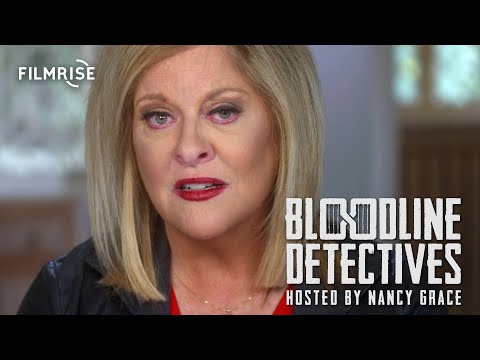
Bloodline Detectives - Episode 8 - Blood Bath
Read the full transcriptHide the full transcript
- I'm Nancy Grace, and this is "Bloodline Detectives." Every parent's worst nightmare is this--
- the police broadcasting the name of their daughter on a loudspeaker. "Is anyone missing a girl named Melanie?"
- Only days earlier, 17-year-old Melanie Road, ecstatic about her family's new home in the magnificent city
- of Bath in Southern England. Bath's beauty is in its age and distinct honey-colored stone
- buildings. But on a summer day almost four decades ago, Bath's rich history is cracked with a murder
- that makes national news. There are no witnesses and few leads. When it's over, this will become an iconic case
- for the bloodline detectives. NANCY GRACE (VOICEOVER): June 8, 1984, a young woman's body
- is discovered on a small road close to her home in Bath, England. The attack was horrendous, horrific, frenzied.
- Stabbed 26 times. NANCY GRACE (VOICEOVER): Straight away, police cordoned off the area and began an intensive search
- to find the person that committed the brutal murder. It's about trying to interpret what
- the crime scene can tell you. It's really a picture, and we have to try and fit all the pieces in together.
- They actually find 86 spots of blood. And it was, I reckon, probably somewhere in the region of a quarter mile, the full trail.
- NANCY GRACE (VOICEOVER): The murder shocks the picturesque city of Bath to the core.
- It's a case that shocked the city. It hung over the city like a cloud, that uncertainty,
- that unease, that discomfort. This kind of thing didn't happen in big industrial cities
- in 1984, let alone genteel Bath. NANCY GRACE (VOICEOVER): After a year of intense investigation,
- police are no wiser as to who the killer was. The case goes cold. The case was filed with no further reasonable lines
- of inquiry. The resourcing on it had been intense. And if we feel that we've done all that we can,
- then that's the point usually when you probably say we think we need to put this to one side
- now. NANCY GRACE (VOICEOVER): This is the story of Melanie Road and how police never give up hope
- and with the help of familial DNA are able to track down a savage killer, bringing an end to another case for the bloodline detectives.
- A man has been arrested. How had they done it? My jaw hit the floor, actually. I didn't think they would ever do it.
- It was phenomenal, the amount of work that went into it. At no point did I give up on the investigation.
- I always felt if the work's put in, we have a good chance of getting a conviction.
- It's got to give some people pause for thought that they could be caught, not just because of something
- that they've done in the past, but be something that somebody else in their family
- has done in the past. [THEME MUSIC] NANCY GRACE (VOICEOVER): Bath, Southern England.
- It's 5:30 in the morning, and local milk man Tony Noonan and his 11-year-old son Ian
- are doing the daily milk run. It starts out like every other day, but quickly turns into something shocking.
- NANCY GRACE (VOICEOVER): Police quickly arrive at the scene and cordon off the area.
- Forensics are also called in to carry out a detailed investigation. When you have the report of a murder,
- instantly lots of people are called out to control the scene. And they will then also decide to call out forensic scientists
- and so forth. So a whole team would have verged onto the location. The crime scene always starts off as an outside scene.
- As this was, you have a tent put over the body to protect it. You don't know what the elements are going to be.
- It was a bright, sunny day in June. Of course, that could change. And also to protect the dignity of her
- from people who were living nearby. At the scene, then and now, the pathologist still comes,
- and they examine the body where it lies. And from that, they can make some interpretations.
- They would just interpret the injuries, how she's lying, what it looks like, and then take
- her away for the post-mortem. They'd even called out a forensic scientist, and the forensic scientist drew a really detailed sketch plan,
- drawing the body in position and all the blood spots, and a little area where there was a pool of blood.
- They also did a video, took loads of photographs. And they take photographs of the body in situ.
- And then slowly, as they gather evidence and swab areas of the body, swab the floor, they take
- photographs of each little bit. And it's at that point that found on the wall is a key ring.
- And the key ring is a wooden key ring with the name "Melanie" carved into it. NANCY GRACE (VOICEOVER): Desperate
- to identify the victim, police drive around the area, calling out the name "Melanie" in the hope
- that her family will hear them. Today, we tend to identify people through either identification of the body.
- So driving licenses, passports, mobile phones. Really, really good and easy. And of course through social media.
- Then they didn't have those luxuries. So they knew that she was probably going to be called Melanie.
- So they drove around the streets in a police car with a loud hailer on the back saying
- "does anybody know a girl called Melanie?" "Is anyone missing a girl called Melanie?"
- As they zigzagged up and down the streets in Lansdowne, they eventually went round into St. Stephen's Close, which
- was where she'd actually lived. And her mom was there, and she heard the car outside.
- And of course her daughter Melanie had been out the night before, but it wasn't unusual for her not to necessarily come
- home. She would often go and stay with a friend and then ring in the morning on the old fashioned landline
- telephone. So she went out into the street, and she'll describe how she was almost chasing the police car down the street banging
- on the back saying, "we've got a daughter called Melanie, and she didn't come home last night."
- And that's how they found out that it was their daughter and that she'd been killed.
- I don't criticize them for doing that. Certainly I can imagine the effect it must have had on the family.
- But the officers wanted to identify as soon as possible who their victim was, because that's when an investigation
- can often really start. Bearing in mind a lot of murders are committed by people known
- to the victim, so they wanted to know who the victim was straight away. NANCY GRACE (VOICEOVER): With Melanie's family now informed
- of her murder, the police in Bath need to recruit experienced homicide detectives from other areas to carry
- out an intensive investigation. In those days, it was a case of, there was no dedicated
- murder team. It was a case of they would bring in everybody from that local division.
- So all those CID officers who were placed in Bath were on it. Would then bring people in from the surrounding areas.
- So those from Bristol would come in, and Somerset. And people that were working on the crime squads or the drug
- squad, they would be drafted in and seconded to come and help as well. And all these detectives were divided up into action teams
- and then sent out. They run out of senior crime officers, so a detective who was originally going to be part
- of the house-to-house team, in fact two, they were both asked to help out the scene-of-the-crime work.
- So they had to look and see if they could follow the trail and identify any potential blood spots.
- And as soon as they knew it was blood, they would draw a yellow circle around it, give it a number,
- and move on. Now, they actually find 86 spots of blood. And it was, I reckon, probably somewhere
- in the region of a quarter mile, the full trail. That enabled the forensic scientists
- and the scene-of-the-crime officers to then go and swab each of those spots. Today, we know that we swap with cotton wool sticks.
- They get like cotton wool buds. In those days, it was like a cocktail stick with a little bit of cotton on the end.
- And it seems really ancient and antiquated, but it works. And they took those meticulously not just over one day,
- over several days. You also have an incident room set up. Now, an incident room then is nothing like a modern day
- incident room. No computers. So what you actually had was statements coming in, in paper form.
- It was all run on an old fashioned card system. So every single thing is meticulously indexed,
- and the names of everybody that's spoken to, anything that's relevant. And it's run by the senior investigating officer.
- He's also called out specialist search teams. And I've seen photographs and videos of them
- with scythes, scything through long grass in order that they can then search the ground,
- looking for a murder weapon. They already knew right from the first moment there were stab wounds.
- So they knew some form of weapon capable of causing a stab wound. So you're talking a knife, a screwdriver,
- something like that. The searches that they did along Camden Crescent, when you drop down this what is now completely overgrown area,
- and would have been at the time in 1984, but they've gone through, they've cut it all back.
- They've absolutely stripped out all the vegetation, to see if the weapon had been discarded just over the fence
- there. But definitely that one was never found. And to this day, we have no idea what happened to it.
- NANCY GRACE (VOICEOVER): News of Melanie's murder spreads quickly throughout the picturesque city
- and shakes local residents to their very core. It struck fear into Bath. It didn't just make local or regional news.
- This was national news, because this kind of thing doesn't happen in Bath. This was such a savage attack on such an innocent victim.
- And it looked straight away like a stranger attack, as if it wasn't someone who had known Melanie.
- The police were very concerned that the young people, particularly women, were doing the right--
- what they perceived to be the right thing, and were doing everything they can to make themselves safe
- and to get home safe and certainly not to be out and about on their own at night.
- Pictures of Melanie went out in a hope that people saw her walking home, so that we would know exactly which route she took home.
- They even put out messages at cinemas. So whilst you're watching your film, back then halfway through there would be some sort of adverts,
- and up would come a story about Melanie asking the public if they've got any information.
- NANCY GRACE: British detectives are using the scientific forensics available at the time.
- But in 1984, those techniques are crude by today's standards. It will take time and the landmark use of a new science
- to discover who murdered Melanie Road. Next on "Bloodline Detectives". NANCY GRACE (VOICEOVER): Bath, Southern England.
- On the morning of June 8, 1984, teen girl Melanie Road is murdered a short distance from her own home.
- Melanie is a straight A student, about to take college entrance exams. She has a bright future ahead of her.
- She had everything to look forward to. She had a pick of universities. She was going to do well in her exams.
- She had a holiday booked. She had a really close and strong group of friends. Her family had just moved to Bath recently.
- They'd been living all around the UK with her dad working for the Ministry of Defense.
- Melanie adored Bath straight away. Her parents didn't know it so well, and Melanie would always say to her mom,
- please come into the city center. It's the most amazing city. And Jean Road always found that later hard to take,
- because it was Bath, in a way, that did this to Melanie. I know her mother was deeply, as you'd expect,
- traumatized by what happened, and is a very, was a very private person. Didn't really court any media attention,
- didn't really want any media attention, but obviously wanted the case solved, and wanted that closure, and wanted
- a body that she could bury. NANCY GRACE (VOICEOVER): Early on, police were able to piece together Melanie's movements the day
- before the murder. Melanie's mom drove her into the city center. She dropped her off at a very nice hotel.
- And they had an event up. Melanie got out of the car. She opened the door, and she looked across,
- and she saw there was a big welcome. She said to her mom, look, they laid out a red carpet.
- What a way to go. And that sentence was the last Jean Road ever had from her daughter.
- After that, Melanie went out to play tennis, I believe, with friends. And then she carried on out for the rest of the evening
- and went to a nightclub. On the Friday night, Melanie had been-- she'd been out to a bar.
- She'd been out with her boyfriend and some other friends. His brother had come home.
- They'd been to a few pubs and clubs. He'd left the club and they'd partied in the center of Bath.
- So her friend and boyfriend had gone one way, and she was just going to take the walk
- home that she normally did, which was up Lansdown Hill. Walking home half past 1:00, 2:00 in the morning
- on a Friday, Saturday night was not unusual for her or anybody else. Bath was considered to be a really safe place.
- And she'd done it many times before. And why was tonight any different? But of course, on that particular night,
- it was drastically different for her. NANCY GRACE (VOICEOVER): At the time of the murder,
- Bath is a busy tourist destination for many national and international visitors.
- Bath is and always has been a busy, busy place. Bath Festival was on. But also it's a place for tourists,
- American tourists, tourists from the Far East, all over Europe. They come to this magnificent city.
- So that must have been really difficult for police officers to try and work out who had even been in the city
- in the first instance. Anything out of the ordinary you would want to know, for example, the festival.
- If you could get-- if you knew of any parties, knew of any festivals, then you would approach the organizers
- and see if they had names of everyone that attended. It's a starting point. Yes, it gives you a great, long list
- of people you need to speak to, but you have actually got people to speak to. It only takes one person to say the person
- I was in that hotel with that night went out and came back with a cut to the hand.
- That can lead you to the offender. So you couldn't ignore these lines of inquiry.
- But it obviously makes the investigation take longer. There was a college that was not
- far from where she was killed, which hosted air traffic control people. And a lot of those were from Saudi Arabia or Arab countries.
- And there was a theory going round in Bath, that it was the Arabs that were responsible.
- And it must be one of those just because it was close by. And there was a lot of work put into that.
- And of course some of those had left the following day. So that then heightened suspicions.
- "Well, it must have been them because they've gone home." But it takes a lot of time and effort to do that.
- International inquiries are challenging today. They were even more challenging back then.
- So trying to understand that. But it didn't stop it happening. The amount of detail that everything
- went into with every single person was incredible. NANCY GRACE (VOICEOVER): Melanie's autopsy reveals
- answers as to what may have happened the fatal morning of June 8. So we know there were 26 stab wounds.
- But when I say 26, some of them were little, gentle stab wounds, particularly those in the back.
- But the little stab wounds in the back, we think are just as likely to be forcing her to move from where he
- originally came in contact with her to make her go to whatever location he wanted, jabbing her gently in the back,
- causing minor punctures. But we also know that some of the more significant stab wounds were concentrated around the breast.
- That is typical of a sexual motive. The word "frenzied" doesn't even begin to cover
- it, what happened to Melanie. And the most horrific thing is that as she lay dying,
- she was raped twice. And so the responsibility of the pathologist is to take those swaps and to ensure that we can-- in those days,
- it was just to take swabs to identify there was semen present. And from that, the only way that they
- could interpret who it may belong to was through blood grouping. So our pathologist, having taken those swabs and samples,
- they get stored then. Depending on the different sample, specific ways that we store them, they get sent to the forensic science
- service. They have responsibilities around keeping it. And we, the police, we have the clothing and those other items
- that come from them, we keep those ourselves and keep those in storage. NANCY GRACE (VOICEOVER): Days into the investigation,
- police have yet to find any witnesses to the brutal murder. Look at that area of Bath.
- It's a reasonably expensive part of the city. It's leafy. It would have been very quiet at that time of night.
- Most people would have been fast asleep. And you know, in that case, yes, you do think, well,
- proximity to other properties should have raised an alarm. There were possible sightings of her.
- There were a couple people phoned in saying they thought they saw her walk across Lansdown Road.
- Which is the route we think that she probably took. But they could never be 100% definite.
- It is bizarre that nobody saw him at the time. But what happened when he got home and who was living with?
- And yeah, why? Why did he manage to get away with it at that point? You look at the media appeals, they talk about has someone
- been talking about it more? Have they been talking about it less? It makes me smile when I look on the TV
- and then see the SIO saying you know, if I'd done something bad, my wife would know about it.
- If I were worried about something, my wife would know. I couldn't keep it from her.
- And this chap now has had four days to live with this. Somebody close to him will realize that something is up.
- He's got to be a very hard man indeed to be able to keep it to himself. NANCY GRACE (VOICEOVER): During the intense investigation,
- police focus on blood spots leading away from the scene. As Melanie was being attacked, she put up a fight.
- And the knifeman was himself cut. So as she lay dying, he fled. As he ran away, he ran down the road and down some stone steps
- and onto Camden Crescent. He left a trail of blood. Our general interpretation is her blood spots
- are potentially her being carried or walking injured to where her body was found.
- The blood spots that were identified as his are likely after the attack, as he is making his departure.
- That blood was preserved at the time. It was analyzed. Of course, these were the days before DNA.
- All they could do was take a blood type. Melanie had blood group A. Her killer also had blood group A.
- But he had a really rare protein makeup within his blood. Only 3% of the male population have this protein makeup.
- So that meant that when men were being tested, they could eliminate people quite quickly.
- They couldn't tell who the killer actually was, but they could rule people out straight away.
- The days before there was DNA? That seems like the stone age in crime fighting. But as we'll see next, the next 30
- years and the birth of the bloodline detectives will change it all. The savage murder of Melanie Road close to her home in Bath
- England in June 1984 has become a perplexing problem for police. Investigators have numerous leads,
- and receive over 1,000 calls from the public, leading to lots of arrests and hundreds of man hours
- in questioning. When we're doing murder investigations, we tend to break it down into categories.
- The first category is the people that Melanie was out with on the night. So you start with those.
- You then look at the others who she might be associated with in the club. So did she talk to anybody else?
- Were there any men that were interested in her? Did they follow her from the club?
- The next thing then, is of course, is then you look at your suspects. So how do people become suspects?
- So in 1984, quite frankly if you didn't look the right way, you couldn't have an alibi, you had a conviction for life crime
- or sexual assaults, there was a good chance you were going to be arrested and brought
- into custody for it. As for suspects, I suppose if you think when you dealt with a murder inquiry, anyone who was remotely put forward
- as a suspect were arrested. So you arrested 90 to 100 people. That wouldn't happen now.
- You've got to-- nowadays you have to justify being able to arrest someone. But back then, you were allowed to,
- and you tended to arrest lots of people. So those people would have been looked at closely.
- It was difficult, wasn't it? Because the nature of where she was killed suggests that it should be somebody local.
- Because although it was in Lansdown in Bath, it was in, I wouldn't call it a back street, but an area
- that the general public wouldn't walk through. So that's the first thing, that yes, you
- think that it's going to be somebody local, but you couldn't exclude that. Everything was open.
- We knew the offender was injured because of the blood. And that blood had been identified
- as being the same blood group as semen found on the body. So anyone who became of interest in the inquiry,
- they had samples taken from them to see if they were the right blood group. Most people they were able to eliminate,
- but there were some that were the right blood group. And those that were the right blood group,
- they then went on to ask for alibis. NANCY GRACE (VOICEOVER): Despite a huge investigation,
- police are nowhere near to finding Melanie Road's killer. And slowly the case goes cold.
- When you haven't been successful in identifying an offender, especially in a homicide case,
- there's no set rules about stop investigating after 6 months, 12 months, 2 years, 5 years.
- Every single one's taken on its merits. And in fact, really the direction generally
- comes from, have we exhausted every available inquiry available to us? In the case of Melanie, it was after 12 months
- that they felt that they'd done everything that they could. They've got all the leads they could possibly have.
- They've done matrixes and likelihood matrixes. Who else can they get to try and solve this problem?
- If they've done this after 30 years, surely there was nowhere else to go. NANCY GRACE (VOICEOVER): For 10 years,
- the case sits in a state of limbo, officers occasionally adding new information to it.
- But it's not until the introduction of DNA technology that the case starts to build momentum once again.
- In 1995, it was really very basic. So we talk about-- when you talk about DNA alleles, if you imagine a bar chart,
- an allele is just one of the bars on a bar chart. And then it was just eight alleles.
- So eight bars. So that was all you would ever compare in 1995. Unfortunately on this particular case,
- albeit they did get DNA, and they got DNA that they could load onto the DNA database,
- it didn't match anyone. But what it did for the team then who were reviewing it,
- they could then look at those people that are the right blood group, those people that were
- deemed persons of interest. They could look to go back to them, take a swab and eliminate them on DNA.
- And that's the process they went through. So they identified a large number of persons of interest,
- and went back and swabbed all of them. Some had died, and some they weren't able to locate at that point.
- NANCY GRACE (VOICEOVER): In 2011, British detectives investigating the brutal 1984 rape and murder of 17-year-old
- Melanie Road in the town of Bath, Southwest England are looking for a new forensic advancements
- to help identify her killer. And that's when they learn about familial DNA. Now, what a familial run is all about is asking the DNA
- database, is there anyone on there with similar-ish DNA that might be related to your offender?
- Now, we know the person who's on the DNA database is not the offender, but we're looking for people
- with similar-ish DNA. The DNA database then come back with lists. Two lists of hundreds of names.
- And they've got a name. They've got a few numbers, which is barcode numbers and this sort of thing.
- And then they've got what they call a likelihood ratio, which at the top of the list is the one whose DNA is
- genetically most similar. It's what is described in our business as a screamer. Because the second one down on the list, the likelihood ratio
- figure they provided was so much lower that it's like saying that the person on the top of the list is screaming at you,
- you must eliminate that person's father. Because it was a parent-child familial list as opposed to a sibling familial list.
- So we went out and we swabbed that person's father, expecting it to be a success.
- And he was eliminated. So that was in 2011. What happened in 2000-- late 2014 coming into '15, Judy made a decision that we ought
- to try another familiar run. Because every year loads and loads of new DNA profiles
- are being loaded into the national database. We knew our offender hadn't been loaded on there,
- but it was possible that a relative of our offender in those interim years had been added to the database.
- The thing about familial work is that it's only as good as the date that you did that run.
- And our date had been in 2009, '10. So by the time we go on to 2013, I was asking to have
- a rerun of the familiar work. But because it had been so expensive, there was a lot of reluctance to do that.
- Of course when we went back to the lab, the cost has come down dramatically. It's only about five grand now, because things
- have moved on so much. And you think, gosh, why didn't we do this earlier? And away we went.
- We got the authority to do a new run. And then they sent it back to us in May, June time it was.
- And the top of the list, the screamer that we'd had before was now number two on the list.
- So we knew straight away that we've got a new screamer. And if it's above the one that was there already,
- then that's obviously our first port of call. And of course, when we look into her,
- she was just a girl who'd had a domestic incident with her boyfriend. It was relatively minor.
- Things had just got a little bit out of hand. But because of the policies that we have around domestic abuse,
- it doesn't matter whether you're a male or a female perpetrator, we always do positive intention.
- And in this case, it was to arrest her. And as soon as she gets arrested, she automatically gets a DNA mouth swab done.
- So that's how she'd ended up on the system. So we rang her up and explained that she's
- on the top of our list. You know, who's her dad? Because of her age, it was going to be a father or an uncle,
- or even potentially a grandfather. So we want to understand about her family tree.
- And of course she'd come from Bath, and then she told us about who her dad was, Christopher Hampton.
- Yes, he'd lived in Bath, but now he lived in Bristol, and where we might find him.
- And so it was down to Gary. He made all these phone calls. He did all this legwork.
- He'd already spoke to lots of people. And he rang up Christopher Hampton. I told him I was the cold case team,
- and that I was investigating the murder of Melanie Road back in 1984 in Bath. And the reason I'm speaking to him
- is his daughter's DNA, because we have DNA of the offender, his daughter's DNA is similar.
- So we now want to eliminate him. When I arrive at the car park in Ashton, I got out the car,
- shook his hand, produced my warrant card. And then we sat in the police car, and I explained to him yet again,
- it's to do with the murder of Melanie Road. We've got two consent forms. One of them is for the police.
- And I read it through with him. He read it and signed it. He then signed an identical consent, which comes
- with a sealed swab package. And after that, I simply ran through, asked him to open his mouth, rubbed the swab
- on the inside of his mouth, the same on the other side, put both of the swabs in little tubes,
- sealed them in a tamper-proof bag. And I explained to him the results take about five weeks.
- Did you want me to notify you when the result come through? And he said, yes. But he was no more nervous.
- He behaved no differently from anyone else. Within a short period of time, a number of swabs
- were submitted to the forensic science service, asking them to get DNA from the swabs
- and compare it to Melanie's murder profile. As we'll see next, a forensic technique unavailable in 1984
- becomes a breakthrough weapon for the bloodline detectives. NANCY GRACE (VOICEOVER): After 30 years, police in Bath,
- England are using familial DNA to develop a strong lead in the rape and murder of teen girl Melanie Road.
- A DNA sample taken from Christopher Hampton is sent to the lab, and cold case officers are waiting
- patiently for the results. Would this be the answer they're waiting for? Or would it be another false hope?
- We'd been working with our scientist, Mike Wheelhouse, on this case for years. And I'm talking about 8, 9, 10 years he'd been involved in it.
- And Mike had just sent an email through to Gary, saying, "oh, I think I've got a hit on Operation Rhodium."
- Oh my God. This is the biggest news of this century. What do you mean, you got a hit?
- And he sent an email. He hasn't picked up the phone. And what's more, he didn't put the name in the email.
- I can remember the first line of the email was something like, "it looks like we may have
- a result on Operation Rhodium." We've got to double check it and triple check it,
- but it looks good. I tried to phone the lab immediately to say, who is it? You know, who's the match that we've got?
- But the scientist was in a meeting. But he obviously spoke to Gary really quickly,
- then we came back and we were told it's Christopher Hampton, and Gary rang me. And then of course, there's those decisions
- about what do you do. But the decision was to arrest him that day. He was arrested as he came home from work.
- And on his arrest, the only significant sort of thing he said was, when his wife said "I'll see you later,"
- he said "no, you won't." So she said, "well, I'll see you tomorrow." And he said "no, you won't."
- And that sort of tells a tale. And his behavior was, he was just calm. It was almost as though he'd been waiting for it.
- It was an acceptance, I would say. He came in, and I know when he was interviewed,
- he produced what they call a prepared statement. So that's a statement that he prepares with his solicitor,
- and it basically said, "I did not rape or murder Melanie Road." And that's the only thing it said.
- NANCY GRACE (VOICEOVER): With a positive hit on Christopher Hampton, police are now able to tell Melanie
- Road's family the good news. All through this, we still had contact with the family,
- all the way through, throughout the whole 30 years. But certainly in the recent years and whilst
- I was involved in it, I definitely had contact with the family. You know, Jean in particular.
- So we got to the night, and suddenly it was the case solved. Right, we need to get out and see the family.
- And god, it makes me emotional now, even thinking about, you know, just the joy for that family and the impact
- on them after all that time is incredible. Really incredible. NANCY GRACE (VOICEOVER): Investigating officers
- built an airtight legal case against Christopher Hampton. They are confident as they head to what they think
- will be a three-week trial. It was highly charged in Bristol Crown Court. He was there in the dock, a gray, average-looking man,
- a forgettable man. And when he was read the charge, just looked straight ahead and just said one word, guilty.
- And there was a sigh at that moment from her family. And I know that the investigators who'd
- been working on this team found at the moment of both relief and the thought of "thank God.
- We've done this for you now, Melanie." When police officers hear sentences, quite often they are not that satisfied with the sentence.
- You know, they know that parole might kick in. People might come out early. Interestingly, the judge in this case,
- albeit he gave him life and gave a recommended sentence, did say "but it is quite likely you will die in prison."
- And hearing a judge say that was in a sort of bizarre way quite pleasing. There had been a cloud over Bath
- since Melanie Road was killed. That's more than three decades that uncertainty, that unease,
- that discomfort had hung over the city, and you know, people who have lived there over that time.
- And to have that crime solved to have somebody sent to jail was just I think a massive sense of relief for the city.
- NANCY GRACE (VOICEOVER): The full impact that the murder has on Melanie's family
- is heard during the last days of trial. Watching Melanie's family deliver their victim
- impact statements was the most highly charged hour or so I've ever spent in court.
- Jean, Melanie's mom, stood up in the public gallery. She was in her early 80s at the time.
- She used to walk with a stick. She put her walking stick to one side. She didn't want Hampton, her daughter's killer, to see this.
- So she walked across unaided to the witness box. And there she delivered the most powerful victim impact
- statement I have ever heard. I still to this day choke up if I were to read it. When they read it out, everyone in the court,
- including the prison officer, were fighting back tears. The one person who seemed to show no emotion
- was Christopher Hampton. The tragedy is not just the loss of, in this case, a daughter.
- It's the loss of all the things that would have followed in her life. So every anniversary, every birthday that comes along,
- it's what-- for the family members, it's what might have been. It's not a one-off event.
- And that's why in part family members will always say to you it never goes away.
- And neither should it go away. Because they've lost so much through the actions of
- some deranged, vile individual. NANCY GRACE (VOICEOVER): The puzzling case of Melanie Road's murder is finally over thanks
- to the use of familial DNA. It was phenomenal. And the reason it was phenomenal was
- because from day one, the amount of work that went into it. And if all those brilliant detectives at the beginning
- hadn't have done what they did, you know, those of us that followed could not have achieved what we did.
- It's got to give some people pause for thought that these techniques now exist, and that they could be caught
- not just because of something that they've done in the past, but because of something that somebody else in their family
- has done in the past. Melanie's mother, Jane Road, was 81-years-old when Chris Hampton was tried
- for her daughter's murder. But she lived to see her daughter's killer brought to justice.
- After the trial, Jane Road said what bothered her the most was the striking resemblance
- Christopher Hampton's wife and daughter had to her own Melanie. She thought only a monster could have
- a family and live with the knowledge that he destroyed another one's. Jane Road may never fully live without the pain of Melanie's
- loss, but thanks to the work of the bloodline detectives, at least she knows that the spirit of Melanie Road
- may finally rest in peace. [THEME MUSIC]
Brief Summary
The murder of Melanie Road in 1984 remains unsolved until familial DNA leads to the arrest of Christopher Hampton decades later.
Key points
- The Investigation Begins. Police struggle to identify the victim and find leads in a chilling case.
- The Murder of Melanie Road. A young woman is brutally murdered in Bath, shocking the community.
- The Arrest. After years of investigation, police finally arrest a suspect in Melanie's murder.
- A Community in Fear. Melanie's murder sends shockwaves through Bath, raising safety concerns.
- Familial DNA Breakthrough. In 2011, detectives use familial DNA to identify a new lead in Melanie Road's murder case.
- The Arrest of Christopher Hampton. After 30 years, police arrest Christopher Hampton, the prime suspect in Melanie Road's murder.
Episode highlights
- The Investigation BeginsPolice struggle to identify the victim and find leads in a chilling case.“They actually find 86 spots of blood.”1:36Apr 1, 2021
- The Murder of Melanie RoadA young woman is brutally murdered in Bath, shocking the community.“This kind of thing didn't happen in big industrial cities in 1984.”2:00Apr 1, 2021
- The ArrestAfter years of investigation, police finally arrest a suspect in Melanie's murder.“My jaw hit the floor, actually.”2:45Apr 1, 2021
- A Community in FearMelanie's murder sends shockwaves through Bath, raising safety concerns.“It struck fear into Bath.”11:32Apr 1, 2021
- Familial DNA BreakthroughIn 2011, detectives use familial DNA to identify a new lead in Melanie Road's murder case.“Now, what a familial run is all about is asking the DNA database...”28:02Apr 1, 2021
- The Arrest of Christopher HamptonAfter 30 years, police arrest Christopher Hampton, the prime suspect in Melanie Road's murder.“He was arrested as he came home from work.”34:51Apr 1, 2021
- Justice for Melanie RoadChristopher Hampton is found guilty, bringing a sense of relief to the community.“We’ve done this for you now, Melanie.”36:53Apr 1, 2021
- Emotional Victim Impact StatementMelanie's mother delivers a powerful statement in court, highlighting the tragedy of loss.“I still to this day choke up if I were to read it.”39:01Apr 1, 2021
Tension
75/ 100High tension