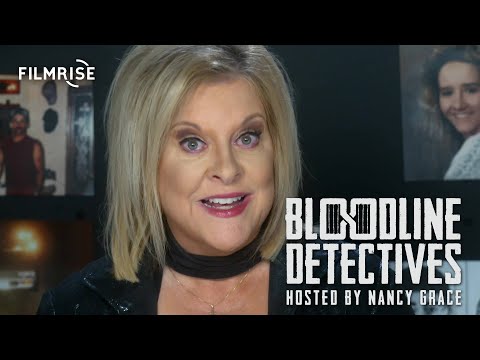
Bloodline Detectives - Episode 14 - The Clearfield Rapist
Read the full transcriptHide the full transcript
- Tonight, a serial rapist terrorizes households in Utah by night and across state lines.
- May 22nd, 2001, police in Clearfield, Utah are called to the scene of a horrific sex assault.
- TONY RAWLINGS: I don't think you could script a more diabolical, sinister, heinous act of crime perpetrated
- against humanity and individuals in a family than what our suspect did. NANCY GRACE (VOICEOVER): Using DNA from the crime scene,
- police matched the suspect to another sex attack the previous July. KYLE JEFFRIES: We know who the suspect is by DNA.
- We just couldn't put the DNA to the man. You know, you wish you could solve them immediately,
- like they do on "CSI." In an hour it's done. This is one of those cases that didn't work that way.
- NANCY GRACE (VOICEOVER): What unfolds next is shocking beyond belief. I don't know if anyone actually knows exactly how many
- victims there are, but at the very least, they had 10 cases with 11 victims. Sadistic.
- That guy has no conscience whatsoever. He is a true animal. NANCY GRACE (VOICEOVER): Police never give up hope, but fear
- they may never capture the man responsible, so they turn to a new science for help.
- BENJAMIN WILLOUGHBY: We were only fishing for results, and getting nothing. But in 2015, with the advances in DNA technology,
- we could begin to actively hunt him. NANCY GRACE (VOICEOVER): This is a story of how police, over 17
- years, and with the help of a new groundbreaking forensic technique, track down and capture
- a serial rapist responsible for destroying countless lives. I'm Nancy Grace. This is "Bloodline Detectives."
- It was the only thing that led us to this man. Now we've got the science catching up with the evidence.
- We need to pursue this. Now we were hopeful. [MUSIC PLAYING] NANCY GRACE (VOICEOVER): It's May 22nd, 2001.
- Clearfield Police in Utah get an urgent 911 call from a family there in the area.
- TIM ROBINSON: The victim was actually in bed with her husband at the time. The suspect ordered her to wake up her husband and bind him.
- She did that. And the suspect asked if there was anybody else in the house. The victim said my daughter is in the house,
- and I believe the victim's brother was in the house. He went throughout the home gathering up
- all of the occupants, the entire family, one by one, and tying them up as well. Then the suspect proceeded to rape one of the victims
- while forcing the other victims to watch, and then he proceeded to sexually assault
- the other victim as well. He mostly sexually assaulted the daughter. KYLE JEFFRIES: The uncle told me that while he was raping
- the victims, the suspected had brushed up against him, and that he thought he was next to be raped.
- I couldn't imagine the horror that went on in that room. TONY RAWLINGS: As you get into the facts
- and delve into what happened to these people and what he perpetrated against them,
- it is probably as diabolical of a crime as you can possibly imagine. TIM ROBINSON: Near the end of the event,
- the door opened and the son of the original victim came in through the door, home from work.
- He immediately had a gun put in his forehead, and he was bound and gagged as well.
- The son had to be restrained, and then had to sit and watch the suspect finish the perpetration
- of crimes against the rest of his family members, his mother and his sister. NANCY GRACE (VOICEOVER): Before the intruder flees the scene,
- he makes one last demand. After he commits a graphic of an act of criminality as you possibly can, the suspect then incredibly
- wanted money from the family. Uncle had $100. The suspect, at gunpoint, made one of our victims
- retrieve the $100 and give it to him. KYLE JEFFRIES: Kind of a strange way that he left that attack.
- He actually kissed one of the victims on the mouth and said goodbye and walked out the door,
- like he was a boyfriend. NANCY GRACE (VOICEOVER): Police arrive at the home and straight away begin a forensic examination
- of the scene. BENJAMIN WILLOUGHBY: When they arrived, they tried to cast a net. They scoured the area, went to neighbors, looking for, again,
- anybody who could have seen somebody coming or leaving, footprints, anybody who might have heard anything.
- KYLE JEFFRIES: We took everything from the house. There was boxes and boxes of evidence.
- We took the bedding. We took the ties that he used to tie up the victims. We took just about everything.
- There's pictures of everything. We had all kinds of evidence in the case. TIM ROBINSON: They would have taken
- both the victims in for sex crimes kits and collected DNA. I know the suspect would lick parts
- of the bodies of the victims, whether it be through oral sex or licking a breast or a cheek, or whatever.
- They would take swabs to collect DNA in that manner. BENJAMIN WILLOUGHBY: It was absolutely necessary to get.
- They were very brave to cooperate and to go through all of these steps and attempt to find their attacker.
- NANCY GRACE (VOICEOVER): The son's able to give a sketchy description of the perp.
- KYLE JEFFRIES: He did catch a glimpse of him, but it was a very fast glimpse, and of course, he
- had a gun put in his face real quick, so he wasn't really focused on the suspect at that time.
- He was focused on the barrel of the gun. TONY RAWLINGS: Still, a rendering was done based upon the information he provided
- that did lead to a suspect composition drawing being done that actually that ended up in a newspaper article,
- as well, here in our area. Some of the leads that they were following up on based on the sketch, they would have immediately taken
- the DNA from those suspects. And these are very loose suspects. Somebody calls in and says that sketch looks
- like it might be so and so. None of that led to anything. It was a complete dead end.
- The family is law-abiding and well regarded in the Clearfield area. TONY RAWLINGS: This was a family living their lives,
- going about their business, minding their business, helping one another, productive in the community, liked
- in their neighborhood. And so this was your ultimate victim, in the sense of basically an innocent,
- naive, law-abiding family. They were just nice people. The father was a preacher.
- This was a religious family just doing their thing day-to-day, and you would never expect the horror
- that came into the house. I don't know how any of them still function today, and they're great people.
- NANCY GRACE (VOICEOVER): Clearfield Police are quick to expand their search outside the local jurisdiction.
- TONY RAWLINGS: There was a local focus, as well as an acknowledgment and a possibility that it might be
- somebody that comes and visits this area that doesn't necessarily live here, that has business
- here, that has associates here. And so you have to keep, I guess, your eye on the ball
- going both directions. We don't believe that any of the victims were targeted. He picked a home that had three grown males living inside
- of it, who were all home. It would be an incredibly unlikely target. But for someone who is just brazenly walking
- along townhomes, just trying to jiggle that door open, it seems to have been his MO.
- A disturbing sex attack and a suspect who baffles police, because he seems to strike at random without a pattern
- that investigators can identify. But as we see next on "Bloodline Detectives," police get a forensic break in the case,
- and with it a window of opportunity to catch a predator. [MUSIC PLAYING] In 2001, police in Clearfield, Utah
- are investigating a savage attack on a local family. The perpetrator breaks into their home,
- gathers members of the household, and rapes the mother and daughter while the others
- are forced to listen. TIM ROBINSON: The suspect ended up finding all of them, and then he raped the mother and the daughter
- in front of the entire family. BENJAMIN WILLOUGHBY: After committing the sexual assaults,
- he stole money from the family, and then he just walked out of the home the way he had walked in.
- NANCY GRACE (VOICEOVER): After an extensive investigation, police are no closer to finding a suspect.
- We tried everything imaginable to try and find this guy, and we were not going to get him.
- NANCY GRACE (VOICEOVER): In May, 2002, nearly one year after the incident, police get information
- the DNA from the perpetrator matches DNA in another sex assault, July 2000. TIM ROBINSON: She woke up to a nude man straddling her.
- He held a knife to her, threatening to cut her throat. He had tore her shirt up, ripped it up with a knife,
- and used the clothing to blindfold her with and tie her up. He covered her eyes with tape, and then he
- proceeded to sexually assault her inside her own home. TONY RAWLINGS: He did it violently.
- He did it aggressively. He did it threateningly, and engaged in the most heinous types of deviant,
- sexual forcible assaultive behavior that one can possibly engage in. JOSH CARLSON: The victim had to unbind herself,
- and then eventually she called 911 and locked herself in her house. Police arrived, secured the scene, made sure
- that the suspect was not there, and proceeded to interview the victim and gather as much evidence
- as they could from the scene. She did receive a rape kit, and through that kit and all
- the evidence left at the scene, we did get DNA from the suspect. Once they were linked, we're still
- trying to find the suspect. We have the DNA, but we had to find something else to try
- and catch him, because we have the DNA and we don't have him yet. NANCY GRACE (VOICEOVER): Over the next 10 years,
- the DNA of the John Doe will be linked to many horrific sex assaults. TIM ROBINSON: Rock Springs; Clearfield; Laramie, Wyoming;
- Ogden, Utah; and Layton, Utah. BENJAMIN WILLOUGHBY: In all of these, the MO was the same.
- The suspect would enter quietly in the middle of the night. He would jiggle screen doors.
- The glass sliding doors on patios, he would jiggle them until he could get one to open.
- He wouldn't break locks. He wouldn't break windows. He would just jiggle those screen doors.
- We think that's how he got in on all of the cases. We had the way he covered everybody's eyes,
- the way he bound everybody up, the weapons that he used. Initially, it was knives, and in the end, it was a gun.
- He progress throughout these rape cases in violence and duration of time. BENJAMIN WILLOUGHBY: Just the calculated coldness
- while he was doing this, the victims would comment how calculated, how calm he was.
- There were some comments made from the victims that kind of stuck out. For instance, one of the things that he said
- was, you have nice [AUDIO OUT] for a white woman. And the victim believed that he said
- that to give her the impression that he was some race other than white. She had been able to see him and knew that it was a white male.
- NANCY GRACE (VOICEOVER): In 2015, investigators are approached by the makers of the TV series "Cold Justice."
- TIM ROBINSON: Their MO is to put a focus on these type of cases, basically to bring to light what's going on,
- the efforts of law enforcement, and try to, I guess, raise public awareness, to a degree.
- We've got these victims who have not had justice yet. They haven't had their day in court.
- In this particular situation, though, strategically, we felt like that this program might
- benefit the investigation. BENJAMIN WILLOUGHBY: Many of the victims, all of the detectives
- who were still working took part in that. All of the resources that the Clearfield Police
- Department could put towards it participated in running down leads. It was a massive operation.
- The hope was that if this story is done, it's going to trigger memories. It might get more public awareness out there.
- Maybe we have additional victims come forward. The best way to put it, we use it
- as an investigative technique. NANCY GRACE (VOICEOVER): This links the suspect's DNA
- to another shocking crime. There was a girl who was asleep inside her own home. It was hot, and she was sleeping in the main living area, where
- the couch and the TV would be. It was so warm. Probably about 10, 11 o'clock at night, I was so hot.
- I moved my blanket down onto the floor and I moved my pillow onto the floor, and I fell back to sleep because the floor was so much
- cooler than being on my bed. And next thing I remember is something woke me up. I wasn't sure what it was.
- I looked up and I saw an outline of a man against the sliding glass door. And then the person spoke to me, and I
- didn't recognize the voice, and told me to roll onto my stomach. So I did. I did exactly as I was told.
- I didn't know what to do. As I was there, I heard my parents' bedroom door open and someone went into the kitchen,
- opened up the fridge. I could see the lights on. And the person whispered into my ear, don't make a sound,
- and put the knife next to my neck. And I can still feel where that knife was, very smooth against my neck.
- And part of me was praying that whoever that was would look around the corner, and part of me
- was hoping that they wouldn't because I didn't know if this man was going to kill me and then kill them
- or what would happen. He put duct tape on my eyes, and he led me through the sliding glass door.
- He took me across the small parking lot, so I was able to describe exactly where I was
- and where the car was parked. He pulled out of the apartment. And as we pulled out of the apartments and he turned left,
- he pushed me down onto the floor, and he had his hand on my back. He pulled into what was then a Park 'N Ride for buses.
- He told me to get into the back seat of the car. And he began to [AUDIO OUT]. It hurt so bad.
- I didn't know what he was doing. I was not experienced with sex. I was 11 years old.
- No experience at all. After he was done, he had me get back in the front seat. He drove me home.
- He parked in front of my apartments, told me to exit the car, and he told me to count to 10.
- If I thought that I had seen him or his vehicle, him, or if I called the police, he would come back and kill me.
- So we realized that we're dealing with one serial rapist and a child rapist, an individual who
- is sexually assaulting, it appears, victims almost indiscriminate of age. That is just sadistic.
- That guy has no conscience whatsoever. He is a true animal. It is such a change in who I am.
- I'm not the same person I was. [MUSIC PLAYING] NANCY GRACE (VOICEOVER): Investigators
- start to pool all their resources from different locations to try and catch the suspect.
- KYLE JEFFRIES: We put the task force together in 2015, when we were able to get everybody
- together in the same room and go through everybody else's cases. I knew there were other cases, but I
- didn't know the details until we got that task force together. In total, we would have 14 victims and 11 attacks.
- We had no leads. We have the DNA. We had nothing else to work with. So the idea was to stir the pot again.
- KYLE JEFFRIES: The first thing we did was pull every case and find the commonalities in the cases,
- and go through every bit of evidence that we still had. Some evidence had been destroyed from back in the day,
- but what evidence we still had and what good evidence we had to find any other links that would help us
- find a suspect. TIM ROBINSON: But because so many of the cases were centralized in the Salt Lake area,
- we figured that he probably had a home here or some type of a home base. This was where he was centralized.
- And so we just kept looking for leads in all the cases, hoping that something would pop up that should have been
- obvious that we just missed. After two decades of nothing and waiting for DNA to hit,
- this is our first good opportunity to go looking. NANCY GRACE (VOICEOVER): 14 victims,
- including an 11-year-old girl, 11 attacks. They began with the intruder opening a screen
- or sliding glass door. Detectives have the DNA of the John Doe, but will it be the link that identifies him?
- That's next on "Bloodline Detectives." [MUSIC PLAYING] In 2015, Clearfield Utah Police reopen the case of a savage sex
- attack on a local family back in 2001, an attack that links DNA from the scene to a string of assaults across 14 victims,
- dating as far back as 1991. We have 11 victims with DNA matches, but my guess is there's still many more out there
- that we haven't uncovered. He may not have specifically targeted me or any of the rest of us, but he was searching for someone,
- and he knew what he was going to do. NANCY GRACE (VOICEOVER): In 2015, the crime series
- "Cold Justice" airs an episode about the crimes that helps investigators in their search.
- Our hope was to generate new victims. Not that we wanted to be victims, but we wanted new evidence.
- We wanted new leads. And we hoped if we could find new victims, we would get that information.
- TIM ROBINSON: For the next three or four days, hundreds and hundreds of phone calls.
- It's my brother. It's my dad. It's my uncle. It's my cousin. It's this guy that I used to date.
- KYLE JEFFRIES: We went through every single lead and broke them down and listened to rape case
- after rape case that just would blow your mind. They got a lot of new leads. They doggedly chased every one of them.
- Again, no lead led to our suspect. TIM ROBINSON: We thought there was a good possibility that he
- had died and that we would never know who he was, because the cases essentially stopped in 2000.
- There were no new DNA hits. We also thought there was a possibility that he'd gone to jail or prison for some type of crime,
- that DNA wasn't collected and sent to the FBI for CODIS hits. NANCY GRACE (VOICEOVER): Now police
- start to use a new science that builds a picture of the suspect. I knew we had DNA.
- You would think as a normal person, as a cop, I thought, gee, we got the DNA. It's going to be out there.
- TONY RAWLINGS: As I indicated back in 2003, my distinct thinking was someday the science will catch up
- with the evidence, and so let's don't let the law and the statute of limitations inhibit that and blow it.
- We're now aware of some potential availability of some different types of DNA, particularly
- tracing and tracking. The male Y chromosome is one of the things that was initially done.
- Now that science is available, let's use it. Let's see where it goes. Let's see what is the result.
- NANCY GRACE (VOICEOVER): 2017, police decide to capitalize on advances in DNA science.
- They enlist Parabon NanoLabs to develop a phenotype. Parabon was able to give us an ethnicity, kind
- of a region to where the suspect had come from, so we had some identifiers there.
- So Parabon NanoLabs was able to produce a sketch of how the suspect would have appeared in his 20s, 30s, 40s,
- and so on just based off of his DNA. They said that his eyes would be blue or green,
- his complexion would be clear. We didn't anticipate him to have freckles. Amazing scientific work that you could tell us that.
- Still not a lot to go on. NANCY GRACE (VOICEOVER): After conducting analysis of the DNA
- sample, Parabon provides detectives with the name of a potential suspect. Burn was the last name I was given,
- and variations of that name. So of course, as soon as I got that information, I went back through all these leads
- that we had had and tried to find a last name that would match. And I did get one of a person local, and everything matched.
- And I did do a warrant on that guy, and turned out not to be the guy. Once again, I thought we had our guy.
- He looked like the profile. He looked like the picture, and turned out it wasn't him.
- TONY RAWLINGS: It created an increased energy and it created some thinking and some thought processes
- and some outreach of new and unique ways to look at DNA, possibilities, things that
- could be done at this point. TIM ROBINSON: And there was a lot of different stuff
- that went into it, nothing that gave us a this is your guy. But what it also did is, ultimately, that process
- went on to Dr. Venter. If we're going to spend this money and do this, we want to make sure that it's scientifically
- sound to the degree we think it would be admissible in court. So we dotted our I's, crossed our T's, vetted it.
- And we came to the conclusion that, again, now we've got the science catching up with the evidence,
- we need to pursue this. Now we were hopeful. NANCY GRACE (VOICEOVER): Parabon's work
- is impressive, but failed to generate any substantive lead. Next, they send their suspect's DNA to Dr. Barbara Rae-Venter,
- a genetic genealogy consultant who is contracted to help ID the rapist. The hope is to find a DNA link to a family
- member in an ancestry database. I spent several weeks trying to get a hold of Barbara,
- and once I did and let her know what was going on, she volunteered to take on the task.
- I was able to give her the DNA profile fairly quickly, and then I was also able to get her a sample of DNA
- from one of the victim's cases. She again developed a profile that she was able to use to put into her system
- to start mining for data. The difference between what we're asking her to do in 2017
- versus what we had been trying to do for two decades, it took us from waiting for his DNA to come into the CODIS
- database to being able to actively hunt him out by looking for and triangulating any relatives who might be
- in a commercial DNA database. TONY RAWLINGS: We were very hopeful, because if anything was going to take us
- in a direction of that DNA profile we filed charges on and saw the warrant on in 2003,
- this was probably our best hope to date. It was 2018. Dr. Venter reported back that she had found a man who
- was likely our suspect's second cousin, and that he was living in Ohio, and that
- was our first active break. For the Bloodline Detectives, a stunning new forensic science
- called genetic genealogy may finally be the key to identify a serial rapist. But as we see next, investigators
- must first climb a family tree to track down a suspect. [MUSIC PLAYING] It's now 2018.
- Investigators in Clearfield, Utah are using a new forensic science called genetic genealogy
- to identify a serial rapist who's been terrorizing families and communities for years.
- Detectives are about to close in on a suspect by navigating some complicated branches of a family tree.
- We got the information that she had found a second cousin to the suspect, and we started looking into those leads,
- and eventually we found out that the mother of the suspect was adopted. We were then able to petition to the probate court in Ohio
- to have the adoption and name change unsealed. So once the court granted it in Ohio,
- what that gave us was a piece of paper from the adoptive parents. That paper included a reference that her biological name
- was Burns, her last name. Once we found out who the mother's real name was and were
- able to get the information, find out who the second cousin, we finally got down to a stepbrother.
- While they were able to track him down, they got an actual DNA sample from him, covertly.
- Sent it off. Turned out it wasn't the guy, but it was a half sibling to our actual known suspect.
- So they went and they interviewed him, and they found out that he had a half brother by the name
- of Mark Douglas Burns, and that Mark Douglas Burns had been convicted of rape in North Carolina in the '70s,
- and that he was currently living still in the Salt Lake area. Everybody on the team would have
- been just ecstatic about that, because after two decades of nothing and waiting for DNA to hit,
- this is our first good opportunity to go looking. It was the only thing that led us to this man.
- If we would not have had the ability to track him through family members, there's no evidence
- that I'm aware of that any of the agencies have right now, evidence or information, that would have led to him.
- NANCY GRACE (VOICEOVER): Police now began surveillance of the suspect, Mark Douglas Burns.
- The detectives ran his criminal history and found that Mark Burns had been convicted of rape in 1974
- in North Carolina. In fact, had been sentenced to death row. ADAM HERBETS: So Mark Burns, in 1974, was in the military.
- He was stationed in North Carolina. The case he was arrested for was a rape inside
- of a McDonald's bathroom. The victim in that case was an 18-year-old woman. TIM ROBINSON: He was charged and ultimately convicted of rape
- and sentenced to the death penalty. At that time, North Carolina had the death penalty.
- He was in prison for a year, year and a half, and then the North Carolina law changed to where you couldn't
- put somebody to death for sexual assault. And so his sentence was commuted to I believe it was 25 years.
- And he spent the next 12 or 13 years in a North Carolina prison. It's a terrible, scary story, and it's worse
- when you hear about the fact that he, A, got out; B, was supposed to die; and C, did it again
- to so many more people in Utah. We then learned, in about 1987, 1988, that Mark Burns was again convicted
- of being a peeping Tom. He was caught looking into the window of a woman's apartment.
- They don't revoke his parole. And another year later, the same thing. He goes and starts looking at windows.
- And so he gets arrested again. I think he does about a year, year and a half in jail,
- and then he's released in I believe late 1989. From then he moved back to Salt Lake City.
- The process of surveilling him led then to a retrieval from trash, from garbage,
- which is perfectly legal and acceptable in the United States. When a person abandons things in the garbage
- and they put it out in the trash and wheel it out for public pickup, they no longer have an expectation
- of privacy in those items. They got a couple of soda cans and bottles, and they were able to test those and get DNA.
- I believe it was September 20th of 2019 when the lab up in Wyoming reported back that the DNA from the garbage we had
- obtained had a single male profile, and that it was our suspect. NANCY GRACE (VOICEOVER): On September 25th, 2013,
- Mark Douglas Burns is arrested by police. At that point, Mark Burns was a truck driver.
- He was working out of Brigham City, Utah. He was residing in North Ogden, Utah. And from what it appeared, he was single,
- living alone, and just working. TIM ROBINSON: Clearfield came up with a plan to make an arrest.
- So the arrest team basically just decided the easiest way to do it would just be go up to the front door
- and knock on the door. - Mark? - Yes. Hey, Detective Swanson. How are you doing?
- MARK DOUGLAS BURNS: I'm well, yourself? Good. Hey, I need you to come out and talk to me for a minute.
- Sure. We need to take you up to the office with us. Had some questions for you. Have another investigator that wants to talk to you.
- About what? You know, I have no idea right now. I'm just an investigator. Asked us to swing by.
- Said, hey, stop by. If Mark is here, pick him up. He didn't see it coming when they arrested him
- and it went down smoothly. I mean, clearly, from the detective standpoint, they're just trying to keep him comfortable.
- They want him to be a little bit chatty when they bring him in for questioning to talk about the actual case.
- Do you have anything on you I ought to be concerned about? No. Mind if I check? The day he was arrested, obviously we're trying to get
- all the information we can. And the first thing we do is we go to his house and we start talking to neighbors, people
- who might have known him. And he had a very good relationship with his next door neighbor.
- And the things that they were saying, it didn't really seem to fit the type of person
- you imagine when you think of a serial rapist. You know, he looked like any guy you'd see on the street.
- I mean, he didn't look like a monster. He just looked like an early 60s man who was
- being contacted by the police. It was a nice home, middle class neighborhood. Just looked like a normal Joe.
- He didn't seem guarded or anything. He provided information freely. But then as soon as I started talking
- about the rapes and sexual assaults, he shut down. NANCY GRACE (VOICEOVER): An arrest
- is finally made by Bloodline Detectives, but their work is not done. Investigators need to know the horrible details
- of the many sex assaults their suspect, Mark Douglas Burns, may have committed over three decades.
- His interrogation is next on "Bloodline Detectives." [MUSIC PLAYING] In 2019, Mark Douglas Burns, the primary suspect
- in a series of sex attacks, is now under arrest in Clearfield, Utah. His DNA linked to nine incidents,
- dating as far back as 1991. That is just sadistic. That guy has no conscience whatsoever.
- He is a true animal. TONY RAWLINGS: I don't think you could script a more diabolical,
- sinister, heinous act of crime perpetrated against humanity and individuals in a family
- than what our suspect did. NANCY GRACE (VOICEOVER): Now in custody, police began to question Burns.
- He wants to know, why am I here? What are you asking me these questions for? Detective Carlson finally told him we're
- investigating a rape case. And when he did that, Mr. Burns was visibly upset. He says, fuck.
- And he continued talking for a while. I started to confront him, saying we had linked DNA to him, and it wasn't just one case.
- It was multiple cases. He didn't seem guarded or anything. He provided information freely.
- But then as soon as I started talking about the rapes and sexual assaults, he shut down.
- Mr. Burns invoked his right to counsel. Once that's done, we can't ask any more questions.
- NANCY GRACE (VOICEOVER): On the day his trial set to start, Mark Douglas Burns does something police never expect.
- TONY RAWLINGS: His attorney came in. Along the lines had made a pretrial negotiation
- to us of a potential plea that would have involved five counts, him pleading guilty to five of the 17.
- We said, no, that's not going to happen. He showed up to argue a motion, and leaned over to the defense to ask if they were ready,
- and learned that he had come to court said that very day, prepared to plead guilty as charged.
- I was expecting that we would at least have further hearings, and I was surprised to find out that he decided he's
- just going to plead guilty. That's all. I'm guilty, we're done, and I'll admit to it.
- NANCY GRACE (VOICEOVER): But Mark Douglas Burns is not finished confessing to terrible crimes.
- He now tells investigators that he also committed three murders. In addition to those rape charges that he's already
- facing and wants to plead guilty to, he's now confessing to homicides, one of them in Utah,
- one of them in Arizona, and one of them in Oregon. TONY RAWLINGS: How can anybody do this to another human being?
- How? How depraved? How does a person get to the point where they can conduct themselves
- in such a dastardly manner and ruin other people's lives in significant ways? But experiencing Mark Burns, there
- was nothing genuine about him. There was nothing sincere. There was nothing contrite.
- It was a game to Mark Burns. NANCY GRACE (VOICEOVER): Finally, the victims of Mark Douglas Burns
- get the justice they deserve. BENJAMIN WILLOUGHBY: One of his last acts before the judge sent him to prison for the rest of his life
- was to attempt to silence that 11-year-old girl, who is now a grown woman and wanted to address the court.
- How can you do that and also claim that you have remorse or that you feel sorry for her?
- I said, I want you to remember that you told me not to bother to tell anyone, that you would never be caught.
- I did it anyway, because I'm stronger than you. It may have taken 28 years, but we are here today.
- You were wrong and Detective Peterson was right. It was not a matter of if, it was a matter of when.
- NANCY GRACE (VOICEOVER): Mark Douglas Burns is sentenced for his crimes. The judge sentenced him to the maximum, 16
- to life on the 14 counts where he could, and six years to life on the other three counts,
- and ran them all consecutive. I hope it eats at him. I hope it eats at him every day, because it eats at me,
- and eats at every one of the survivors. BENJAMIN WILLOUGHBY: He expressed some very
- shallow remorse to the victims. One single tear, and then the minute he was done,
- he was cold again. NANCY GRACE (VOICEOVER): If not for the advances in genetic genealogy, the terrible crimes
- committed by Mark Douglas Burns would have gone unpunished. BENJAMIN WILLOUGHBY: If we did not
- have the genetic genealogy on this case, he would still be living in our community.
- We would have no justice. We wouldn't. I don't see any other way that we could have found him.
- NICHOLE EYRE: At the end of the trial, I really did put it away. I told my husband that I was going to watch and see
- what happened with the Wyoming cases, and to be very honest, I haven't checked once.
- I just haven't thought about it. It's completely-- I need to live my life. NANCY GRACE (VOICEOVER): Mark Douglas Burns hid
- in plain sight as a friendly neighbor, no one ever suspecting he's raped over a dozen women, including
- an 11-year-old little girl, and that he would then confess to multiple murders. In 2020, Burns was sentenced to at least 242 years in prison.
- But the miracle of the Bloodline Detectives isn't only their ability to solve crimes that occur today,
- but the ability to reach back for decades, bringing criminals to justice and finding
- some sense of closure for victims and their families. As forensic science continues to evolve,
- their work will continue to expand, making communities a little safer for all of us,
- and bringing criminals hiding in the shadows out into the light. I'm Nancy Grace.
- Thanks for being with us on "Bloodline Detectives." [MUSIC PLAYING]
Brief Summary
A serial rapist terrorizes Utah families for years until DNA advancements lead to his capture.
Key points
- A Family's Nightmare. In 2001, a family in Clearfield, Utah, is terrorized by a serial rapist.
- The Forensic Breakthrough. In 2015, advances in DNA technology help police actively hunt the suspect.
- The Horrific Assault. A mother and daughter are raped in front of their family during a home invasion.
- Mark Douglas Burns Arrested. After two decades of searching, Mark Douglas Burns is arrested for multiple rapes.
- Confession of Murders. Mark Douglas Burns confesses to three murders in addition to his rape charges.
- Sentencing of Burns. Mark Douglas Burns is sentenced to at least 242 years in prison for his crimes.
Episode highlights
- The Forensic BreakthroughIn 2015, advances in DNA technology help police actively hunt the suspect.“With the advances in DNA technology, we could begin to actively hunt him.”1:33Apr 1, 2021
- The Horrific AssaultA mother and daughter are raped in front of their family during a home invasion.“The suspect ordered her to wake up her husband and bind him.”2:38Apr 1, 2021
- Mark Douglas Burns ArrestedAfter two decades of searching, Mark Douglas Burns is arrested for multiple rapes.“It was our first good opportunity to go looking.”28:19Apr 1, 2021
- Confession of MurdersMark Douglas Burns confesses to three murders in addition to his rape charges.“He now tells investigators that he also committed three murders.”37:21Apr 1, 2021
- Sentencing of BurnsMark Douglas Burns is sentenced to at least 242 years in prison for his crimes.“In 2020, Burns was sentenced to at least 242 years in prison.”40:38Apr 1, 2021
Tension
85/ 100High tension